

Dark stone surrounds often make a fireplace feel like the heaviest part of the room even when the rest of the space has been lightened up over time.
I usually notice that the right update to the surround lets the rest of the furniture arrangement finally feel balanced instead of pulled toward one dark block.
Testing a few paint or tile options in place first tends to show which direction actually works with the existing mantel and flooring.
A simple frame addition can soften the edges without a full rebuild.
That kind of adjustment often turns the fireplace into a quieter part of the room rather than the one element that still looks unfinished.
Paint A Dark Stone Fireplace White To Brighten The Room

Painting a dark stone fireplace white can make the whole room feel lighter and more open. The heavy gray surround stood out too much against the light walls and floor, but once it was painted the same color as the room the fireplace became a softer focal point instead of a dark block.
This works best in rooms that already have light walls and wood floors. Keep the change simple by painting the stone first and then adding one natural element like a wood mantel. Make sure the paint can handle heat if the fireplace gets used regularly.
Make The Fireplace Wall The Main Feature
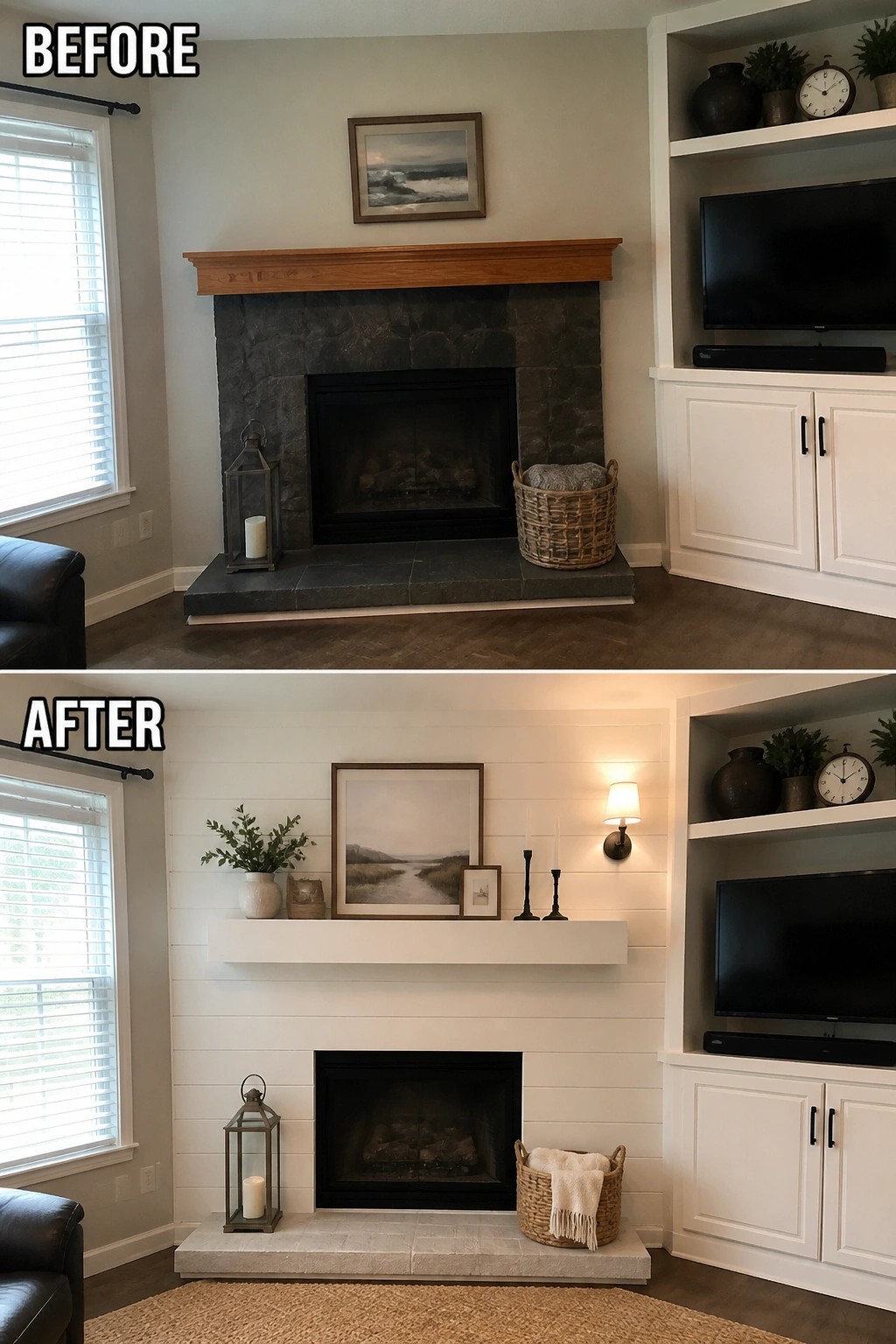
The dark stone surround made the fireplace feel heavy and separate from the rest of the room. Covering the wall with white shiplap and adding a clean floating mantel pulled everything together and gave the fireplace a lighter, more central role.
This works best in rooms where the fireplace sits on a large blank wall. Cover the stone with a light material, keep the mantel simple, and let the updated wall do most of the work. It suits homes that want to keep the original firebox but need the area to feel brighter without a full rebuild.
Replace Dark Stone With Marble To Brighten The Fireplace Wall

Many homes with dark stone fireplaces end up with a heavy, closed-in look that dominates the room. Switching the surround to light marble tiles and adding backlighting behind the new surface makes the whole wall feel taller and much brighter without moving any furniture.
This idea works best in living rooms where the fireplace sits on a main wall and you want a quick visual reset. Keep the new material simple, match the hearth to the surround, and use the lighting only where it highlights the stone rather than competing with it.
Make The Fireplace Wall The Main Feature

A dark stone fireplace can easily feel heavy and separate from the rest of the room. Adding built-in shelving on both sides and updating the stone color pulls everything together and turns the wall into the clear center of the space. The lighting inside the shelves also helps the area feel brighter without needing much else.
This approach works well in living rooms where the fireplace already sits in a central spot. Keep the shelves simple and avoid filling every inch so the wall still feels open. It suits homes with standard ceilings and gives you extra storage without taking up floor space.
Update A Dark Stone Fireplace With Patterned Tile
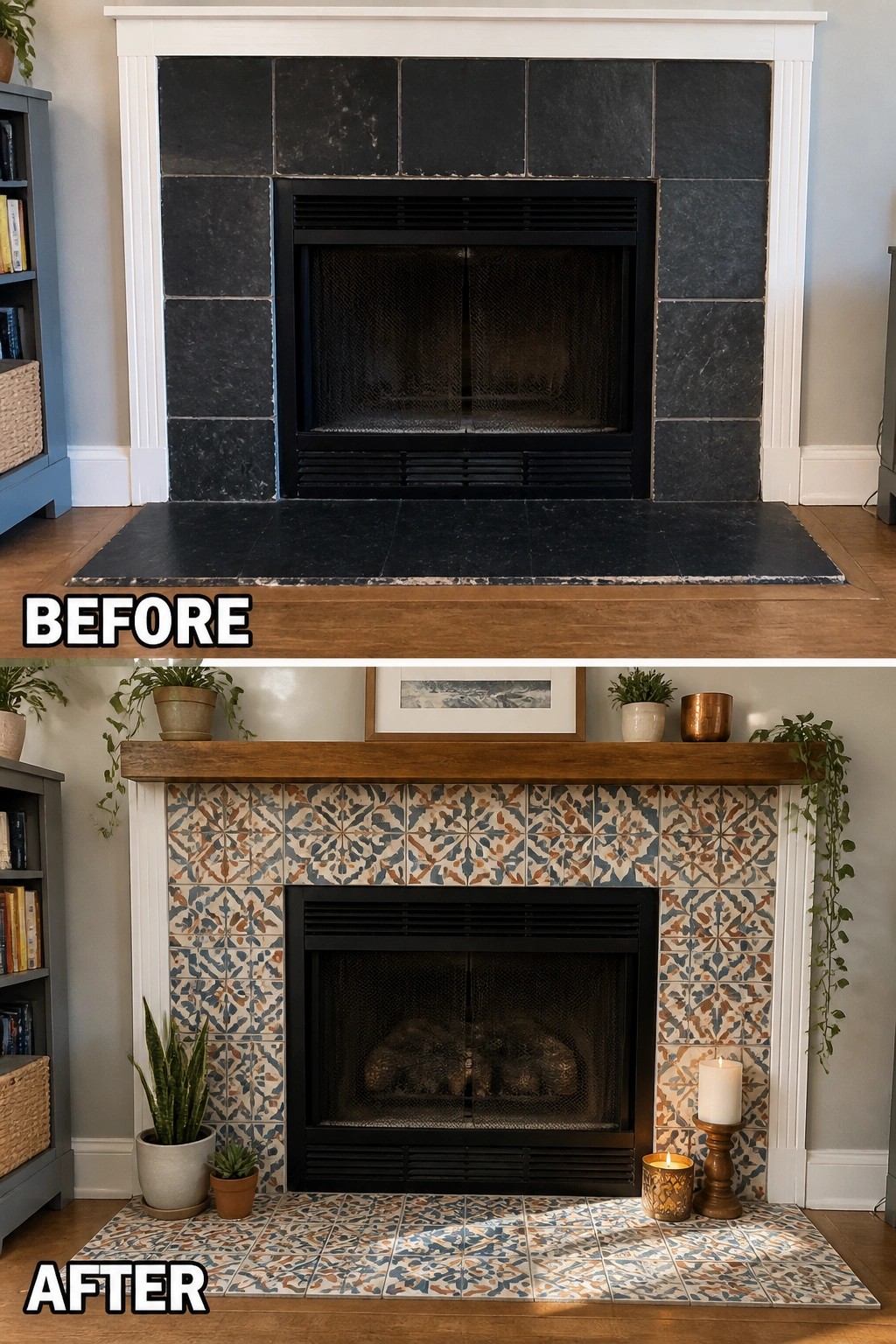
A dark stone surround often makes a fireplace feel heavy and dated. Replacing it with patterned tile gives the wall new life while keeping the original firebox in place. The change shifts the focus from the solid dark surface to a lighter mix of colors and shapes that still feel grounded.
This idea works best in rooms where the fireplace is the main feature. Pick tile that picks up colors already in the room and keep any new mantel simple so the pattern stays the star. It is a practical update if you want to refresh the look without a full renovation.
Make The Fireplace Wall The Main Feature

A dark stone fireplace often ends up feeling heavy and unused when the hearth stays bare. Adding a thick wooden mantel and a long built-in bench turns the whole wall into the natural center of the room while giving you practical seating and storage at the same time.
This approach suits older homes with solid stone that is worth keeping but needs softening. Keep the bench height low, use baskets underneath for logs or blankets, and limit what goes on the mantel so the fire itself stays the focus.
Update A Dark Stone Fireplace With A Lighter Surround

A heavy dark stone surround can make the whole room feel closed in. Replacing it with a smooth light plaster finish and a simpler mantel softens the look and helps the fireplace sit more naturally with the surrounding walls.
This idea works best in rooms that already get decent natural light and need the fireplace to feel less dominant. Focus on keeping the new surface clean and avoid overloading the mantel so the lighter material can do the work.
Lighten A Dark Fireplace Surround

The dark stone surround made the fireplace feel heavy and closed in. Replacing it with light marble, a slim gold frame, and a pair of wall sconces opened the wall up and turned the fireplace into a brighter focal point.
This works best in rooms where the fireplace already sits in the center of the main wall. Keep the new surround simple and let the sconces provide the only extra light so the change stays clean and easy to live with.
Make The Fireplace Wall The Main Feature

A big dark stone fireplace can easily feel heavy and unfinished when the opening is empty and the wall above blends into the background. Painting the wall black and adding a modern electric insert with backlighting gives the whole area a clear purpose and makes it the natural center of the room.
This approach works best in living rooms where the fireplace already takes up a lot of wall space. Choose an insert that sits neatly inside the existing opening, then use a dark paint on the flat wall to tie the stone and new firebox together. Keep the styling simple with just a couple of lanterns or small plants so the focus stays on the fire itself.
Lighten A Dark Fireplace Surround To Open Up The Room

A dark stone fireplace can weigh down a living room even when the rest of the space is decent. Switching the surround to a light color instantly lifts the whole area because it reflects more light and reduces that heavy feeling. The change from the dark gray stone to the white brick finish shows how much difference a single surface update can make.
This idea works best in rooms where the fireplace already sits in the center of the layout. Keep the mantel simple and choose accessories in light or neutral tones so the new surface stays the main focus. It suits older homes that still have the original dark surround but do not need a full rebuild.
Paint A Dark Stone Fireplace To Brighten The Space

A dark stone fireplace can make a whole room feel heavy and closed in. Painting the stone a lighter color opens everything up and turns the fireplace into a cleaner focal point instead of the darkest thing in the room. Adding a simple wood mantel gives you a place to style without needing a big renovation.
This idea works well in living rooms that already have light walls and floors. Start with a good masonry primer so the paint holds up to heat, then keep the styling light and not too crowded. It suits homes where the fireplace is the main feature but currently feels dated or overpowering.
Make The Fireplace Wall The Main Feature

A dark stone fireplace can easily fade into the background when the insert looks dated and the hearth stays cluttered. In this case the update centered on adding a simple black mantel, swapping the old brass insert for a clean black one, and extending a concrete hearth across the base. Those changes alone pulled the whole wall forward as the main point of the room.
The same approach works well in living rooms where the fireplace sits between windows or doors. Start with the mantel size and finish so it matches the scale of the stone, then choose an insert that blends with the surround rather than fighting it. Keep the hearth clear except for a small stack of wood or a set of tools so the eye stays on the firebox instead of wandering to stray items.
Update A Dark Stone Fireplace With Wood Paneling

A heavy dark stone fireplace can make a whole room feel weighed down. Switching the surround to wood paneling lightens the look while still keeping the fireplace as the main focal point. The wood ties into nearby cabinetry and gives the wall a cleaner, more finished appearance without adding extra bulk.
This approach works well in rooms that already have wood tones or want a warmer feel. Keep the mantel simple and let the paneling run the full width so the eye stays on the fireplace itself. It suits homes where the original stone feels dated but the structure is worth keeping.
Update A Dark Stone Fireplace With Light Tile

A heavy dark stone surround can make a fireplace feel closed in even when the rest of the room is light. Replacing it with a pale herringbone tile opens the space up and turns the fireplace into a clean focal point without changing the mantel or built-ins.
This approach works best in rooms that already have white trim and simple furniture. Keep the new tile pattern straightforward, extend it across the hearth, and limit extra decor so the lighter surface stays the main feature.
Lighten A Dark Stone Fireplace Surround

A dark stone fireplace can make a whole room feel heavier than it needs to. In this case the before photo shows a solid dark surround that blends into the background and pulls the space down. Whitewashing the stone and adding a thick wood mantel changed the balance completely. The fireplace now stands out as a bright focal point instead of disappearing into the wall.
This approach works well in homes where the original stone feels dated or too heavy for the room size. Test the whitewash on a small section first so you can control how much of the stone texture shows through. Keep accessories simple and repeat warm wood tones so the new look stays grounded rather than stark.
Update A Dark Stone Fireplace With Terracotta Tile

A dark stone surround often makes the fireplace feel heavy and closed off from the rest of the room. Covering it with terracotta tile lightens the look while still keeping the firebox as the main focal point. Adding a simple arched niche above further softens the straight lines of the original stone.
This approach suits homes with warm or earthy color schemes. Measure the firebox first so the new tile fits cleanly around the opening, and keep any added decor minimal so the tile and arch remain the main features.
Paint A Dark Stone Fireplace A Warmer Color

A dark stone fireplace often makes a room feel heavier than it needs to. Painting the surround a warm terracotta shade changes the mood right away and turns the fireplace into something that actually brightens the space instead of pulling it down.
This approach suits living rooms that already have wood floors and neutral walls. Keep the change simple by adding a wood mantel and a few potted plants so the new color stays the main focus without extra clutter.
Make The Fireplace Wall The Main Feature

Many older stone fireplaces end up looking heavy once the rest of the room is updated. Replacing the thick mantel and deep opening with a flat black stacked stone surface and a long linear insert removes the bulk and turns the wall into one clean plane.
This works best in rooms that already have dark wood floors or built-ins, since the new surround ties everything together without competing for attention. Keep the rest of the wall clear so the firebox stays the main point of interest.
Make The Fireplace Wall The Main Feature

Painting the stone a deeper charcoal shade and switching the fire screen to a lighter gold finish pulls the whole wall together and makes the fireplace stand out more clearly. Adding sconces on either side and a simple round mirror above the mantel gives the area better balance and a bit more light without needing major construction.
This idea works best in rooms where the fireplace already sits in the middle of the main wall. Start with the paint and screen if you want the biggest shift for the least effort, then add lighting and one centered piece above the mantel so the space feels finished rather than crowded.
Swap Dark Stone For A Lighter Fireplace Surround

A dark stone fireplace often makes the room feel heavy and closed off. Replacing it with a lighter stone surround changes the balance right away and turns the fireplace into the main feature instead of a bulky dark mass.
This idea works best in rooms with wood floors and simple wall colors. Choose a light stone that still has some texture, then add just a few pieces like a wood mantel, a pair of sconces, and a low bench to keep the area feeling open and usable.
Make The Fireplace Wall The Main Feature

A dark stone fireplace often disappears into the room when the floor runs straight through without any break. Adding a wooden mantel and laying a herringbone pattern right in front gives the firebox a clear boundary and turns it into the main focal point.
This idea suits living rooms where the fireplace needs more presence. Match the mantel to nearby wood tones, then use a simple floor pattern to mark the hearth area so the change feels intentional rather than decorative.
Lighten A Dark Stone Fireplace Surround

A dark stone fireplace can easily dominate a room and make the whole space feel heavier than it needs to be. In this case the original surround was updated by replacing the deep tones with a lighter gray stone and adding white shiplap above the mantel. The result is a much cleaner focal point that still keeps the warmth of a real fireplace.
This approach works well in living rooms where you want the fireplace to blend in rather than take over. Keep the changes simple by choosing a lighter finish for the stone and adding a plain paneling treatment above. It is often enough to make the whole wall feel updated without a full renovation.
Add A Thick Wooden Mantel To A Dark Stone Fireplace

A simple way to refresh a dark stone fireplace is to replace a thin floating shelf with a substantial wooden beam. The heavier mantel adds warmth and scale that balances the heavy texture of the stone, while a built-in niche for stacked firewood turns an empty side wall into useful storage.
This approach works best in rooms where the fireplace already takes up a large wall. Keep the styling light with just a few lanterns or candles so the wood and fire remain the main focus. Choose a beam with some natural variation in tone to soften the dark surround without fighting it.
Add A Mantel To Balance A Dark Stone Fireplace

A tall dark stone fireplace often feels heavy when it runs straight up the wall with no break in the surface. Adding a wood mantel at mantel height creates a clear horizontal line that stops the eye and gives the surround more shape.
This approach works best when the stone is already in good shape and you want to keep it. Place a pair of sconces on the wall above the mantel and keep the styling light so the new layer does not compete with the stone itself.
Frequently Asked Questions
Q: Will a light paint color really cover dark stone without looking patchy? A: Clean the surround thoroughly and roll on a stone primer first. Follow with two light coats of heat safe paint in your chosen shade. This builds even coverage that lasts through regular use.
Q: What if I want to layer tile over the existing stone instead? A: Check that the surface feels solid and scrape away any loose bits. Spread thinset mortar and press the tiles into place one section at a time. Let it cure fully before grouting so nothing shifts near the heat.
Q: How can I add a wood mantel without it clashing with the dark surround? A: Choose a light oak or painted pine board that stands out softly against the stone. Secure it on sturdy brackets set a safe distance from the opening. The contrast pulls attention upward and warms the whole spot.
Q: Do these updates need special cleaning later on? A: Wipe the new surface with a damp cloth and mild soap once a month. Skip harsh scrubbers that could wear the finish.
