

Kitchens tend to feel unfinished when the counters run into a blank wall with nothing to anchor them.
I have noticed that a backsplash with real presence often settles the whole room without requiring new cabinets or a full layout shift.
It works best when the material actually supports how the space is used day to day rather than just sitting there for show.
Some of these choices reminded me that small material decisions can make a kitchen feel more complete than adding more storage ever does.
One stood out for keeping things practical while still giving the eye a place to rest.
Let A Statement Backsplash Refresh An Outdated Kitchen

Many kitchens with older wood cabinets and plain tile feel heavy and closed in. Switching the cabinets to white and adding wood counters lets a bold teal backsplash take center stage and brighten the whole space.
This idea works best in simple galley layouts where one strong surface can carry the update. Stick with the same tile on both walls and choose hardware that blends with the new counters so the backsplash stays the clear focus.
Make The Backsplash The Focal Point
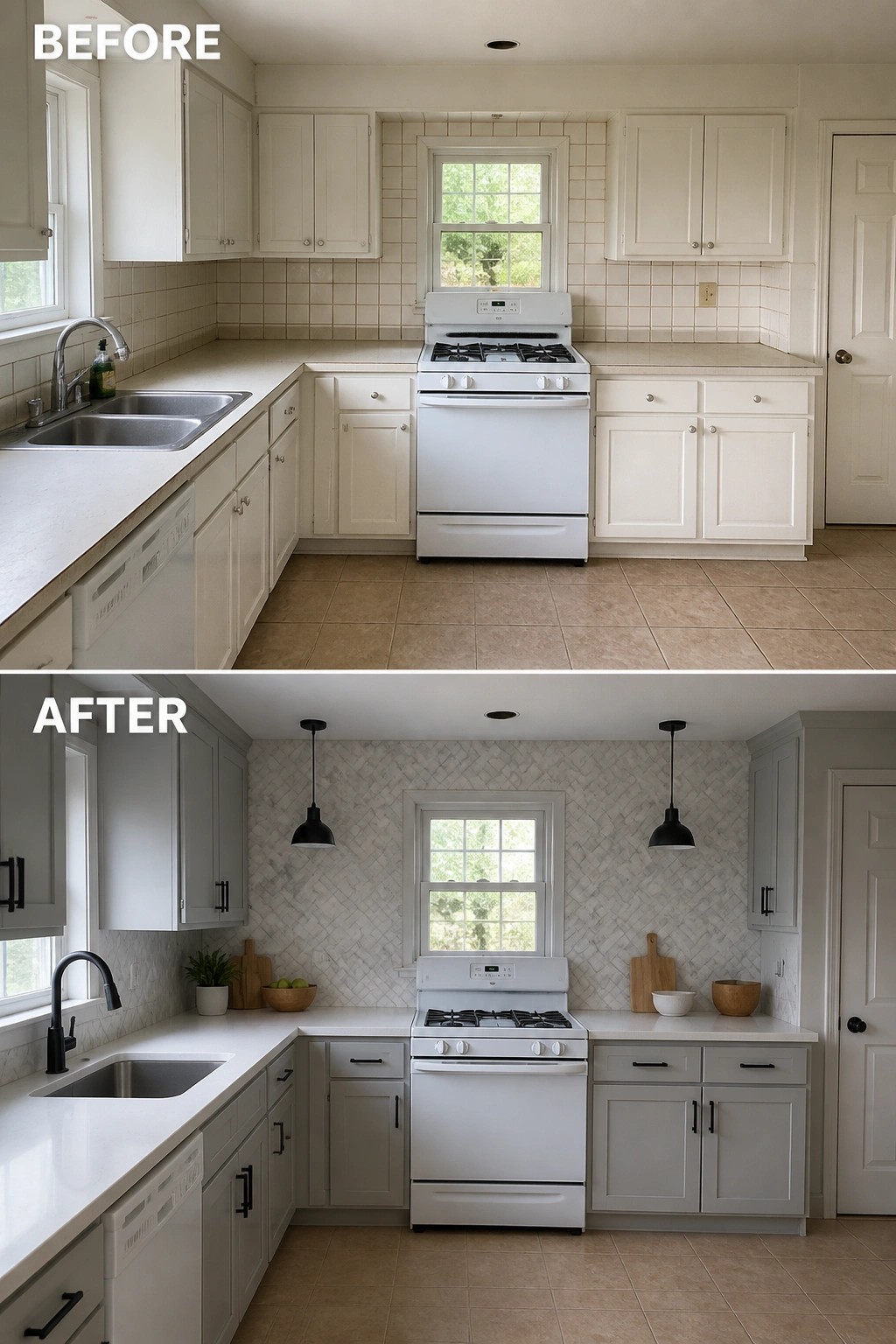
A plain kitchen with basic square tile can feel flat even when the cabinets and counters are in good shape. Switching to a herringbone marble backsplash gives the room a clear center without changing the layout or replacing the appliances.
This approach works best when the rest of the kitchen stays simple. Choose one patterned material that stands out against the cabinets, then keep counters and walls quiet so the backsplash can carry the update.
Let A Statement Backsplash Refresh The Range Wall
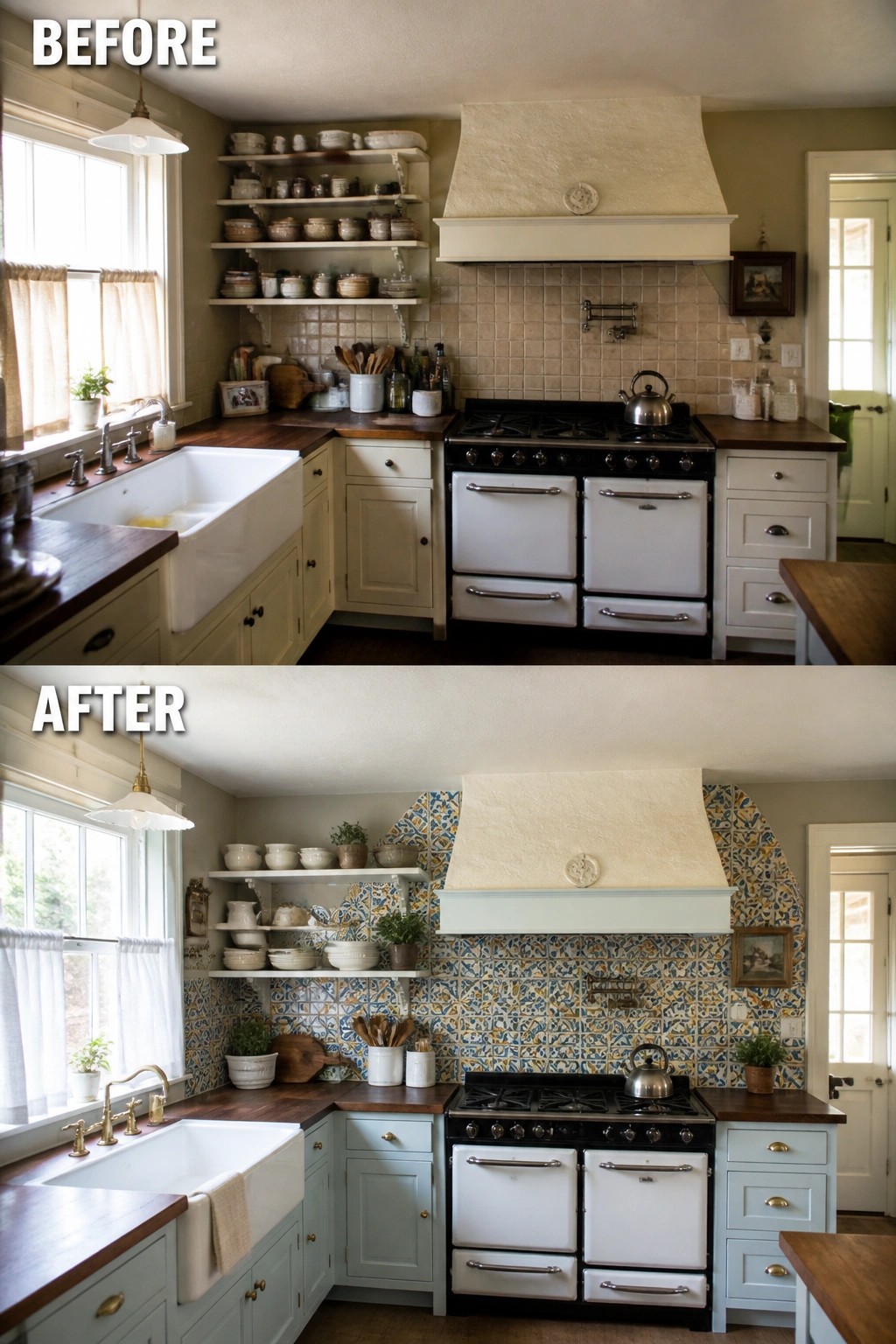
A plain tile backsplash can leave the cooking area feeling flat even when the rest of the kitchen works. In this case, swapping the simple square tiles for a colorful patterned design that curves around the hood gave the whole wall new focus without changing the cabinets or counters.
This approach works well in older kitchens where the range sits in a visible spot. Keep the pattern to the backsplash area so it stands out, and choose colors that tie into nearby finishes rather than fighting them. It is a straightforward update that brings personality without requiring a full remodel.
Let A Statement Backsplash Refresh The Kitchen
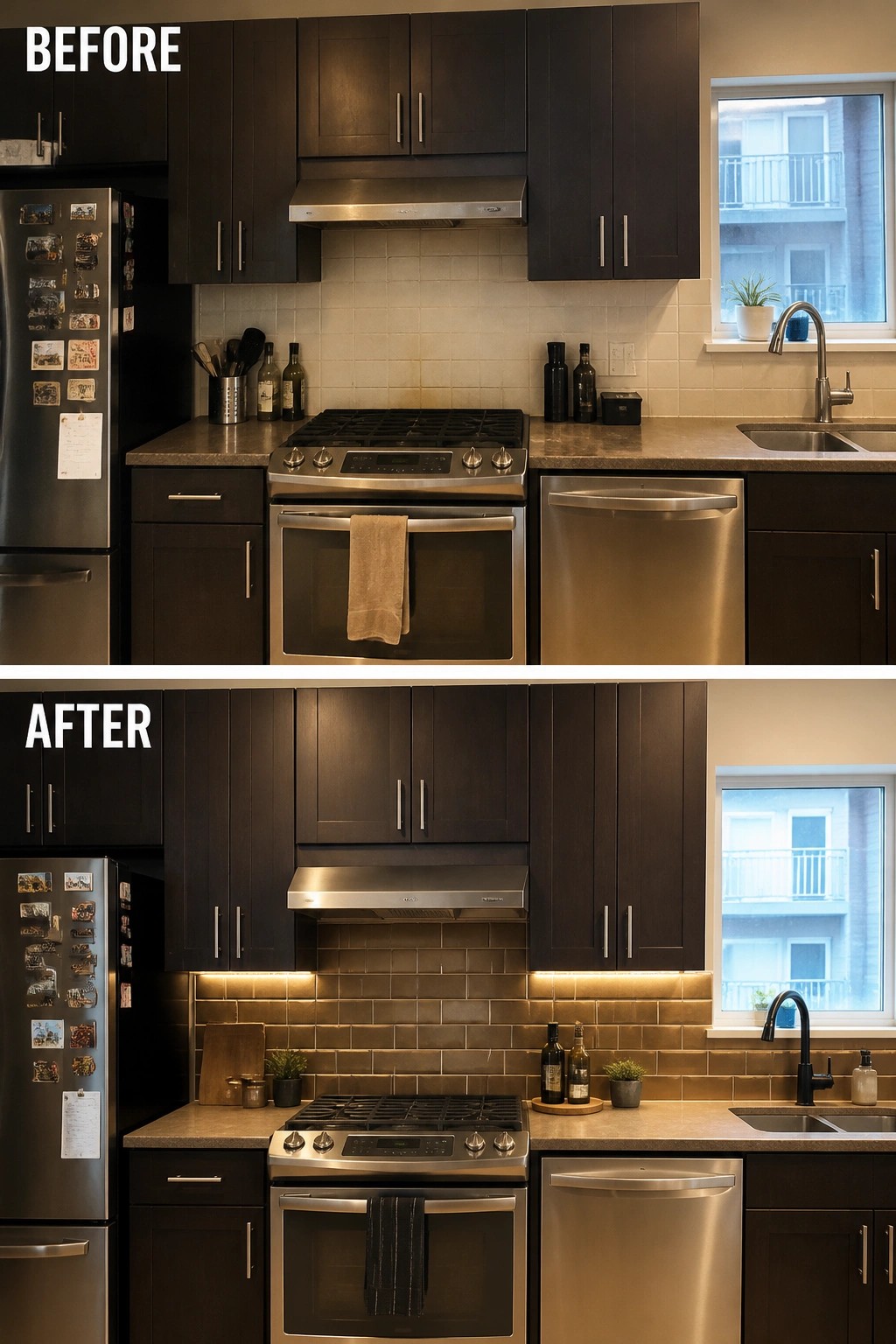
A plain white tile backsplash can leave a kitchen feeling flat even when the cabinets and appliances are in good shape. Switching to a warmer, slightly textured tile with under-cabinet lighting gives the wall behind the stove a clear purpose and makes the rest of the room feel more finished.
This idea works best in kitchens that already have a workable layout but need one strong surface to pull everything together. Keep the tile simple in pattern, repeat one of its tones in smaller accents like a new faucet or soap dispenser, and use the lighting to make the backsplash the main point of interest rather than adding lots of extra decor.
Add A Statement Backsplash Behind Open Shelves

Many kitchens with open shelving end up looking unfinished because the wall behind stays plain. In this case the change came from installing a bold patterned tile that runs across the full area. The new surface gives the shelves something to sit against and pulls the whole wall together without needing to replace the cabinets or counters.
This approach works well in kitchens where you want one strong visual element rather than lots of small updates. Keep the tile color and pattern simple enough that it does not fight with the dishes and glassware you already own. If your shelves hold mostly neutral pieces, a deeper or patterned tile can add interest without requiring a full remodel.
Let A Statement Backsplash Refresh The Sink Wall

A change from plain tile to a single slab backsplash can shift the whole feel of a sink area without moving any cabinets or appliances. The old white grid looked flat and dated next to the speckled counters, while the new marble-style surface adds movement and makes the space feel more put together.
This idea works best when the sink wall already gets a lot of attention. Keep the counters clear of clutter so the backsplash stays the main feature, and pick a material that contrasts enough with the countertop to stand out without clashing.
Let A Statement Backsplash Lead The Update

A plain white tile backsplash can make a kitchen feel flat and dated even when the rest of the space is clean. Switching to a bold herringbone marble pattern gives the whole room a fresh focal point without needing a full renovation. The change stands out right away because the eye goes straight to the new backsplash instead of the old countertop and basic tile.
This idea works best in smaller kitchens where one strong surface can carry the update. Keep the rest of the changes simple, like painting the lower cabinets a deeper color and swapping hardware, so the backsplash stays the main feature. It suits homes where you want a polished look without spending on new counters or appliances.
Let A Statement Backsplash Refresh A Basic Kitchen

A kitchen with nothing behind the range often feels unfinished even when the rest of the room is functional. Adding a reflective tile backsplash turns that blank wall into the main feature and gives the whole space a more finished look without needing a full renovation.
This idea works best when the surrounding cabinets and counters stay simple. Pick one material that catches light, like the metal tiles shown here, and let it do the work while you keep everything else neutral.
Make A Patterned Backsplash The Focus Of Your Sink Area
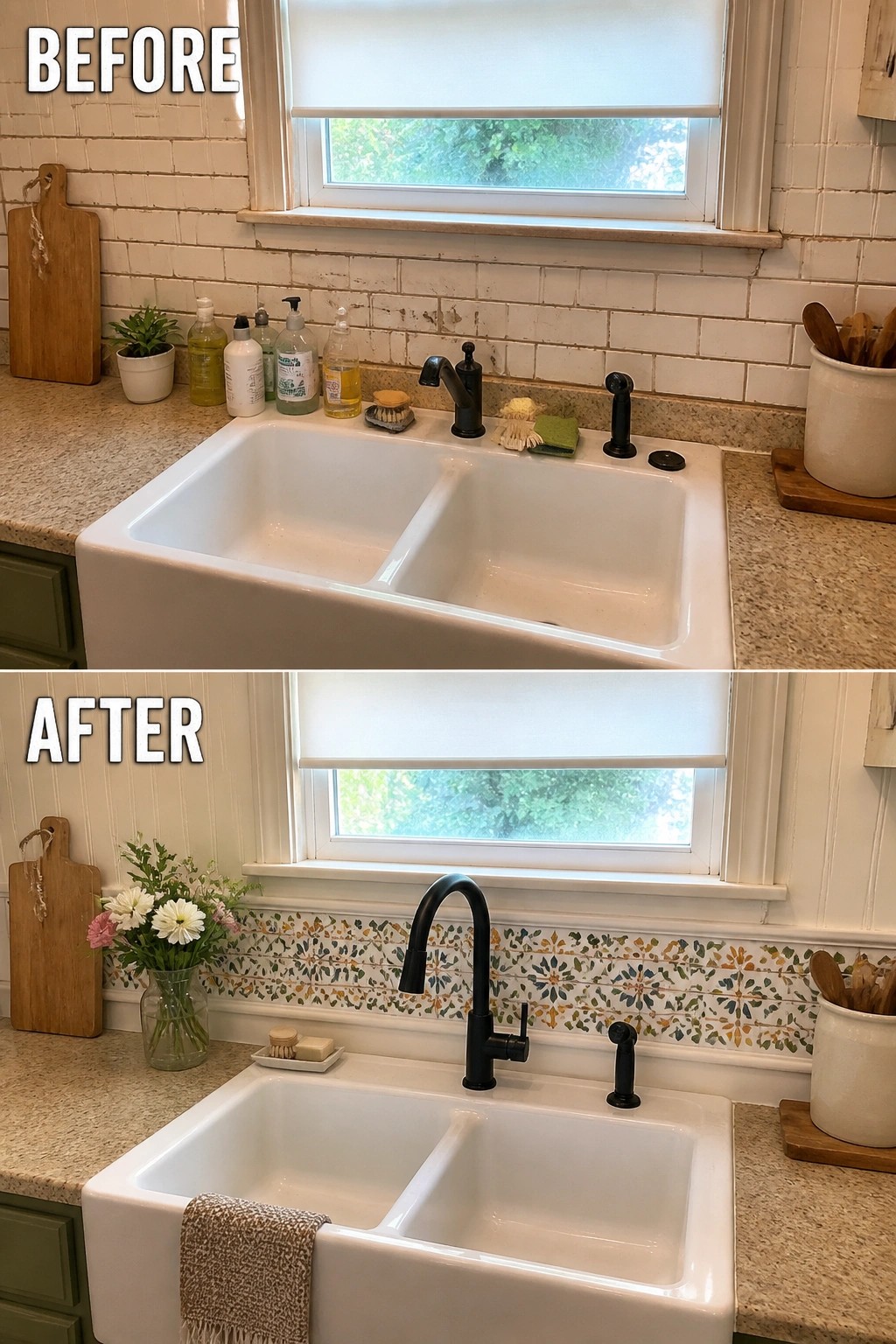
Switching from plain subway tile to a colorful patterned backsplash instantly changes how the sink area feels. The new tile adds interest without any major changes to the cabinets or counters, and clearing off most of the bottles keeps the eye on the pattern instead of the clutter.
This idea works best in smaller kitchens where the sink wall is already a natural focal point. Choose a tile that repeats one or two main colors from the rest of the room, then keep the countertop mostly clear so the backsplash can stand out on its own.
Turn A Basic Tile Backsplash Into A Statement Feature

The kitchen shifted from a plain horizontal subway tile backsplash to a vertical wood panel style that adds height and texture across the wall. This change gives the space a warmer, more finished look while keeping the dark cabinets and counters in place.
A vertical backsplash works best when the rest of the kitchen stays simple. Add a pair of pendant lights above the sink and a few open shelves to frame the new surface. It suits older homes with standard tile that still have solid cabinetry and just need one strong update to feel current.
Let A Patterned Backsplash Anchor The Counter

A blank wall above a kitchen counter often leaves the space feeling unfinished. Adding a strong geometric tile backsplash gives the area a clear purpose and turns the counter into a usable spot for meals or coffee.
This idea works best in smaller kitchens or open layouts where the counter doubles as seating. Keep the tile bold but limit other changes to simple updates like matching stools so the backsplash stays the main feature.
Add Interest With A Patterned Kitchen Backsplash
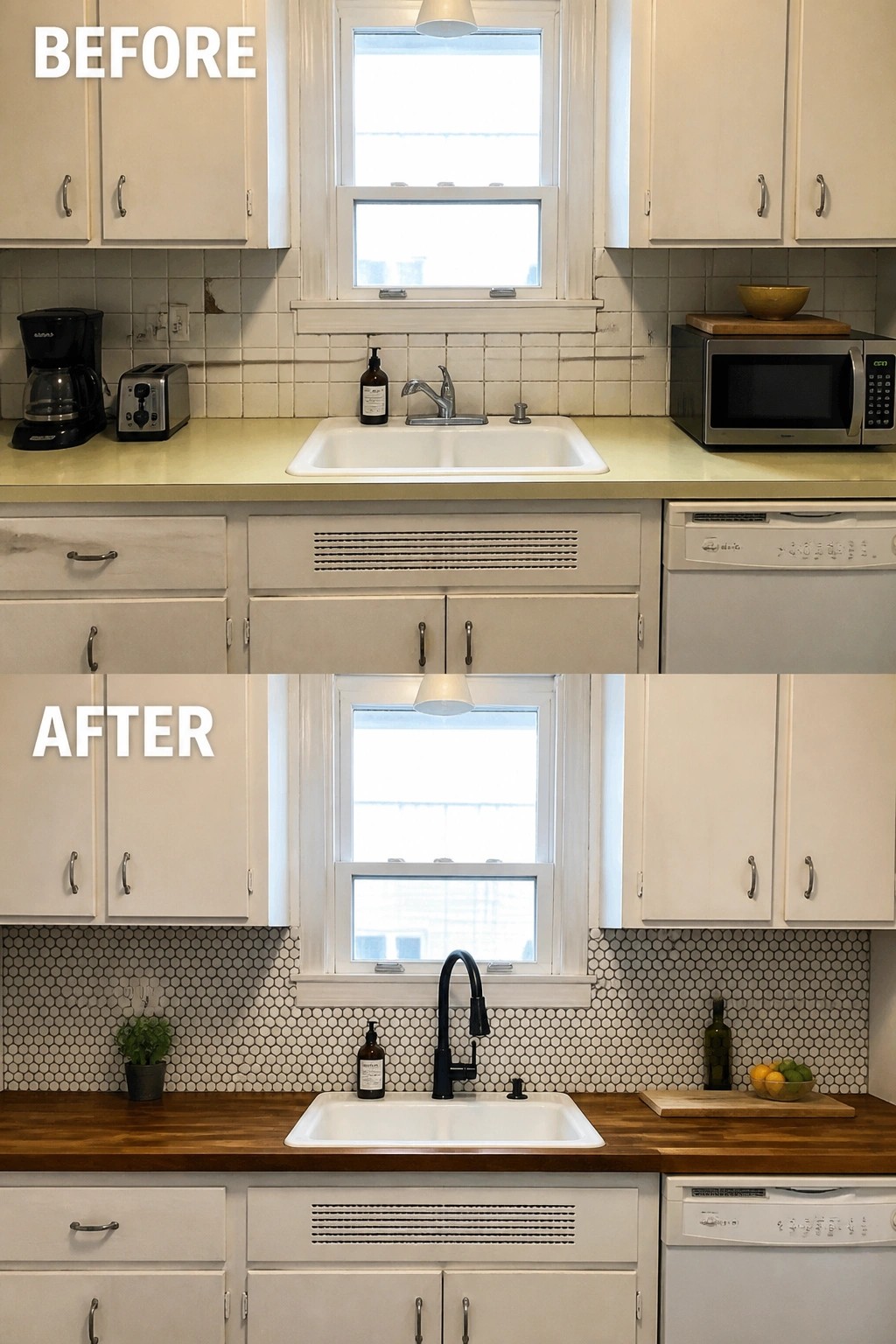
A simple backsplash swap can shift the whole feel of a kitchen without a full remodel. The before version had basic subway tile that blended into the white cabinets and light counters. The after version uses a small hexagonal tile that brings texture and a bit of pattern while keeping the space bright and clean.
This idea works best when the rest of the kitchen stays fairly neutral. Stick with white or light cabinets and let the backsplash carry the visual weight. Darker counters or a black faucet help the new tile stand out even more. If your kitchen has plain tile now, start by picking a pattern you like in a size that feels right for the wall space.
Refresh Dated Cabinets With A Statement Backsplash

Painting the cabinets white and installing a new backsplash completely changes how this kitchen feels. The old oak and plain wall surface made the room look heavy, while the lighter cabinets and speckled backsplash open it up and give it a cleaner look.
This idea works best in kitchens where the cabinets are still in good shape. Focus on a backsplash with some texture or pattern so it becomes the main feature, then keep counters and hardware simple so the backsplash does the work.
Use A Wood Backsplash To Warm Up The Kitchen
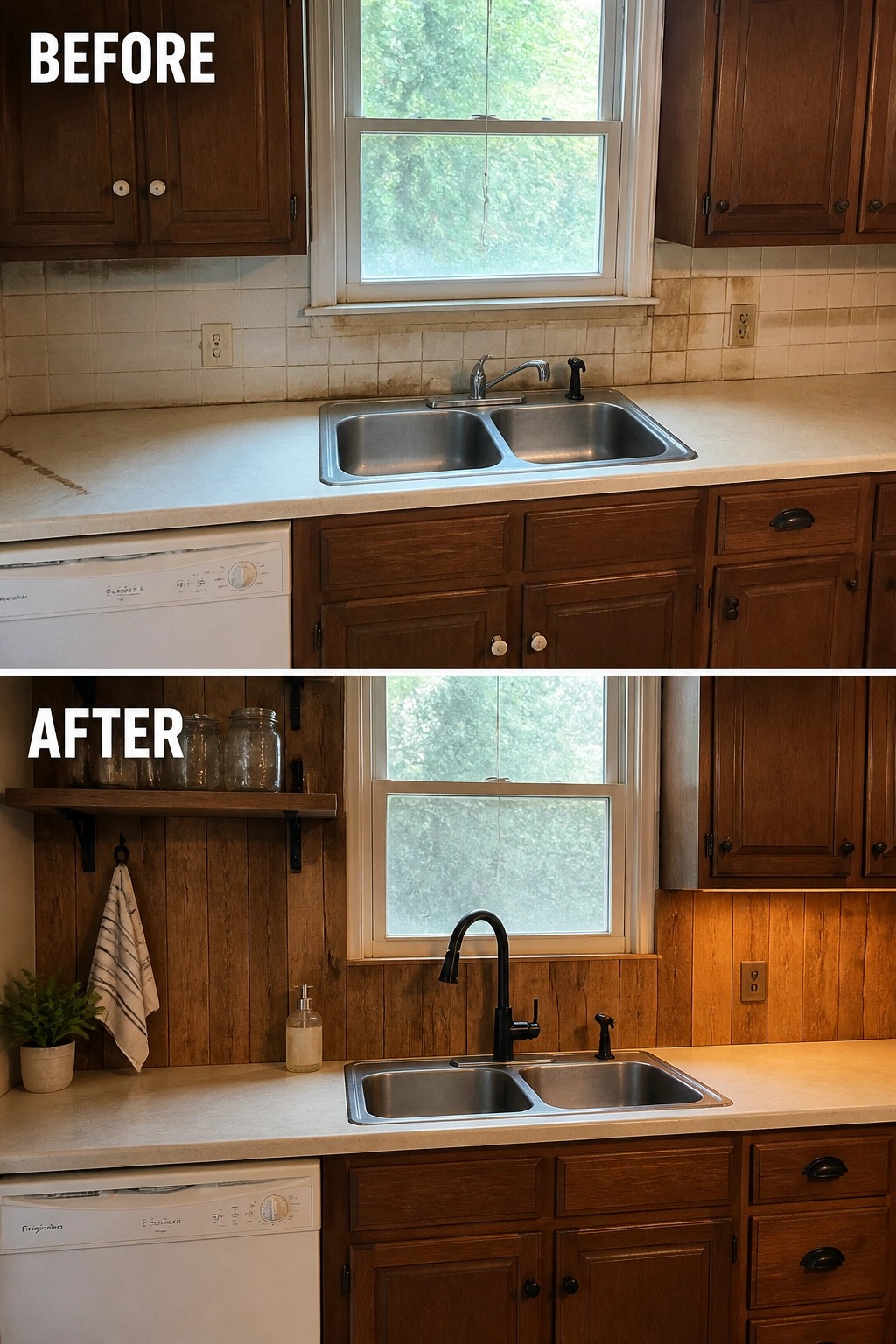
The kitchen had a basic tiled backsplash that left the space feeling flat and dated. Replacing it with wood paneling gave the room a much softer and more finished look while keeping the existing cabinets and counters in place.
This approach works well in kitchens that already have decent layout and storage but need more warmth. Focus on the backsplash area first, then add one small shelf if you want a spot for jars or a towel hook.
Let A Backlit Backsplash Become The Kitchen Focal Point
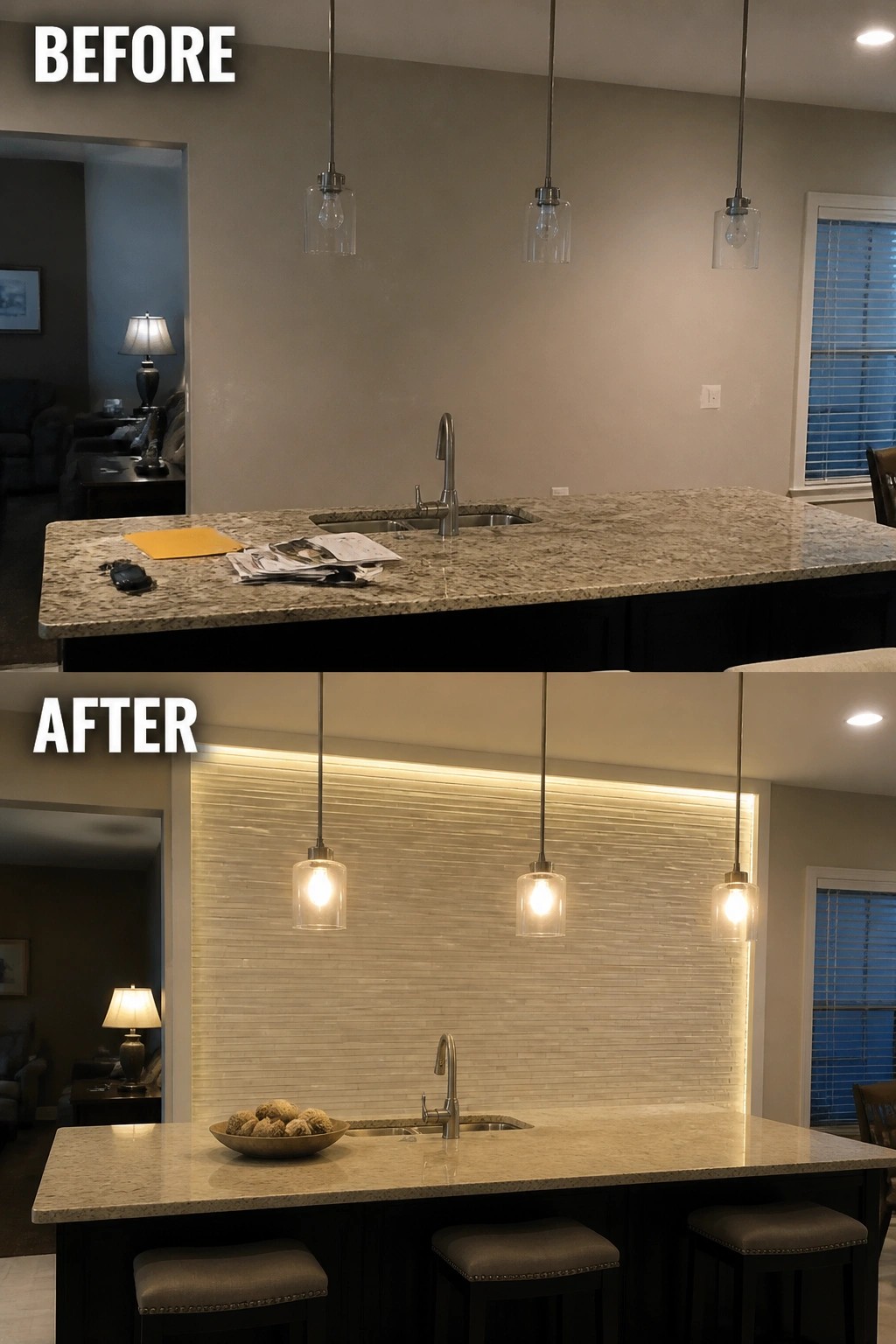
A blank wall behind a kitchen island often leaves the space feeling unfinished. Adding a textured backsplash with hidden LED lighting turns that empty area into the main focal point and gives the whole room a finished look.
This idea works best in open kitchens where the island is visible from the living area. Keep the surrounding counters clear, run the lighting along the top edge, and choose a material that reflects light without overwhelming the rest of the room.
Let A Statement Backsplash Refresh The Whole Kitchen

A plain square tile backsplash can make even a functional kitchen feel dated. In this case, switching to a white hexagonal tile gave the space a cleaner pattern and more visual interest while the cabinets were painted a soft green. The new backsplash works as the main update and pulls the rest of the changes together without needing a full gut job.
This approach works well in kitchens where the layout is still usable but the finishes feel tired. Pick a tile shape or color that contrasts lightly with the cabinet color, and keep the countertop simple so the backsplash stays the focus. It is an easier project than replacing cabinets and still makes the room feel current.
Add A Statement Backsplash To Refresh The Kitchen

A plain wall behind the stove can make even a functional kitchen feel unfinished. In this case, adding terracotta tile created an instant focal point that pulls the whole cooking area together without requiring new cabinets or appliances.
This approach works best in kitchens that already have decent layout and storage. Choose a tile color and scale that contrasts with the existing counters and cabinets, and keep the surrounding surfaces simple so the backsplash stays the main feature.
Refresh A Kitchen With A Statement Backsplash
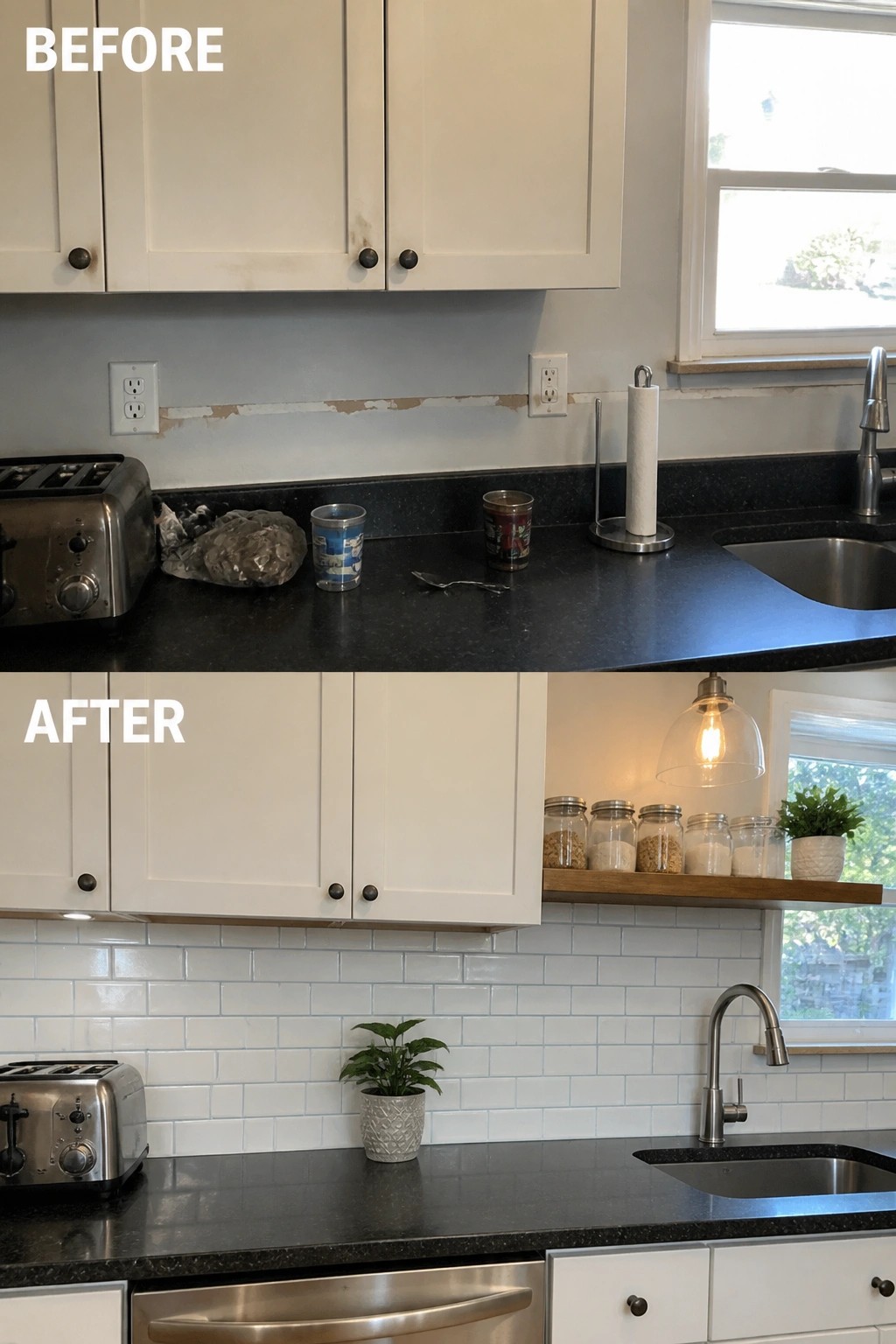
A white subway tile backsplash can quickly update an older kitchen that still has decent cabinets and counters. In this case the tile covers the worn wall area and gives the whole space a cleaner, brighter look without requiring new cabinetry or a full remodel.
This approach works best when the rest of the kitchen is in decent shape but feels dated. Keep the tile simple, add one or two open shelves for jars or plants, and let the backsplash carry the update. It is an affordable way to make the room feel finished.
Add A Statement Backsplash To Refresh The Sink Wall
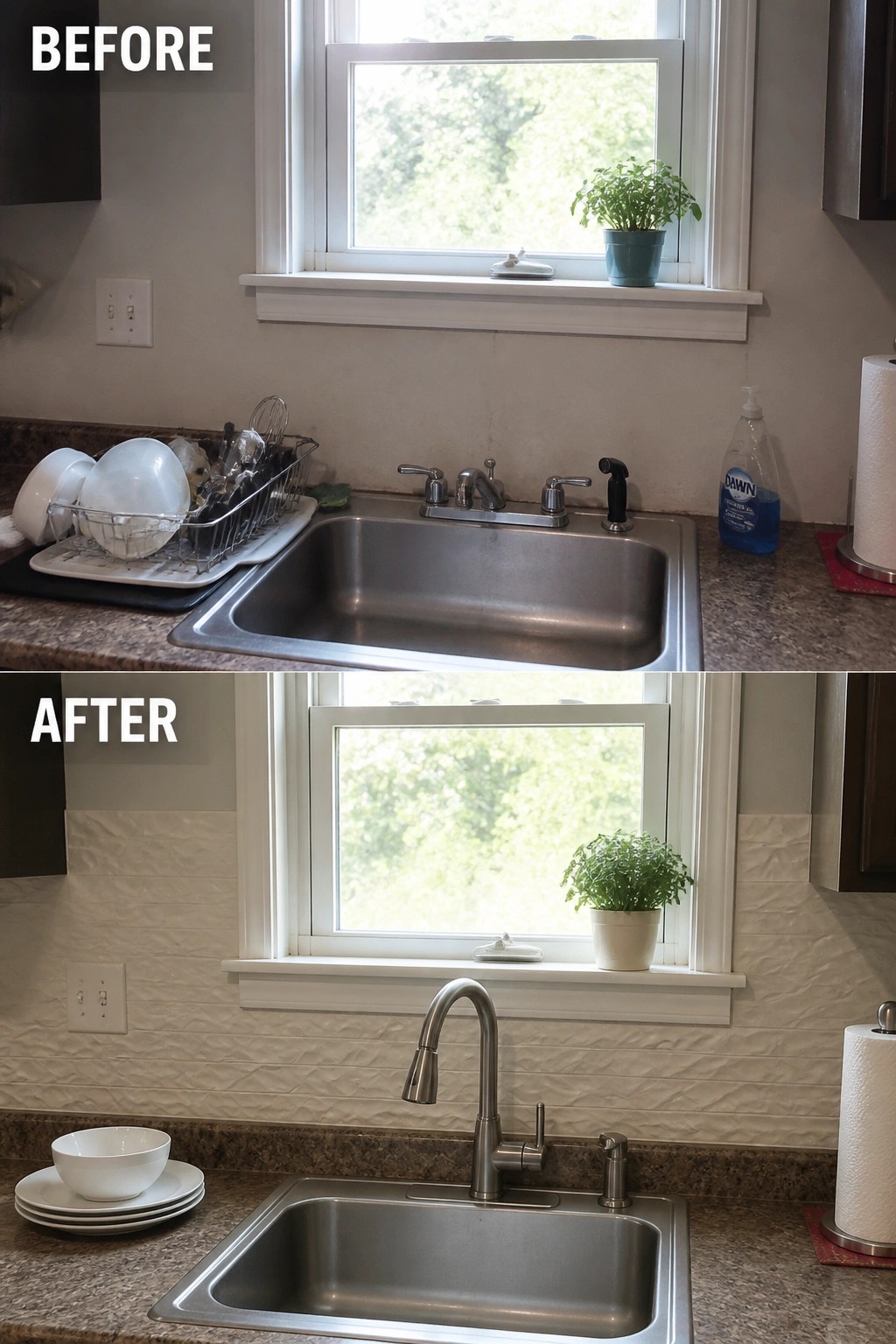
A plain wall behind the sink can make the whole area feel unfinished. In this kitchen the change came from installing a textured tile backsplash that adds pattern and depth without overwhelming the small space. The new surface instantly draws attention and makes the sink area look more intentional.
This approach works well in older kitchens where the original wall is just painted drywall or basic tile. Keep the tile light in color if your counters are busy, and choose a texture that catches light rather than a busy pattern. Start with the backsplash before updating the faucet or counters so the main feature stays the focus.
Turn A Plain Wall Into A Statement Backsplash
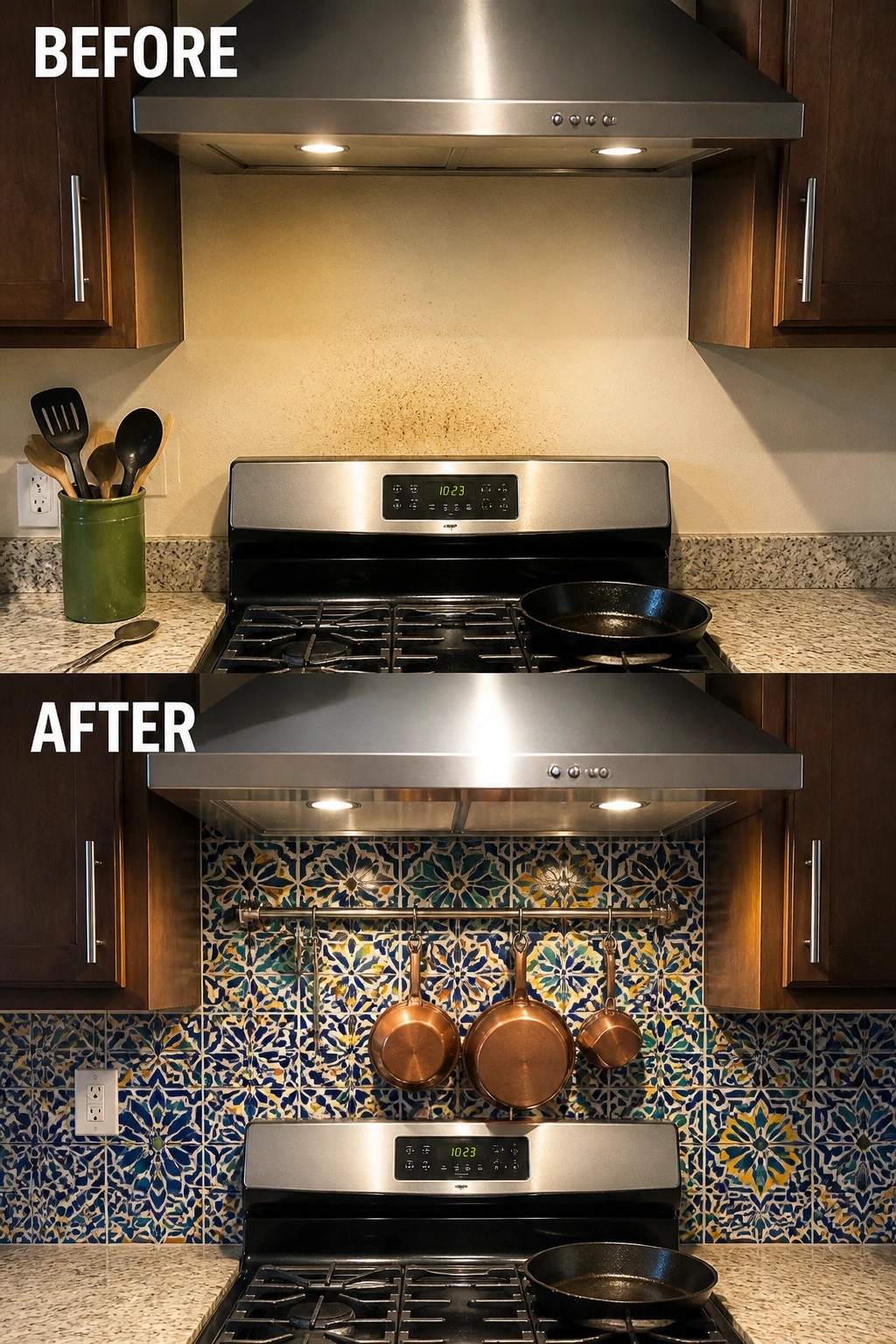
A plain painted wall above the stove can make the whole cooking area feel unfinished. Switching it out for a colorful patterned tile backsplash immediately gives the space a clear focal point and pulls the eye upward. The added hanging rail with copper pans keeps utensils off the counter while reinforcing the new look.
This approach works well in kitchens that already have basic cabinets and appliances but need one strong visual update. Choose tiles in a scale that fits the wall size, and keep the surrounding counters fairly simple so the backsplash stays the star.
Add A Decorative Tile Border To Anchor Open Shelves

The before photo shows open shelves loaded with mismatched mugs, books, and dishes that made the wall feel crowded. In the after, the shelves hold fewer items arranged with more breathing room, and a narrow patterned tile strip was added to create a simple backsplash accent.
This idea works best in kitchens where the existing tile is plain and you want to add interest without replacing the whole backsplash. Keep the shelves edited down so the border can read as the main detail, and repeat one or two colors from the tile in the items you leave out.
Install A Statement Backsplash To Refresh The Cooking Area

The kitchen improved once the plain wall above the stove was replaced with a brick backsplash. The new surface adds texture and gives the range a clear focal point while the mounted rack keeps everyday spices within reach without crowding the counter.
This idea suits compact kitchens where you want one main update rather than many small changes. Choose a backsplash material that can support hooks or a rail, and keep the rest of the surrounding surfaces simple so the new wall stands out.
Let A Patterned Backsplash Become The Focal Point
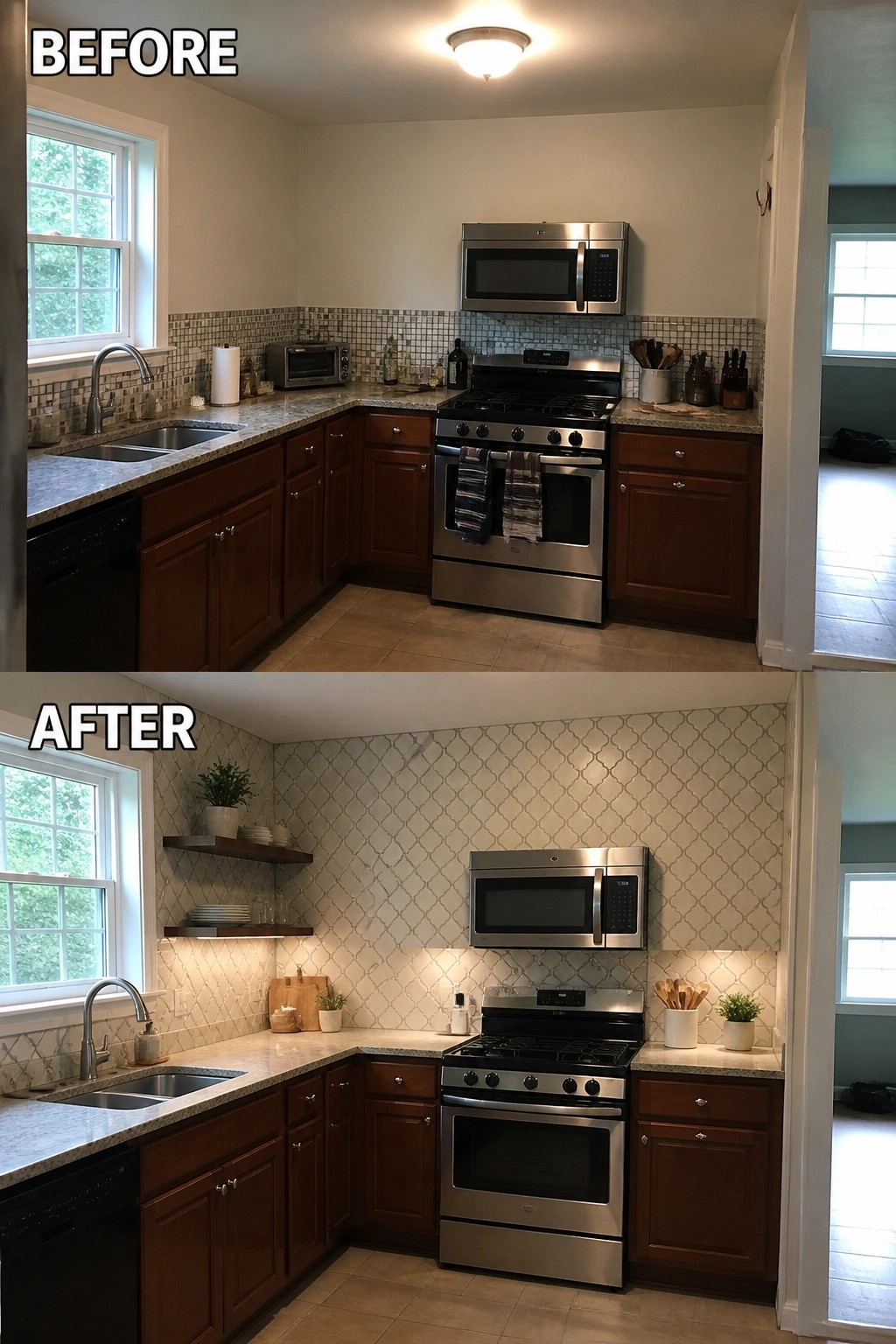
A patterned backsplash can give a kitchen more character without needing new cabinets or appliances. Here the old small mosaic tile was swapped for a larger scale design that covers the wall more fully. Floating shelves and under-cabinet lights were added to keep the eye on that new surface.
This idea works best in kitchens that already have solid layout and storage. Pick one wall for the pattern and keep counters fairly clear so the backsplash stays the main feature. It suits older homes where a single change can refresh the space without a full remodel.
Frequently Asked Questions
Q: What size should my statement backsplash be to make an impact? A: Run it across the full length of the main wall for the biggest effect. This draws the eye right away. Keep it to the area behind the stove and sink if your kitchen is small.
Q: How do I protect a fancy backsplash from grease and spills? A: Choose materials with a sealed finish right from the start. Wipe it down after cooking to prevent buildup. Regular maintenance keeps it looking fresh for years.
Q: Will a bold backsplash clash with my existing cabinets? A: Pick colors that echo tones already in your cabinets or floors. This creates harmony without extra work. Test samples in place to confirm the match.
