
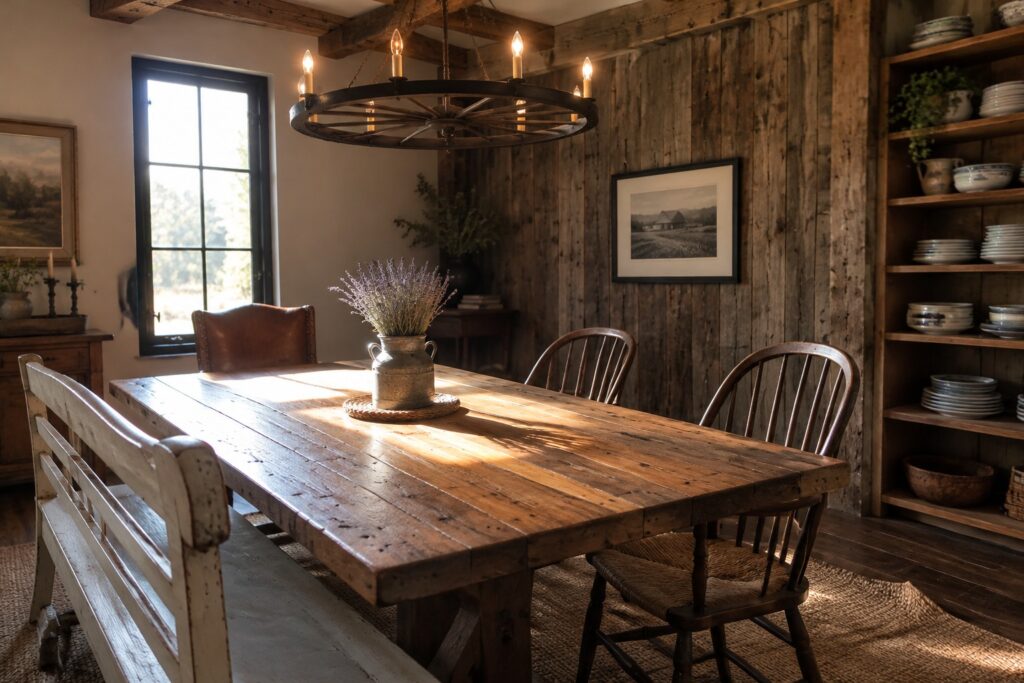
A dining room feels most comfortable when the table, chairs, and walking space work together, not just when the finishes look good.
Reclaimed wood brings knots, worn edges, and color variation that can make a farmhouse room feel lived-in, but too much of it can leave the space feeling heavy.
I’d balance a weathered table with simpler seating or lighter walls, especially in a smaller room where every surface counts.
Details like a well-placed light, a practical rug, and enough room to pull out chairs can help the rustic materials feel at home in daily life.
Some of these approaches are worth saving and adapting to the size, light, and furniture you already have.
Build the Dining Room Around a Reclaimed Wood Table
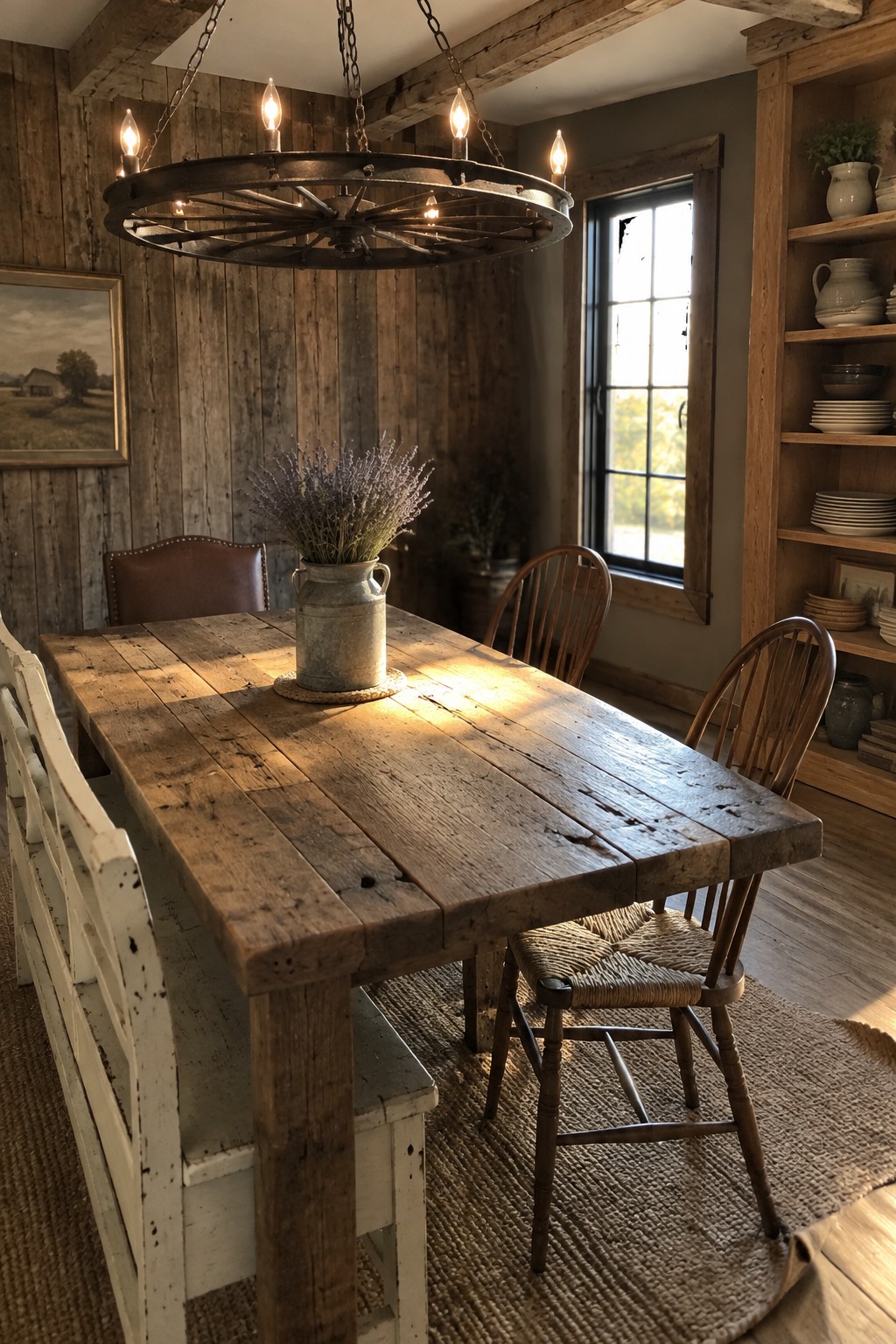
A substantial reclaimed wood table can give a farmhouse dining room its character without much extra decoration. The old boards bring natural variation to the room, and their sturdy look suits everyday meals as well as larger gatherings.
Choose a table that fits the room while leaving enough space to pull out chairs and walk around it. A simple bench can tuck along one side, as shown here, but keep other finishes fairly restrained so the wood remains the main feature.
Use Reclaimed Wood for a Cozy Dining Nook

Reclaimed wood can make a small dining nook feel settled and useful. Here, the built-in bench has a simple plank finish that gives the table a natural place to sit without needing much extra furniture.
This idea works especially well in a bay window or an unused corner. Use sturdy boards for the bench, then keep the table and chairs easy to move so the space still feels practical for everyday meals.
Make a Reclaimed Wood Table the Main Dining Feature
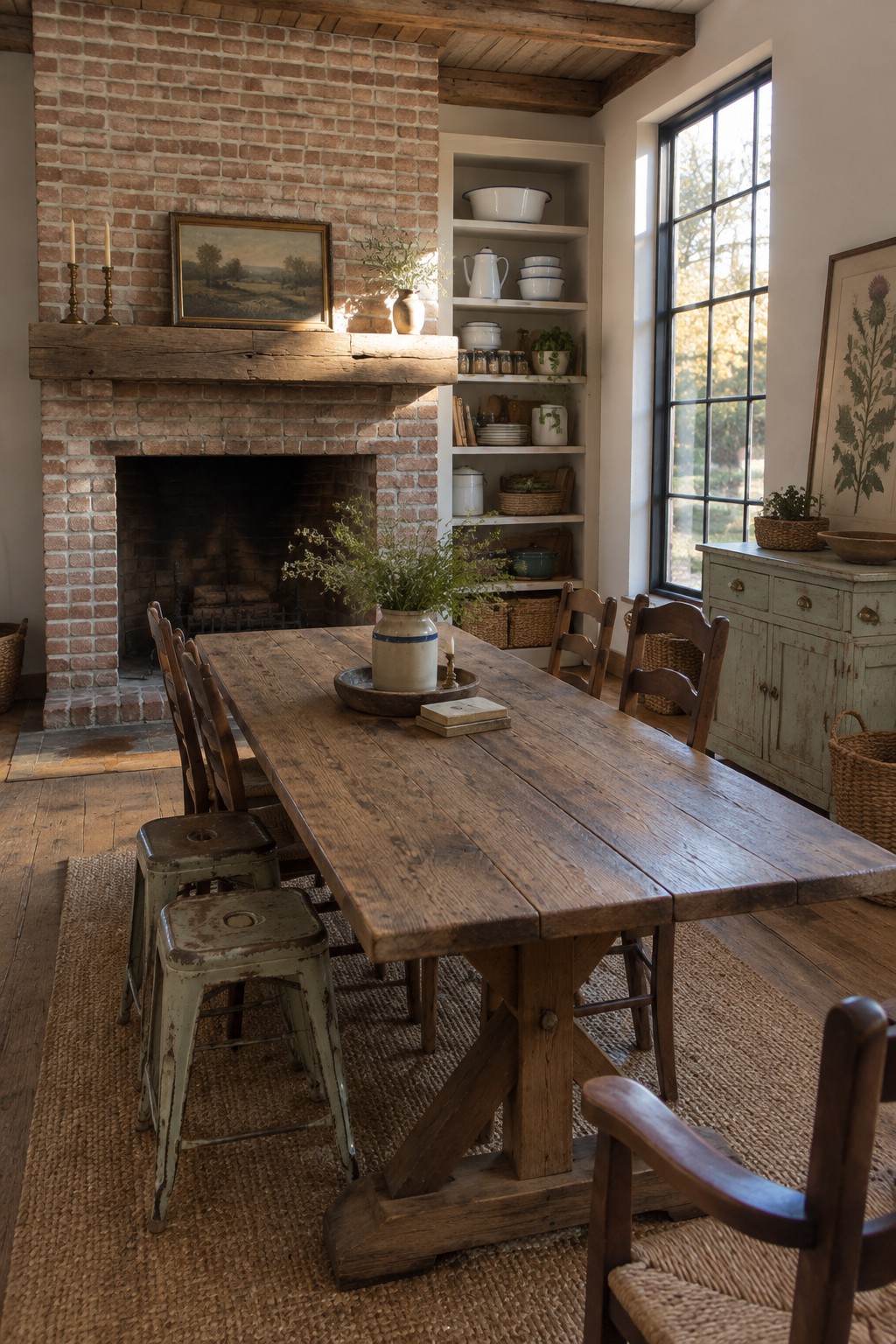
A sturdy reclaimed wood table gives a farmhouse dining room a practical, lived-in feel. Its worn surface brings character to the room without needing much extra decoration.
Choose a table sized for everyday meals, with enough room to walk around it and pull out the chairs. A trestle-style base suits a spacious dining area, while a simpler design may work better in a smaller room.
Highlight a Reclaimed Wood Table With Simple Decor

A sturdy reclaimed wood table gives a farmhouse dining room a practical center and a little character that new furniture can lack. Its worn surface can stand up to everyday meals, while a simple woven runner keeps the table useful without hiding the wood.
This approach suits older homes and rooms with straightforward finishes. Let the table be the main rustic feature, and keep nearby furniture fairly simple so the space does not feel crowded.
Use Reclaimed Wood Across the Dining Room

Reclaimed wood can do more than make a dining table feel rustic. Using it on the wall as well gives the room a connected, lived-in look, while the table brings the same worn texture into everyday meals.
This approach works especially well in a farmhouse dining room with simple furniture and neutral fabrics. Keep the wood tones fairly close, or use a lighter wall treatment so the room does not feel too dark.
Choose a Round Reclaimed Wood Dining Table

A round reclaimed wood table makes it easier for everyone to join the conversation, and its worn surface gives the dining room a lived-in feel. It works especially well in a farmhouse room where the table is used for everyday meals, not just special occasions.
Keep the chairs simple so the table remains the main feature. A round shape suits a smaller dining area, but leave enough space around it to pull chairs back comfortably.
Choose Chairs That Give a Reclaimed Table a Collected Look
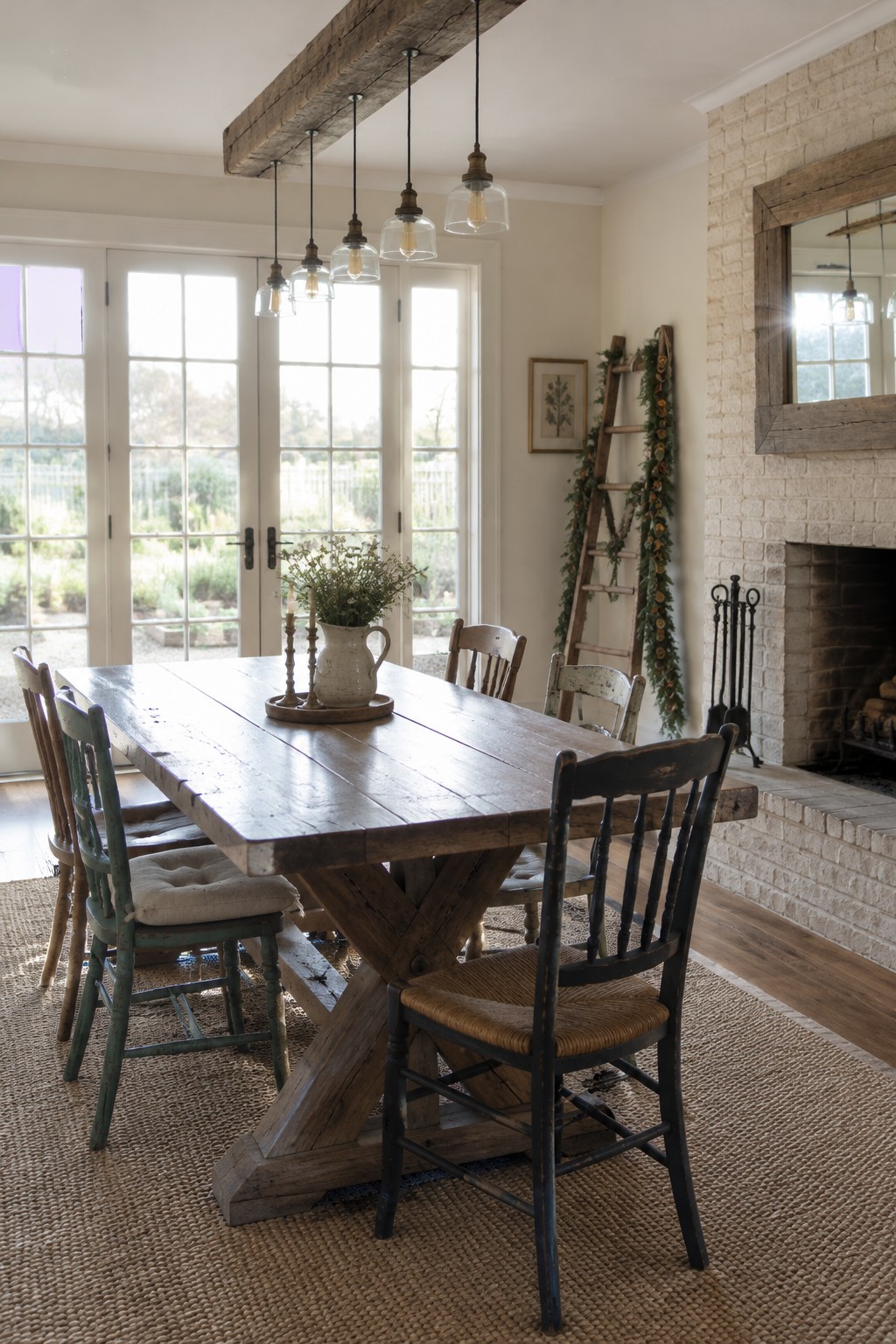
A sturdy reclaimed wood table can feel more relaxed when its chairs do not all match. Here, worn painted chairs sit around the table, giving the dining area a lived-in look without taking attention away from the wood.
Try mixing chair styles or finishes, but keep the seat heights comfortable and suitable for the table. This approach works especially well in a farmhouse dining room where a perfectly matched set might feel too formal.
Add a Reclaimed Wood Worktable for Casual Dining
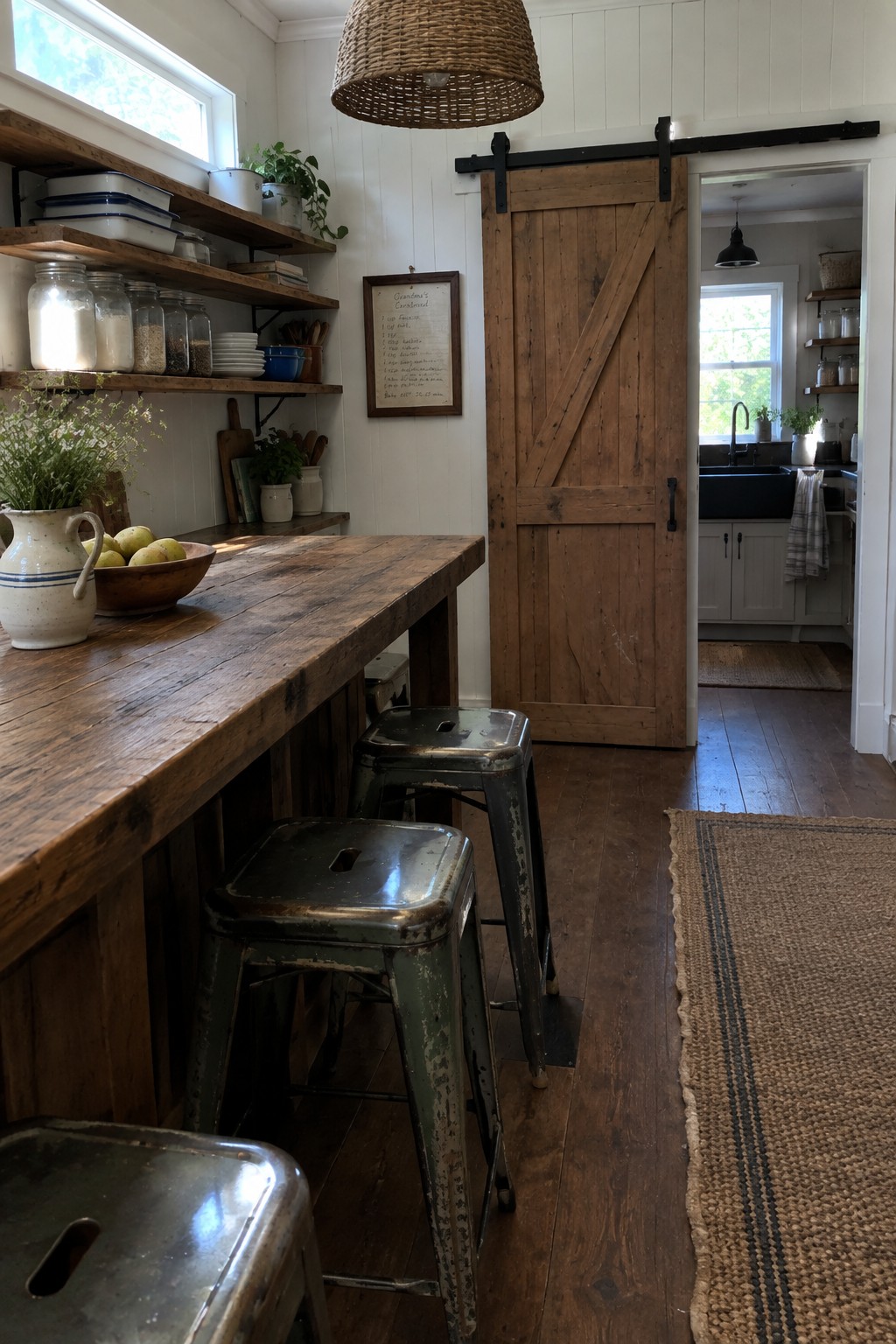
A long reclaimed wood worktable can make a dining space feel relaxed and useful, especially in a farmhouse kitchen. Its sturdy, worn surface has room for everyday meals as well as food preparation, so the table need not be saved for special occasions.
Choose a table that leaves enough room to walk around it, and pair it with simple stools or chairs that tuck in neatly. This setup works well in a narrow kitchen, but keep the tabletop fairly clear so it stays practical.
Add a Built-In Bench for a Rustic Dining Room

A built-in bench makes good use of a narrow dining area and gives the table a settled place in the room. Here, reclaimed boards form the bench and its back, while simple cushions make the seat comfortable for everyday meals.
This arrangement works well in a farmhouse kitchen or a small dining room where loose chairs would take up too much space. Keep the bench seat deep enough for comfortable sitting, and use cushions that can be removed for cleaning.
Style a Long Reclaimed Wood Table for Family Gatherings
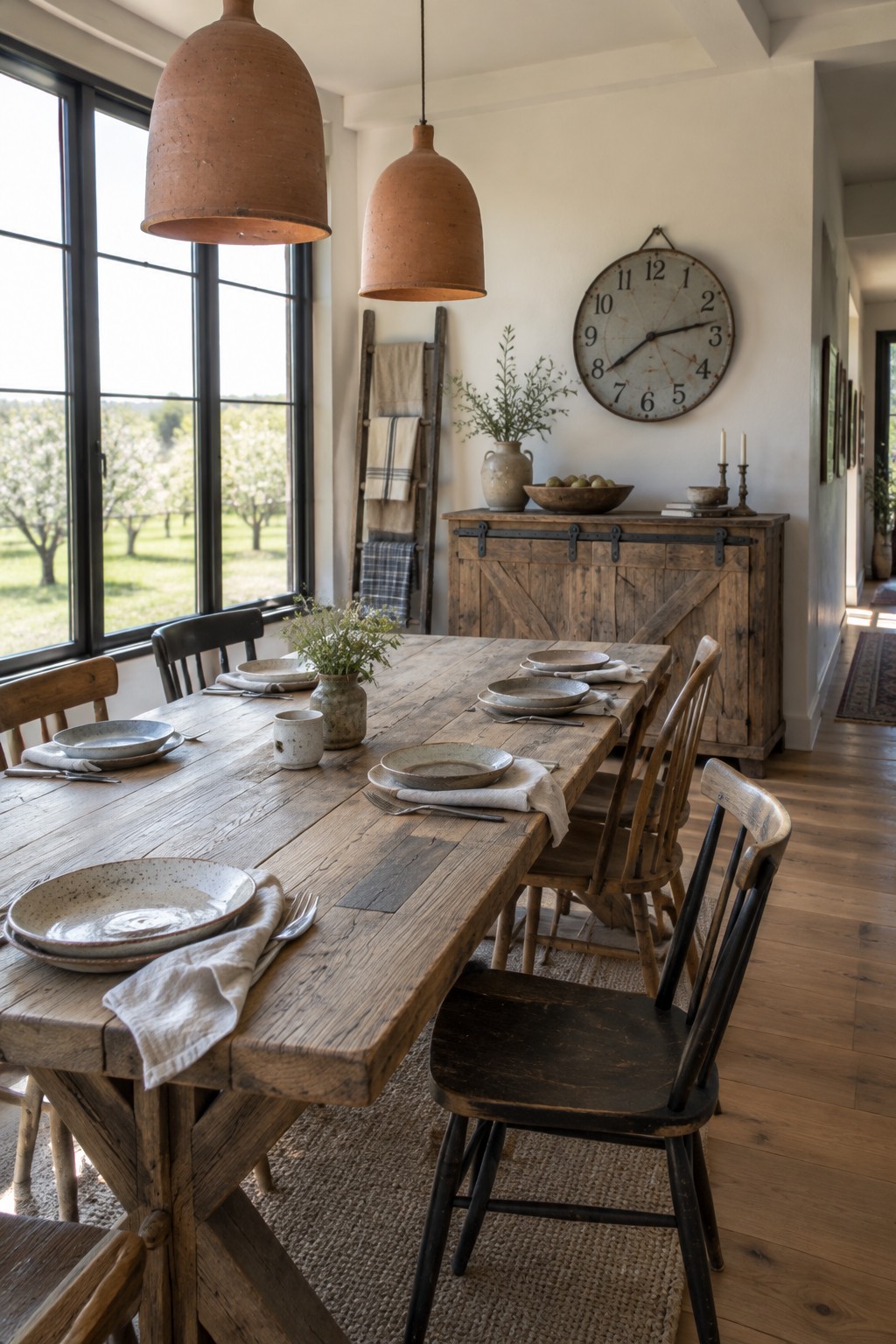
A long reclaimed wood table makes family-style dining feel natural, especially in a room with enough space to walk around it. The worn boards bring a little variation to the surface, so everyday dishes and simple linens feel right at home.
Leave room for chairs to pull out on both sides, and keep the table setting fairly simple so the wood remains easy to see. This approach suits open dining areas and older homes particularly well.
Pair a Reclaimed Wood Table With Leather Benches
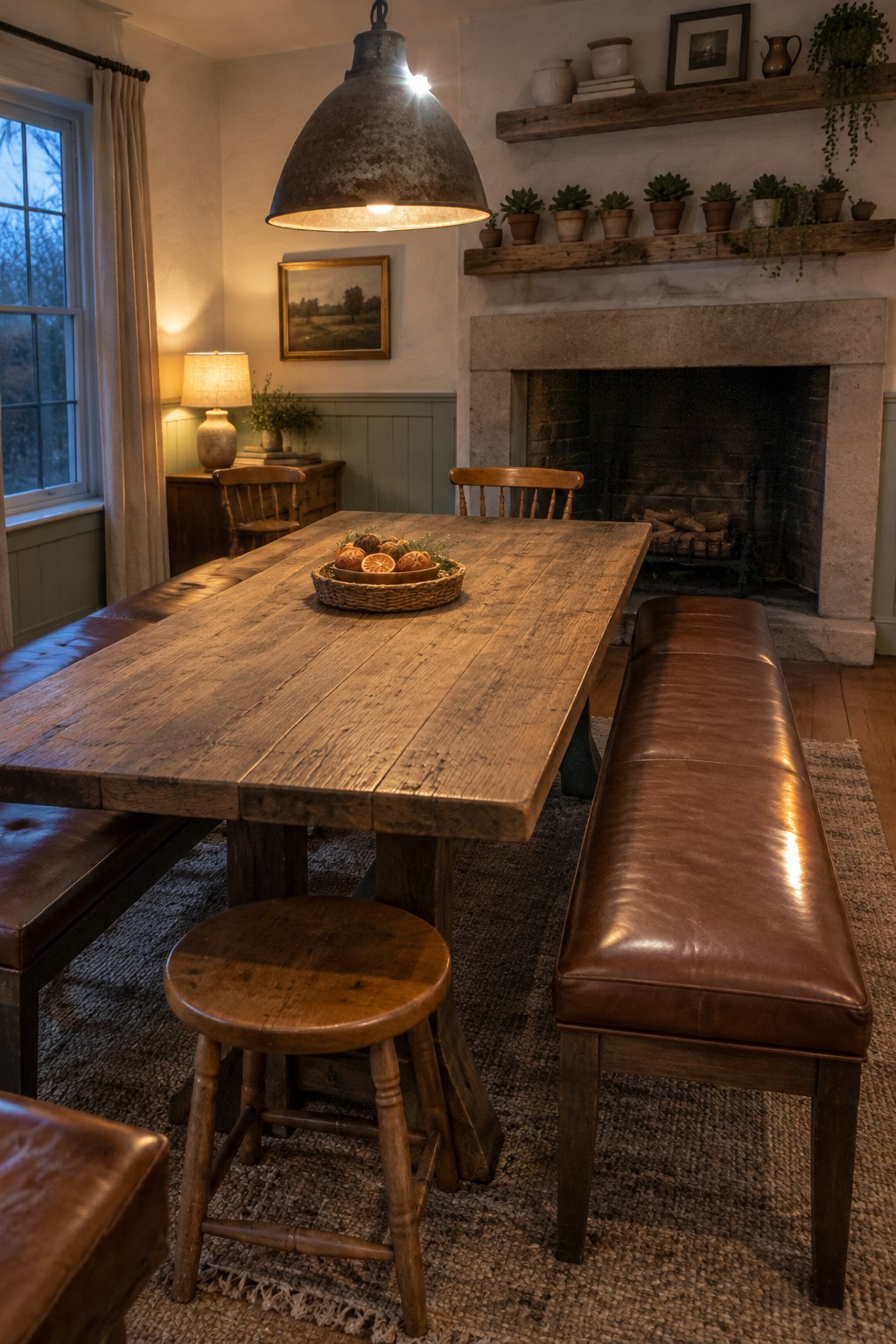
A long reclaimed wood table gives a farmhouse dining room room for family meals and casual gatherings. Its worn boards bring plenty of character, so the rest of the furniture can stay simple. Here, leather benches keep the seating practical and relaxed.
This setup works especially well in a dining room that gets used throughout the day. Leave enough space around the table for people to pull out benches and chairs, and choose a sturdy finish that can handle regular use.
Create an Eclectic Dining Space With Mismatched Chairs

A round reclaimed wood table makes a practical gathering spot, and a mix of chair styles keeps the dining room from looking too matched. The worn boards have enough character to stand on their own, so the rest of the furniture can stay simple.
Try chairs you already own, even if their shapes or finishes differ. Keep the table size comfortable for the room, and leave enough space around it to pull out each chair easily.
Highlight Natural Wood Grain in a Farmhouse Dining Room

A substantial reclaimed wood table can give a dining room its character without much extra decorating. Its worn boards and sturdy shape suit a farmhouse interior, and simple chairs keep the table useful for everyday meals.
Let the wood grain show rather than covering the tabletop with lots of accessories. This approach works especially well in a dining room with other natural finishes, such as a chunky timber fireplace mantel.
Balance a Rustic Table With Painted Dining Chairs
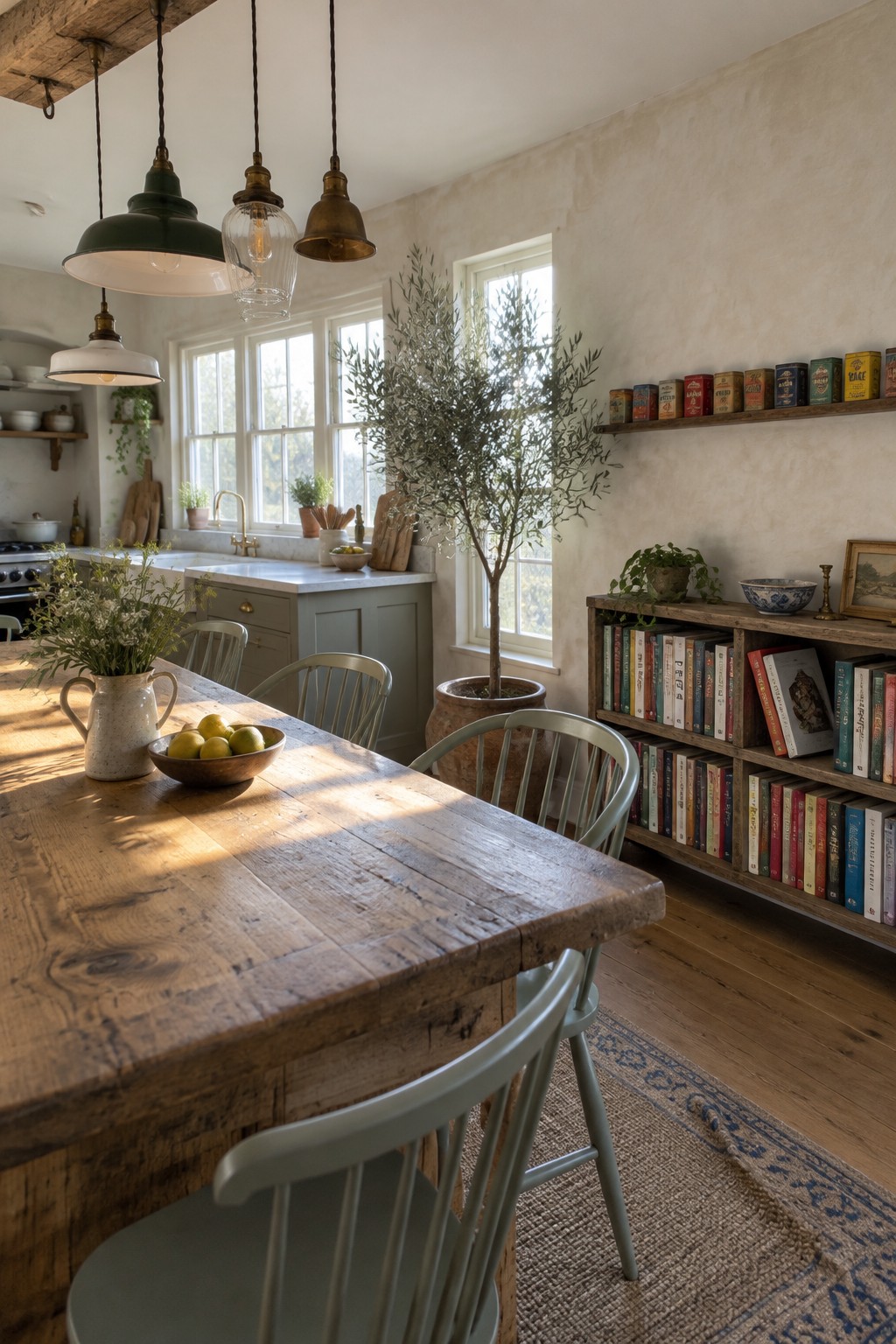
A substantial reclaimed wood table can give a dining room its character without much extra decorating. Its worn surface brings a practical, lived-in feel, while simple painted chairs keep the room from looking too heavy.
This approach suits farmhouse kitchens and dining areas where the table gets daily use. Choose a size that leaves room to pull out the chairs, and let the wood’s natural marks show rather than trying to make it look new.
Save Space With a Long Table and a Side Benchle

A long reclaimed wood table makes a dining room feel ready for everyday meals and larger gatherings alike. Its worn boards bring plenty of character, so the rest of the furniture can stay simple.
This shape works especially well in a narrow dining room, where a bench along one side can save space and fit extra diners. Choose a table that still leaves a comfortable walkway, and keep the wood finish fairly natural to show its grain.
Create a Welcoming Dining Space With Weathered Wood
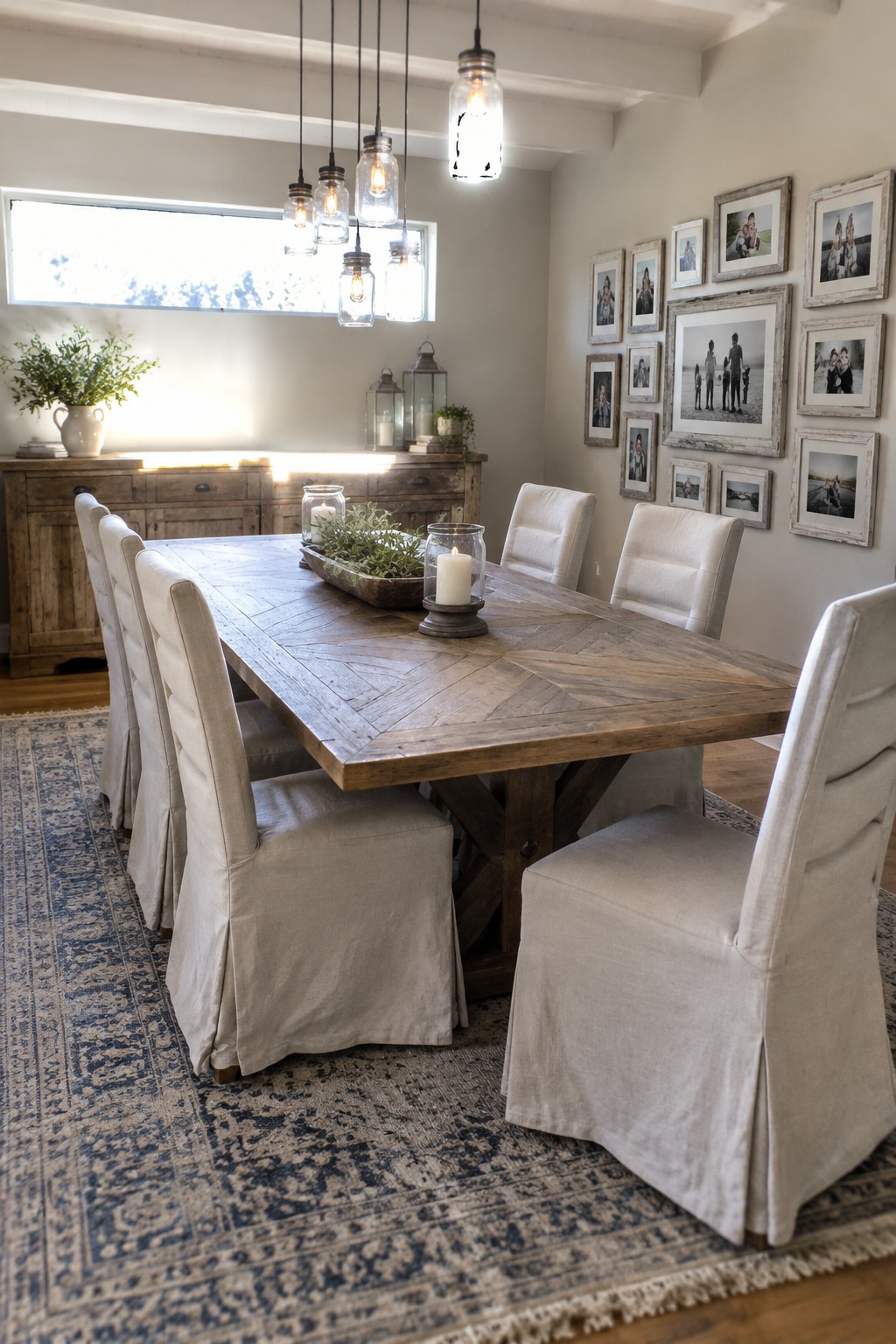
A large reclaimed wood table gives a dining room a sturdy, welcoming feel and makes everyday meals feel a little more special. The weathered boards bring character without needing much extra decoration.
This look suits a farmhouse dining room with enough space to move around the table. Keep the chairs simple and comfortable, and leave room for the wood grain to stand out.
Keep a Farmhouse Dining Table Practical and Uncluttered

A long reclaimed wood table makes a practical center for a farmhouse dining room. Its worn boards give the room character, while the generous surface leaves plenty of space for meals and conversation.
Keep the rest of the setup simple so the table stays easy to use. A plain woven runner and sturdy chairs suit this look, and a bench can be useful when you need a little extra seating.
Hang Reclaimed Wood as Open Storage

A reclaimed wood rail can turn everyday cookware into simple, useful wall storage. In a dining nook or eat-in kitchen, it also gives a plain wall a bit of the home’s history without taking up floor space.
Use a sturdy board and secure hooks, then keep the display to pieces you reach for often. Copper pans suit this look, but too many items can make a small dining area feel crowded.
Furnish a Small Dining Nook With a Rustic Table

A reclaimed wood table can make a small dining nook feel settled and useful. The worn surface brings character, while woven chairs keep the seating from feeling too formal.
For a similar setup, try a narrow rectangular table in a breakfast nook or a tight dining area. A simple built-in bench can save space, but leave enough room to pull out the chairs comfortably.
Add Rustic Shelving for Dining Room Storage
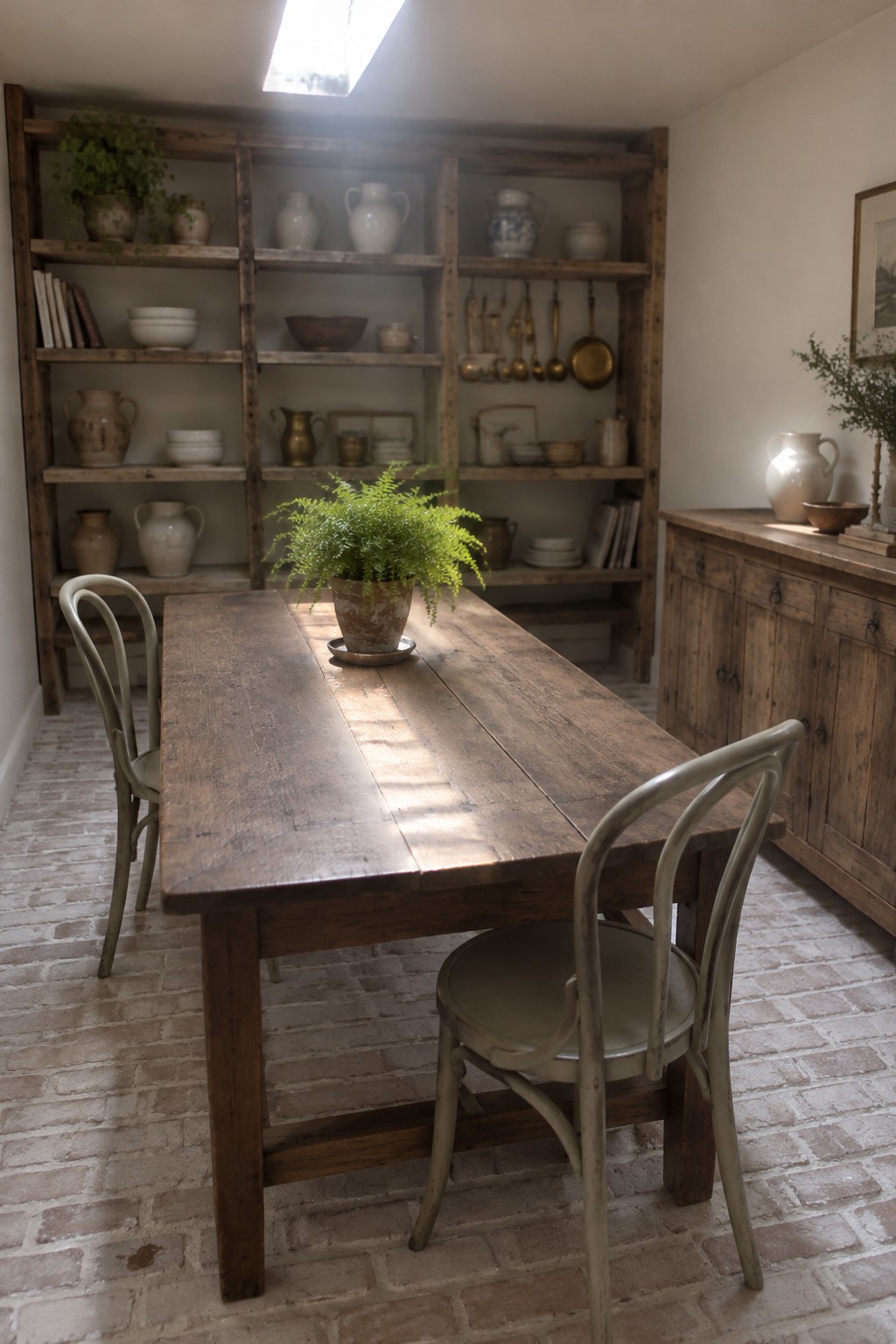
Open reclaimed-wood shelving can give a dining room useful storage while keeping the old-house character visible. Here, the sturdy shelves hold dishes and pottery, so everyday pieces can stay close at hand instead of being tucked away.
This works especially well in a narrow dining room where a deep cabinet might feel bulky. Keep the shelves practical, and leave some open space between items so the display does not become cluttered.
Prepare a Reclaimed Wood Dining Table for Group Meals
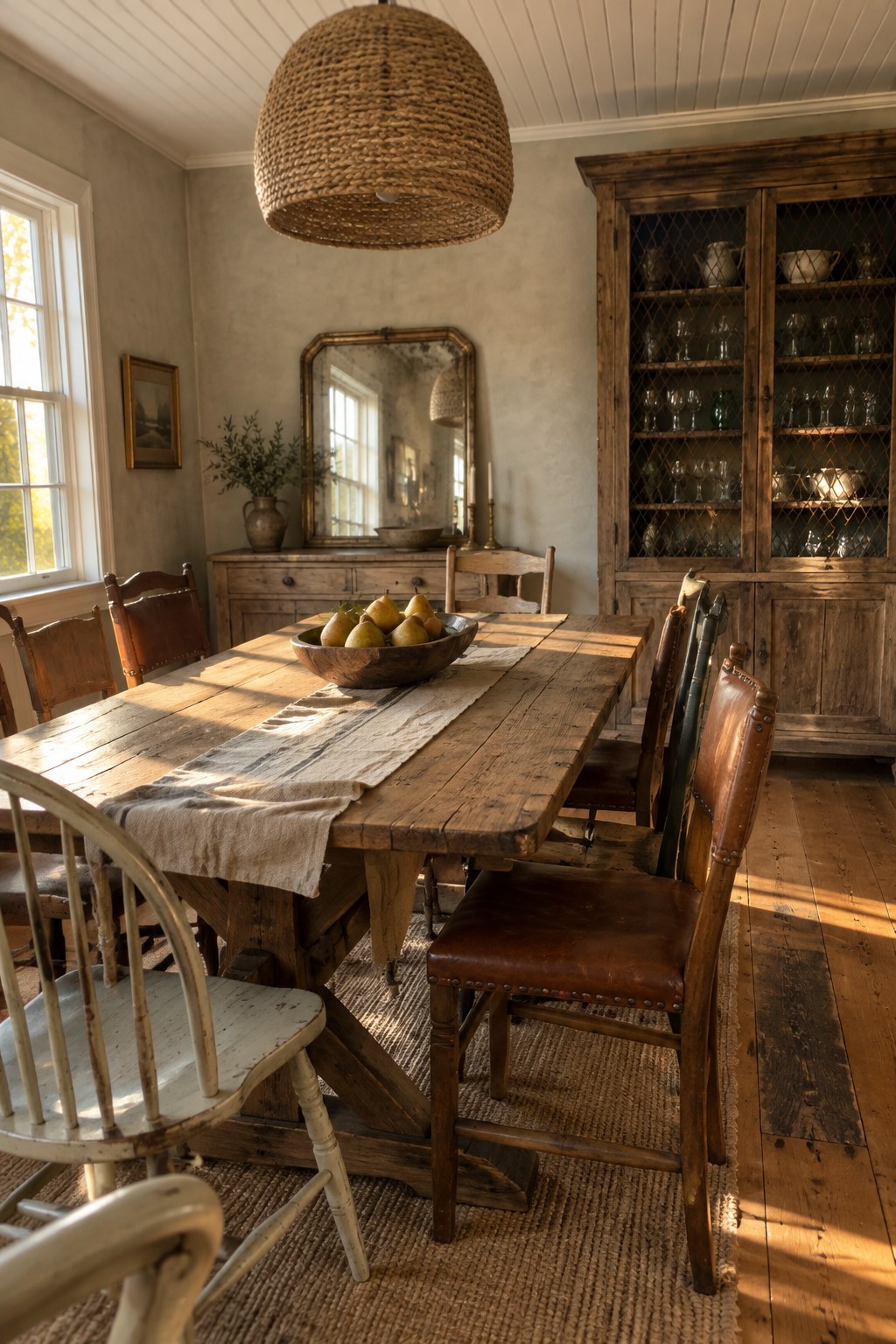
A long reclaimed wood table makes a dining room useful for more than special occasions. Its sturdy, worn surface suits everyday meals, and there’s room to gather extra chairs when family or friends come by.
This style works especially well in an older home or a room with other natural materials. Keep the tabletop fairly simple, perhaps with a fabric runner, so the wood remains easy to see and clean.
Pair a Rustic Table With Cane-Back Dining Chairs

A sturdy reclaimed wood table can give a dining room its rustic character without much extra decorating. The worn surface feels at home beside simple cane-back chairs, and its everyday usefulness is part of the appeal.
This look suits a small dining area or an older home where a little wear feels natural. Keep the table as the main wood feature, then choose chairs that are comfortable and easy to move around.
Frequently Asked Questions
Q: How can I use reclaimed wood without making the dining room feel too dark?
A: Pair a weathered wood table or accent wall with light-colored walls, simple linens, and plenty of natural light. You can also mix in lighter wood tones to keep the room feeling open.
Q: Do reclaimed wood dining tables need special care?
A: A soft cloth and gentle cleaner usually handle everyday messes. Check whether the table has a protective finish, and use coasters or placemats to guard against spills and heat.
Q: How do I know if reclaimed wood is safe to use indoors?
A: Ask where the wood came from and whether it has been cleaned and treated. Avoid pieces with a musty smell, flaking paint, or signs of pests, especially if you plan to use them for a dining table.
Q: Can reclaimed wood work in a small dining room?
A: Yes. Choose one reclaimed wood feature, such as a compact table, and keep the surrounding furniture visually light. Too many bulky pieces can crowd the room.
