

A small entryway can feel cluttered or unfinished when shoes, coats, and bags have nowhere to go, even if the rest of the home is tidy.
I find that the layout matters as much as the storage, since a clear path and a few well-chosen pieces can make a tight entrance easier to use.
Simple changes like adding wall hooks, a slim bench, or a narrow shelf can bring order without taking up the floor space you need to get in and out.
The difference is satisfying when the entry feels calmer and more connected to the rest of the home.
I’d save the ideas that match your daily routine and adapt them to the corners and walls you already have.
Make A Small Entryway More Useful

A crowded entry can work better when everyday storage moves off the floor. Here, a narrow floating cabinet and shoe shelf replace a table and a row of shoes, leaving more room to walk through.
In a small entryway, choose a shallow cabinet that fits the wall and keep only the shoes you use often on the shelf. Wall hooks can hold bags and coats without taking up floor space.
Add Built-In Shoe Storage To A Small Entryway

A crowded shoe rack can take up more floor space than it saves. Replacing it with a bench that has shoe cubbies underneath keeps footwear in the entry while leaving more room to walk.
This idea works well in a narrow hallway where a full-size cabinet would feel bulky. Keep the cubbies sized for the shoes your household wears most, and leave enough open floor for the door and an easy path through.
Add A Wall-Mounted Entryway Organizer

The entryway works better when coats and umbrellas have a set place instead of gathering around a freestanding coat rack. A wall-mounted pegboard organizer uses vertical space, and the small bench gives you a spot to sit without taking over the floor.
This idea suits a narrow foyer or a busy drop zone near the front door. Keep the organizer sized to the wall, and leave enough space below it for people to pass comfortably.
Use A Runner To Define A Narrow Entryway
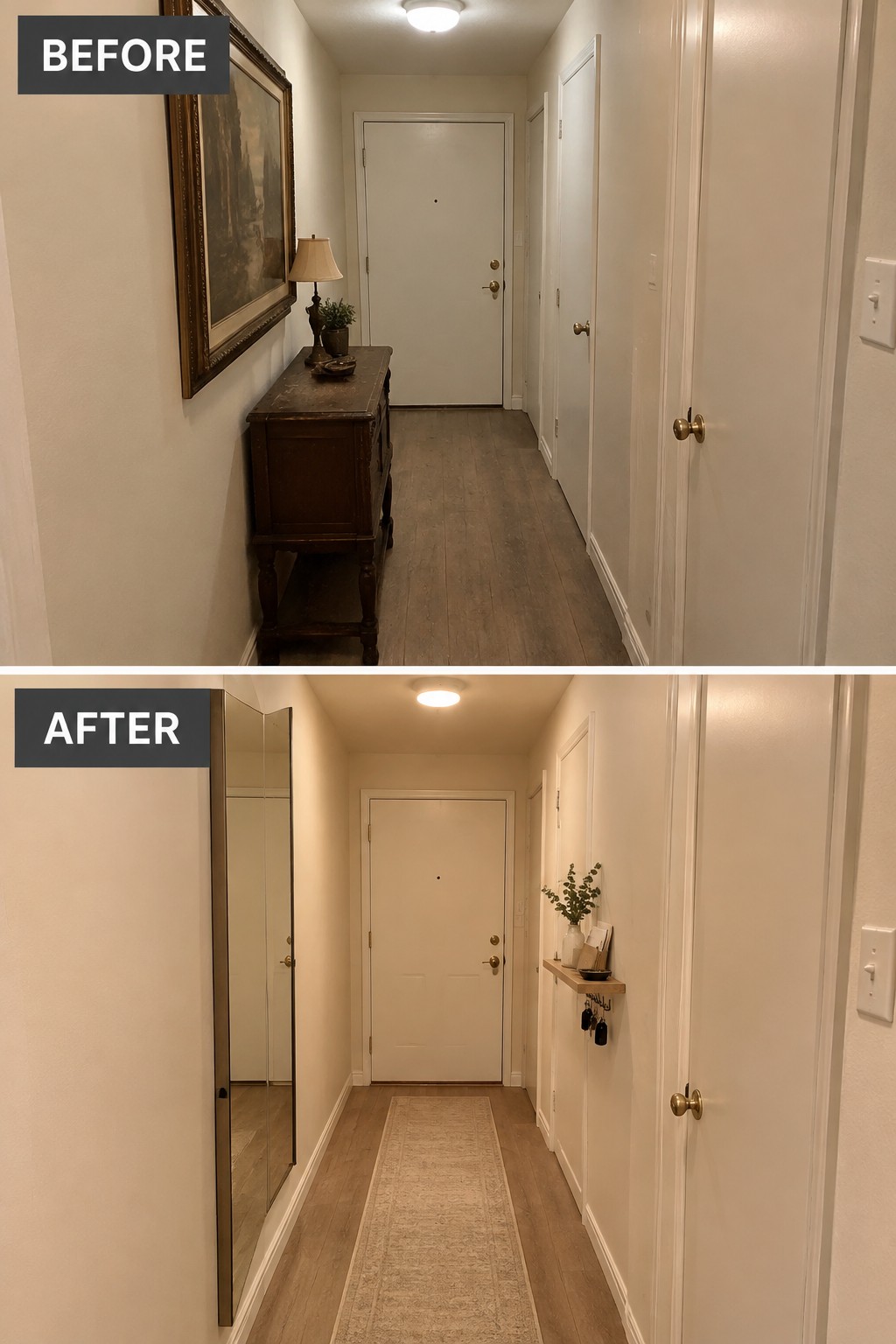
The long runner gives this hallway a clear path and makes the narrow space feel more finished. In place of the bulky console, the makeover keeps the floor open, which is useful when doors and walkways already take up much of a small entry.
Choose a slim runner that leaves a strip of floor visible along the sides, and make sure doors can still open freely. This works especially well in a long hallway where a larger rug or furniture would get in the way.
Add A Bench To Organize Entryway Shoes

Replacing the pile of shoes with a small bench and open shoe shelves gives the entryway a clear place to sit and store footwear. It works well in a tight corner because the storage stays below the seat instead of taking up more floor space.
Choose a bench that fits the corner and leaves enough room to walk through. Open shelves make everyday shoes easy to reach, but keep the number of pairs there limited so the entry stays tidy.
Replace A Bulky Dresser With Built-In Entryway Storage

The bulky dresser takes up floor space in this narrow entry, while the after version uses tall built-in cabinets to store shoes and everyday items. Keeping storage against the wall leaves a clearer path to the door and makes the small entry more useful.
This idea works well in apartments and narrow hallways where a freestanding cabinet can feel in the way. Measure carefully before adding cabinets, and keep the walkway wide enough for people to pass comfortably.
Add A Bench With Shoe Storage

Replacing loose shoes and baskets with a built-in bench and pull-out shoe drawers makes this narrow entryway easier to use. The bench gives people a place to sit while putting on shoes, and the drawers keep footwear off the floor.
In a small hallway, choose a shallow bench that leaves a clear path to the door. A few hooks above it can hold everyday bags and coats, but keep the storage limited to what the household uses most.
Keep Small Entryway Floors Clear

The entryway feels more usable once the loose shoes are gathered into one basket and the floor is left open. In a narrow space, keeping everyday items contained makes it easier to walk through and helps the area feel less cluttered.
Use a basket that fits the shoes your household reaches for most, and keep it close to the door. Avoid filling the floor with extra storage; a simple container can be enough when there isn’t room for a larger shoe cabinet.
Add Vertical Storage To A Small Entryway

This entryway works better once storage moves up the walls instead of spreading across the floor. The crowded coat hooks and shoes have been pared back, while a shelf above the door and a narrow shoe rack keep everyday items organized without blocking the walkway.
Use the same approach in a narrow hall: keep only current-season coats within reach, and move extra belongings into labeled bins on a high shelf. A slim rack can hold shoes near the door, but leave enough clear floor space to walk through comfortably.
Turn A Narrow Entryway Into Built-In Storage

Replacing a freestanding shelf and bench with built-in seating and shoe storage makes better use of a tight entryway. The bench fits along the wall, while a tall, narrow shelf keeps shoes organized without taking over the walkway.
This approach works well in a small foyer or mudroom where every inch matters. Keep the storage shallow enough for the door and walking path, and use the bench for just a couple of cushions so it stays practical.
Replace A Bulky Entryway Bench With Wall Storage

The large bench takes up much of the narrow entryway, while the updated space uses wall-mounted shelves to keep shoes off the floor. This is a practical way to free up walking room without giving up everyday shoe storage.
In a small hallway, use a shallow shelf for the pairs you wear most and keep the floor clear beneath it. Check that the shelf is sturdy and high enough to leave room for shoes, but not so deep that it gets in the way.
Make A Narrow Entryway Feel Finished With A Runner

A runner gives a long, narrow entryway a clear path and makes the space feel more put together. Here, adding one to the bare floor helps the small hall feel like a finished part of the home without taking up extra floor space.
Choose a low-pile runner that leaves a strip of floor visible along each side, so there’s still room to walk comfortably. A simple pattern can hide everyday dirt, which is useful near an exterior door.
Organize Shoes Under The Entryway Table

The entry table works better when the space beneath it has a clear purpose. In the updated entryway, two low trays keep shoes together instead of letting them spread across the floor, leaving the walkway tidier and easier to use.
Choose trays that fit beneath your table without sticking out into the path. This idea suits a narrow entry where a full shoe cabinet would feel bulky, and it makes everyday footwear easy to put away.
Replace A Floor-Standing Coat Rack With Wall Storage

The floor-standing coat rack and basket take up valuable room in this small entryway. A wall-mounted hook rail with a shelf moves coats and hats up, leaving more floor space for shoes and everyday movement.
Use a sturdy rail and a shelf that is not too deep, then keep only the things you reach for often within easy reach. A low shoe tray can keep footwear together without blocking the path.
Add Wall Storage To Keep A Small Entryway Clear

A crowded entryway can feel hard to move through, especially when everyday items pile up on a table or floor. Replacing the cluttered table with a slim floating shelf and wall-mounted baskets keeps useful storage within reach while leaving more floor space open.
Use the wall for coats, scarves, and small grab-and-go items, and keep the shelf shallow so it does not narrow the walkway. This idea works well in a narrow hall where a full-depth cabinet would get in the way.
Replace A Bulky Cabinet With Slim Entryway Storage
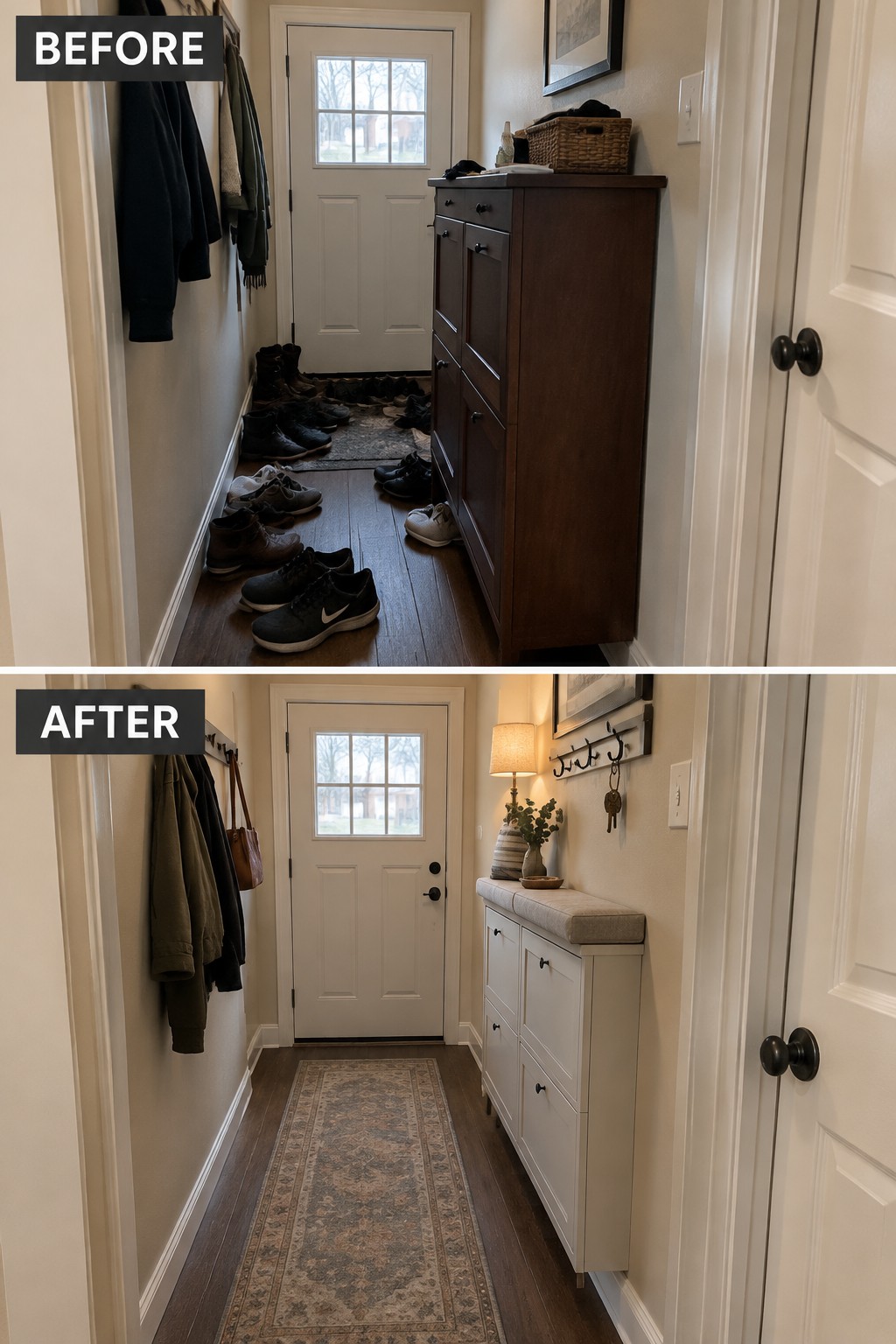
The dark, crowded entryway works better after the bulky cabinet is replaced with a narrower storage unit. It still provides a place to tuck away shoes, but leaves more open floor space for moving through the hall.
In a narrow entry, look for a shallow cabinet that fits the wall without pinching the walkway. A cushioned top can make it useful for sitting while putting on shoes, but keep the surface simple so it does not become another drop zone.
Frequently Asked Questions
Q: What should I put in a small entryway if there’s barely room for furniture?
A: Start with wall-mounted hooks and a slim shelf or ledge for keys and mail. They keep everyday items handy without taking up floor space.
Q: How can I make a tiny entryway feel less cluttered?
A: Give shoes, bags, and coats a clear home, and keep only the items you use regularly by the door. A small basket or closed cabinet can hide the visual mess.
Q: Is a rug a good idea in a narrow entryway?
A: Yes, as long as it fits without catching the door or blocking the walkway. Choose a low-pile rug that’s easy to clean.
Q: Where can I add a mirror if there’s no room for a console table?
A: Hang one on an open wall or the back of a closet door. It gives you a quick last look before heading out without using any floor space.
