
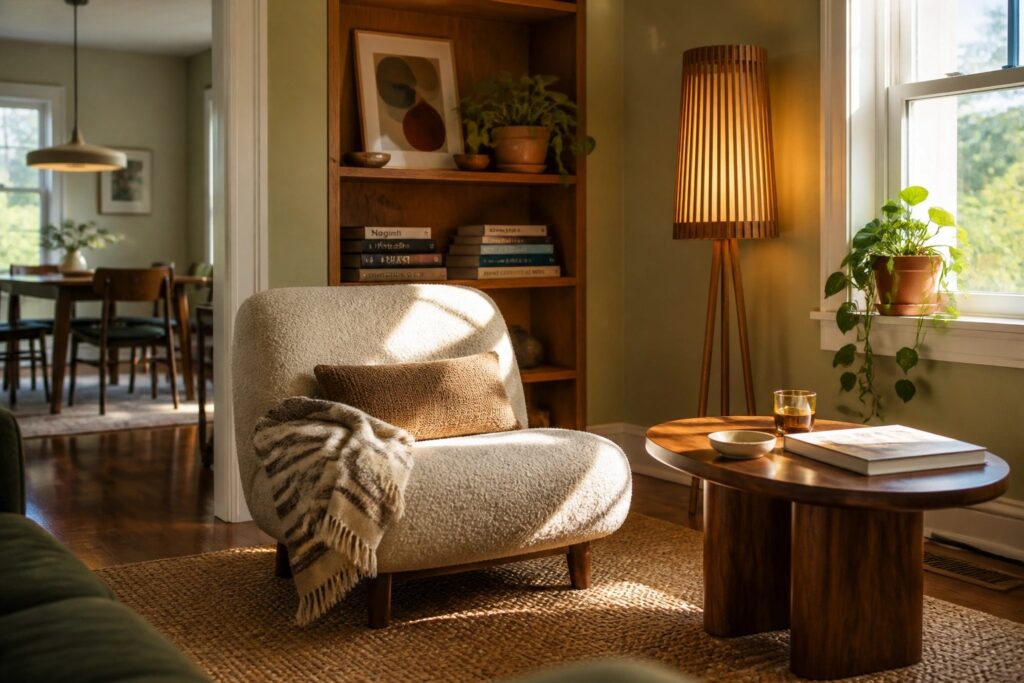
In open floor plans the challenge is creating defined spots without walls to guide the eye or the feet.
I have noticed that a single accent chair tucked into a corner can quietly organize the surrounding space and make it feel more lived in.
People tend to gravitate toward areas that look settled and the right placement helps that happen naturally over time.
Layout matters more than the chair itself.
A few of these ideas seem practical enough to adapt based on how my rooms actually get used each day.
Anchor An Open Room With One Solid Chair
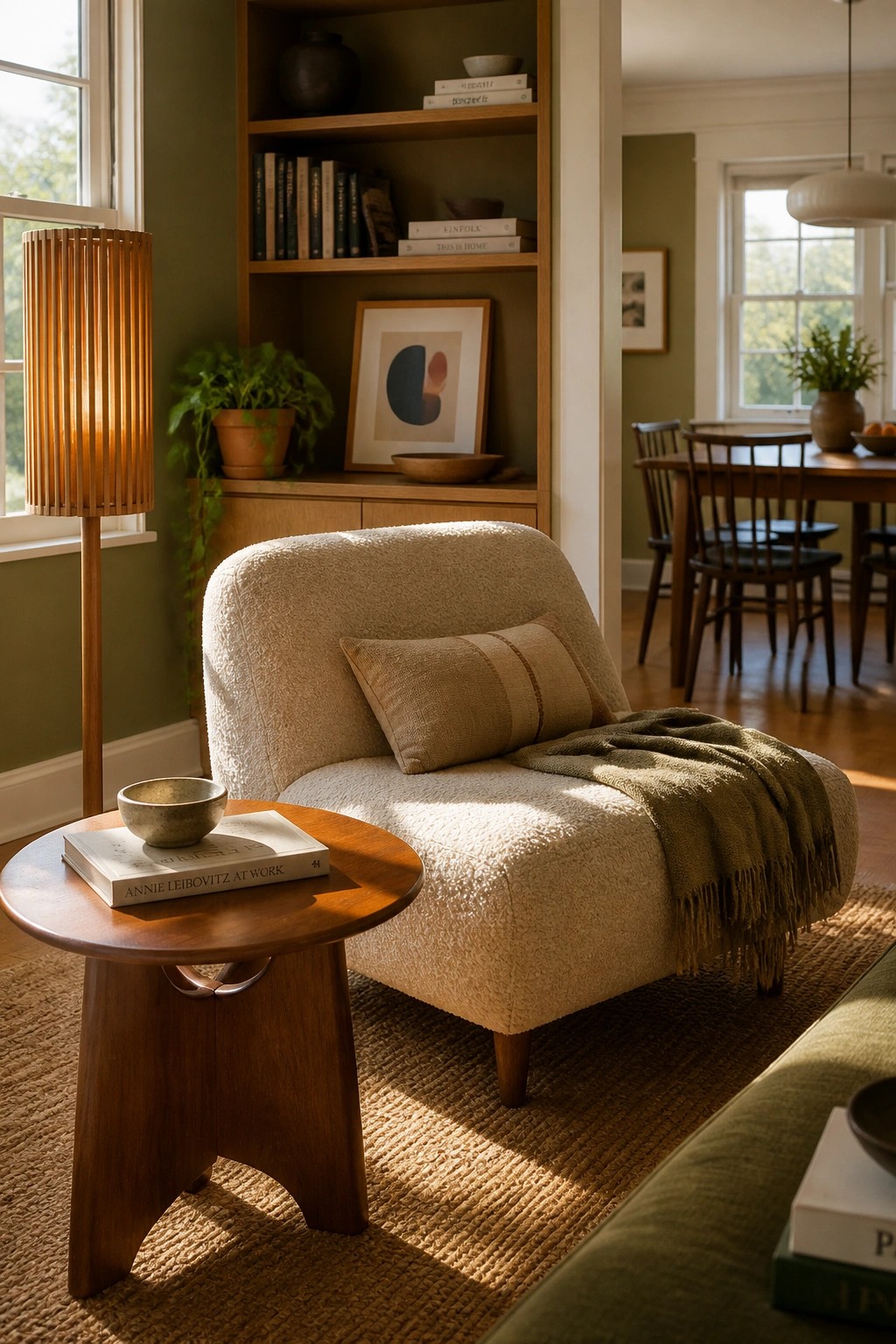
A big comfortable chair can do more than just give you a place to sit. In an open layout it creates a clear spot that feels separate without needing walls or dividers. The soft texture and simple shape help it stand out just enough while still blending with the rest of the room.
Try this in a living area that flows into dining or kitchen space. Pair the chair with a low table and a lamp so the corner feels finished on its own. It works especially well in homes that need one quiet seat without crowding the flow.
Anchor The Room With A Corner Accent Chair
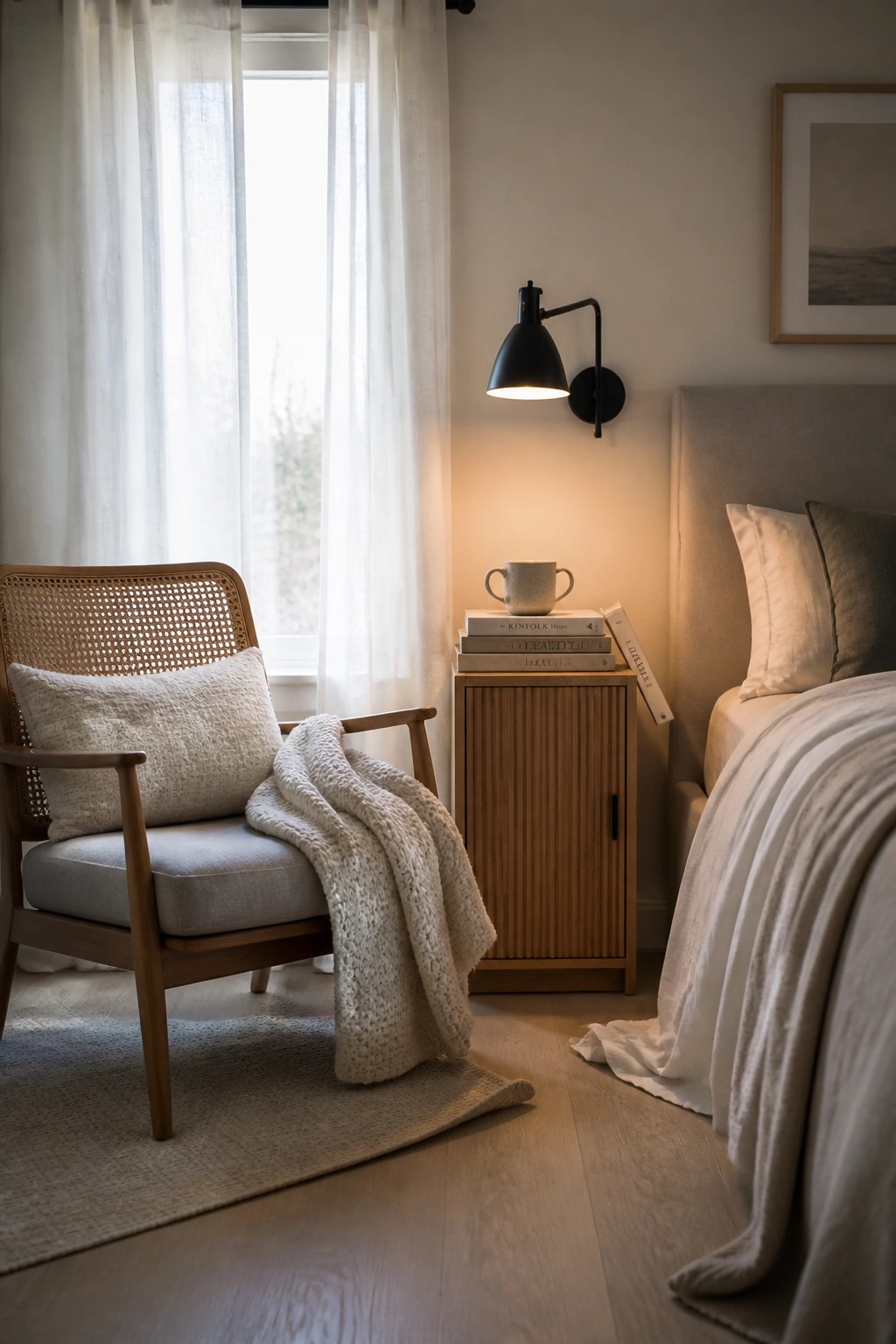
A simple accent chair tucked into a corner gives the room a clear spot to pause. It works especially well in bedrooms or open living areas where you want one defined seat without crowding the space. The chair becomes the anchor that keeps the rest of the room from feeling loose.
This setup suits homes that need a quiet reading spot or extra seating near a window. Keep the chair light in scale so it does not block light or traffic, and add just one soft layer like a throw for comfort. It works best in rooms with at least a few feet of open floor beside the bed or sofa.
Swivel Chairs Work Well In Entry Corners
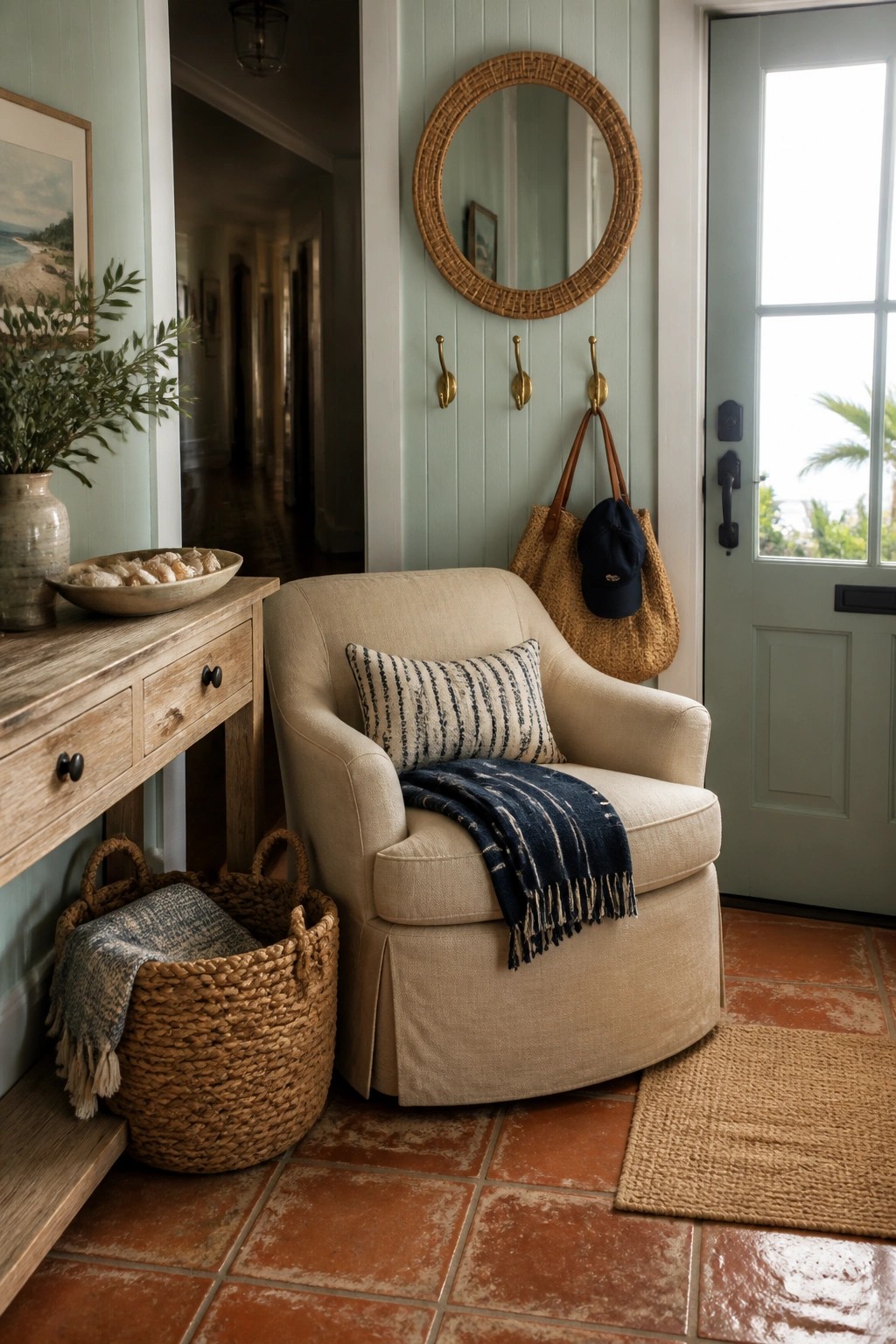
Many entry areas feel like they need something to slow people down without blocking the flow. A swivel chair gives you a spot to sit for shoes or bags while keeping the space open and easy to move through.
This works best in homes with simple wall hooks and a console nearby. Keep the fabric neutral so the chair fits in with whatever else you already have in the hall or front room.
Leather Chair On A Large Rug Defines The Corner
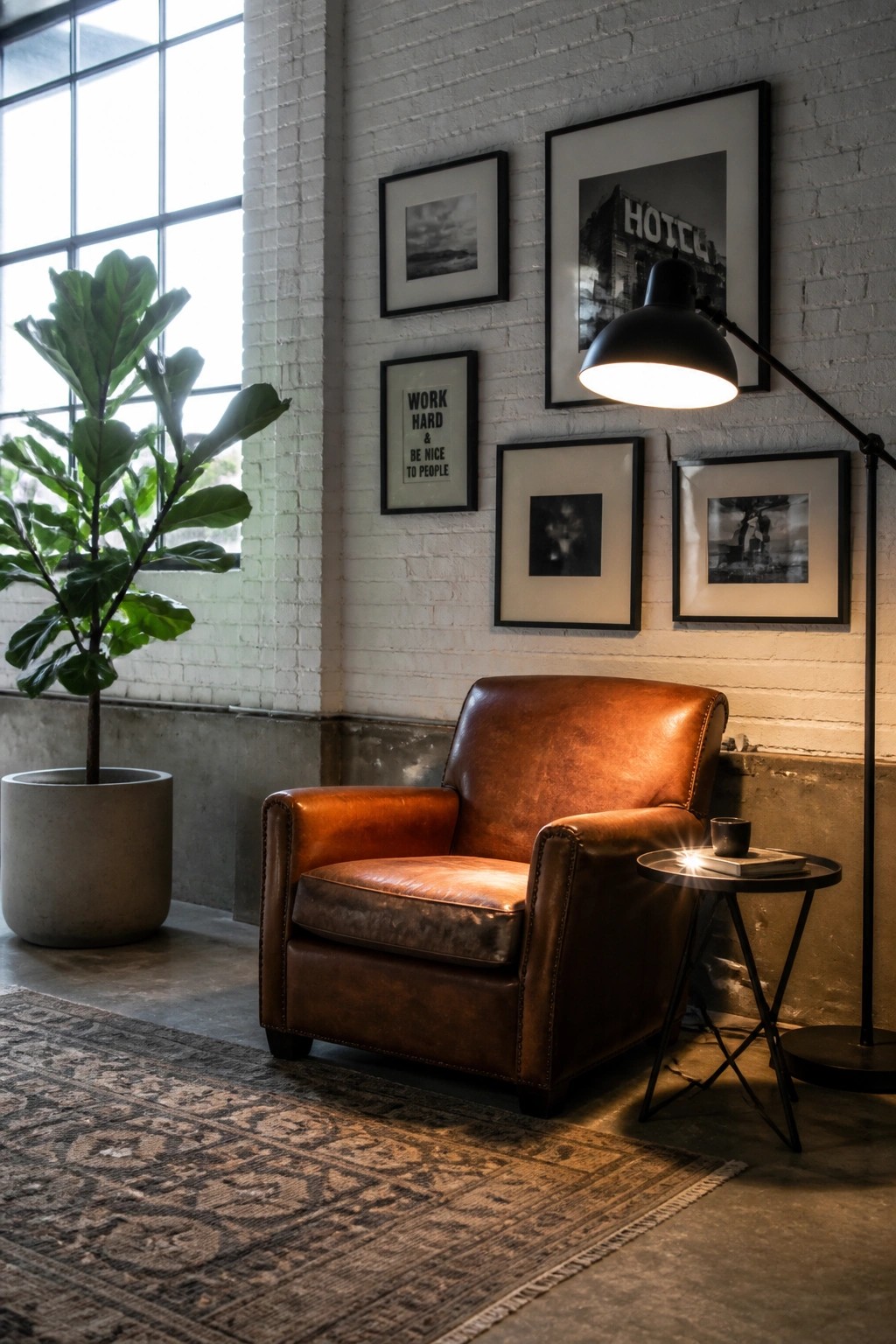
A big leather chair can mark out a quiet spot in an open room without needing much else. The weight of the piece and the rug underneath keep the area from feeling lost in the larger space.
Place the chair so the rug extends out in front and to the sides. This setup works best in lofts or living areas with high ceilings where you want one clear place to sit and read.
Accent Chair Corners That Anchor Open Rooms
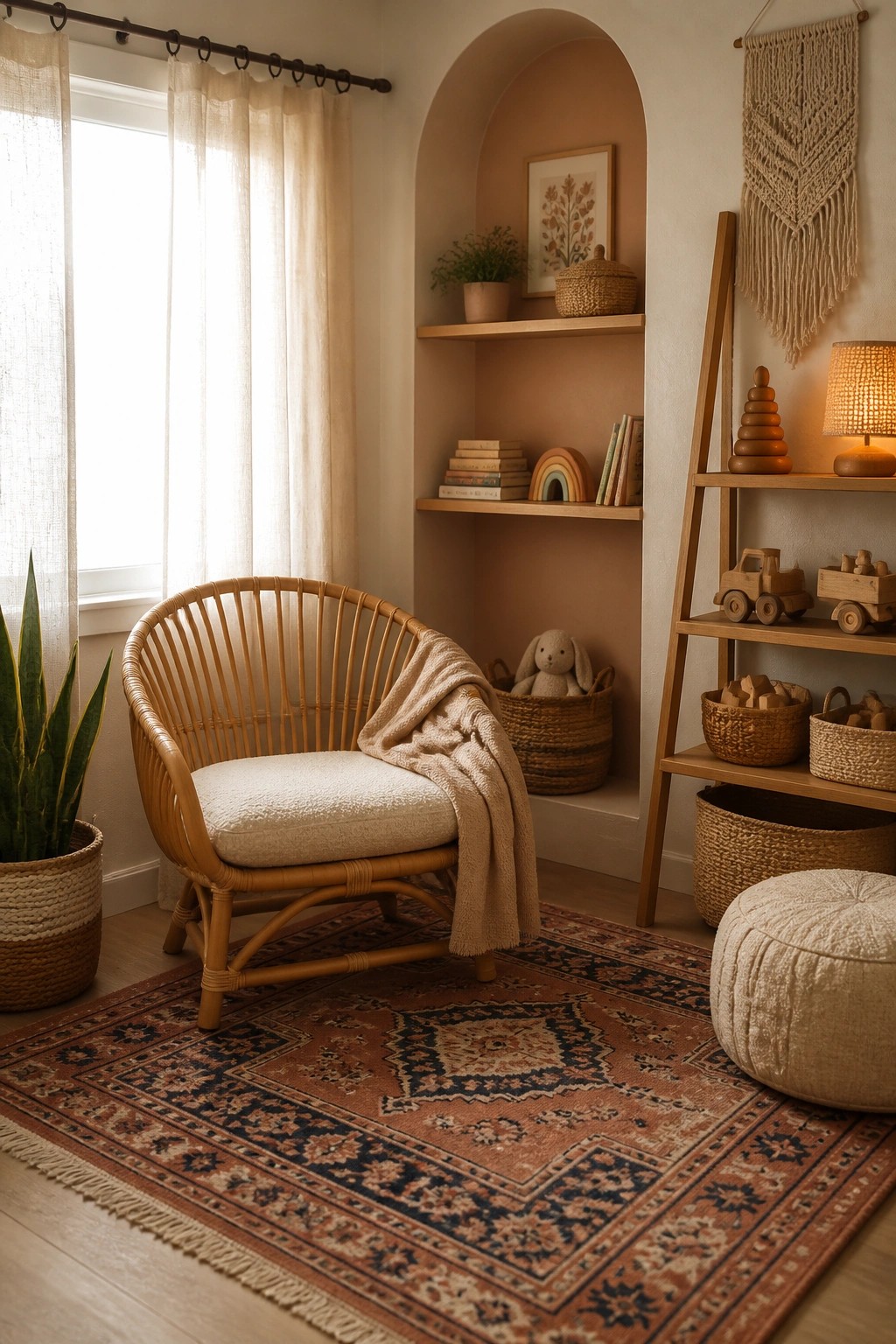
A single chair can turn an empty corner into a useful spot without much effort. In open rooms this works well because the chair and rug together mark off a small area while leaving the rest of the space open.
Place the chair on a large patterned rug so the two pieces read as one unit. This setup suits living rooms or family rooms where you want a quiet seat without adding walls or big furniture.
Anchor An Open Corner With A Chair And Lamp
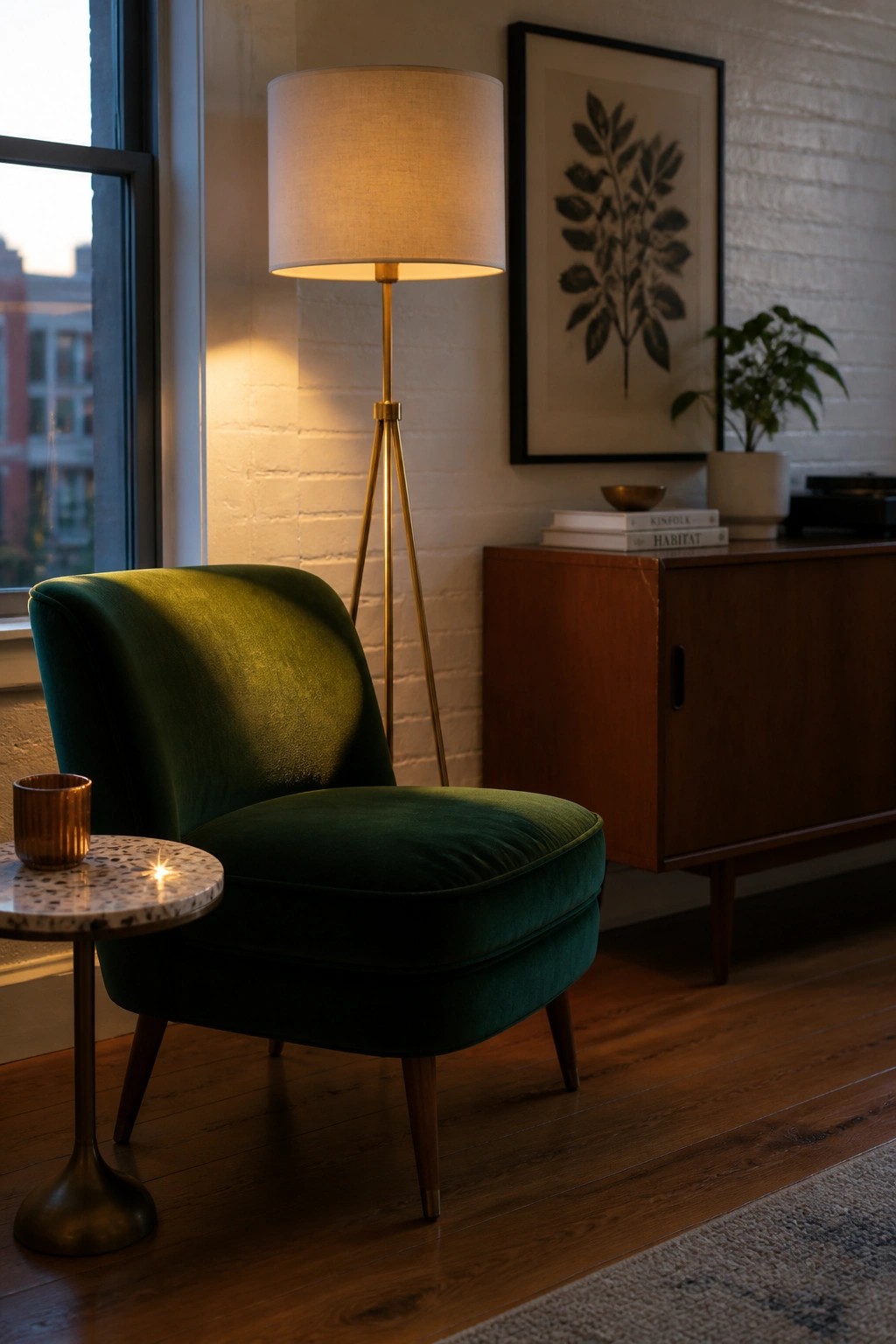
An accent chair paired with a tall floor lamp gives an open room a clear spot to settle into. The chair takes up just enough space to feel intentional while the lamp adds height and a soft pool of light that makes the corner feel separate from the rest of the room.
This setup works best in living areas that lack built-in nooks or architectural breaks. Choose a chair with some presence in both color and texture, then keep the surrounding pieces low and simple so the corner reads as a quiet pause rather than another seating area.
A Chair That Holds A Desk Corner Together
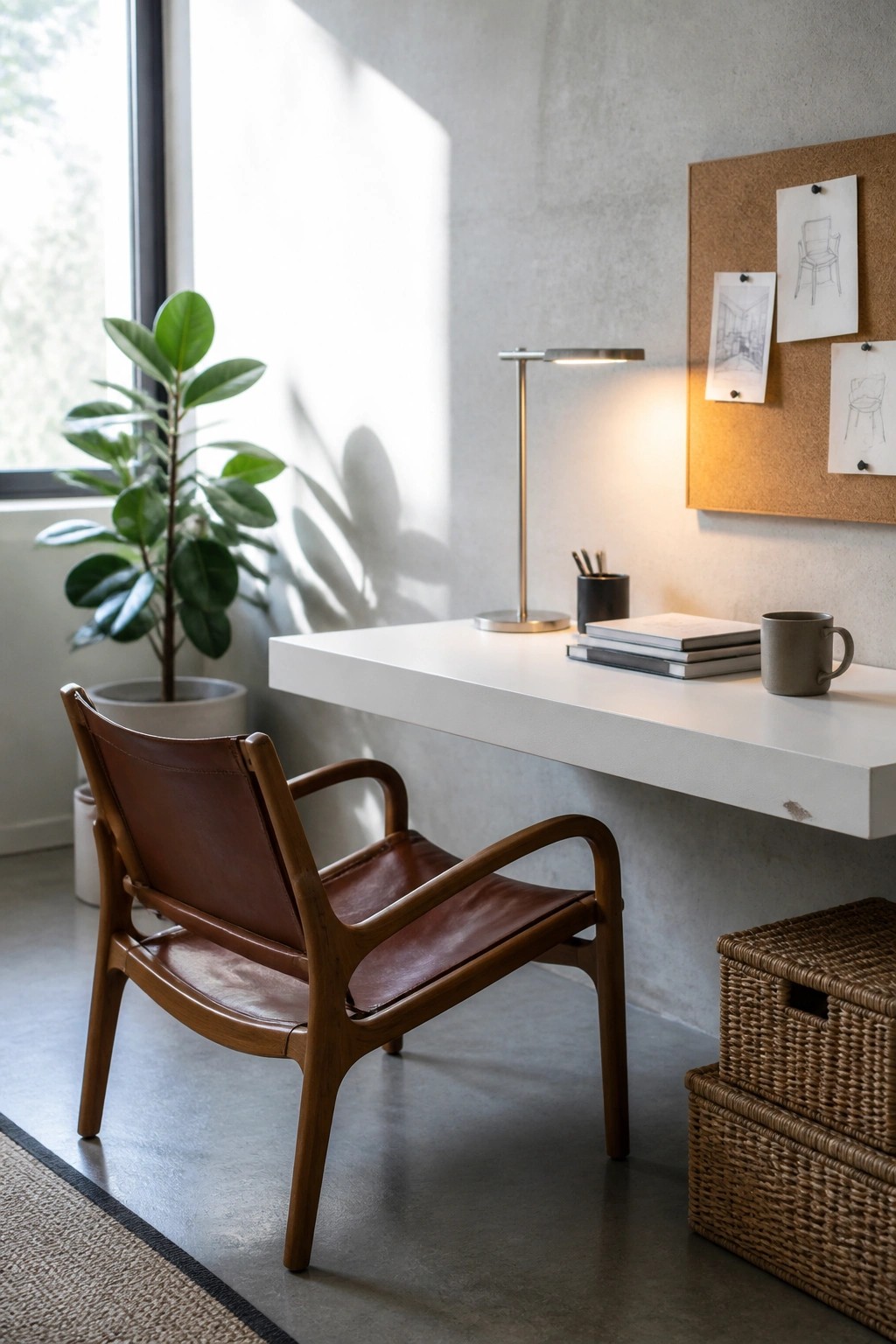
A floating desk can feel a little unfinished on its own. Placing a solid chair with real presence underneath it gives the spot weight and makes the whole area read as a purposeful workspace instead of just a shelf on the wall.
This setup suits smaller rooms or open-plan spaces where you need the desk to stay light but still feel grounded. Choose a chair with a sturdy frame and comfortable seat so the corner invites use without adding bulk.
Wingback Chairs Give Corners A Clear Purpose
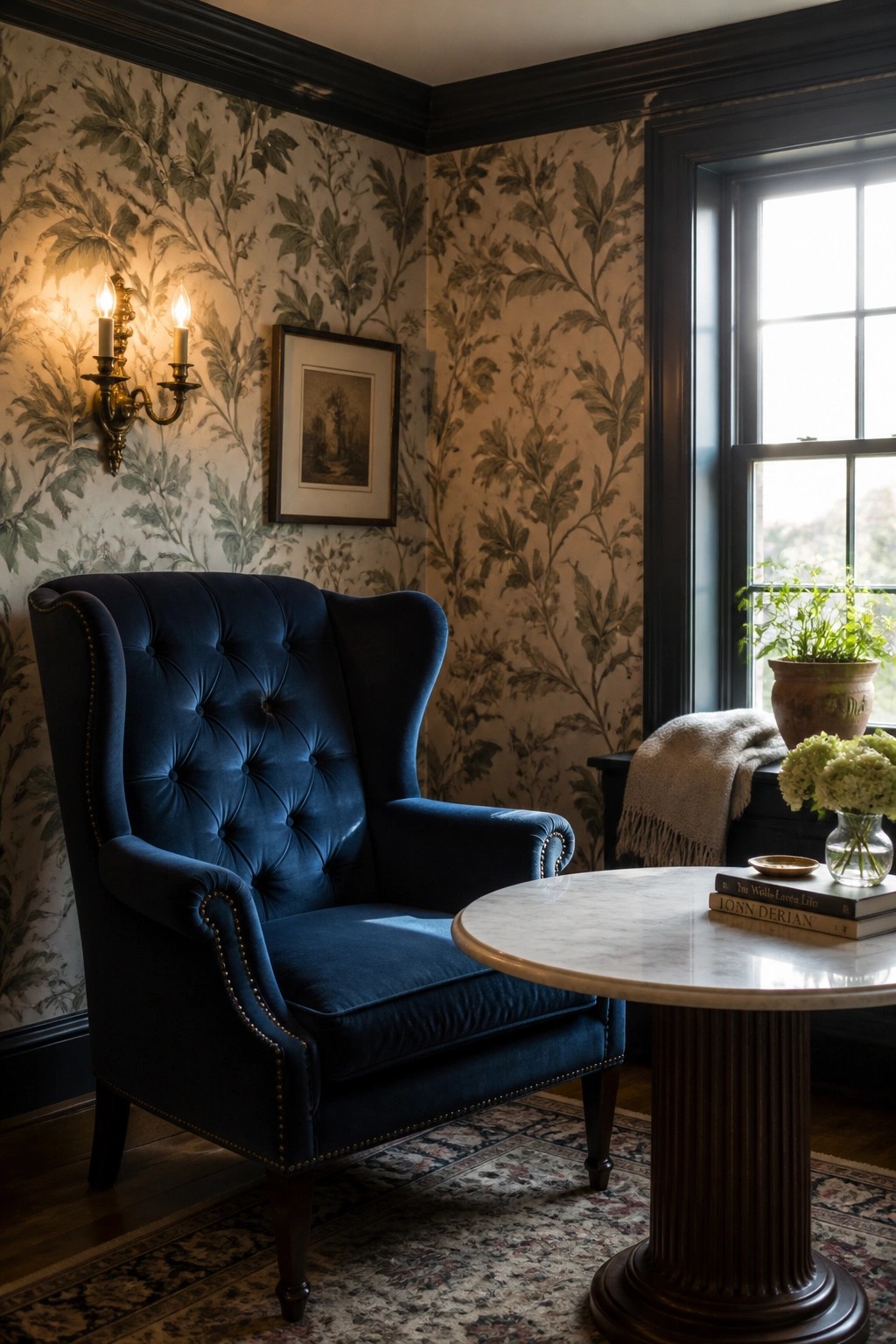
A wingback chair can turn an unused corner into a spot that actually gets used. The tall back and enclosed sides create a little pocket of comfort that feels separate from the rest of the room.
This setup works best in living rooms or bedrooms where you want one quiet place to sit without adding much else. Keep the rest of the area simple so the chair does the work of defining the space.
Accent Chairs That Anchor a Window Corner
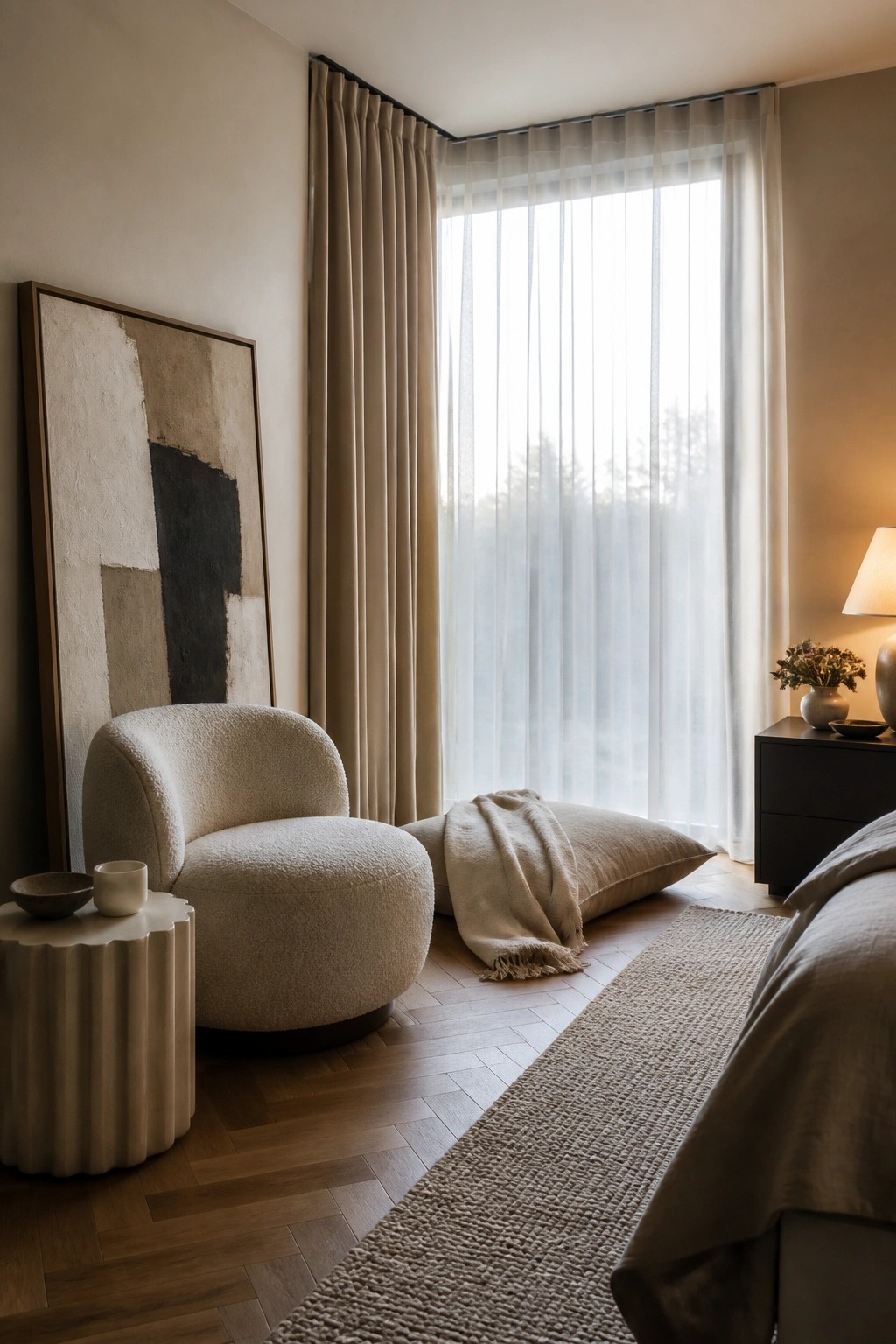
An accent chair set near a large window turns an open stretch of floor into a quiet place to sit. It gives the room a clear spot for reading or resting without needing much else around it.
This setup works best in bedrooms or living areas with tall windows and soft natural light. Keep the chair simple in shape and let the texture stand out, then add just one small table nearby so the corner feels useful but not crowded.
Leather Chair on a Checkered Rug
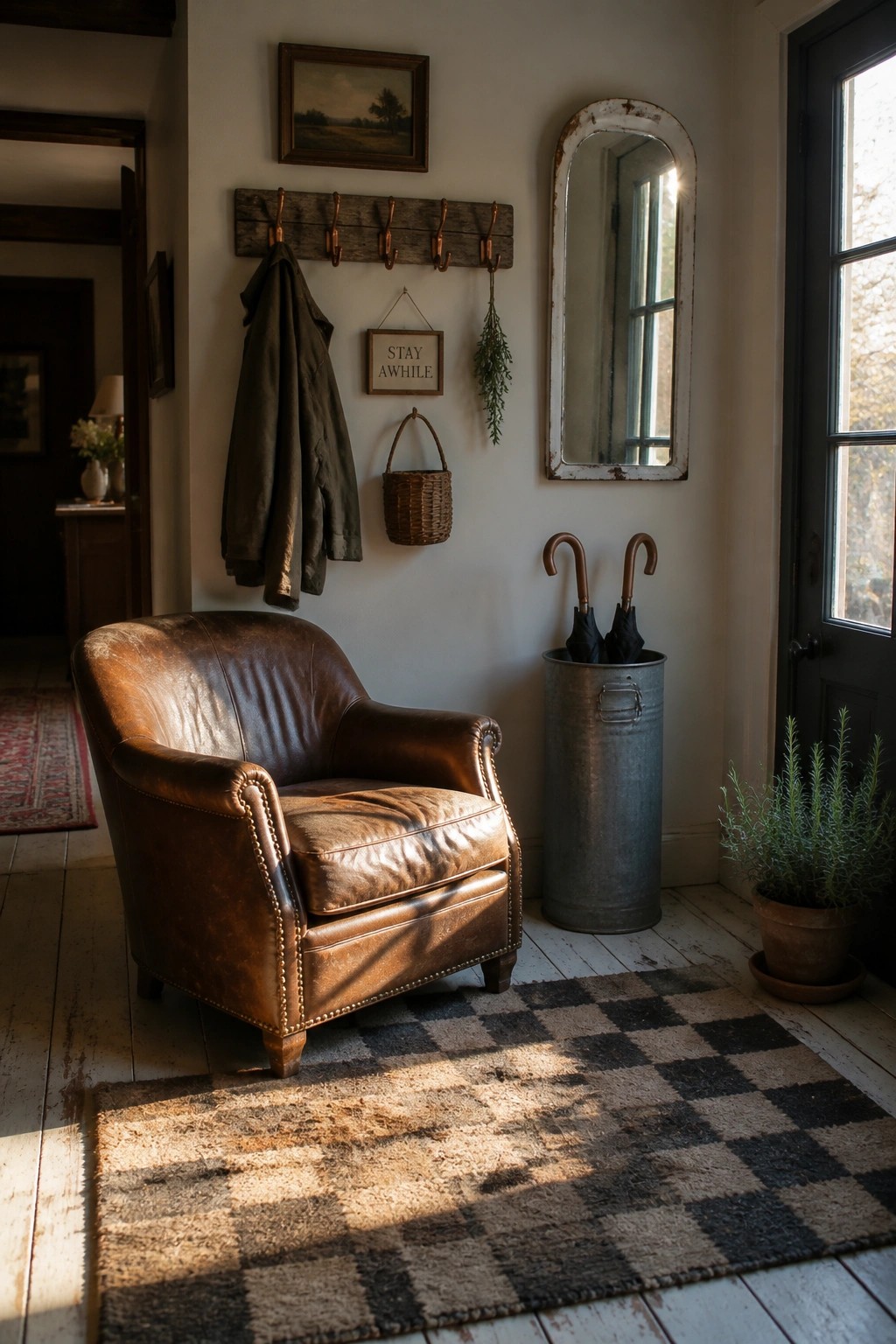
A worn leather chair gains more presence when placed on a large rug with a strong pattern. The rug helps mark off a clear spot for sitting without closing off the rest of the room.
This approach works well in entryways or open living areas that need a bit of structure. Keep the rug big enough so the chair sits fully on it and the legs do not hang off the edge.
A Chair Tucked Into The Kitchen Corner
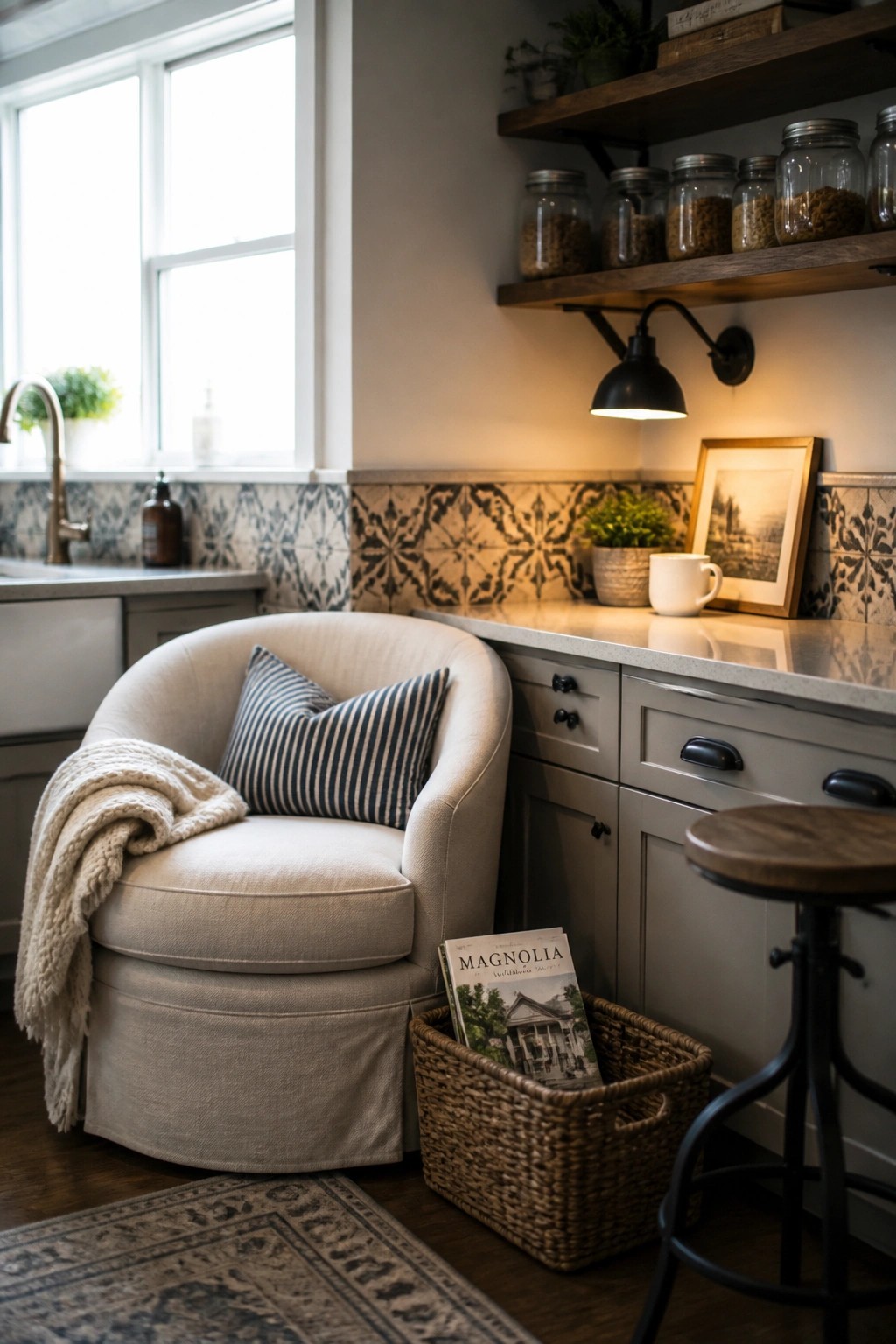
Many kitchens feel better with a simple chair pulled into one corner. It gives the space a place to pause without needing a whole separate seating area.
This works well in open layouts where the kitchen runs into other rooms. Keep the chair low and rounded so it does not block the flow, then add one basket underneath for a few magazines or a throw.
Built-In Shelving Behind An Accent Chair
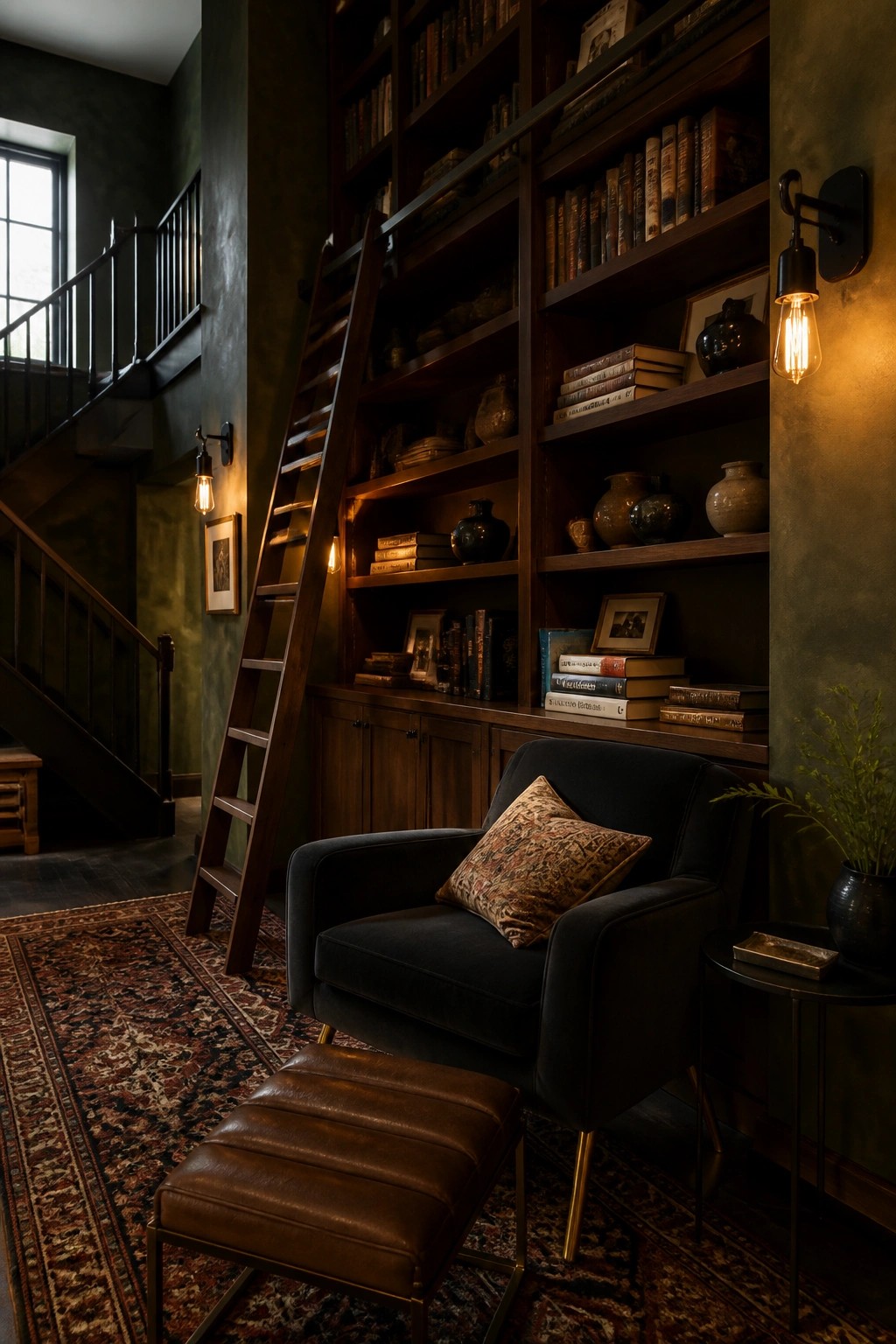
A tall wall of built-in shelves gives an accent chair a clear reason to be there. The shelves fill the vertical space and turn what might feel like an empty corner into a defined spot for reading or sitting. It works especially well in rooms with high ceilings where furniture alone can get lost.
This setup suits older homes or open living areas that need something solid to hold the space together. Keep the chair low and simple so the shelves remain the main feature, and add a rolling ladder if the height calls for it.
Rounded Accent Chairs For Quiet Corners
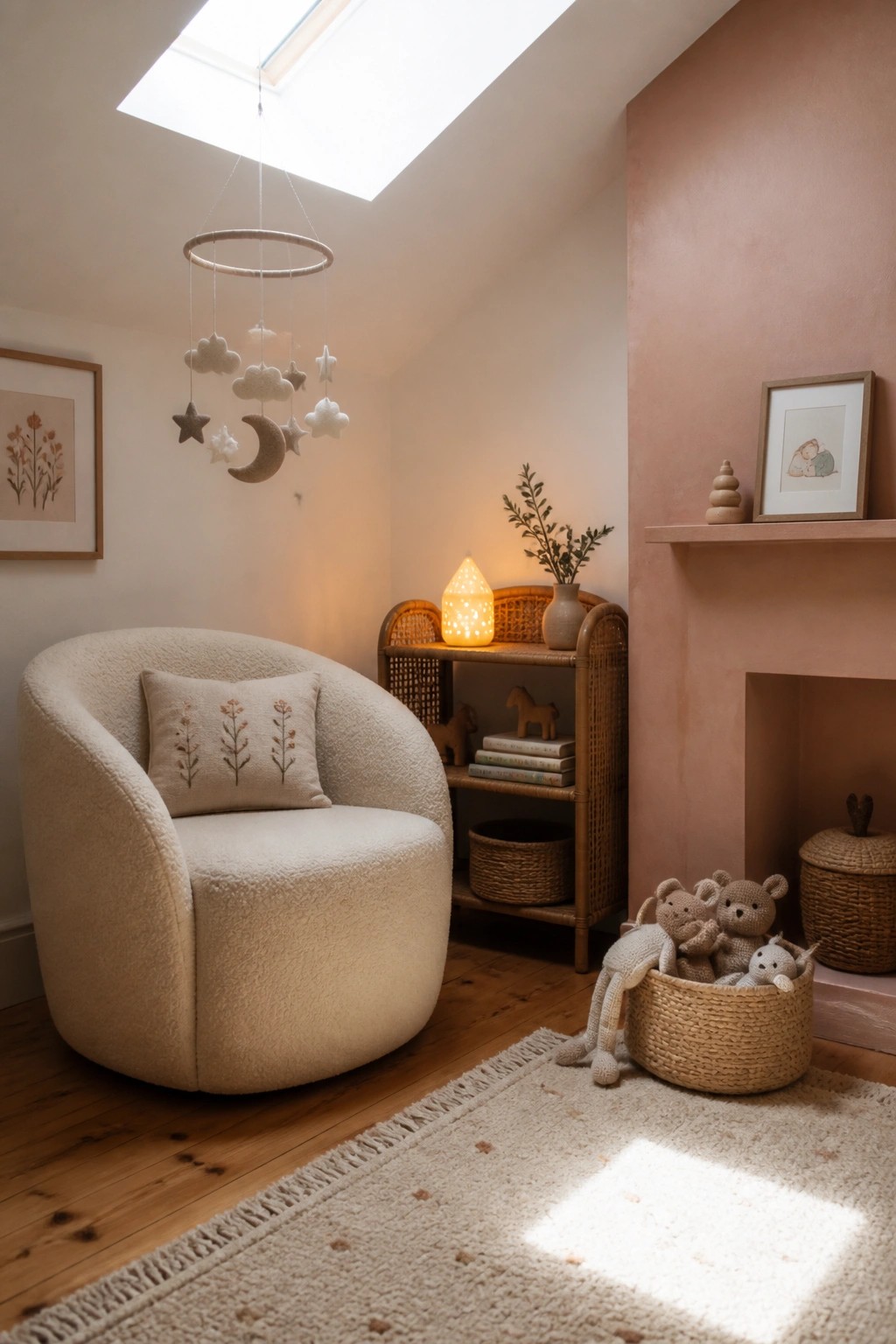
A rounded accent chair gives an open room a clear spot to pause without adding sharp lines or heavy pieces. The soft curve helps the chair sit comfortably in a corner while still leaving the rest of the space open.
This shape works best in light, neutral rooms where you want one defined seat rather than a full seating group. Keep accessories minimal so the chair itself sets the mood.
An Accent Chair in the Bathroom Corner
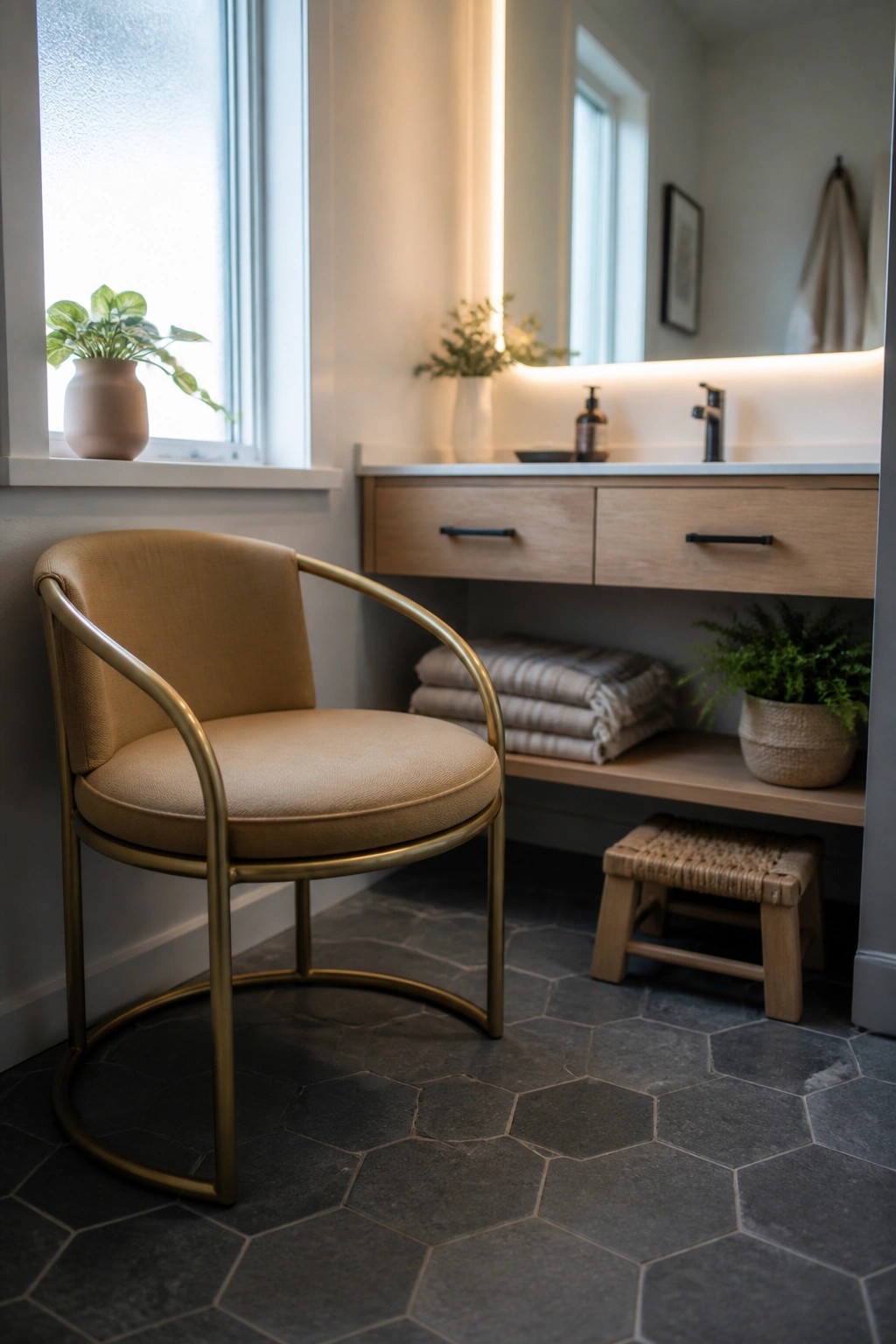
Bathrooms often leave a corner unused even when there is room for something more. A simple chair fills that spot and gives the space a finished feel without much effort.
This works best in rooms that already have some open floor area near a window or vanity. Choose a chair with a slim frame so it does not block movement, and pick a fabric that can handle occasional damp air.
Accent Chairs Along Hallway Walls
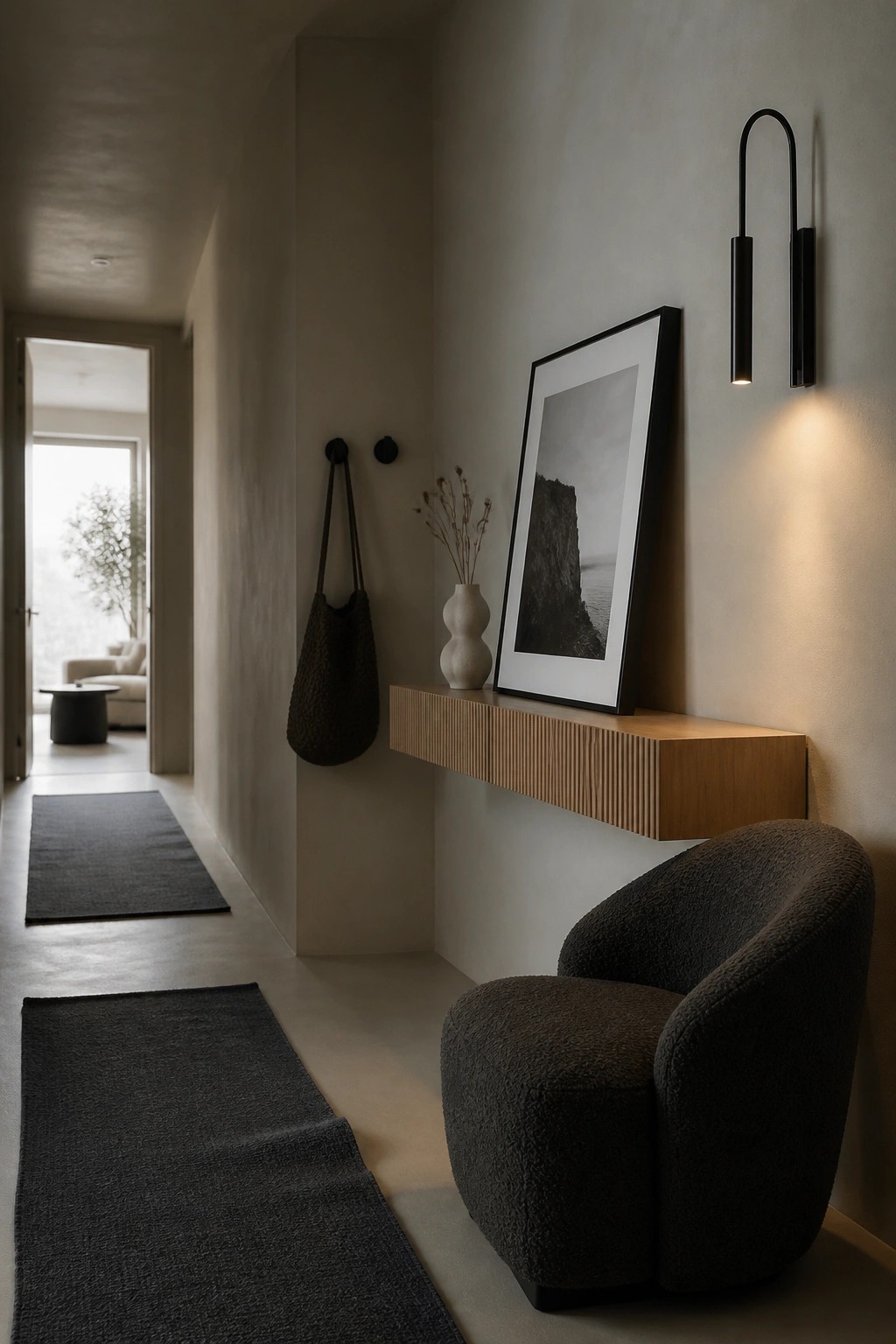
An accent chair can turn a plain hallway into something more useful. Instead of leaving the space empty, a single chair gives people a place to sit and pull on shoes or just rest for a minute without crowding the walkway.
This works best in wider hallways or transitional areas where you have room for one chair and a small surface nearby. Keep the chair low and the surrounding pieces simple so the path stays clear. A textured fabric chair like the one shown here pairs well with a narrow floating shelf for keys or mail.
Window Corner Accent Chairs
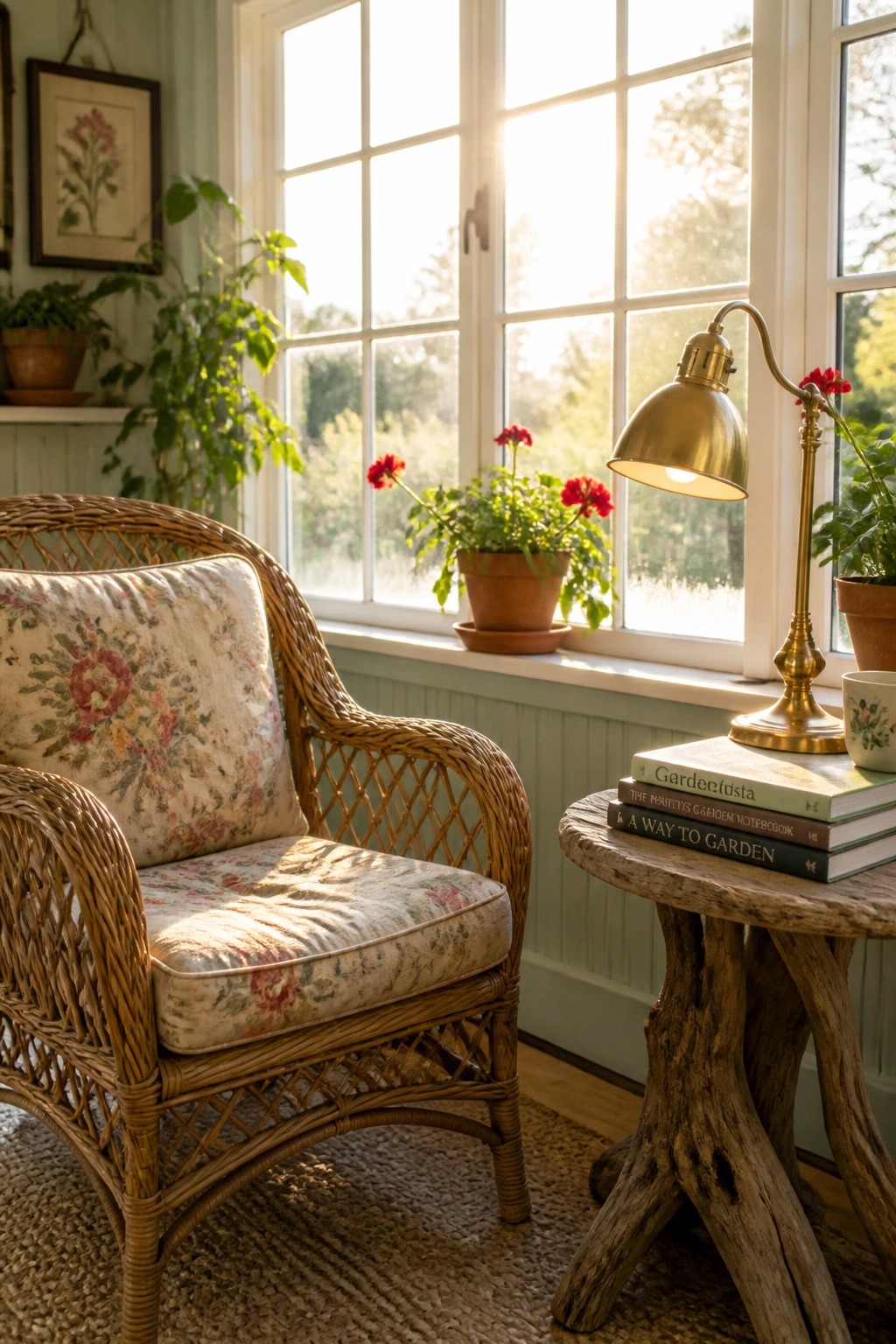
Placing an accent chair right by a window gives an open room a clear spot to pause. The light makes the corner feel useful instead of leftover space, and the chair becomes the anchor without needing much else around it.
This setup works well in living rooms or bedrooms that get steady daylight. Keep the table small, add only a lamp and a couple of books, and leave the rest of the floor open so the corner reads as intentional rather than busy.
Tuck An Accent Chair Into A Bedroom Corner
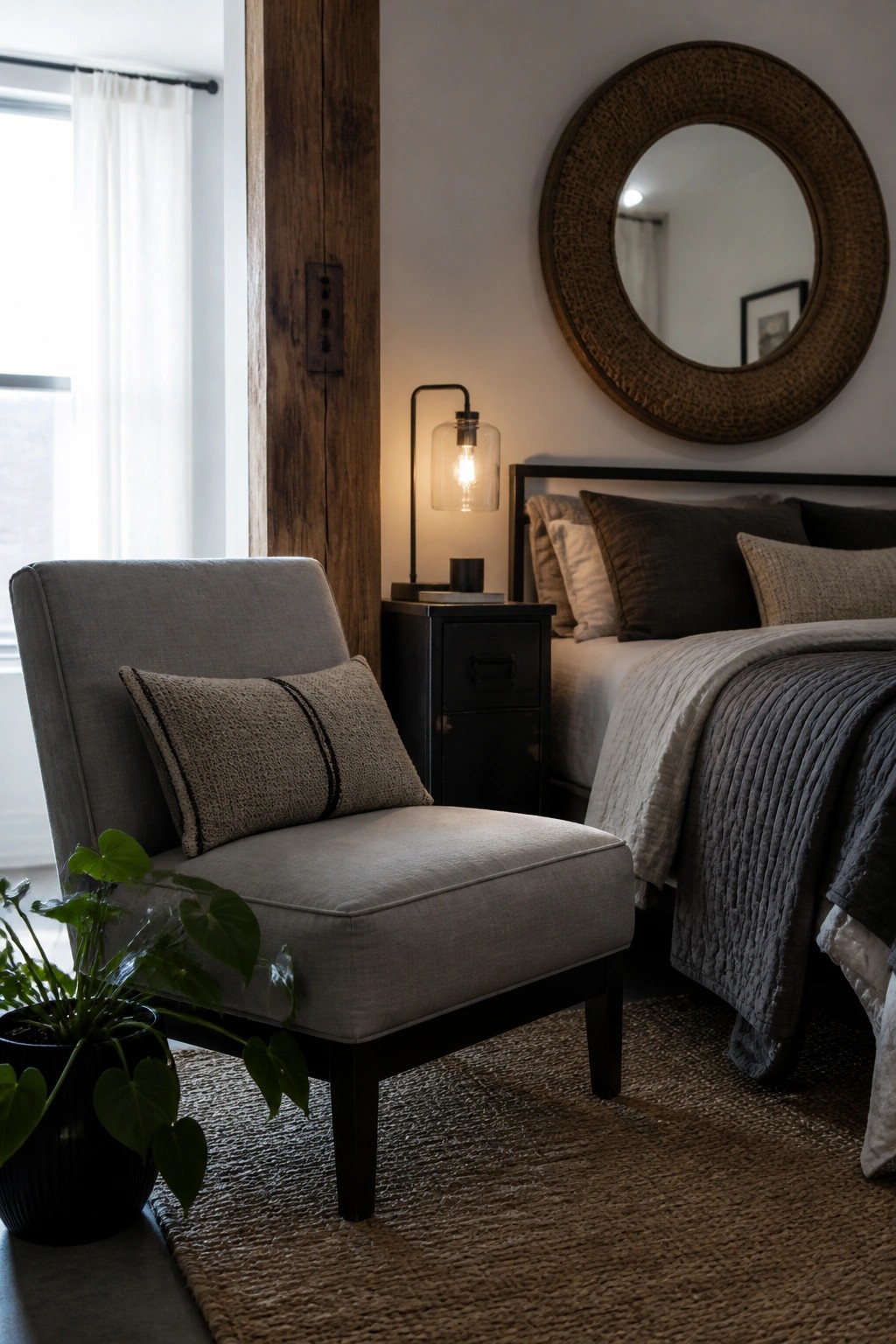
An accent chair can turn an unused corner into a quiet spot that makes the whole room feel more settled. It gives the space a clear purpose without crowding the main furniture pieces.
This approach works well in bedrooms that have extra floor space near the bed or window. Keep the chair low and simple so it does not compete with the bed, and add just one or two soft textures like a pillow or a nearby plant.
Choosing Rounded Shapes For An Accent Chair Corner
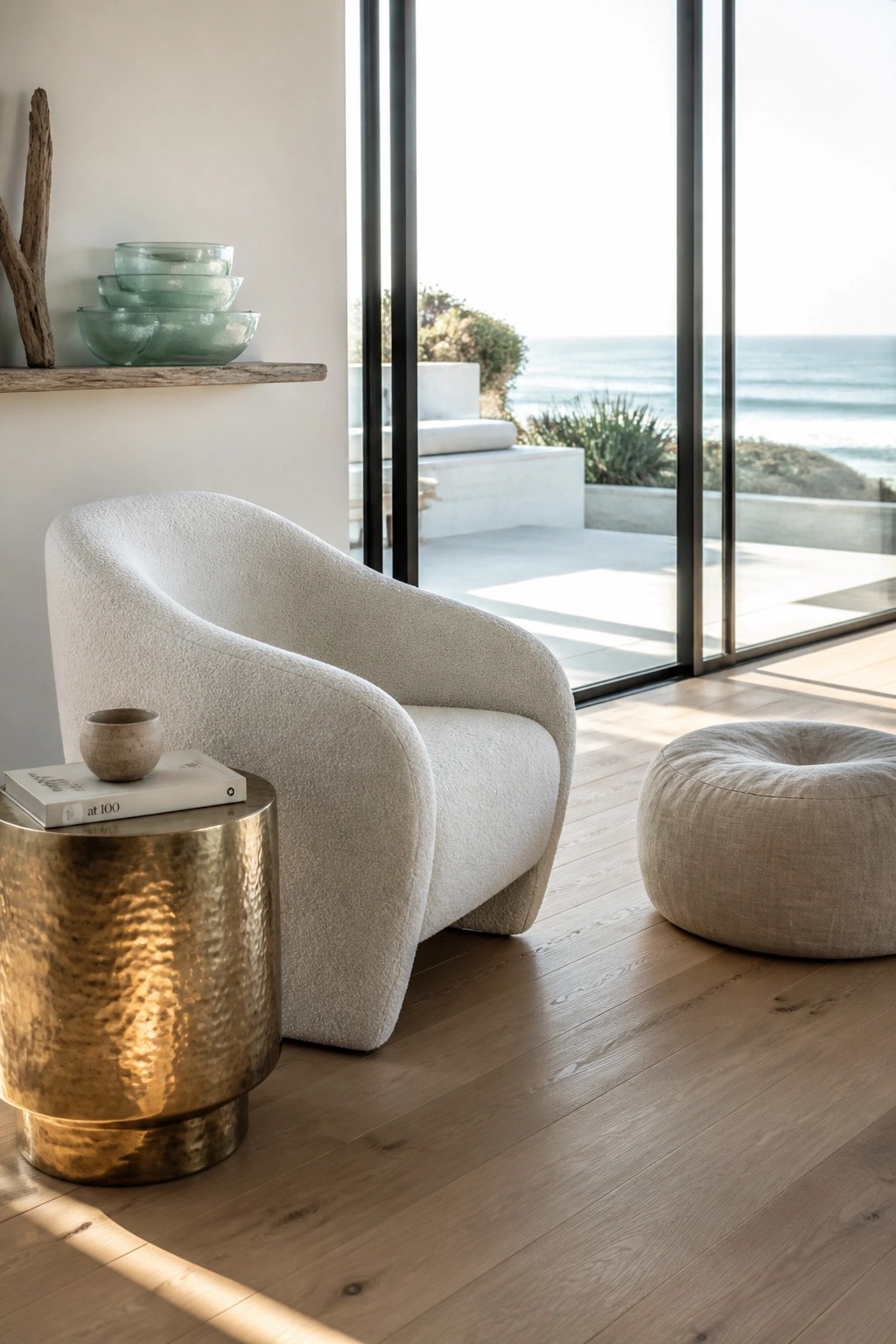
A rounded chair helps mark off a quiet spot in an open room without needing walls or extra furniture. The curved back and low profile keep the area feeling open while still giving it a clear center.
Try pairing the chair with a round ottoman in the same fabric. This setup works especially well near large windows or in rooms with light wood floors, where you want something simple that does not block the view or the flow of the space.
Accent Chair In A Window Corner
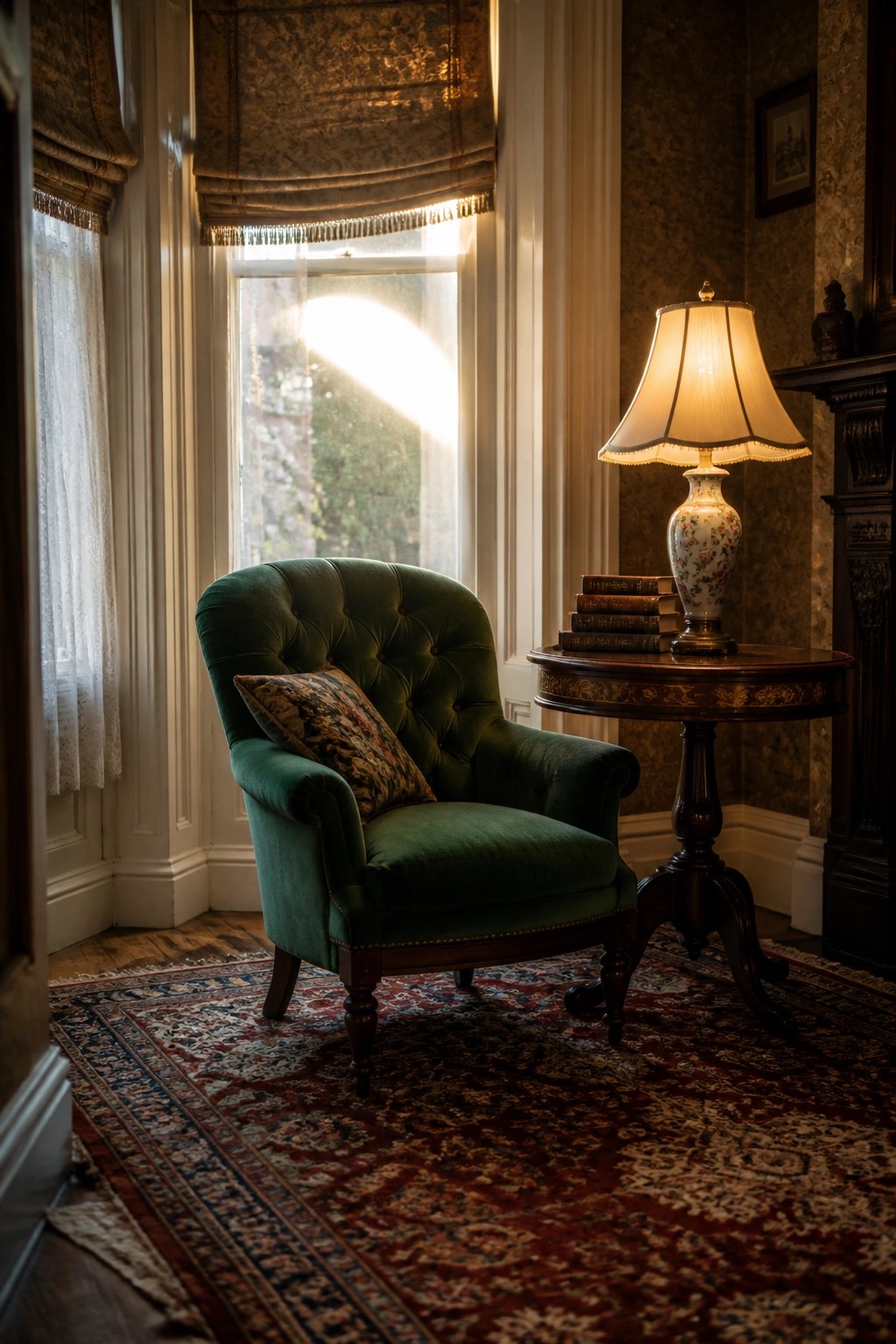
An accent chair placed in a corner near a window gives an open room a clear spot to settle without adding walls or dividers. The chair becomes the anchor that turns empty space into something usable.
This approach works best in living rooms or larger bedrooms that feel too open. Keep the rest of the furniture light so the chair can stand out and still leave room to move around it.
A Rounded Chair Turns A Corner Into A Quiet Spot
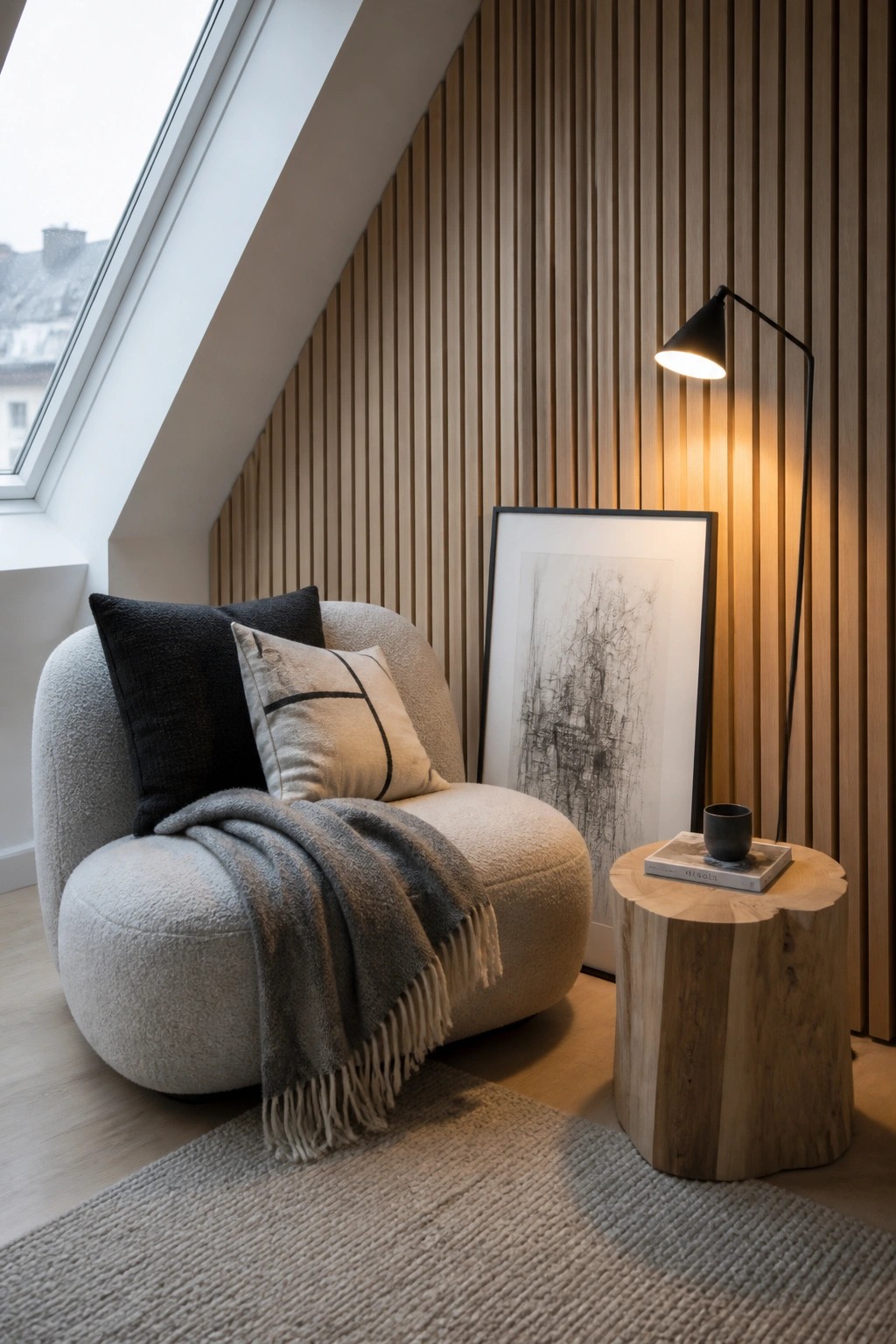
A rounded accent chair helps define a small seating area in an open room without adding sharp lines or bulk. The soft shape feels welcoming and works especially well in spaces with angled walls or under a window.
Try placing one with a simple floor lamp and a low table nearby. It suits living rooms that need an extra spot to sit without crowding the main seating area.
Accent Chairs That Fill Empty Corners
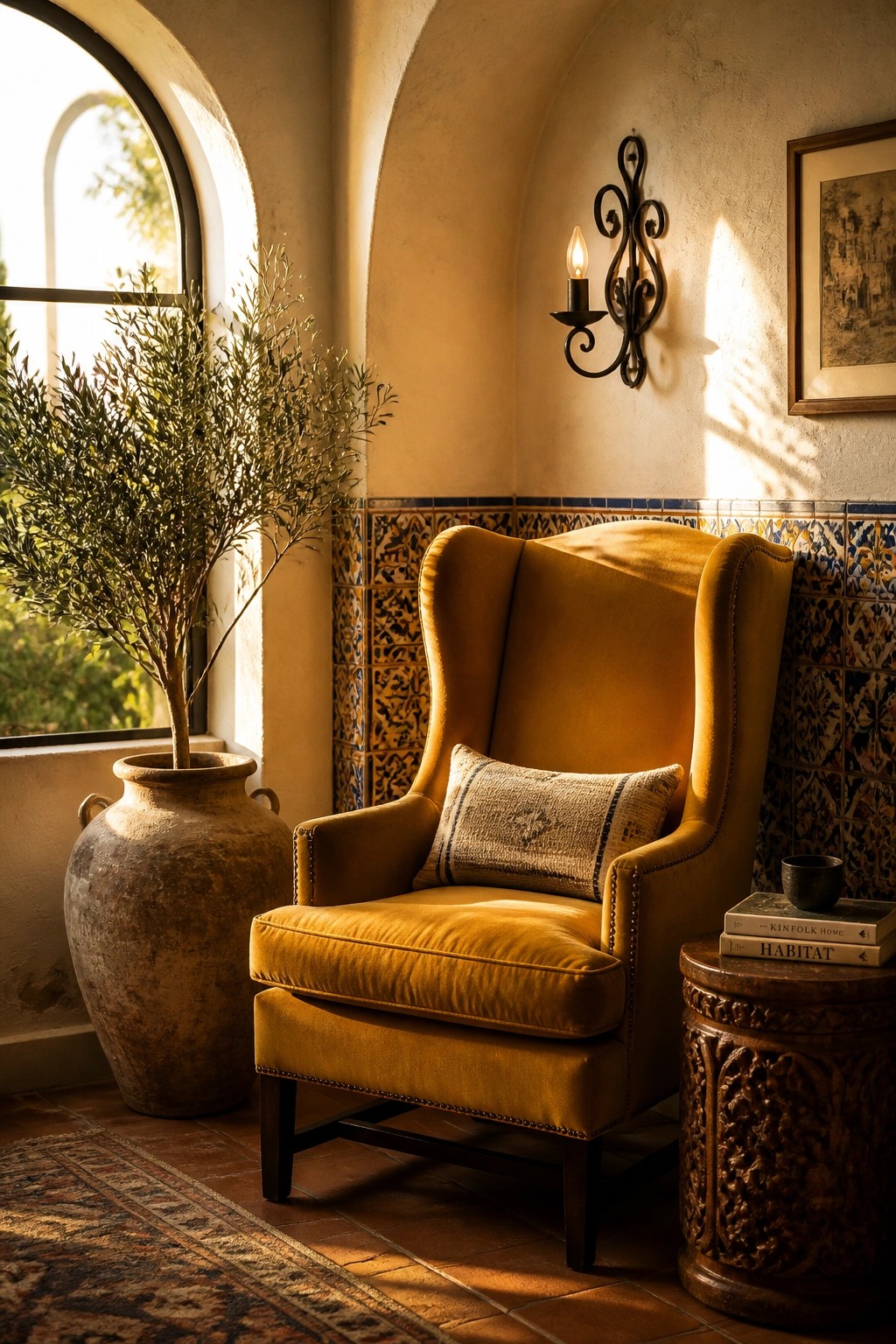
Many rooms have corners that feel like wasted space. An accent chair placed there gives the area a clear purpose and makes the whole room feel more settled.
Choose a chair with some height and a solid frame so it holds its own. It works especially well near a window where the light makes the spot feel usable throughout the day.
Tucking An Accent Chair Into A Bath Corner
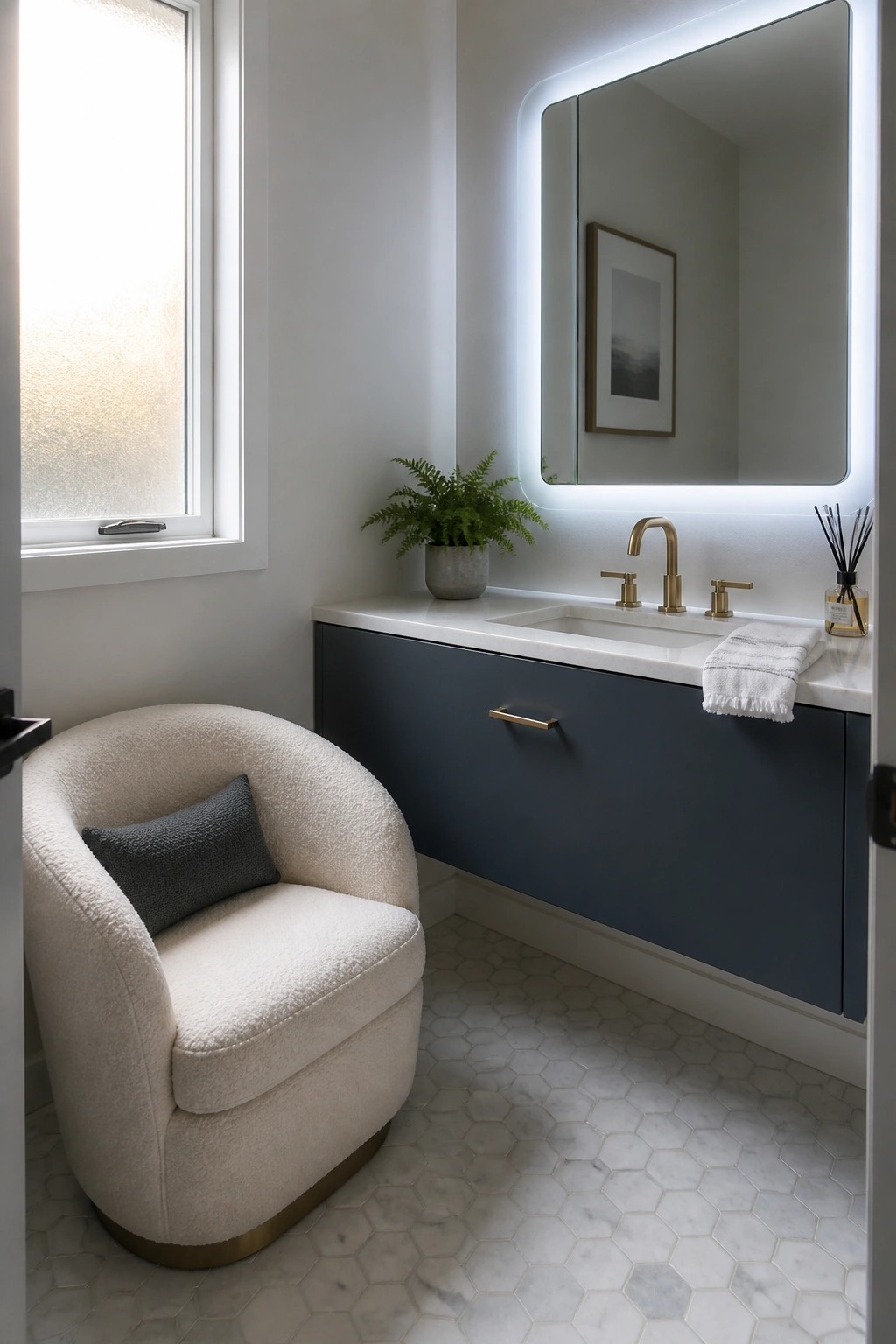
Bathrooms often end up with one empty corner that feels a little flat. Placing a rounded accent chair there adds a spot to sit while getting ready and gives the room something solid to rest against visually.
This idea works best in powder rooms or larger baths where the chair can sit near a window or beside the vanity. Pick one with a soft texture and keep the rest of the space simple so the chair stands out without crowding the floor.
Create A Reading Nook With An Accent Chair
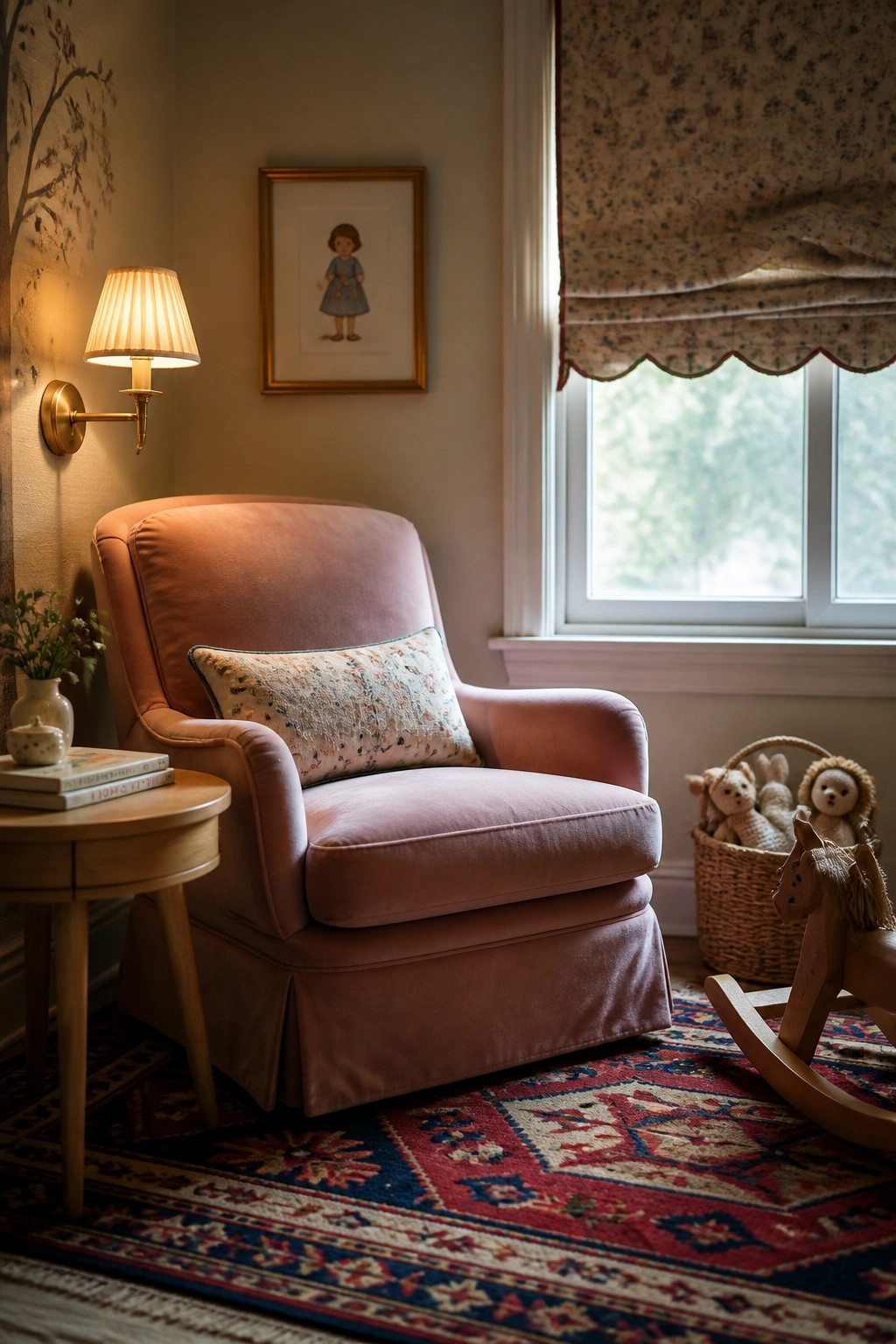
Many homes have an empty corner that feels a bit lost. Putting a comfortable chair there with a small table beside it turns that spot into a place people actually use.
This setup works best in living rooms or bedrooms with some natural light. Pick a chair in a soft fabric, keep the table low and simple, and add just a lamp and a couple of books so the corner stays easy to sit in.
A Woven Bench For Utility Corners
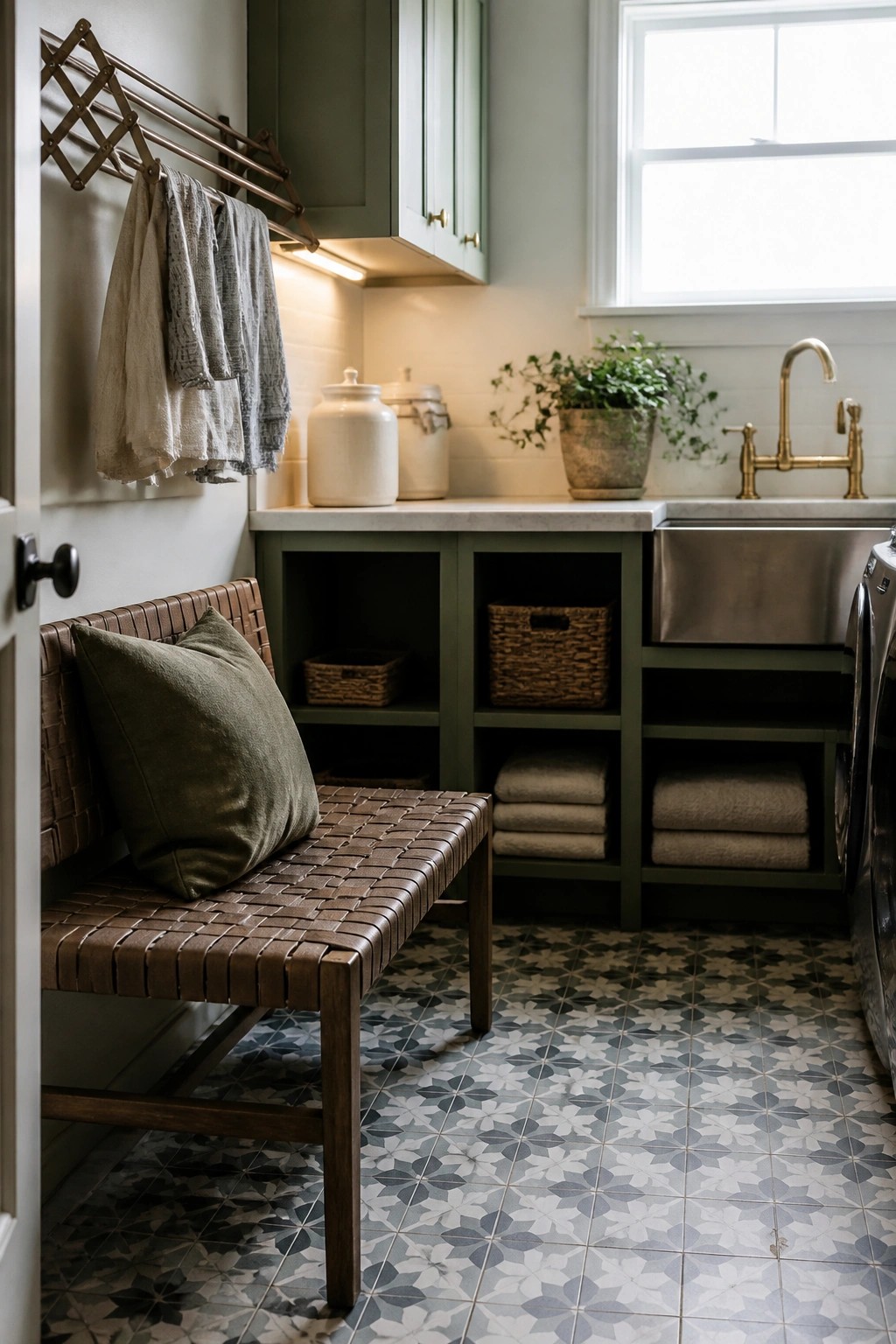
A simple woven bench gives you a place to sit in a laundry room or mudroom without crowding the space. It turns an open stretch of wall into something useful while keeping the room feeling light.
This setup works best in homes where the laundry area stays open to hallways or living spaces. Keep the bench low and the cushion minimal so it does not compete with the cabinets or sink area.
Corner Accent Chairs Give Open Rooms A Clear Spot
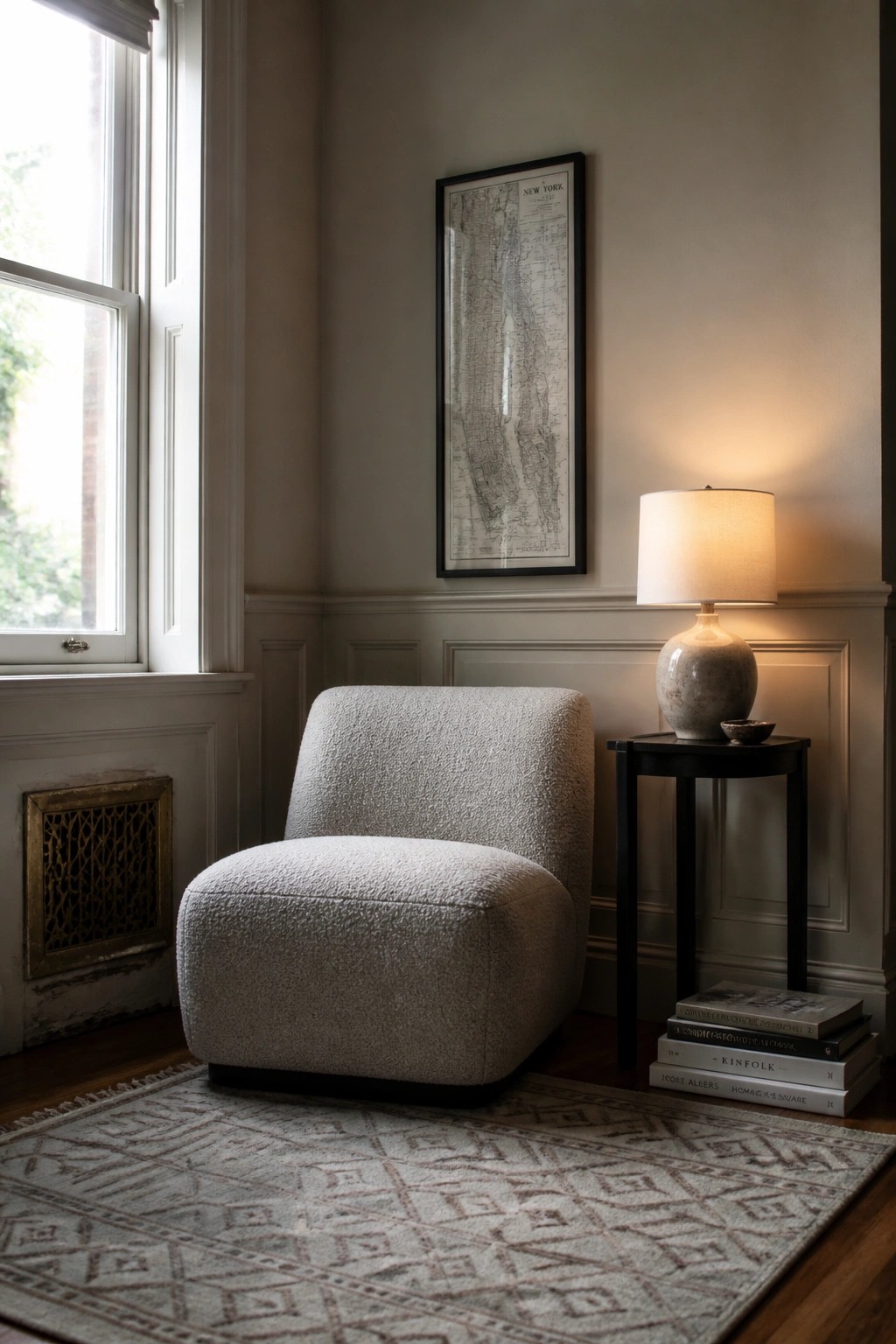
A single chair tucked into a corner can turn an empty stretch of floor into something useful. It creates a quiet place to sit without needing a whole seating group or large furniture layout.
This setup suits living rooms or open spaces where you want one calm spot for reading or resting. Keep the table and lamp small so the chair remains the main feature and the corner stays open.
Frequently Asked Questions
Q: How big should the accent chair be if my open room has high ceilings?
A: Go for something with a taller back or wider seat. That extra height draws the eye up and stops the corner from feeling empty. Test the chair in the space before buying so it balances the room scale.
Q: My corner already has a floor lamp. Can I still add a chair there?
A: Slide the chair in front of the lamp base. Sit in it to check that light reaches your lap for reading. The lamp now serves the chair without extra clutter.
Q: What if I want to try one of these setups but my floors are hardwood and echo a lot?
A: Add a small rug just under the chair legs. It softens sound and keeps the chair from sliding when you stand up. Pick a rug that matches the chair fabric so the corner feels pulled together.
