
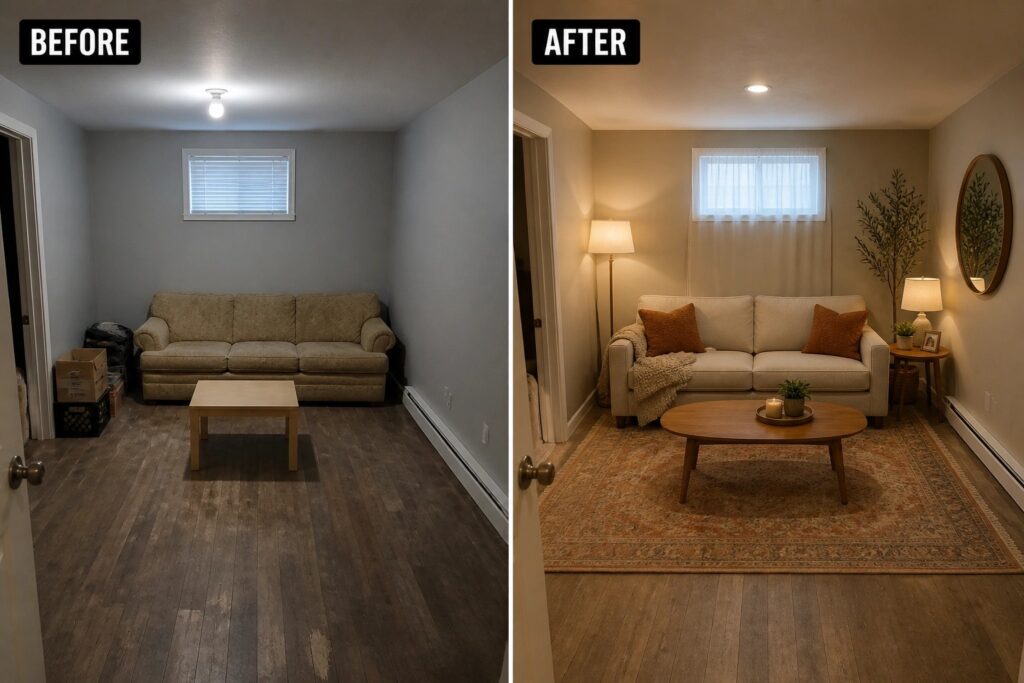
Living rooms with few windows often end up feeling heavier than they need to because the colors and furniture placement do not work with the light that is already there.
I have noticed that adding reflective surfaces in the right spots can make the space feel more open even when the windows stay the same.
Layout matters here too.
Moving seating toward the brighter areas helped the room feel more usable once everyday items were no longer competing with the shadows.
A few of these ideas are the kind I would test one at a time in my own home to see what actually holds up.
Layer Warm Lighting And Textiles To Brighten A Dark Room
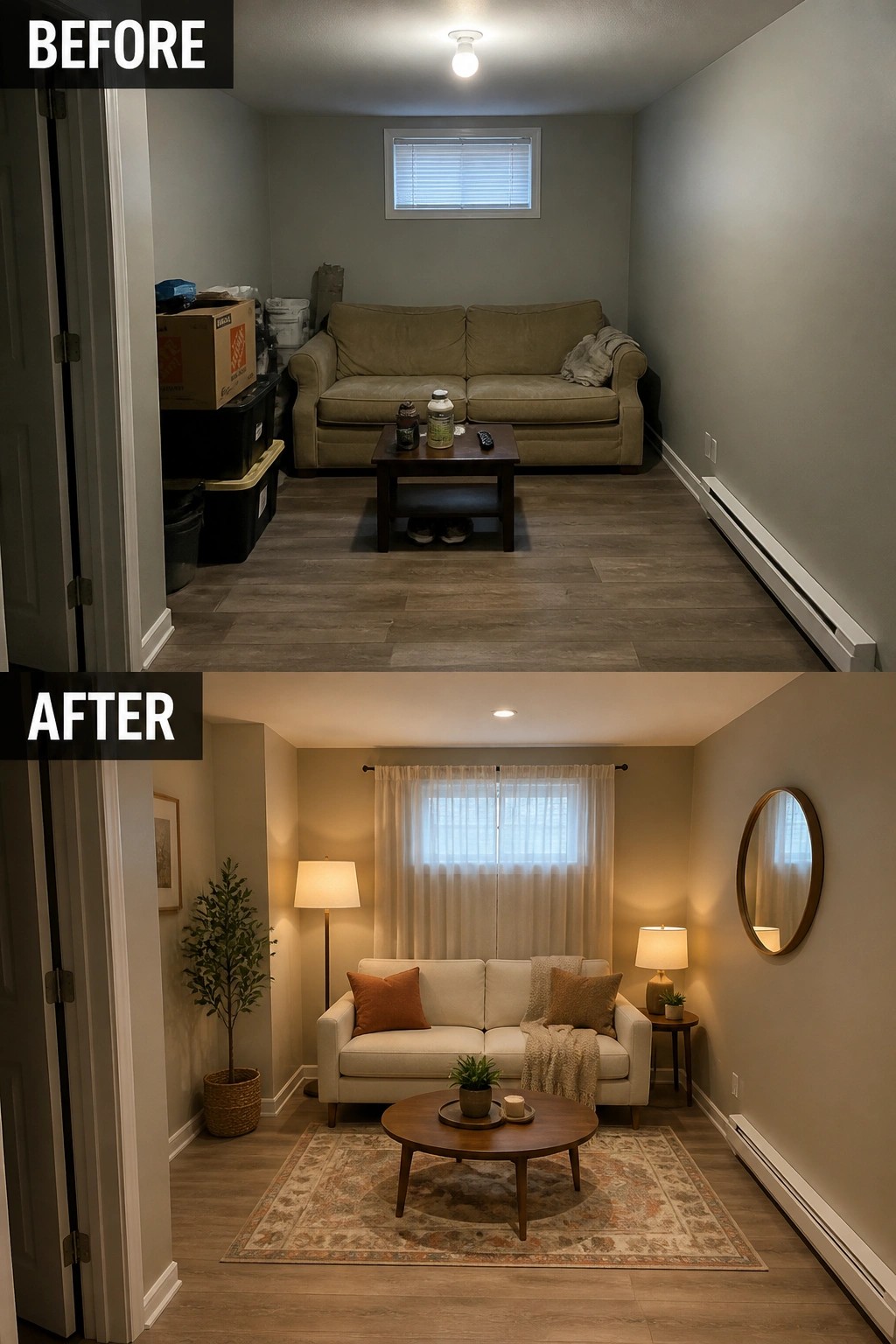
Small rooms with limited windows often feel flat because a single overhead light leaves corners in shadow. Adding lamps on both sides of the seating and a rug under the coffee table creates even light and a clear center, which makes the space feel finished instead of empty.
This idea suits basement rooms or any living area with small high windows. Start with two or three lamps at different heights, then add a rug that matches the size of your seating group so the furniture feels connected. Keep the layers simple so the room stays easy to move through.
Brighten A Dark Room By Updating The Fireplace Wall

The main change here is swapping the dark wood paneling and heavy fireplace for light walls and a terracotta surround. Lighter curtains also let more light through, which helps the whole room feel less closed in. These two updates do most of the work without touching the floor or ceiling.
This idea works well in older homes where dark trim or paneling makes the space feel heavy. Paint the walls a light neutral first, then focus on the fireplace as the main feature with a warmer material. Add a floor lamp and sheer curtains so the room does not rely only on the windows for light.
Layer Lighting Sources To Warm Up A Low-Light Room
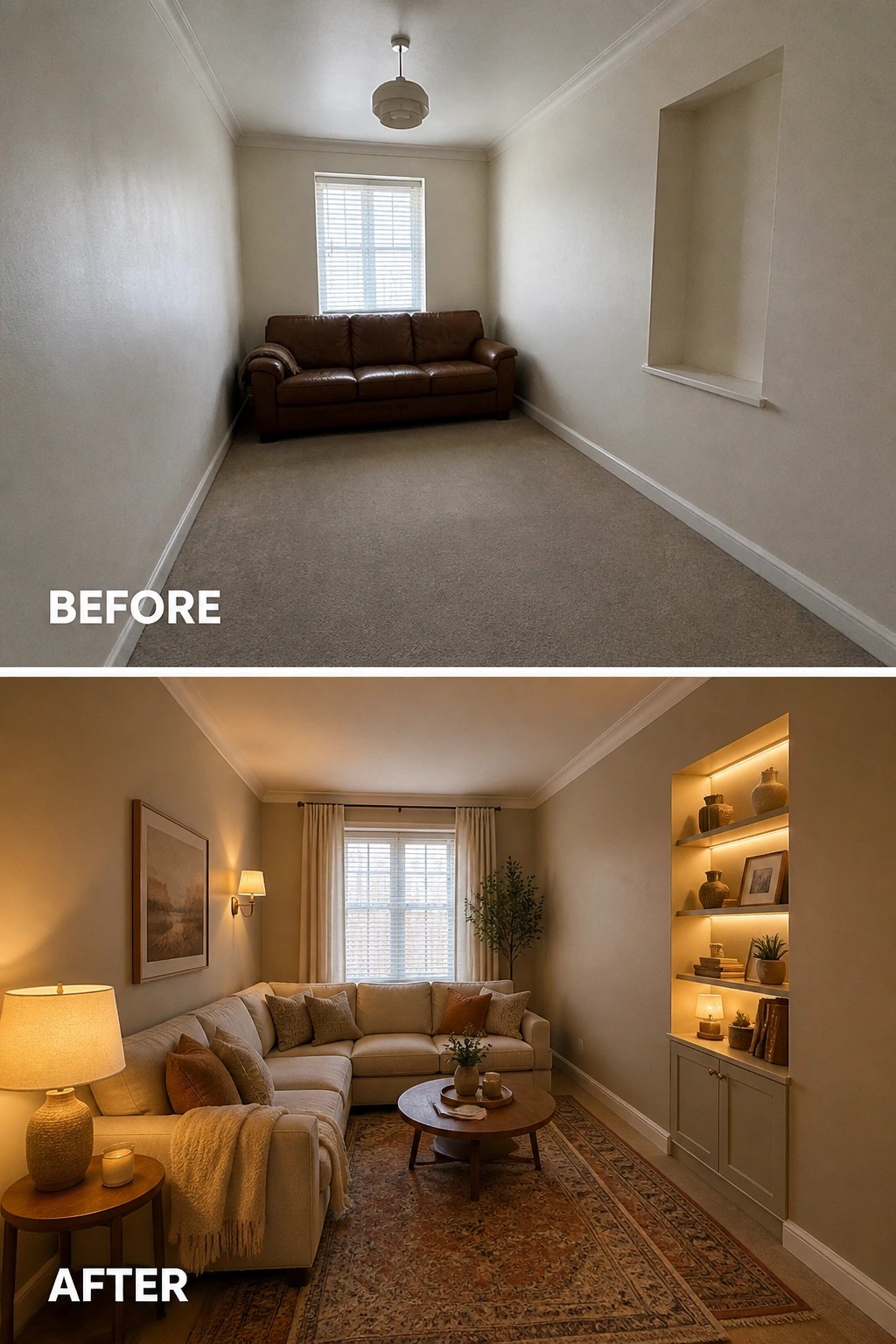
A room with small windows and plain walls can feel cold and empty even in the daytime. Adding lamps at different heights, a wall sconce, and lit built-in shelves gives the space a steady warm glow that changes how it feels to be there.
This works best in older homes or any living room that gets little direct sun. Start with one or two table lamps near seating, then add a floor lamp or sconce if you can. Warm bulbs and a rug help pull the light down to eye level so the room feels finished without needing a full renovation.
Warm Up A Dark Basement With Layered Lighting
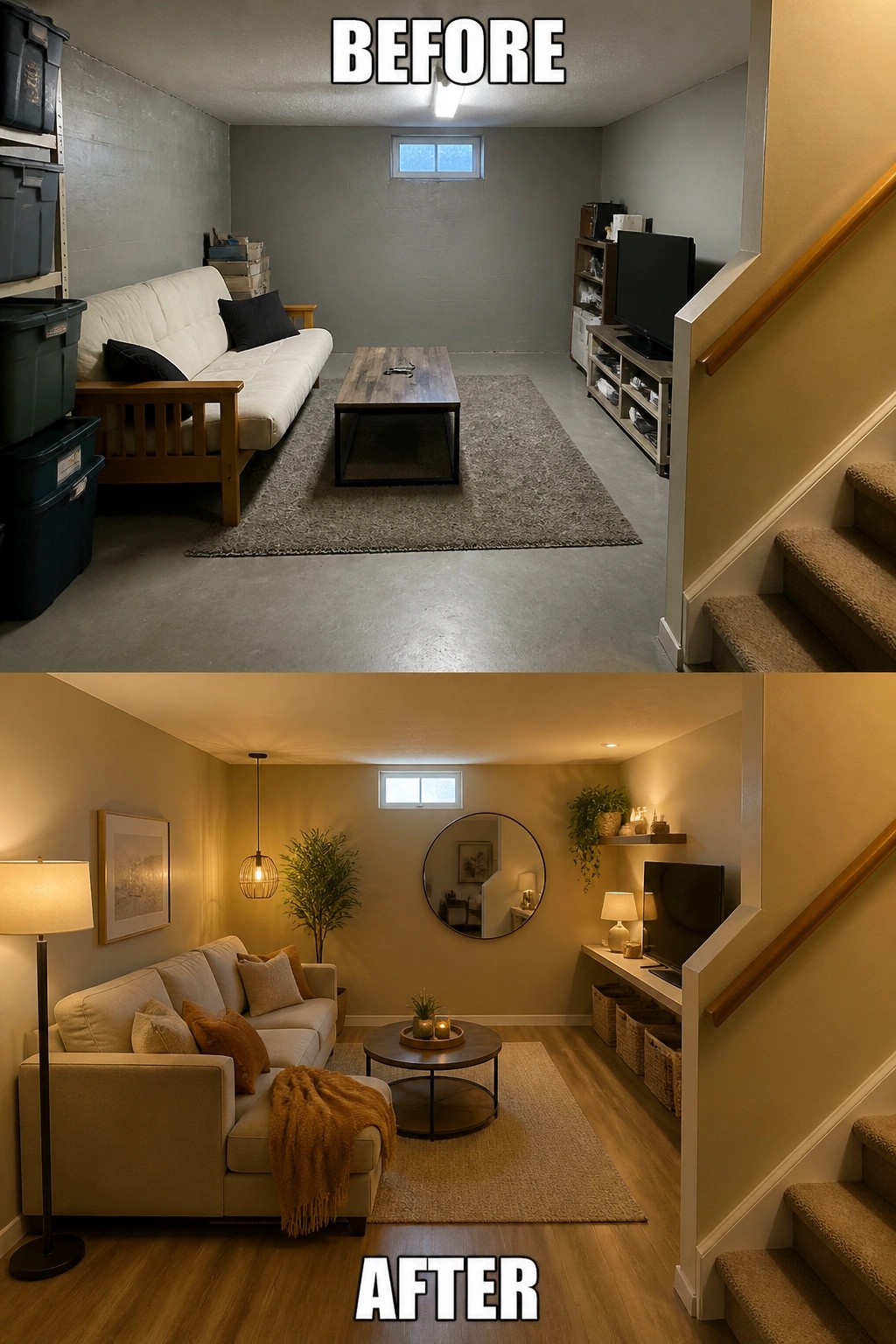
A basement room with concrete floors and gray walls can feel cold even when it is furnished. Adding multiple light sources at different heights, switching to warmer wall color, and bringing in wood flooring and soft textiles makes the space feel finished and much more comfortable to use every day.
This approach works well in any lower level room that gets little natural light. Start with a good overhead light, then add a floor lamp near seating and a smaller lamp on a side surface so the room does not rely on one harsh source. Keep the palette simple and repeat warm tones in the rug, pillows, and throw to tie everything together.
Replace Heavy Curtains To Let More Light Into A Dark Living Room

The main change here is swapping out the thick black curtains for lighter sheer panels. The before version felt closed in and heavy because the dark fabric blocked almost all daylight. Once the windows could actually let light through, the whole room opened up without needing major structural work.
This idea works best in living rooms that already get some natural light but still feel dim because of heavy window coverings. Pick a light neutral fabric that diffuses the sun instead of blocking it, then add a rug and a couple of lamps so the space feels complete even when the light is soft.
Swap Dark Carpet For Lighter Flooring And A Rug

Dark carpet can make a room feel smaller and heavier, especially when natural light is limited. Switching to wood floors and adding a light rug opens up the space right away and gives it a warmer base without needing major construction.
This approach works well in older homes or rooms that already feel closed in. Keep the rug large enough to sit under the front legs of the main seating, and bring in one or two floor lamps so you have light at different heights instead of relying only on the ceiling.
Layer Lighting To Warm Up A Plain Room
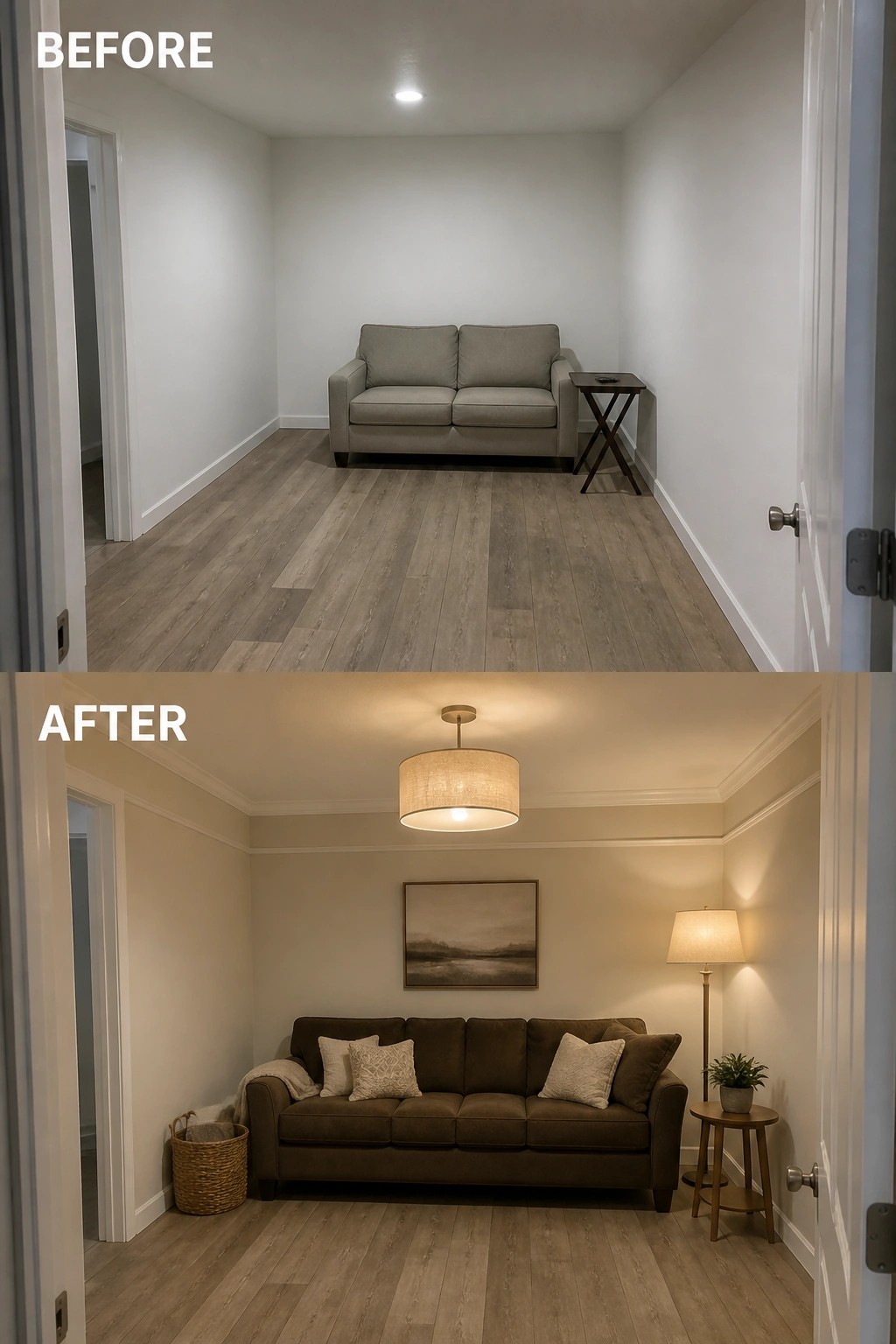
A single overhead light often leaves a small room feeling flat and cold. In this case, swapping it for a fabric drum pendant plus a floor lamp near the seating area changed how the whole space felt. The softer glow reaches the walls and floor without creating harsh spots, which helps a room with limited windows feel more inviting right away.
This works best in narrow living areas or rooms that get little daylight. Keep the fixtures simple and choose warm bulbs. Then add a few textiles like pillows and a throw in the same tone family so the light has something to reflect off. Avoid crowding the floor with too many pieces, since the goal is even light rather than extra furniture.
Warm Up A Dark Living Room With One Accent Wall

A plain living room with beige walls often feels cold when natural light is limited. Painting one wall a deep terracotta color and adding a large patterned rug with pillows and throws changes the whole feel without needing a full renovation.
This idea works best in smaller or shaded rooms where you want quick impact. Pick a warm paint shade first, then add one or two layers of texture like a rug and soft seating pieces so the space feels balanced rather than empty.
Add A Window Seat To Warm Up A Quiet Corner

A bare bay window can leave a room feeling unfinished, especially when the space gets limited natural light. Adding a built-in window seat with cushions turns that empty area into a usable spot for sitting and relaxing. The simple addition of a large rug underneath helps define the zone and makes the whole room feel more complete without needing major construction.
This approach works well in older homes where the windows already provide a natural focal point. Keep the cushions in warm neutral tones and add one or two lamps nearby so the area stays usable after dark. It is a practical way to gain seating while keeping the room from feeling too open and cold.
Switch Dark Furniture For Lighter Pieces
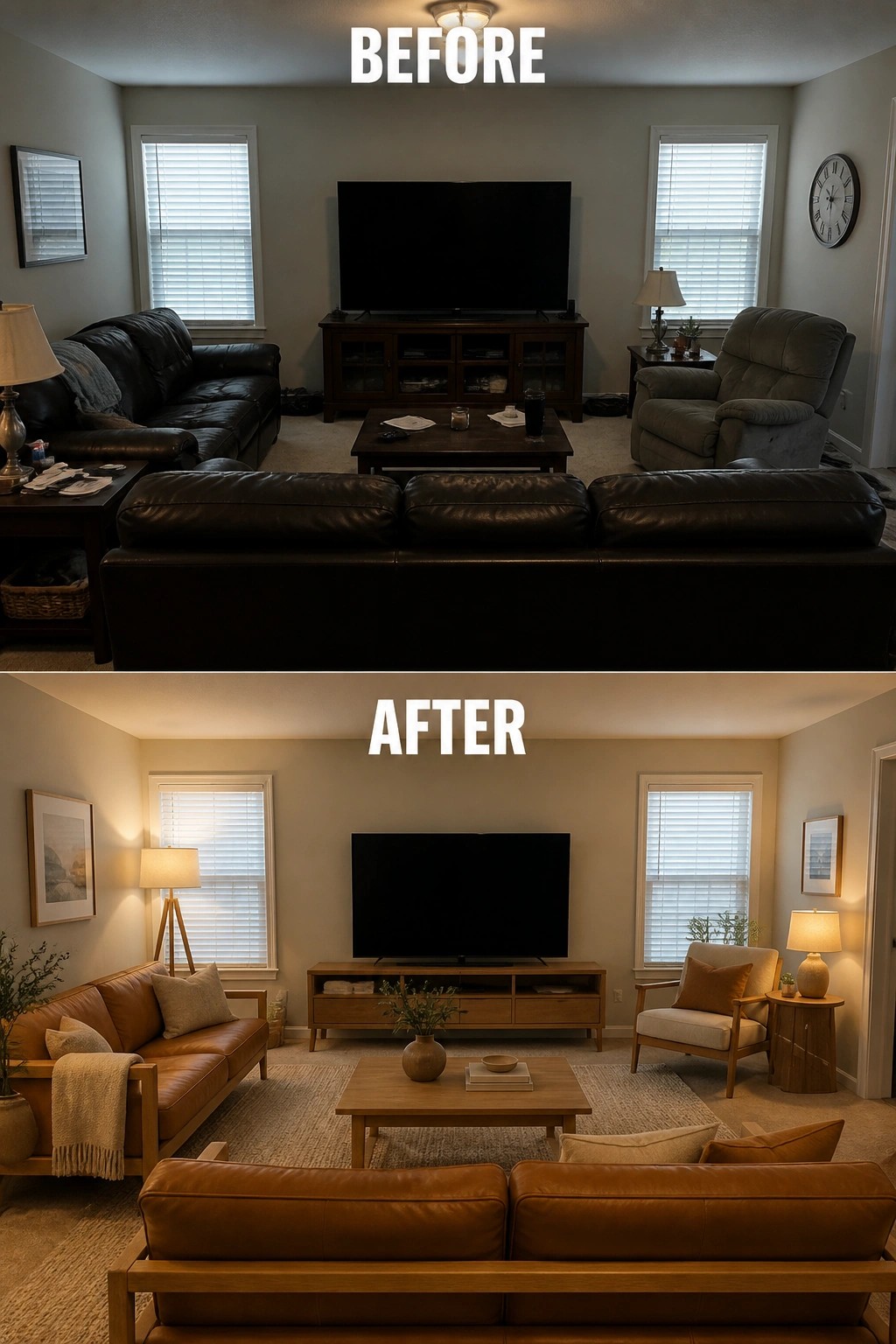
Many dark living rooms feel closed in because of heavy black or very dark seating. Replacing that main furniture with lighter brown leather and adding wood tones opens the space up right away. The before photo shows how the black sofas and dark tables made everything feel heavier. In the after photo, the change to warmer leather and oak furniture immediately makes the room feel brighter even with the same windows.
This approach works well in rooms that get limited daylight. Start by choosing one or two larger pieces in a lighter finish, then add a few wood accents and simple lamps. Keep the layout open so light can move through the space. It is a practical first step before adding rugs or wall color.
Layer Lighting And Color To Warm Up A Dark Room
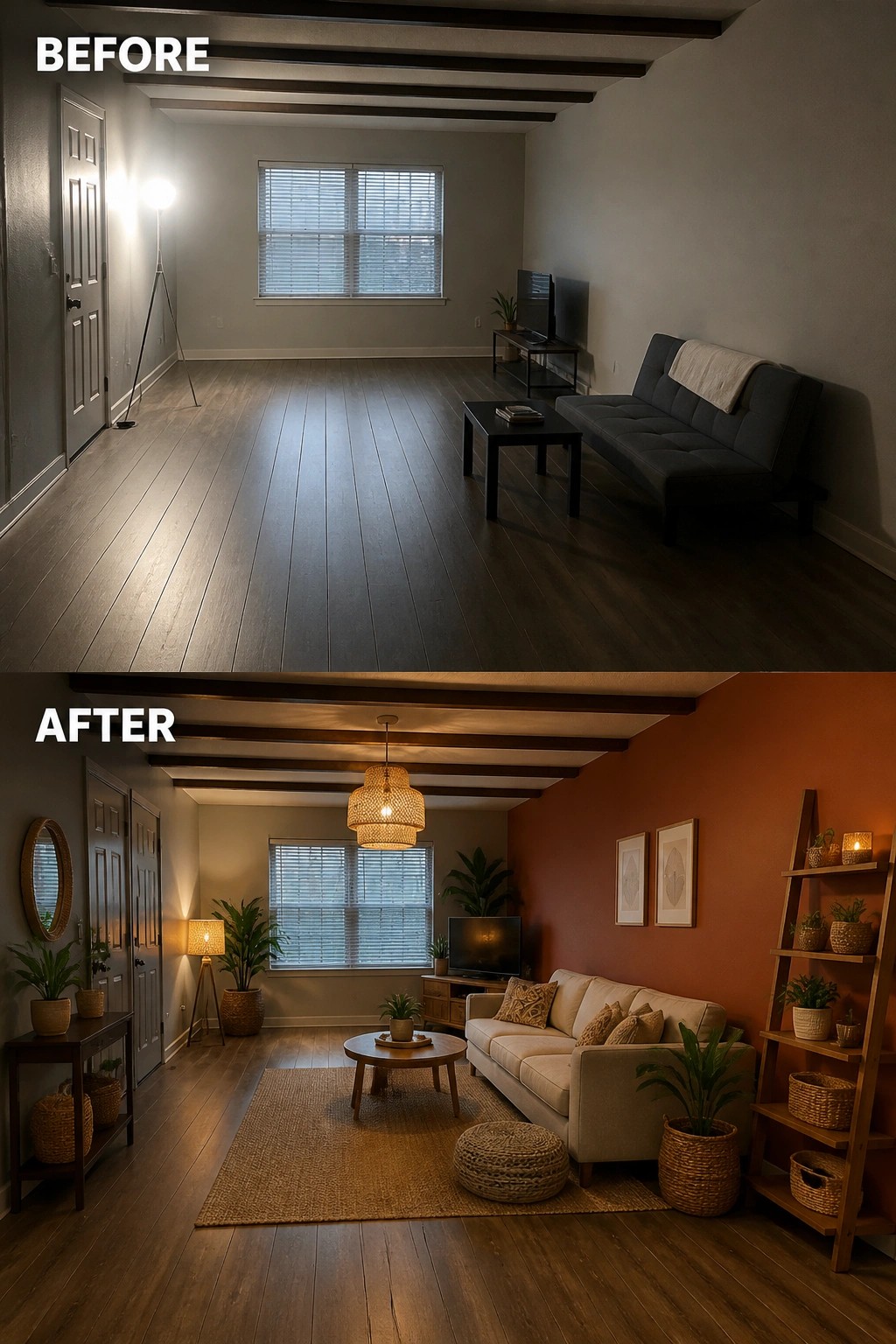
A dark living room with little natural light often feels flat and unwelcoming when it has only one harsh overhead source. In this case the space gained warmth by swapping that single bright lamp for several softer lights at different heights and by painting one wall a rich terracotta tone that reflects the new glow.
This approach works well in any room that gets limited daylight. Start with a few table lamps and a floor lamp placed near seating, then add one accent color on a single wall rather than repainting the whole room. Keep the rest of the walls light so the space does not close in, and use the colored wall to anchor the main seating area.
Create A Cozy Nook Under The Stairs
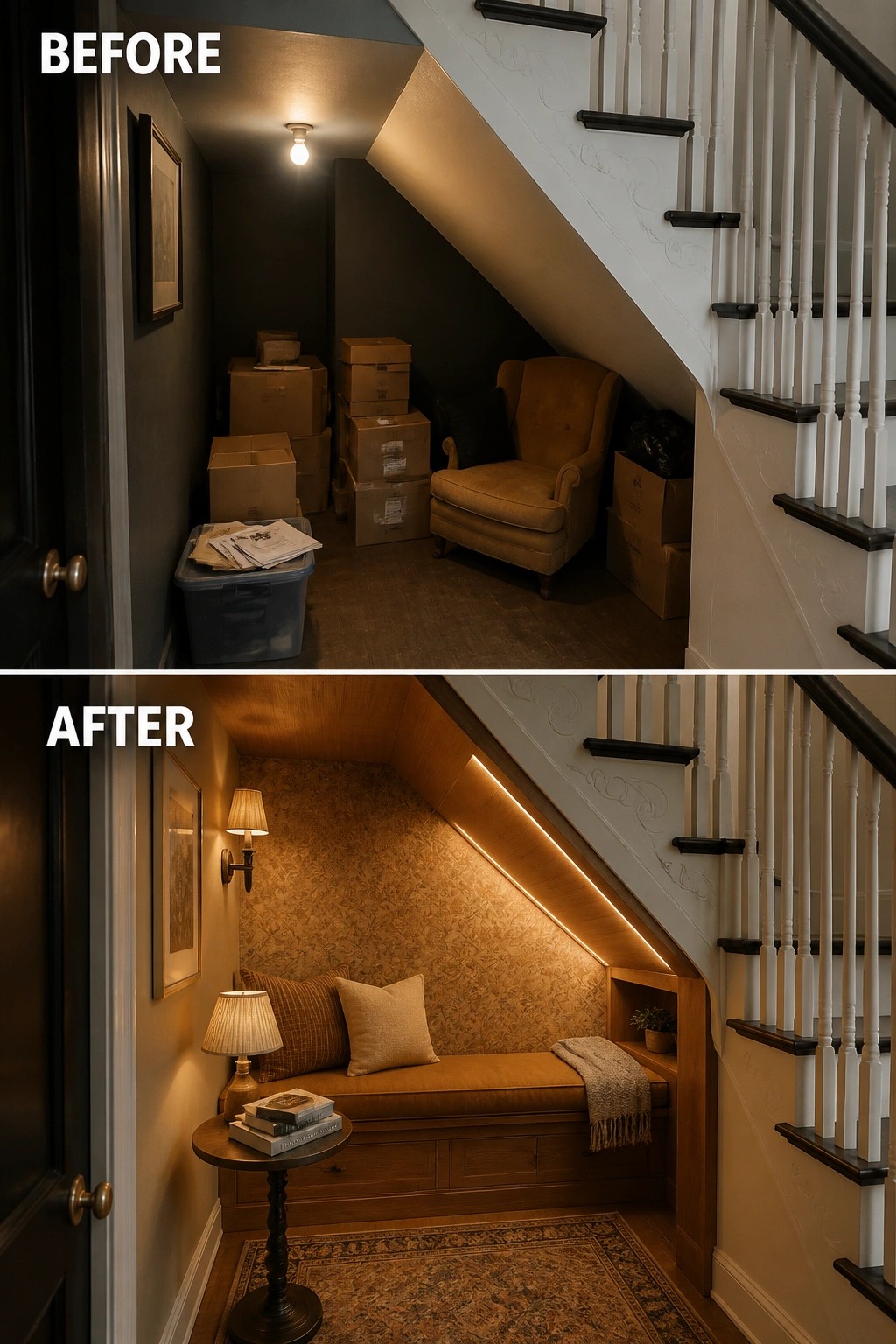
Many homes end up using the space under the stairs as overflow storage, which leaves it feeling dark and forgotten. Clearing out the clutter and adding a built-in bench with simple cushions turns the same spot into a quiet place to sit and read. Warm wallpaper and a mix of lamps and strip lighting make the low ceiling feel less closed in.
This idea works best in older homes where staircases often create odd corners. Keep the furniture low and the color palette soft so the nook stays calm rather than busy. Start with lighting and a bench before adding extra layers.
Layer Lighting And Add A Rug To Warm Up A Dark Room

Many rooms with limited natural light feel flat when they rely on a single ceiling fixture. This living room shifted from that overhead light alone to a mix of a hanging pendant, table lamps, and a floor lamp, plus a large woven rug that pulls the seating together and softens the wood floor.
The same idea works well in small apartments or older homes where windows stay small. Start with two or three lamps placed near seating so the light actually reaches where people sit, then add one rug sized to fit under the front legs of the sofa. Keep the rest of the room simple so the added light and texture do the main work.
Add Built-Ins Around The TV To Warm Up The Room
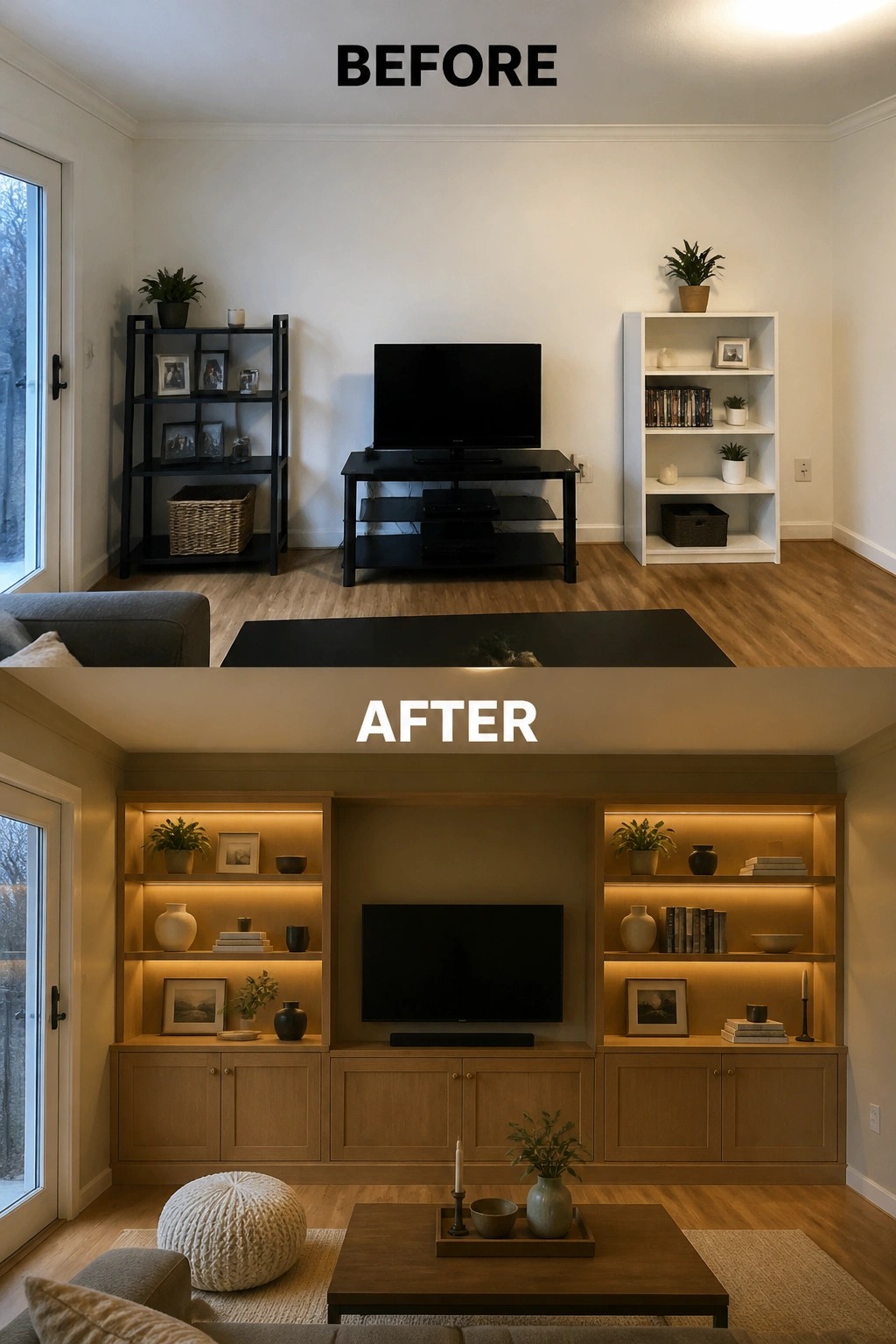
The before photo shows a TV sitting on its own stand with a black shelving unit on one side and a white bookcase on the other. That setup left the wall feeling scattered and a bit cold. In the after photo the three pieces were replaced with one run of wood built-ins that frame the TV and add storage below. The shelves are lit from within, which brings in a soft glow that helps the space feel brighter even when natural light is low.
This approach works well in rooms that need more warmth without adding clutter. Built-ins give you a single focal point instead of three separate pieces fighting for attention. If your room has a similar layout, measure the wall once and plan the cabinets and shelves to reach the same height on both sides of the TV. Stick with a medium wood tone and add simple strip lighting inside the shelves so the light stays even and useful at night.
Warm Up A Sparse Living Room With One Large Rug And Layered Lighting

A big area rug can pull an empty room together fast, especially when the floors are dark and the windows do not bring in much light. In this case the room went from feeling open and cold with only a small rug under the sofa to having a full-size patterned rug that holds the seating area in place. Adding a couple of lamps and some soft textiles on the chairs and sofa then gave the space a warmer tone without needing to repaint or change the floors.
This approach works well in rooms that feel too open or echoey. Start with the rug to mark where the furniture belongs, then add one or two lamps so the light sits at sitting height instead of coming only from the ceiling. Keep the rest of the pieces simple so the room does not get crowded, and choose textiles in one or two warm tones to tie everything together.
Use Lighter Curtains To Brighten A Dark Living Room

Heavy dark curtains can close off a room even when windows are present, which is exactly what happened in the before photo. Switching to lighter golden curtains that still provide privacy but let daylight through makes the whole space feel more open and inviting right away.
This approach works well in older homes or rooms that face away from direct sun. Keep the curtain rod the same but pick a softer fabric and a warmer tone. Then add a couple of lamps or sconces so the room stays cozy once the sun goes down.
Add Built-In Shelving To Warm Up A Dark Corner
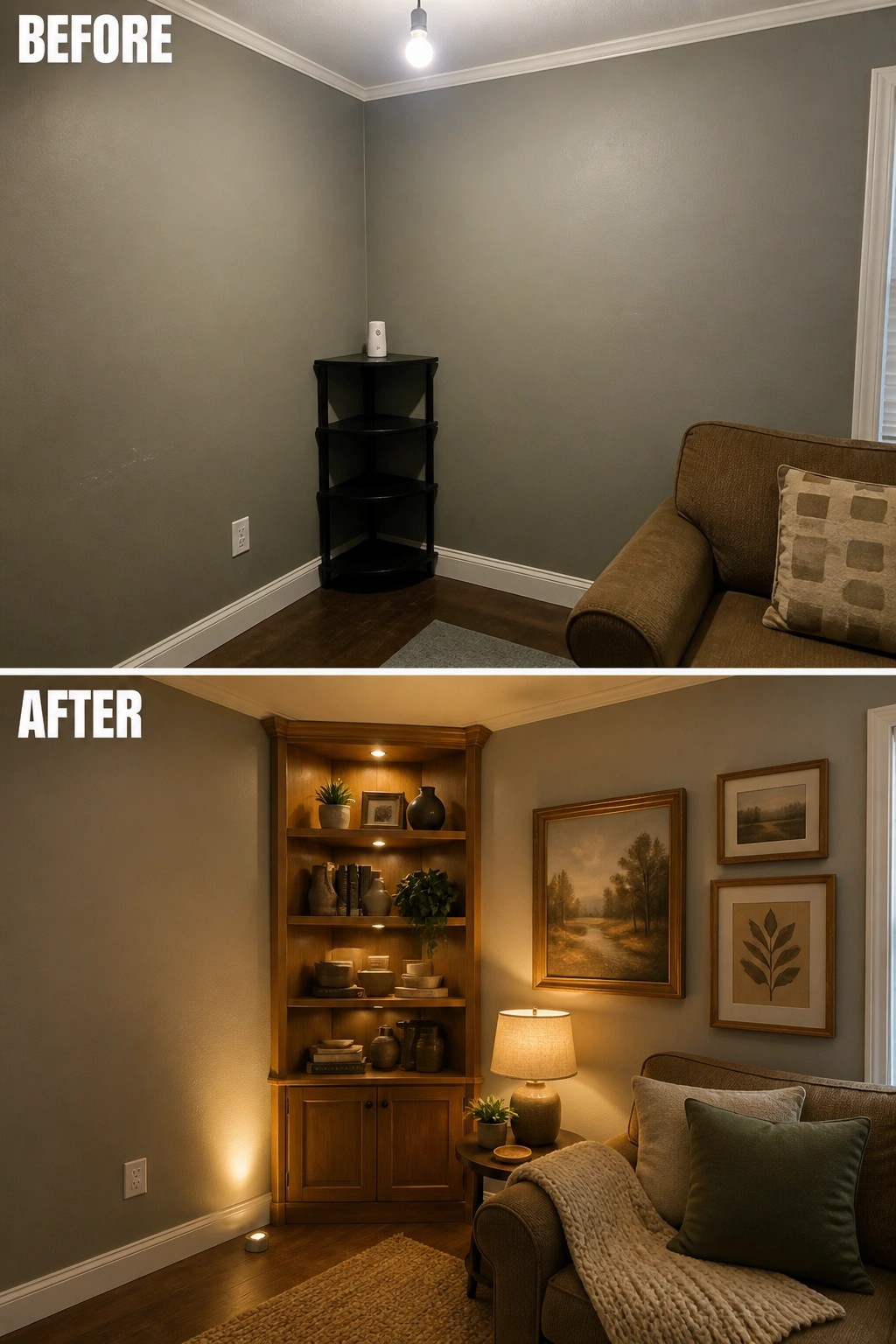
A plain corner with just a small shelf can leave a room feeling unfinished, especially when natural light is limited. Replacing that basic unit with a full built-in cabinet and shelving adds both storage and a place for layered lighting, which helps the space feel more inviting without needing extra windows.
This approach works well in older homes or smaller living rooms where one corner tends to stay empty. Start with the cabinet base for function, then add a few shelves with warm LED strips inside. Keep the styling simple so the lighting stays the main feature rather than crowding the shelves.
Add Warm Lighting To Soften A Dark Living Room

Many dark living rooms feel cold because they rely on one overhead light. Adding a couple of table lamps creates a softer glow that makes the space feel inviting without needing more windows.
This approach works best in rooms with gray walls or dark floors. Start with lamps on either side of the main seating area, then add a rug to pull the furniture together. Keep the scale simple so the room still feels open.
Use Layered Lighting To Warm Up A Dark Room
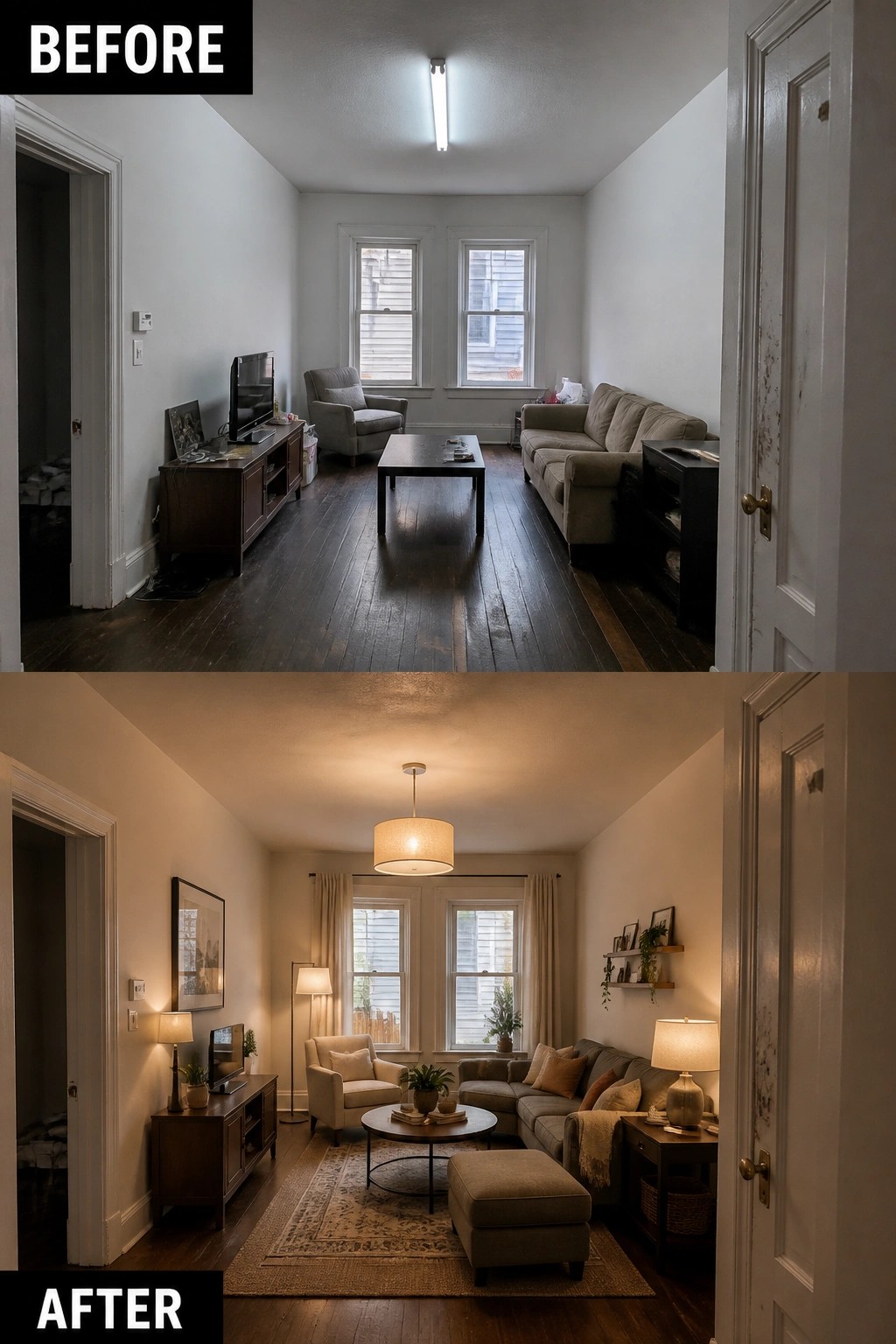
The main change here was replacing one harsh ceiling light with several softer sources. A pendant hangs in the center, a floor lamp stands near the chair, and table lamps sit on both sides of the seating. The rug and simple curtains also help pull the space together without adding much clutter.
This approach works well in older homes where windows are small or the room faces away from the sun. Start with one overhead light you actually use, then add two or three lamps at different heights. Keep the bulbs warm rather than cool, and place at least one lamp near where people sit so the light feels useful instead of just decorative.
Make The Fireplace Wall The Main Feature
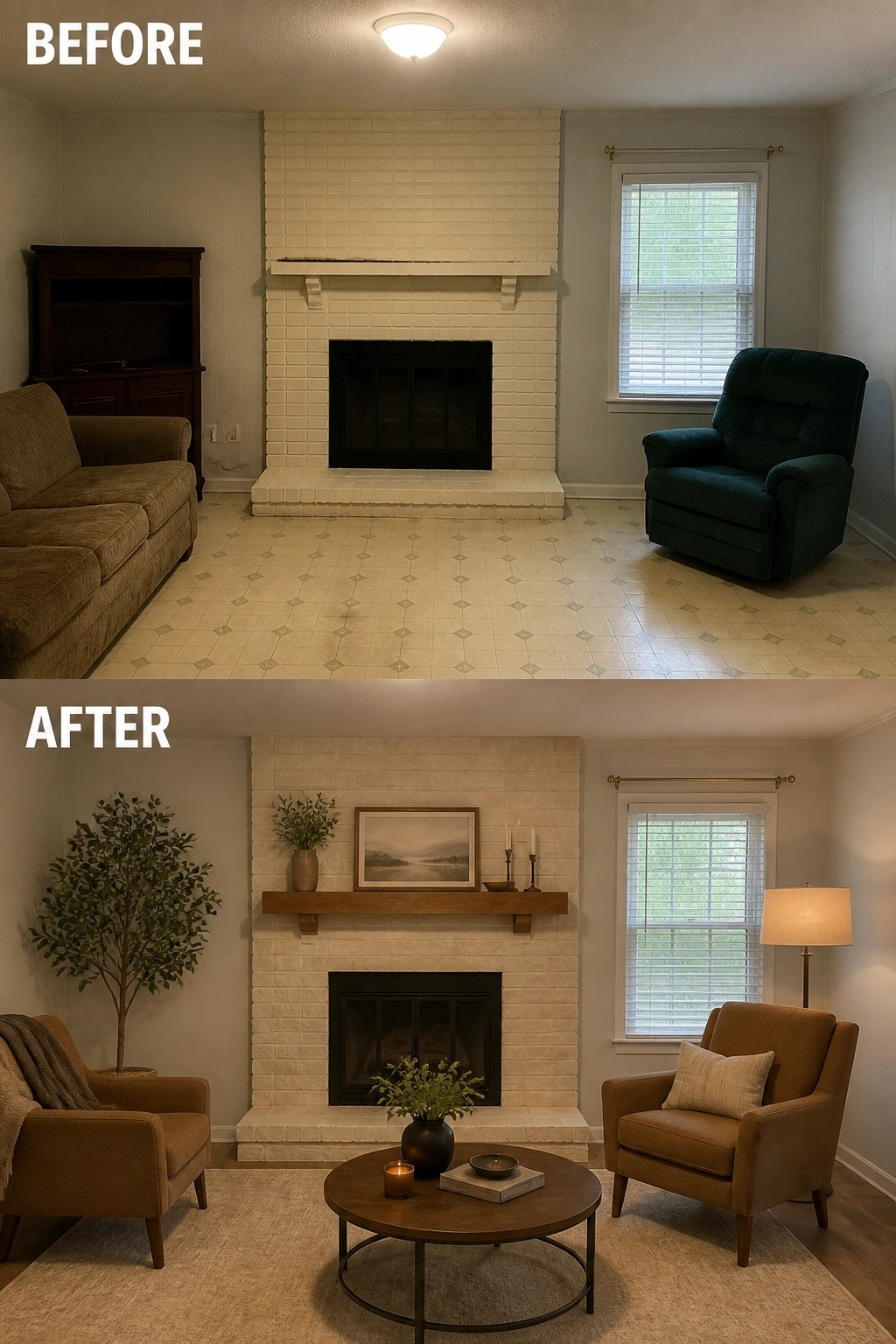
A fireplace often sits in the middle of a room but does little to hold it together when the wall above stays bare. Adding a wooden mantel gave this one a clear shelf for a few simple pieces, which pulled the whole space into focus and made the seating feel like it belonged there.
This works especially well in rooms that get little natural light. Keep the mantel styling light so it does not block what little daylight comes in, then add a rug under the chairs and table to mark the living area. The result feels finished without needing a full furniture overhaul.
Layer Lighting And Textiles To Warm A Dark Living Room
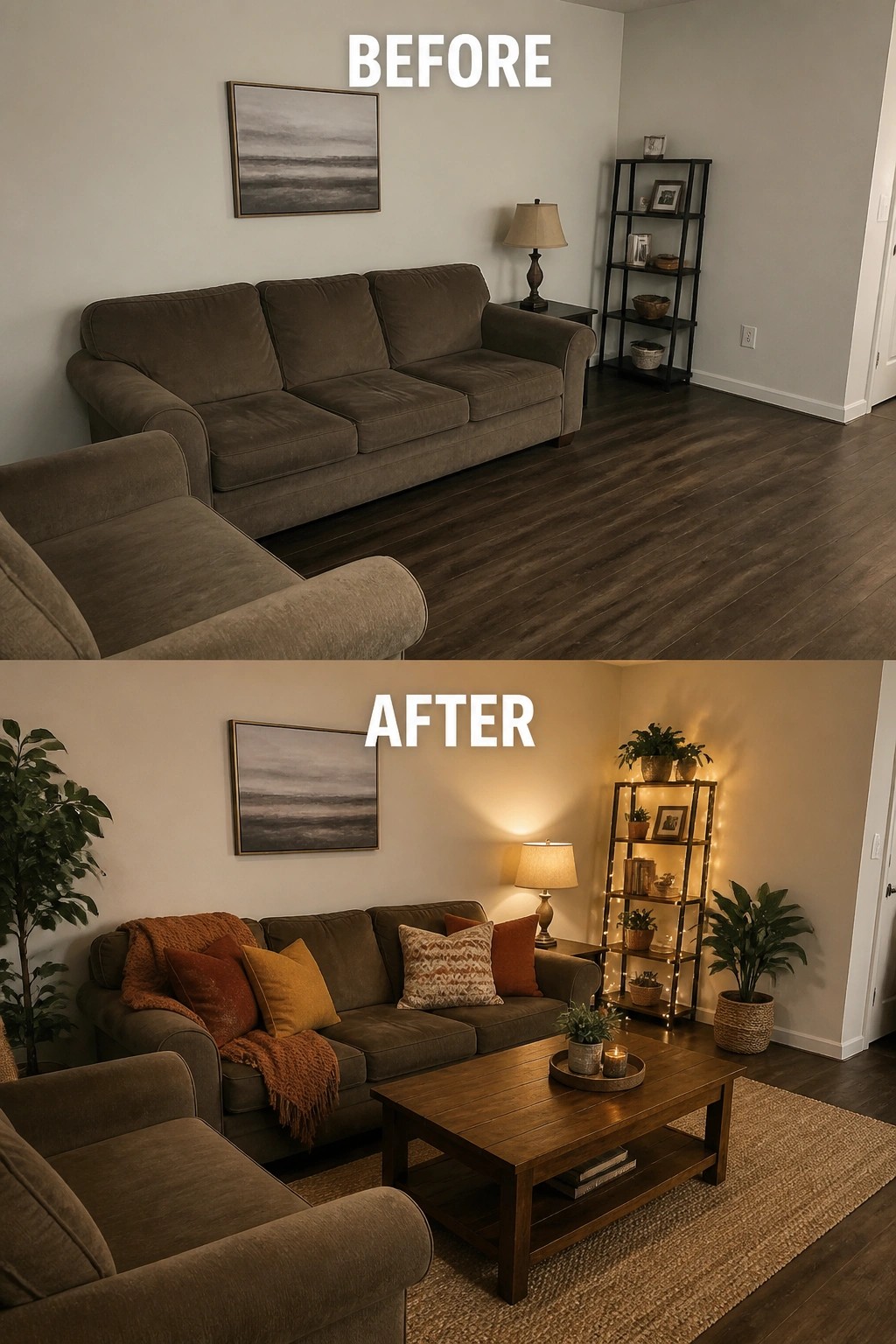
One simple way to make a dark living room feel warmer is to add layers of soft light and textiles. The before version had a plain sofa and little else, while the after version brought in a rug, a few pillows, a throw, and both a lamp and string lights to lift the space.
This idea works best in rooms with limited windows because multiple light sources and warm fabrics help reflect what light is already there. Start with one or two lamps near seating, then add a rug and a couple of pillows in similar tones. Keep the additions modest so the room stays open and easy to move through.
Use Open Shelving To Warm Up A Dark Living Room
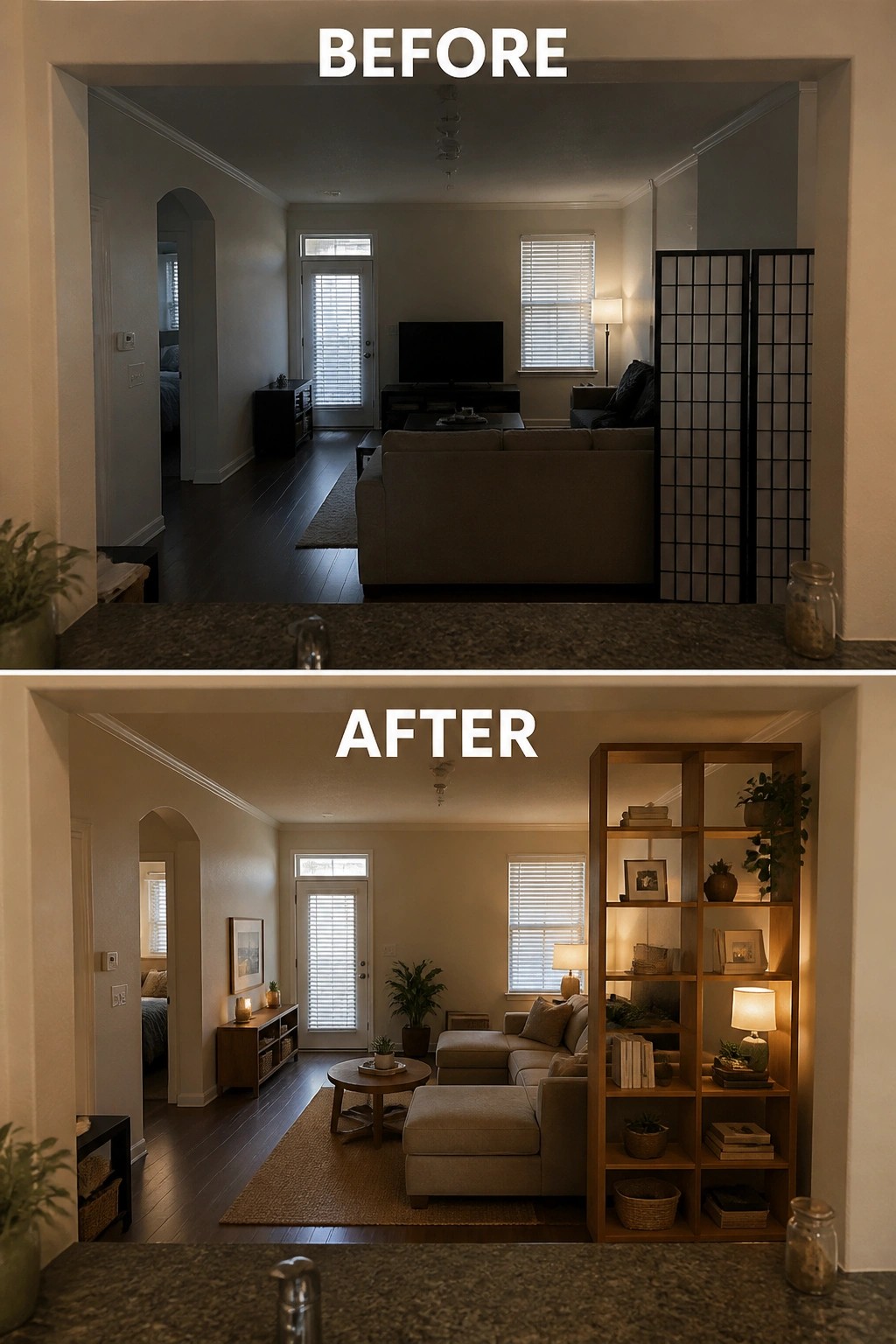
A solid room divider can make a living room feel smaller and darker than it really is. Replacing it with a tall open bookshelf lets light move through the space while giving you room for lamps, books, and plants that add warmth without closing things off.
This idea works best in homes where the living area needs some definition but still needs to feel connected to the rest of the house. Keep the shelves from getting too full and use a few lamps on different levels so the light spreads evenly at night.
Paint One Wall A Warm Color To Brighten A Neutral Room

A room with plain beige walls often feels flat when light is limited. Painting just the back wall a warm terracotta shade brings in depth and makes the space feel more inviting without a full repaint.
This approach works best in smaller living rooms that need a quick lift. Keep the other walls light, then add a few textured pillows, a throw, and a lamp or two so the warmth stays noticeable once the sun goes down.
Warm Up Cool Gray Walls With Paint And Layered Lighting

A cool gray room with one overhead light often feels flat and a little cold, even in the daytime. Switching the walls to a warmer neutral and adding a few lower light sources makes the same space feel softer and more welcoming without changing the furniture or layout much.
This approach works well in narrow entries or hallways that get limited sun. Start with the wall color first, then place lamps and sconces at different heights so light fills the room from more than one direction. Keep the fixtures simple so they do not crowd the space.
Frequently Asked Questions
Q: What if my walls are already a dark color and I can’t paint them lighter? A: Layer in plenty of warm lighting with multiple lamps instead of relying on one overhead fixture. Swap heavy curtains for sheer ones that let in more daylight during the day. Light colored rugs and throws can also bounce some brightness back into the space.
Q: How do I pick furniture without making the room feel even smaller? A: Go for pieces with lighter wood tones or fabric in soft neutrals that reflect light better than black or deep brown. Avoid crowding the floor with too many bulky items and leave some open paths. A single statement chair in a pale shade can open things up nicely.
Q: Can I still use mirrors if the room has almost no windows? A: Yes, place one on a wall facing your main light source like a lamp or doorway to spread what light you do have. Keep the mirror size proportional so it adds brightness without overwhelming the layout.
