

Spare rooms often end up sitting empty because nothing about the space suggests what it should become.
I have found that figuring out a basic layout before adding anything else usually makes the whole room start to make sense.
Layout changes matter most.
Once the main pieces are in place, even simple additions like storage or better lighting help the room feel less like an afterthought and more like part of the house.
Testing one or two of these ideas at a time has shown me how a forgotten space can become something genuinely useful without needing a full plan from the start.
Turn A Bare Spare Room Into A Functional Bedroom
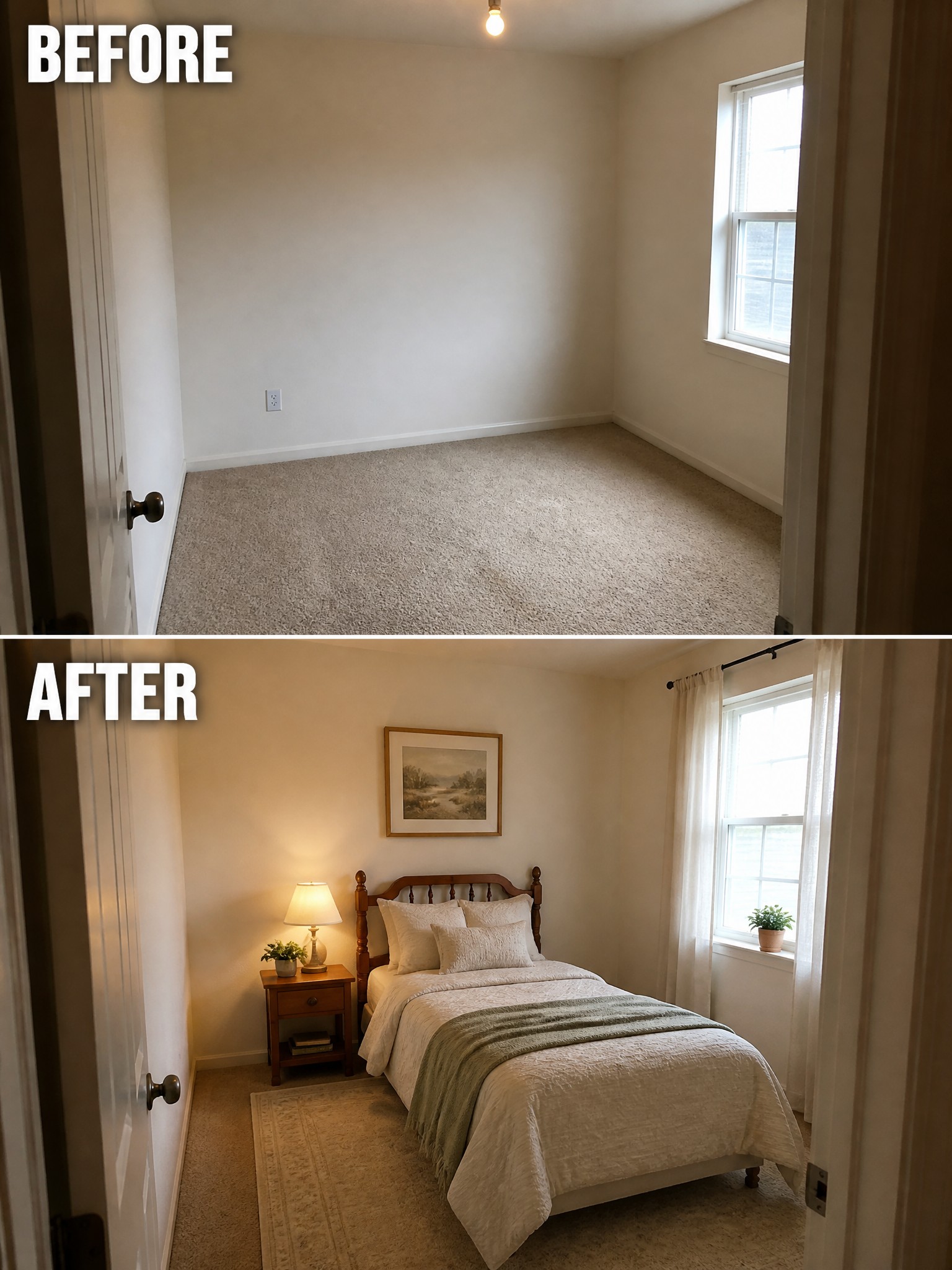
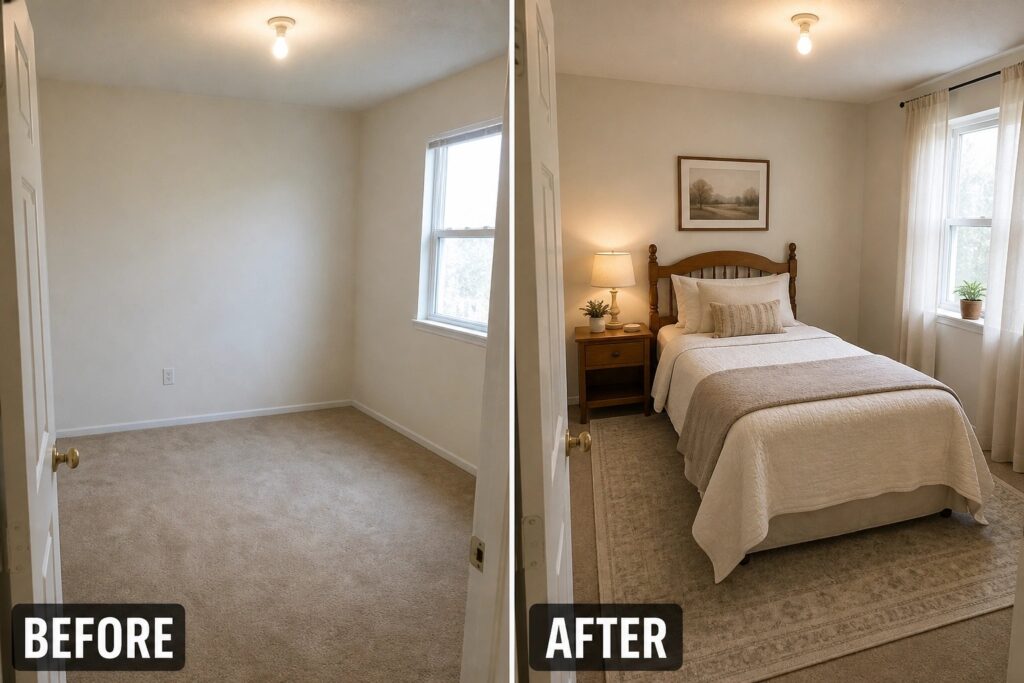
An empty room with just carpet often feels like wasted space. Placing a bed, adding a rug underneath, and bringing in curtains plus a couple of lamps gives the room a clear purpose and makes it comfortable right away.
Start with the bed to set the layout, then add a rug to mark the main area. Keep other pieces small so the room stays open and easy to move around in. This works well in spare rooms that need to serve as a guest space without much extra effort.
Turn A Cluttered Spare Room Into A Craft Space

Spare rooms often fill up with boxes and random items until they feel like dead space. Clearing the clutter and adding a desk with a stool turns the room into a place where you can actually sit down and work. The pegboard and open shelving with labeled bins keep tools and supplies in reach without making the room feel packed.
This idea works best in small rooms that have no clear purpose. Decide on the main activity first, then bring in only the furniture and storage you need for that use. Simple open shelves and a pegboard keep things organized without requiring a big budget or major construction.
Add Built-Ins To Give A Spare Room Purpose
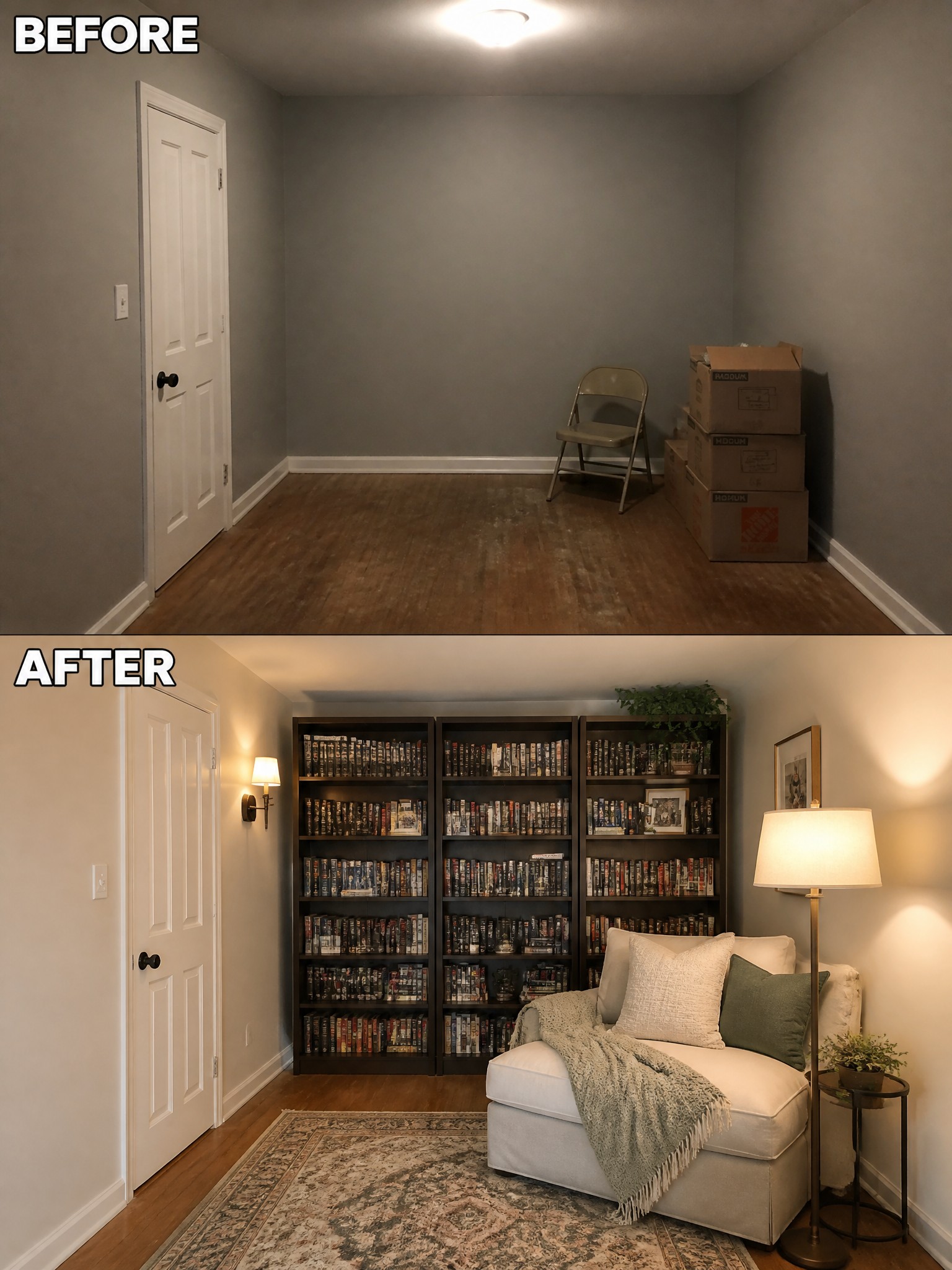
An empty spare room often stays that way because it has no real function. Built-in bookshelves along one wall can solve that by creating a clear purpose without needing a big renovation. The space shifts from a bare floor with just a folding chair to a room that actually invites use.
This idea works best in homes where extra rooms sit unused and need a simple reason to exist. Measure the longest wall first, then install the shelves and fill them gradually. Keep the seating and lighting modest so the room stays practical rather than overcrowded.
Use Paint And Textiles To Warm Up A Bare Room

An empty room with plain walls and carpet often feels cold and unfinished. Painting one wall a warm terracotta color and adding a large patterned rug right away makes the space feel grounded and much more inviting. Layering a bed with simple linens, a throw, and a macrame piece above it then gives the room a clear purpose without needing a lot of extra pieces.
This approach works especially well in spare rooms that lack any real plan. Start with the paint and rug to set the tone, then add curtains and a couple of lamps to finish the look. It keeps the room from feeling like leftover space and turns it into something you actually want to use.
Declutter First To Give A Spare Room A Clear Purpose
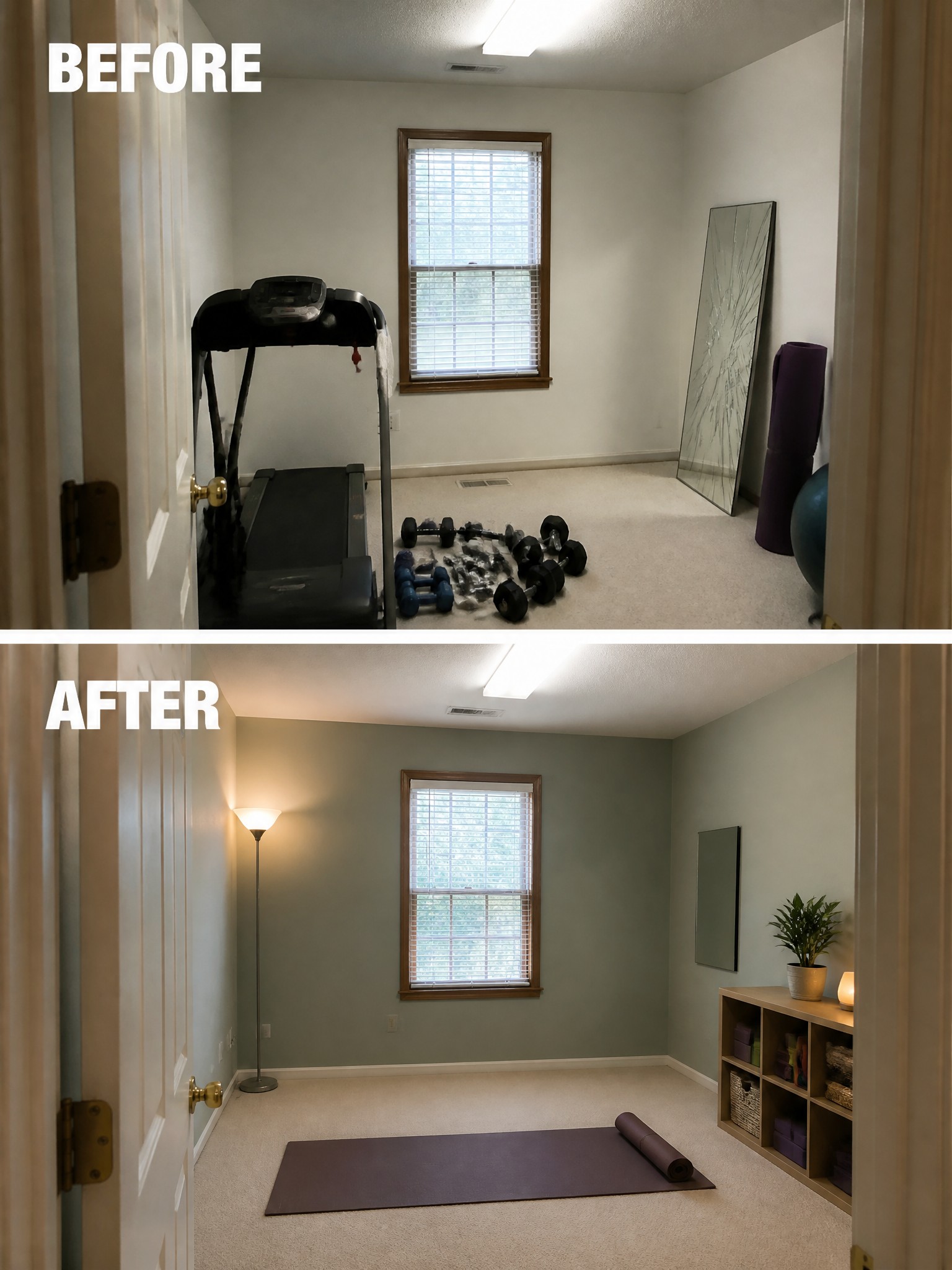
A spare room can quickly fill with random exercise gear and leftover items until it feels unusable. Removing the treadmill and scattered weights opens the space up completely. Once the floor is clear, a simple coat of paint and one yoga mat are enough to give the room a single, calm purpose.
This idea works best in any extra room that has turned into storage. Decide what you actually want to use the space for, then keep only what supports that activity. A low storage unit can hold the rest without crowding the floor.
Turn A Bare Spare Room Into A Home Office

An empty spare room often sits unused because it lacks any clear purpose. Adding a desk, chair, and rug gives the space a function without needing a full renovation. The rug defines the work zone on the carpet while the desk fits neatly under the window for natural light.
This idea works best in rooms that already have decent natural light and at least one clear wall. Keep the furniture scale modest so the room still feels open, and place the desk first before adding smaller pieces like shelves or a lamp.
Use A Colorful Mat To Define A Play Area

A plain carpeted room can feel like it has no real purpose until you add something that marks it as a play space. The colorful foam mat does most of the work here by giving the floor a clear boundary and making the room feel ready for kids right away.
This idea works well in spare rooms that sit empty most of the time. Start with the mat, then bring in low storage and a small table so the space stays practical without getting overcrowded. It keeps toys in one area and makes cleanup simpler at the end of the day.
Give A Bare Spare Room A Clear Purpose
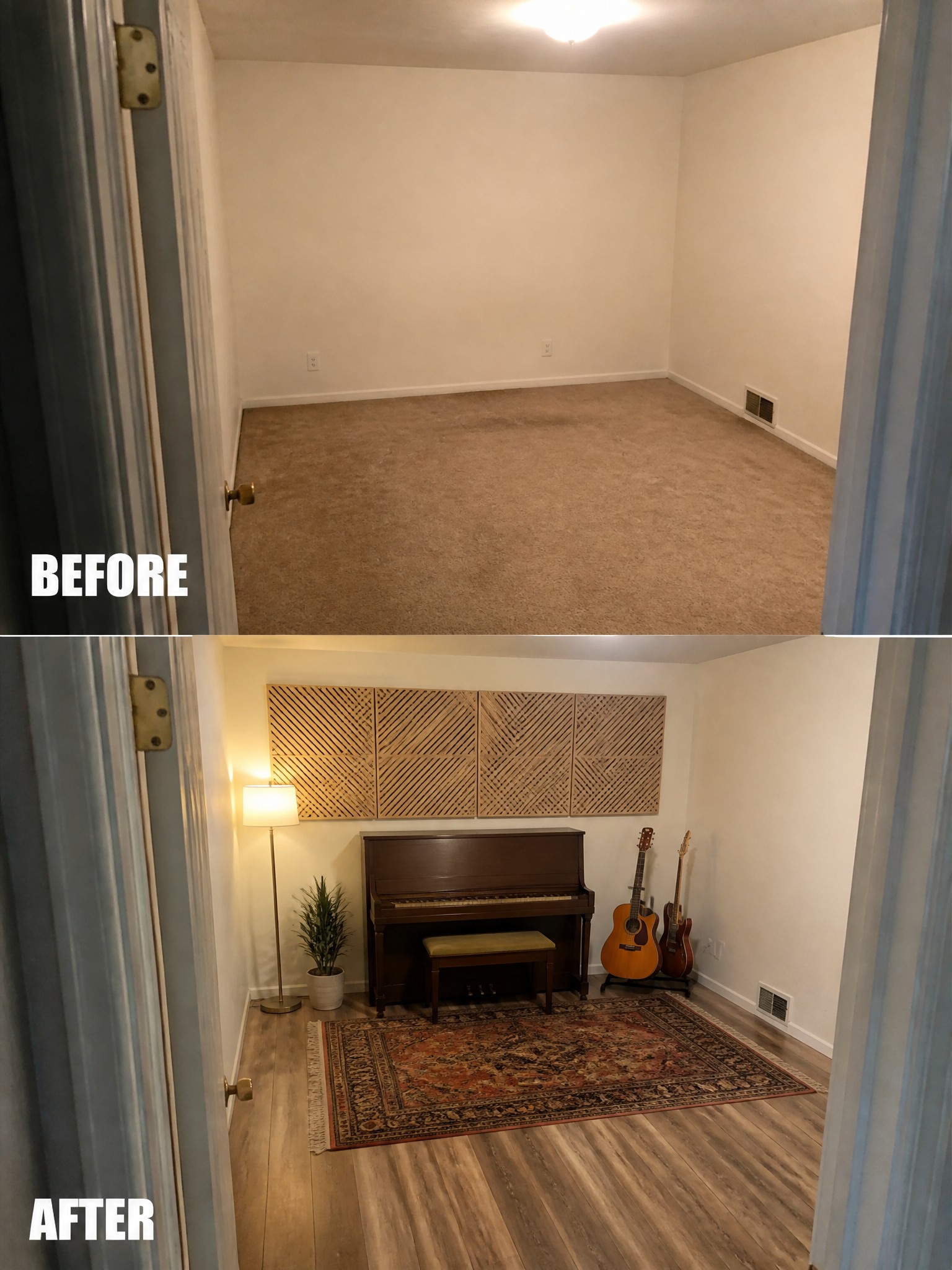
An empty room with nothing but carpet can feel like wasted space. Adding one main piece of furniture like a piano gives the room an immediate reason to exist, while a rug and a few lamps keep everything grounded and usable.
This idea works well in spare rooms that lack a plan. Choose one activity or function first, then bring in the largest piece that supports it. Keep the rest simple so the room stays easy to move around in.
Turn An Empty Spare Room Into A Walk-In Closet

An empty spare room often becomes a place to store boxes and overflow items. Here the space shifted from a bare carpeted room with a portable wardrobe and scattered boxes to one lined with open shelving and hanging rods that keep clothes and accessories visible and sorted.
This idea works best in homes with an extra bedroom that is not needed for sleeping. Measure the longest walls first and add basic shelving and rods before bringing in any decor. Leave the middle of the room open so you can still move around easily and add a small rug if you want a softer floor underfoot.
Use Curtains And Rugs To Finish A Plain Room

A spare bedroom often starts out looking half done, with just the basics and nothing to pull the space together. Adding curtains, a rug, and a few layers of bedding and lighting turns the same room into something that actually feels like a place to rest. The biggest shift here comes from softening the hard edges with fabric and giving the floor some definition.
This approach works well in any room that feels too open or temporary. Start with window treatments and a rug sized to the bed area, then add a couple of lamps so the space has light at night without relying only on the ceiling fixture. Keep the rest simple so the room stays easy to maintain.
Turn An Empty Spare Room Into A Guest Bedroom

An empty room often sits unused because it lacks any clear purpose. Adding a bed that fits into the recessed wall area, along with a rug and simple bedding, turns the space into a functional bedroom right away. The nightstand and lamp on one side keep the layout practical without filling the whole floor.
This approach works best in homes that have extra rooms but no real plan for them. Choose the bed placement first, then add just enough layers to make the room feel complete. It suits small homes or apartments where a spare room needs to serve as a guest space without major changes.
Turn A Recessed Nook Into A Workspace
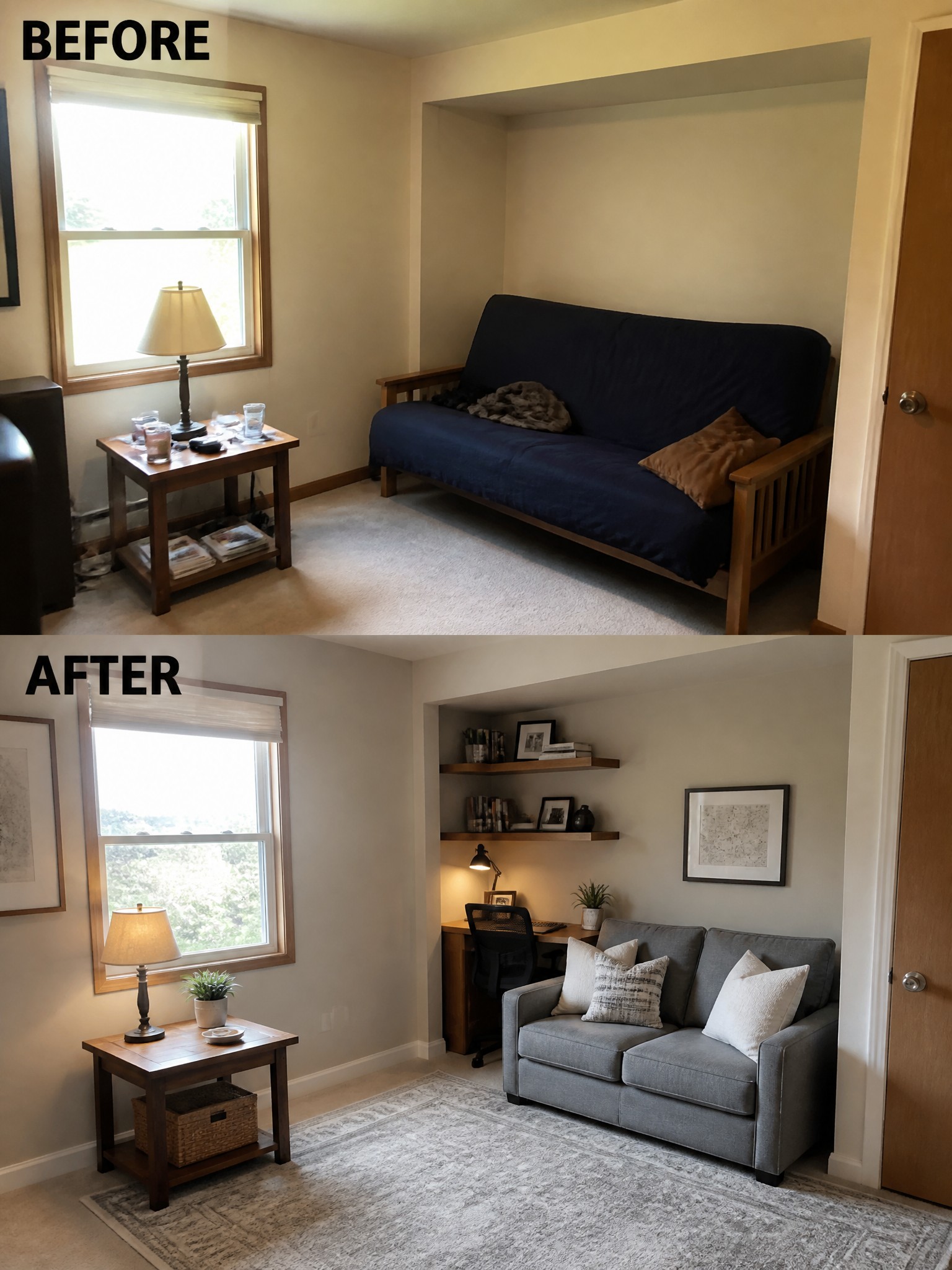
Many rooms have a recessed wall that ends up wasted or filled with whatever furniture happens to fit. Here the space held a futon with little else going on. Floating shelves above a compact desk gave the nook a clear job as a workspace while the rest of the room stayed open for seating.
This idea suits spare rooms that need to handle both living and working without feeling cramped. Keep the shelves shallow and limit what sits on them so the area stays useful instead of cluttered. A rug helps separate the zone from the rest of the floor plan.
Make An Empty Room Feel Finished
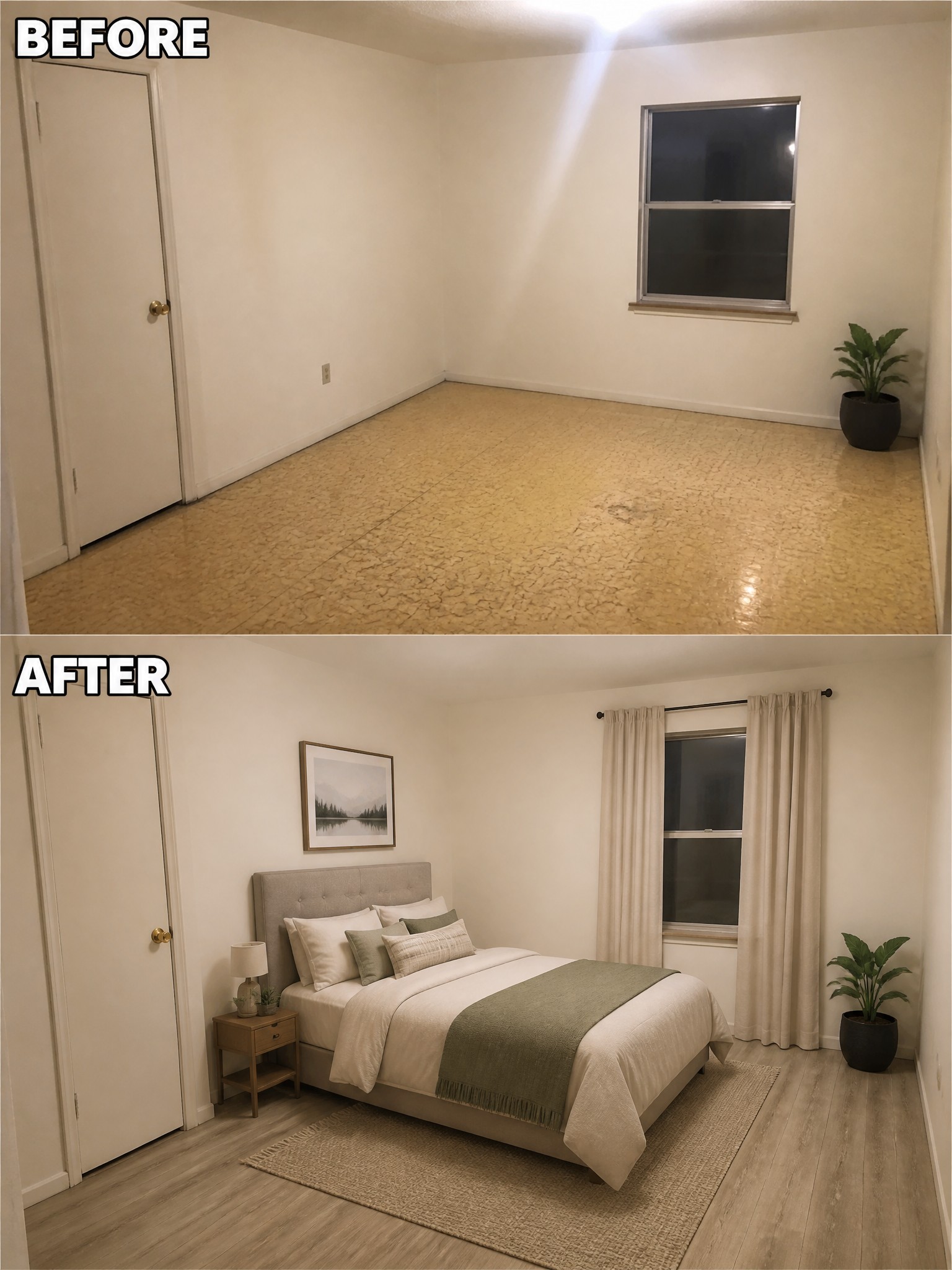
An empty room often stays unused because it lacks any sense of purpose. Adding a bed as the main piece, along with a rug to anchor it and curtains to soften the window, gave this space a clear function and made it feel like a real bedroom instead of leftover square footage.
This idea works best in spare rooms that have no built-in role. Place the largest item first to set the layout, then add just enough textiles and lighting to make the room comfortable without crowding it. The same approach can turn a guest room, office, or storage space into something usable.
Turn A Spare Room Into A Simple Workspace

A spare room with just a folding table often feels temporary and unfinished. Replacing the table with a proper desk and adding wall shelves gives the space a clear reason to exist. The painted geometric wall also helps by breaking up the blank surfaces and making the room feel more intentional.
This idea works best in homes that have an extra bedroom sitting unused. Place the desk against the longest wall so the room has a natural focus, then add only the storage you actually need. Keep the rest of the space open so the room stays practical instead of crowded.
Turn An Empty Spare Room Into A Usable Space
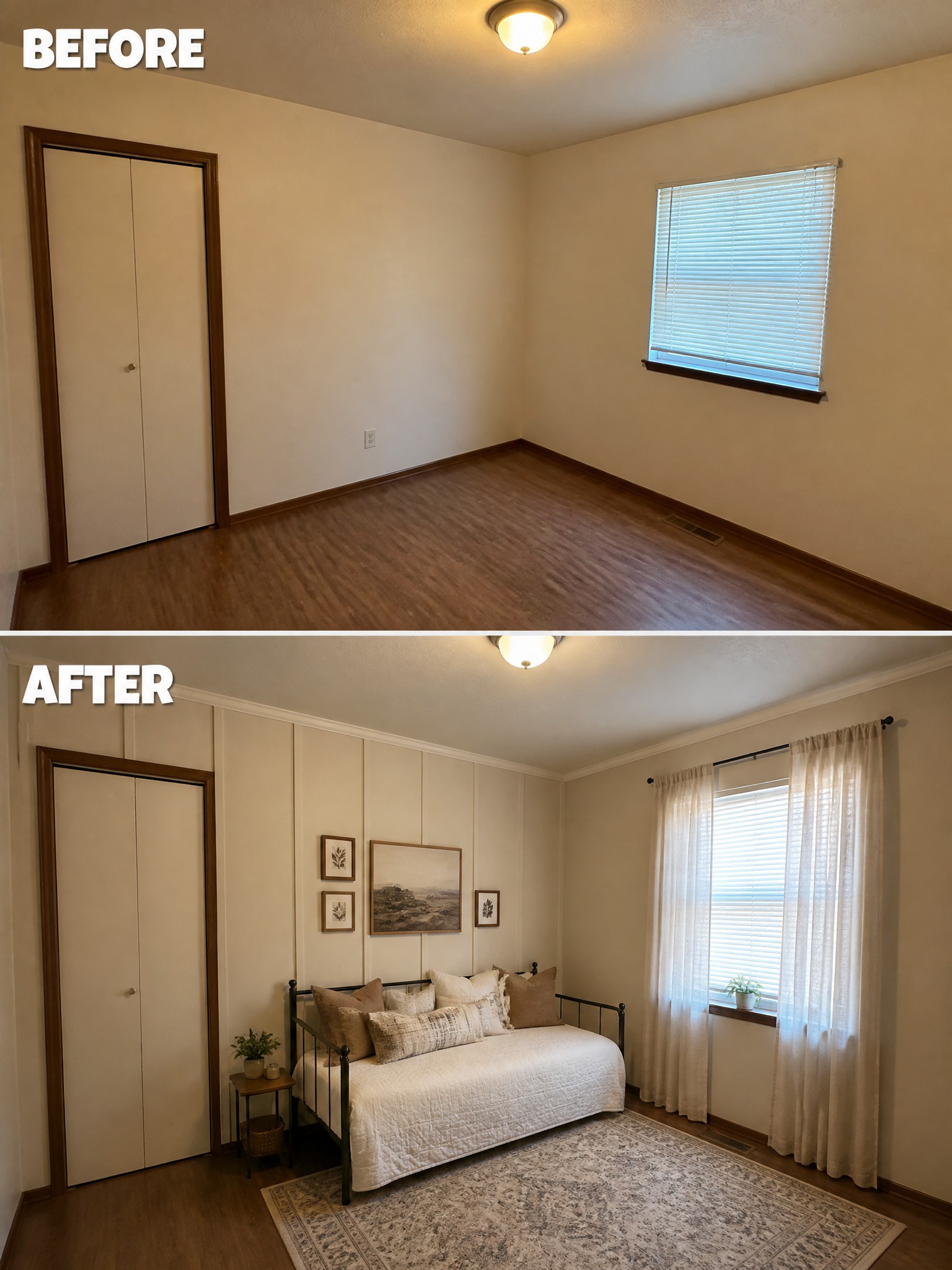
An empty room often stays that way because people wait for a big plan. In this case, the space went from bare walls and floor to a simple daybed setup with a rug underneath and curtains at the window. Those few additions gave the room a clear reason to exist without any major construction.
The same approach works in most spare rooms that lack a defined purpose. Start with one main piece of furniture sized to the room, then add a rug to mark the area and curtains to soften the windows. Keep the rest minimal so the space stays flexible for guests or storage later.
Turn A Cluttered Spare Room Into A Craft Space
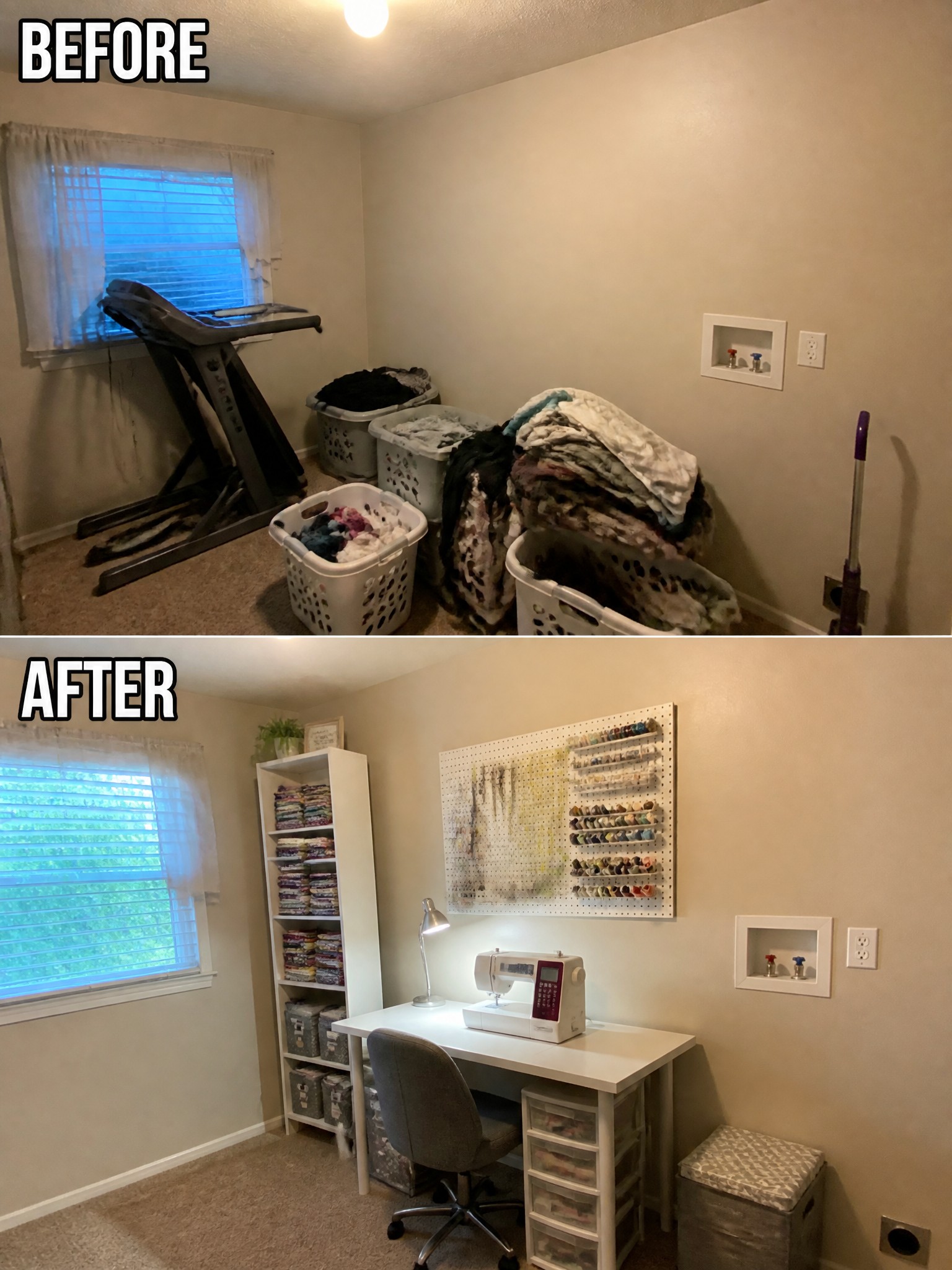
A spare room often ends up as a dumping ground for laundry and random items. Clearing the floor and adding a simple desk, a tall shelf unit, and wall storage turns the same space into a place where someone can actually sit down and work on projects. The biggest shift comes from giving the room one clear purpose instead of letting it stay a catch-all.
This idea works well in any extra bedroom or bonus room that lacks a defined use. Start by removing everything that does not belong to the hobby, then bring in basic storage that matches the scale of the room. A small desk and vertical shelves keep the floor open and make the space feel intentional rather than crowded.
Finish A Plain Room With A Few Key Pieces

An empty room often feels unfinished even when the walls and carpet are already in place. Adding a console table, a mirror, a lamp, and curtains gives the space a clear purpose and makes it feel like a real room instead of leftover space.
This approach works best in spare rooms or guest areas where you do not need a lot of furniture. Keep the layout simple, add one or two soft layers like curtains and a rug, and stop before the room starts to feel crowded.
Clear Out Clutter Before Furnishing A Spare Room
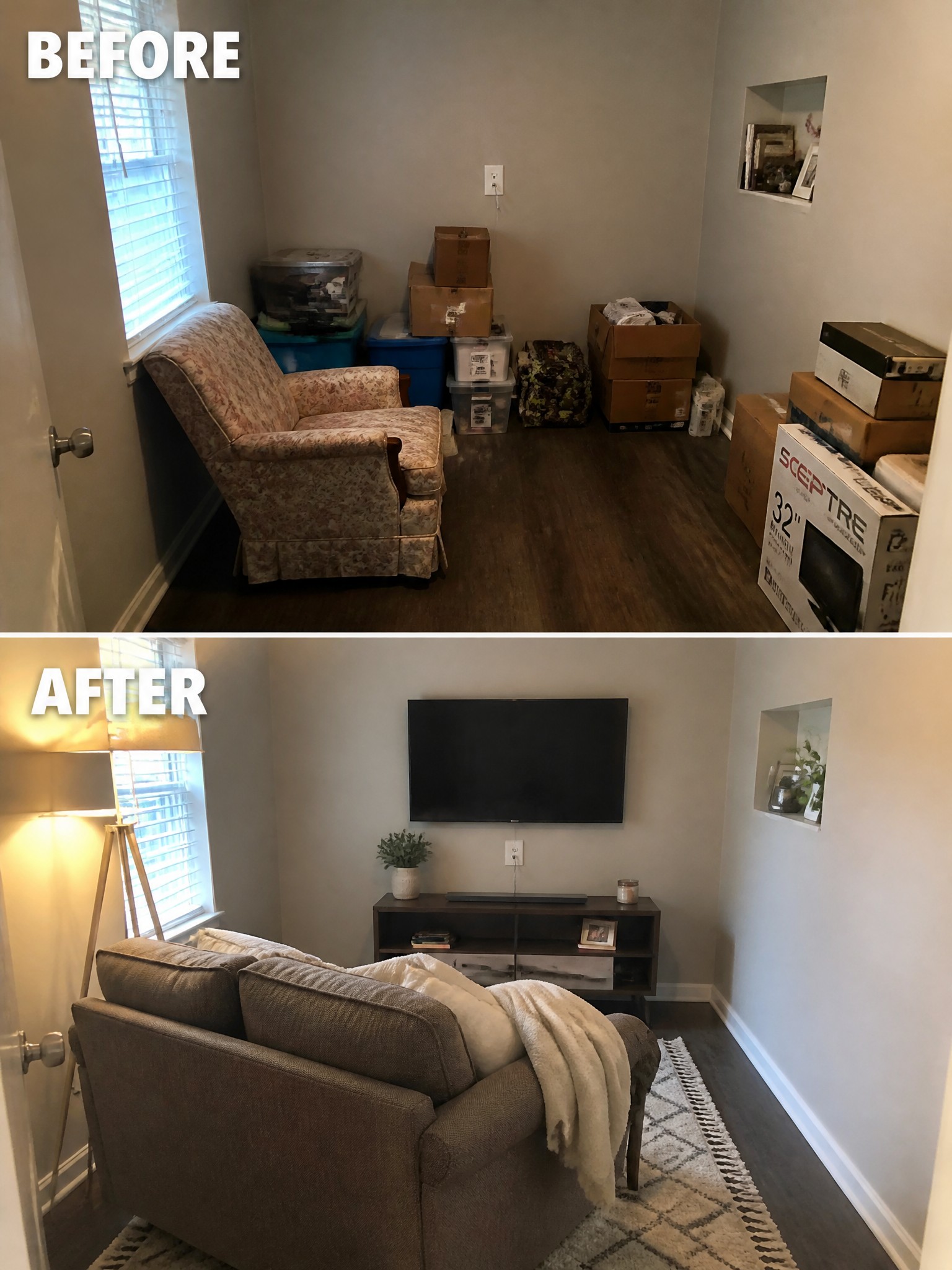
Many spare rooms end up as storage spaces because boxes and old furniture pile up quickly. Once the clutter is removed, the room suddenly has space for a proper seating area and a simple media console under the TV. The change turns an unused corner into a room people actually want to sit in.
Start by sorting what needs to stay and what can go elsewhere in the house. After the floor is clear, choose one main seating piece and build around it rather than trying to fit furniture among the boxes. This approach works well in small homes where every room needs a clear purpose.
Use Curtains And Plants To Finish A Bare Bedroom
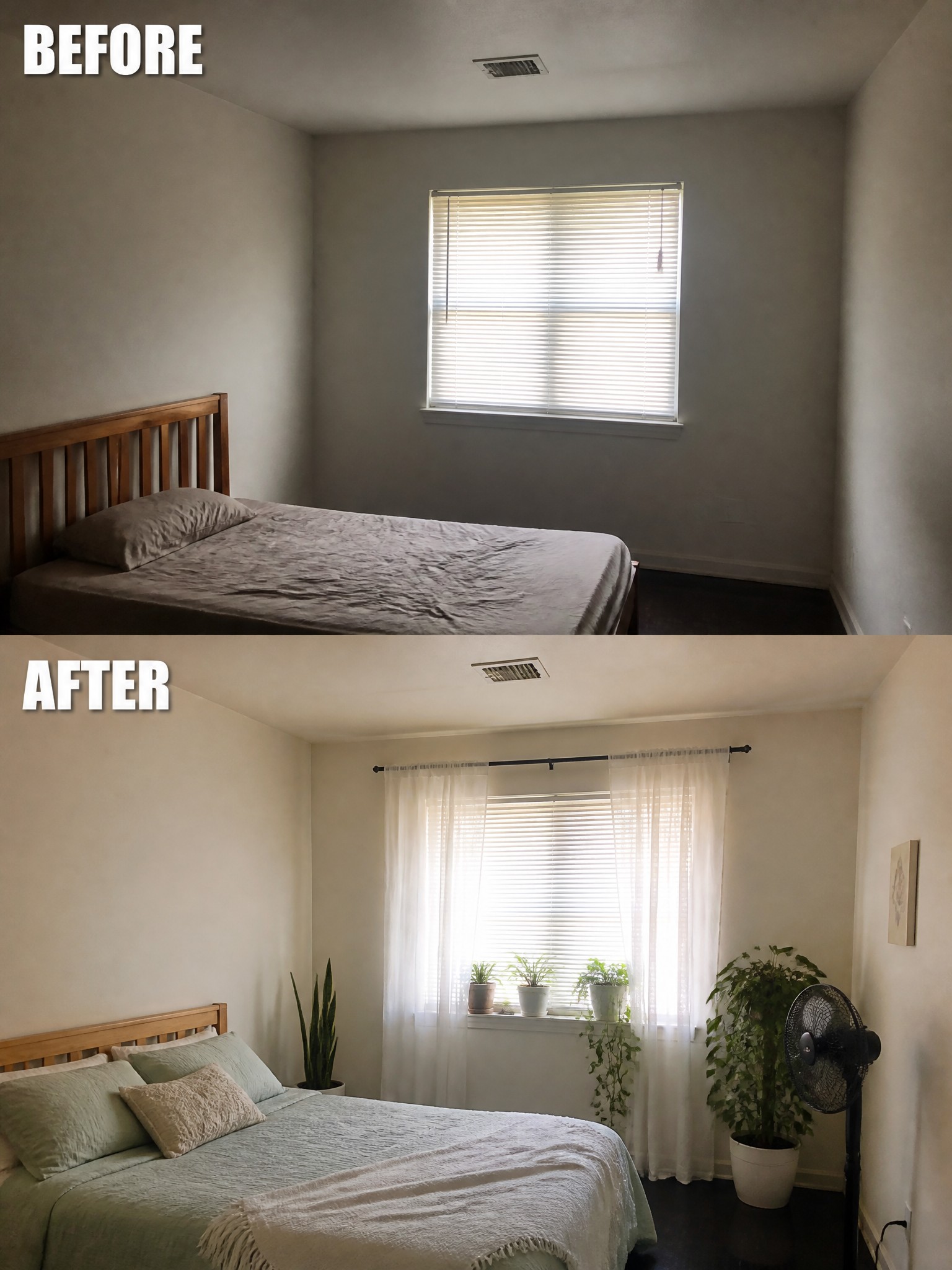
A plain bedroom with just a bed and an uncovered window can feel cold and unfinished. Adding sheer curtains softens the light and creates a calmer look, while a few well-placed plants bring life into the space without much effort.
This idea works especially well in spare rooms or guest bedrooms that rarely get much attention. Focus first on window treatments that suit the light, then add plants that match the room’s conditions. Keep the rest of the furniture simple so the new layers stand out.
Turn An Empty Spare Room Into A Simple Bedroom

An empty room often sits unused because there is no clear starting point. Adding a bed and a rug gives the space a purpose right away. The bed sets the main function while the rug defines the area and makes the floor feel warmer and more finished.
This idea suits spare rooms that need to work as guest space without much effort. Place the bed first to decide the layout, then choose a rug large enough to sit under the front legs. Keep other pieces minimal so the room stays practical rather than crowded.
Turn An Empty Spare Room Into A Bedroom With Storage

An empty room often stays that way because people are not sure what to put in it. Adding a bed with drawers built into the base and a couple of wall shelves above it gives the space a clear purpose without crowding the floor. The before photo shows just a pile of bedding on the carpet, while the after shows how one main piece of furniture can make the room feel finished and usable.
This idea works well in homes where spare rooms double as guest space or overflow storage. The drawers handle extra bedding and clothes, and the shelves keep things organized without needing a full dresser. Focus on a bed that fits the room size first, then add simple shelves if there is wall space left.
Layer Textiles To Warm Up A Bare Spare Room
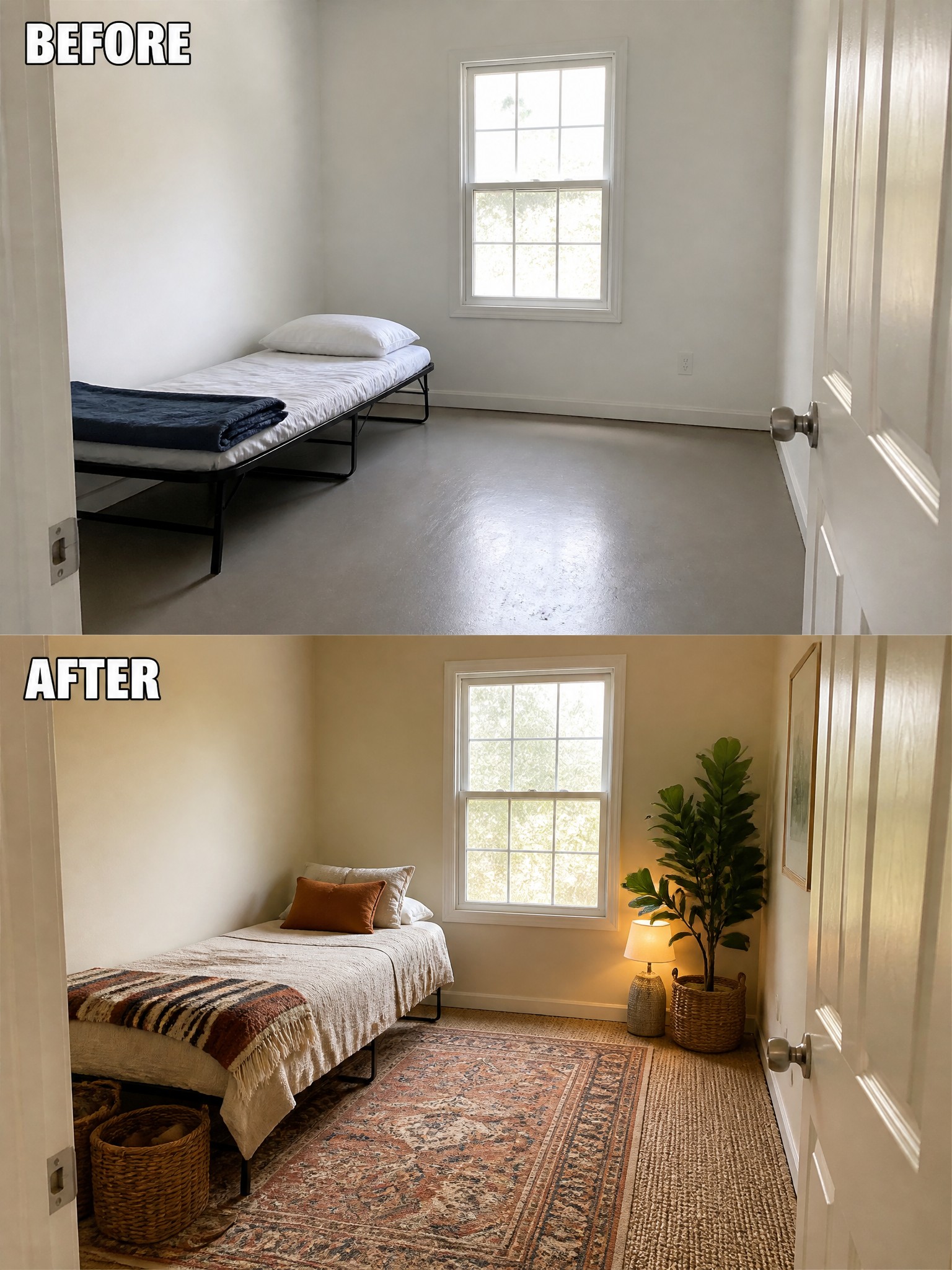
A spare room with just a bed and bare floors can feel cold and unfinished. Adding a rug, a heavier throw, and a few pillows makes the space feel grounded and ready to use right away.
This approach works well in any small room that lacks purpose. Start with one large rug to define the area, then layer in soft textiles and one or two simple lamps so the room feels complete without needing major furniture changes.
Frequently Asked Questions
Q: How do I even begin if I have zero ideas for the spare room?
A: Walk into the room and list three things you like about it right now. Then try moving one piece of furniture to a new spot to see how it feels.
Q: Will these transformations work if my spare room is small?
A: Focus on one wall or corner at a time instead of the whole space. Light colors and fewer items keep it from feeling cramped.
Q: What if I need the room to work as a guest bedroom sometimes?
A: Pick a sofa bed or a daybed that looks like regular seating. Store extra bedding in a basket that fits the new setup.
Q: How can I refresh the space without spending much money?
A: Rearrange what you own and add plants or artwork from other rooms. Swap out lampshades for a quick new look.
