
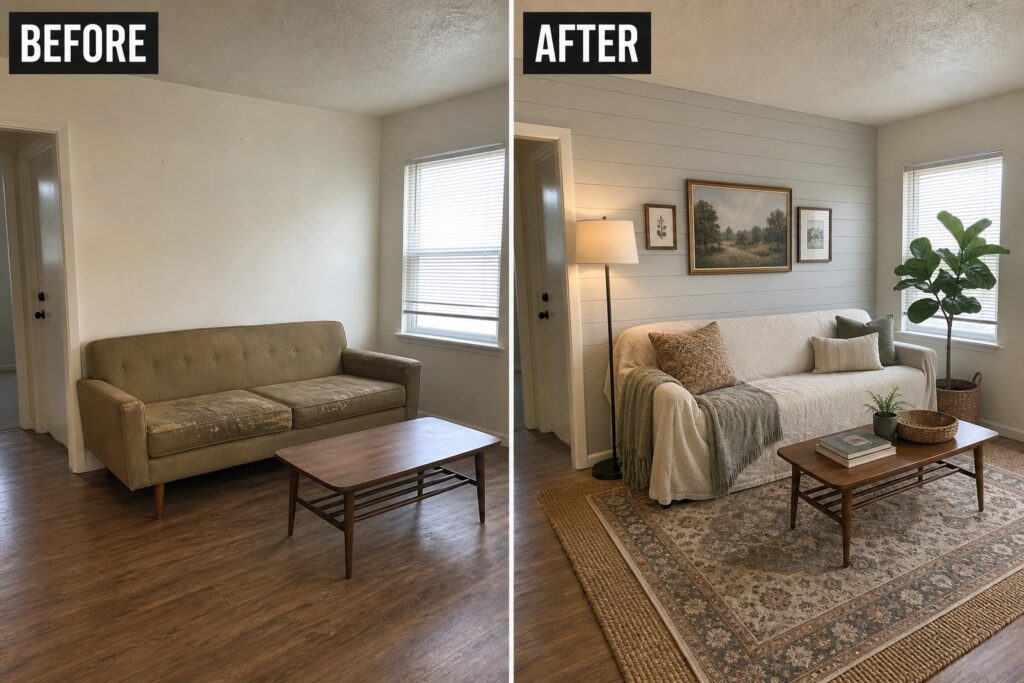
When I moved into my first place the main room felt bare because nothing had a clear spot and the layout never quite worked for daily use.
Budget updates that focus on storage and lighting usually pull those same rooms together without needing new furniture or major work.
Paint helps more than I expected.
I often test small swaps like removable hooks or secondhand rugs first because they let me see what actually fits the space before committing to anything else.
Over the years those practical steps have shown me how a room starts to feel settled once the basics line up with how we really live in it.
Make A Plain Living Room Feel Finished
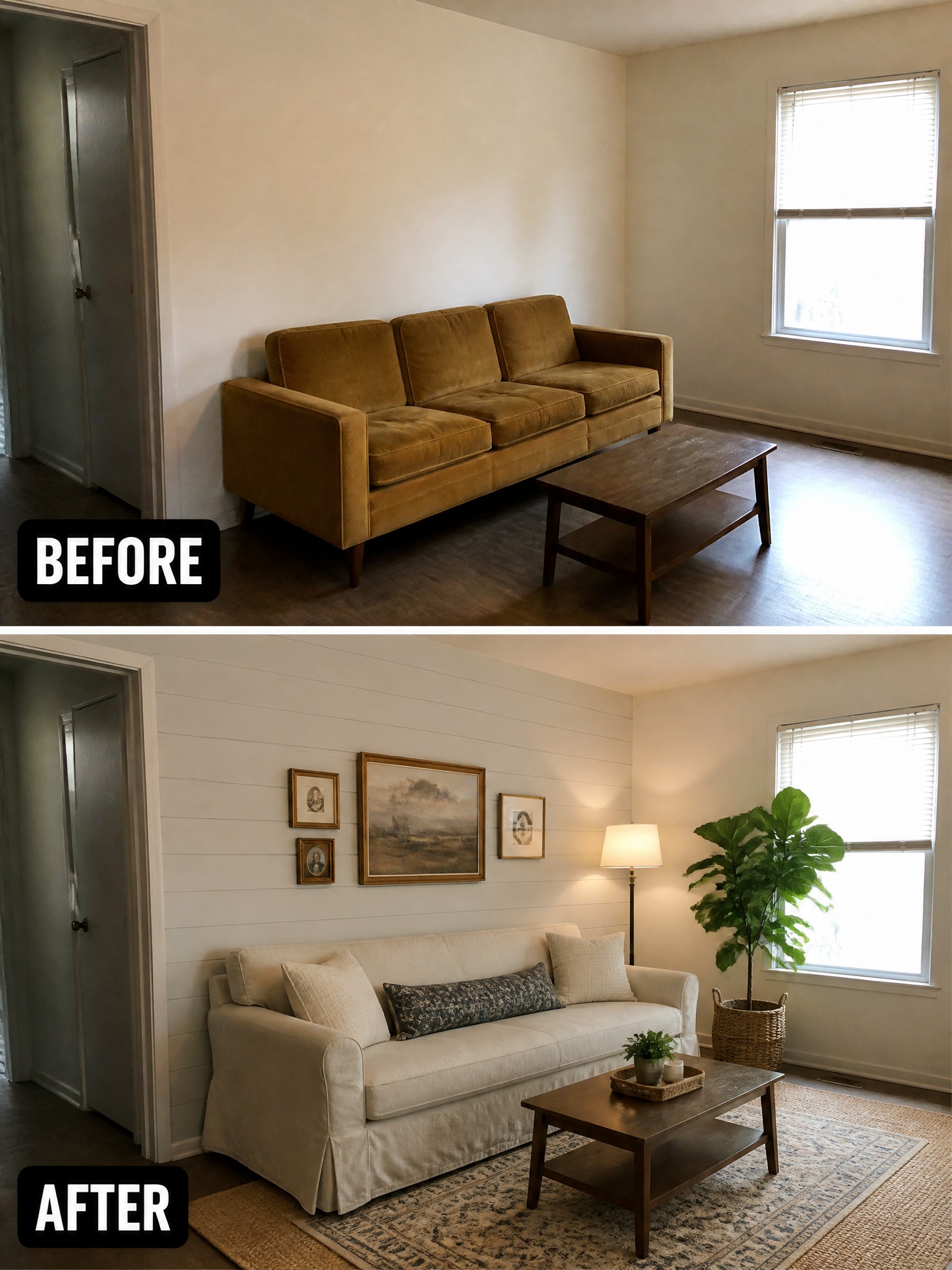
A room with only a sofa and table often feels empty even when the furniture is in place. Adding a rug under the seating, a few pillows, a floor lamp, and some wall art brings the space together and makes it feel used.
This idea works well in rentals or first homes where big changes are not possible. Start with the rug to define the seating area, then add soft layers and one good light source. Keep the additions simple so the room stays easy to move around in.
Make A Plain Bedroom Feel Finished
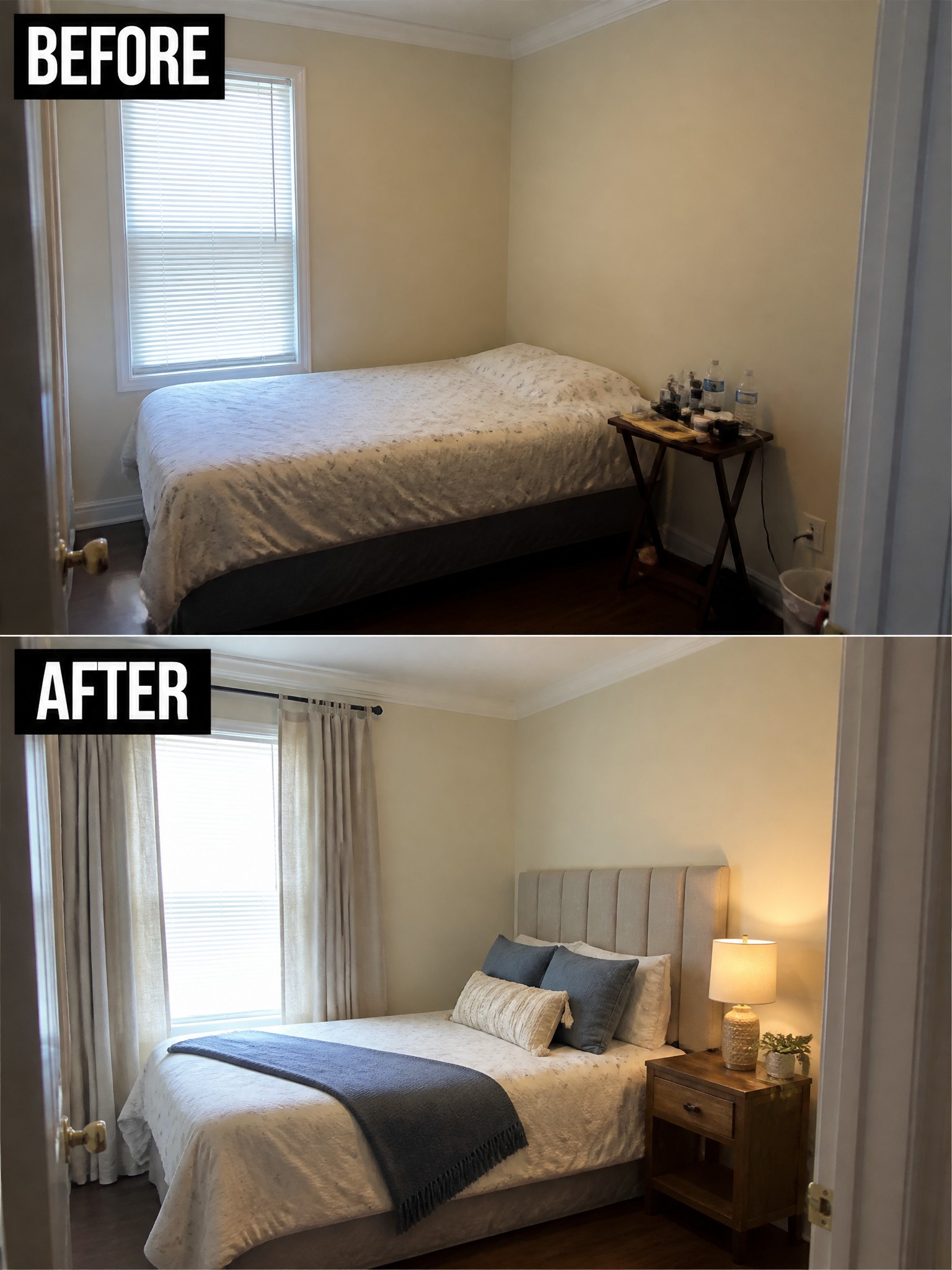
A basic bedroom often looks unfinished when it has only a bed, blinds, and a small table. Adding curtains and a simple headboard creates a softer, more complete space without any major construction.
This idea works especially well in rentals or first homes where you cannot change the walls or flooring. Start with the bed area by adding a headboard and a bedside lamp, then hang curtains to frame the window. The result feels calmer and more intentional while staying easy to remove later.
Update Kitchen Cabinets With New Hardware And Finishes
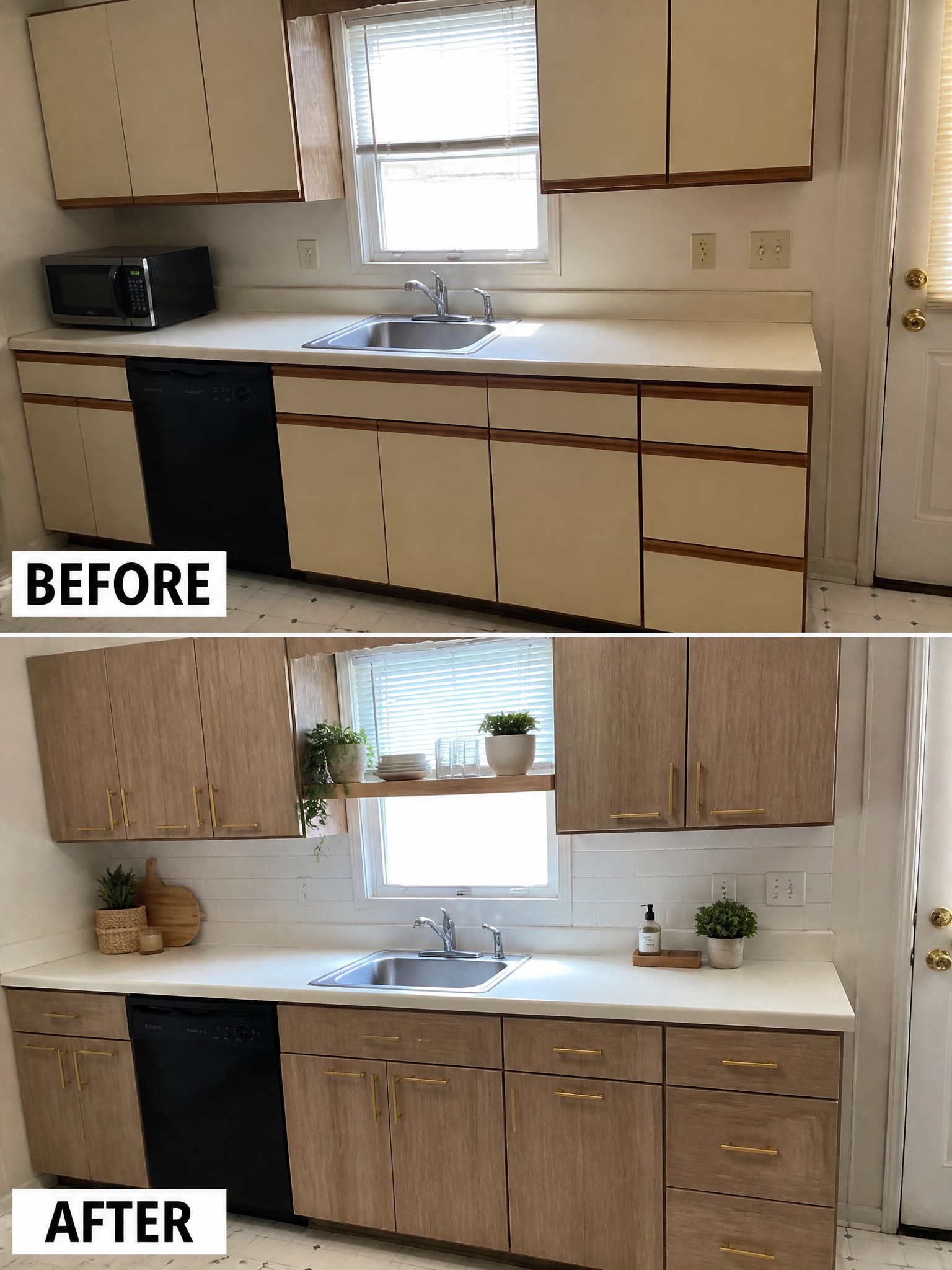
The kitchen went from a flat, dated look with plain beige cabinets and visible wear to a much cleaner space once the cabinets were replaced with a warmer wood tone and fitted with simple gold handles. Adding a white subway tile backsplash helped tie everything together and made the counters feel more finished without any major construction.
This kind of update works well in rentals or first homes where a full remodel is not possible. Focus on the cabinets first since they cover the largest area, then add one or two details like a peel-and-stick backsplash or new pulls if your lease allows it. Keep the rest of the space simple so the cabinets stay the main feature.
Refresh A Basic Bathroom With Vanity And Lighting Updates
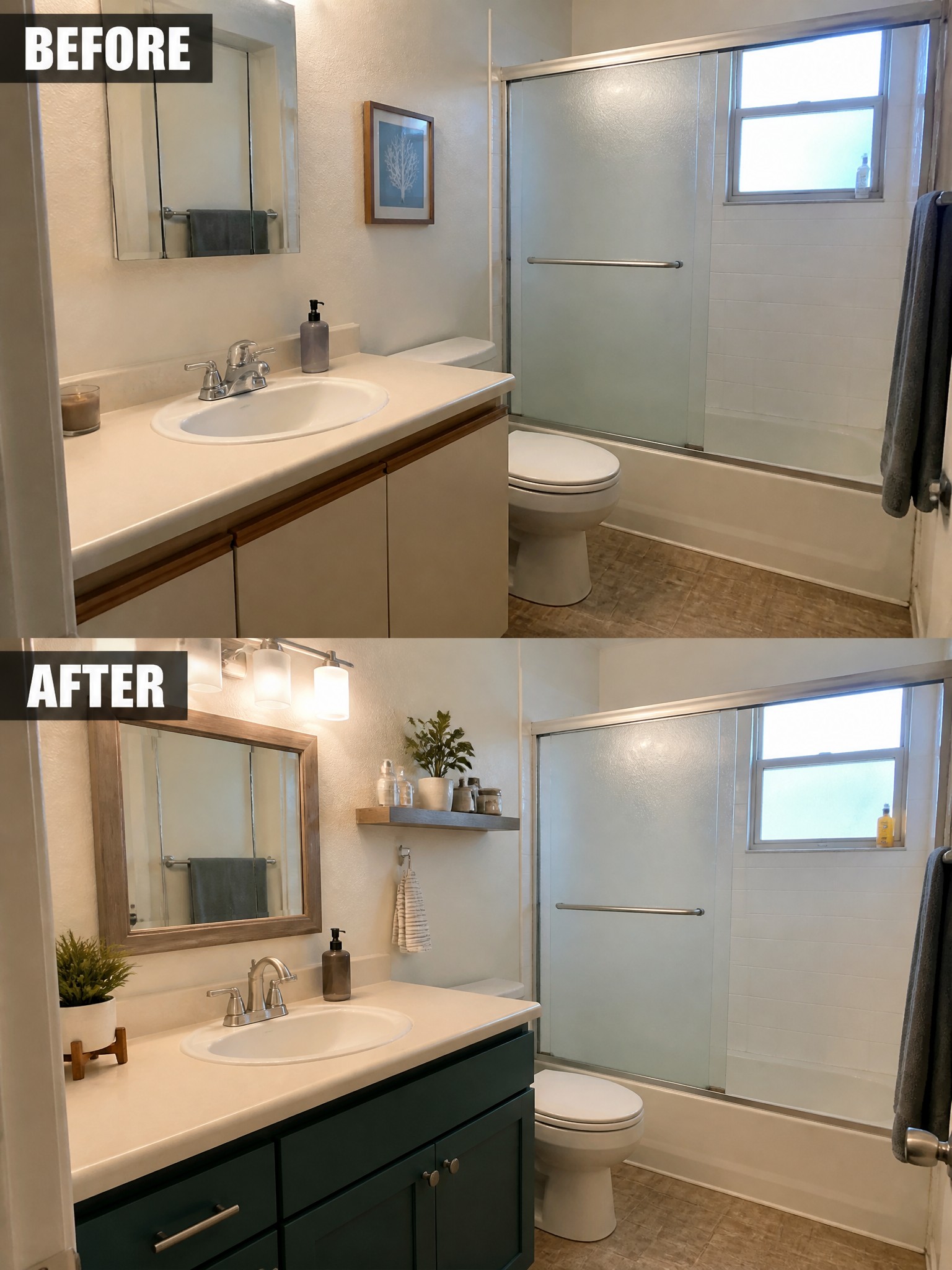
Many bathrooms in rentals start with plain vanities and basic lighting that leave the space feeling unfinished. Updating the vanity color and swapping in a new light fixture above the mirror can pull the whole room together without needing a full remodel.
This idea works best when you want to keep the layout and larger fixtures in place. Choose one main piece like the vanity for the biggest impact, then add a small shelf or a couple of plants to finish the look without crowding the counter.
Add A Storage Bench To Organize An Entryway
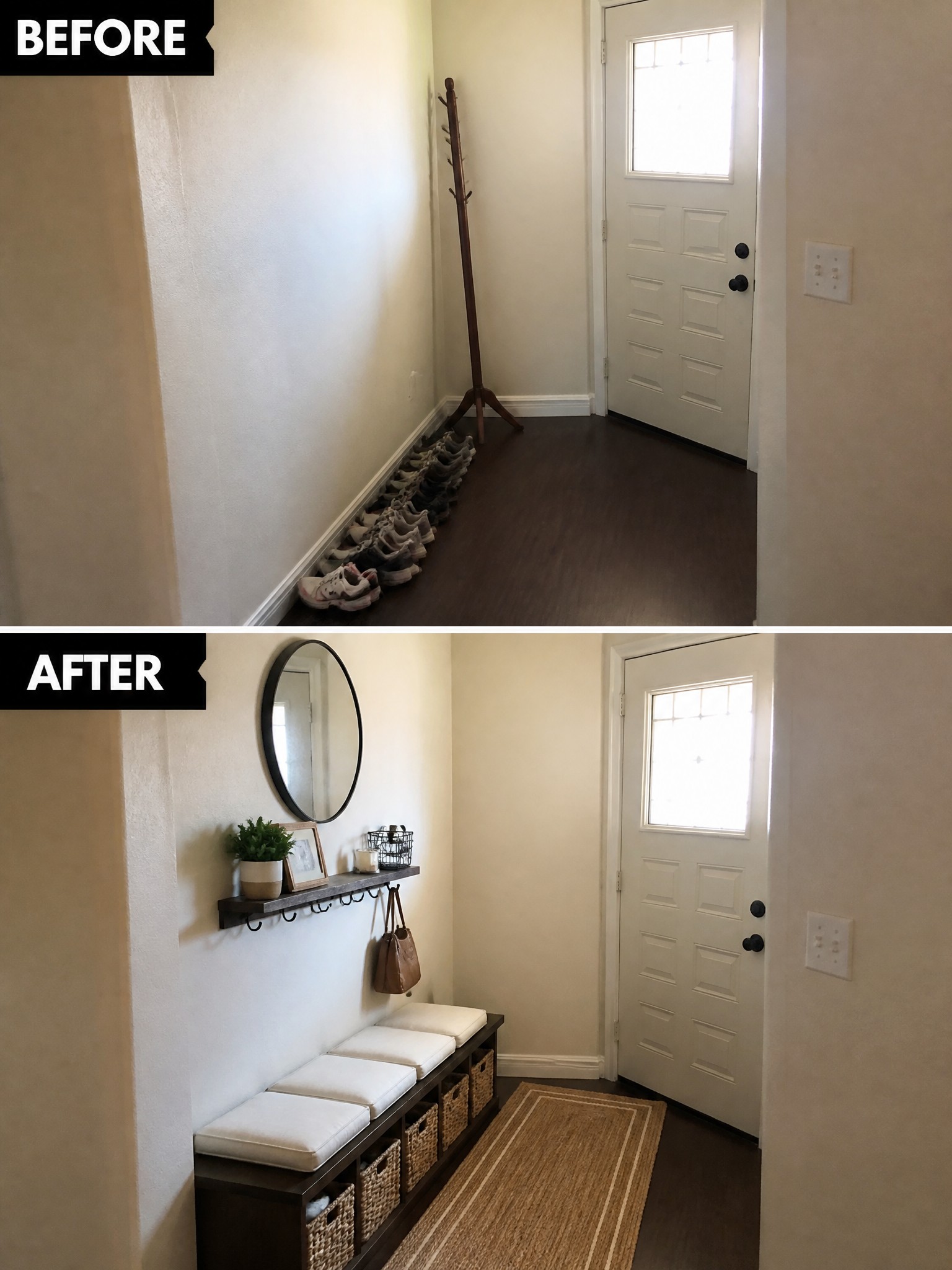
A narrow entry often collects shoes and bags along the wall with no clear place for them. A bench with open cubbies underneath gives shoes a spot in baskets while the seat makes it easier to put them on or take them off.
This idea works best in apartments or small homes where the front door opens straight into living space. Keep the bench low and slim so it does not block the walkway, and add a few hooks above it for coats and bags.
Add Wall Storage To Keep A Workspace Organized
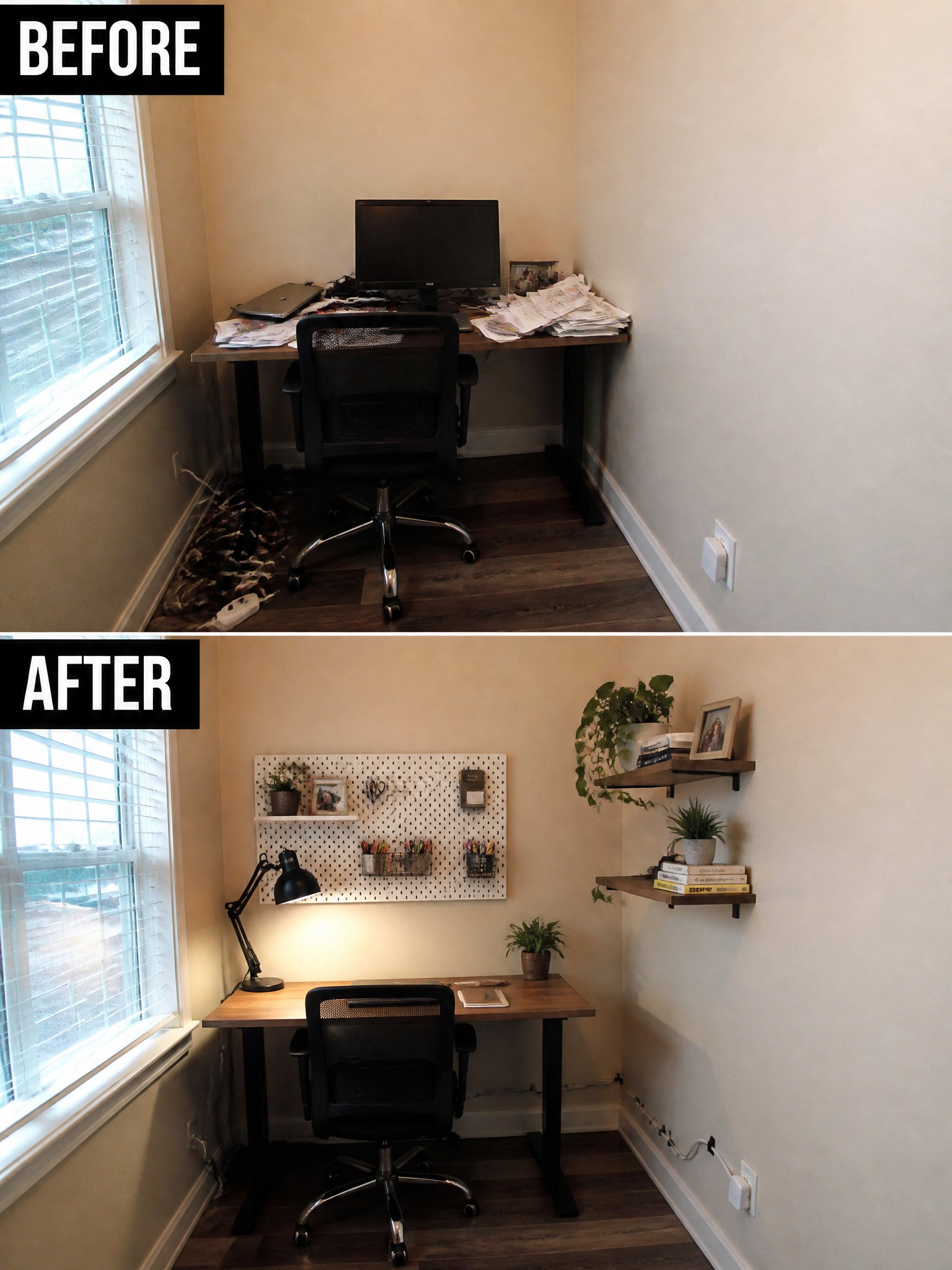
A cluttered desk quickly makes a small room feel cramped and hard to use. Moving papers, pens, and supplies onto a pegboard and a couple of floating shelves cleared the surface and gave everything a set place.
This idea works well in rentals or first homes where you cannot change the walls much. Start with one large pegboard or a few shelves above the desk, then add only the hooks and bins you actually need so the space stays practical instead of crowded.
Organize A Messy Closet With Basic Storage Bins
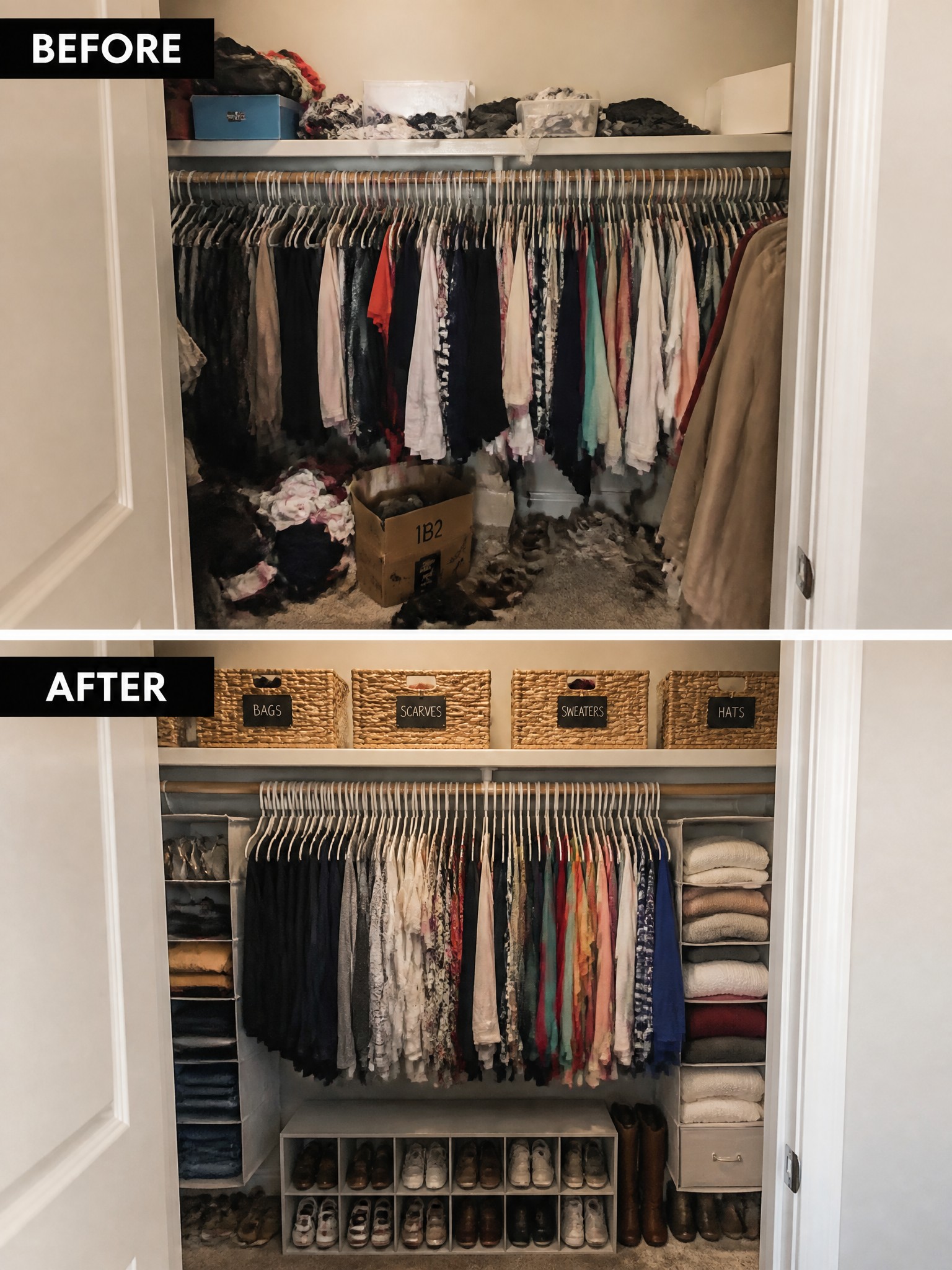
A cluttered closet floor and an overloaded top shelf make it hard to find anything. Adding a few labeled baskets on the upper shelf and a low cubby unit at the bottom turns the space into something you can actually use every day. The hanging clothes stay on the rod, but the rest of the items now have a clear place instead of ending up in piles.
This idea works especially well in rental closets where you cannot add new shelving or rods. Focus first on clearing the floor so you have room to stand and reach. Then group items by type and use inexpensive baskets or a simple shoe cubby to keep everything visible and off the ground.
Add Wall Storage To Organize A Laundry Room
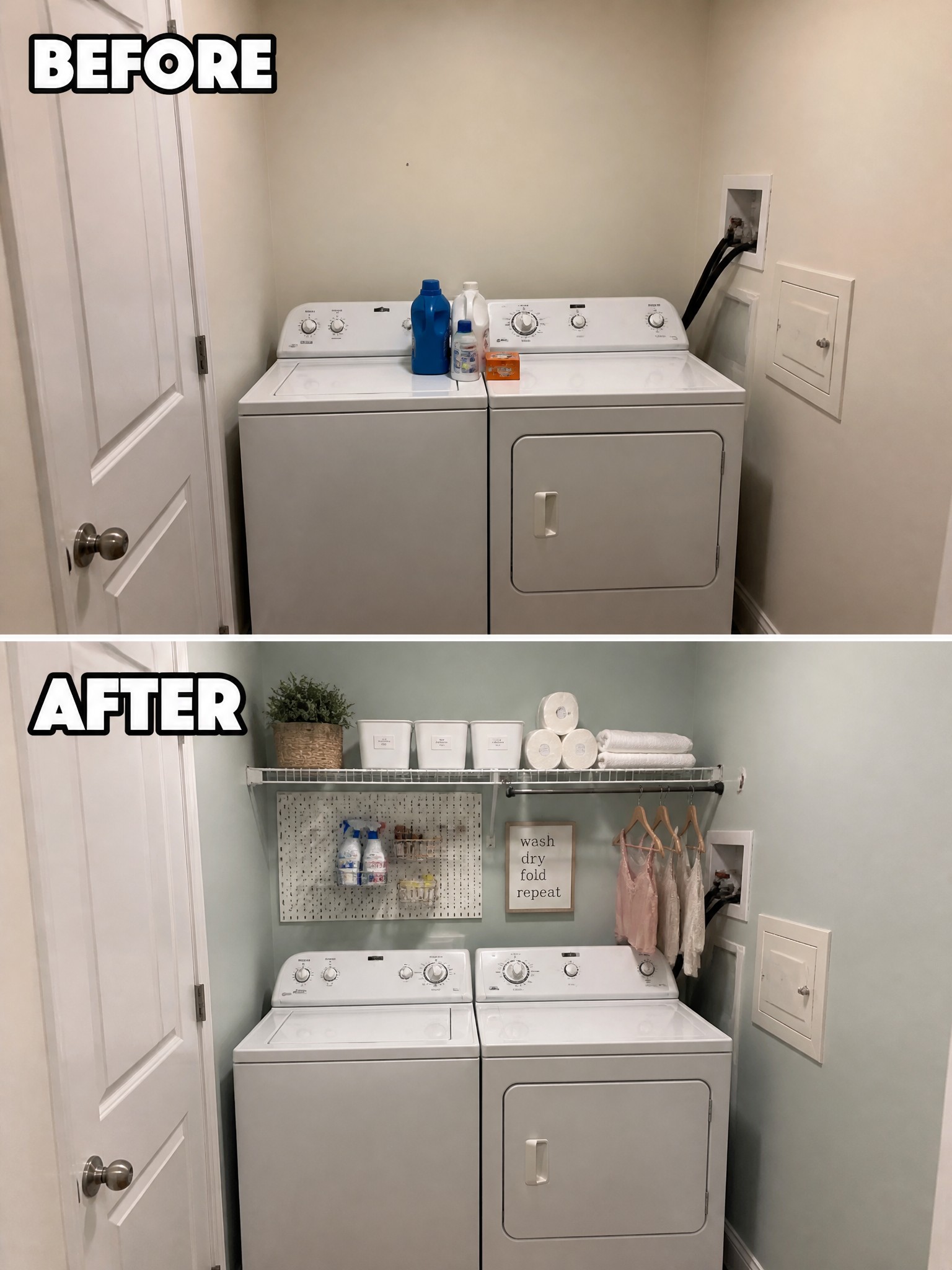
A laundry room can feel cramped when everything sits on the machines or the floor. Adding a wall shelf and pegboard above the washer and dryer gives a clear place for bins, supplies, and hanging items without taking up extra floor space.
This idea works best in small or narrow rooms where you need quick access during laundry days. Use a sturdy shelf for bins and towels, then hang a pegboard for bottles and tools so they stay off the machines. Renters can choose removable hardware, while homeowners can go a step further with a hanging rod for clothes that need air drying.
Add Built-In Seating To Make A Small Corner More Useful
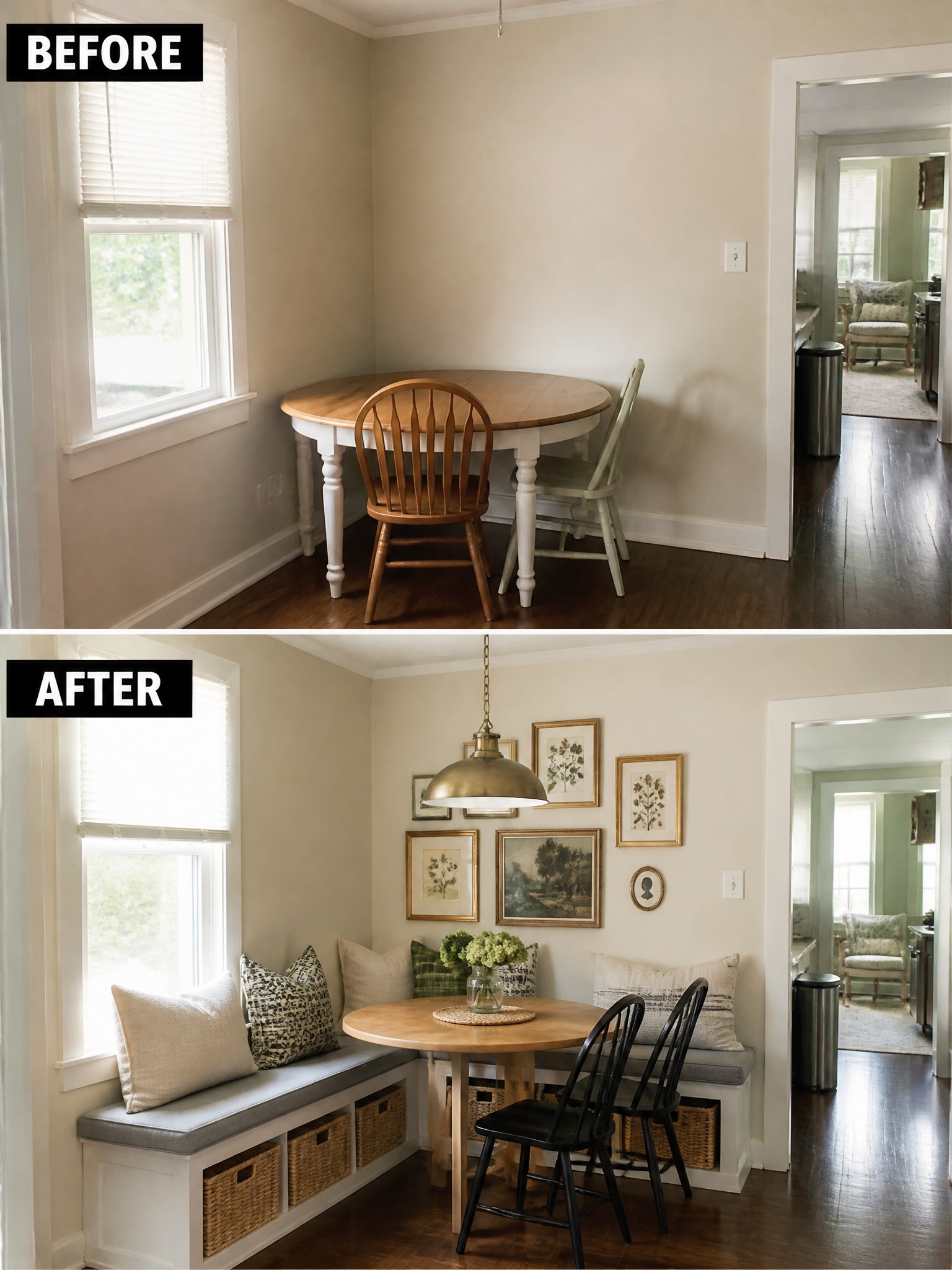
A round table alone can leave a corner feeling unfinished and hard to use. Adding built-in benches along the walls turns the same space into a real dining spot with room for more people and hidden storage underneath. The benches also give the area a settled look that a few loose chairs never quite manage.
This idea works well in small homes or rentals where you can build simple platform benches that stay in place. Keep the scale modest so the table still fits comfortably, and use baskets or bins that slide in and out for everyday items. Focus on one or two benches first rather than trying to fill the whole room at once.
Make An Unfinished Basement Feel Like A Finished Room
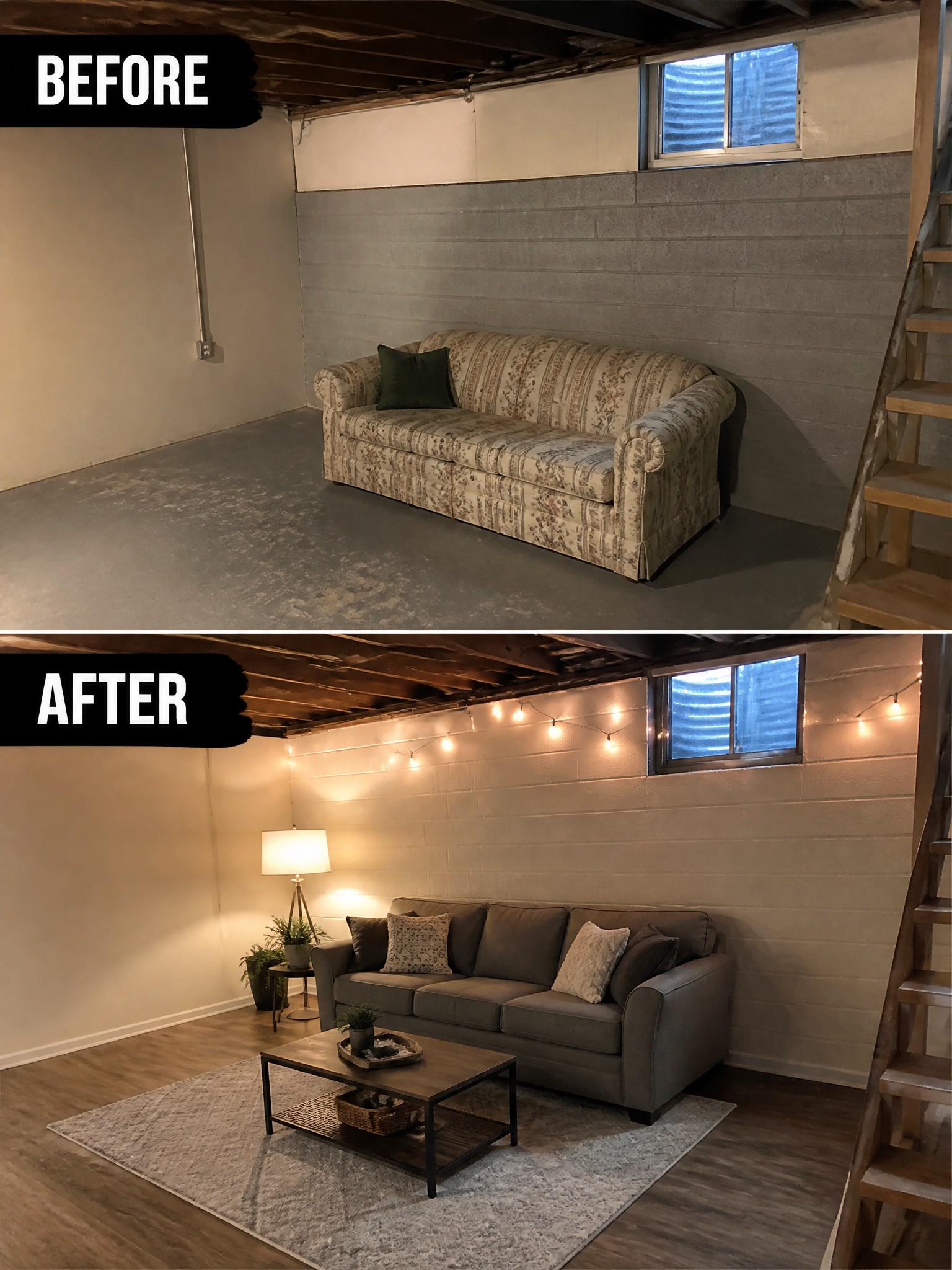
A basement with a concrete floor and bare walls can feel cold and unused. Adding wood-look flooring and an area rug gives the space a clear purpose, while string lights and a floor lamp add the warmth that was missing.
This idea works well in any below-grade room where you cannot change the walls or ceiling. Focus first on the floor and one defined seating zone, then add lighting that actually reaches the sitting area. Keep extra furniture to a minimum so the room stays open and easy to move around in.
Add A Fold Down Counter To A Small Kitchen
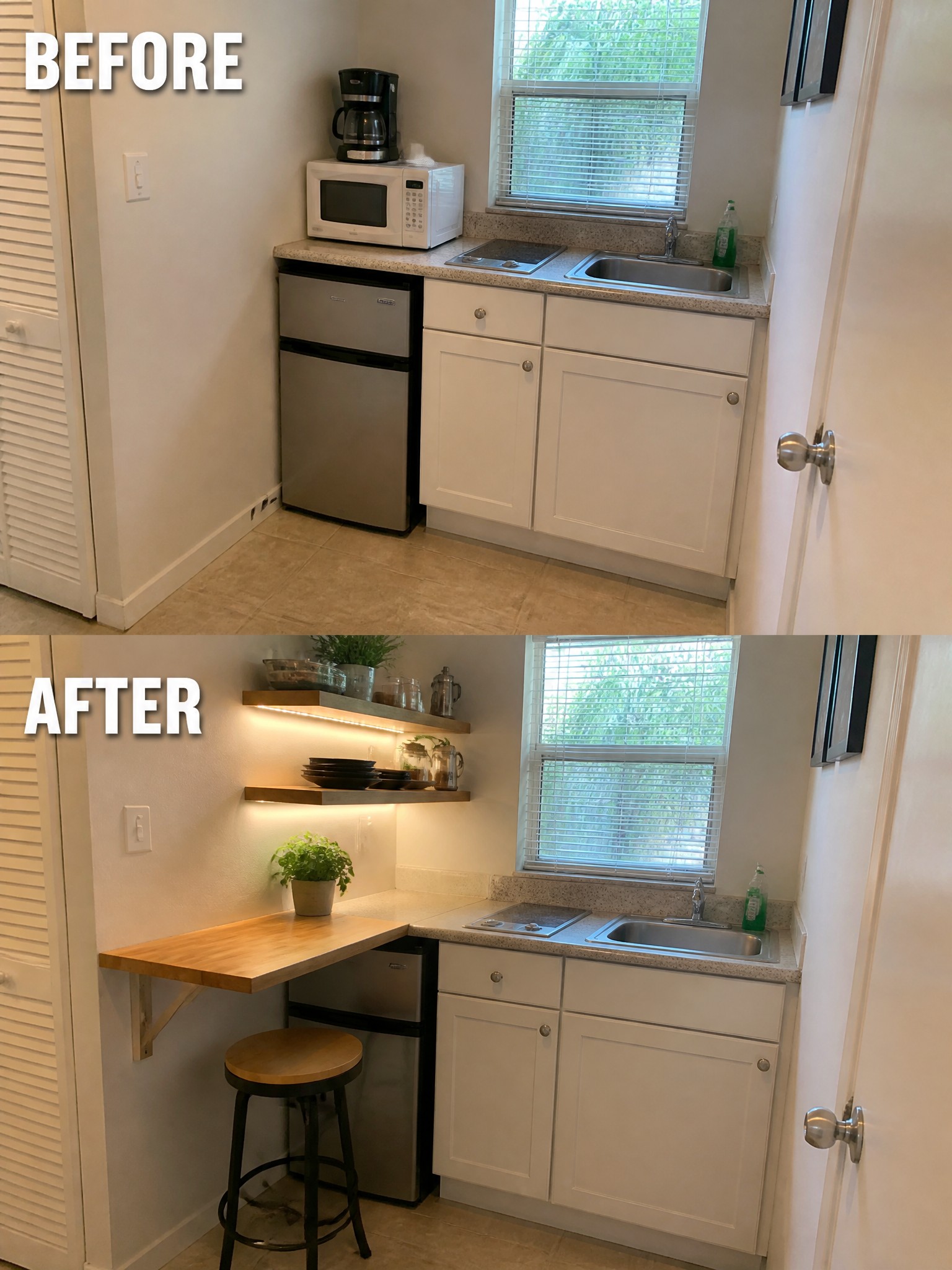
A small kitchen often lacks room for both prep and eating, and this change solves that without taking up permanent floor space. The before shows the usual tight layout with just the fridge and cabinets along the wall. Adding a simple fold-down wooden counter and a stool turns the corner into a usable spot for meals or quick work.
This works especially well in rentals where you cannot add fixed furniture. Mount the counter on strong brackets so it stays level when in use, and fold it flat against the wall when you need the area clear. Keep the stool lightweight so it can tuck away easily too.
Refresh A Fireplace With Paint And Tile
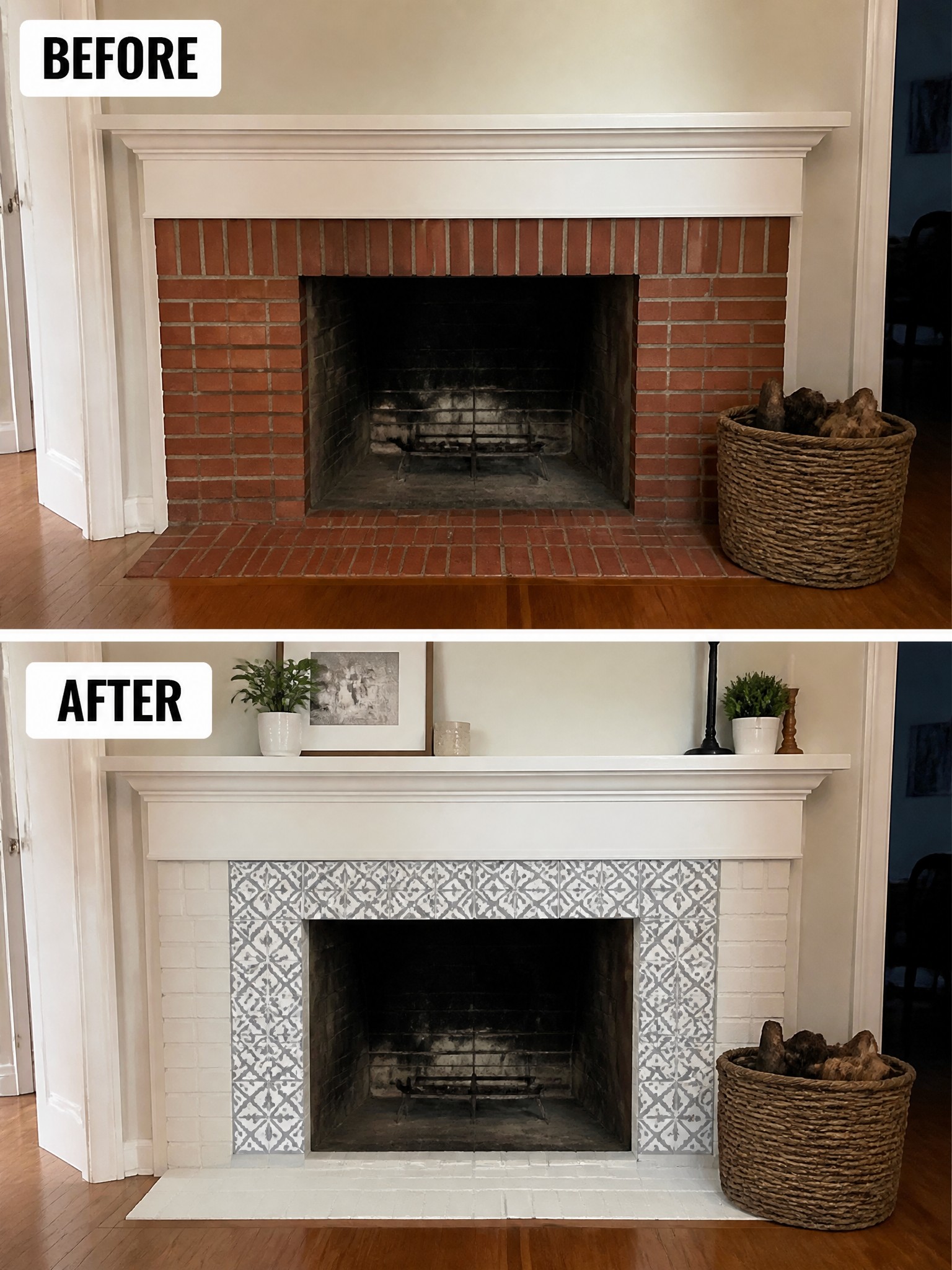
A plain brick fireplace often feels unfinished in an otherwise simple room. Painting the brick white and adding a patterned tile border around the opening gives the wall a clear focal point without major construction.
This idea suits older homes or rentals where the brick is sound but dated. Use a masonry primer first, then pick tile in a scale that fits the firebox size. Keep any mantel decor light so the new surround remains the main feature.
Refresh A Plain Shower With A Patterned Curtain
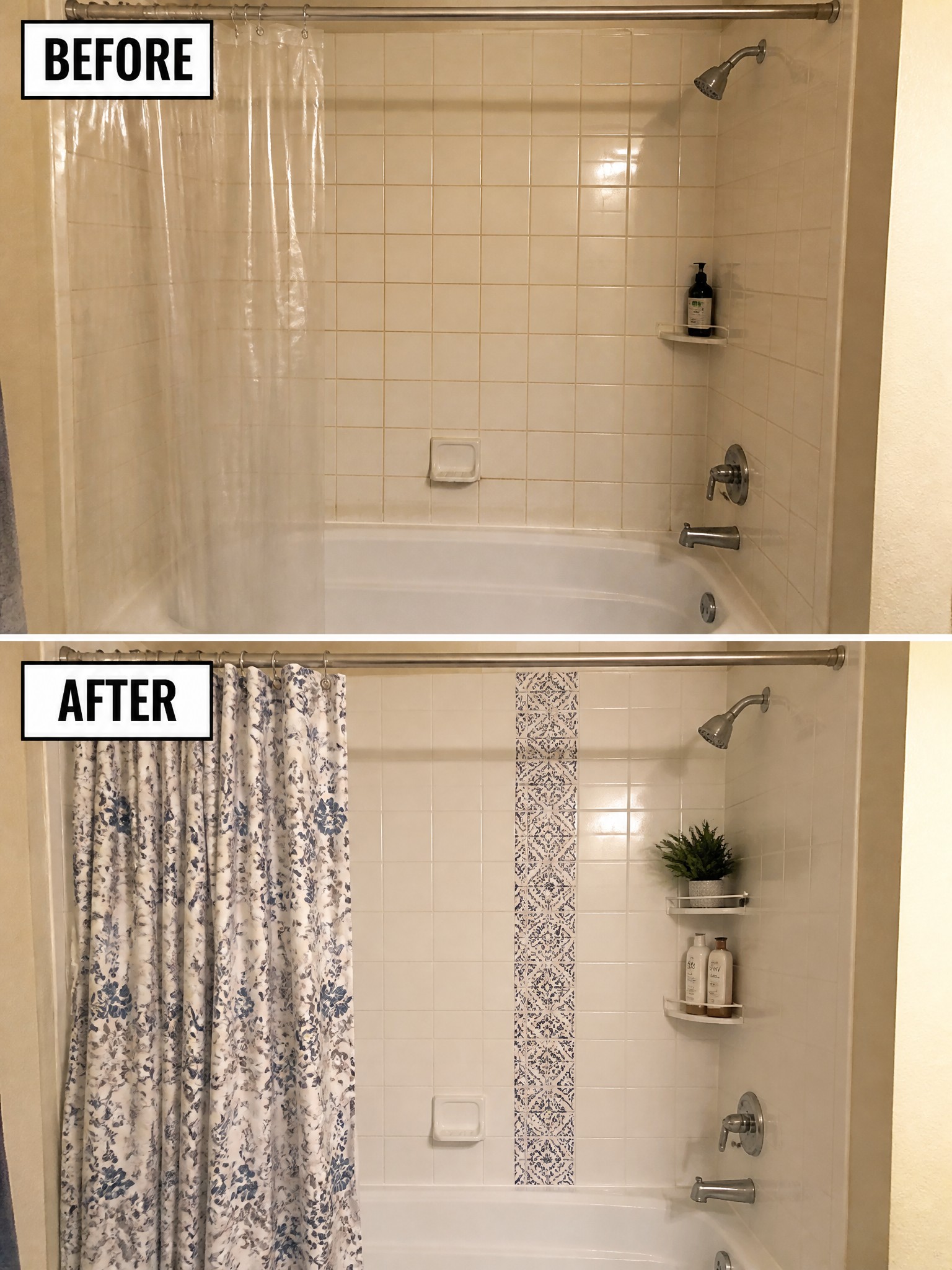
A basic white tiled shower often feels flat because everything blends together. Changing the curtain to one with a soft pattern breaks up the monotony and adds color without any construction. The vertical tile strip in the after photo helps too, but the curtain does most of the work on its own.
This idea suits renters and small bathrooms especially well. Keep the rest of the tile as is and focus on one strong pattern that repeats a color already in the room. Add a single small plant on the shelf if there is space, and stop there so the shower still feels open.
Layer Curtains And A Rug To Finish A Basic Room
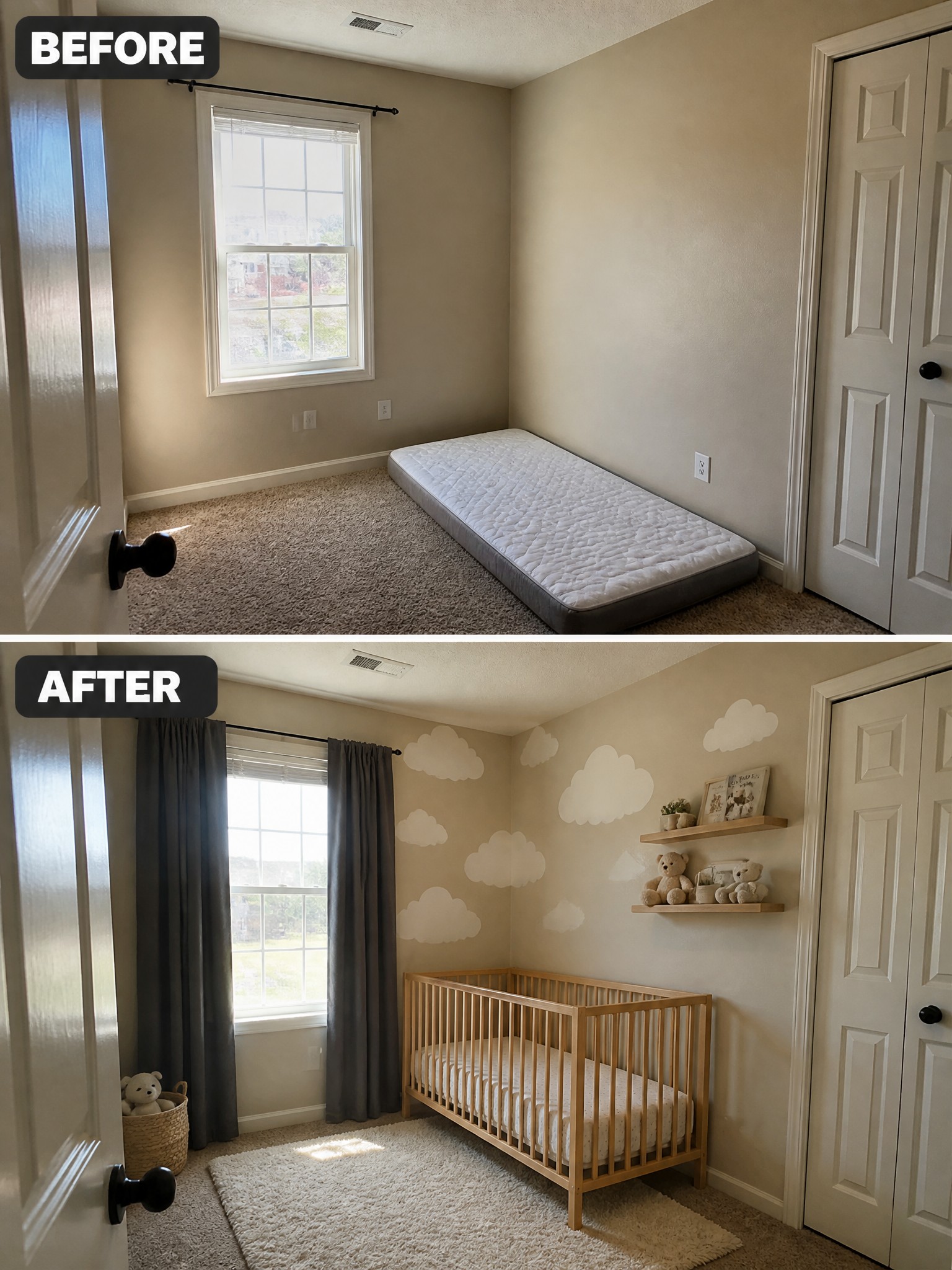
A room with just a mattress on the floor can feel unfinished even if the walls are painted. Adding curtains and a rug right away changes how the space feels because those two pieces bring softness, define the floor area, and make the windows look intentional instead of bare.
This approach works well in rentals or first homes where you cannot do major work. Start with a simple crib or bed in the right spot, then add the rug to anchor it and curtains that reach the floor. The rest can come later, but those layers alone make the room feel ready to use instead of temporary.
Add A Runner And Wall Art To Finish A Staircase
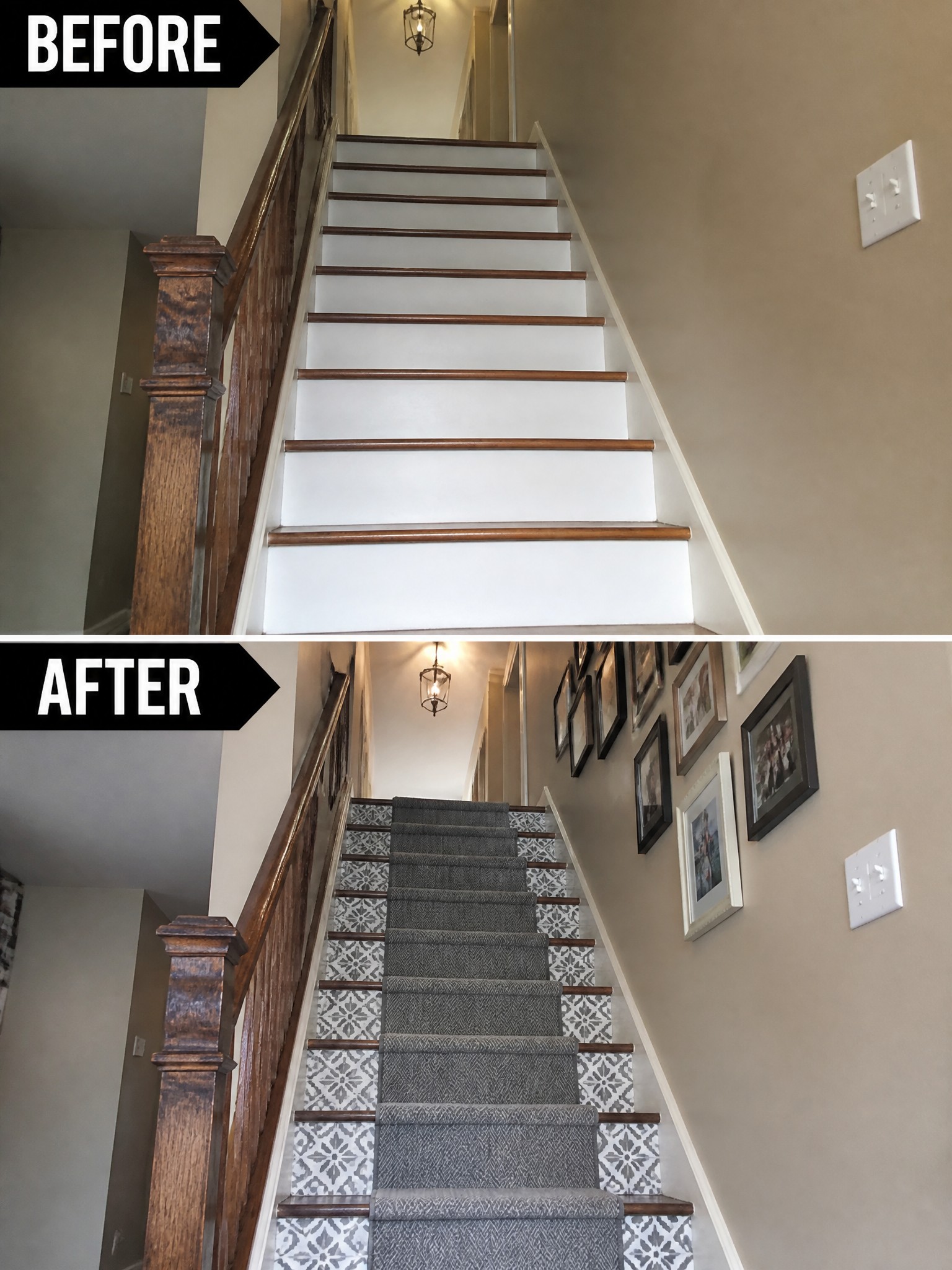
A plain staircase often feels like the one spot that never gets much attention. Here the steps received a gray patterned runner while the side wall gained a simple collection of framed photos. Those two additions turned an empty stairwell into something that feels much more lived in.
This approach suits almost any home with stairs that sit in plain view. Pick a runner that can handle foot traffic and keep the pattern simple so it does not fight the rest of the house. Hang the frames in a loose group rather than a strict grid so the wall can grow over time without looking forced.
Turn A Closet Into A Compact Workspace
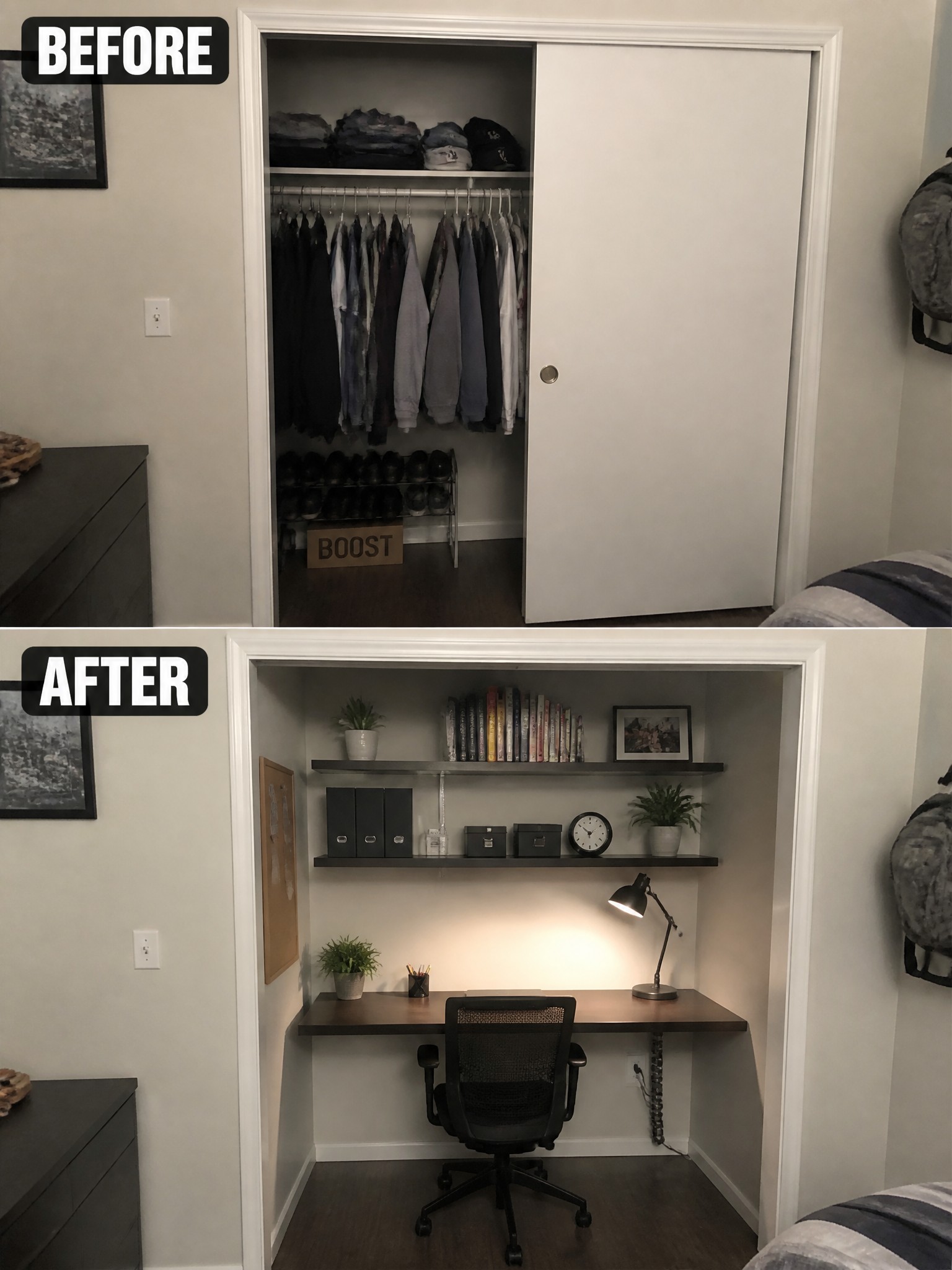
Many small homes and apartments lack room for a separate office. Clearing out a closet and fitting a desk inside creates a quiet spot to work without taking over the bedroom or living area.
This approach works best when the closet is not needed for daily storage. Keep the shelves above the desk low enough to reach easily, and choose a chair that slides fully inside so the space can be closed off when not in use.
Replace Upper Cabinets With Open Shelving
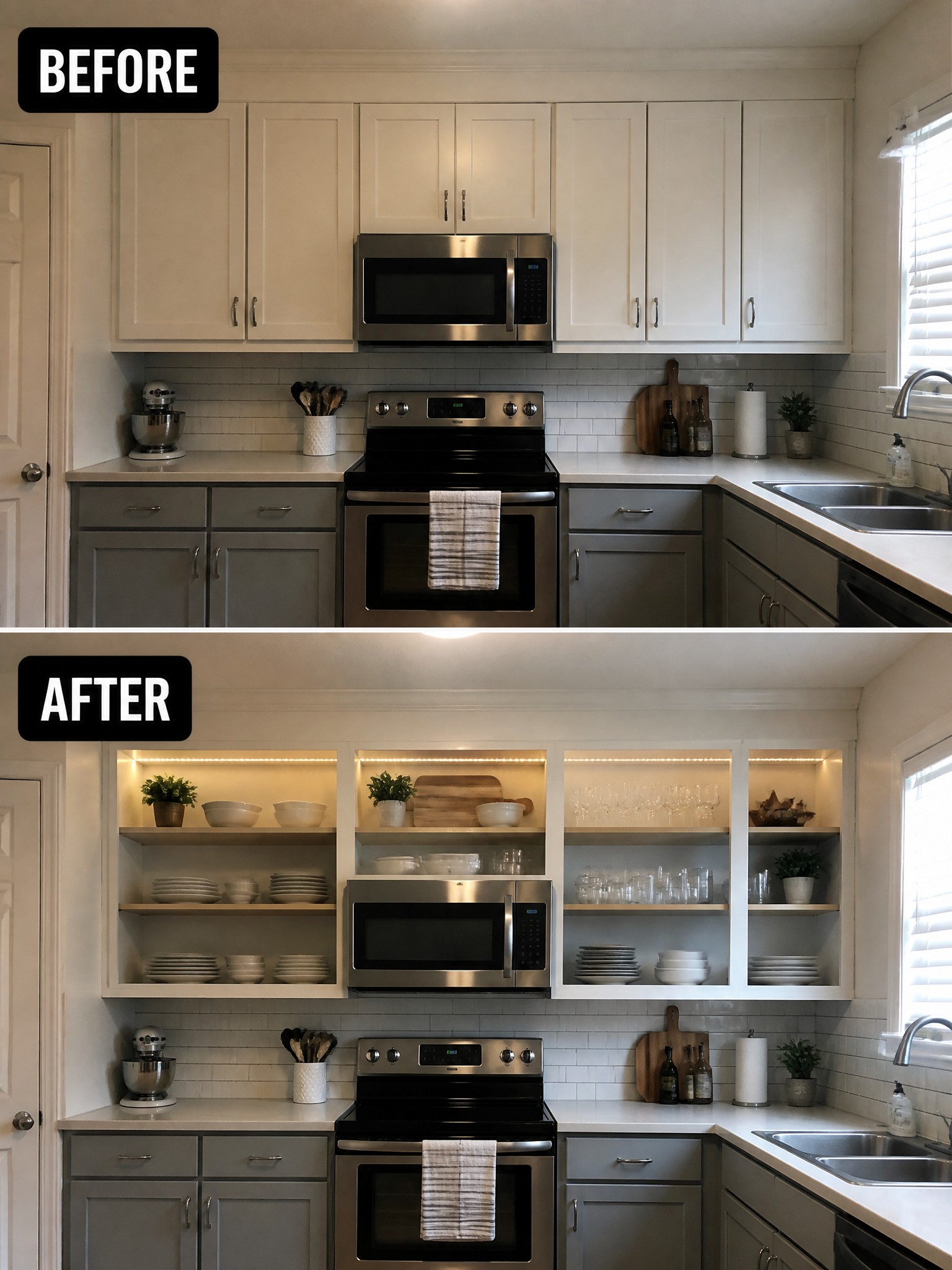
Many kitchens feel closed in when every inch above the counters is covered with cabinet doors. Removing the upper cabinets and switching to open shelves changes the whole feel of the space. It lets light move through the room and turns storage into something you can actually see and use every day.
This approach works well in smaller kitchens or rentals where you want more air and light without a full renovation. Keep the shelves to one or two rows so they do not overwhelm the counters, and add simple strip lighting underneath to keep the lower area bright. Stick to everyday dishes and a few plants so the look stays practical instead of cluttered.
Add Wall Sconces To Finish A Basic Bathroom
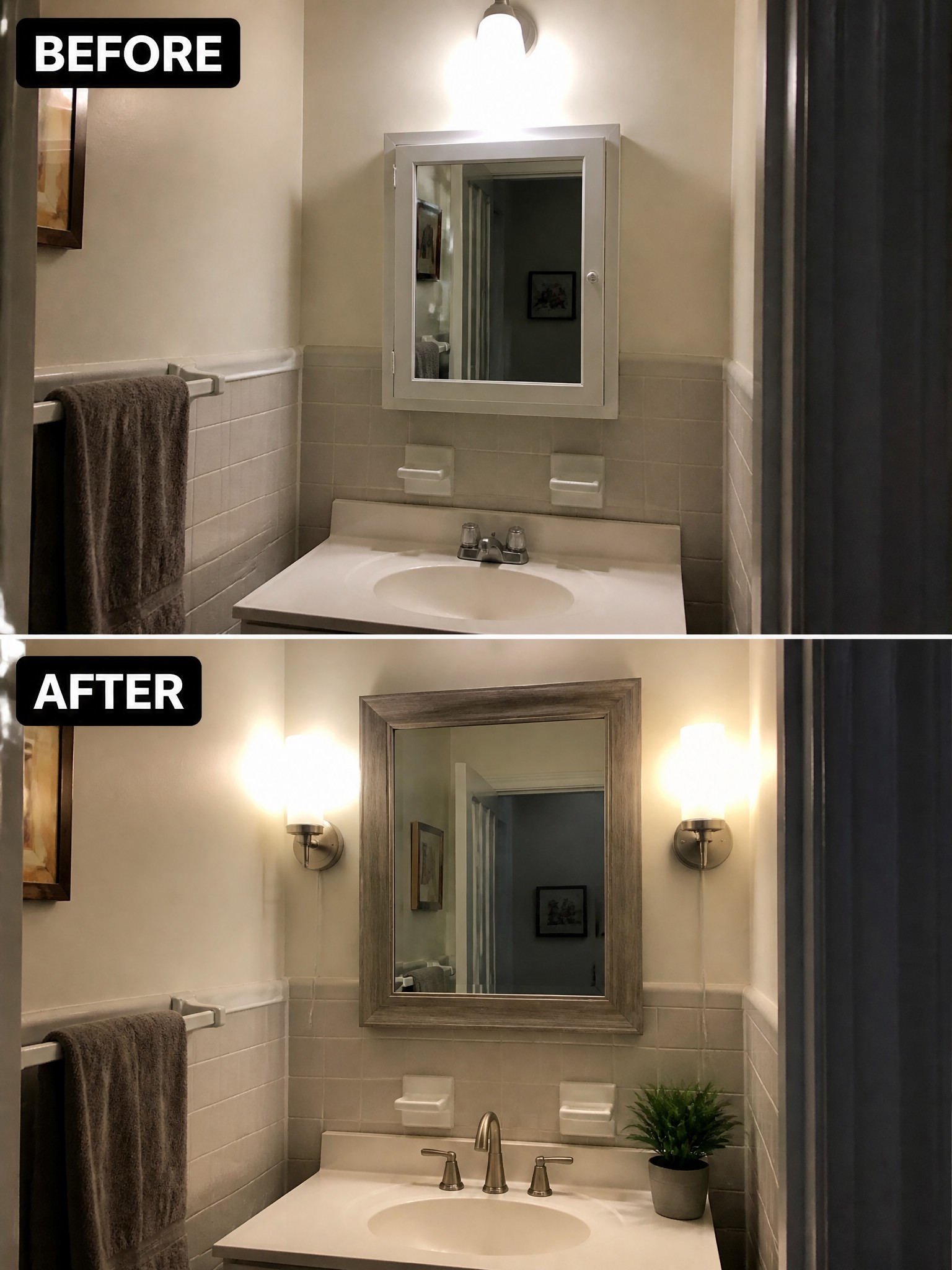
A single overhead light often leaves a bathroom feeling flat and dated. Swapping in a pair of wall sconces on either side of the mirror gives better task lighting and instantly makes the space feel more finished without a full renovation.
This approach works well in rentals or first homes where you can only make small changes. Mount the sconces at eye level, keep the fixtures simple, and choose bulbs that match the existing hardware so the update stays cohesive.
Mount The Tv To Open Up The Room
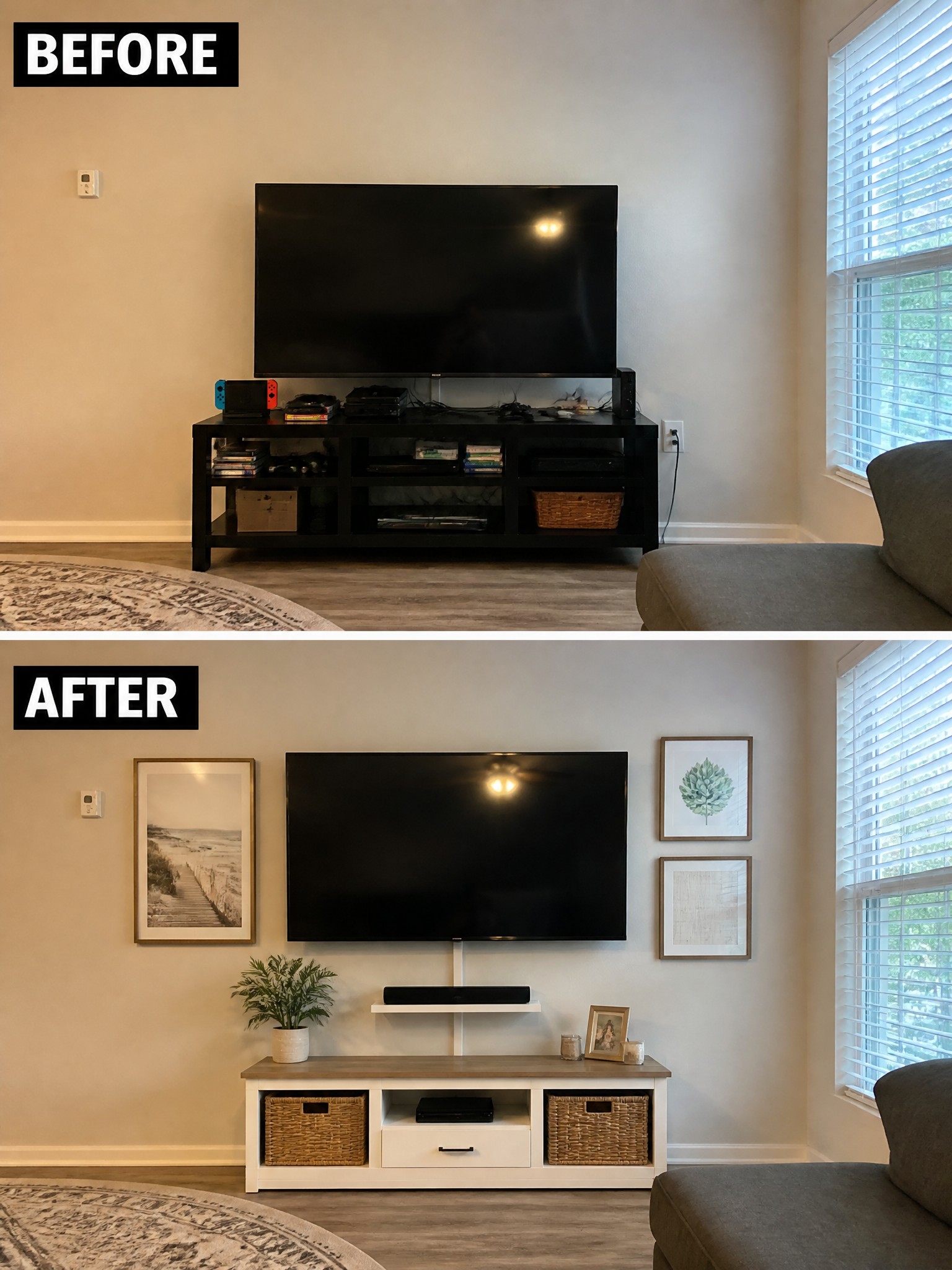
Mounting the TV instead of leaving it on a bulky stand makes a big difference in how the whole wall feels. In the before photo the screen sat low on a wide black unit that took up a lot of visual space and left cables showing. Once the TV moved up onto the wall, the area below could be replaced with a much lower console that stays out of the way and keeps everyday items tucked inside.
This approach works well in smaller living rooms or any space where you want the seating area to feel less crowded. Start by checking that your wall can handle the mount, then choose a console that matches the storage you actually need rather than trying to hide everything on open shelves. Adding a couple of framed pieces on either side of the screen helps balance the wall without adding more furniture.
Add A Large Rug To Make A Bedroom Feel Finished
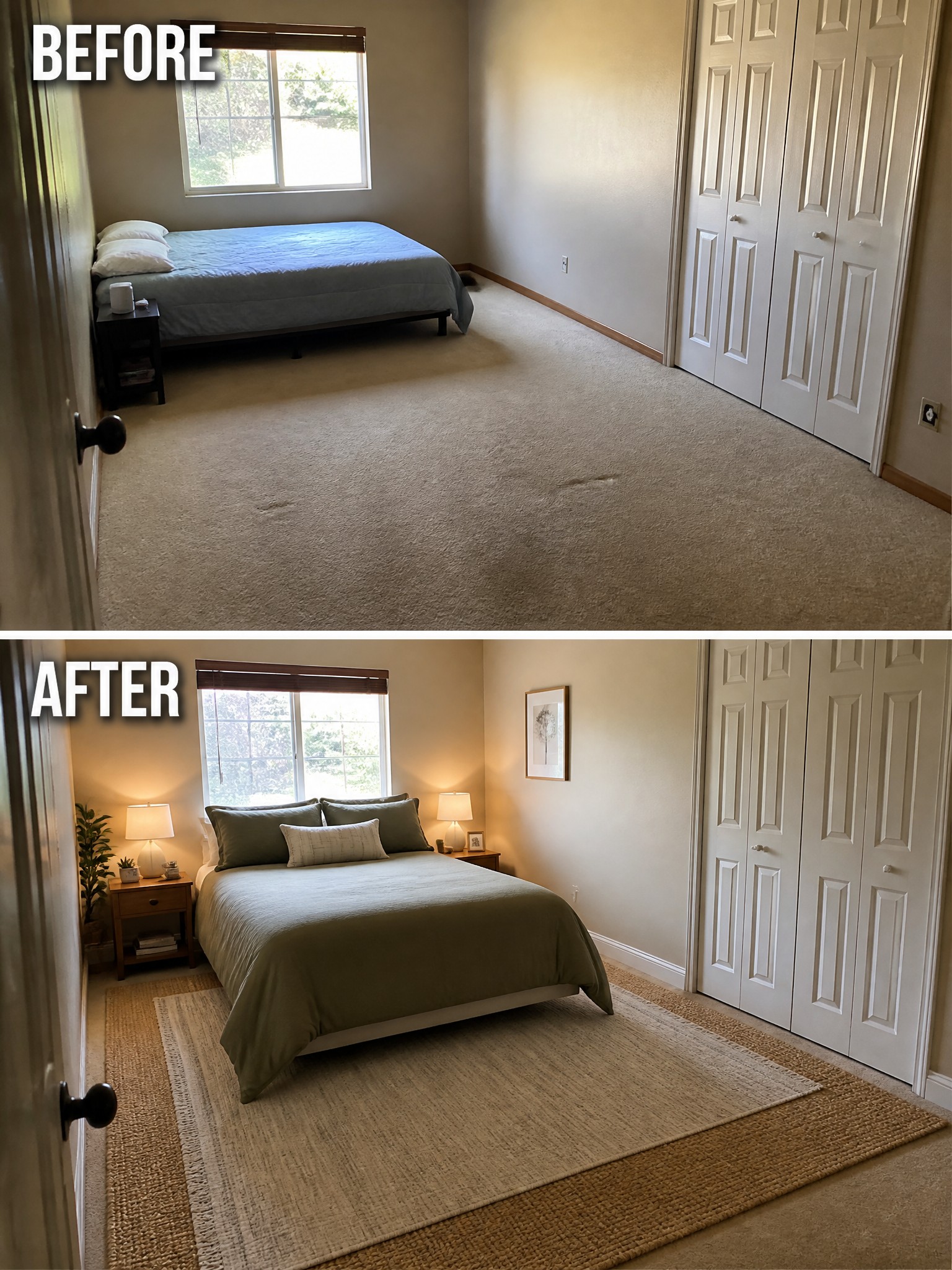
A basic bedroom can feel incomplete when the bed sits directly on wall-to-wall carpet with little else around it. Placing a large area rug under the bed and nightstands creates a defined zone that brings the furniture together and adds some warmth and texture to the space.
This idea works especially well for renters or anyone who cannot change the flooring. Pick a rug that is wide enough for the nightstands to rest on it too, and keep the colors neutral so it layers cleanly over the existing carpet without clashing.
Add A Rolling Island To Create Extra Kitchen Workspace
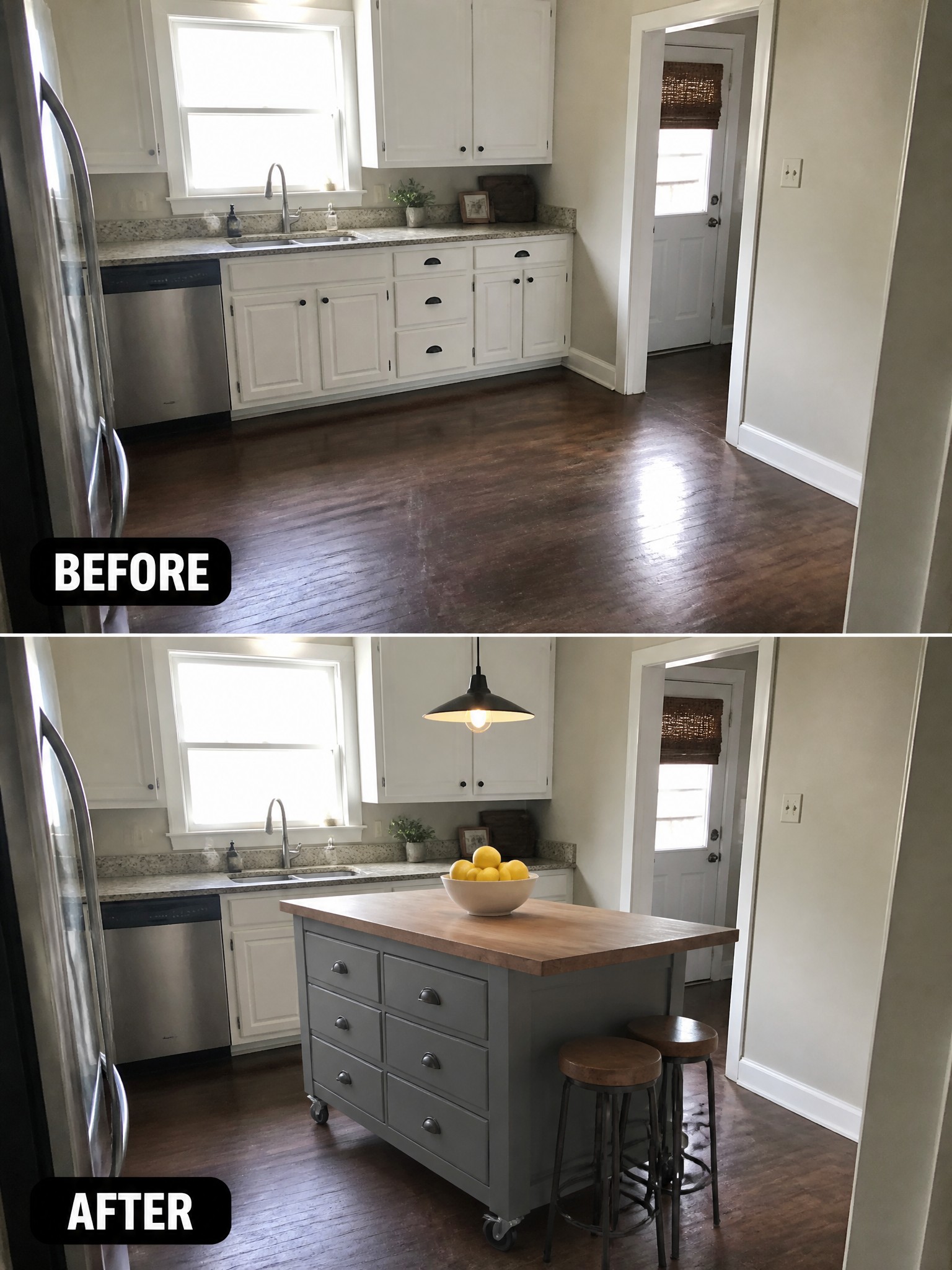
An empty kitchen floor can leave the room feeling unfinished even when the cabinets and counters are already in place. Adding a rolling island fills that gap by giving you more counter space, drawers for storage, and a spot to pull up a stool.
This idea works especially well in rentals or first homes where a built-in island is not an option. Look for one on wheels so you can shift it when you need to clean or rearrange, and keep the style simple so it blends with what is already there.
Add Wallpaper To A Small Bathroom
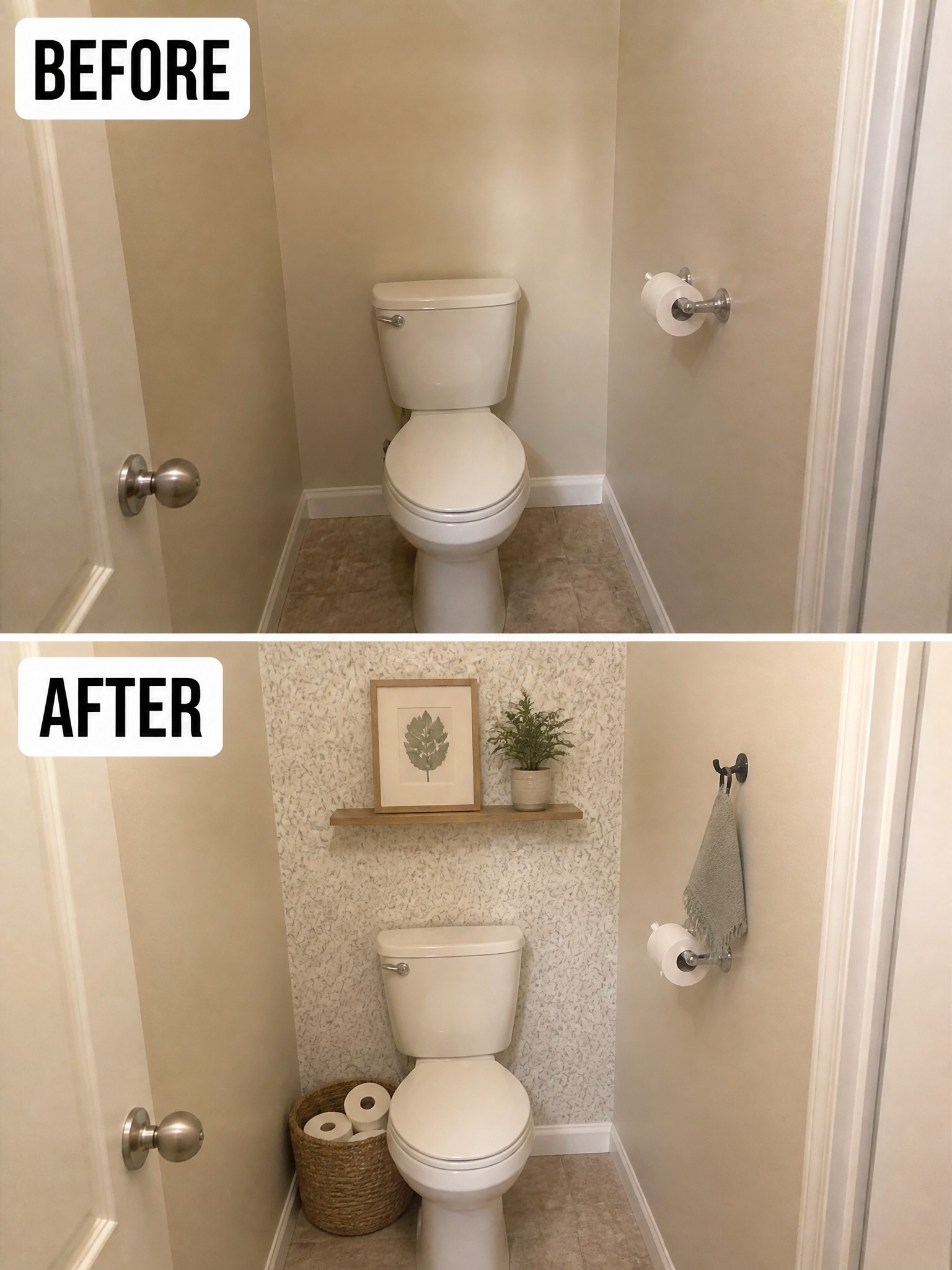
A plain bathroom can feel cold and unfinished when every wall is left bare. Adding wallpaper to just the back wall gives the space a clear focal point and makes the room feel more complete without a full remodel.
This idea works especially well in small bathrooms or rental spaces where you want to avoid major changes. Use peel-and-stick wallpaper if you need to remove it later, and keep any added shelf or accessories simple so the room stays practical.
Build A Window Seat In An Unused Corner
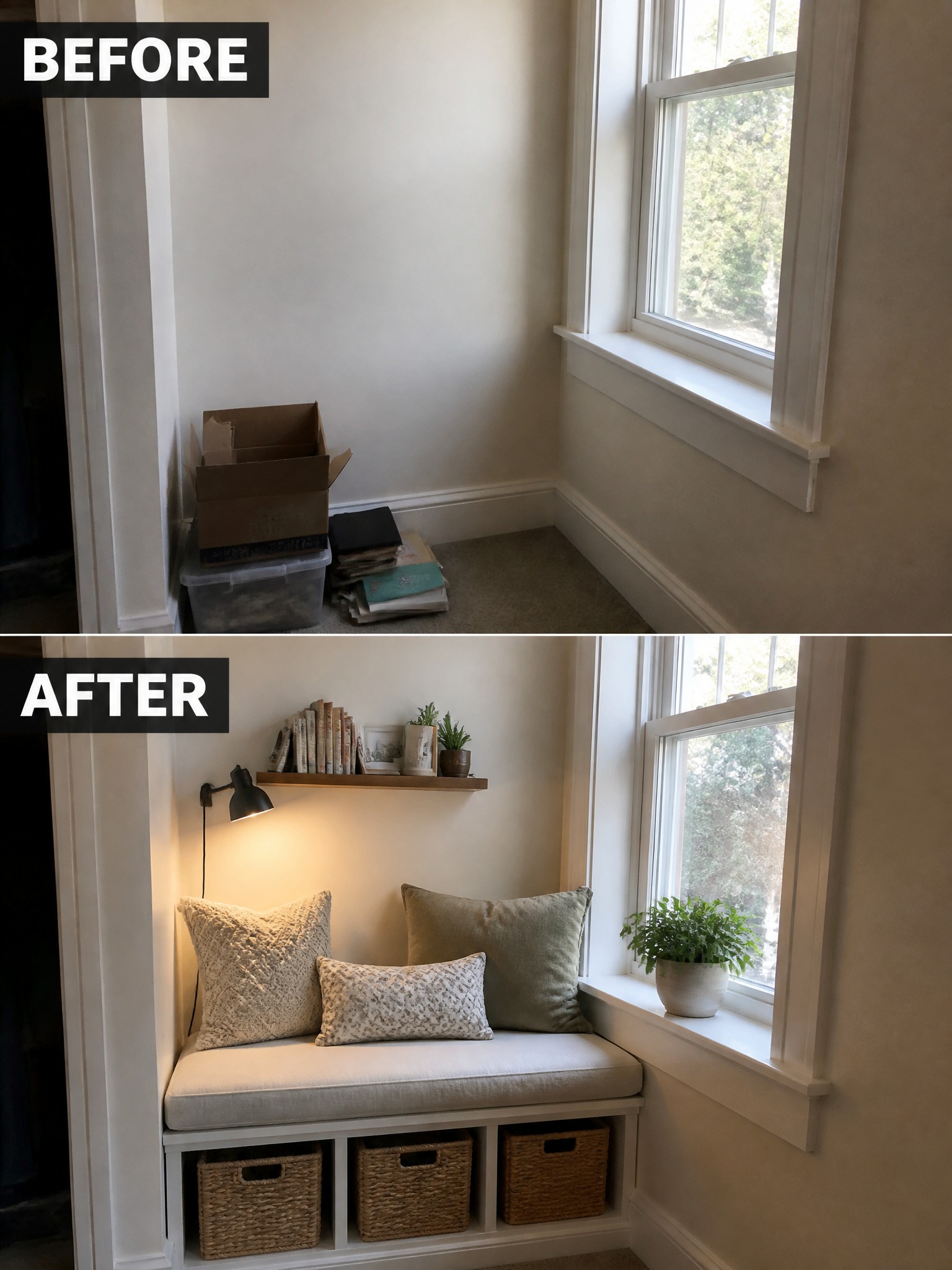
An empty corner next to a window often ends up collecting boxes and random items because it does not have a clear purpose. Adding a built-in bench with a cushion and open storage below gives the space a job while keeping the floor clear.
This works especially well in smaller rooms or rentals where you cannot add large furniture. Keep the bench simple, use baskets that slide in and out easily, and add one narrow shelf above for books or a small light so the area feels finished without crowding the room.
Frequently Asked Questions
Q: What if the landlord spots the changes during an inspection? A: Stick to things you can undo in an hour like repositionable wall decals or freestanding shelves. Take photos of the original setup before you start so you can match it exactly later. Q: How do I keep costs under fifty dollars for a whole room? A: Hit up thrift stores for fabric you can turn into curtains or pillow covers. Rearrange what you already own first and only buy a couple of accent pieces that tie everything together. Q: Will any of these ideas actually survive a move without breaking? A: Pack lightweight items like washi tape accents or potted plants in sturdy boxes with plenty of padding. Skip anything glued down permanently so you can reinstall it the same way in the next place.
