
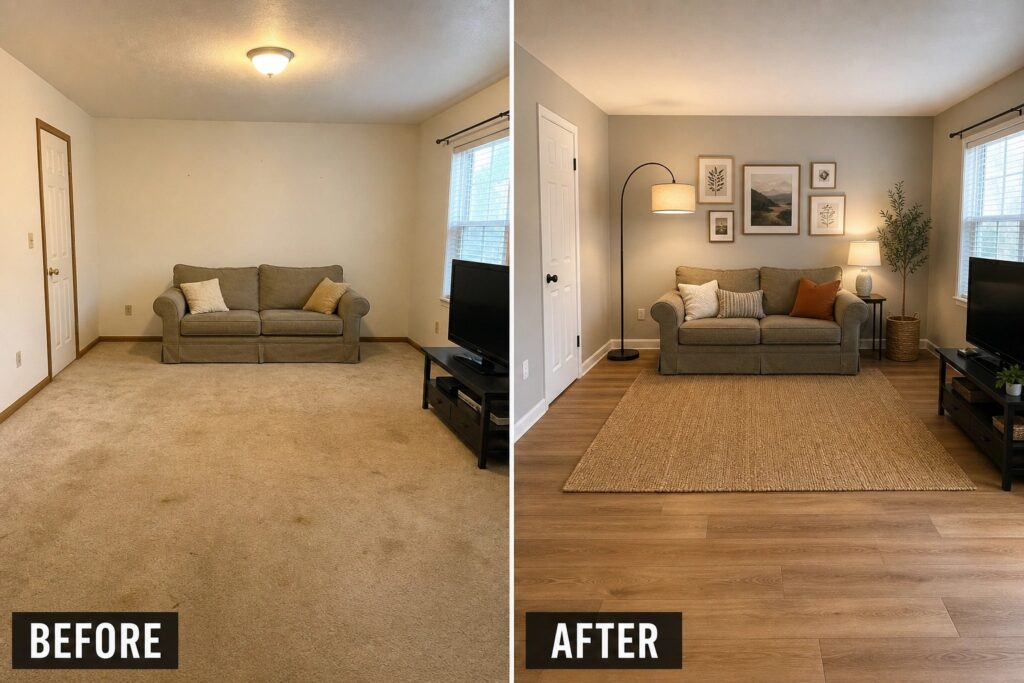
I often notice that old carpet and empty walls make a room feel like it is still waiting for someone to move in.
Bad lighting compounds the problem by leaving corners dim and colors looking flat.
Changing just the light fixtures usually shifts the whole feel more than I expect.
Once the basics sit in a better order, adding texture through rugs or simple wall pieces starts to pull everything together without much cost.
I like to try one small update at a time so I can see what actually works in the space I have.
Make A Plain Living Room Feel Finished
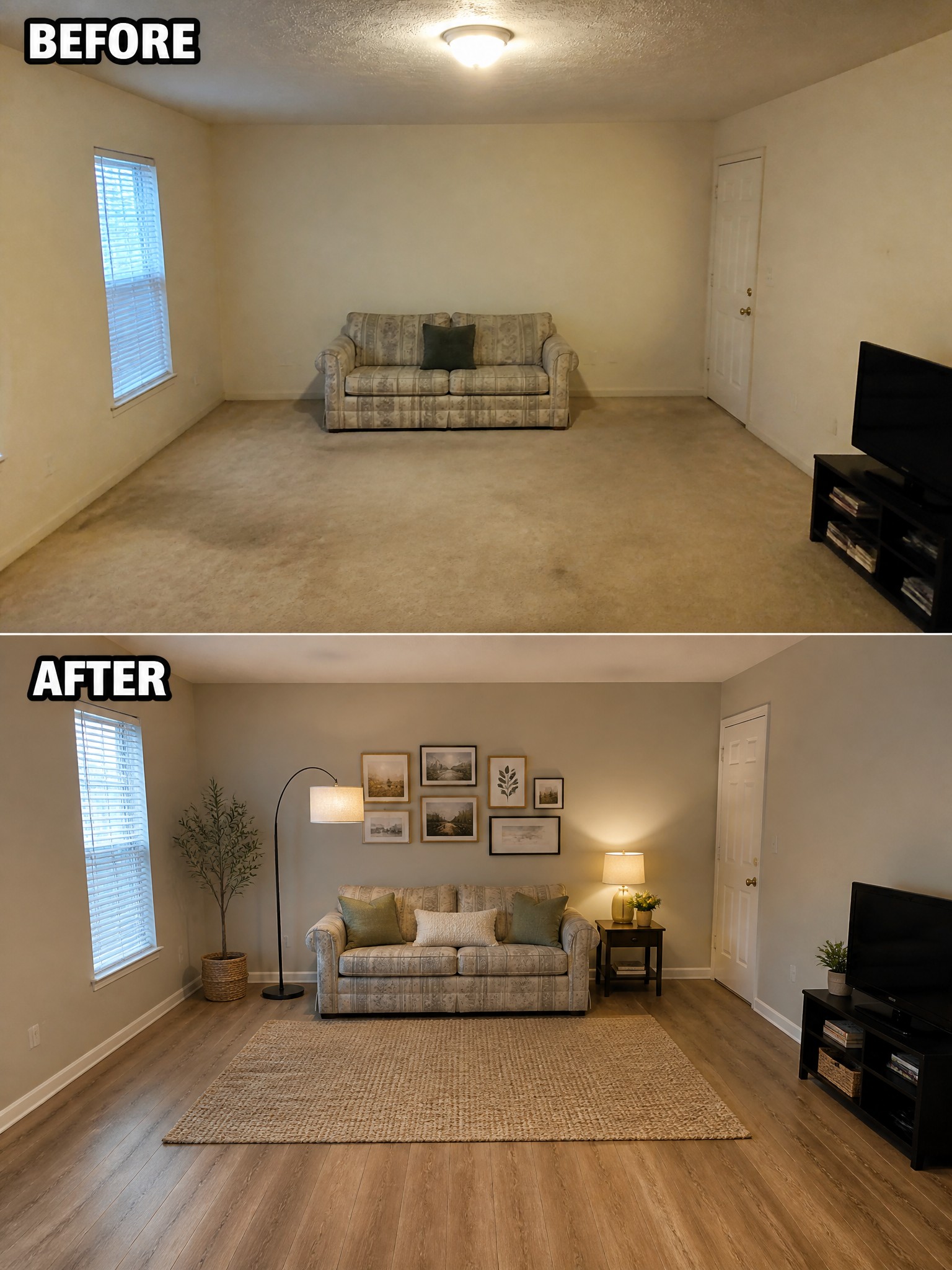
One simple way to improve a bare living room is to add a large rug and a couple of lamps. The before version shows a wide open space with just the sofa sitting on plain carpet. The after version uses a big woven rug to anchor the seating area and brings in both a floor lamp and a table lamp so the light feels softer and more even.
This idea works best in older homes that still have wall to wall carpet or basic lighting. Place the rug so the front legs of the sofa and any side chairs sit on it. Then add at least two lamps at different heights instead of depending only on the ceiling light. Keep the rest of the room simple so the rug and lighting do the main work.
Replace Old Carpet And Add Layered Lighting
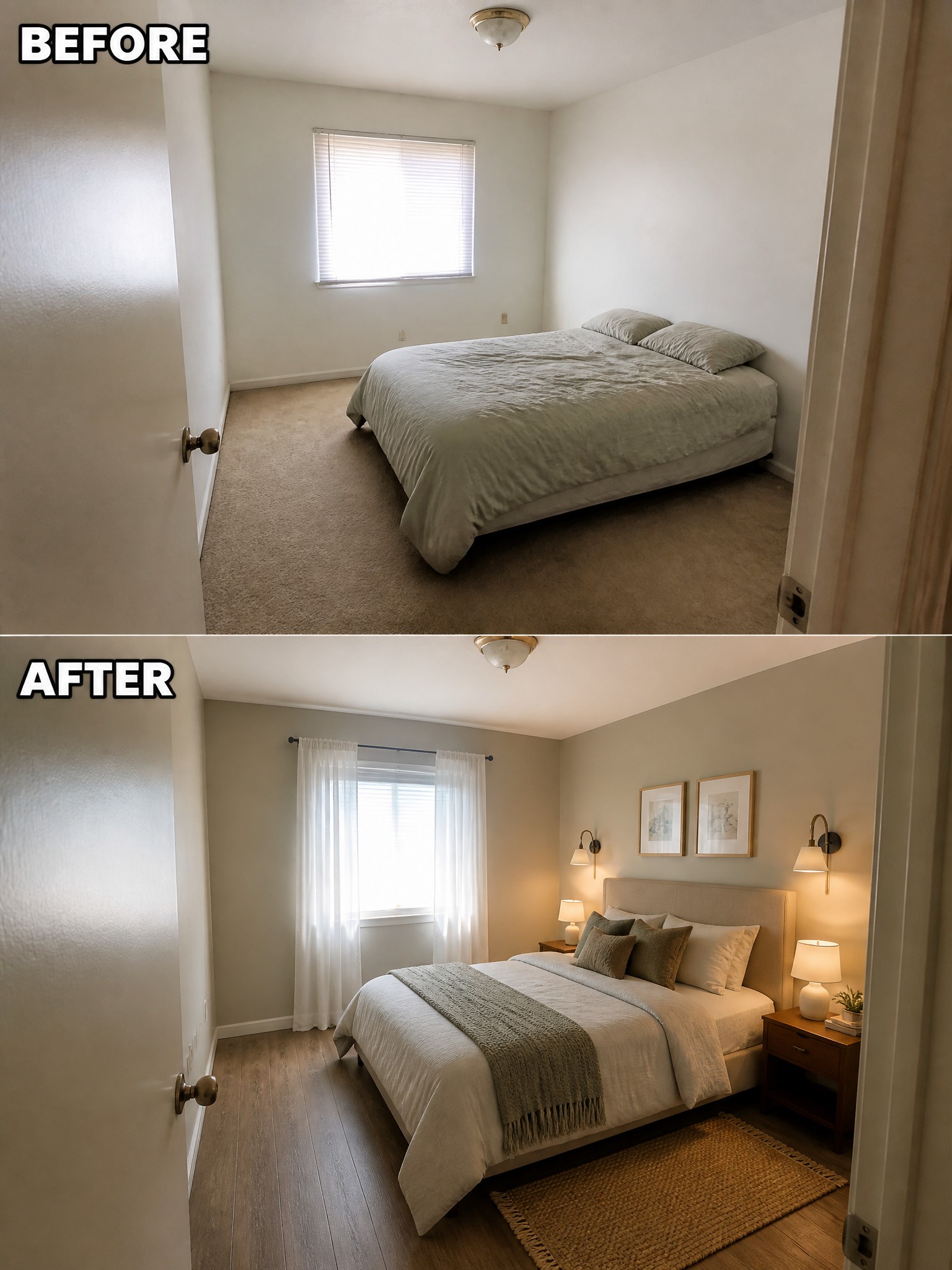
Many bedrooms start out feeling flat because of wall-to-wall carpet and a single overhead light. Swapping the carpet for wood flooring and bringing in several light sources changes the whole feel. Curtains help soften the windows while a rug under the bed keeps the space grounded.
This approach works well in older homes where carpet has seen better days. Focus first on the floor if the budget allows, then add a mix of table lamps and wall sconces so the room does not rely on one harsh light. Keep the rest of the furniture simple so the new lighting and textiles do the main work.
Replace Old Carpet To Freshen Up A Workspace
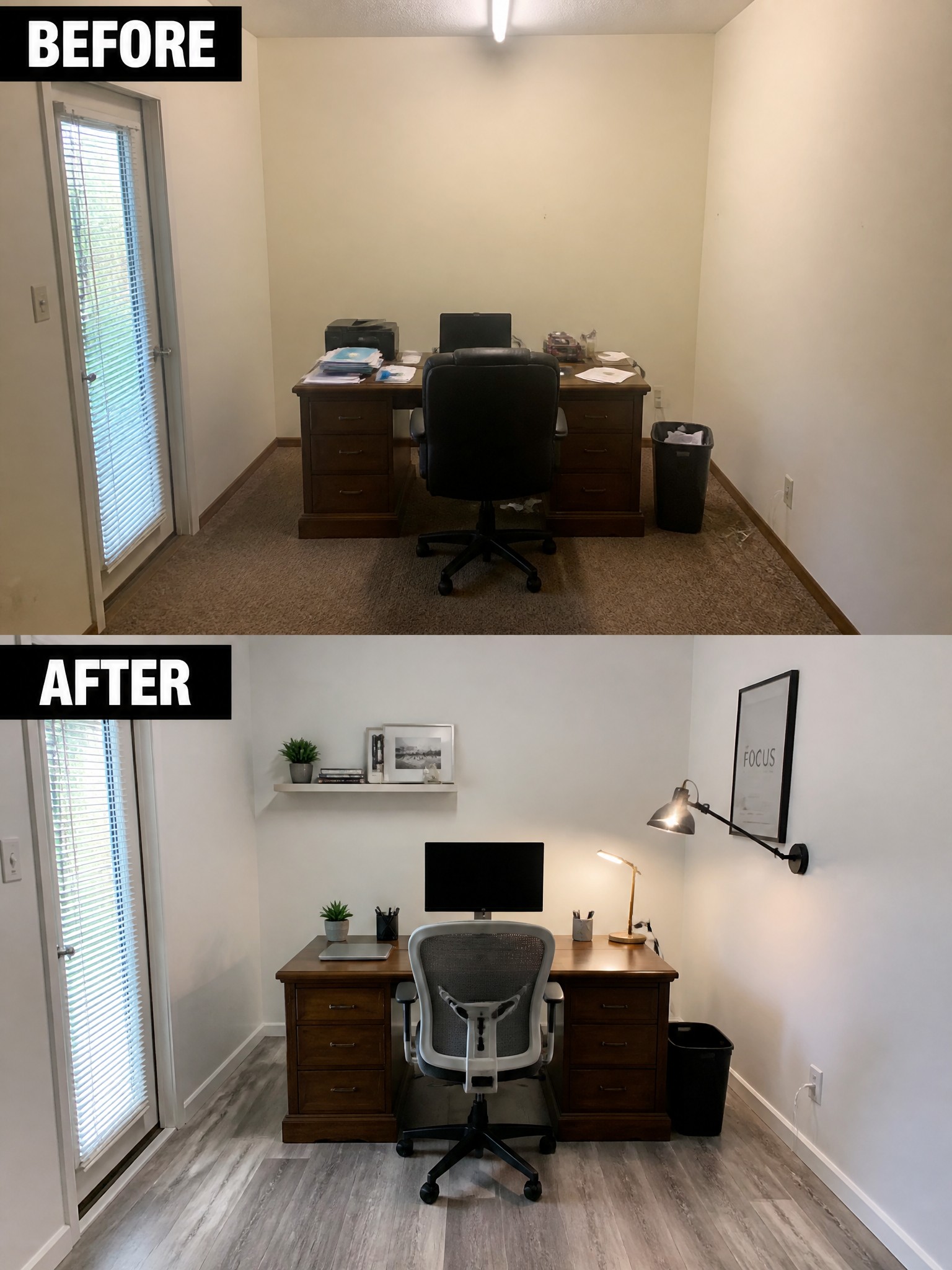
Swapping out the carpet made the biggest difference in this office. The old flooring looked worn and held onto a heavy feeling that made the room seem smaller and darker than it really was. New light-toned flooring brightened everything right away and gave the space a cleaner base to build on.
This approach works well in any small room that feels dated or closed in. Start with the floor if the carpet is the main thing dragging the room down, then add one or two simple lights so the desk area actually gets usable light. Keep the rest of the furniture simple so the room does not feel crowded again.
Add A Canopy And Lights To Make A Kids Room Feel Special
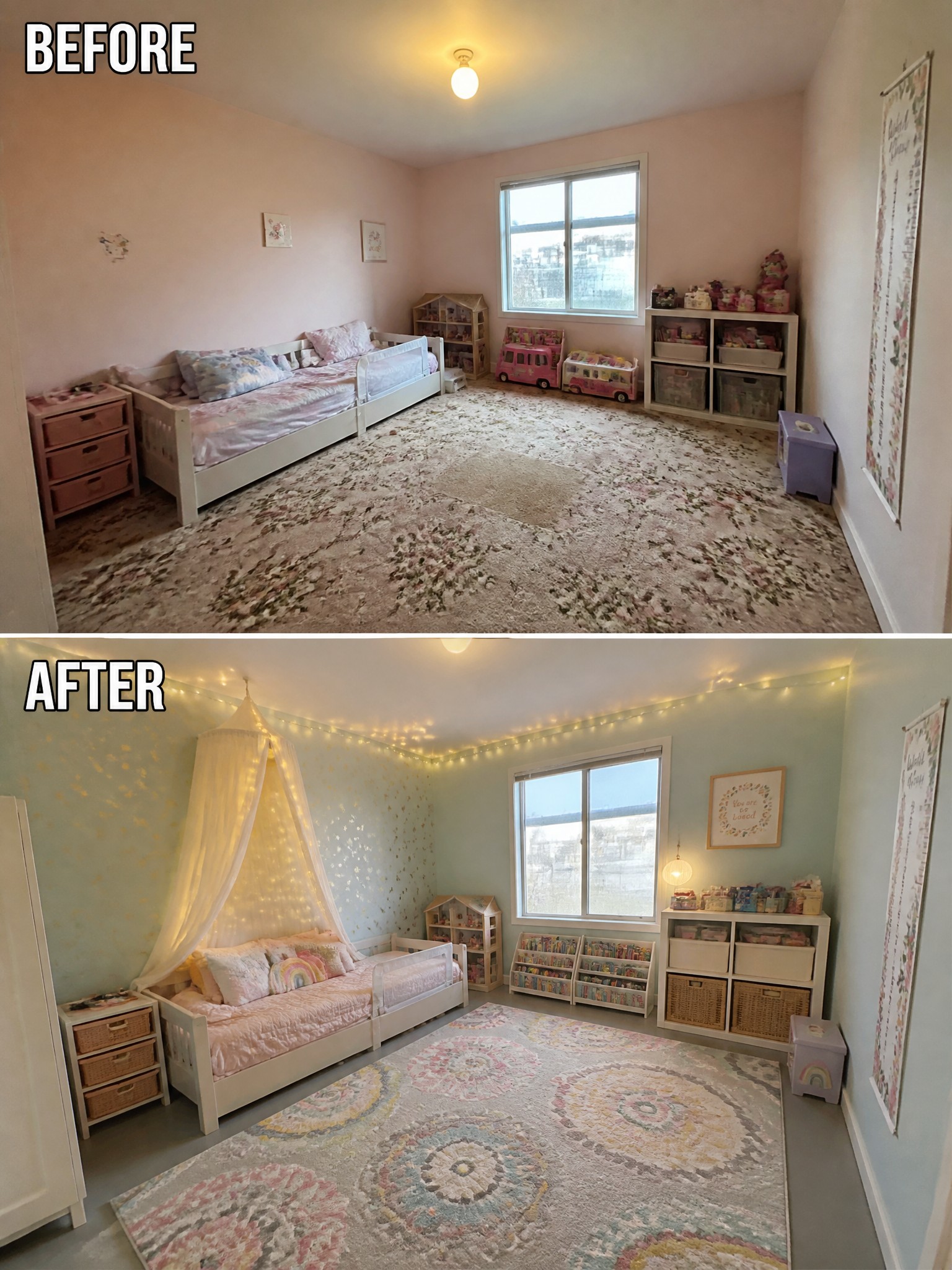
The before photo shows a basic bed sitting against plain walls with nothing to draw the eye or create any sense of comfort. In the after photo, a simple canopy with string lights turns that same bed into the main feature and makes the whole room feel warmer and more inviting.
This approach works best in small bedrooms where you want to add charm without buying new furniture. Hang the lights along the ceiling edge first, then add the canopy over the bed so the glow stays focused where the child sleeps. Keep the rest of the room light on color and storage so the bed area stands out.
Update The Walls And Floor To Make A Room Feel Finished
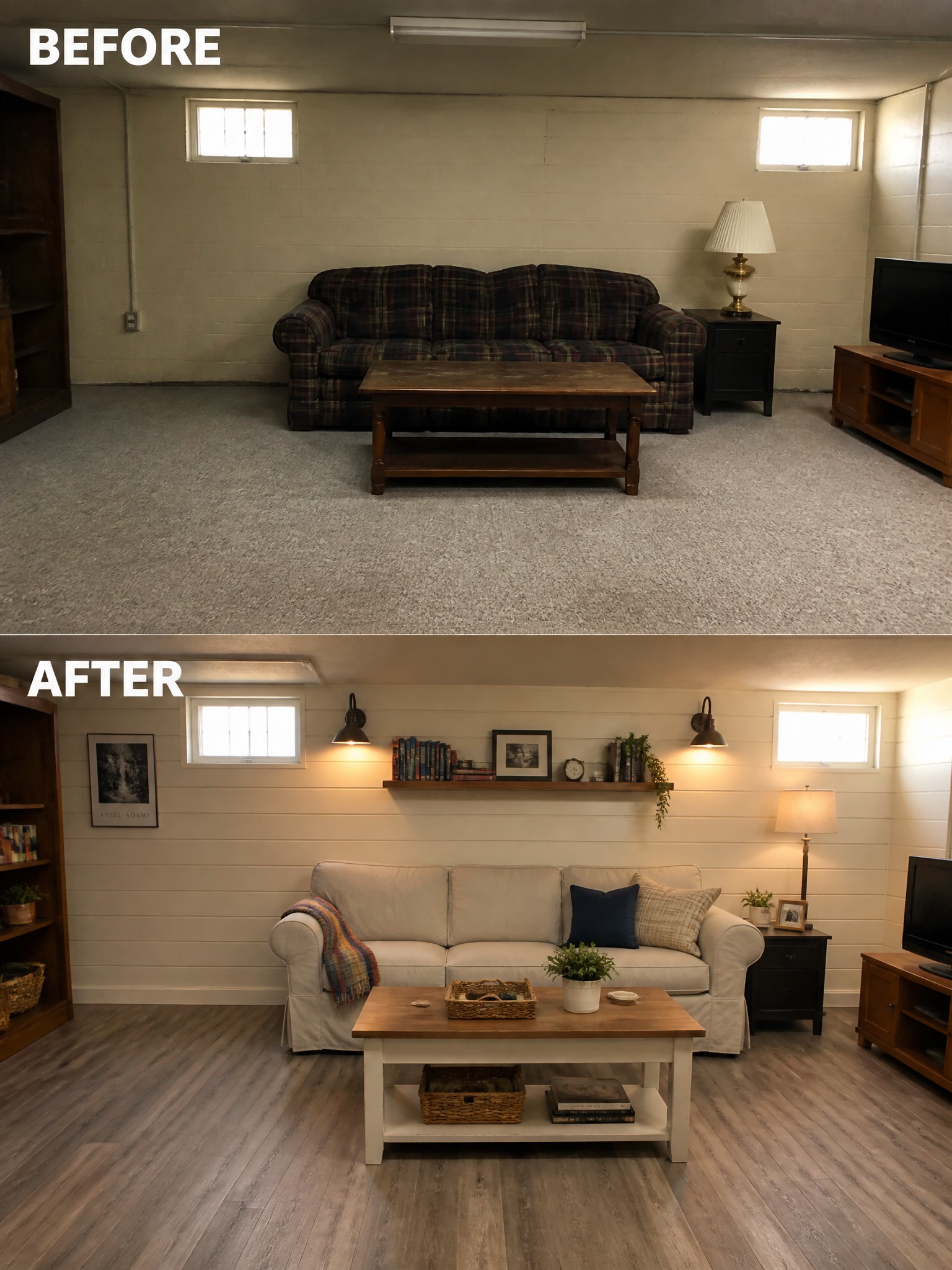
Basements often start with concrete walls and carpet that keep the space feeling unfinished. Switching to white paneling and wood-look flooring changes the whole feel without needing a full renovation.
This idea works best in rooms that already have decent furniture but lack warmth. Start with the walls and floor before adding smaller pieces, since those two changes do most of the work in making the room feel complete.
Make A Plain Living Room Feel Finished
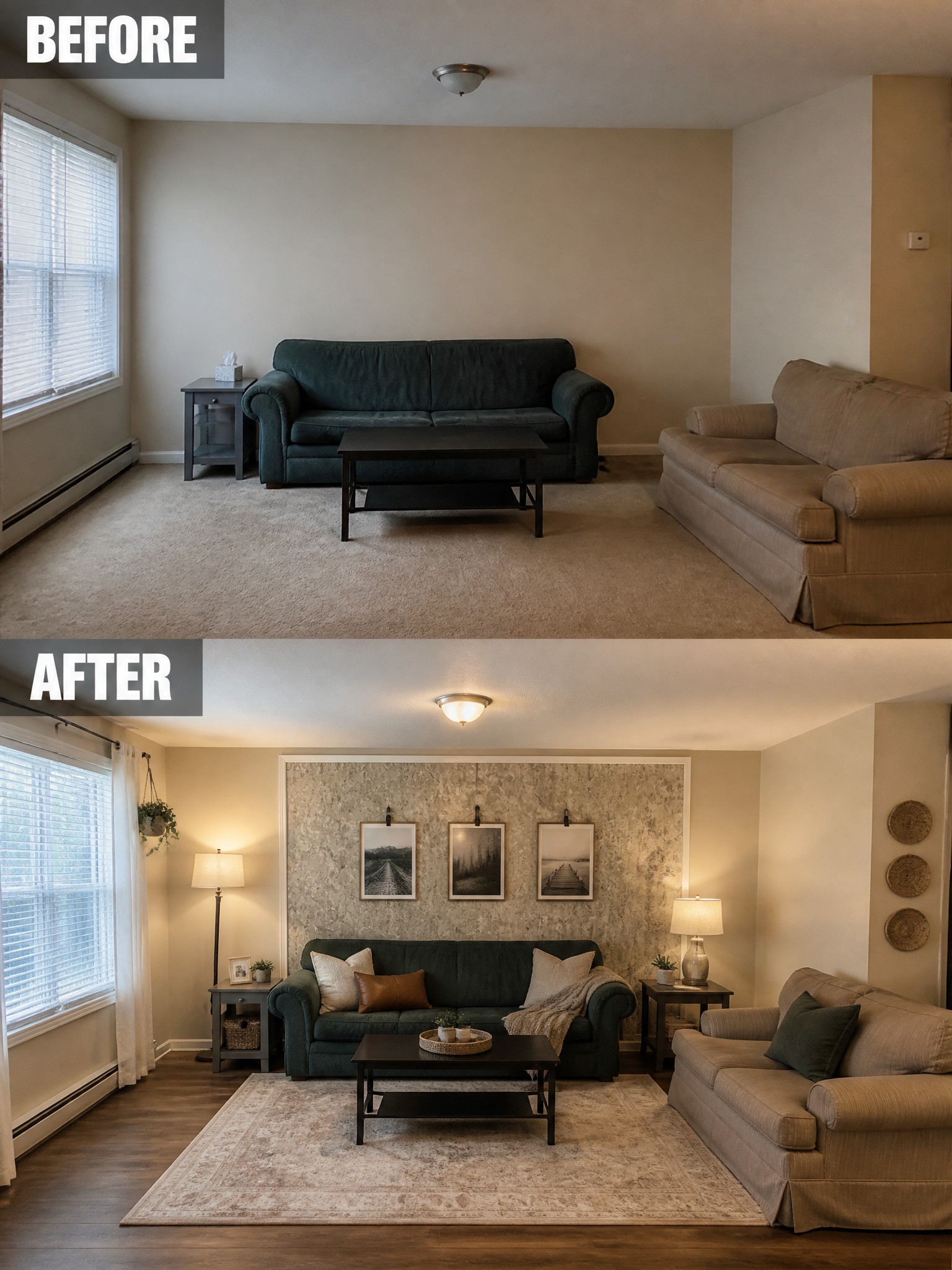
A room with old carpet and blank walls often feels unfinished even when the furniture is in place. Adding one large rug under the seating area and bringing in a few lamps makes the biggest difference here. The rug pulls the sofa and chairs together while the lamps add light at different heights instead of relying only on the ceiling fixture.
This idea works in any living room where you want to keep the carpet for now. Choose a rug big enough to sit under the front legs of the main furniture, then add at least two lamps so the space does not feel dim at night. A few simple pictures on the wall above the sofa finish the look without much cost.
Replace Old Carpet And Refresh The Walls
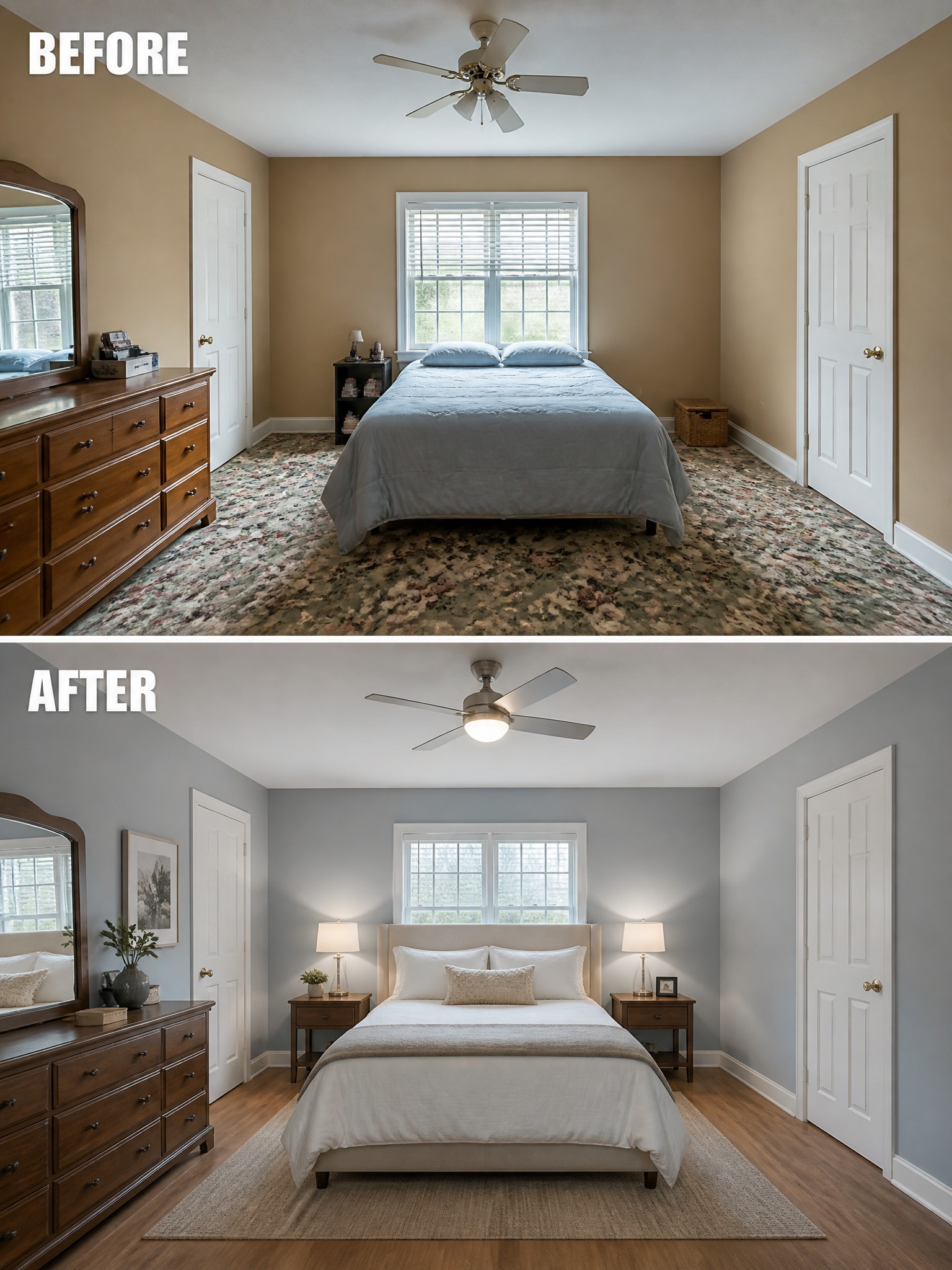
Old carpet often makes a bedroom feel heavier than it needs to be. Removing the busy floral pattern and switching to hardwood with a simple area rug opened up the space right away. Painting the walls a soft gray also helped the room feel brighter and more current without any major construction.
This kind of update suits older homes where the carpet has worn out but the structure is still sound. Start with the flooring if your budget allows, then pick a lighter wall color that bounces light around the room. Adding a pair of bedside lamps is usually enough to finish the look once the bigger surfaces are handled.
Replace Old Carpet To Make A Bedroom Feel Finished
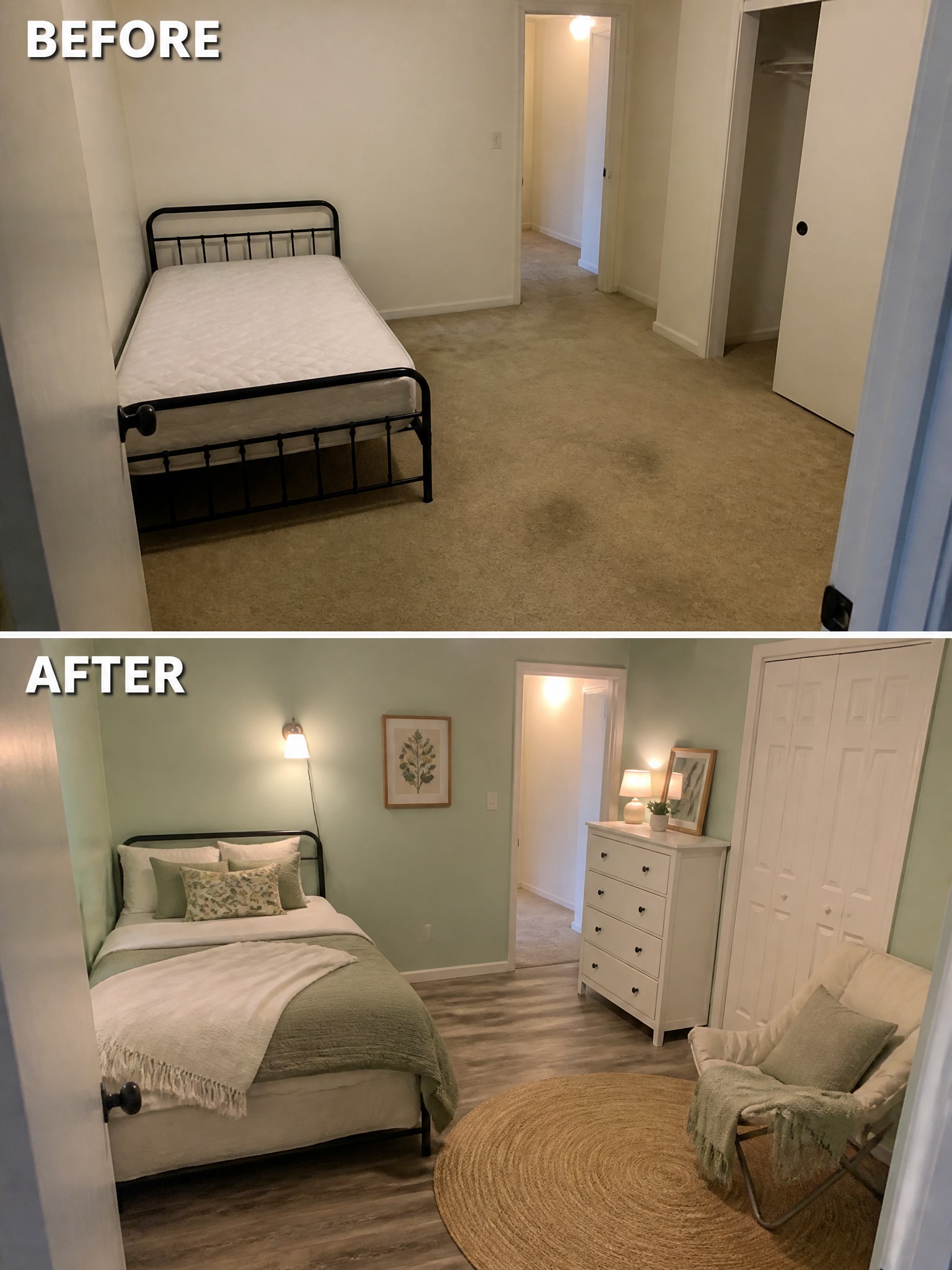
Many older bedrooms start with plain carpet, empty walls, and almost no lighting. Swapping the carpet for new flooring and adding a coat of paint immediately changes how the room feels. The rest comes from a few simple layers like bedding, a lamp, and one or two small pieces of furniture that keep the space from looking empty.
This approach works well in small bedrooms where you want to keep costs down. Focus first on the floor and walls, then add textiles and lighting in the spots where you actually use the room. A single chair and a low dresser can give the space purpose without crowding it.
Replace Carpet With Foam Tiles In A Kids Room
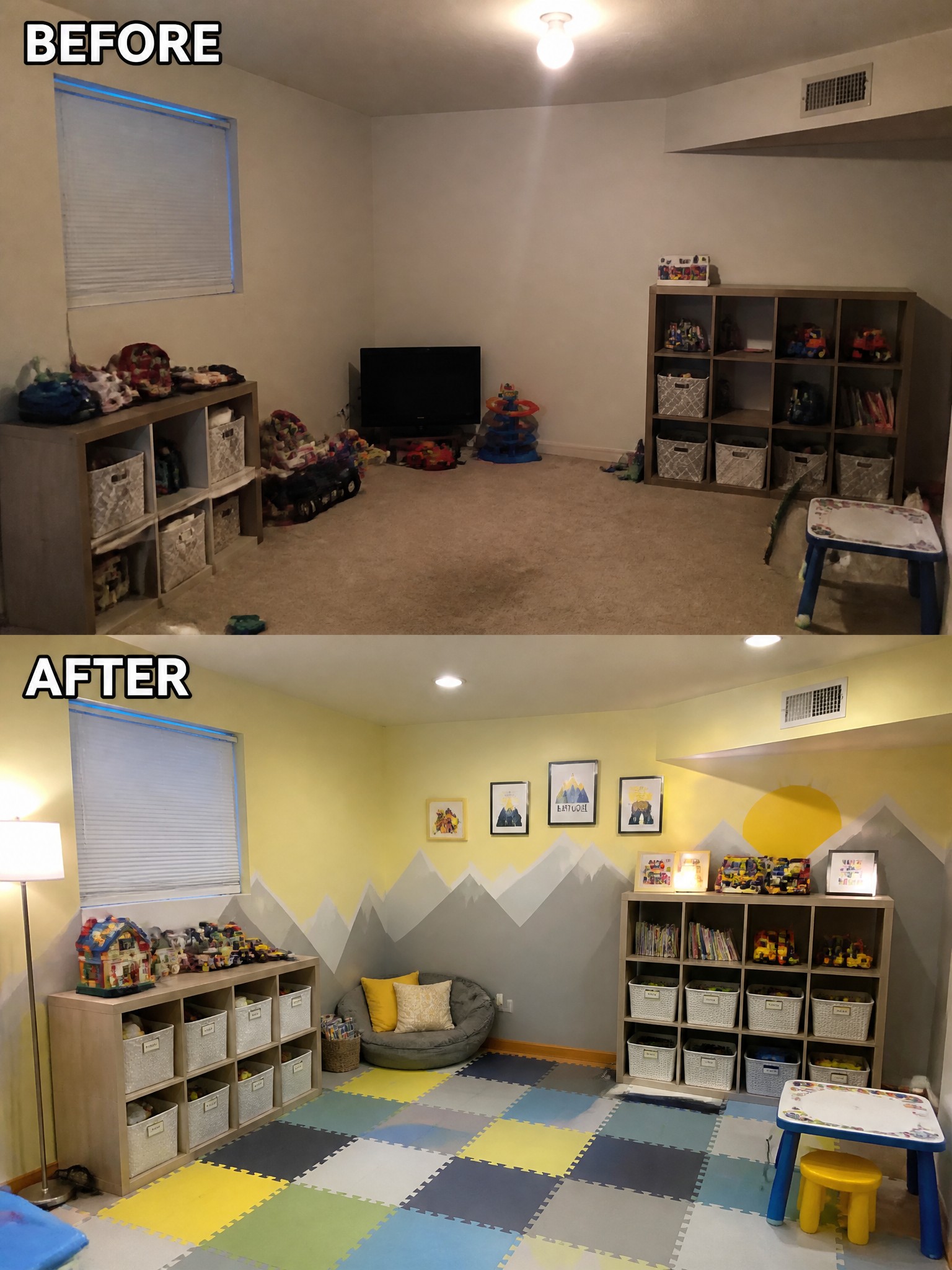
Old carpet can quickly look worn in a room where toys and spills are constant. Switching to interlocking foam tiles gives a durable surface that is easy to clean and softer underfoot. The new floor also helps define the play area and keeps toys contained in one spot.
This approach works well in any room used mainly for play. Start with a simple color pattern for the tiles and keep the rest of the space organized so the floor stays visible. It is a practical change that holds up better than carpet when kids are active indoors.
Make A Plain Room Feel Finished
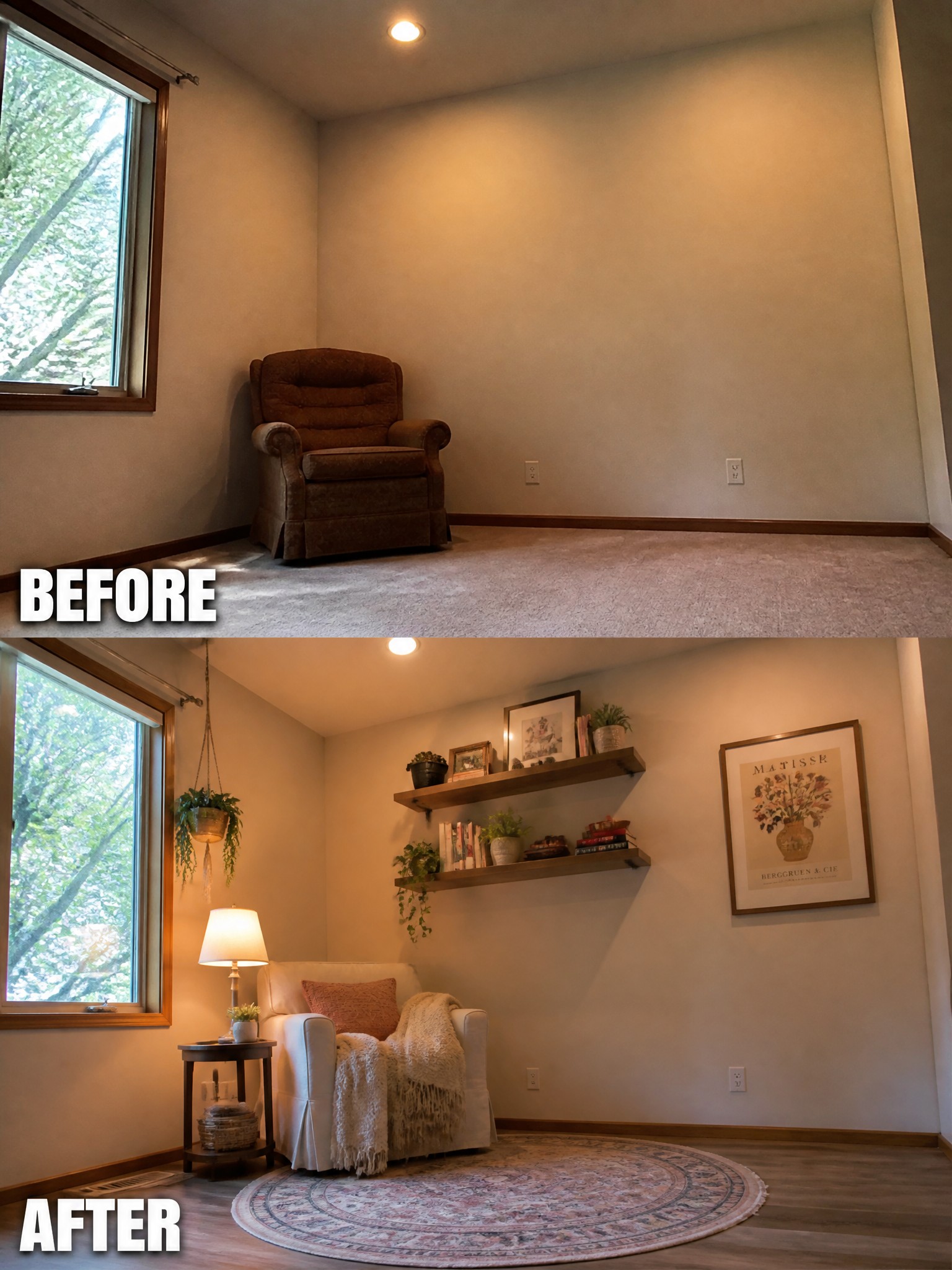
A bare room with carpet and empty walls often feels unfinished even when it is clean. Adding a rug to define the floor space and a few wall shelves with books and plants gives the area a clear purpose without major construction.
This idea works best in small corners or rooms that lack natural focal points. Start with the rug to set the scale, then bring in one comfortable chair and simple lighting so the space feels balanced and ready to use.
Refresh A Dated Dining Room By Changing The Floor And Trim
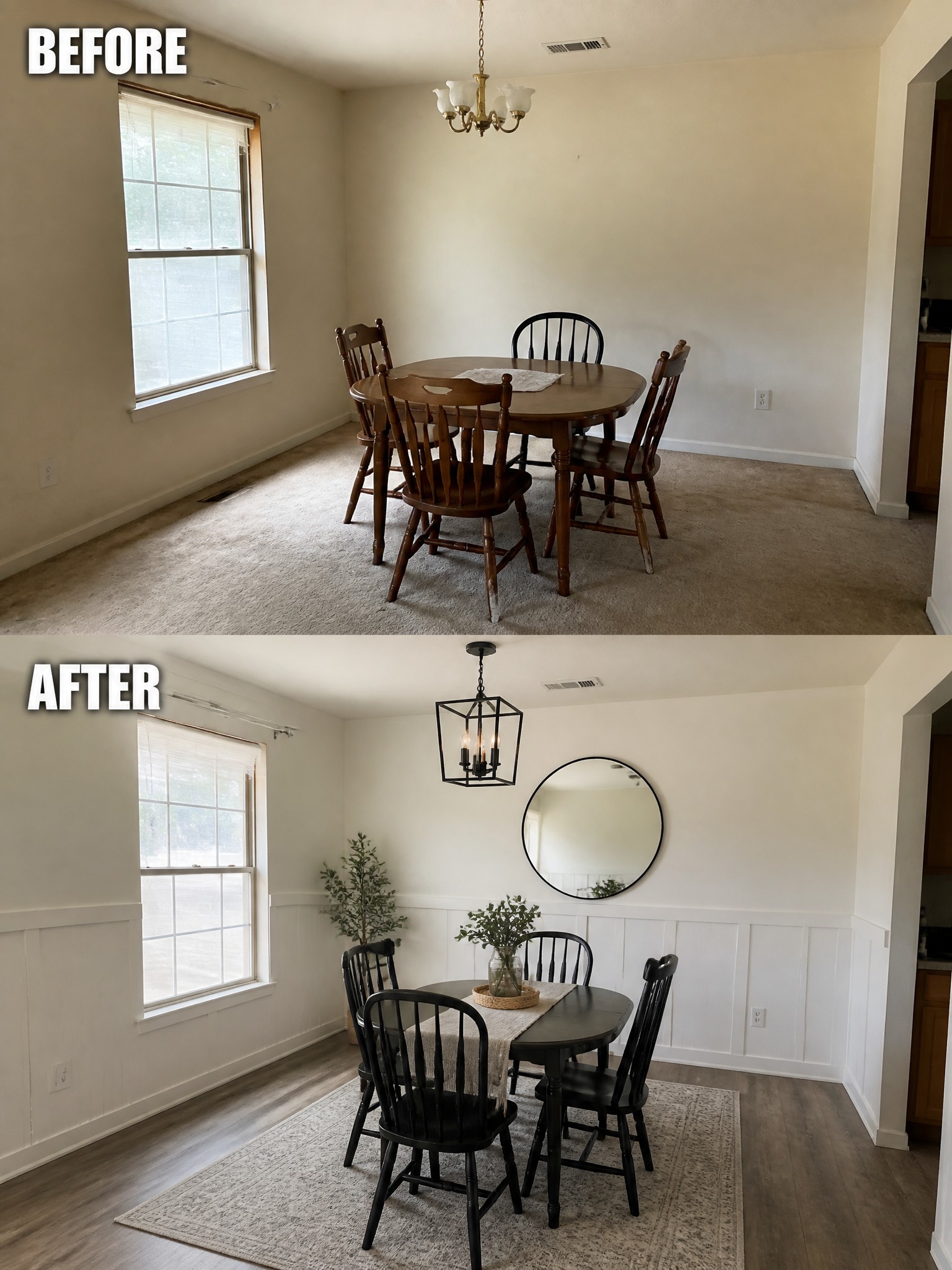
Replacing the old carpet with wood-look flooring instantly makes the room feel cleaner and more current. Adding white wainscoting on the walls and swapping the light fixture for something darker gives the space a clearer structure without any major construction.
This approach works well in older homes where carpet has worn down and walls feel flat. Focus first on the floor and a simple trim detail, then bring in a rug to define the seating area. Keep the rest of the updates light so the room does not feel overcrowded.
Add Lighting And Storage To Fix A Cluttered Closet
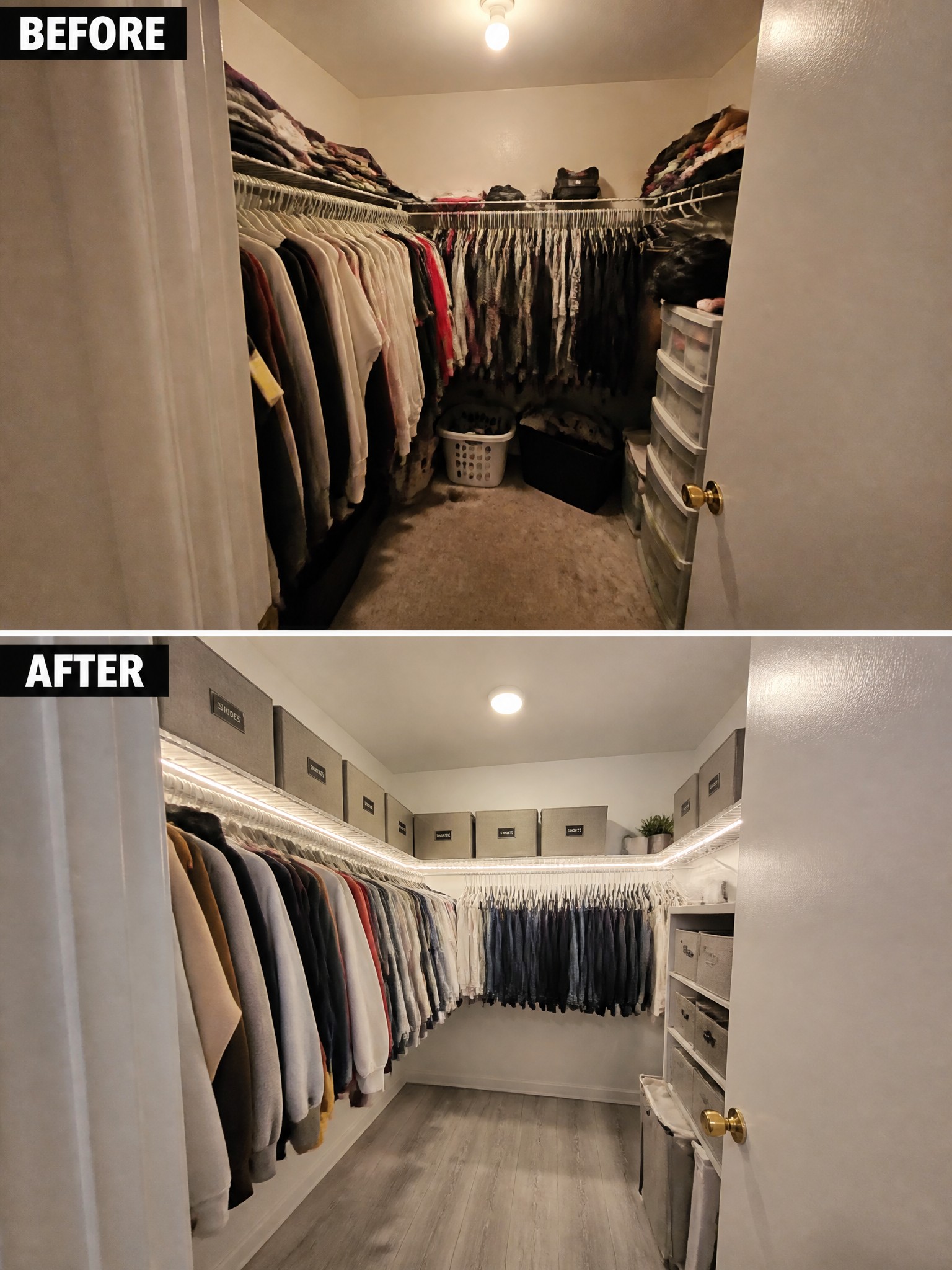
Closets often end up dark and overcrowded because there is no good lighting and no real system for the clothes. Adding LED strips under the shelves and using matching labeled bins made this space much easier to use. The clothes now hang in clear sections instead of being crammed together, and the floor is no longer hidden under piles.
This idea works well in any small or windowless closet where you cannot see what you own. Start with simple plug-in LED lights along the top shelves, then group items into bins by type so you can pull down only what you need. It keeps the space practical without requiring a full custom system.
Replace Old Carpet To Refresh A Small Space
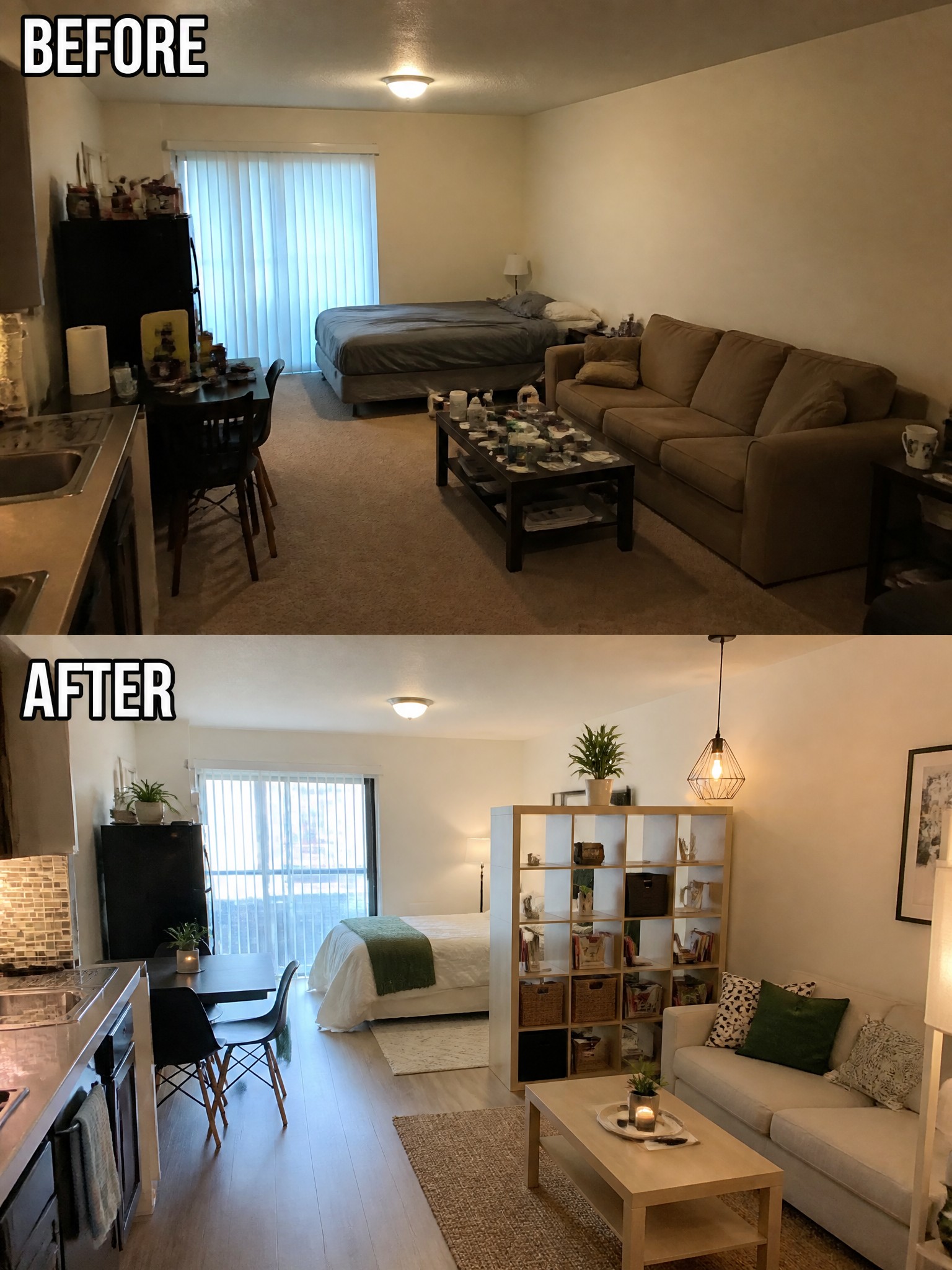
Old carpet often makes a room feel dated and closed in, especially when paired with heavy furniture and poor lighting. In this makeover the carpet was removed and replaced with light wood flooring, which immediately brightened the space and created a cleaner base for the rest of the room. A simple shelving unit was also added to separate the sleeping and living areas, giving each zone its own purpose without needing walls.
This approach works well in small apartments or studios where one room serves multiple functions. Start with the floor if the carpet is worn or dark, then use an open shelf or low bookcase to define zones rather than crowding the space with more furniture. Keep the rest of the updates simple so the new flooring remains the main improvement.
Make A Plain Room Feel Finished
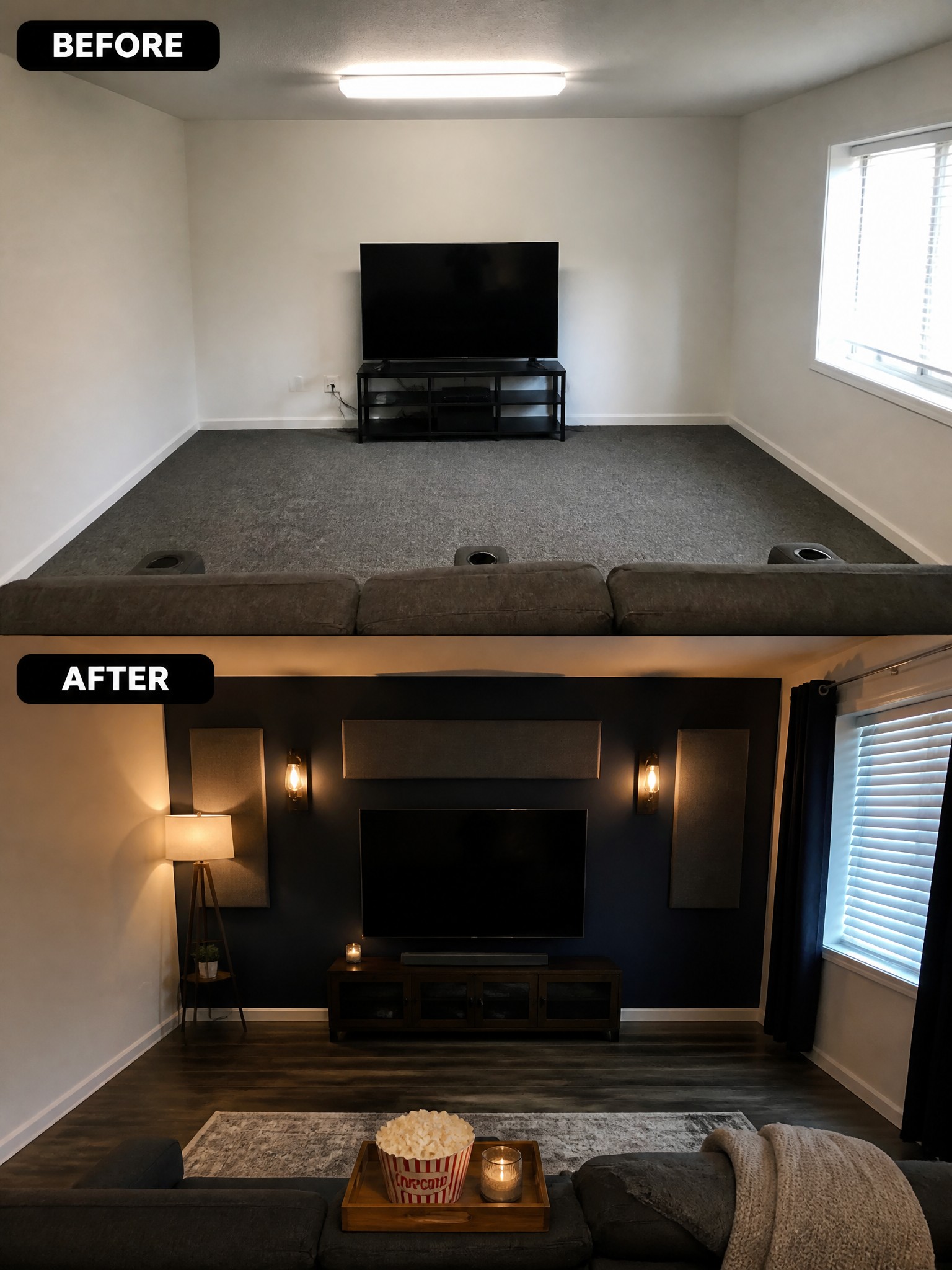
The biggest shift here came from replacing the old carpet with wood flooring and painting one wall a deep navy to create a focal point behind the TV. Adding wall sconces, a floor lamp, and a rug pulled the space together without needing a full renovation.
This approach works well in any room that feels empty or cold from builder-grade finishes. Start with the flooring and one painted wall if the budget is tight, then layer in lighting and a rug to define the seating area. It suits older homes or rentals where you want warmth without major construction.
Add Storage Furniture To Organize A Narrow Hallway
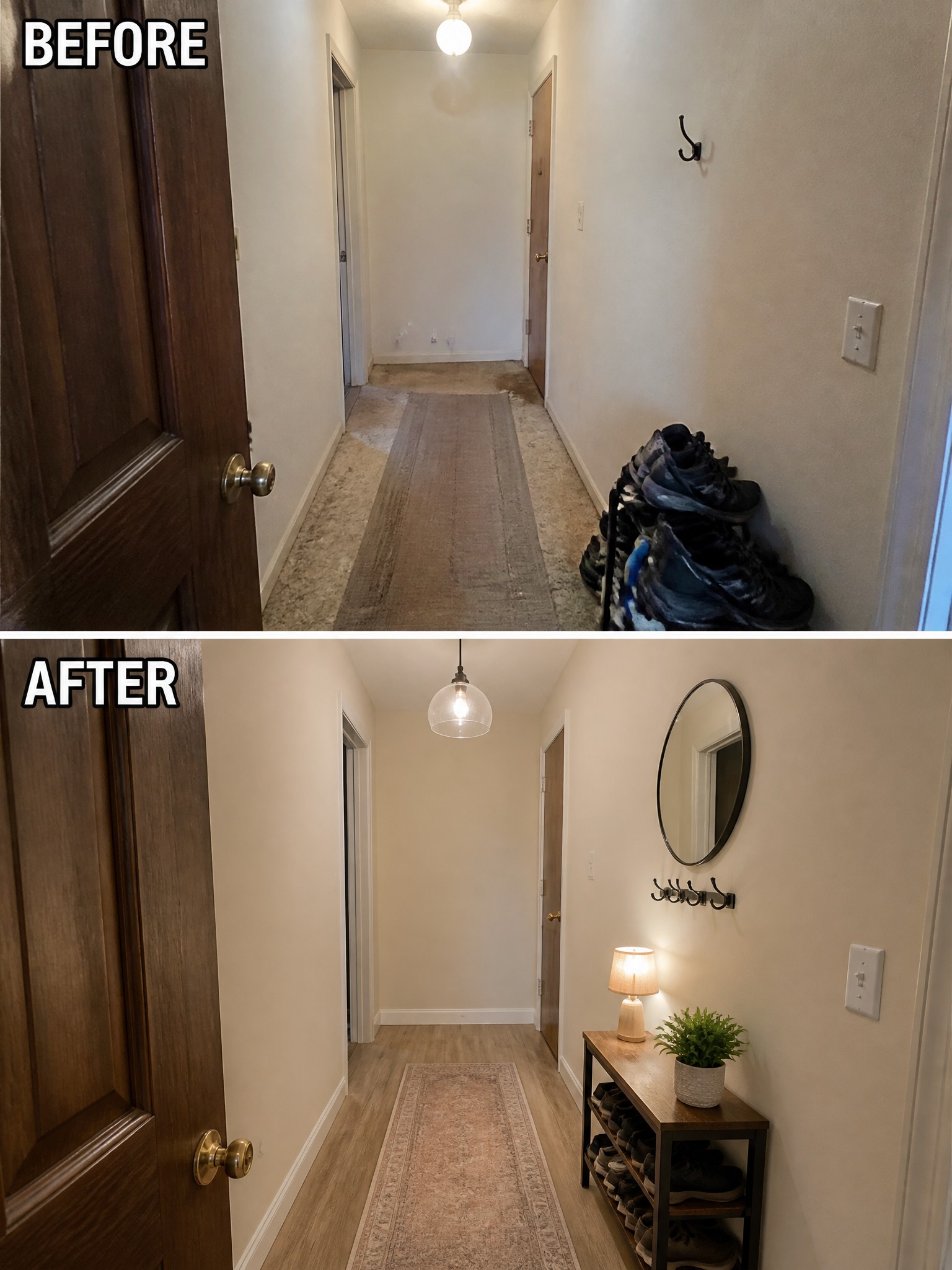
A hallway near the door often collects shoes and clutter because there is no real system for them. Adding a low shoe rack bench and a slim console table gives the space a clear purpose and keeps the floor clear.
This idea works well in older homes with tight entries or long corridors. Keep the furniture narrow so the walkway stays open, and use a mirror and small lamp on the console to make the area feel brighter without taking up much room.
Paint The Walls And Add String Lights To Warm Up A Bedroom
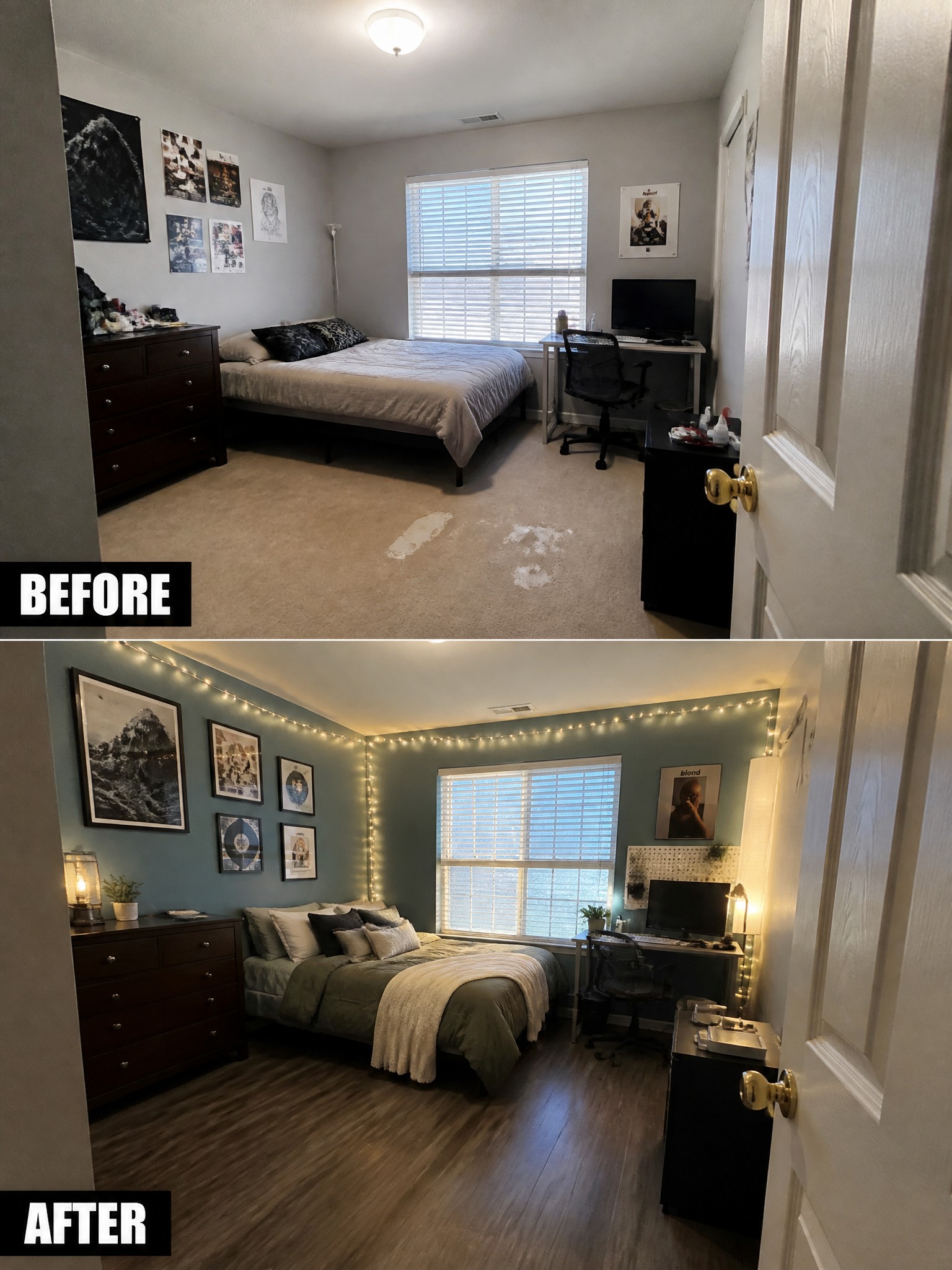
A plain bedroom with beige walls and basic overhead lighting can feel cold and unfinished even when the furniture is already in place. Painting the walls a soft color and running string lights along the ceiling gives the room a much warmer feel without needing a full renovation. The change is simple but makes the space look more put together right away.
This idea works well in any bedroom that feels flat or builder basic. Start with the walls since that shift affects everything else, then add the lights where you actually sit or read. It suits smaller rooms especially, since both changes are low cost and easy to adjust later if the color or placement does not feel right.
Organize Blank Laundry Walls With Pegboard And Lighting
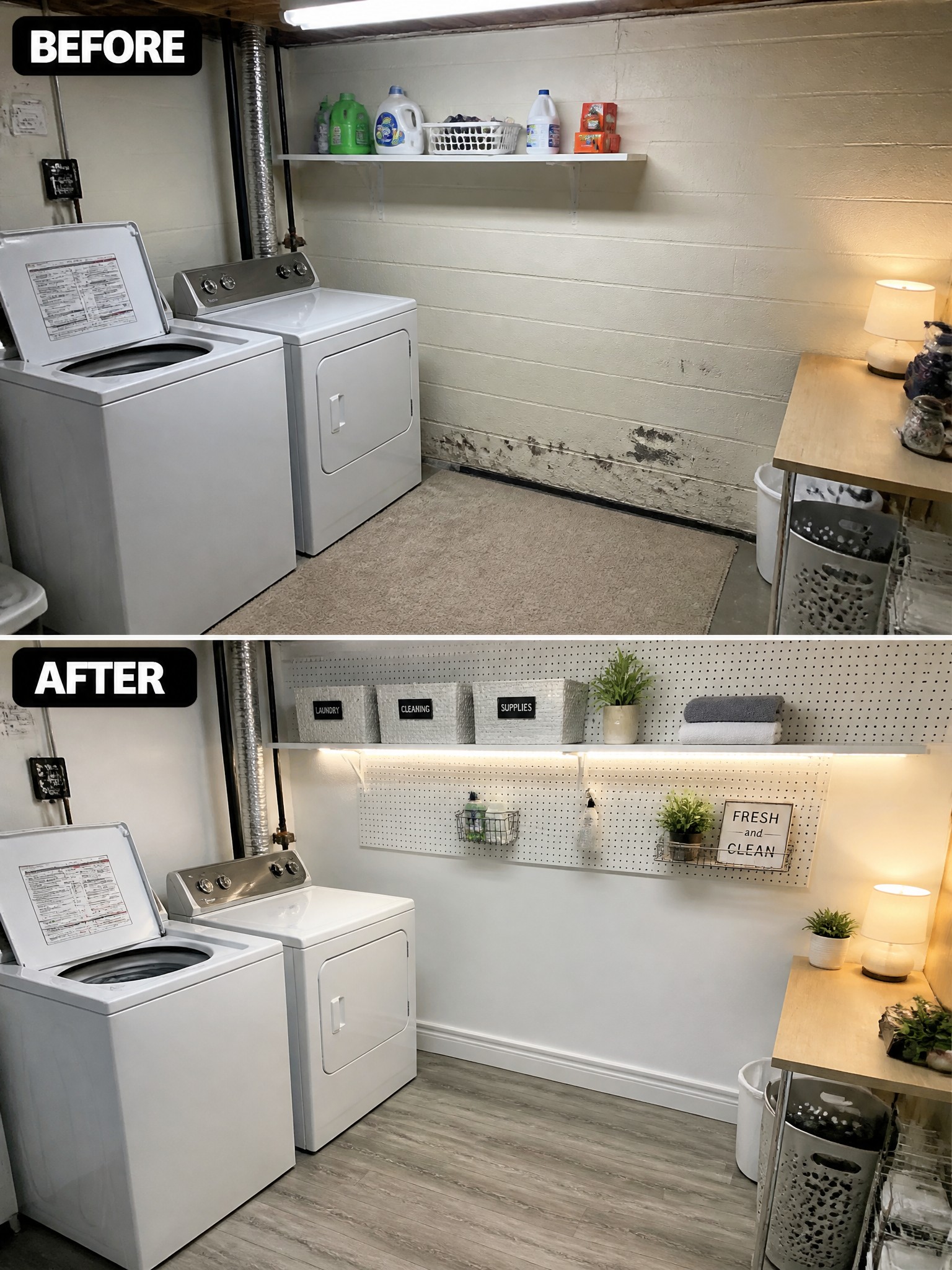
A plain laundry room often ends up with just a shelf and a lot of empty wall space. Adding a pegboard panel below the shelf gives you a place to hang small baskets and hooks while the bins on top keep everything sorted by category. Under-shelf lighting makes the whole area easier to use at night and helps the space feel less like a basement corner.
This approach works well in any utility room where you need quick access to supplies without adding big cabinets. Start with a simple pegboard kit and a strip of LED lights, then add a few labeled bins so nothing ends up scattered on the floor. It is an easy way to handle blank walls and dim lighting without a full renovation.
Make A Plain Living Room Feel Finished
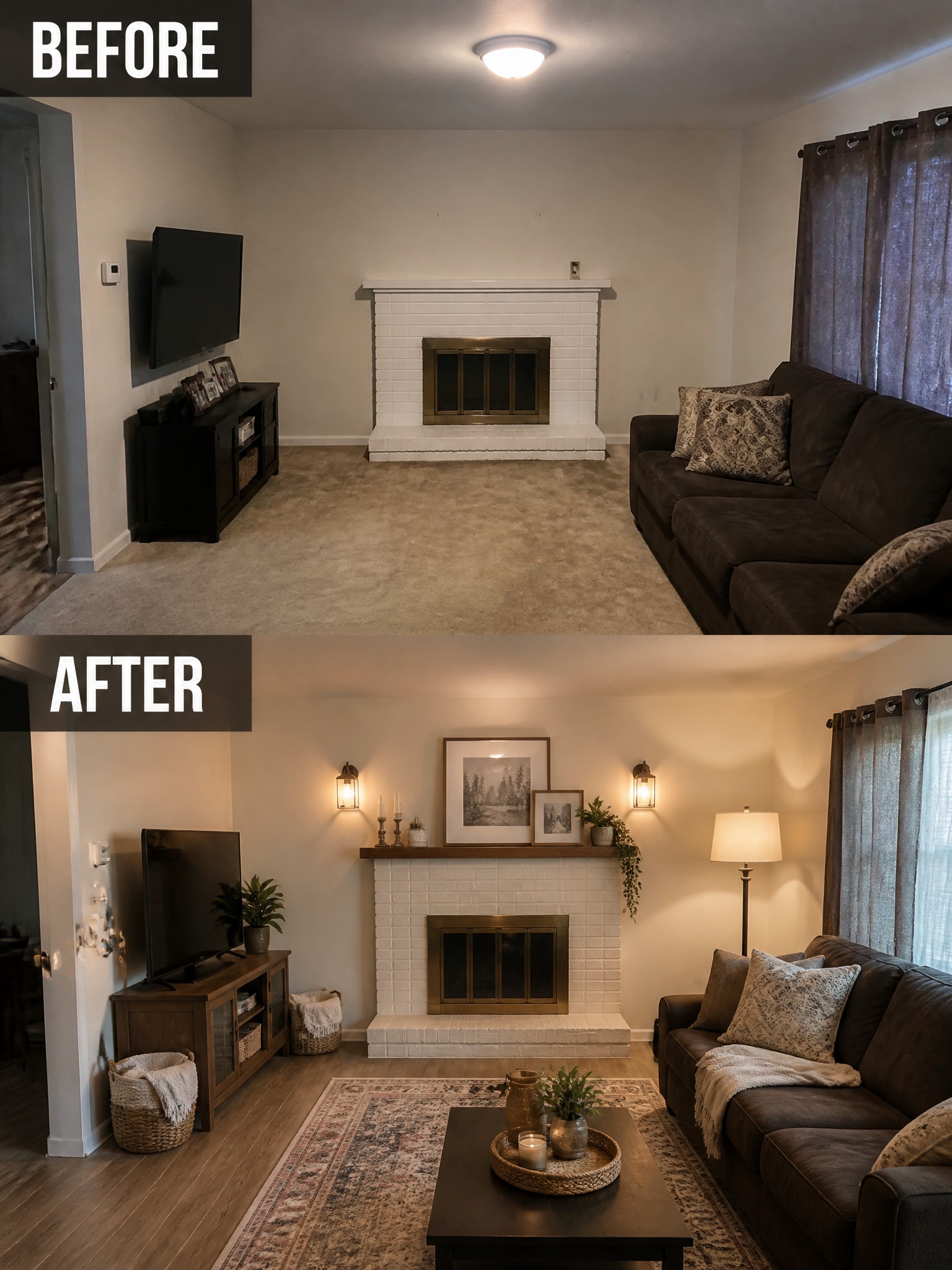
A basic living room with carpet and a plain fireplace wall can feel unfinished even when the furniture is in place. The change here comes from treating the fireplace as the main focal point and adding layers around it. A rug defines the seating area, while sconces and a floor lamp bring in warmer light that the single ceiling fixture could not provide.
This approach works well in older homes where carpet is staying for now. Start with the fireplace wall by adding a simple mantel piece and a couple of lights, then bring in one large rug to ground the sofa and chairs. Keep the rest of the room simple so the new layers stand out without crowding the space.
Replace Old Carpet And Add Better Lighting
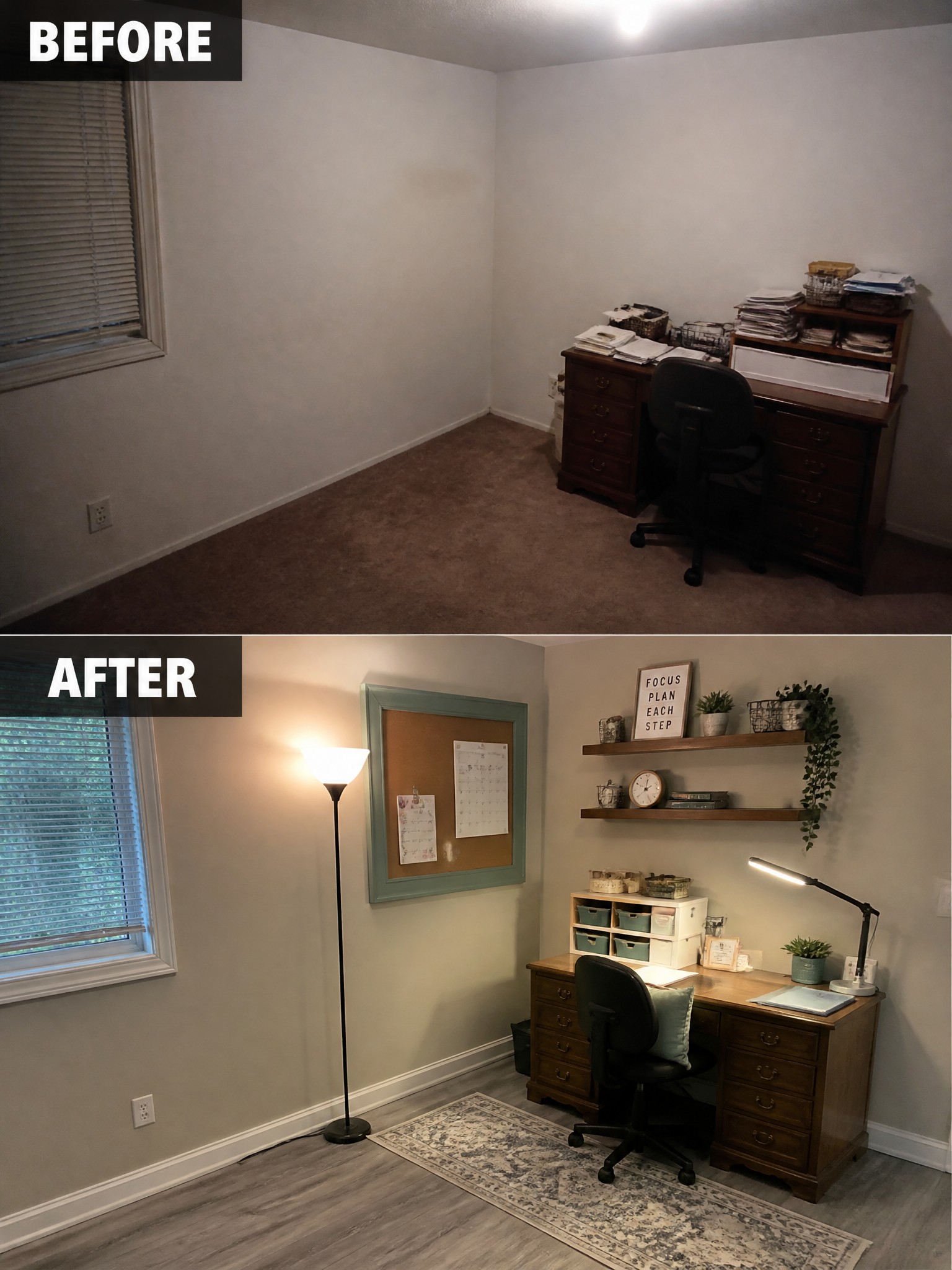
Swapping the old carpet for lighter flooring and adding a rug instantly made the room feel cleaner and more open. The addition of a floor lamp and a desk lamp also changed how the space works at night, since the single ceiling light was not enough on its own.
This idea suits any room with worn carpet and weak lighting, especially home offices or spare bedrooms. Start with the floor if the carpet is in bad shape, then bring in a couple of lamps before adding smaller pieces like shelves or a bulletin board.
Turn An Empty Room Into A Workspace
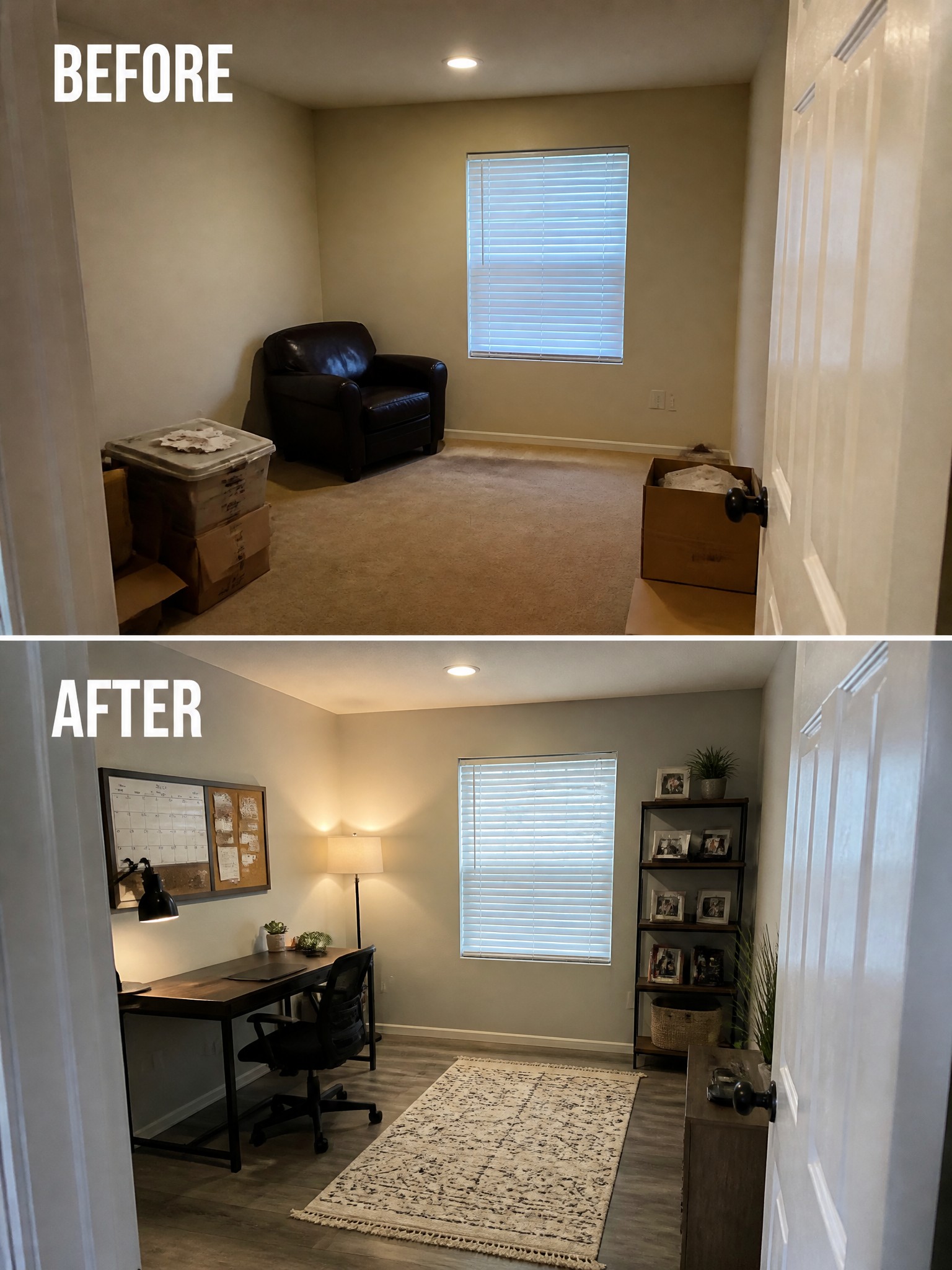
An empty room often stays that way because it has no clear purpose. The before photo shows a plain space with carpet and little else. Placing a desk and chair along one wall and adding a rug underneath gives the room a job and makes the floor feel finished.
This approach suits spare bedrooms or bonus rooms that need to double as work areas. Keep the desk simple and face it toward the window for light, then add one floor lamp so the space stays usable after dark. A single rug is usually enough to define the zone without crowding the floor.
Layer Textiles And Lighting Over Old Carpet
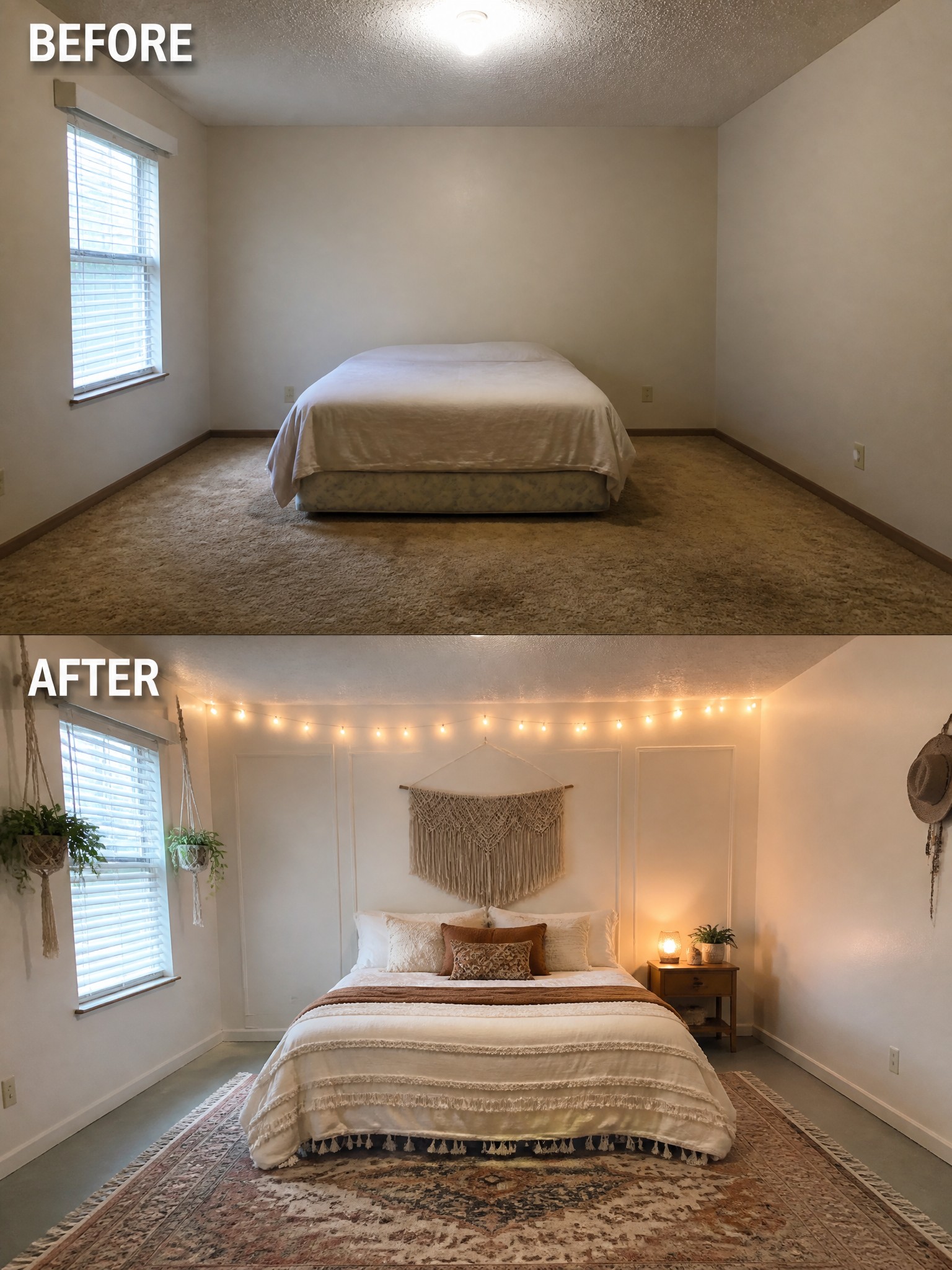
A plain bedroom with basic carpet and empty walls can feel cold and unfinished no matter how clean it is. Adding a large rug, string lights along the wall, and a simple macrame hanging immediately softens the space and gives it a clear focal point without any major construction.
This approach works especially well in older homes where replacing carpet is not in the budget yet. Start with one big rug to define the bed area, then add affordable string lights and one or two wall pieces to break up the blank surfaces. Keep the rest of the room simple so the layers do not compete.
Frequently Asked Questions
Q: What if my carpet has stains I can’t scrub out?
A: Cover the bad spots with a couple of affordable area rugs in similar colors. Move furniture to hide the edges where the rugs meet the carpet. This keeps the room feeling fresh without a full replacement.
Q: How can I fill blank walls without buying a ton of new stuff?
A: Print out photos or art from your phone and tape them up in a loose grid. Move things around until the spacing feels right. One big plant in the corner pulls the whole wall together.
Q: The overhead light is harsh and makes the room look smaller.
A: Add a floor lamp in one corner and a small table lamp on the opposite side. Point both toward the ceiling so the light spreads out evenly. Swap the bulb for a softer wattage if the glare still bothers you.
