
I often notice that a fireplace can end up as the one spot in a living room that still feels a little empty even after the rest of the furniture is in place.
When the mantel is made of white oak the grain adds just enough warmth to pull the seating area together without needing a lot of extra pieces around it.
I have found that the lighter tone works especially well in rooms that get uneven light during the day since it reflects what is already there.
Small swaps like this usually feel worth the effort.
It is the kind of change I would try first if a space still looked unfinished once the main layout was set.
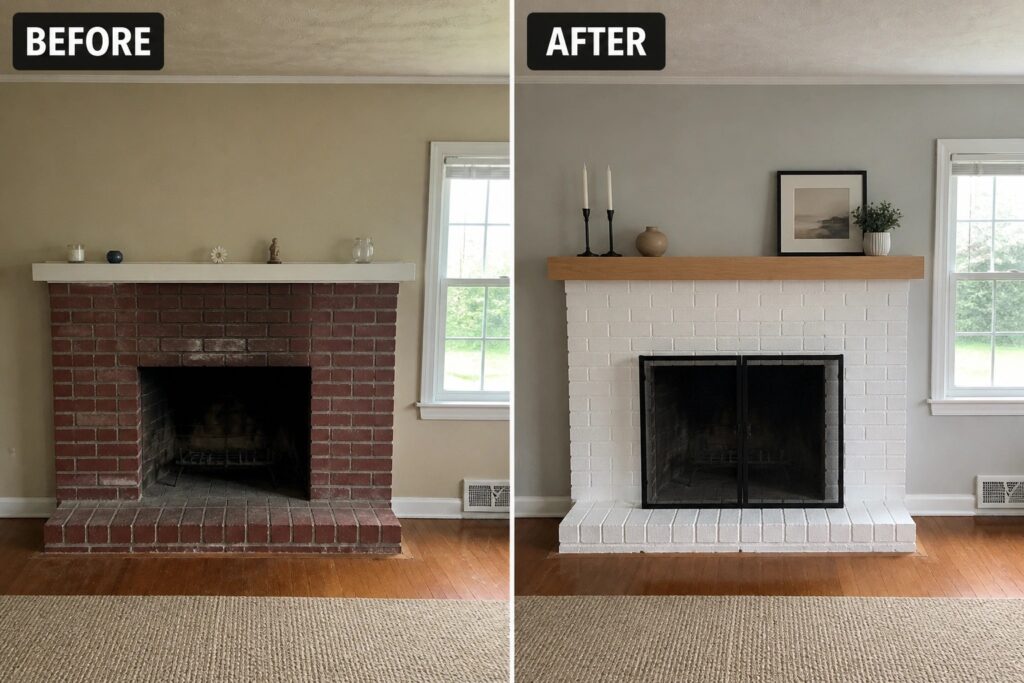
Paint The Brick And Add A Light Wood Mantel

Painting an old red brick fireplace white changes the whole feel of the room. The dark brick no longer dominates, and the new light wood mantel adds a simple, clean line that draws the eye without extra clutter. This one change turns a heavy, dated feature into something that fits a calmer, lighter space.
The idea works best in rooms that already have neutral walls and wood floors. Keep the mantel fairly narrow and match the wood tone to other trim or furniture so it feels like part of the room rather than an add-on. If the brick is in good shape, painting it is usually enough, and you can skip bigger construction.
Swap A Dark Mantel For A Floating White Oak Shelf

A heavy dark mantel can make a fireplace feel dated even when the rest of the room is fine. In this case the old carved surround was replaced with a slim white oak shelf set against a light vertical panel wall. The change instantly lightens the whole wall and lets the firebox stay as the main focal point without extra clutter.
This approach works well in homes that want a cleaner look but do not need a full renovation. Keep the new shelf narrow, match the wood tone to other trim if possible, and limit decor to one or two small items so the mantel stays simple.
Add Built-Ins Around A Fireplace For Balance

A plain fireplace often leaves the whole wall feeling unfinished. In this case the before photo shows an open stretch of wall with nothing but the mantel and some clutter on the floor. Adding matching built-ins on both sides gives the fireplace a clear frame and turns it into the main feature of the room.
This approach works well in living rooms or family rooms where you want storage without crowding the space. Keep the shelves at a comfortable height for books and small decor, and use the lower cabinets for things you want out of sight. A simple wood mantel ties the whole wall together and keeps the look from feeling too built-in heavy.
Update A Dated Fireplace With A White Oak Mantel

The original floral tile and plain mantel made the fireplace feel old and heavy. Replacing the surround with white marble and adding a light oak mantel shifted the whole wall into a cleaner, brighter focal point.
This works best in rooms where the fireplace already sits in the center. Keep the new mantel simple and let the wood tone do the work, then add a pair of sconces if the space needs more light at night.
Refresh A Brick Fireplace With A Smooth Surround And Oak Mantel

A heavy brick fireplace can start to feel dated once the rest of the room is updated. Replacing the brick surround with a smooth plaster finish and adding a simple white oak mantel lightens the whole wall and gives the fireplace a cleaner, more current look. The change removes the visual clutter of the old mantel ledge while keeping the firebox as the main focus.
This idea works best in living rooms that already have wood tones elsewhere, since the mantel can tie the space together without extra effort. Keep the styling minimal so the mantel and new surround stay the main features. A single round mirror or a pair of candlesticks is usually enough.
Replace A Painted Mantel With White Oak
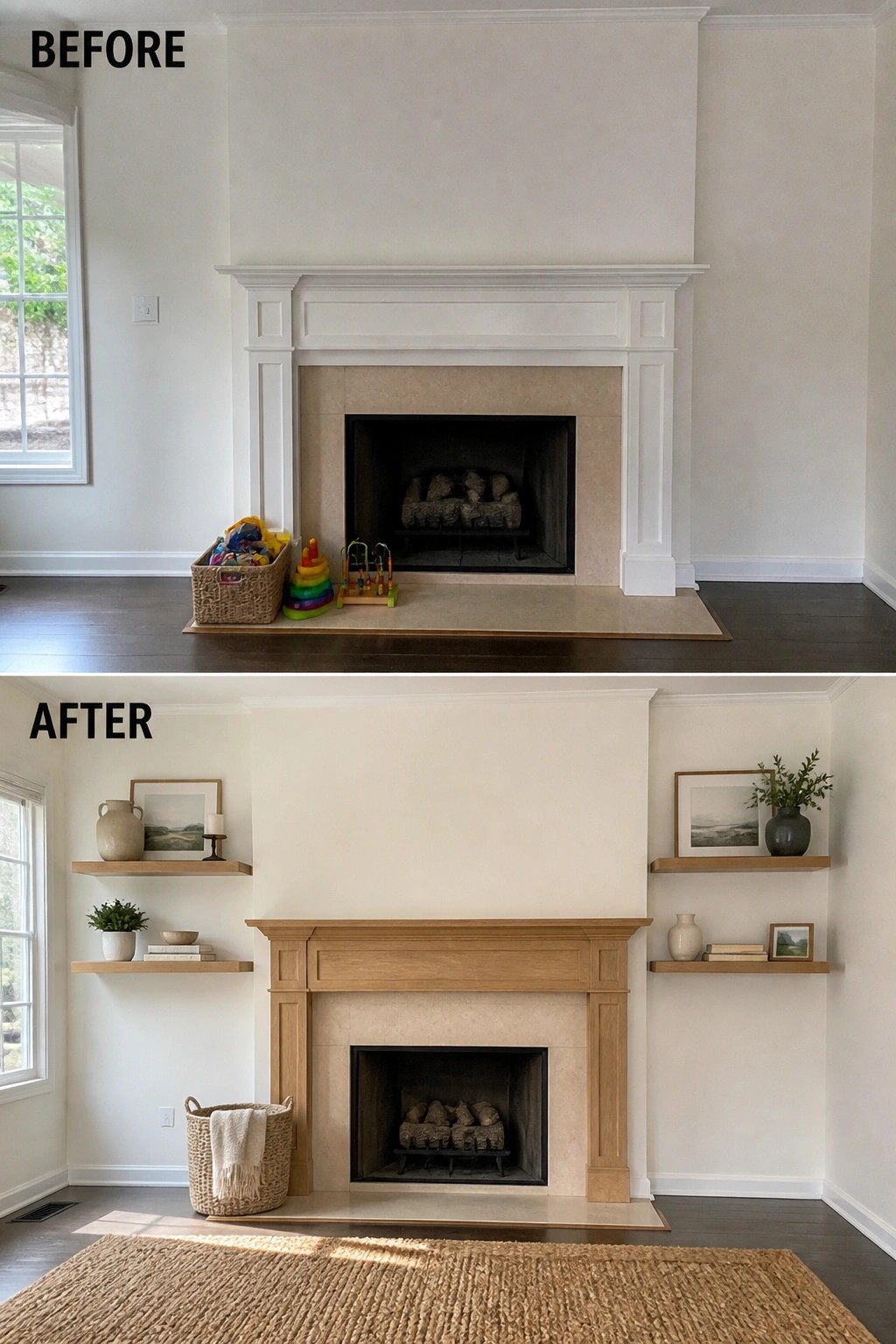
A white mantel can start to feel flat once the room around it gets more use. Swapping it for white oak adds a natural tone that pulls the whole wall together, especially when you add simple floating shelves on each side to hold a few pieces instead of leaving the surface bare.
This approach works well in living rooms that already have wood floors or other warm finishes. Keep the shelves light and do not overcrowd them. One or two larger items per shelf usually looks better than filling every inch.
Make The Fireplace Wall The Main Feature
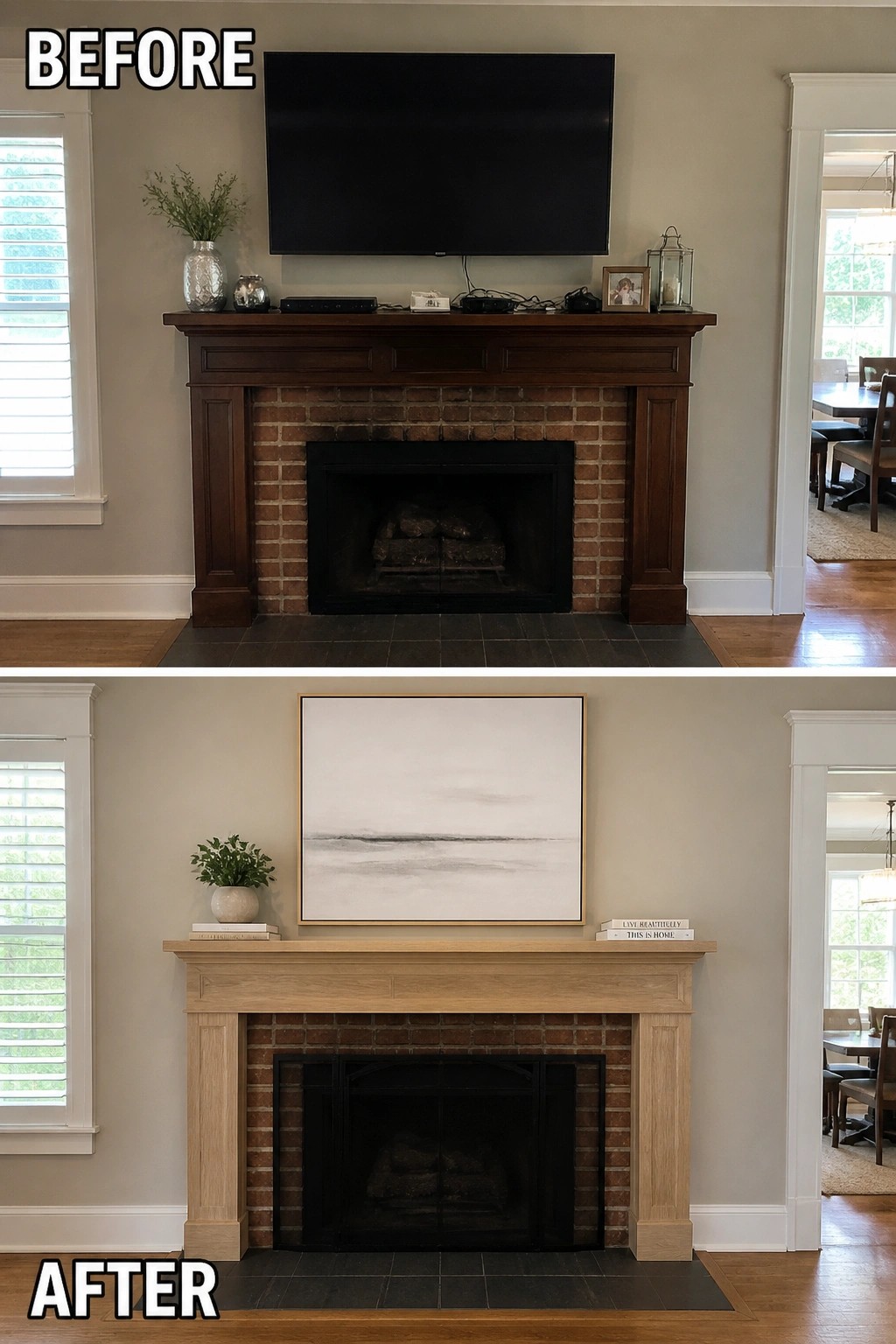
Mounting a TV above the fireplace often pulls attention upward and leaves the mantel looking cluttered. Switching to a lighter white oak mantel and removing the TV lets the brick surround and firebox take center stage instead.
This idea suits rooms where you want the fireplace to feel calm and grounded. Keep the surface clear except for one or two small items, and hang art at a comfortable height so the eye stays on the mantel and the opening below it.
Add A White Oak Mantel To Refresh The Fireplace

A plain fireplace often looks unfinished when the mantel feels too thin or basic. Swapping in a thicker white oak mantel and adding light blue shiplap below it gives the wall a clear focal point without major construction.
This idea works best in living rooms or family rooms where the fireplace already sits in a central spot. Keep the new mantel depth around six to eight inches so it feels substantial but does not stick out too far. Paint the surround in a soft color that still lets the wood tone stand out.
Update A Dated Fireplace With A Simple White Oak Mantel

A heavy dark mantel with lots of carving can make a fireplace feel closed in and old. Switching to a plain white oak mantel lightens the whole wall and lets the stone surround stand out without competing for attention. The change also opens up room for simpler lighting and art above the opening.
This approach works well in older homes where the original mantel has become too dark or busy for the rest of the room. Keep the new mantel fairly narrow and straight so it does not overwhelm the scale of the fireplace. Pair it with a few wall sconces at eye level and one piece of art centered above to finish the look without adding more weight.
Add A White Oak Mantel To Frame The Fireplace

A fireplace without a mantel can feel unfinished and easy to ignore. Adding a white oak mantel shelf gives the wall a clear top line and turns the opening into the main focal point without needing a full surround overhaul.
This idea suits rooms where the fireplace sits on a long blank wall. Choose a mantel depth that feels balanced with the scale of the room, and keep the styling light so the wood remains the main material change.
Update A Fireplace With A White Oak Mantel
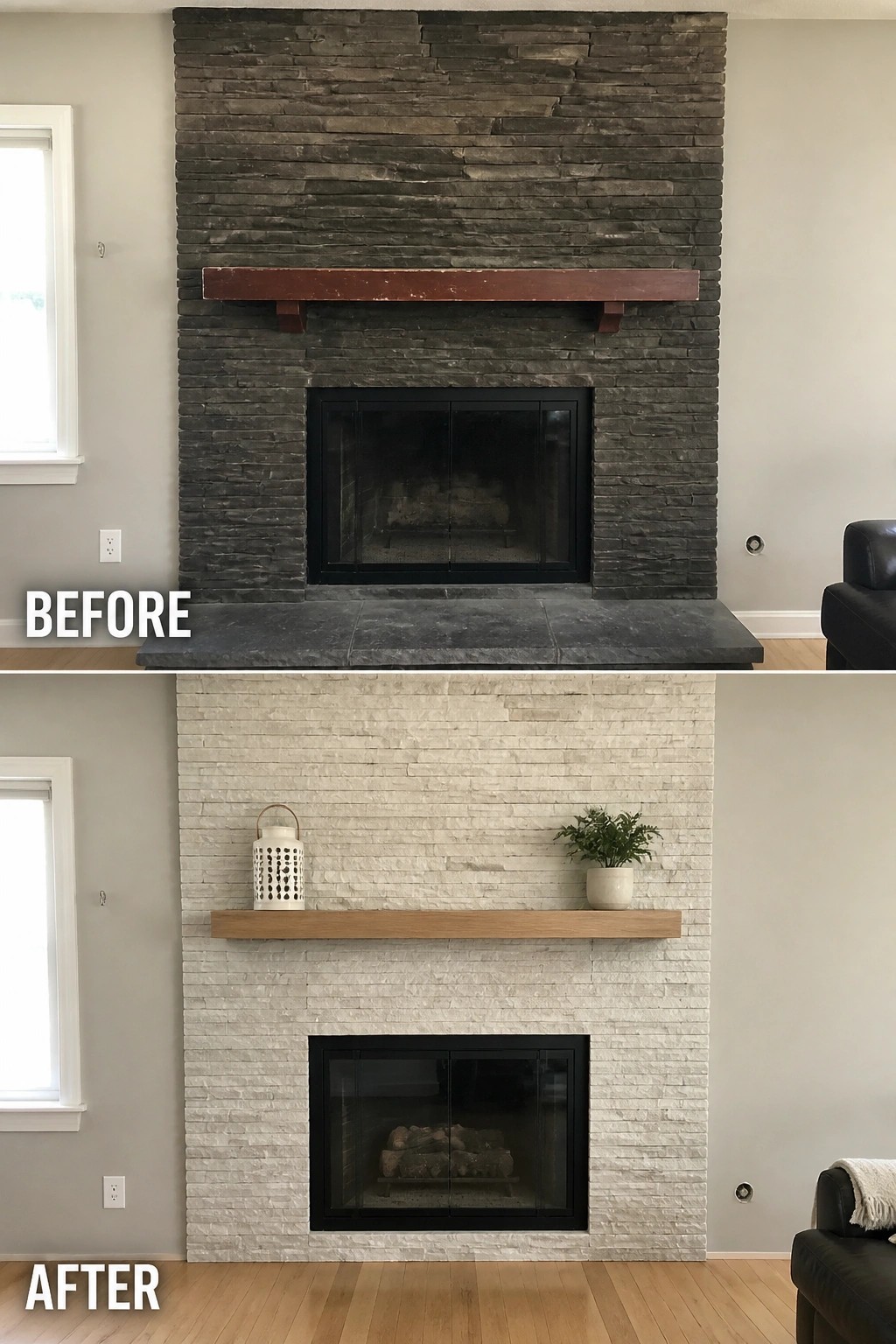
A dark stacked stone fireplace often makes the surrounding wall feel heavy and dated. Replacing both the surround and the mantel with lighter materials opens up the space and helps the fireplace blend more naturally with the rest of the room.
This approach works best in living rooms with neutral walls and wood floors. Keep the new mantel narrow and simple, then limit accessories to one or two small pieces so the white oak stays the main detail.
Refresh A Dark Fireplace With White Oak
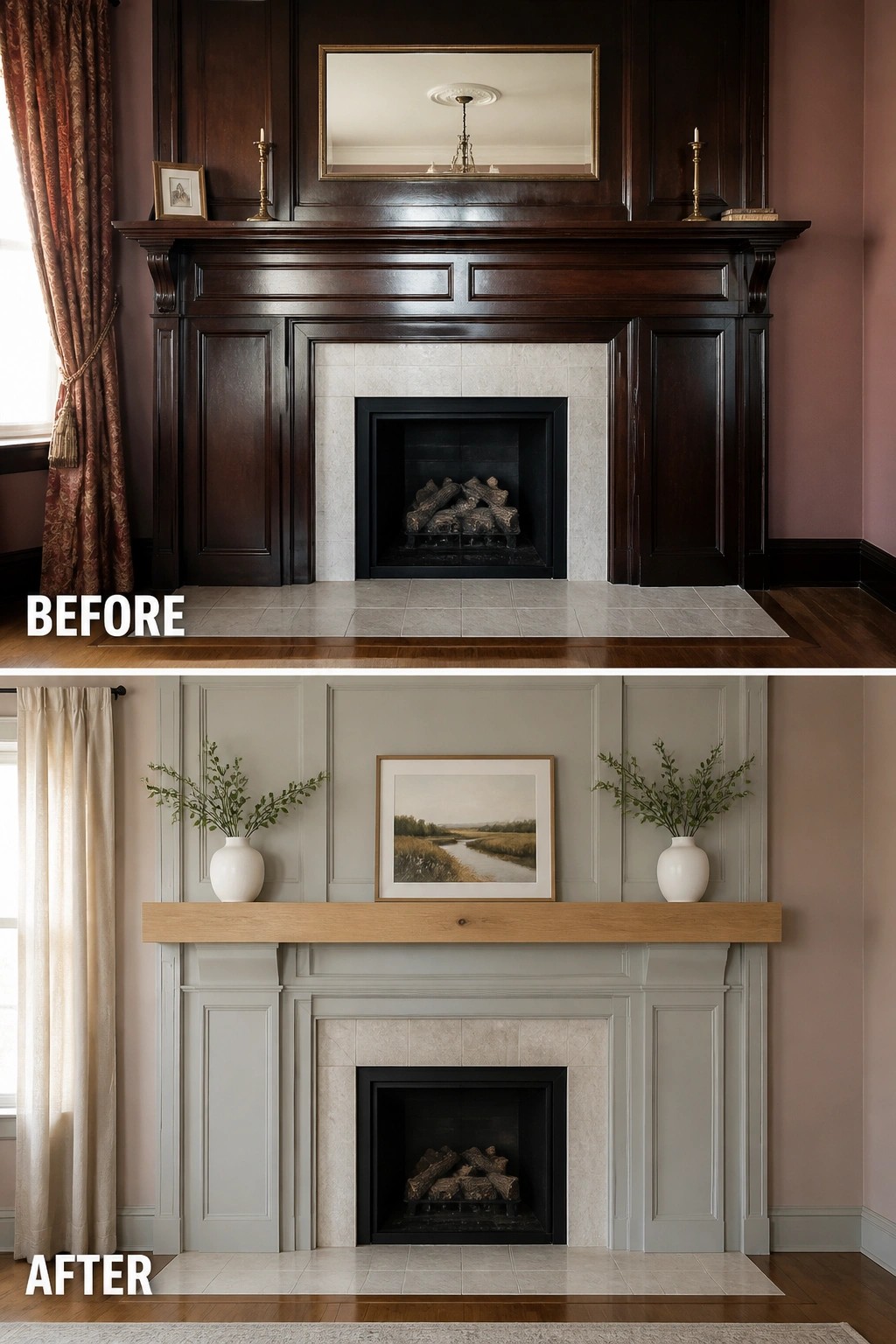
A heavy dark mantel and surround can make a fireplace feel closed in and dated. Painting the entire surround a light neutral color and replacing the old mantel with a simple white oak shelf opens the space up and gives it a cleaner, more current look without changing the structure.
This approach works well in older homes where the original woodwork is solid but the finish feels too heavy for the room. Keep the rest of the wall simple so the new mantel stays the main feature, and choose a mantel depth that matches the scale of your fireplace opening.
Add A White Oak Mantel With Underlighting
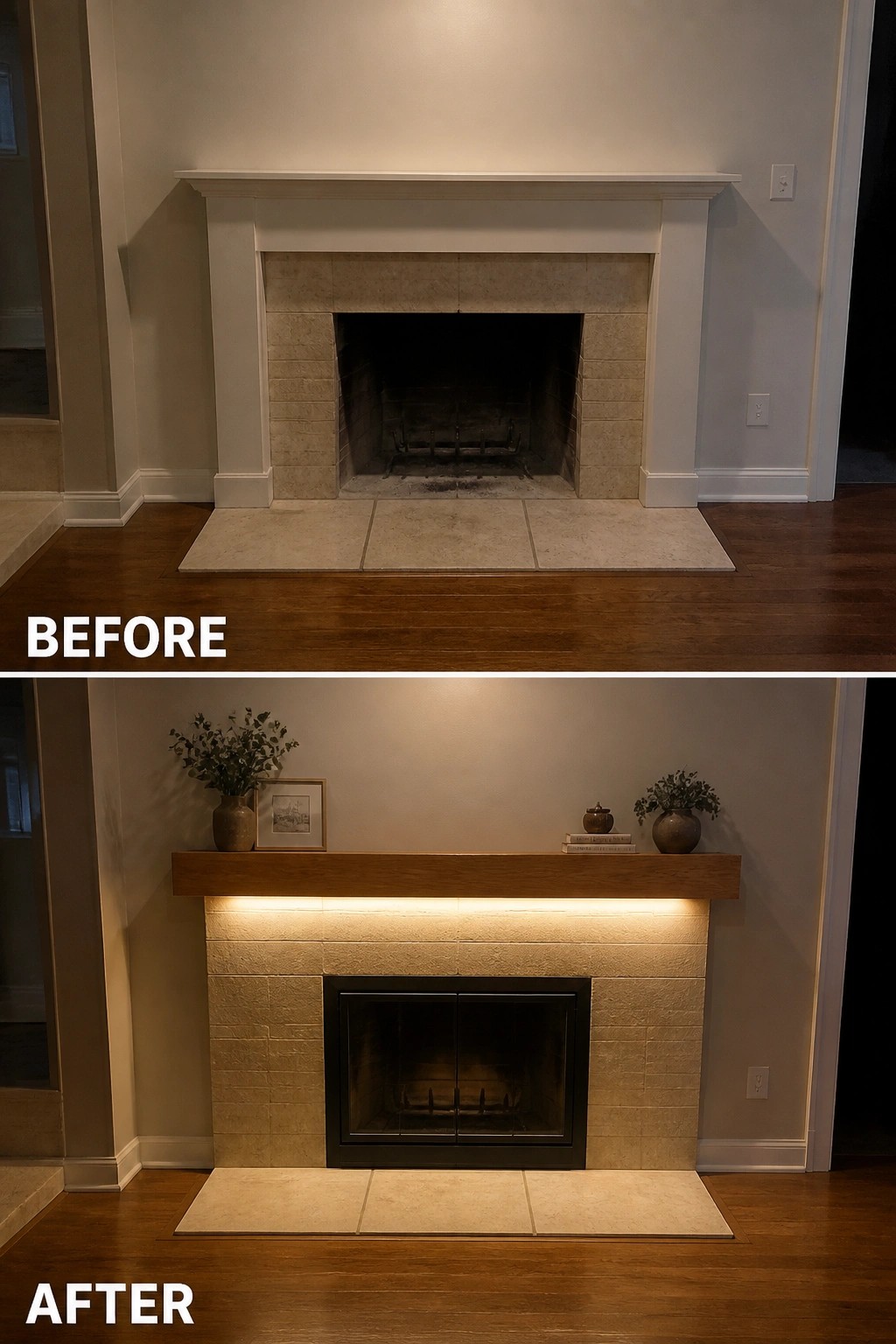
The old white mantel gave the fireplace a standard look that blended into the wall. Swapping it for a thicker white oak mantel with a strip of light underneath makes the whole area feel more finished and draws attention to the stone surround.
This idea works best on fireplaces that already have a decent stone or brick face but need a stronger focal point. Keep the top styling light with just a few items so the lighting and wood grain stay the main features.
Add A Wood Mantel To Refresh A Plain Fireplace

A basic fireplace with plain tile and a standard white mantel can start to feel flat over time. Switching to a light wood mantel and adding patterned tile around the opening gives the wall more presence without a full rebuild.
This approach works best in rooms where the fireplace already sits in a central spot. Keep the wood tone simple so it pairs with existing furniture, and choose tile that adds interest without competing with the rest of the space.
Replace A Dark Mantel With Light Oak
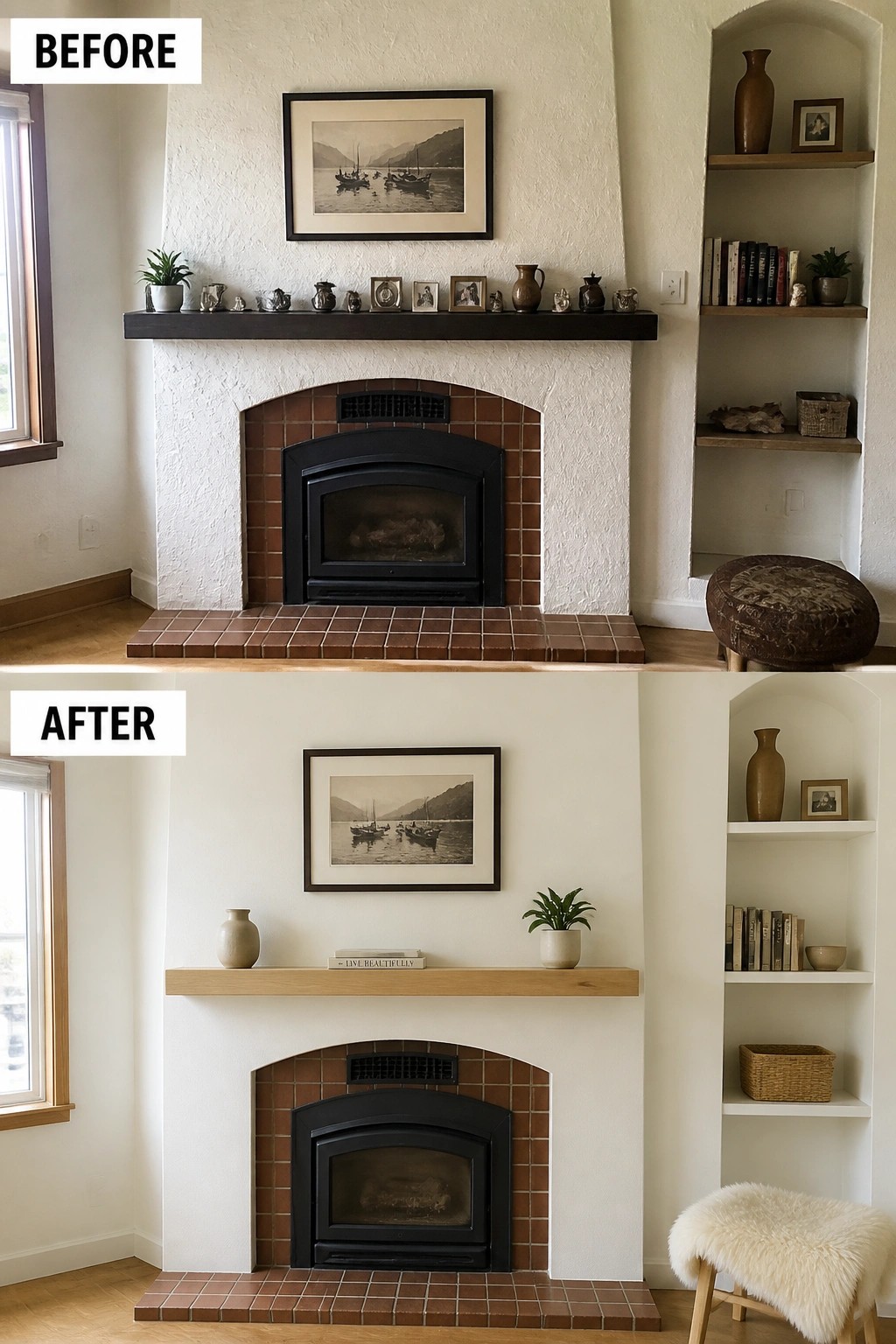
The dark mantel in the before photo made the whole fireplace area feel heavy and crowded. Switching to a simple light wood mantel opens up the space right away and lets the brick and firebox stand out without extra clutter.
This works well in rooms that already have wood tones elsewhere, since the oak ties things together without adding more contrast. Keep the styling minimal on the new mantel so the change stays clean and the fireplace remains the main focus.
Add A Wood Mantel To Refresh The Fireplace

Many fireplaces end up looking unfinished when they lack a mantel. Adding a simple wood shelf gives the wall a clear stopping point and turns the fireplace into the main feature of the room. Here the old open hearth was replaced with a clean insert while the new mantel provides a place for just a couple of small items.
This idea suits rooms where the fireplace already sits in a good spot but feels bare. Keep the mantel depth modest so it does not stick out too far, and match the wood tone to any nearby trim or furniture. The change stays simple and works in both older homes and newer ones that need a bit more warmth.
Use A White Oak Mantel To Refresh The Fireplace

The before version shows a standard white mantel and surround that blends into the wall. In the after, the surround turns black and a light wood mantel sits on top, which pulls the whole wall together and makes the fire itself stand out more. The change is simple but shifts the feel from plain to finished.
This works well in living rooms where the fireplace already sits in the center. Keep the new mantel the same depth as the old one so it does not crowd the room, and let the wood tone do most of the work rather than adding too many new decorations on the shelf.
Install A White Oak Mantel To Refresh The Fireplace Wall
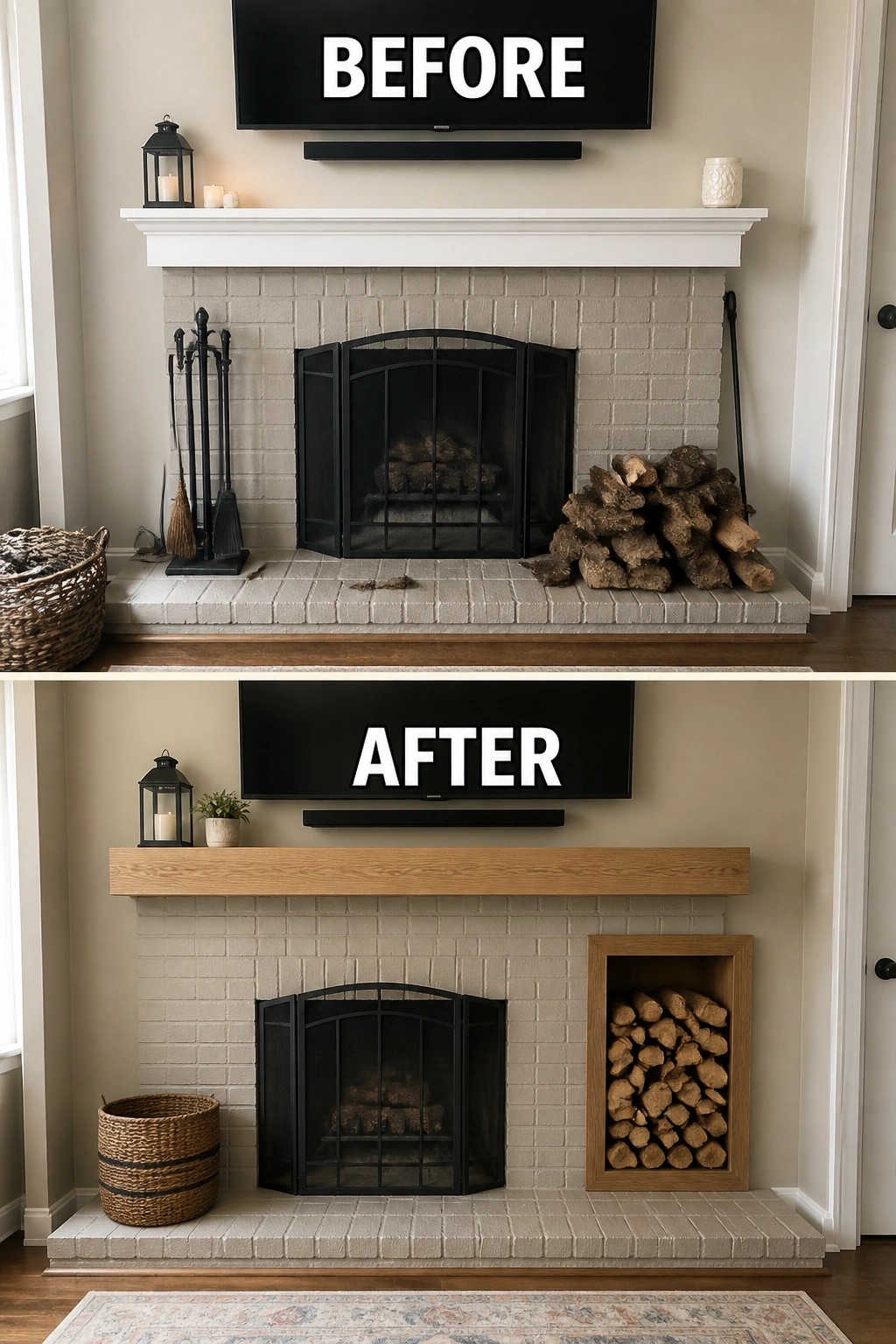
The before photo shows a basic white mantel that feels a bit disconnected from the rest of the room, with tools and loose firewood scattered around the hearth. Switching to a white oak mantel brings in warmth and ties the brick fireplace to the wood tones already in the space, while the added built-in storage keeps everything neat.
This idea works best in living rooms where the fireplace is a main feature but the current mantel feels plain or outdated. Keep the new mantel simple in profile so it does not compete with the brick, and match the wood tone to nearby flooring or furniture for a cohesive look.
Simplify A Stone Fireplace With Plaster And A White Oak Mantel

A heavy stone fireplace can start to feel dated once the rest of the room is updated. Covering the stone with a smooth plaster finish removes the busy texture and lets a simple white oak mantel take center stage. The change keeps the same firebox and hearth height but makes the whole wall feel lighter and more current.
This approach works best in rooms that already have wood tones elsewhere. Keep the mantel narrow and centered, then add just one or two small items so the wood stays the main detail. The result is a fireplace that still feels substantial without competing with the rest of the space.
Make The Fireplace Wall The Main Feature

A heavy black mantel and dark brick can make a fireplace feel closed in and dated. Switching to a lighter brick color and adding a simple white oak mantel opens the whole wall up and turns the fireplace into the natural center of the room.
This approach works best in living rooms where the fireplace already sits in the middle of the main wall. Keep the new mantel narrow and let one or two larger accessories sit on it rather than filling the surface. The lighter surround does most of the work, so you can keep the rest of the room simple.
Frequently Asked Questions
Q: How often do I need to dust or clean the mantel? A: Wipe it down every couple of weeks with a dry cloth. Skip the wet cleaners since they can raise the grain on oak.
Q: Can I hang stockings from the mantel without it sagging? A: Screw a couple of sturdy hooks into the underside for support. Space them evenly so the weight stays balanced across the wood. This setup holds up fine even when the stockings are full.
Q: What color walls pair best with a white oak mantel? A: Soft grays or warm creams let the wood stand out nicely. Avoid stark white since it can make the mantel blend in too much. Test a small patch on your wall to see what feels right in your lighting.
