
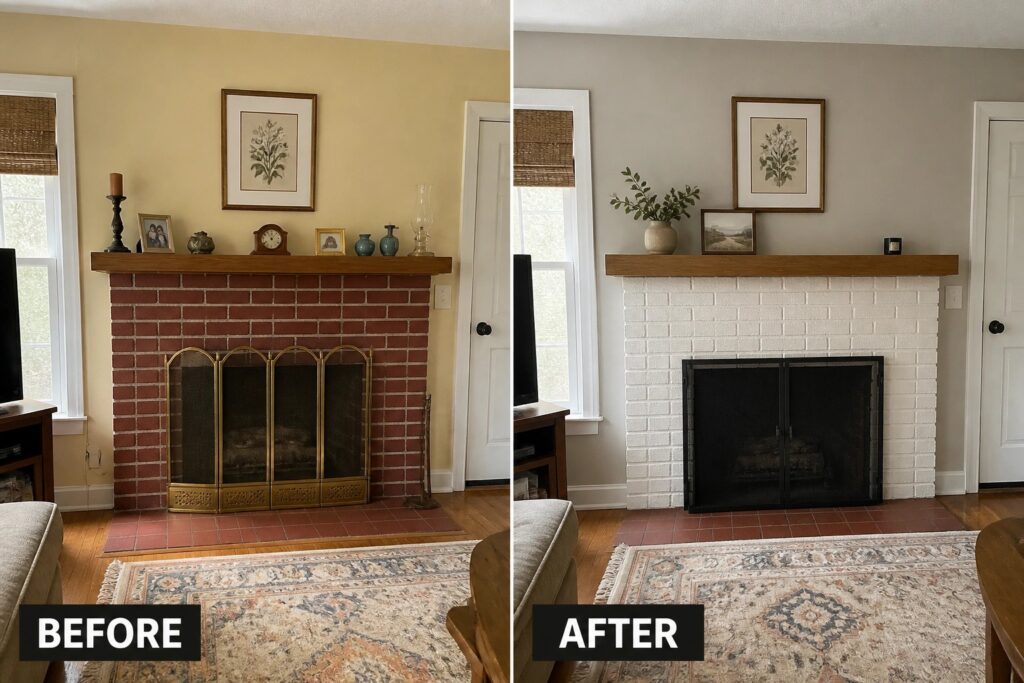
I have walked into rooms where the fireplace looks like the one spot that never quite matched the rest of the space, with old tile or a plain box that made everything around it feel a little off.
Finding budget ways to update the surround and mantel without touching the firebox itself often helps the whole room settle into a more settled layout.
I tend to test mantel height and material choices first because those details seem to decide whether the seating area starts to work as one piece.
Many of these approaches focus on surface changes that keep costs low while making the fireplace area feel like it belongs with the furniture and lighting already in place.
The results usually show up in how much more often the room gets used.
Paint The Brick To Update A Fireplace
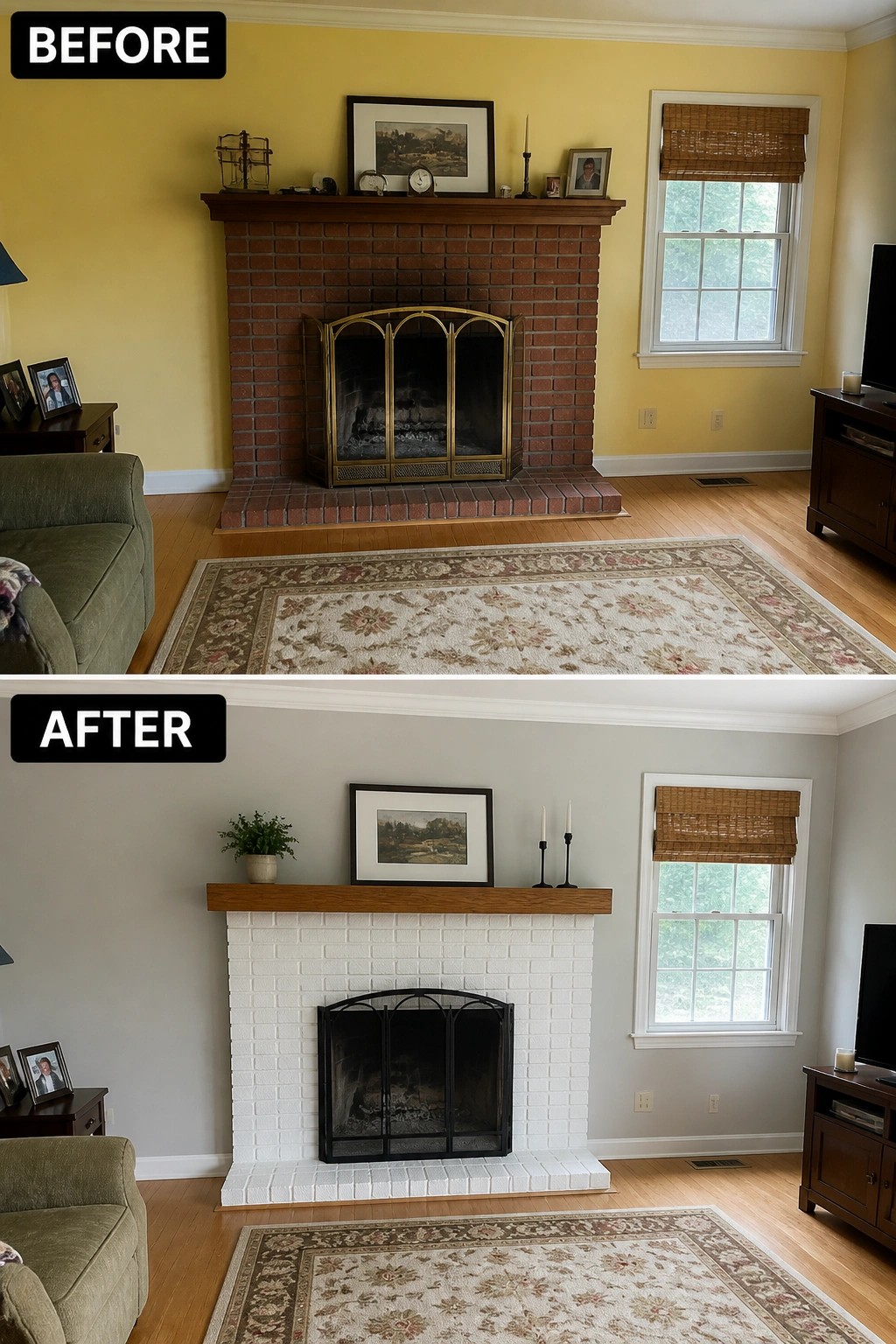
Painting the brick on an old fireplace is one of the simplest ways to change how the whole room feels. In this case the red brick was painted white and the mantel was lightened, which made the fireplace look cleaner and helped the room feel brighter without touching the firebox itself.
This approach works well in living rooms where the fireplace is the main focal point but the original brick feels too heavy or dated. It is best for homes that want a quick refresh rather than a full remodel, and it keeps costs low since the work stays on the surface. Just be sure the brick is clean and the paint is rated for heat before you start.
Make The Fireplace Wall The Main Feature

A plain fireplace surround can easily fade into the background. Adding tile around the firebox gives the whole wall a clear purpose without touching the insert itself. In this case the change is simple. The old beige tile is covered with a patterned design that reaches the mantel and floor, turning the fireplace into the main point of the room.
This works well in living rooms that already have basic furniture and just need one stronger focal point. Keep the tile pattern to one or two colors so it does not compete with other decor. Start with the surround and hearth first, then style the mantel lightly so the new tile stays the star.
Make The Fireplace Wall The Main Feature

A plain fireplace often gets lost when the wall around it has no real shape or purpose. Here the before version shows a basic mantel with little else to draw the eye. Adding vertical paneling and open shelves on each side gives the fireplace a clear frame and turns it into the main point of the room.
This idea works best in living rooms that already have a working fireplace but feel unfinished around it. Keep the shelves fairly shallow and repeat a few simple items so the wall stays balanced. It suits homes where you want one strong focal point without changing the firebox itself.
Make The Fireplace Wall The Main Feature

The before photo shows a basic white fireplace with a thin mantel that blends into the wall. Adding a stone surround and a thick wood beam mantel gives the whole wall more weight and turns the fireplace into the clear center of the room.
This approach works best in living rooms where the fireplace already sits in the middle of the main wall. You can keep the original firebox and just add a veneer layer in front, then top it with a simple beam mantel. The key is choosing materials that contrast with the existing paint so the fireplace feels more solid without needing a full rebuild.
Make The Fireplace The Main Feature With Dark Paint

A white mantel and light tile often make a fireplace disappear into the wall. Painting the mantel, surround, and hearth black gives the whole unit strong contrast so it becomes the natural focal point of the room.
This works best in spaces with light walls and wood floors where the dark tone can stand out without feeling heavy. Use paint rated for high heat on the tile and keep any added accessories, like a simple log rack, minimal so the fireplace itself stays the star.
Paint The Brick To Update An Old Fireplace

Painting the brick surround white makes the whole fireplace feel lighter and more current. The before version had that heavy reddish brick taking over the wall, while the after version turns the same firebox into a clean focal point that blends with the room instead of fighting it.
This approach works well in living rooms or family rooms where the fireplace is the main feature but the original brick feels dated. Keep the mantel if it is in decent shape, swap the hearth tile if needed, and stick to simple styling on top so the white surface stays the star.
Refresh The Hearth With Patterned Tile
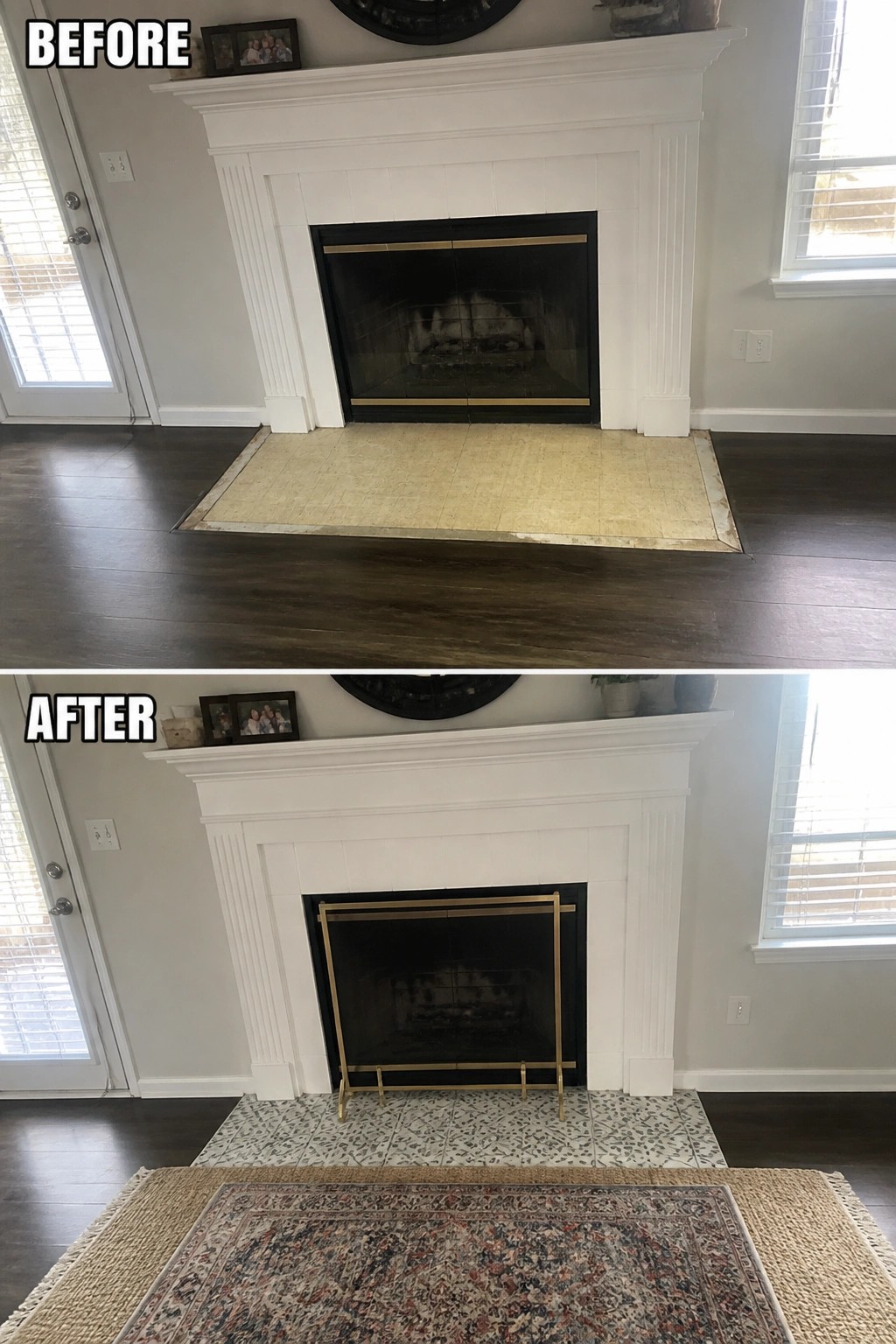
One simple way to update a fireplace is to change just the hearth tile while leaving the firebox and mantel alone. The plain beige surface was replaced with a patterned design, and a brass screen was added to give the opening more presence.
This idea works best in rooms where the fireplace already has decent proportions. Pick a tile pattern that adds interest without clashing with the floor, keep the screen light in scale, and layer a rug in front if you want extra definition. The rest of the room can stay as it is.
Add Built-Ins To Frame The Fireplace

Adding simple built-in shelves on both sides of the fireplace gives the whole wall a finished look without touching the firebox itself. The before photo shows a plain mantel with empty space on either side, which leaves the area feeling flat. Once the shelves go in, the fireplace becomes the clear center of the room and the wall gains useful storage at the same time.
This works well in living rooms where the fireplace sits in the middle of a long wall. You can use stock cabinetry or basic shelving units painted to match the trim, then style the shelves with a mix of books, baskets, and a few plants. Keep the top shelves lighter so the eye still lands on the mantel and art above the firebox.
Make The Fireplace Wall The Main Feature
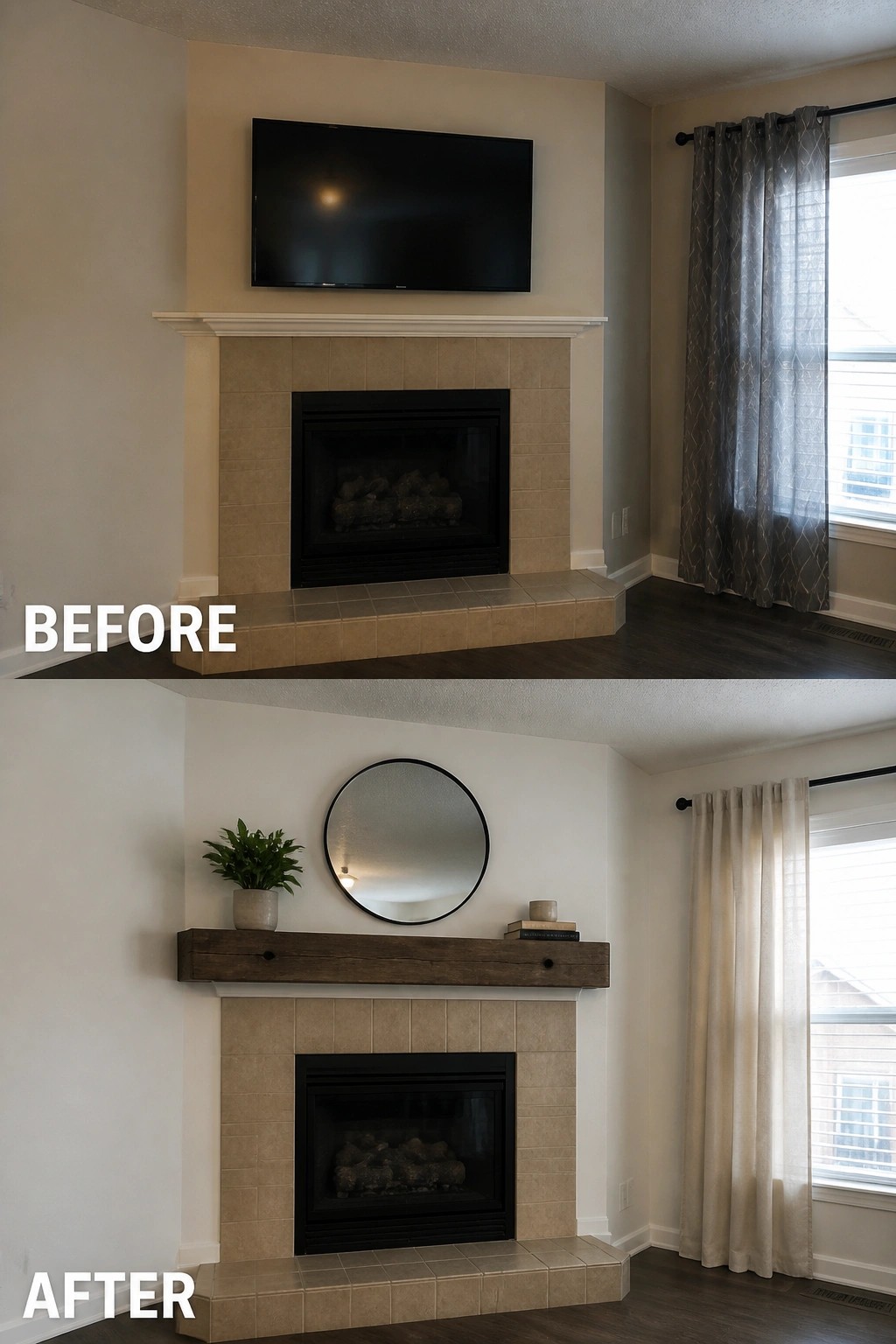
Removing the television from above the fireplace lets the original surround take its natural place in the room. A simple wooden mantel gives the eye a clear resting point without adding much bulk. The change keeps the existing tile and firebox exactly as they were.
This idea works well in rooms where the fireplace already sits in a good spot but feels secondary. Add only a few items on the mantel so it stays balanced. It suits homes that want a quieter look without major construction.
Make The Fireplace Wall The Main Feature
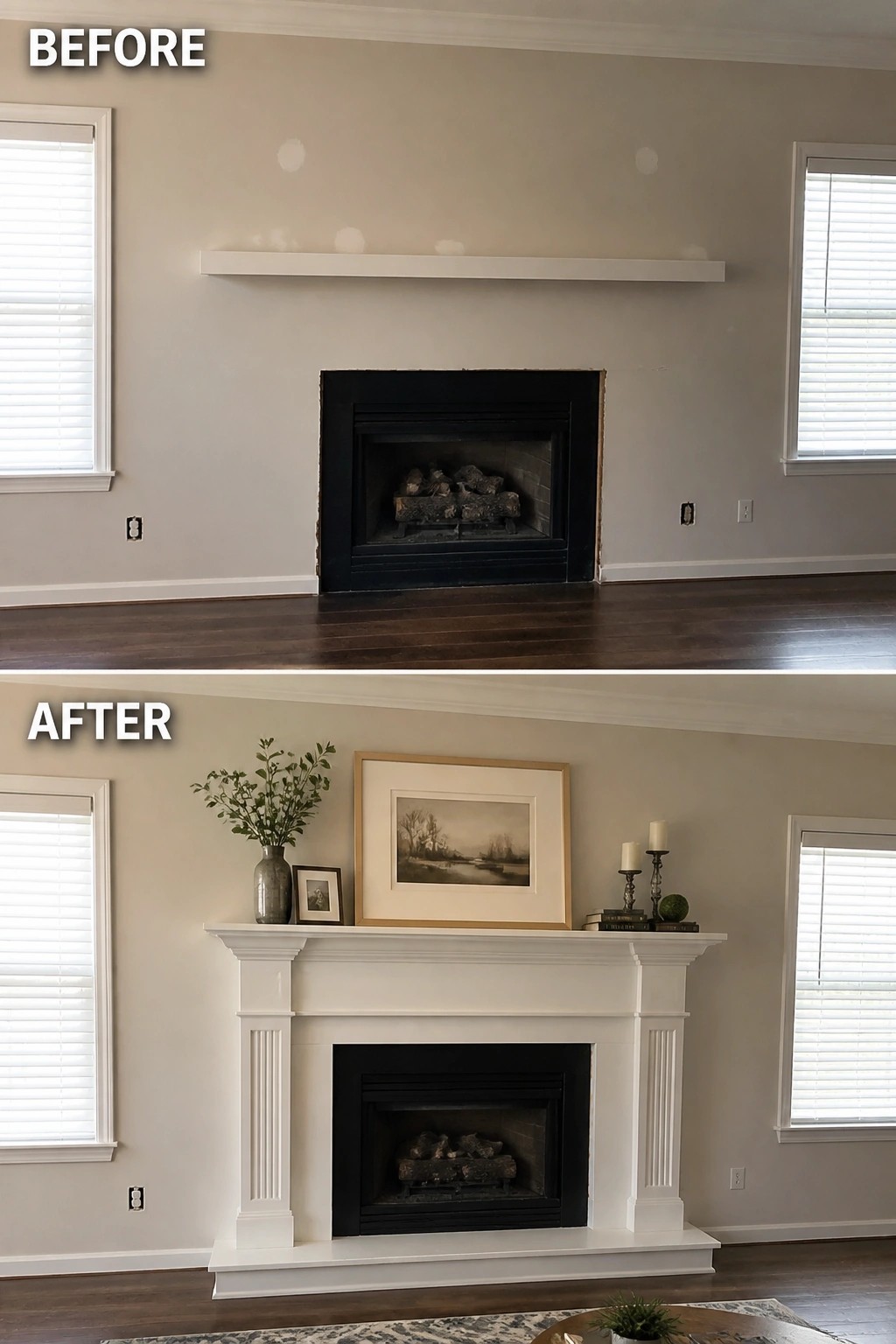
A floating shelf above the firebox left the wall looking unfinished and the fireplace lost in the middle of the room. Adding a full mantel with side columns gave it a solid frame and turned the whole area into the natural center of the space.
This idea works best when you want one clear focal point without touching the firebox itself. Look for a mantel kit or simple surround that fits your existing opening, then keep the top styling light so the architecture stays the main draw.
Update An Old Fireplace With A Modern Insert
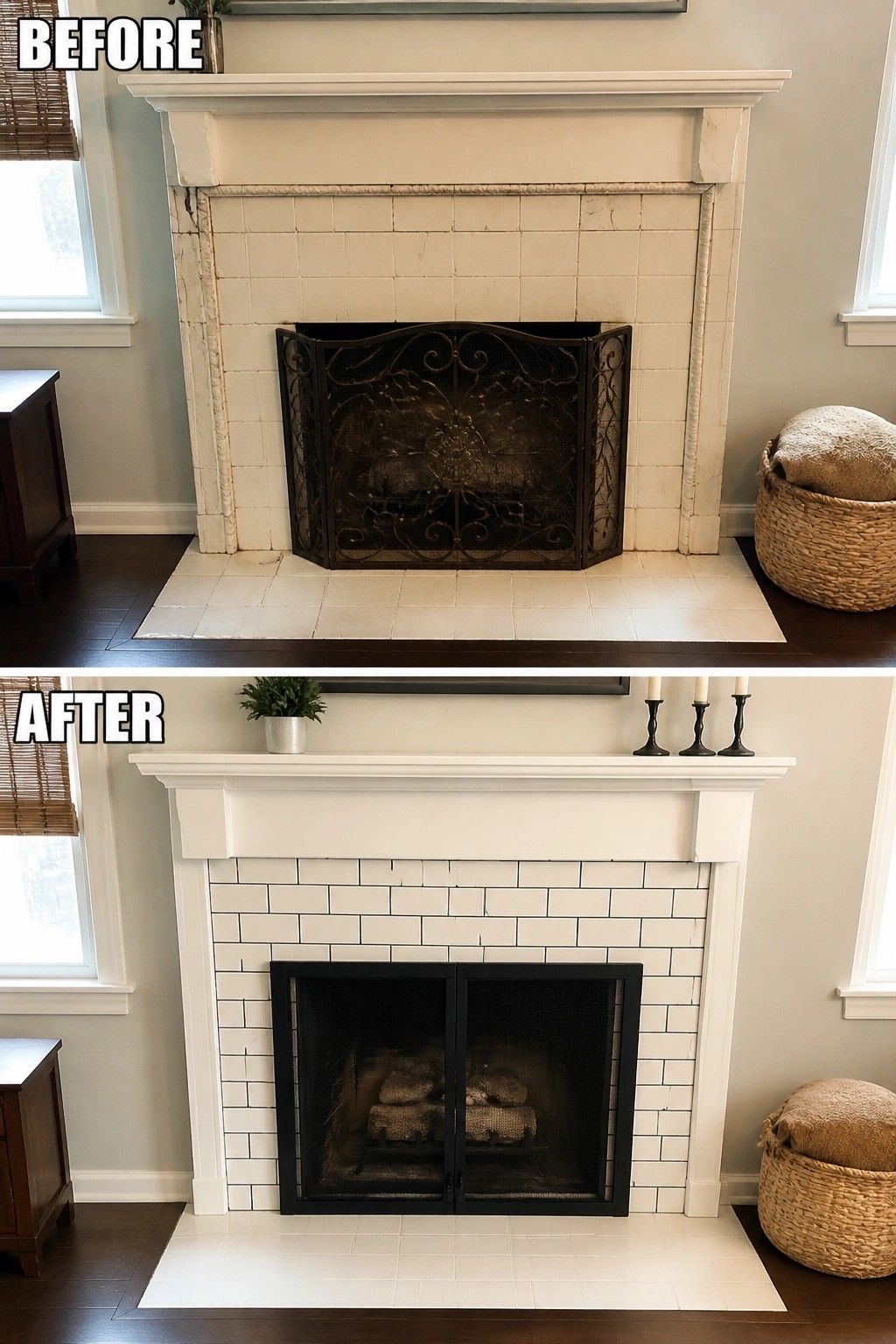
An old fireplace screen often makes the whole wall feel dated. Replacing it with a clean black insert and updating the tile to simple white subway tile removes the heavy look and gives the fireplace a lighter, more current appearance without touching the firebox.
This approach works best when the existing firebox is still functional. Keep the mantel clear or use just a few simple items so the new insert remains the focus. It suits homes where the goal is a quick visual refresh rather than a full renovation.
Add Seating And Storage To The Fireplace Hearth

Extending a simple bench across the front of the fireplace turns the hearth into usable space instead of leaving it as an empty ledge. The storage baskets underneath pull clutter out of sight while the cushions make the seat practical for everyday use.
This approach suits rooms that need extra seating without crowding the floor. Match the bench height to the hearth so the brick remains the main feature, and keep the finish close to any existing wood tones in the room.
Paint The Brick And Update The Mantel

A dark brick fireplace can feel heavy in a room even when the rest of the space is light. Painting the brick a softer color and swapping the mantel for a lighter wood one opens up the wall and makes the fireplace feel more like a main feature instead of just a dark rectangle.
This works well in living rooms where you want the fireplace to stand out without spending money on a full rebuild. Keep the firebox and the basic opening the same, then focus on the surround and mantel. A few simple additions like a couple of candles or a small sign are enough once the main surfaces are changed.
Make The Fireplace Wall The Main Feature
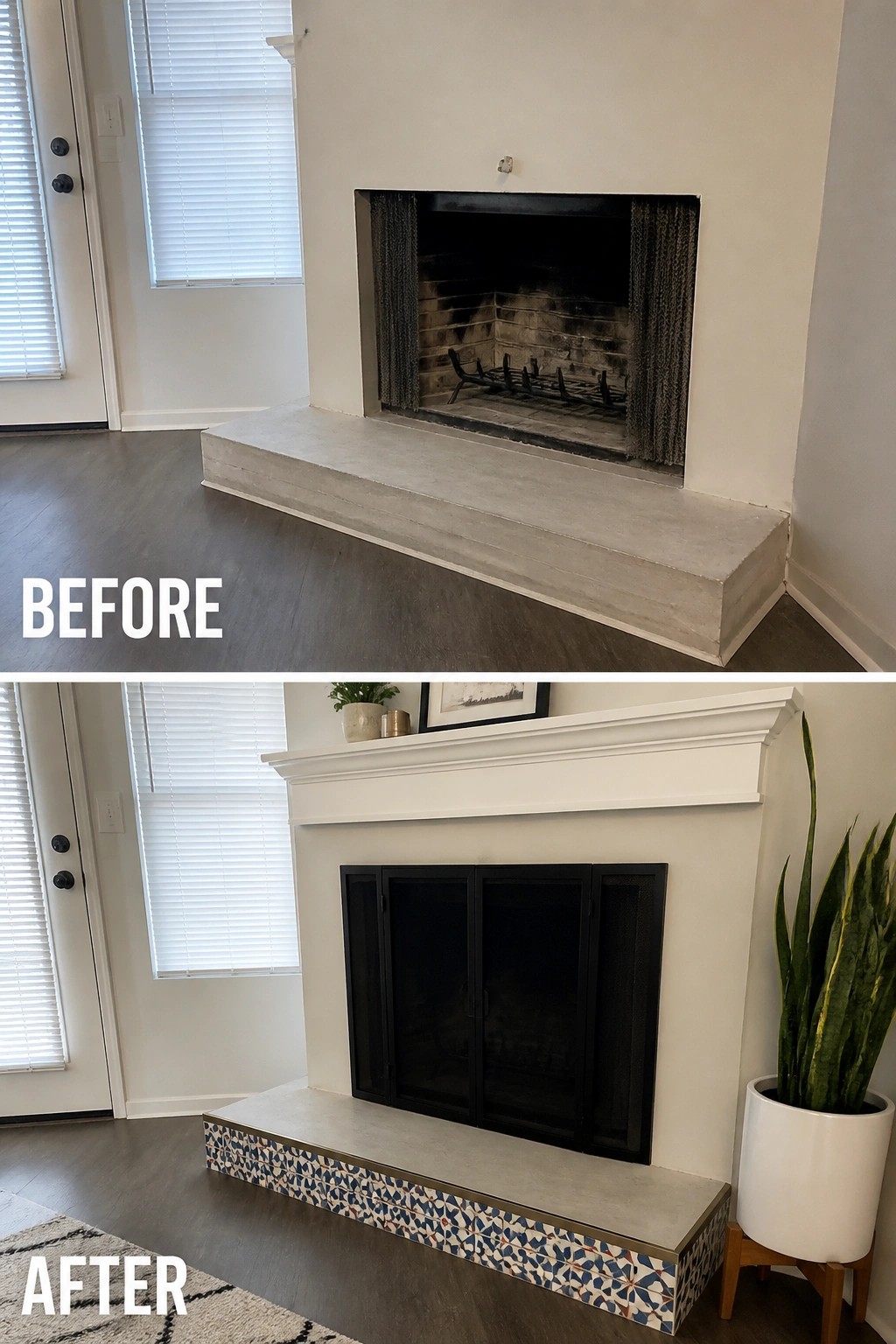
A plain concrete hearth often leaves a fireplace feeling unfinished and a bit lost in the room. Adding a simple white mantel with trim around the opening and some tile detail along the front gives the whole wall a clear purpose and makes the fireplace the natural center.
This approach works best in living rooms or family rooms where you want one strong focal point without replacing the firebox itself. Stick with light trim if your walls are white, and keep any tile or paint on the hearth modest so it adds interest without competing with the rest of the space.
Simplify A Fireplace Mantel For A Cleaner Look
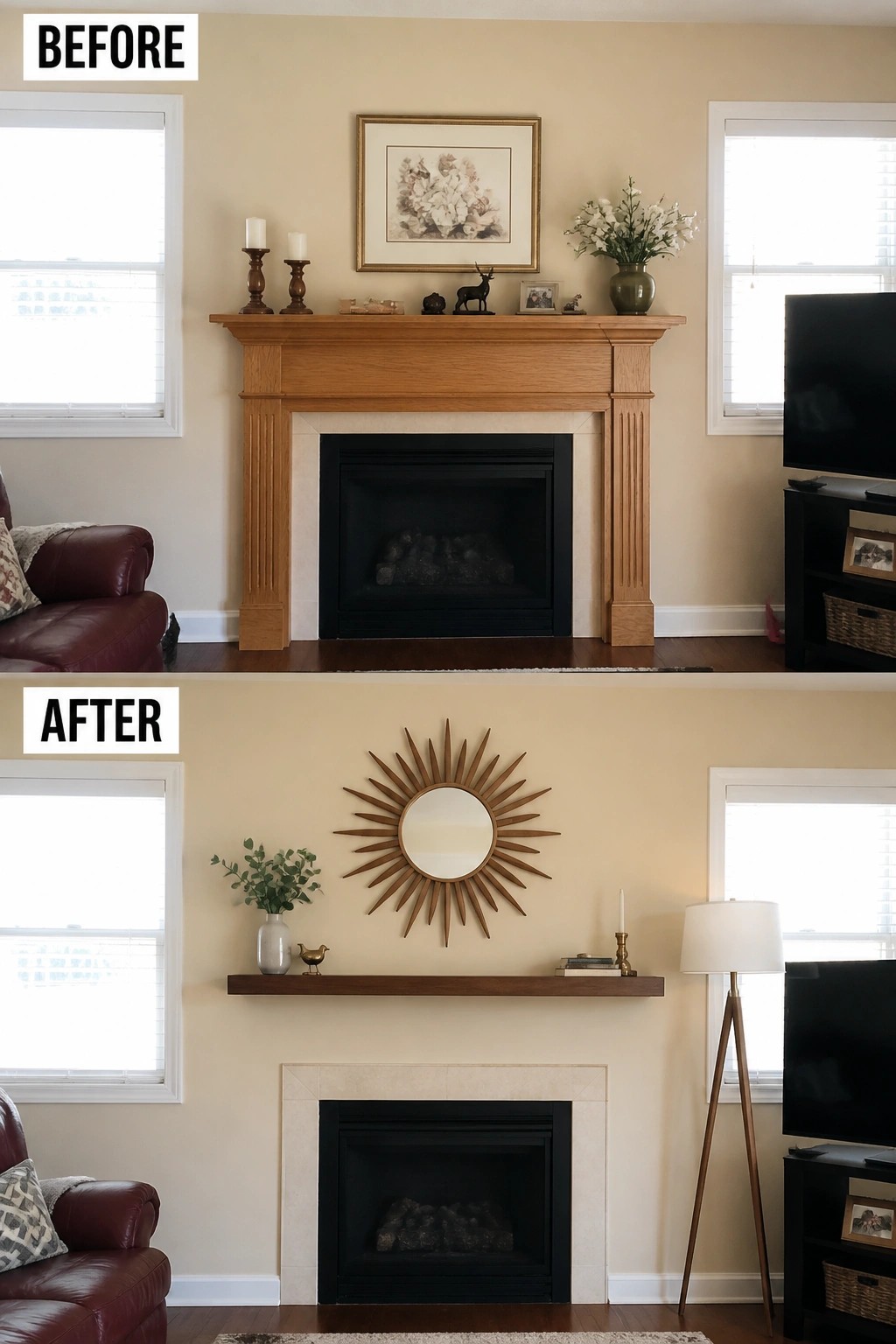
The before photo shows a heavy wooden mantel covered with small decorations that made the fireplace feel crowded. In the after version, the mantel was swapped for a narrow floating shelf and the wall was given one large sunburst mirror instead. This single change pulls the eye straight to the firebox and makes the whole wall feel lighter and more current.
The same approach works well in living rooms where the fireplace sits between windows or doors. Keep the shelf thin so it does not compete with the opening, then choose one main piece above it rather than a collection of smaller items. This keeps the focus on the fire itself and avoids the cluttered look that often comes with older mantels.
Make The Fireplace Wall The Main Feature

Painting the brick white and adding a simple mantel shelf turns a plain fireplace into the main focal point of the room. The change makes the whole wall feel brighter and more finished without touching the firebox itself. A decorative screen adds color and keeps the look intentional instead of bare.
This approach works well in rooms where the fireplace sits in the middle of a wall but feels flat. Start with a good clean and a couple coats of paint meant for masonry. Keep the new mantel narrow so it does not crowd the space, then add just a few items that match the room’s colors. The goal is to draw the eye without overfilling the shelf.
Make The Fireplace Wall The Main Feature
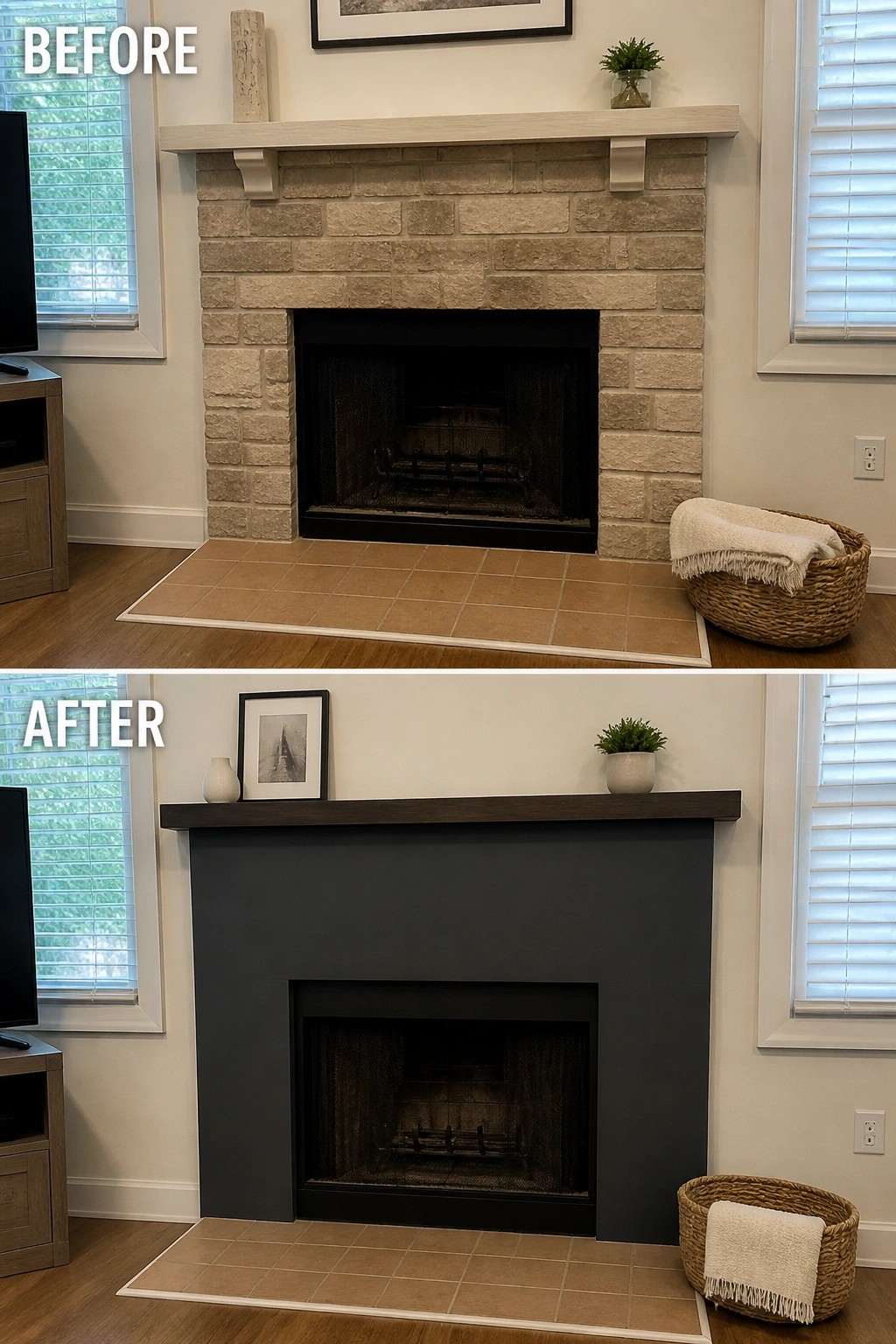
Painting the surround and swapping the mantel is a straightforward way to give a fireplace more presence without touching the firebox itself. Here the light stone was painted a deep gray and the pale mantel was replaced with a darker wood tone. The change creates stronger contrast against the wall and turns the fireplace into the clear focal point of the room.
This idea works well in spaces where the fireplace already sits in a central spot but blends into the background. Choose a color that contrasts with your walls rather than matching them, and keep the rest of the room simple so the new finish stands out. It is an inexpensive update that can be completed in a weekend and still leaves the original firebox untouched.
Make The Fireplace Wall The Main Feature
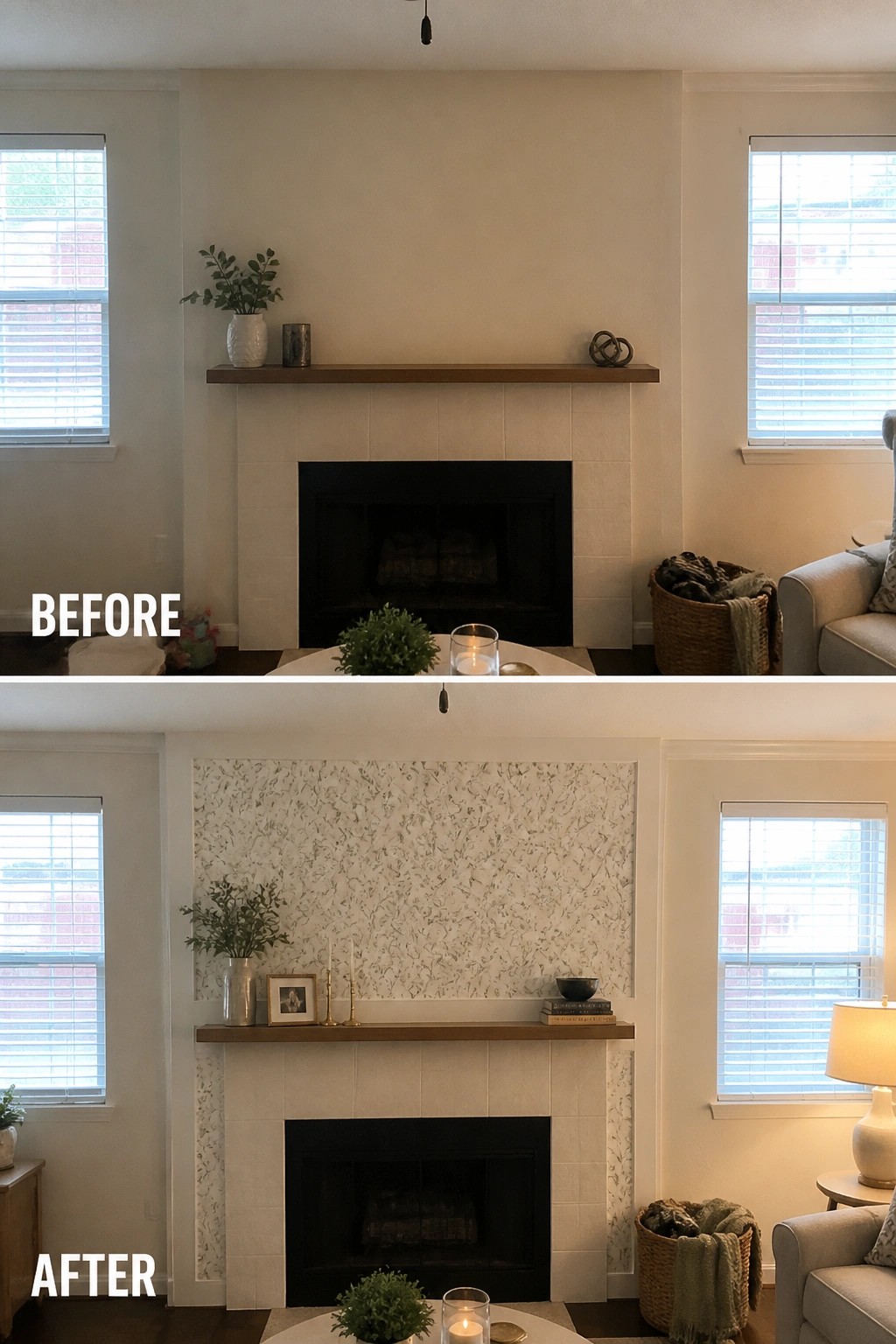
A plain fireplace wall often fades into the background even when the firebox itself is fine. In this case the change came from adding a simple patterned wall treatment above the mantel. That single surface now pulls the eye and gives the whole room a clear center without any work on the firebox.
This approach works well in living rooms where the fireplace sits between windows or on a long wall. Keep the pattern or texture to the upper section only so the tile surround stays clean. Use a few balanced items on the mantel rather than crowding it, and the wall itself does most of the work.
Make The Fireplace Wall The Main Feature
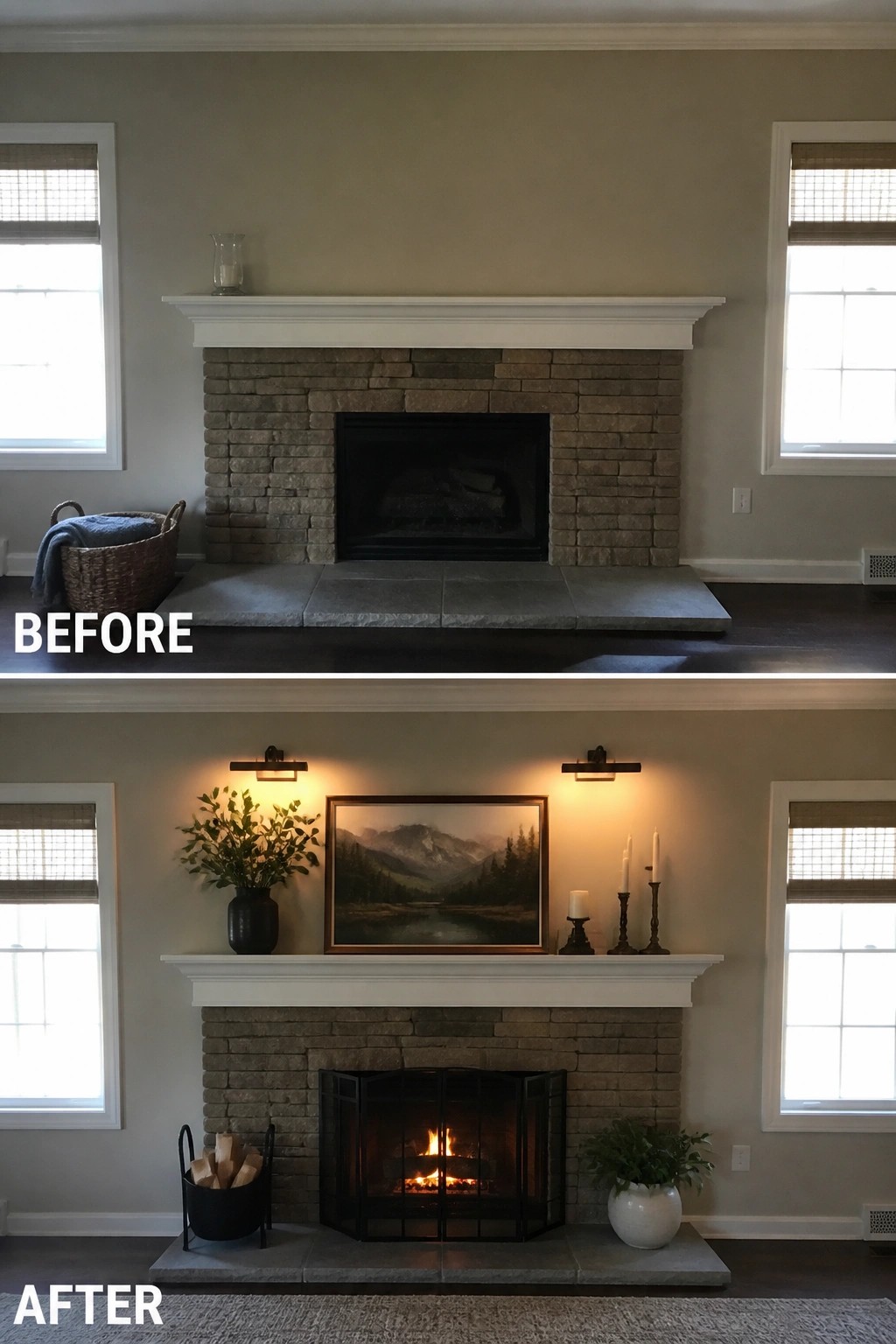
The before photo shows a fireplace with almost nothing above the mantel and no added lighting around it. In the after version, a pair of wall sconces was installed on either side and the mantel received one centered piece of art plus a few balanced items. These changes alone make the fireplace feel like the main point of the room instead of just a blank wall with a firebox.
This approach works best in living rooms where the fireplace already sits in a central location. Add the sconces first if the wall looks empty, then keep the mantel styling simple so it does not compete with the stone. The goal is to draw attention to what is already there rather than replace anything.
Make The Fireplace Wall The Main Feature

The fireplace already had a solid tile surround, but the large wall above it looked flat and unfinished. Adding vertical beadboard paneling on either side of the mantel gave the whole area more structure and turned it into the natural center of the room.
This idea works best in spaces where the fireplace sits against a big blank wall. Keep the paneling simple, paint it to match the trim, and limit mantel decor to a few balanced pieces so the texture stands out without crowding the space.
Add Lighting To Highlight Your Fireplace
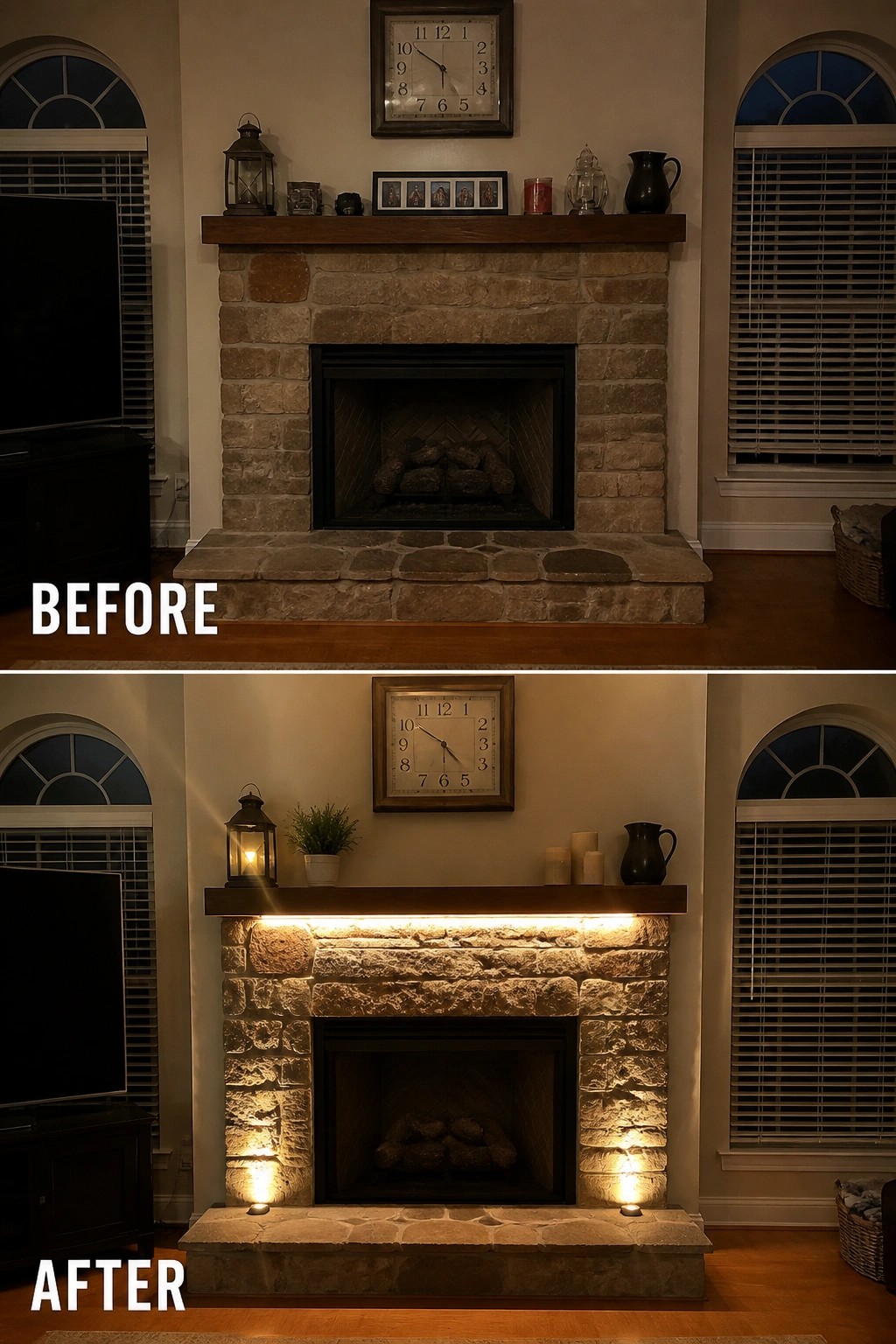
Adding lights around a stone fireplace can turn it into the main feature without any major construction. In this case, a simple strip of warm LED lighting under the mantel plus a few small fixtures at the base made the whole surround glow and gave the room a much cozier feel at night.
This approach works well in living rooms where the fireplace already has good bones but feels flat. Keep the lights warm rather than cool white, hide the strip neatly under the mantel edge, and use small spots only where they point at the stone instead of shining into the room. Start with one or two fixtures and add more only if the space still feels dark.
Make The Fireplace Wall The Main Feature

Painting the wall around the brick a deep dark color and adding simple trim turns the fireplace into the main focal point. The change frames the existing brick without replacing anything inside the firebox, so the update stays budget friendly.
This idea works well in older homes where the fireplace sits on a flat wall. Extend the paint or paneling a couple feet past the brick on each side, keep the mantel styling light, and the new surround will pull the room together without extra furniture or major construction.
Frequently Asked Questions
Q: Will painting the brick around the firebox really change the look much? A: It can shift the whole feel of the room fast. Pick a matte heat resistant paint in a lighter shade and roll it on in thin coats. Clean the surface well first so it sticks without peeling later.
Q: How do I add a simple mantel on a tight budget? A: Cut a basic pine board to fit the width you need and sand it smooth. Mount it with sturdy brackets screwed into wall studs above the opening. Seal the wood afterward to handle any warmth that rises.
Q: What should I watch for when adding trim around the sides? A: Keep the trim at least six inches from the actual opening so heat does not damage it. Use thin molding strips and nail them into place for a quick frame effect. But test the fit with painter’s tape first to avoid mistakes.
Q: Can I swap out old tile without messing with the firebox? A: Chip away the existing tile carefully with a putty knife and replace it one section at a time. Choose peel and stick tiles made for fireplaces to save on adhesive and mess. Work in small areas so the pattern stays even.
