

A fireplace can end up feeling like an afterthought when the floor around it stays flat and unused.
I have found that a raised hearth bench often gives that area a reason to be used instead of just passed by.
The bench creates a natural spot for sitting near the fire while also helping the whole wall feel more finished.
It solves the awkward gap.
Many of the setups show how the bench can adapt to different room sizes and still keep the focus on daily comfort rather than decoration alone.
Turn A Raised Hearth Into Built-In Seating
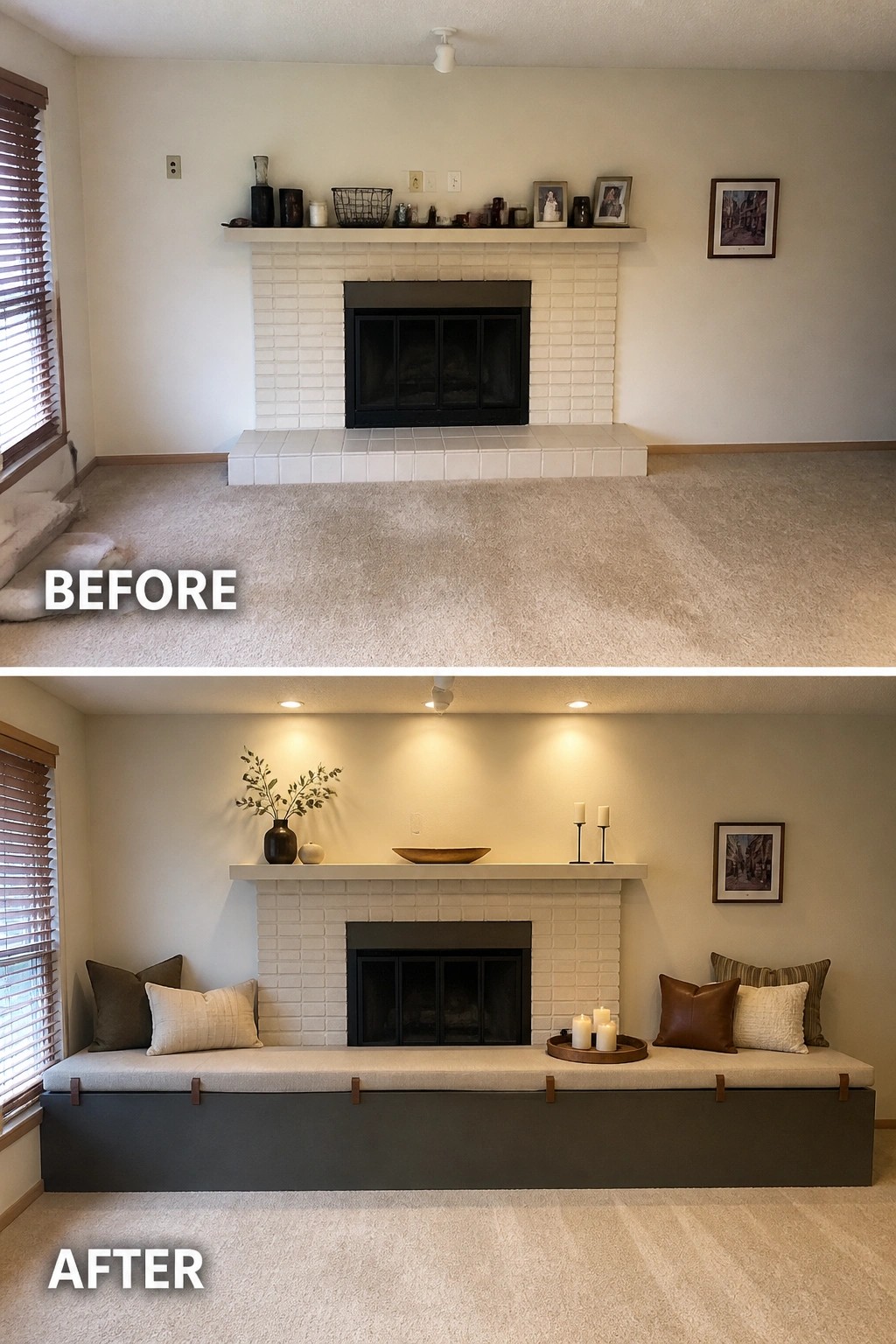
The raised hearth here was basically just a step in front of the fire. Extending a bench across the front and wrapping it around both sides gives the room actual seating without crowding the floor.
This idea works best when the hearth already sits at a comfortable height for sitting. Keep the bench depth reasonable so it does not block the room, and use simple cushions that can be moved around as needed.
Add A Bench To The Fireplace Hearth For Seating And Storage

A simple brick hearth often leaves the space in front of the fireplace underused. Adding a bench across the front turns that area into practical seating while creating storage below. The change makes the fireplace feel more like a built-in feature instead of a standalone element on the wall.
This approach works well in living rooms or family rooms where extra seats are always welcome. Keep the bench depth comfortable for sitting and use the open sections for baskets or stacked wood. It keeps the floor clear and gives the room a more finished look without needing a lot of extra furniture.
Make The Fireplace Wall The Main Feature

Adding floating shelves around a stone fireplace gives the wall purpose without covering up the natural material. In the before photo the firebox sat under a single mirror with almost no storage or display space. The after version adds a long shelf right above the raised hearth plus staggered side shelves that turn the whole surround into usable display area for plants, books, and simple pottery.
This approach works especially well when the hearth already has some height. Keep the shelves in the same wood tone as other furniture in the room so they feel built in rather than added on. Start with one long shelf across the front and two or three shorter ones on each side, then fill them lightly so the stone still shows through.
Turn A Raised Hearth Into Built-In Seating
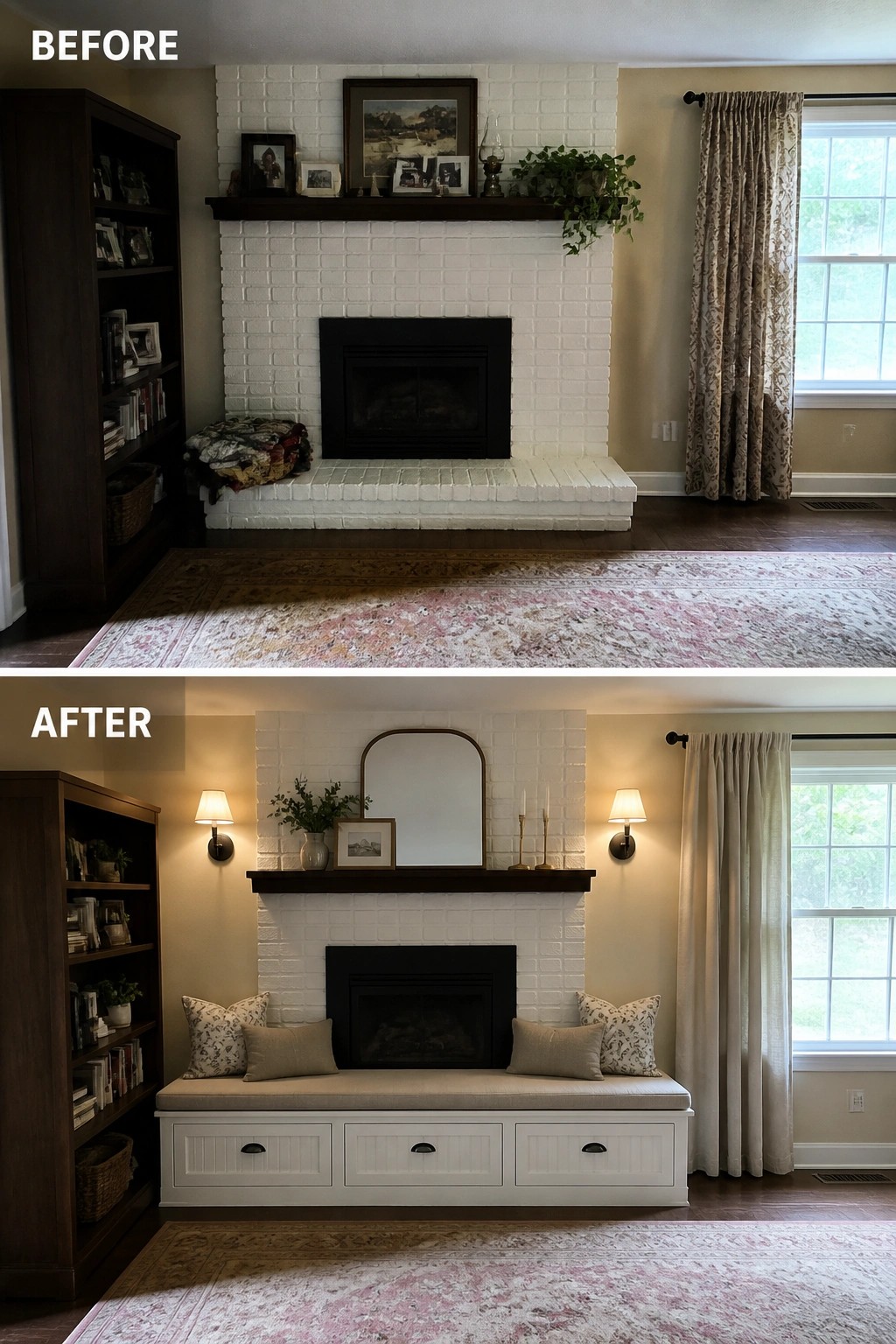
A raised hearth often sits unused because it feels too high for casual sitting and too low to ignore. Here the owners added a full-length cushion and three drawers underneath. That single change turned the ledge into real seating while keeping the fireplace as the center of the room.
This idea works best in smaller living rooms where floor space is limited. It gives you extra places to sit during gatherings and hides blankets or games at the same time. Just choose a cushion that can handle daily use and keep the drawers shallow enough that they still open easily.
Turn The Raised Hearth Into A Bench

A plain raised hearth often sits unused because it feels more like a step than a place to sit. Covering it with tile and adding a cushion turns the same structure into a simple built-in bench that makes the whole fireplace area feel more finished and usable.
This works well in rooms where you want extra seating without adding new furniture. Keep the bench depth shallow so it does not block walking paths, and choose tile that can handle foot traffic if people will step on it.
Add Built-In Benches Around A Raised Hearth
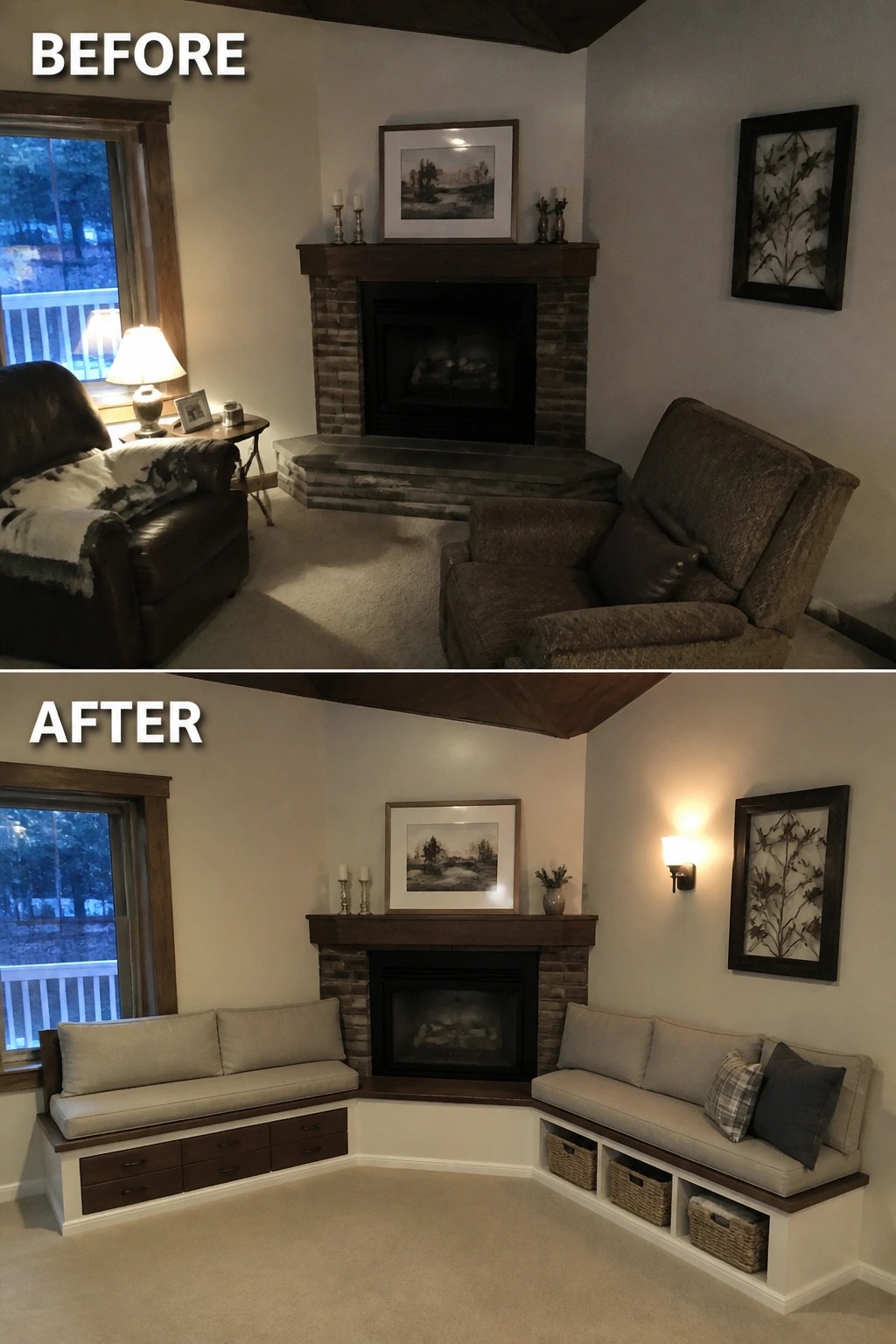
The before photo shows a typical fireplace setup with separate chairs placed around the raised hearth. In the after, the room gains a much more useful layout by wrapping built-in benches along both sides of the hearth. This turns the fireplace into the main seating area instead of leaving it as a standalone feature.
This idea works best in rooms that need extra seating without crowding the floor with more chairs. The benches follow the hearth height, keep the corner feeling open, and add storage below for blankets or games. It suits homes with existing raised hearths that want a simple way to make the fireplace more practical for everyday use.
Add A Raised Hearth Bench To Modernize Your Fireplace

One simple way to update an old fireplace is to replace the traditional mantel and tile with a dark wall, a floating shelf, and a raised hearth bench. The change turns the fireplace into a stronger focal point while the bench adds seating and gives the lower part of the wall a finished look.
This idea works best in living rooms where you want a cleaner, more current feel without tearing out the whole structure. Match the bench material to other wood tones already in the room and keep the depth comfortable for sitting. It suits homes that already have neutral floors and can handle a darker accent wall behind the fire.
Add A Bench Around The Raised Hearth
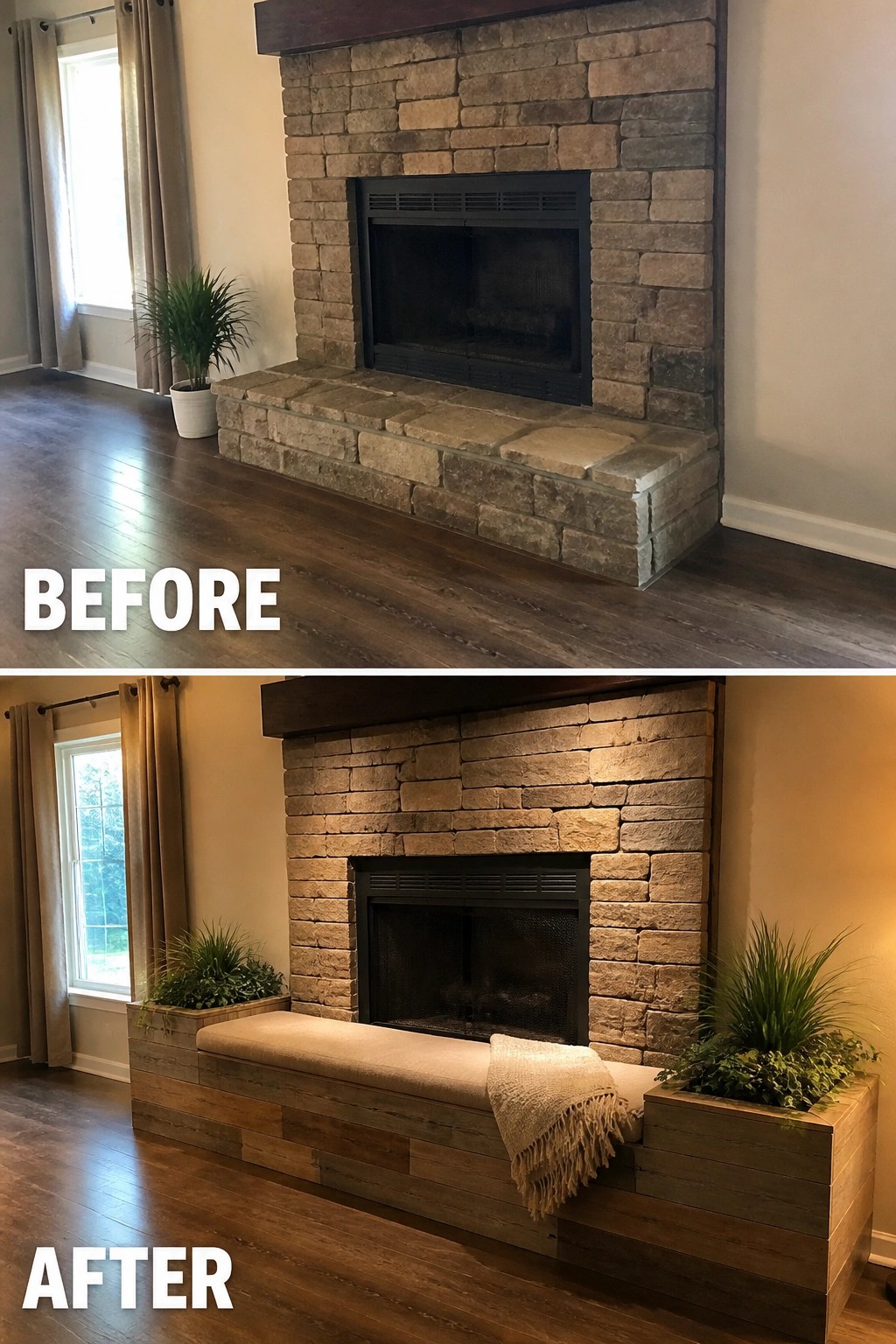
One practical way to update a raised hearth is to build a bench directly into it. The original setup left the ledge as a plain step with no real function. Adding a cushioned seat and flanking planters turns the same space into seating that invites people to sit near the fire.
This approach works well in rooms that need extra seating without adding more furniture. Match the bench material to nearby wood tones and keep the depth comfortable for sitting. Side planters help soften the look and keep the focus on the fireplace itself.
Extend The Raised Hearth With A Low Bench

The before photo shows a fireplace that sits alone on the wall with nothing to connect it to the rest of the room. Adding a long low console across the front turns the raised hearth into part of a larger seating and storage piece. The bench on the right side also makes the window area more usable without adding separate furniture.
This approach works best in living rooms where the fireplace needs a stronger presence but you do not want to build full cabinetry. Keep the bench height close to the hearth so the line stays clean, and use the surface for a few simple items like vases or books. It adds function without crowding the space.
Add Built-In Shelves Around The Fireplace

Adding built-in bookshelves on both sides of the fireplace turns a plain wall into the main feature of the room. The before version had just the mantel and TV with open space on either side. The after version fills those gaps with shelves that hold books and small decor while keeping the focus on the firebox itself. The raised hearth also gets a simple cushion so it works as extra seating without needing new furniture.
This idea works well in rooms with high ceilings where the fireplace feels too small on its own. Keep the shelves the same depth on both sides and match the trim to the mantel so everything looks built together. It adds storage without taking up floor space and makes the hearth bench feel more intentional.
Add A Raised Hearth Bench For Built-In Seating

Many fireplaces sit low and flat, which leaves the area in front underused. In this case the original setup had a simple tile hearth with no real place to sit or rest items. Raising the hearth into a bench adds a practical seat right where people gather, and the cushion makes it comfortable for everyday use.
This works best in living rooms where you want extra seating without adding more furniture. Keep the bench depth around 16 to 18 inches so it feels like a real seat rather than just a ledge. Choose a fabric that holds up to daily use and make sure the bench height lines up with nearby chairs so the whole area feels connected.
Add A Raised Hearth Bench To Your Fireplace

Painting the brick white and adding a built-in bench turns a plain fireplace into the main seating spot in the room. The change makes the hearth feel useful instead of just decorative, and it gives people a place to sit without crowding the space with extra chairs.
This idea works best in living rooms that need more seating but do not have room for a large sofa. Keep the bench low and add a simple cushion so it stays comfortable without blocking the firebox. Use a durable fabric if the bench will see regular use.
Turn The Raised Hearth Into Built-In Seating
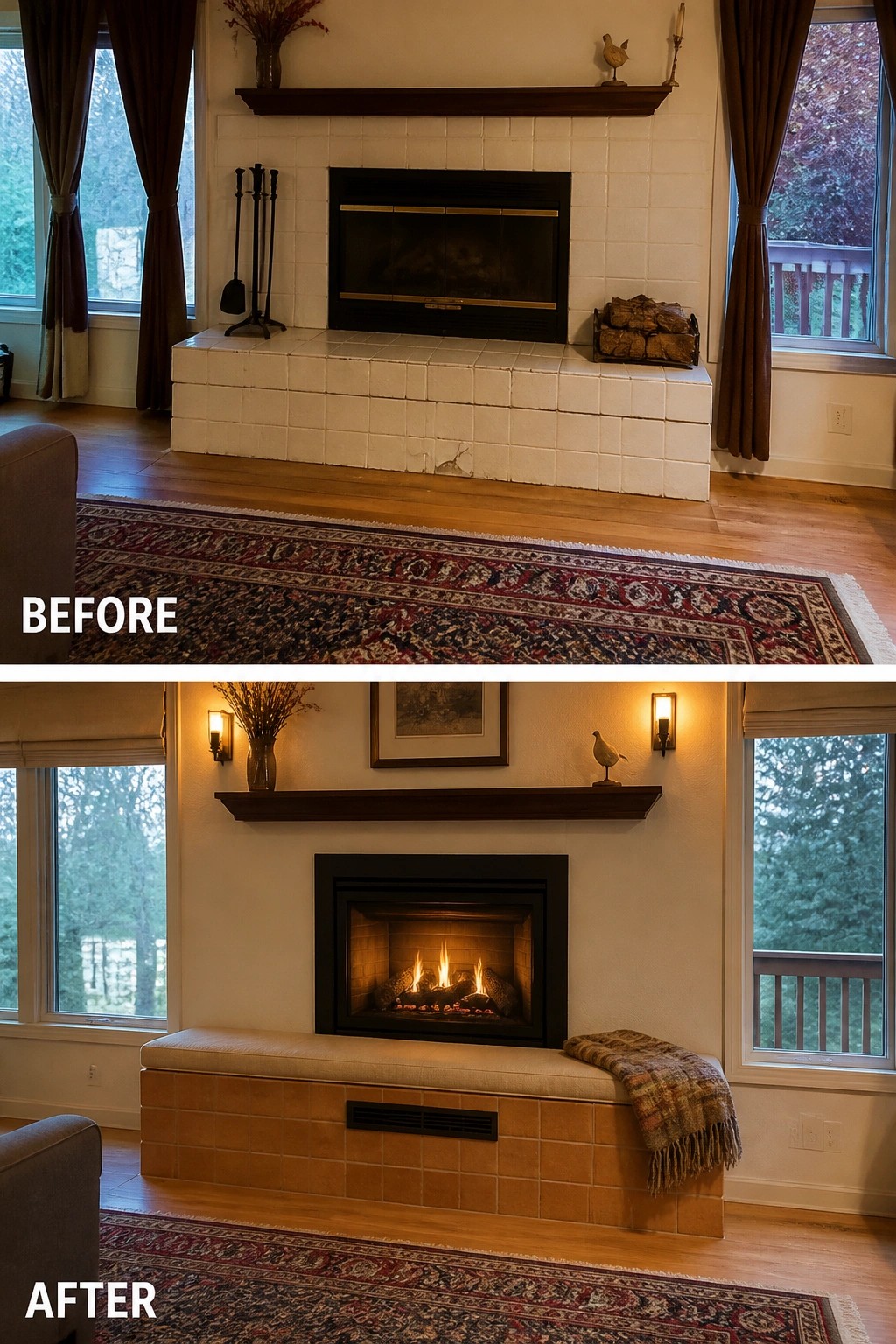
A raised hearth often ends up as dead space that just collects dust. In this case the owners covered the old white tile with warmer tones, added a long cushion across the top, and turned the whole ledge into a place where people can actually sit and warm up. The change makes the fireplace feel more like part of the room instead of just a box on the wall.
This idea works best in living rooms where you already have the floor space in front of the fire. Keep the cushion simple so it does not fight with rugs or nearby furniture, and add a couple of wall sconces if the area feels dark once the bench is in place. It is an easy way to gain seating without bringing in another chair.
Tile A Raised Hearth Bench
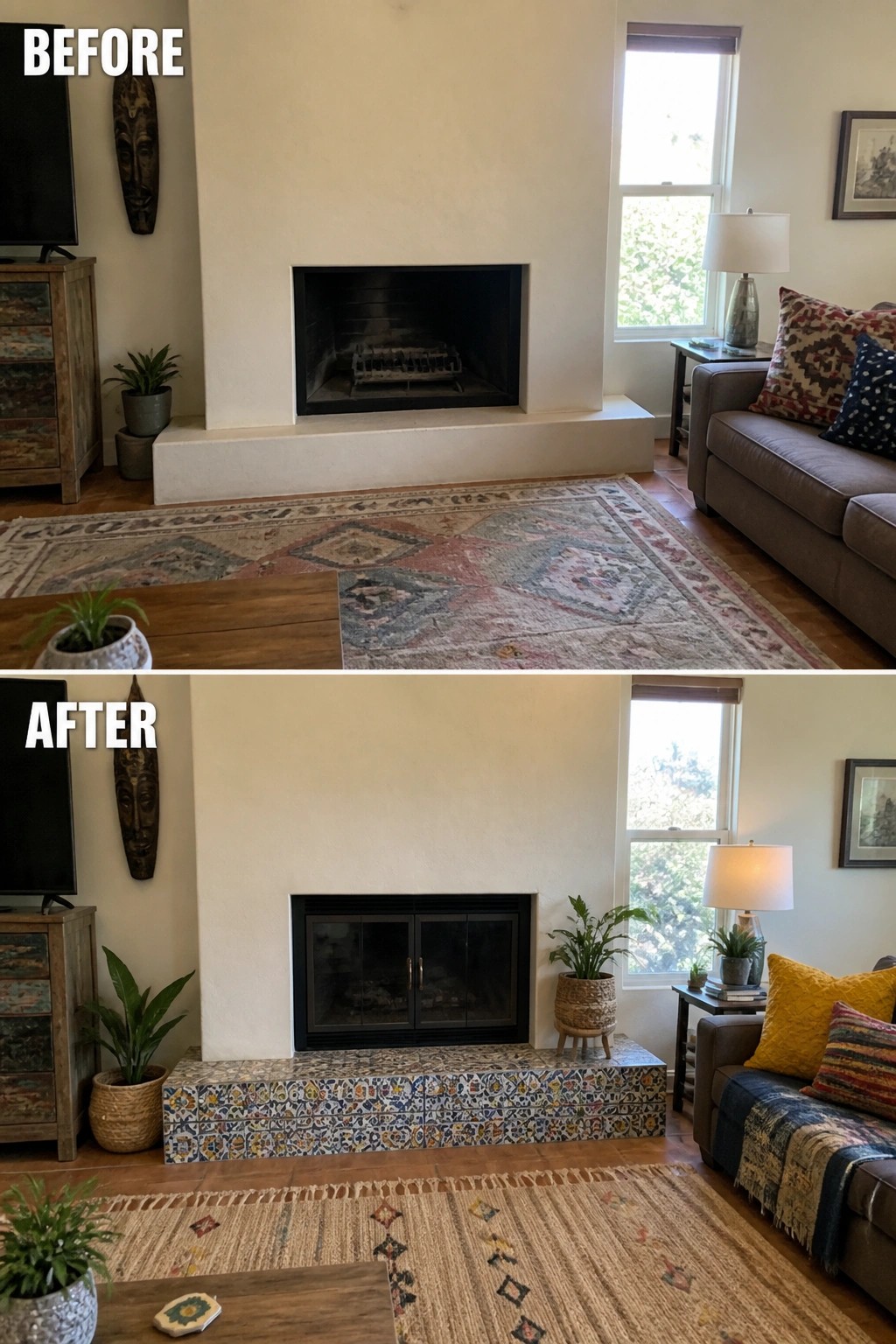
One simple way to update a fireplace is to cover the raised hearth with tile. The before version had a plain painted bench that blended into the wall, while the after version adds a band of patterned tile that gives the whole fireplace more presence without changing the size or shape.
This approach works best when the hearth is already at a usable height for seating or display. Pick tile that holds up to heat and foot traffic, and keep the pattern to the front face so it stays easy to clean around the edges.
Build Bench Seating Around A Raised Hearth

A raised hearth often sits unused and takes up floor space. Here the concrete ledge was wrapped with a long metal bench and leather cushions, turning it into seating that runs on both sides of the fireplace. The update also added a clean metal surround and a simple wall sconce so the whole wall feels purposeful instead of leftover.
This approach works well when the hearth is already at a good sitting height. Match the bench material to the room so it blends in rather than fights the brick. It gives extra seating without crowding the floor and keeps the fireplace as the main focus.
Turn A Raised Hearth Into Built-In Seating

A raised hearth can feel like wasted space when it is too high for regular use. Adding a simple cushion across the top and open storage below turns it into a bench that actually gets used. The change makes the fireplace area more practical without any major construction.
This works best in rooms where floor space is limited and you need extra seating or storage. Choose a cushion that is firm enough to sit on and baskets that fit the openings cleanly. It is a good option for homes that already have a raised hearth and want to make it functional rather than just decorative.
Make The Fireplace Wall The Main Feature
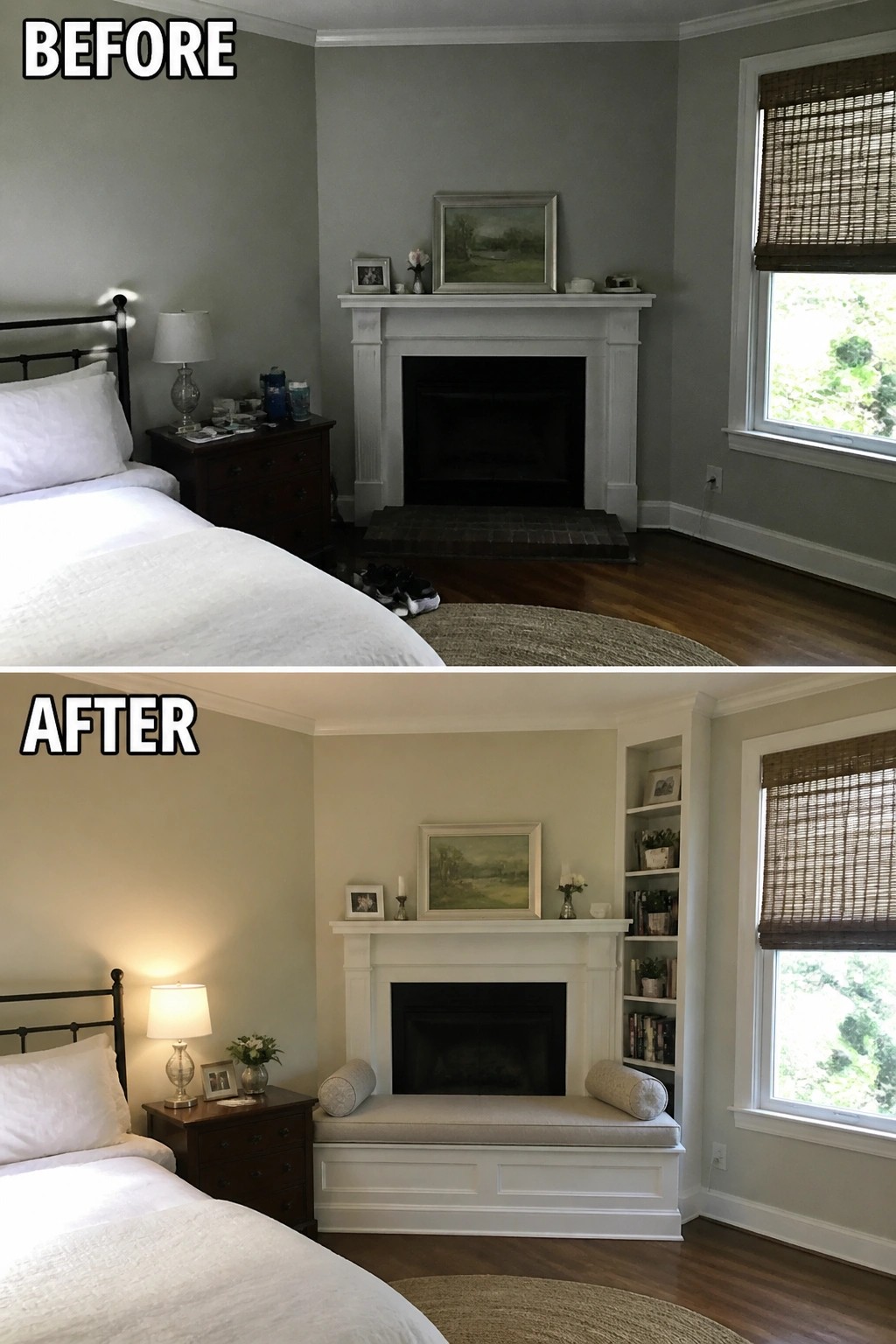
The before photo shows a plain fireplace with only a mantel and a few small items on top. The after adds a built-in bench right across the front and simple shelves on one side. This turns the fireplace into actual seating while giving the wall more purpose without crowding the room.
A hearth bench works best in bedrooms or smaller living spaces where you want the fireplace to feel used rather than just looked at. Keep the bench height low, add a few cushions, and match the trim to the mantel so everything feels connected.
Turn A Raised Hearth Into A Bench

A plain raised hearth often ends up as wasted space that just collects dust. In this case the owners wrapped the front with patterned tile, added a thick cushion across the top, and turned the whole thing into a built-in bench. The change makes the fireplace feel more useful without crowding the room.
This idea works well in homes where the hearth already sits at a comfortable seat height. Keep the cushion in a neutral fabric so it does not compete with the tile pattern, and add a few pillows only where people will actually lean. The bench gives extra seating without needing another chair, which is handy in smaller living rooms.
Turn A Raised Hearth Into A Bench
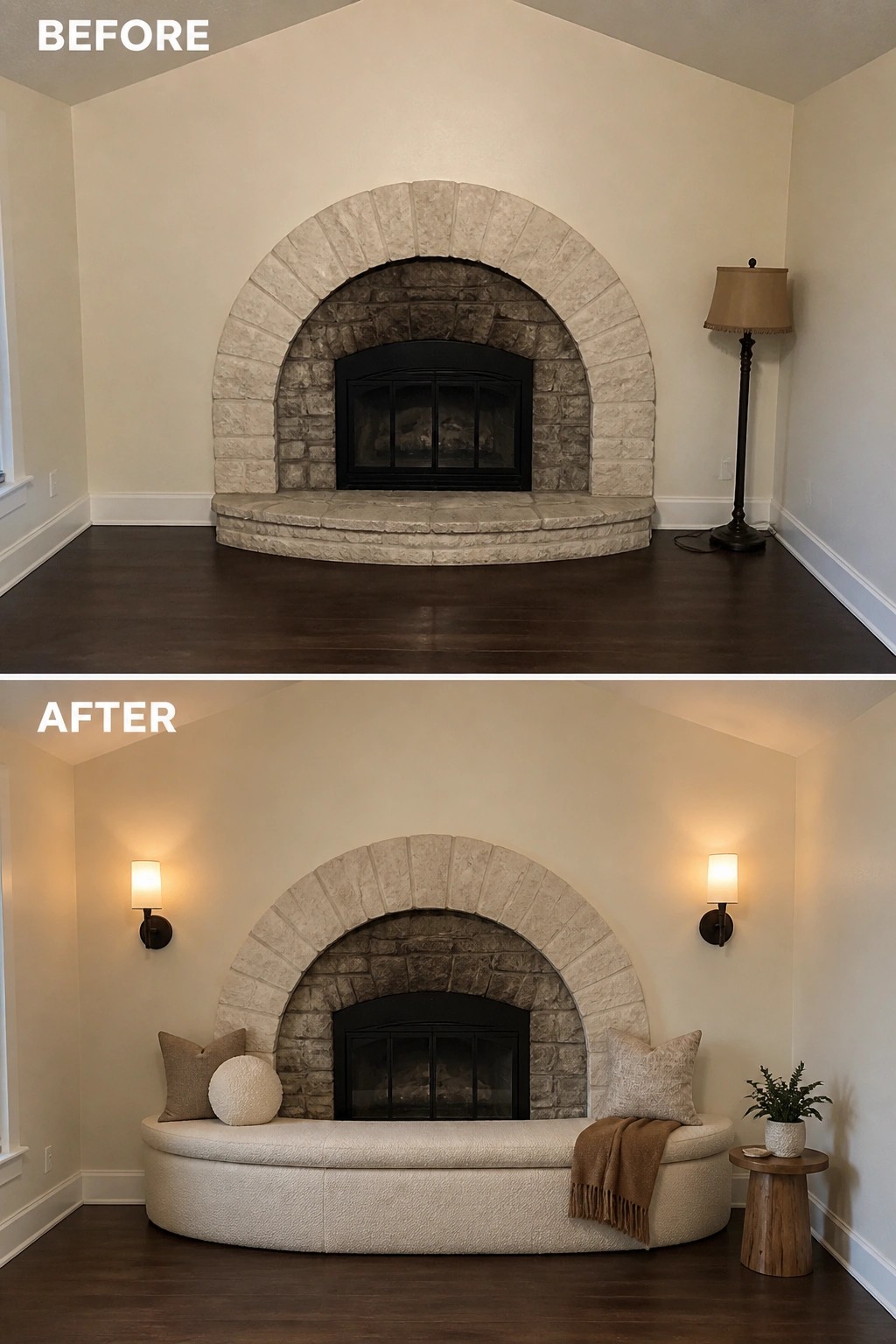
A raised hearth often sits unused because it is too high for comfortable seating and too low to feel like a proper ledge. In this case the stone base was kept but topped with a simple upholstered cushion that follows the curve, turning the whole area into a place people actually sit. The addition of two wall sconces gives soft light at sitting height and removes the need for a floor lamp that took up floor space.
This works best in rooms where the fireplace is already the main focal point and you want to add seating without crowding the floor. Keep the bench depth around 18 inches so it feels like a real seat, and choose a fabric that can handle daily use. If the hearth is deeper than standard, add a thin plywood top first to create a flat surface before the cushion goes on.
Turn A Raised Hearth Into A Bench Seat

A raised hearth often ends up as wasted space because it sits too high for comfortable seating and offers nowhere to store anything. Adding a padded cushion across the top and built-in drawers below turns the same ledge into a place people actually use.
This idea works best in living rooms that need extra seating without adding more furniture. Keep the bench depth reasonable so it does not block the room, and pick a durable fabric if kids or pets will use it often.
Add A Low Bench Beside The Raised Hearth

The main shift in this room came from removing the tall dark cabinet that sat right next to the fireplace. A simple white bench now runs along the floor and lines up with the raised brick hearth, which opens the wall and keeps the focus on the fire instead of the TV.
This approach works best in rooms where the hearth already sits higher than the floor. The bench adds seating and hidden storage without covering the brick, and it keeps the layout practical for everyday use. It suits homes that want the fireplace to feel like the main feature rather than competing with large furniture.
Turn A Raised Hearth Into A Bench Seat
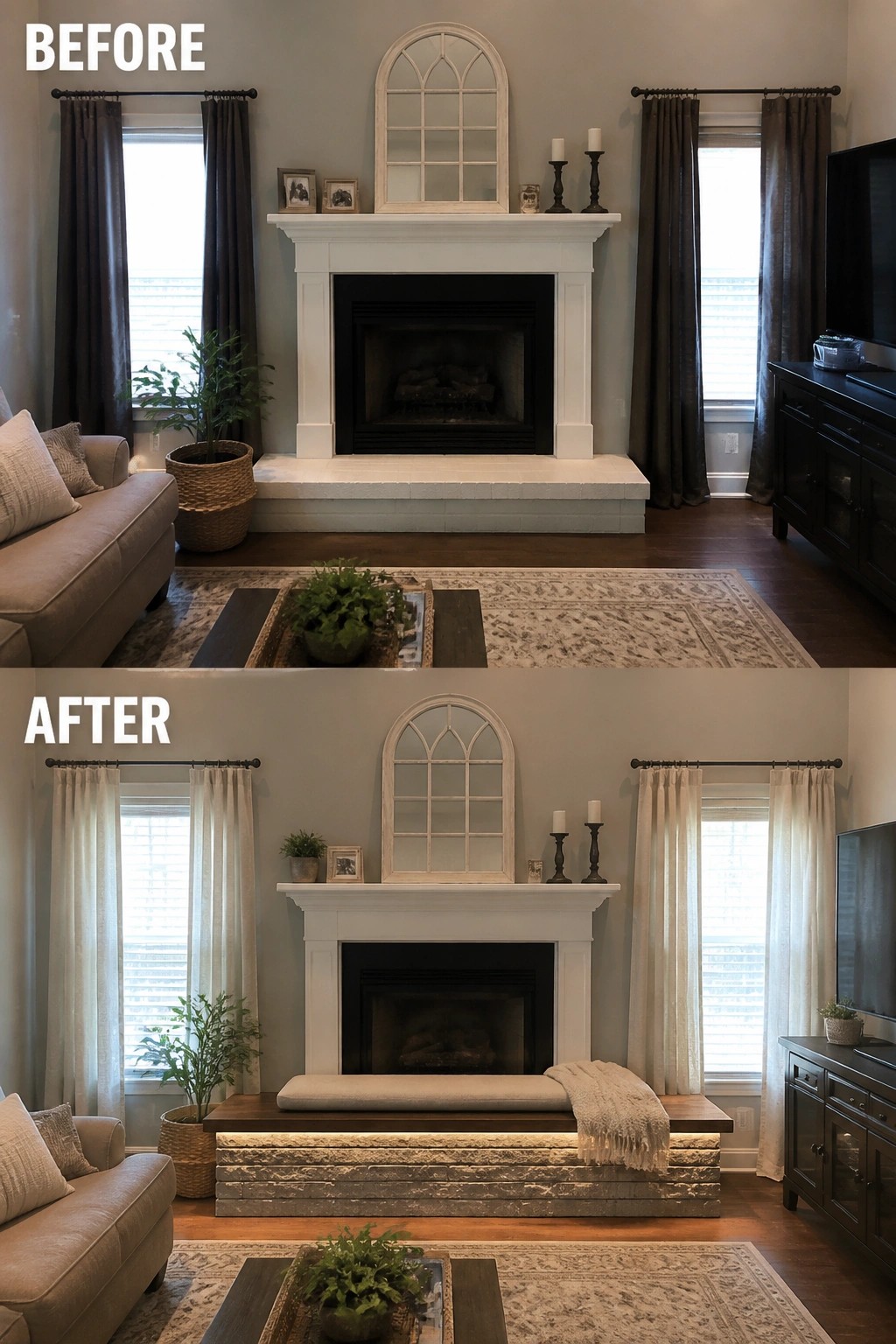
Covering the front of a raised hearth with stacked stone and adding a simple bench on top turns an underused ledge into actual seating. The change also lets you run low lighting along the base, which softens the look of the fireplace at night and gives the whole wall more weight without new furniture.
This works best in rooms where the fireplace already sits at the center but the hearth feels like dead space. Keep the bench cushion in a neutral fabric so it reads as part of the architecture rather than an extra piece, and make sure the depth still leaves room to walk around the coffee table.
Extend A Raised Hearth Into A Bench

Extending the hearth turns a basic fireplace into something more useful. The before photo shows the standard setup with the firebox and a basket sitting off to the side, while the after version runs a long bench across the full width. The added cushion makes the whole wall feel more finished and gives the room an extra seat without bringing in another piece of furniture.
This works best in living rooms that already have a raised hearth and need practical seating. Keep the bench depth comfortable for sitting and choose a cushion that matches your sofa fabric so it blends in. The storage space underneath is a bonus if you keep the doors simple and the hardware minimal.
Give A Raised Hearth A Simple Bench Seat

A raised stone hearth often ends up as wasted space in a living room. Adding a padded bench turns it into extra seating while under-lighting along the base adds a soft glow that makes the fireplace feel more finished in the evening.
This idea works best in rooms that already have a sofa and a couple of chairs but could use one more place to sit. Keep the cushion simple and low so it does not block the view of the TV, and add a pair of wall sconces on either side of the mantel to balance the lighting without taking up table space.
Frequently Asked Questions
Q: How high should I make the bench so it works for sitting? A: Match it to the height of your sofa seats. Stack some wood scraps to test before cutting anything.
Q: Can I tuck storage under the bench for firewood? A: Yes, add simple shelves in the base. Just keep vents clear so heat escapes properly.
Q: How do I deal with ash or soot that gets on the bench surface? A: Brush it off often with a hand broom. But avoid anything abrasive on the wood.
