
Many fireplaces end up looking like an afterthought when the surround has no real detail to it.
Switching to fluted wood gives the wall a bit of rhythm that ties the mantel, hearth, and nearby furniture into one clearer arrangement.
I usually start by fixing the fireplace area first because it often anchors the whole room once it has some presence.
The ideas here show ways to keep the update simple while still making the space feel more put together and ready for daily use.
A few of them could work even if you only have time for a weekend project.
Make The Fireplace Wall The Main Feature

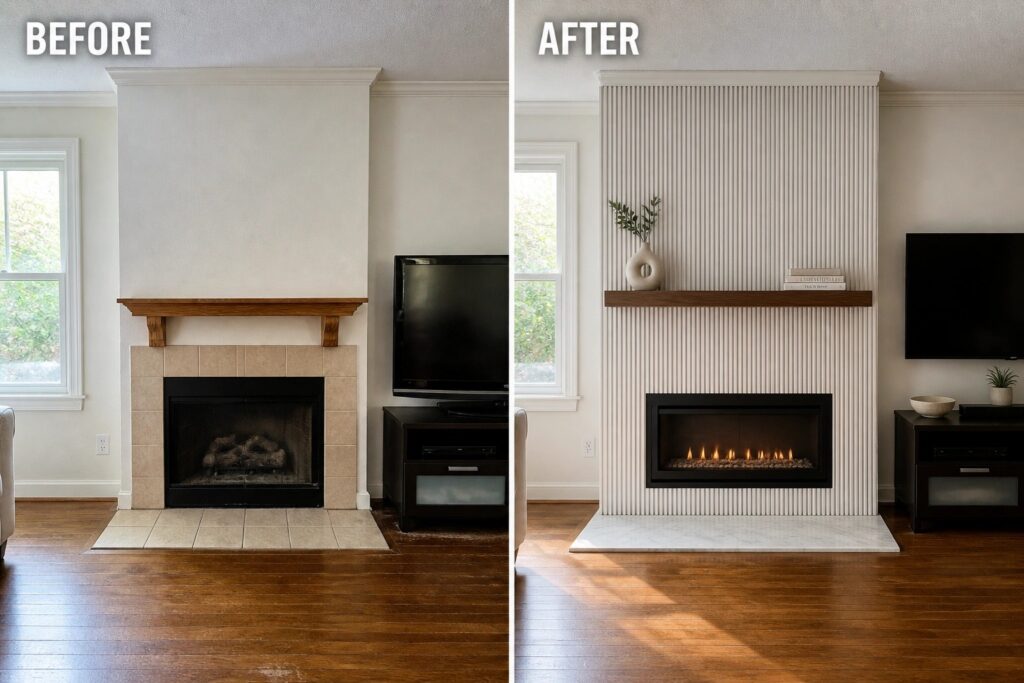
The before photo shows a basic tiled fireplace with a heavy wooden mantel that felt dated next to the dark floors. The after version replaces that look with tall vertical fluted wood panels that run from the floor up past the mantel height, paired with a low-profile electric fireplace and a simple floating shelf.
This works best in rooms where the fireplace sits on a large blank wall and needs to feel more intentional. Keep the shelf light with just a couple of items, mount the TV to the side, and match the wood tone to any existing flooring or furniture so the new surround blends in rather than competing.
Make The Fireplace Wall The Main Feature
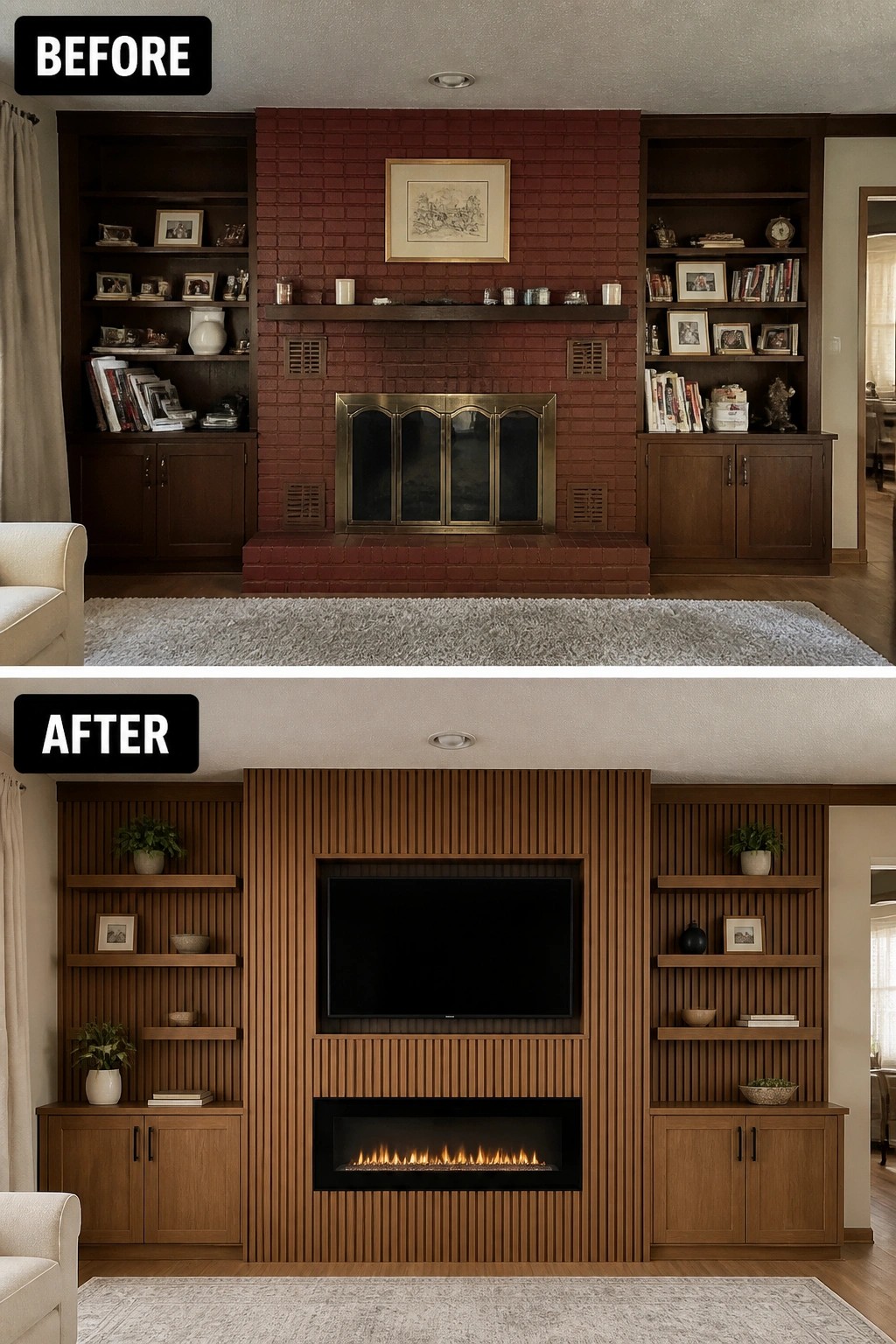
An old brick fireplace with dark built-ins can start to feel heavy and dated once the rest of the room moves forward. Switching to a full-height fluted wood surround with a simple linear fireplace below the TV pulls everything together and turns the wall into the clear focal point. The change removes the visual clutter and replaces it with one clean material that runs from floor to ceiling.
This approach works best in living rooms where the fireplace sits on a long wall and needs to feel current without a full renovation. Keep the shelves on either side but simplify what goes on them so the wood texture stays the main detail. It suits homes that already have wood tones elsewhere and want the fireplace area to match rather than compete.
Make The Fireplace Wall The Main Feature

A plain corner fireplace often blends into the background instead of standing out. Covering the wall and surround with vertical fluted wood and painting the whole structure black gives the fireplace a clear shape and turns it into the main focal point of the room. The shift from light stone and wood to a dark textured surface makes the fire feel more central without adding much else.
This idea works best in rooms where the fireplace sits at an angle or feels unfinished. Keep the rest of the space light so the dark surround can hold attention. Use the built-in benches for seating with simple cushions and add one small piece of art or a plant above the fire to complete the look.
Make The Fireplace Wall The Main Feature

A plain fireplace often fades into the background when the surround feels flat and dated. Replacing the old tile with vertical fluted wood panels on both sides gave the wall clear shape and made the fireplace the natural center of the room. The new mantel sits at a better height and the updated firebox helps everything feel finished.
This idea suits older homes where the fireplace is still in good shape but needs more presence. Keep the fluted boards in proportion to the opening and match the finish to your existing trim so the update feels built in rather than added on. Start with the surround before adding any styling on the mantel.
Make The Fireplace Wall The Main Feature

A simple fireplace can feel lost when the wall around it stays flat and bare. Adding a fluted wood surround gives the firebox a clear frame and turns the whole area into the main focal point. The change from a plain wall to vertical panels plus side shelves creates height and texture without crowding the room.
This idea works well in living rooms that already have a neutral palette. Keep the wood tone close to the floor color so the surround blends in, and limit what goes on the shelves to a few larger items. It is an easy way to give an existing fireplace more presence without moving walls or changing the firebox itself.
Make The Fireplace Wall The Main Feature

A plain white fireplace can easily blend into the background, especially when the mantel sits high and the wall above it stays bare. Adding vertical fluted wood paneling below a lower mantel creates a clear focal point and gives the whole wall more weight without changing the room layout.
This idea works best in living or dining spaces where the fireplace already sits in the center of the view. Use a soft neutral color on the paneling so it blends with the walls, and keep the new mantel depth shallow enough that it does not crowd the seating area in front of it.
Refresh An Old Fireplace With A Fluted Wood Surround

A plain tiled fireplace can start to feel dated once the rest of the room is updated. Wrapping the surround in vertical fluted wood and painting it black gives the wall a clean, modern shape while keeping the original opening usable.
This idea works best in rooms where the fireplace sits in the center of the main wall. Keep the mantel styling minimal so the texture of the wood can stand out, and make sure the new surround fits the scale of the room so it does not overwhelm the space.
Update A Stone Fireplace With Fluted Wood

A bulky stone fireplace can start to feel heavy and dated in a living room. Replacing the surround with vertical fluted wood panels and swapping the open firebox for a clean wood stove gives the wall a simpler, more modern shape while keeping the hearth as the main focus. The change removes the clutter on the mantel and lets the wood texture do the work instead.
This approach works well in rooms that already have wood tones or neutral walls. Keep the rest of the space light so the fluted panels stand out, and make sure the stove size fits the room scale before committing to the build.
Make The Fireplace Wall The Main Feature

One simple way to update a living room is to replace a basic mantel with a full-height fluted wood surround. The old white mantel and loose collection of frames gave way to a dark vertical panel that runs from floor to ceiling and frames a clean linear firebox.
This idea works best on a large blank wall where the fireplace already sits in the center of the room. Choose a single dark tone for the wood, keep accessories minimal, and let the vertical lines do the work. The result feels finished without adding extra furniture or heavy decor.
Update A Plain Fireplace With Fluted Wood Panels
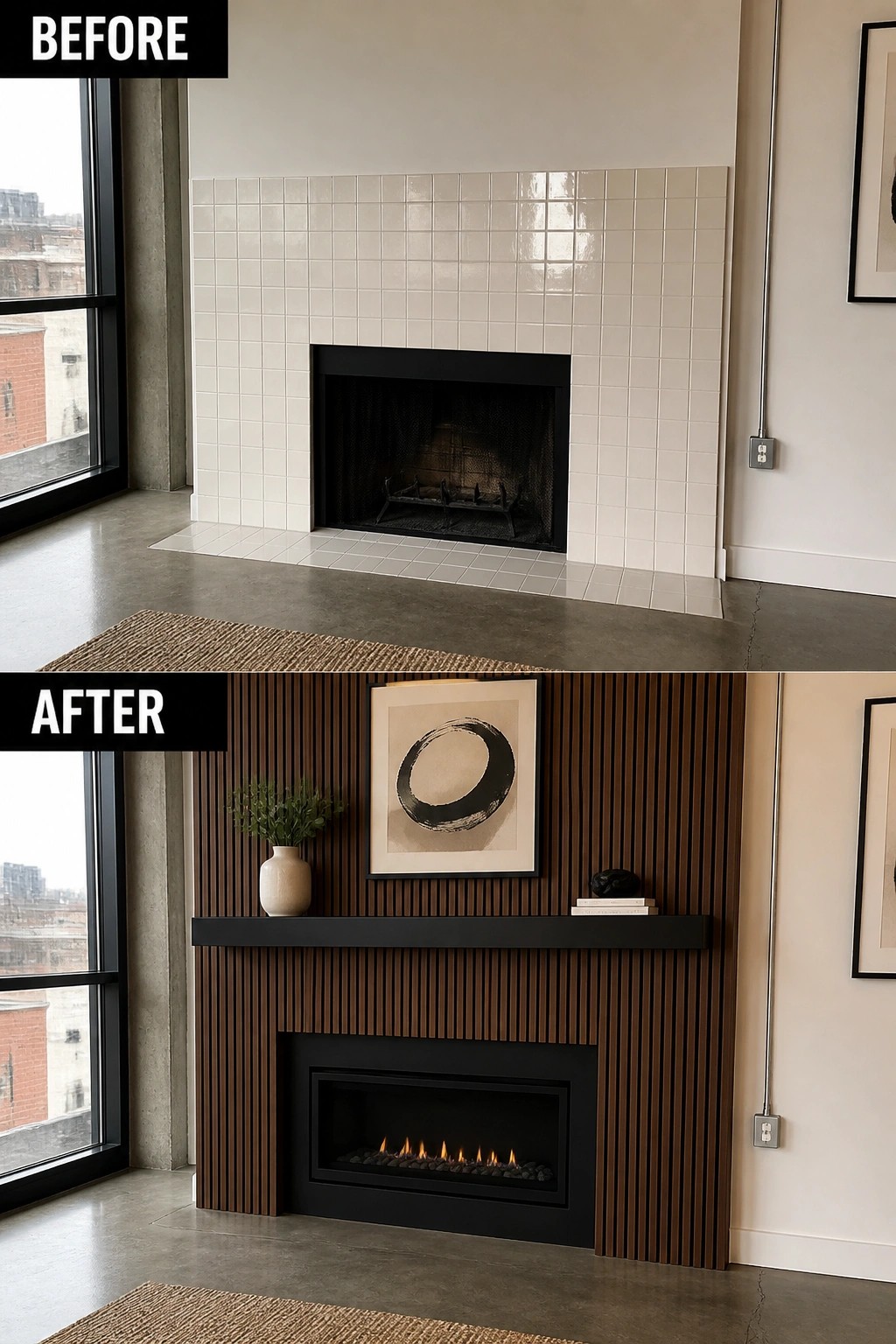
A plain tiled fireplace often feels unfinished in a modern room. Adding vertical fluted wood panels around the firebox brings texture and warmth while the black mantel gives a clean, finished edge. The change turns a flat white wall into the main focal point.
This works best in open living areas with concrete floors or large windows, where the wood adds needed contrast. Keep surrounding walls light and limit decor to a few simple pieces so the fluting stays the focus.
Make The Fireplace Wall The Main Feature

The old beige tile and gold frame made the fireplace feel dated and flat. Switching to vertical fluted wood panels gave the wall texture and height while the new black insert kept the look clean and simple.
This idea works best when the fireplace sits in the middle of a room and needs to stand out. Match the wood tone to other natural pieces like a mantel shelf or rug so the change feels connected rather than added on.
Modernize A Fireplace Wall Using Fluted Wood
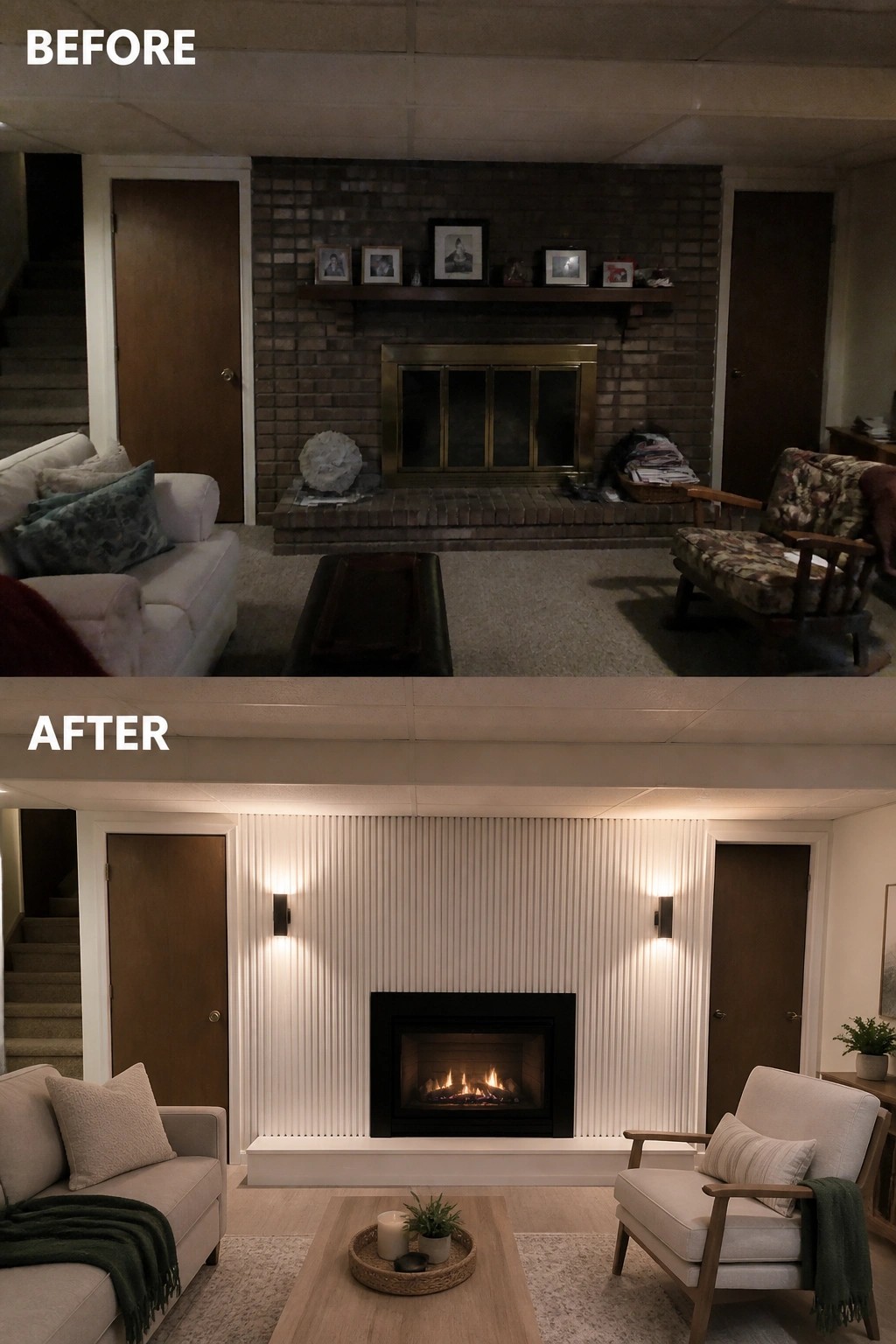
Many older homes still have heavy brick fireplaces that dominate the room in a dated way. Covering the brick with vertical fluted wood panels and adding simple wall sconces creates a much lighter, cleaner look while keeping the fireplace as the main feature.
This idea works best in living rooms that need a quick refresh rather than a full remodel. Stick with a light wood tone and a simple black insert so the wall stays calm and the focus stays on the fire itself.
Make The Fireplace Wall The Main Feature

A busy traditional mantel often fights with the rest of the room. Replacing it with a tall black fluted surround creates one clean vertical surface that brings the fireplace and television together instead of leaving them as separate pieces.
This idea suits rooms where you want a modern update without moving walls or running new wiring. Keep the finish the same on the surround and firebox, limit what sits on the ledge, and let the vertical lines carry the look.
Make The Fireplace Wall The Main Feature

A fireplace often sits in the middle of a room but still feels like an afterthought when the surround looks dated. Switching to vertical fluted wood panels gives the wall height and texture while a new linear firebox sits neatly inside. The simple floating shelf and low storage base replace the old mantel and scattered items, so the eye lands on the fire instead of the clutter around it.
This idea works best in open living areas where the fireplace needs to connect the kitchen and seating zones. Keep the wood tone close to your cabinets or floors, then limit shelf decor to two or three small pieces so the fluted detail stays the focus.
Make The Fireplace Wall The Main Feature
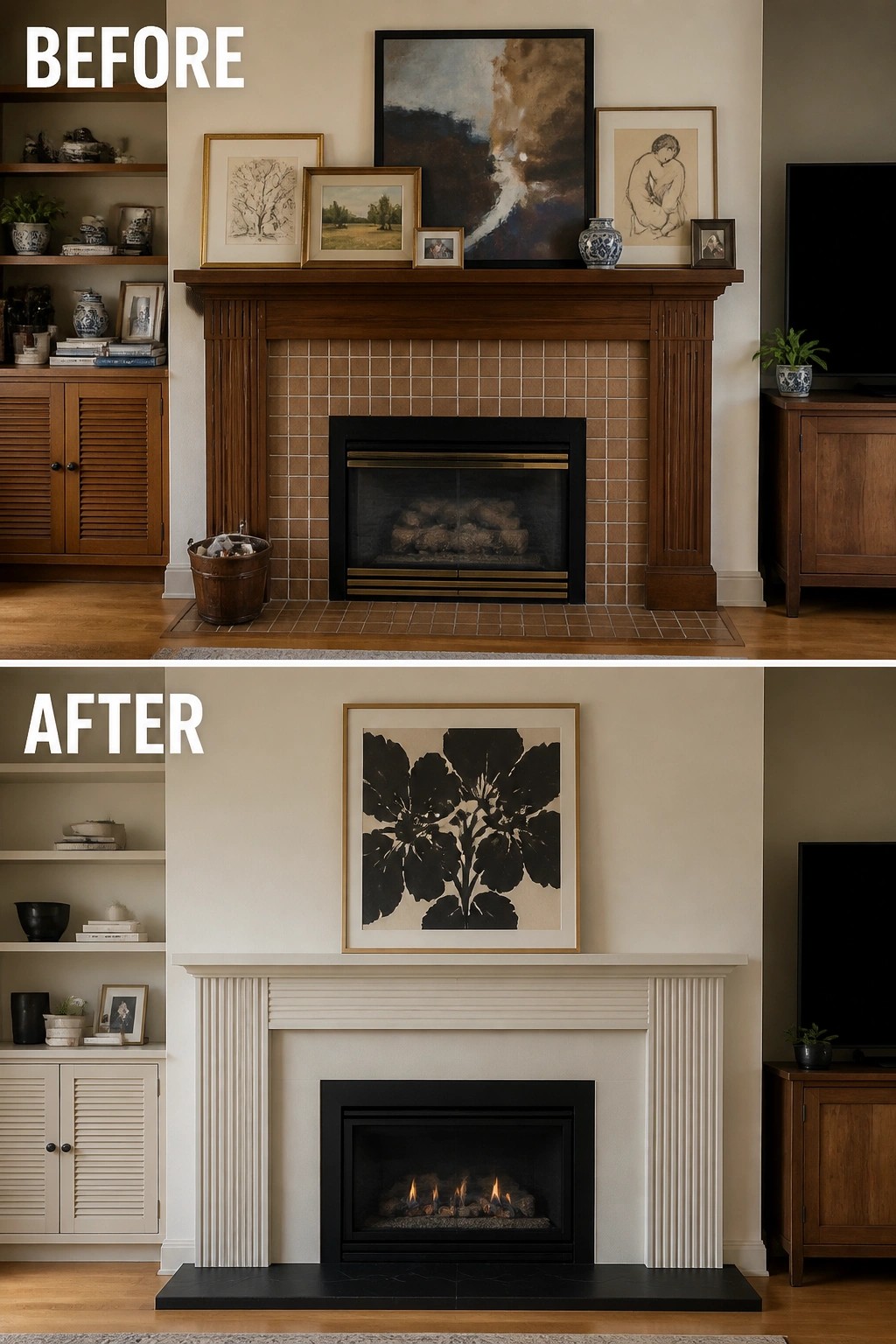
A busy mantel covered in small frames and mismatched accessories can make a fireplace feel scattered. Switching to a clean fluted wood surround with one large piece of art above it pulls the whole wall together and turns the fireplace into the clear focal point of the room.
This approach works best in living rooms that already have decent scale but need a simpler look. Paint the surround to match the wall color so the fluting adds texture without creating a heavy border, and keep the top of the mantel clear except for one statement piece.
Refresh A Fireplace With Fluted Wood Surrounds

A heavy stone fireplace can make a room feel dated even when everything else is neutral. Adding tall fluted wood panels on both sides and a simple wood shelf above the opening gives the wall clean lines and a modern focal point without changing the firebox itself.
This approach works best in living rooms where the fireplace sits in the center of the longest wall. Keep the wood finish light and the rest of the room simple so the vertical texture stands out. It is an easy update for homes that want a fresh look without major construction.
Make The Fireplace Wall The Main Feature
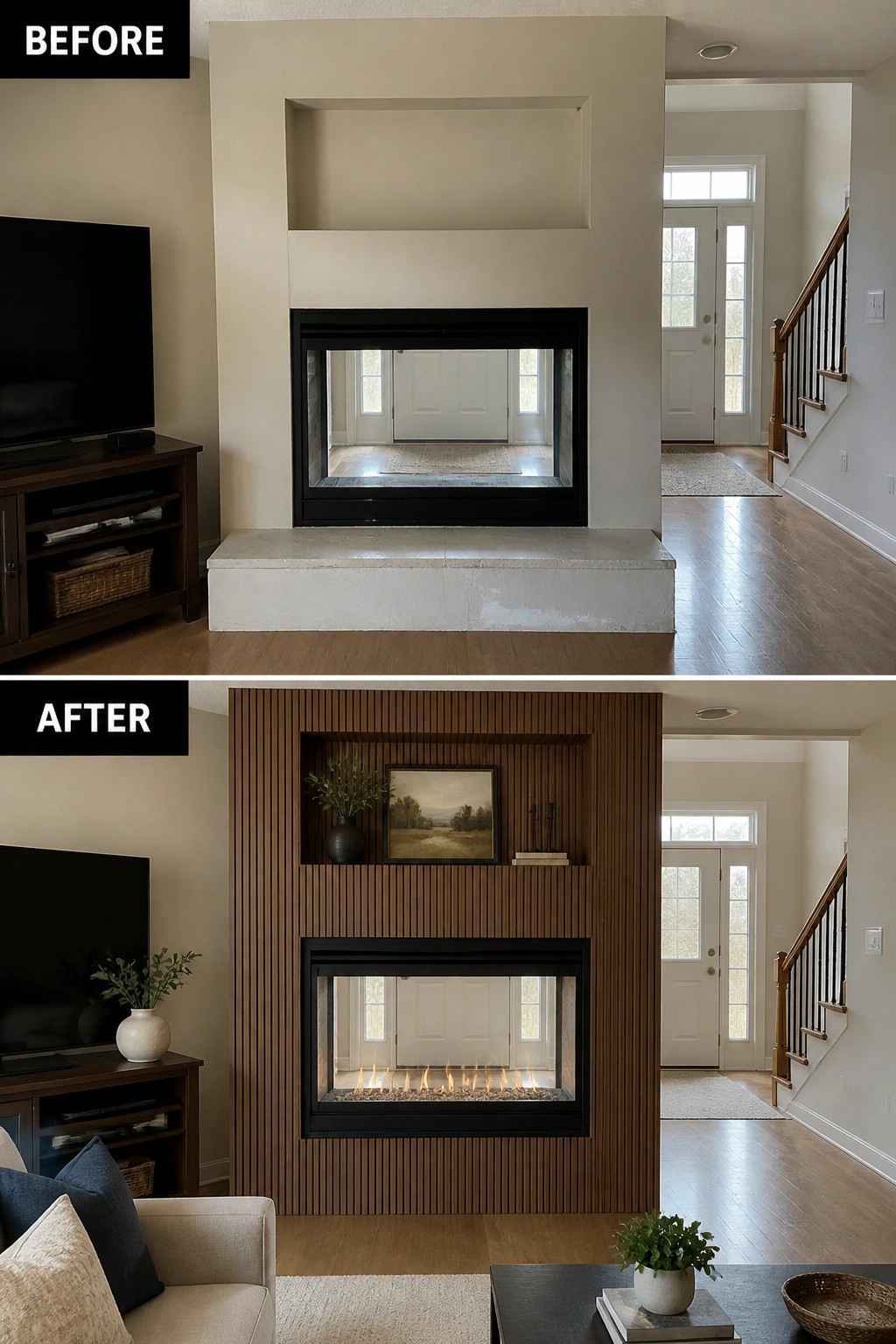
A plain fireplace surround can leave the whole wall feeling unfinished even when the rest of the room is furnished. Adding a fluted wood surround turns the fireplace into the clear focal point by giving the wall texture and depth. Here the bare concrete hearth and empty upper niche gained structure once the vertical wood was installed around the opening and the shelves were filled with just a few pieces.
This idea works best in rooms where the fireplace sits between a TV and an open walkway. It suits homes that already have wood tones in nearby furniture or flooring. Keep the shelves lightly styled and match the wood finish to existing cabinetry so the new surround feels like a natural extension rather than a separate project.
Update A Fireplace Wall With Fluted Wood

A plain fireplace often fades into the background when the surround is just tile and a basic mantel. Adding vertical fluted wood gives the wall texture and presence without needing a full rebuild. The change turns the firebox into the clear center of the room while keeping the rest of the space intact.
This idea works well in living rooms where the fireplace sits between other furniture pieces. Keep the wood tone light so it blends with the walls, and use the added shelf and lower ledge for small plants or simple decor. Measure the height first to make sure the panels reach a natural stopping point above the mantel.
Frequently Asked Questions
Q: How hard is it to swap out an old surround for fluted wood?
A: Start by measuring your fireplace opening and the wall space around it. Cut your wood panels to fit and attach them with screws or adhesive. Sand everything smooth before staining or painting to match your room.
Q: Does fluted wood work with a gas insert or only wood burning fires?
A: It works fine with either type as long as you leave proper clearance for heat. Check your local codes for the exact distances required. Many people add a metal liner inside the flutes for extra protection near the firebox.
Q: What finish lasts longest on wood near heat?
A: Oil based stains hold up better than water based ones in warm spots. Apply two coats and let them cure fully before using the fireplace.
