

Beige and cream rooms can feel calm without turning flat, but they need contrast and texture to keep the eye moving.
I find that a living room works best when the seating fits the way people actually gather, rather than leaving the layout to the rug or coffee table alone.
Warm wood, layered fabrics, and a few darker accents can give a soft palette enough definition while still keeping the room restful.
The first thing I notice is often whether the space feels comfortable to use, with clear paths through the room and a place to set down a drink.
Some of these details are easy to test at home, even if a full room makeover is not in the plans.
Use Built-Ins To Keep A Cozy Room Tidy

Built-in shelves can give a living room useful storage without adding more freestanding furniture. Here, open shelves display a few books and simple objects, while closed cabinets below hide everyday clutter.
This idea works especially well in a room with an unused wall or fireplace alcove. Keep the open shelves lightly filled so they stay easy to maintain, and use lower cabinets for things you would rather keep out of sight.
Use Built-Ins To Keep A Living Room Orderly

Built-in shelves can give a living room useful storage without bringing in extra cabinets. Open shelves keep books and a few favorite pieces close at hand, while closed cupboards below hide everyday clutter.
This approach works especially well around a fireplace, where shelving can make use of wall space that might otherwise sit empty. Keep the display simple, and leave some room on the shelves so they stay easy to maintain.
Let The Fireplace Shape The Seating

A fireplace can give a living room a natural center, so the seating feels settled without much extra decorating. A simple mantel and pale surround keep the focal point calm, which suits a beige and cream palette.
Place the main seats close enough for conversation, but leave a clear path through the room. This works especially well in an open living area, where the fireplace can help define the sitting zone.
Use Built-In Shelves To Keep Beige Rooms Calm

Built-in wall niches give a living room a place for a few useful or decorative pieces without bringing in extra furniture. Here, the recessed shelves keep their pottery display simple, so the neutral walls still feel uncluttered.
This approach works well in a small living room or anywhere floor space is limited. Keep the shelves shallow and avoid filling every niche; a little open space makes them easier to live with.
Make A Window Seat Part Of The Living Room

A built-in window seat gives a living room a useful spot to sit without taking up floor space. Here, it also makes the large window feel like part of the room rather than just a view.
This idea works well in a bay window or a wide alcove. Keep the cushion and pillows close to the room’s existing colors, and choose a seat depth that feels comfortable without narrowing the walkway.
Make A Fireplace The Center Of The Seating Area

A fireplace can help a living room feel settled without needing a lot of extra decoration. Here, the chairs face toward it, while the pale surround fits easily into a beige and cream palette.
Try arranging the main seats so people can talk and still enjoy the fire. This works especially well in a room with a clear focal wall, but leave enough space around the fireplace for easy movement.
Use A Wood Slat Wall As A Living Room Feature

A wood slat wall gives a living room a clear focal point without needing much extra decoration. Here, the vertical boards extend behind the television and fireplace, while the natural wood keeps the look comfortable alongside cream upholstery.
This treatment works well on one main wall, especially in a room with simple furniture and a restrained color palette. Choose a wood tone that sits comfortably with the floor, and keep the slats to one area so they don’t overwhelm the room.
Use A Long Sofa To Define The Living Area

A large sofa can help an open-plan room feel like it has a clear living area, without adding a wall or divider. Here, the low, generous seating keeps the lounge comfortable while leaving the kitchen and dining space connected.
This works especially well in a shared living and dining room. Choose a sofa that fits the room without blocking walkways, then place a rug beneath it to mark out the seating zone.
Use A Round Coffee Table In A Soft Neutral Room

A round coffee table can make a living room easier to move through, especially when a sofa and chair sit close together. Its curved edge also feels less formal than a square table, while a simple wood finish suits a beige and cream palette.
Choose a table that leaves enough room to walk around and reach from the seating. A pedestal base is useful in a smaller room because it keeps the floor area more open.
Use A Window Seat To Add Extra Seating

A built-in window seat makes use of space that might otherwise go unused. It gives the living room a relaxed spot to sit, and a simple cream cushion helps it feel like part of the room rather than a separate nook.
This idea works well beneath a wide window in a living room that needs a little extra seating. Keep the cushion depth comfortable, and leave enough room for people to move around the main sofa.
Use Tall Windows To Bring Light Into A Beige Living Room

Tall windows suit a room with a high ceiling, letting in plenty of daylight without adding more color or pattern. Long curtains keep the window treatment simple and make sense with the room’s relaxed, neutral style.
This idea works especially well in living rooms with generous wall height. If privacy is a concern, use a light-filtering shade behind the curtains so you can control the view without covering the windows completely.
Use A Window Seat To Add Extra Seating

A built-in window seat makes a living room more useful without taking up space for another chair. Here, the seat also includes drawers below, so it offers a place to sit and a bit of tucked-away storage.
This idea works especially well in a deep window alcove or beside a wall of built-in shelves. Keep the cushion simple and choose a fabric close to the room’s main upholstery for an easy, settled look.
Arrange Seating Around The Fireplace
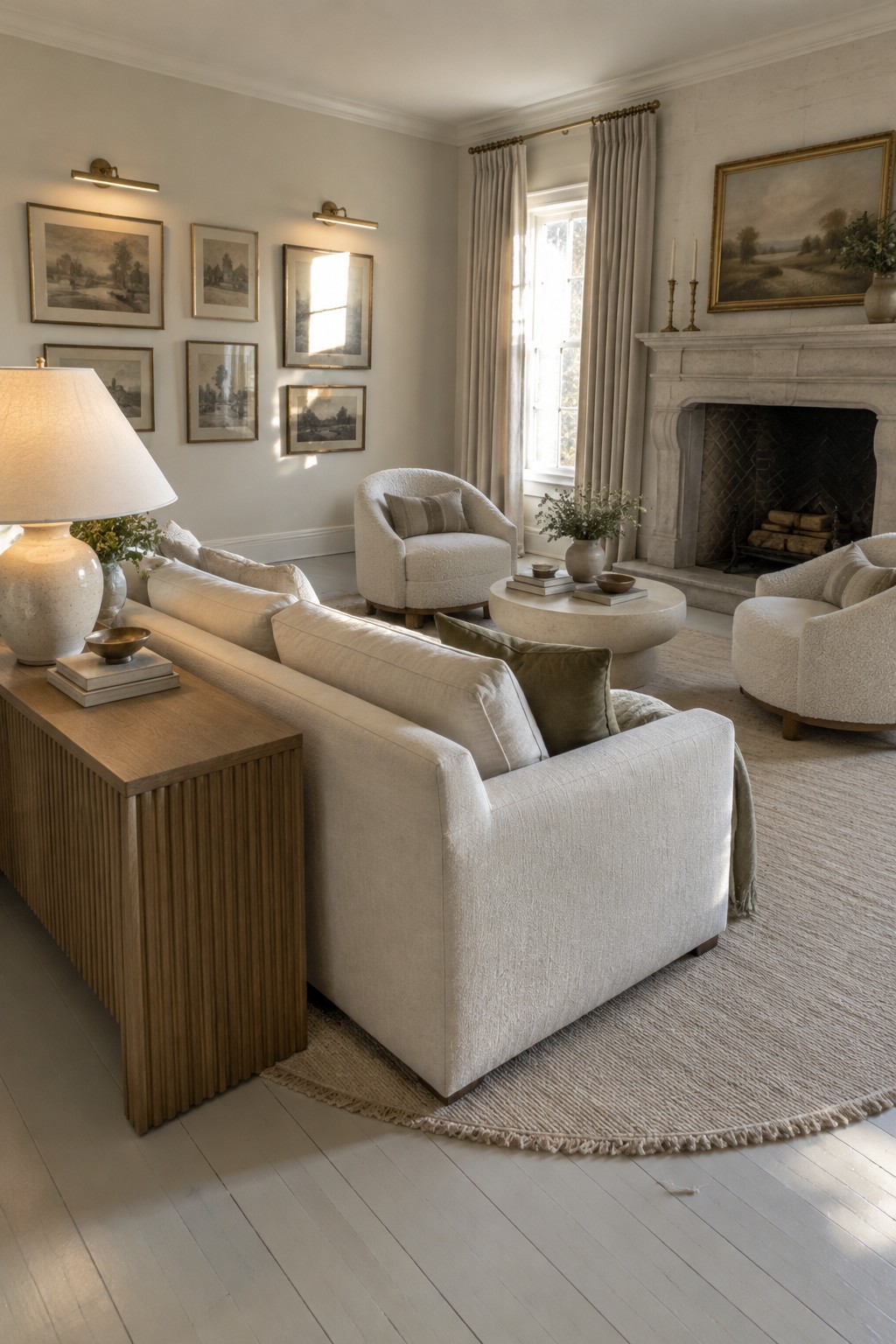
A fireplace can give a living room a natural center, so the seating feels connected rather than scattered. Here, a sofa and rounded chairs face inward, leaving the fireplace easy to enjoy without making the room feel formal.
Try this layout in a room where the fireplace is a main feature. Keep enough space between the seats for comfortable conversation, and use a round coffee table if you want to make the path around it easier.
Use A Chunky Wood Mantel For Rustic Character

A thick wood mantel can give a modern living room a more relaxed, lived-in feel. Here, its rough finish stands out against the simple fireplace and pale walls without making the room feel busy.
This idea suits a home with clean-lined furniture and natural materials. Keep the mantel styling fairly spare so the wood remains the main feature, and choose a finish that fits the room’s other wood tones.
Use Natural Materials To Warm Up Beige Rooms

A beige living room can feel more welcoming when its materials have a little texture and variation. Here, the chunky rug and speckled stone coffee table bring interest to a simple neutral palette without making the room feel busy.
Try this mix in a room with plain walls and light upholstery. Choose one textured surface for the floor and one for a table or accessory, then keep the rest fairly simple so the materials can stand out.
Use A Slatted Wood Wall Behind The Fireplace

A slatted wood wall gives a modern fireplace a clear place in the room without adding a lot of decoration. The narrow lines bring texture to the beige and cream palette, while the long, simple firebox sits neatly within the wall.
This treatment works well on one main wall in a living room, especially when the rest of the finishes stay quiet. Use wood in a tone that suits your flooring and furniture, and keep the slats consistent so the feature feels calm rather than busy.
Use Stone Built-Ins For Living Room Storage

Stone built-ins can provide useful storage without bringing in a separate cabinet that may feel bulky. Here, open niches and a TV recess are built into the wall, keeping the main furniture arrangement simple.
This approach works well when you want a clean look and have a wall that can accommodate custom shelving. Leave some sections open for a few books or small objects, and keep the rest uncluttered.
Use Shoji Screens To Filter Light

Shoji screens bring a simple, useful kind of privacy to a living room. Their translucent panels let daylight through while making it feel less harsh, and the wood grid adds quiet structure without needing much decoration.
They work well in rooms where you want to soften a bright window but keep the space open. Choose sturdy frames that suit the room’s woodwork, and keep nearby furnishings fairly simple so the screens don’t have to compete for attention.
Frequently Asked Questions
Q: How do I keep a beige and cream living room from feeling flat?
A: Mix textures and slightly different shades. Try a nubby rug, linen cushions, smooth ceramic decor, and warm wood so the room feels layered without adding strong colors.
Q: What colors work well with a beige and cream palette?
A: Soft greens, muted terracotta, and warm browns all sit comfortably alongside beige and cream. Use them in small touches, like a cushion, vase, or throw, to keep the room feeling calm.
Q: How can I make a cream sofa practical for everyday use?
A: Add washable covers or a machine-washable throw where people sit most. A textured fabric can also help disguise small marks better than a smooth, pale finish.
Q: Can I use black accents in a cozy beige living room?
A: Yes, a few black details can give the softer palette some definition. Try a lamp base or picture frame, then balance it with warm materials like wood and woven fabric.
