

Small living rooms often feel cozier when the layout leaves room to move rather than trying to fit in every piece of furniture.
I find that the first thing people notice is whether the seating feels comfortable and connected, even when the room has to serve several purposes.
Warm textures, soft lighting, and a few well-chosen colors can make a compact apartment feel settled without making it seem crowded.
The ideas here show practical ways to balance storage, seating, and open space, and I’d adapt the ones that suit my own room’s shape and daily routines.
A little breathing room can change the whole feel.
Use Built-In Storage to Free Up Floor Space
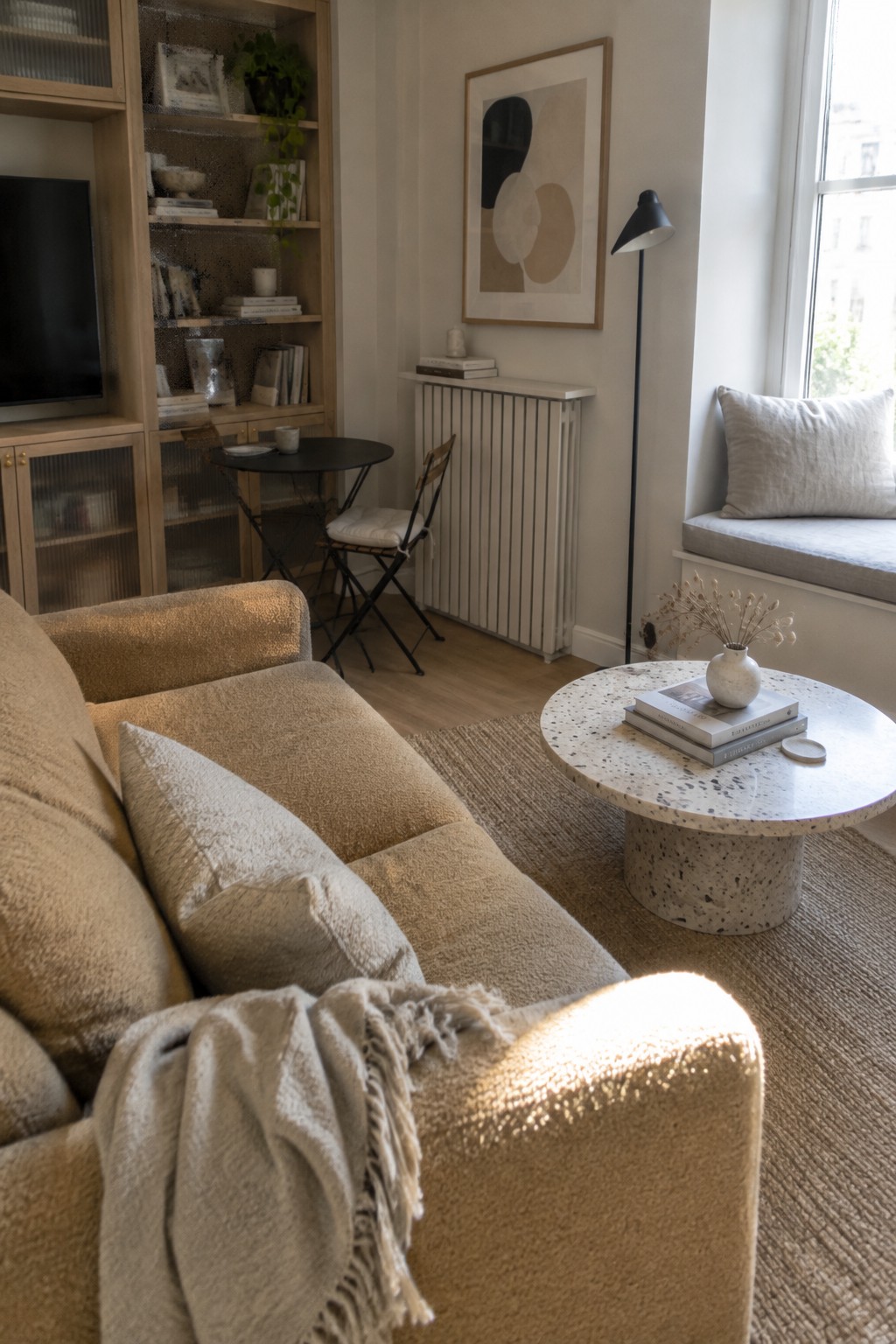
Built-in shelves can make a small living room more practical without adding bulky standalone furniture. Here, the tall wood cabinet also holds the TV, while its mix of open shelves and closed storage gives everyday items a place to go.
In an apartment, a similar setup can use one wall for books, media, and a few display pieces, leaving more room for seating. Keep the shelves from feeling crowded by leaving some open space and storing less attractive items behind doors.
Use a Daybed to Make a Small Room Work Harder

A daybed can make a small apartment room feel more flexible. It offers a place to sit during the day and a comfortable spot to sleep at night, without taking up space for both a sofa and a full bed. A simple wood frame keeps the setup practical.
Try this idea in a studio, guest room, or narrow living area. Use a few cushions for daytime comfort, and keep the bedding easy to fold or tuck away. Measure carefully so the daybed still leaves a clear path through the room.
Use A Large Rug To Define A Small Living Room

A large rug can help a small apartment feel more settled by giving the seating area a clear boundary. Here, a patterned rug sits beneath the sofa and coffee table, making the living space feel distinct from the desk area behind it.
Choose a rug that reaches under the front legs of the main seating, rather than one that leaves each piece floating on its own. In a narrow room, leave a little floor showing around the edges so the rug defines the space without crowding it.
Use Built-Ins To Save Living Room Space
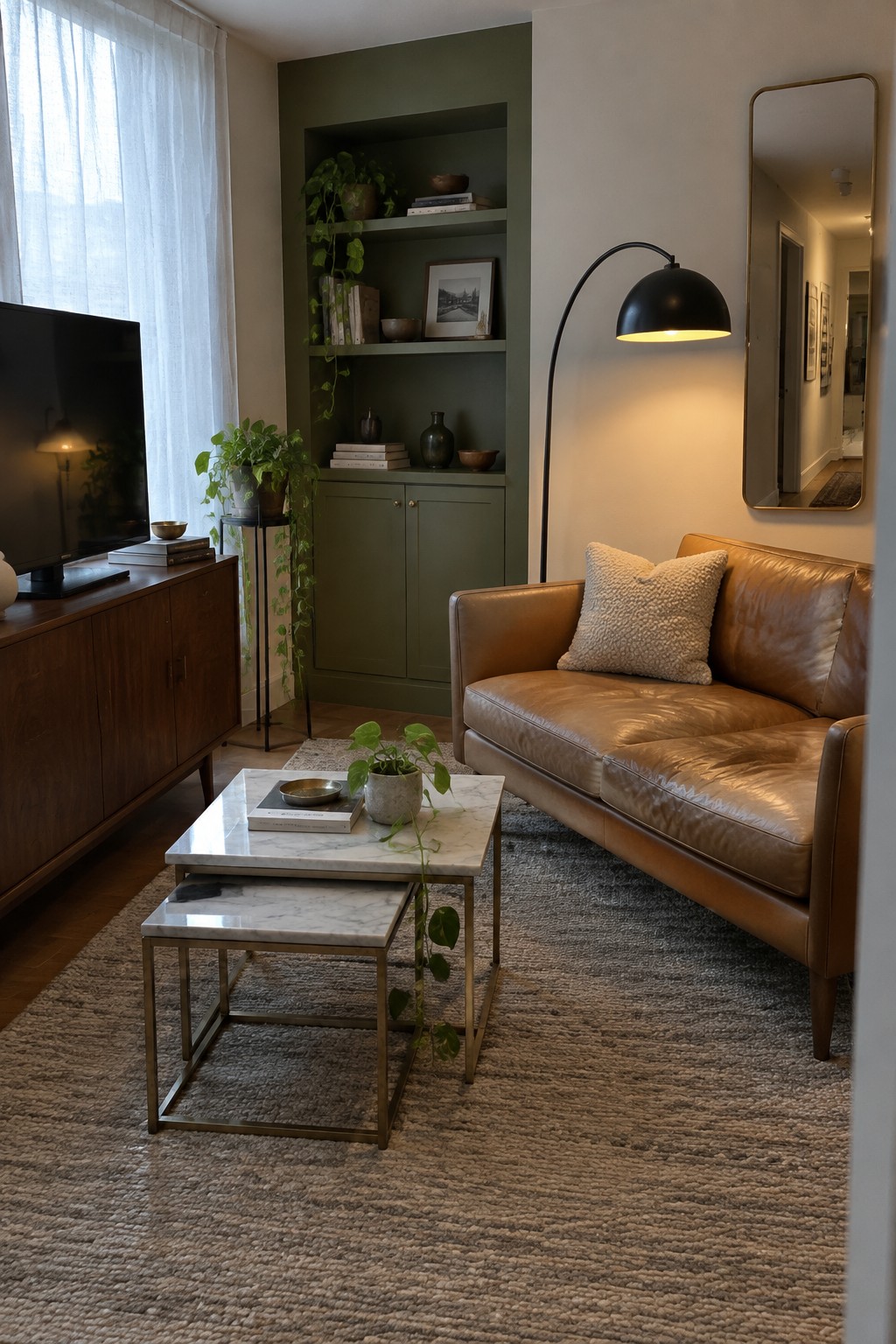
Built-in shelves and cabinets make good use of a small living room’s walls, leaving more floor space for everyday furniture. Here, the recessed shelving also gives books and a few favorite objects a place to stay without needing a separate bookcase.
If you’re planning built-ins, include closed storage below for items you don’t want on display. A muted paint color can help the unit sit quietly in the room, especially in an apartment where storage is often limited.
Use a Narrow Coffee Table to Keep the Room Open

A slim coffee table can give a small living room a useful surface without taking over the walkway. This one also has drawers and an open section for baskets, so everyday items can stay close by without cluttering the sofa or floor.
Look for a table that leaves room to pass on both sides, and choose one with storage if you need to tuck away remotes or blankets. A long, narrow shape often works well in front of a compact sofa.
Use a Wall Bed to Keep a Small Living Room Flexible

A wall bed lets one room serve as both a living area and a bedroom without keeping a bed out all day. Built-in cabinetry around the bed can also provide useful storage while keeping the setup looking neat.
This works especially well in a studio or a small apartment where the living room needs to do double duty. Keep the sofa compact so there is enough clear floor space when the bed is lowered.

A slatted divider can give a small apartment living room a little separation without closing off the room. The vertical wood screen here lets the kitchen remain visible, so the space still feels connected.
This works well between a living area and a kitchen or entry, especially when a full wall would block light or make the layout feel tight. Leave enough room to walk around it, and choose a screen with open spacing so it does not become a visual barrier.
Use Light Colors to Keep a Small Living Room Open
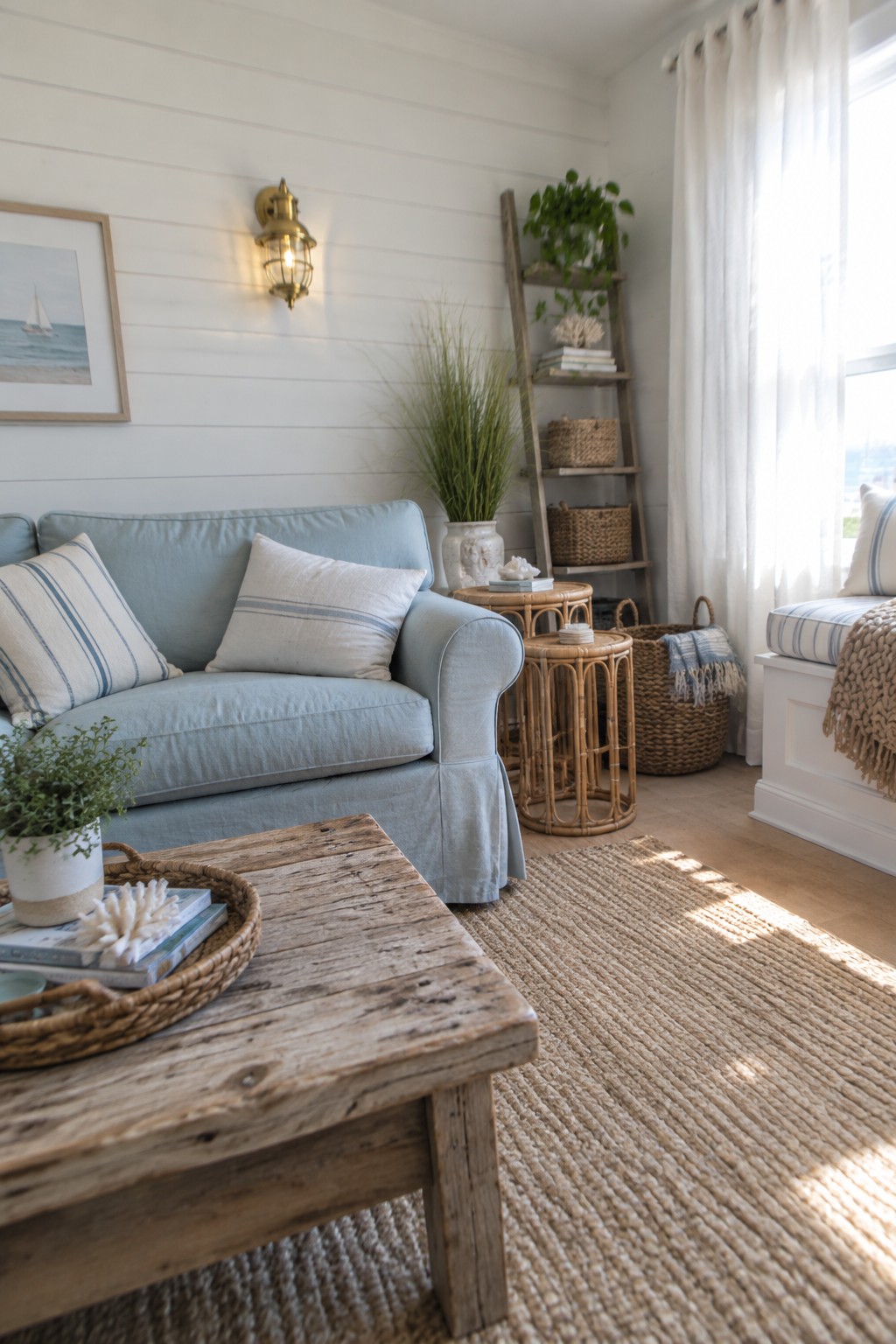
A pale blue sofa and light walls help a small living room feel open without making it look bare. The color scheme is easy to live with, and a few natural wood and woven textures keep it from feeling too plain.
Try this approach in a compact apartment living room, especially if it gets good daylight. Keep the larger pieces light, then bring in darker colors through small accents that are easy to change.
Use a Compact Sectional to Make the Most of a Small Living Room

A compact sectional can offer plenty of seating without spreading chairs across the room. Its L-shaped layout makes good use of a corner and leaves a clear path through the rest of the living area.
Look for a low-profile design with slim arms so the sofa does not take up more visual space than it needs to. In a small apartment, place the longer side along a wall and keep nearby tables simple and easy to move.
Add Built-In Shelving Around a Fireplace

Built-in shelving can make a small living room more useful without taking up extra floor space. When it sits beside the fireplace, it turns an awkward corner into practical storage and gives books and baskets a proper home.
Keep the lower cupboards closed to hide everyday clutter, and use the open shelves for a few books or small items. This approach works well in apartments with limited storage, but keep the shelves from getting too crowded.
Use Plants to Bring Life to a Small Living Room

Houseplants can make a small living room feel more personal without taking up much usable space. A taller plant in a corner adds greenery above the furniture, while smaller pots can fill spots that might otherwise go unused.
Choose plants that suit the light in your room, and keep the largest one out of walkways. Grouping a few pots near a window can make caring for them easier, too.
Choose a Round Coffee Table for Easier Movement

A round coffee table can make a small living room easier to move through. Its curved edge takes up less visual space than a boxy table, and there are no sharp corners to squeeze past.
Look for a compact table that still gives you enough room for a book or a cup. A low, sturdy style works well in front of a sofa, especially when you keep the surrounding floor area clear.
Use a Wall-Mounted Table in a Small Living Room
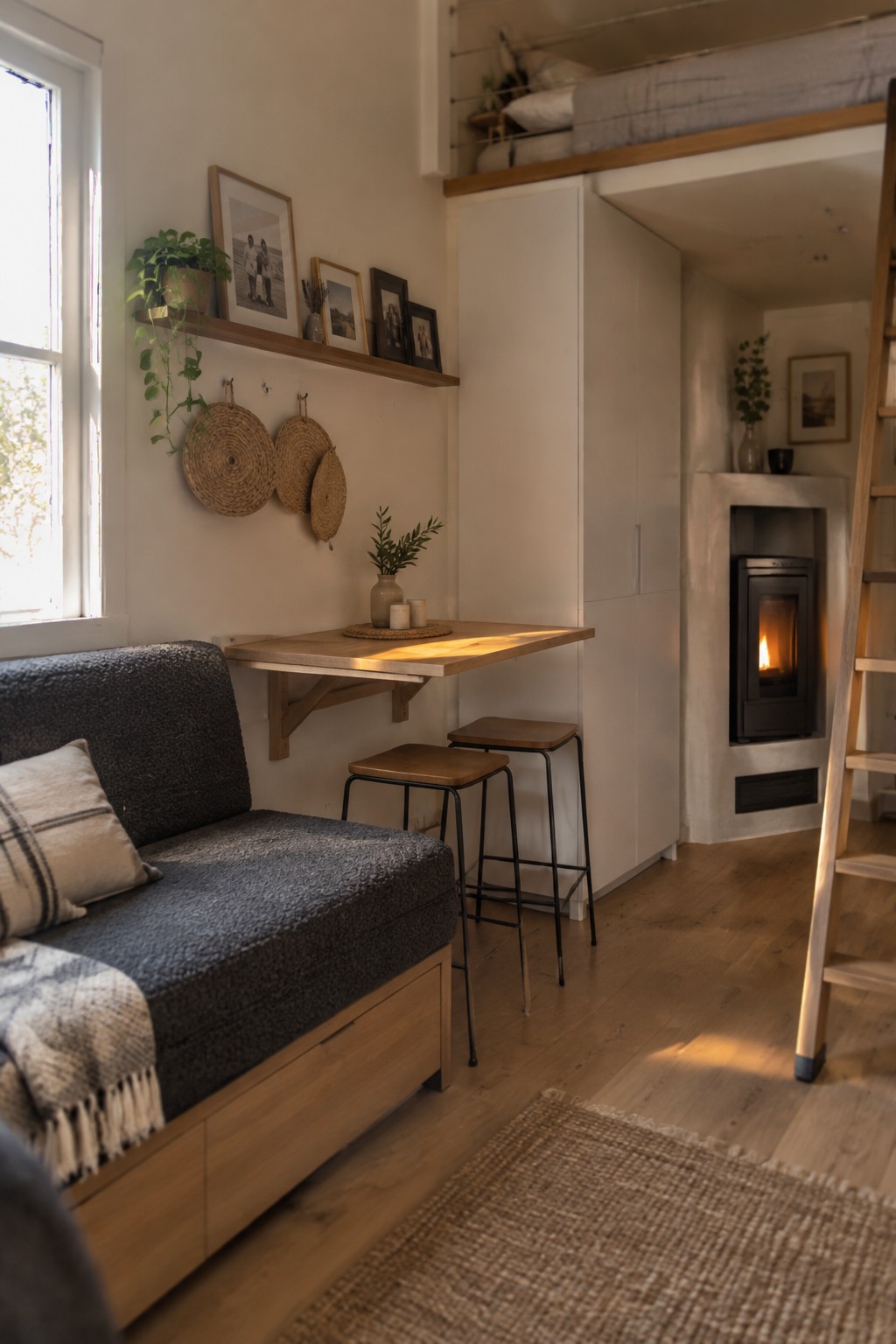
A small wall-mounted table can give a living room a useful place to eat or work without taking up floor space all the time. This one folds down visually into the room’s layout, while the stools tuck beneath it when they are not needed.
This setup works well in a narrow apartment where a full dining table would crowd the walkway. Secure the table to wall studs, and check that there is enough legroom before choosing stools.
Use a Slim Coffee Table to Keep the Layout Open

A narrow coffee table can give a small living room a useful surface without taking over the walking space. Here, the open metal base and glass top keep the table from looking bulky beside the sectional.
Choose a table that leaves enough room to walk around it and reach the sofa comfortably. A glass top can help in a compact apartment, but keep the items on it simple so the surface stays easy to use.
Use Window Seating to Make a Small Living Room More Useful

A low window seat can add a comfortable place to sit without taking up the floor space that a separate armchair would need. It also gives a small living room another clear use, especially when the main sofa is already doing most of the work.
If you’re planning one, a simple built-in bench beneath the window can provide extra seating and, if space allows, storage below. Keep the cushions fairly slim so the bench stays easy to use and doesn’t crowd the room.
Use a Wall Niche to Add Character Without Taking Up Floor Space
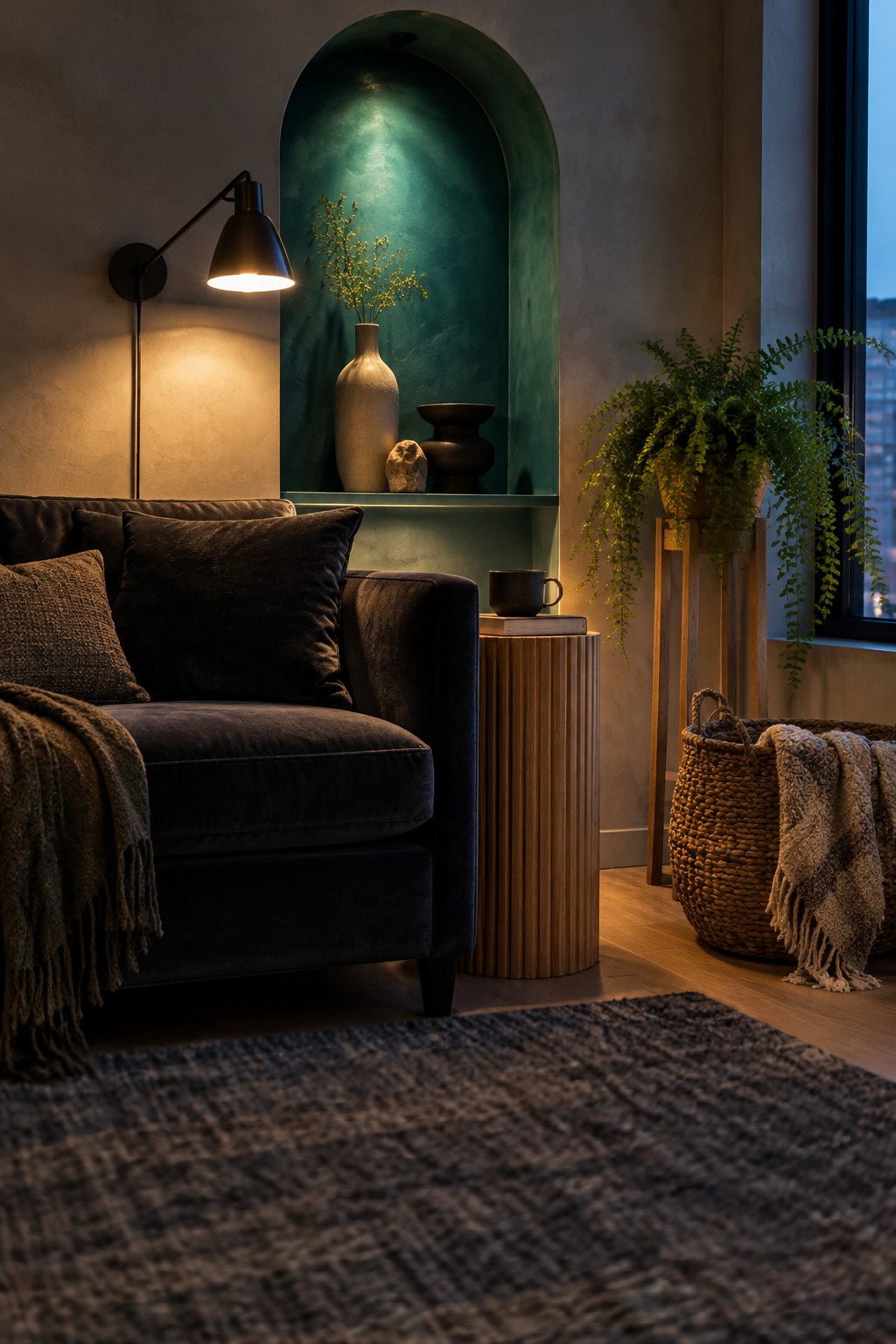
A recessed wall niche gives a small living room a place for a few favorite pieces without needing another cabinet or shelf. Here, the deep green finish makes the niche stand out while keeping the display contained.
This idea works well in an alcove or unused section of wall. Keep the display simple, and use a shallow ledge so it does not crowd the room.
Use a Small Desk to Add a Work Spot
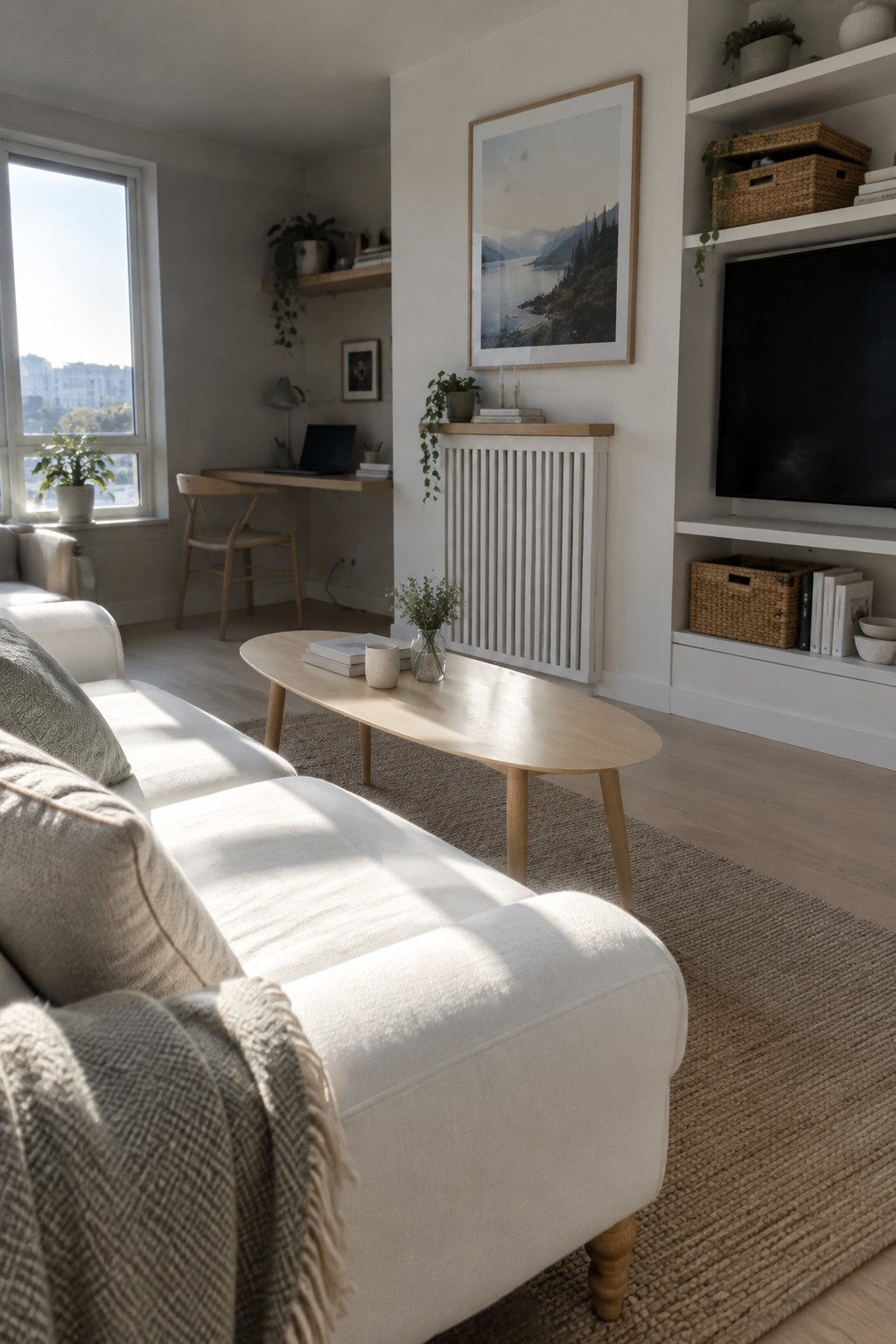
A compact desk can make a small living room more useful without taking over the space. Here, a simple wall-side work area fits into a corner, leaving the main seating area clear.
Look for a narrow desk that suits an unused stretch of wall, and choose a chair that can tuck underneath when it is not needed. A floating shelf above can hold a few supplies, but keep the setup light so it does not crowd the room.
Use a Rug to Define the Living Area
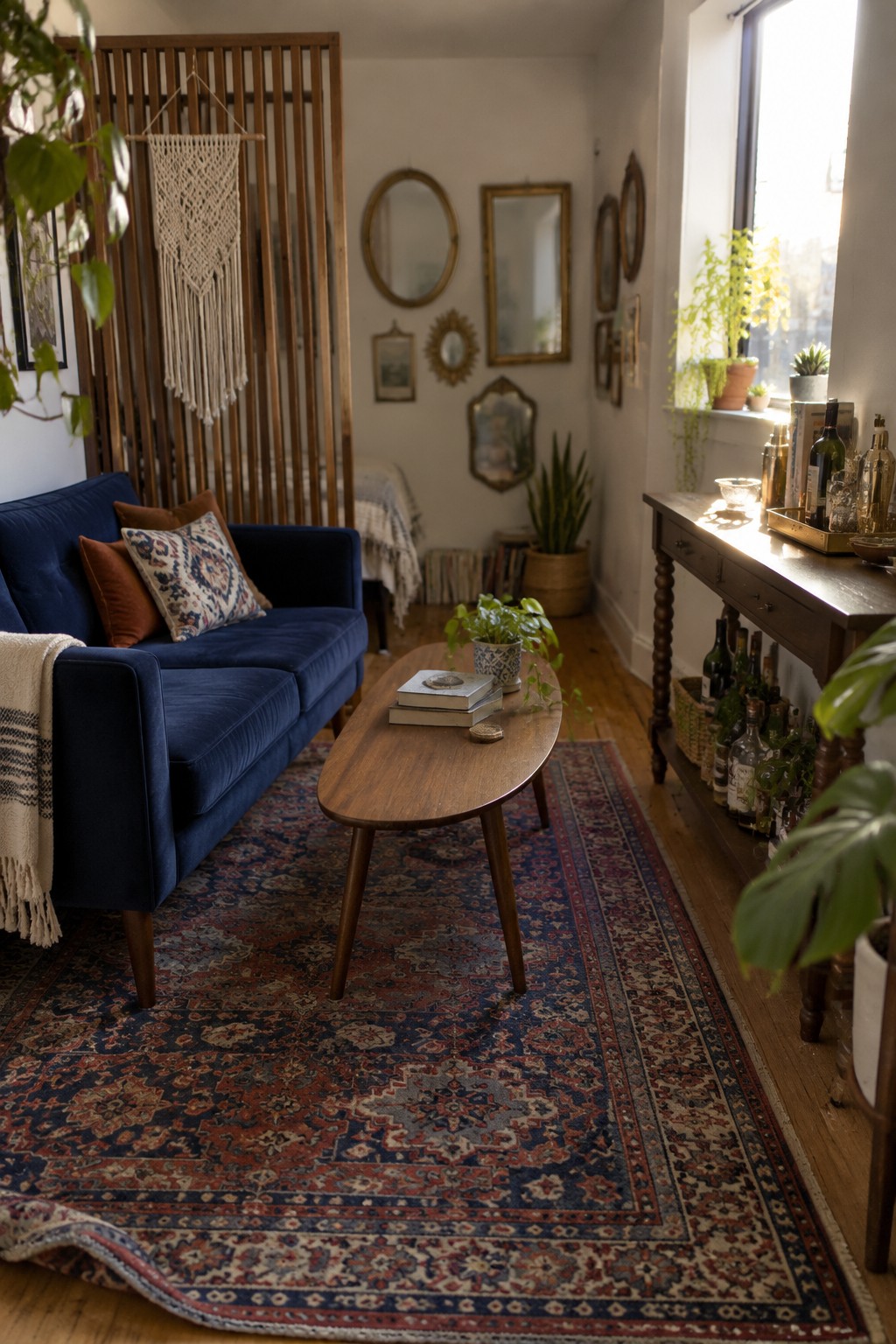
A large patterned rug can help a small apartment living room feel like a settled area rather than furniture pushed against the walls. It gives the seating group a clear boundary without taking up any extra floor space.
Choose a rug large enough for the front legs of the sofa to rest on it, and leave a strip of floor visible around the edges if you can. A traditional pattern, like the one beneath the blue sofa here, can also bring color into a room without needing more furniture or wall decor.
Use Floating Shelves for Small-Space Storage

Floating shelves make use of wall space without taking up room on the floor, which is especially helpful in a small apartment living room. They can hold books and a few favorite objects while keeping the seating area clear.
Try a few long shelves above a sofa, as shown here, and leave some open space between items so the wall does not feel crowded. Check that they are securely fixed, especially if you plan to store heavier books or pottery.
Use a Daybed as a Small Living Room Sofa

A wooden daybed can serve as both a sofa and a place to stretch out, which is useful when a small apartment has no room for separate pieces. Keep the bedding simple and add a few cushions so it feels comfortable for everyday sitting.
This setup works best when the daybed fits neatly along a wall and leaves a clear path through the room. A low-profile frame helps, and a washable throw is handy for protecting the mattress.
Choose a Compact Sofa for a Small Living Room
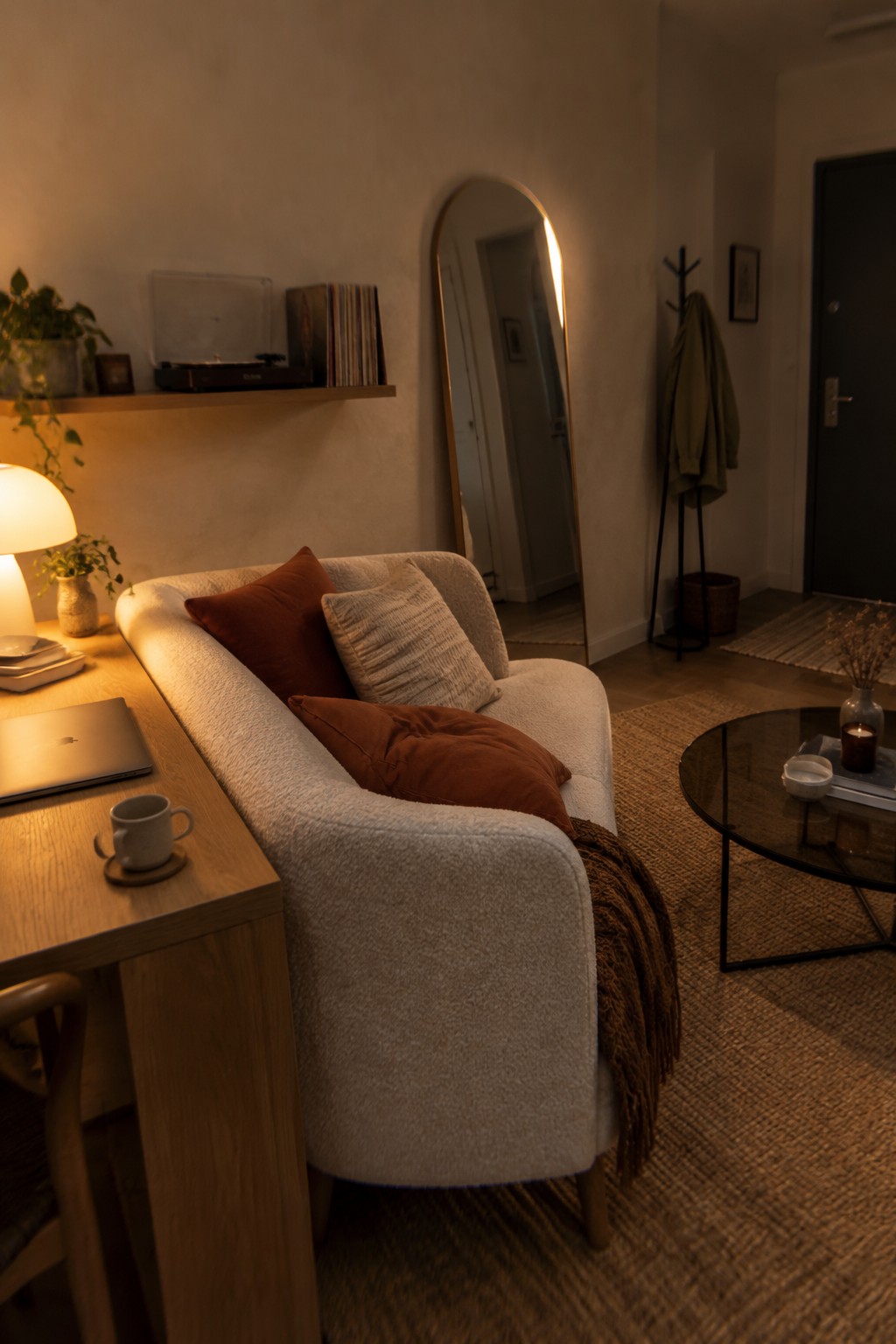
A compact sofa can make a small living room feel easier to use without giving up comfortable seating. A rounded, low-profile shape takes up less visual space than a bulky sofa, while a couple of cushions make it comfortable for lounging.
Look for a sofa with a modest depth and arms that do not stick out too far. Leave enough room around it to walk through the space, and use a nearby side table instead of adding extra furniture.
Frequently Asked Questions
Q: How can I make a small living room feel cozy without making it look crowded?
A: Choose a few soft textures, like a rug, cushions, or curtains, rather than filling every surface with decor. Keep the main walkway clear so the room still feels easy to move around in.
Q: What kind of sofa works best in a small apartment?
A: Look for a compact sofa with slim arms and legs you can see beneath. It gives you a comfortable place to sit without making the room feel boxed in.
Q: How can I add storage without making the room feel cluttered?
A: Use closed storage, such as a storage ottoman or a cabinet, for everyday items you want close by but out of sight. A small tray on the coffee table can keep the few things you leave out looking tidy.
Q: Can I use dark colors in a small living room?
A: Yes. Try a dark color on one wall or in a few accents, then balance it with lighter textiles and warm lighting.
