
A living room can look comfortable at first glance, but awkward paths between the sofa, doorway, and windows often make it harder to use than it should be.
I find that a good layout balances clear walkways with places to sit, talk, and put a cup down without making the room feel crowded.
Modern pieces can help, but their scale and placement matter more than matching every finish or following a rigid furniture rule.
These layouts show practical ways to arrange seating, tables, and storage so the room feels settled while people can move through it easily.
I’d save the ideas that suit your room’s shape and test them with the furniture you already have.
Keep A Clear Path Around The Sofa

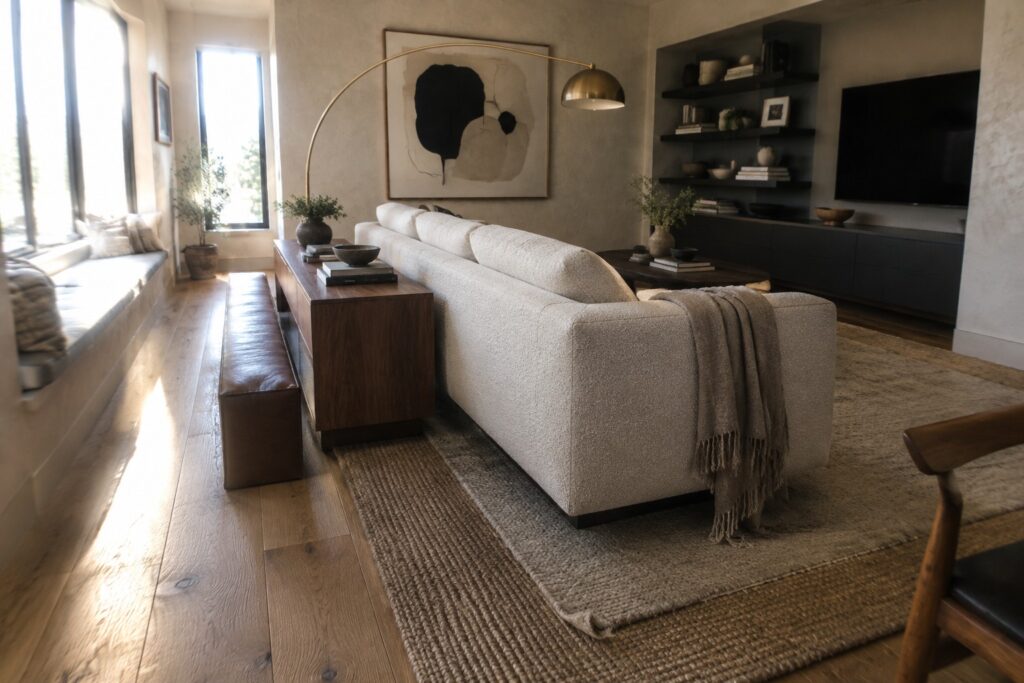
A sofa can define the seating area without blocking the route through the room. Here, it sits beside a narrow console, leaving an open strip of floor along the window side. That kind of arrangement makes a living room easier to cross without cutting through the main seating spot.
Try it in a long room where people need to move between a doorway and windows or other seating. Keep the console slim, and leave enough space beside it for comfortable walking. If the path feels tight, move the sofa or choose a smaller table.
Use Furniture Zones To Keep Traffic Moving
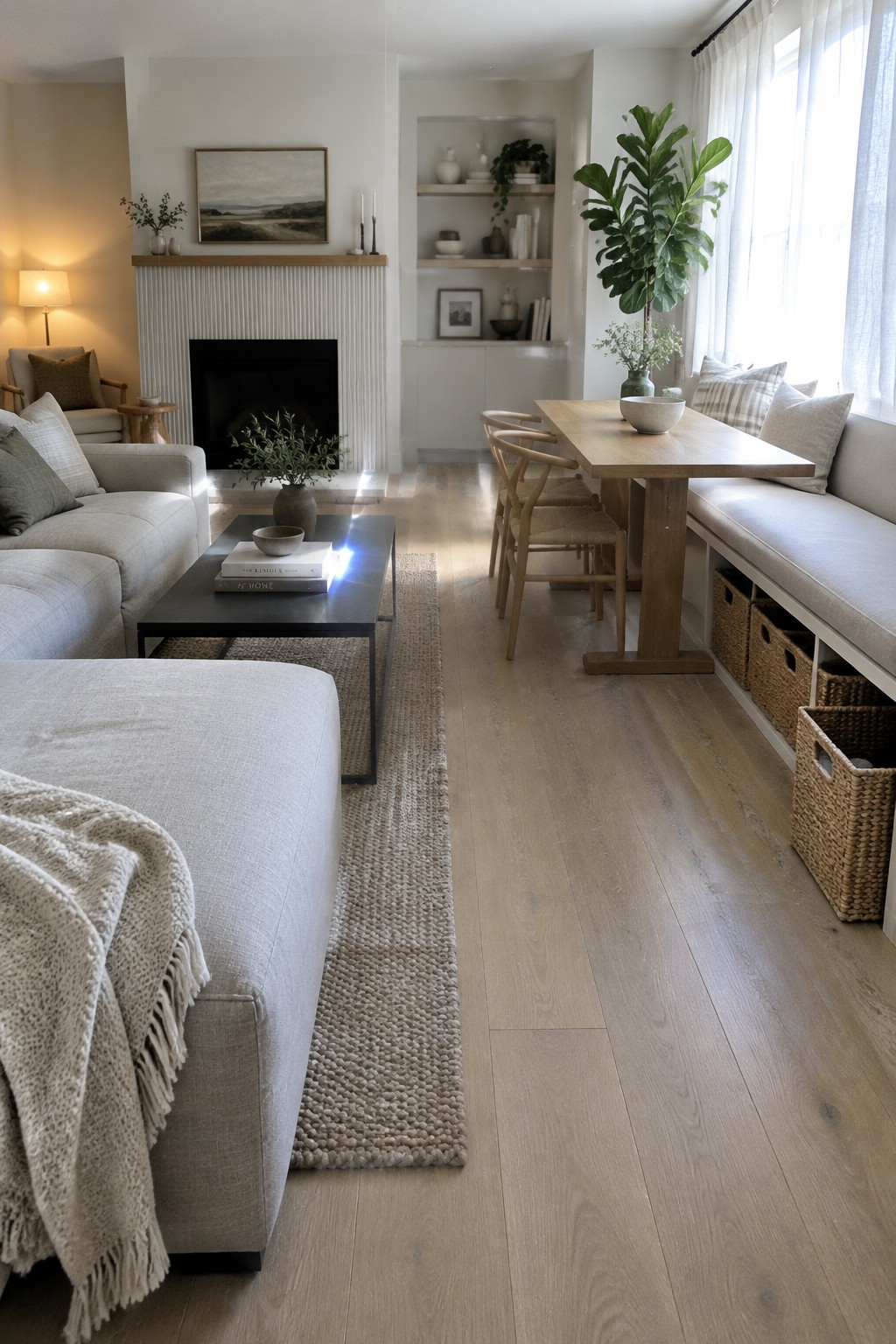
A long, narrow living room can work well when the seating area and dining area each have a clear place. Here, the sofa and coffee table stay to one side while the dining table sits along the window, leaving an open path between them.
Try this layout when your living room also needs to serve as a dining space. Keep the main walkway clear, and avoid choosing pieces that are too wide for the room.
Arrange Seating Around a Clear Walking Path
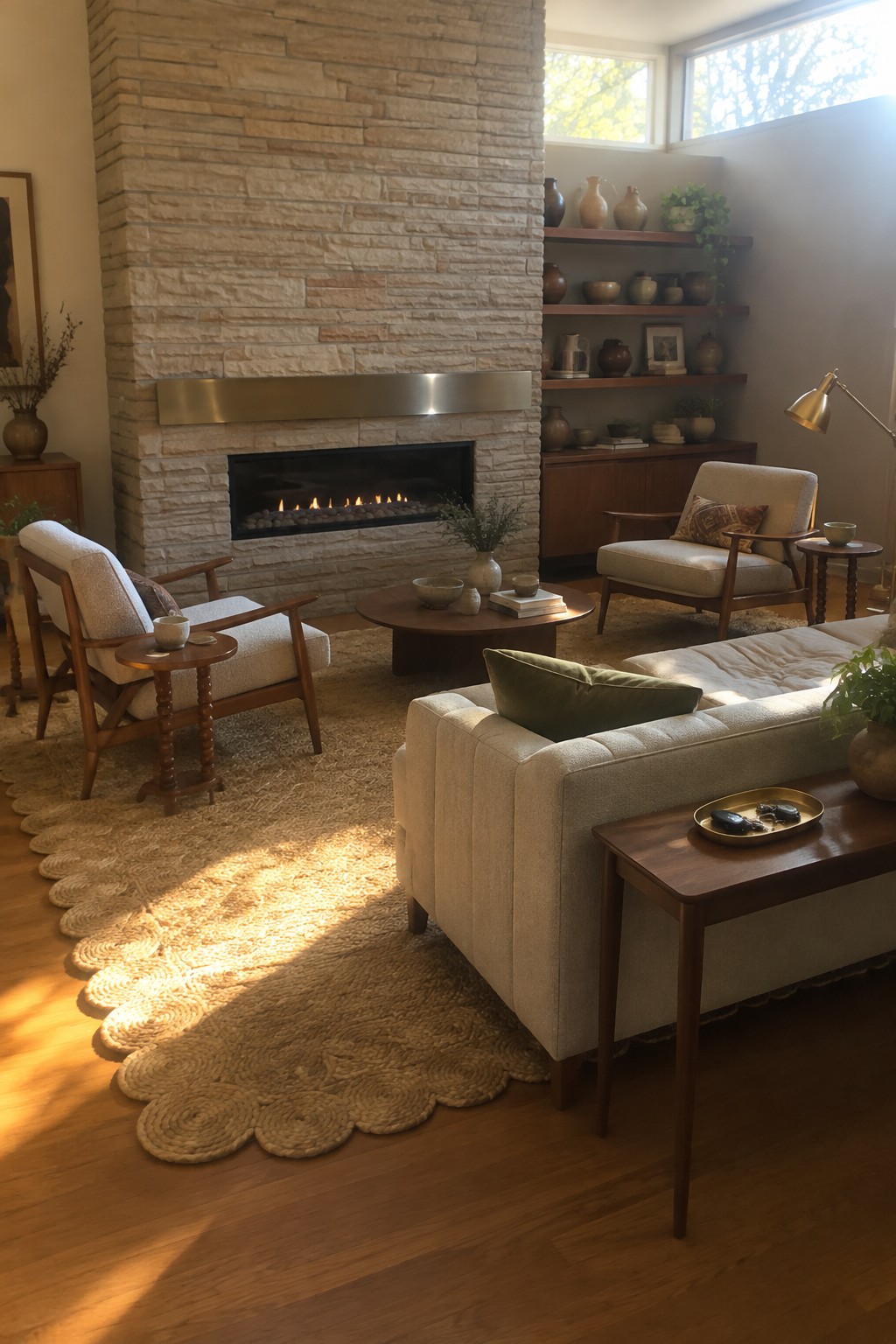
A living room can feel cozy without making people weave around the furniture. Here, the chairs and sofa face the fireplace, while the seating stays grouped around a central table. That gives the room a natural place to gather and leaves a route around the seating area.
Try this arrangement when you have a strong focal point, such as a fireplace or large window. Keep the main path open, and avoid pushing side tables or chair legs into it. A round coffee table can also make it easier to move between seats.
Keep A Clear Path Through The Living Room

A clear route between the seating and the window makes a small living room easier to move through. The sofa sits along one side, while the chairs stay near the edge of the rug, leaving the middle open instead of turning it into a crowded walkway.
Try placing the main seating around a compact coffee table, then leave a comfortable path from the doorway to the far side of the room. A built-in window seat can provide extra seating without taking up floor space, but keep the approach to it clear.
Use A Long Rug To Define The Walking Route

A long runner can mark a clear route through a living room while helping the seating area feel settled. Here, it runs beside the sofa and coffee table, leaving a path toward the doorway.
This works well in a narrow room where people need to pass through without cutting across the main seating spot. Choose a rug that leaves some bare floor along the edges, and make sure its corners lie flat so the route stays easy to walk.
Keep the Main Walking Route Open
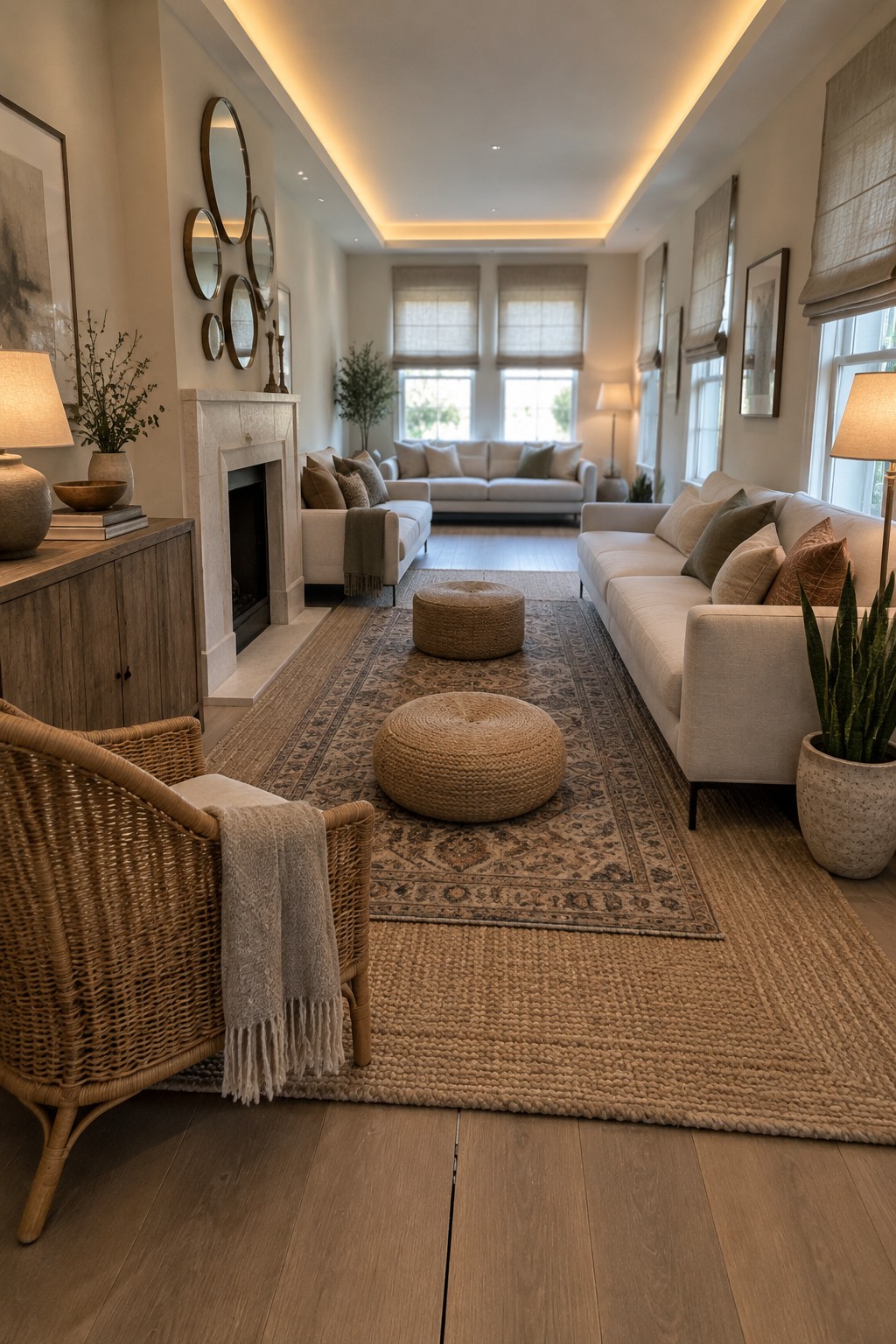
Leaving a clear route between the seating areas makes this long living room easier to move through. The sofas sit along the sides, while the central rug and poufs define a place to gather without blocking the way.
In a similar room, keep the main path open and place smaller seating or tables just outside it. This arrangement suits narrow living rooms, but leave enough space around the furniture so people do not have to squeeze past.
Use Built-Ins To Keep The Layout Open

A wall of built-in shelving can provide useful storage without taking up floor space, which helps a living room feel less crowded. Here, the shelves sit beside the fireplace, keeping books and baskets in one place while leaving the main seating area open.
This approach works well in a smaller room or anywhere the walking route passes close to the walls. Keep shelves tidy and avoid letting baskets or decor spill into the path.
Leave A Clear Route Between Seating Areas

A living room can feel cozy without making people weave around the furniture. Here, the coffee table sits between the sofa and chairs, while a route remains open along the side of the room toward the hallway.
Try leaving a comfortable gap beside the main seating area so people can pass through without crossing in front of someone sitting down. This works especially well in long rooms that connect to a hall or another living space. Keep the table close enough to reach, but not so far into the walkway that it becomes an obstacle.
Give A Sectional Room To Breathe

A large sectional can make a living room comfortable without blocking the main route through it. Here, the seating sits around a low table area, leaving open floor space in front rather than filling every corner with furniture.
In a spacious room, try placing the sectional so people can walk around its outer edge to reach the seating. Keep tables low and compact, and leave enough clearance for easy passage. A sectional that is too large for the room can quickly make that route feel cramped.
Leave Room Between Opposing Sofas

Facing sofas can make a living room feel easy to use, as long as there’s a clear route between them. Here, the narrow coffee table sits in the middle, while the seating stays along the sides.
This arrangement suits a long, narrow room where people need to pass through without stepping around furniture. Keep the table compact and leave enough space at its ends for comfortable movement.
Leave Room to Walk Beside the Seating

A living room feels easier to use when the main route stays open instead of cutting through the seating area. Here, a long runner follows the cabinets, leaving a clear way to reach the sliding door without stepping around the coffee table.
This approach works well in a narrow room or one with a door at the far end. Keep the rug aligned with the route and leave enough space beside furniture for comfortable walking.
Float The Coffee Table In The Seating Area

A coffee table can sit within a seating group without blocking the route through the room. Here, the sofa and bench face inward across the table, while the rug helps mark the shared seating area.
Leave enough space around the table for people to pass comfortably, especially between the seating and the room’s edges. This works well in a larger living room where you want a distinct conversation spot but still need an easy path through.
Use A Window Nook Without Blocking The Main Room

A window seat can add a useful place to sit without taking over the living room. Here, it sits beyond the main seating area, leaving a clear route along the side of the rug.
This arrangement works well when a room has a recessed window or alcove. Keep the approach to the nook open, and avoid placing a table or extra chair in the walkway.
Use A Console Table Behind The Sofa
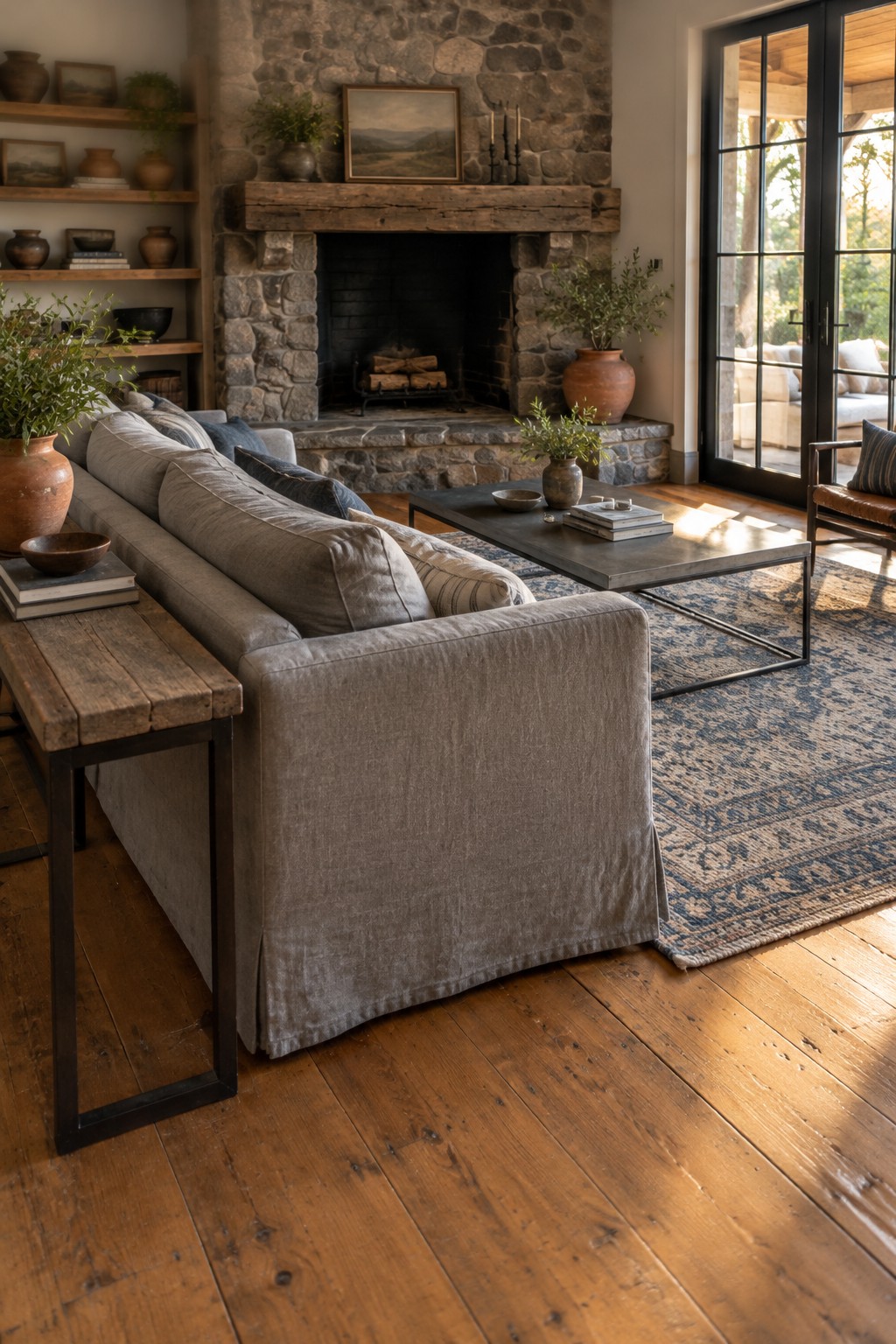
A narrow console table can make use of the space behind a sofa without blocking the main route through the living room. Here, the long table follows the sofa’s back, keeping small items close at hand while leaving the seating area open.
Choose a table that is slimmer than the sofa and leave enough room to walk around its ends. This works especially well when the sofa floats in the room rather than sitting against a wall.
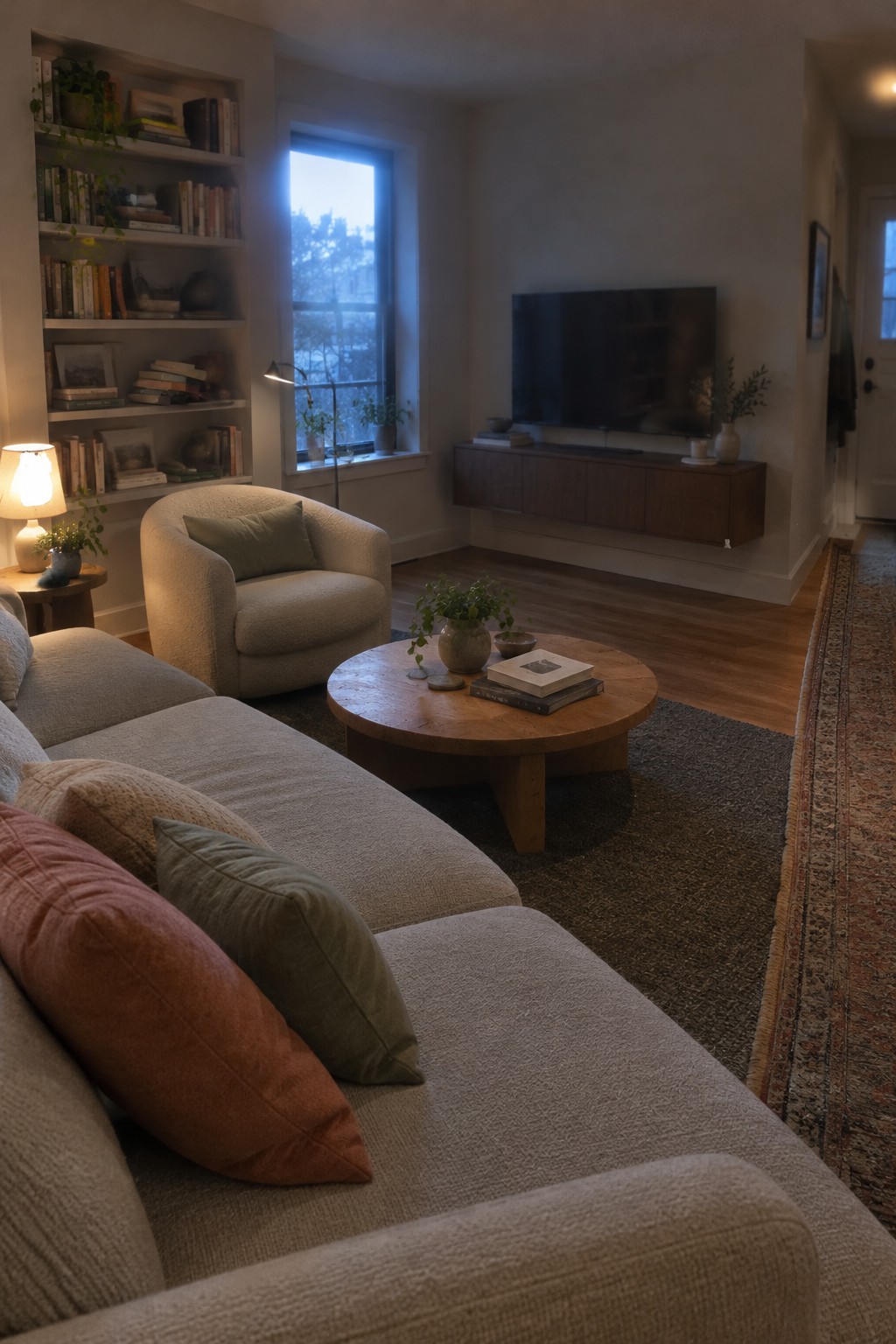
A coffee table can help define a seating area without blocking the route through the room. Here, the sofa and armchair face toward the table, while the open floor beside them leaves a clear way to move across the living room.
This arrangement works well in a long room where people need to pass between the seating area and another part of the home. Keep the table close enough to reach from the seats, but leave a comfortable gap around the outside edge for walking.
Use A Rug To Mark The Seating Area

A large rug can define where the living room seating belongs while leaving a clear route around it. Here, the rug sits beneath the sofa and coffee table, while the tatami walkway stays open along the side.
This works well in long or narrow rooms where furniture can easily crowd the path. Choose a rug large enough to sit under the front of the sofa, and keep its edge out of the main walking route.
Keep Built-In Storage Along The Walls
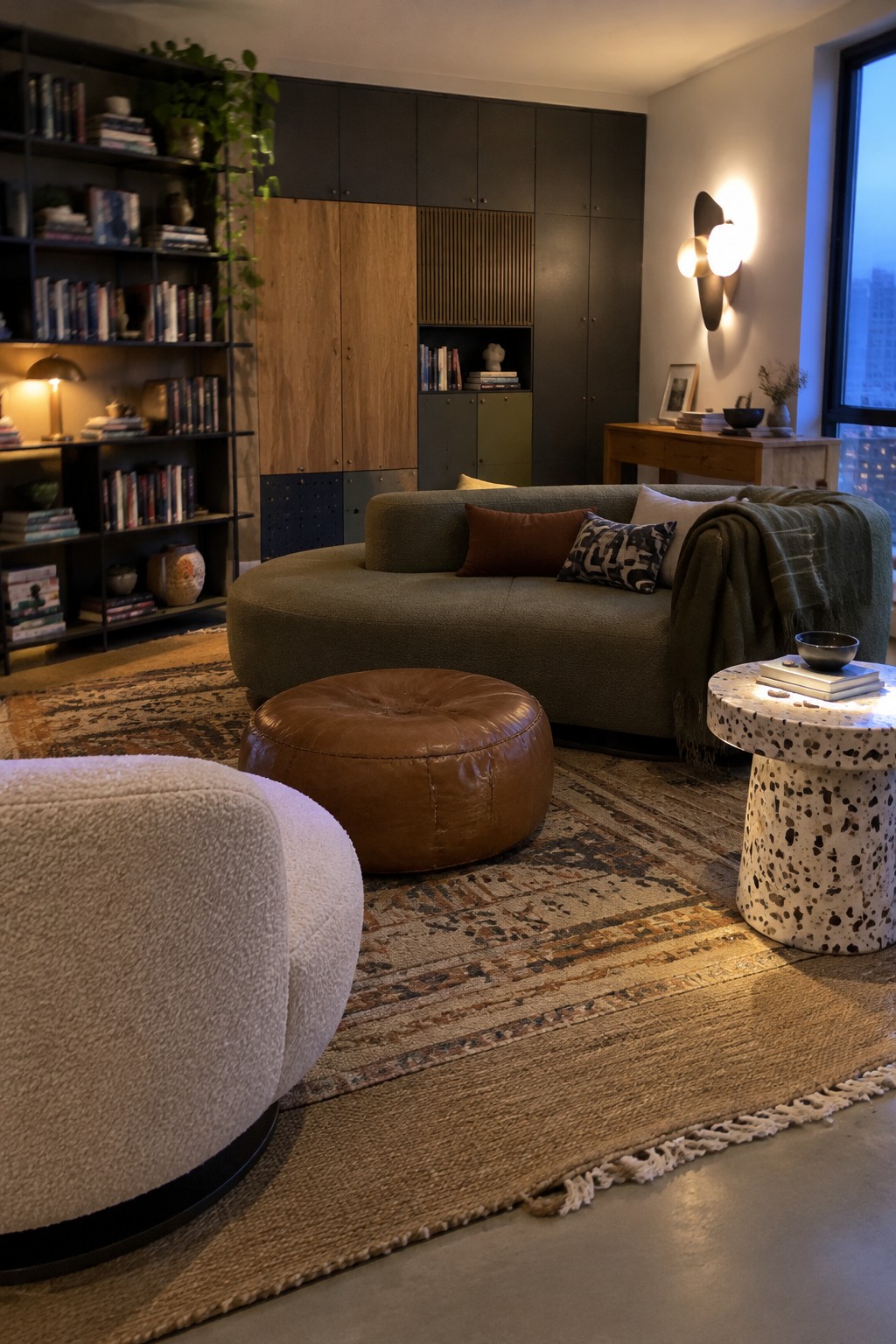
Tall storage along the back wall keeps books and everyday items close without taking up floor space in the seating area. That leaves the room easier to move through, even with several pieces of furniture.
In a living room with a similar wall, use shelving or cabinets to keep storage in one place, then leave the central route open. Closed cupboards can hide less tidy items, while a few open shelves keep favorite books handy.
Use A Built-In Wall To Keep Seating Compact
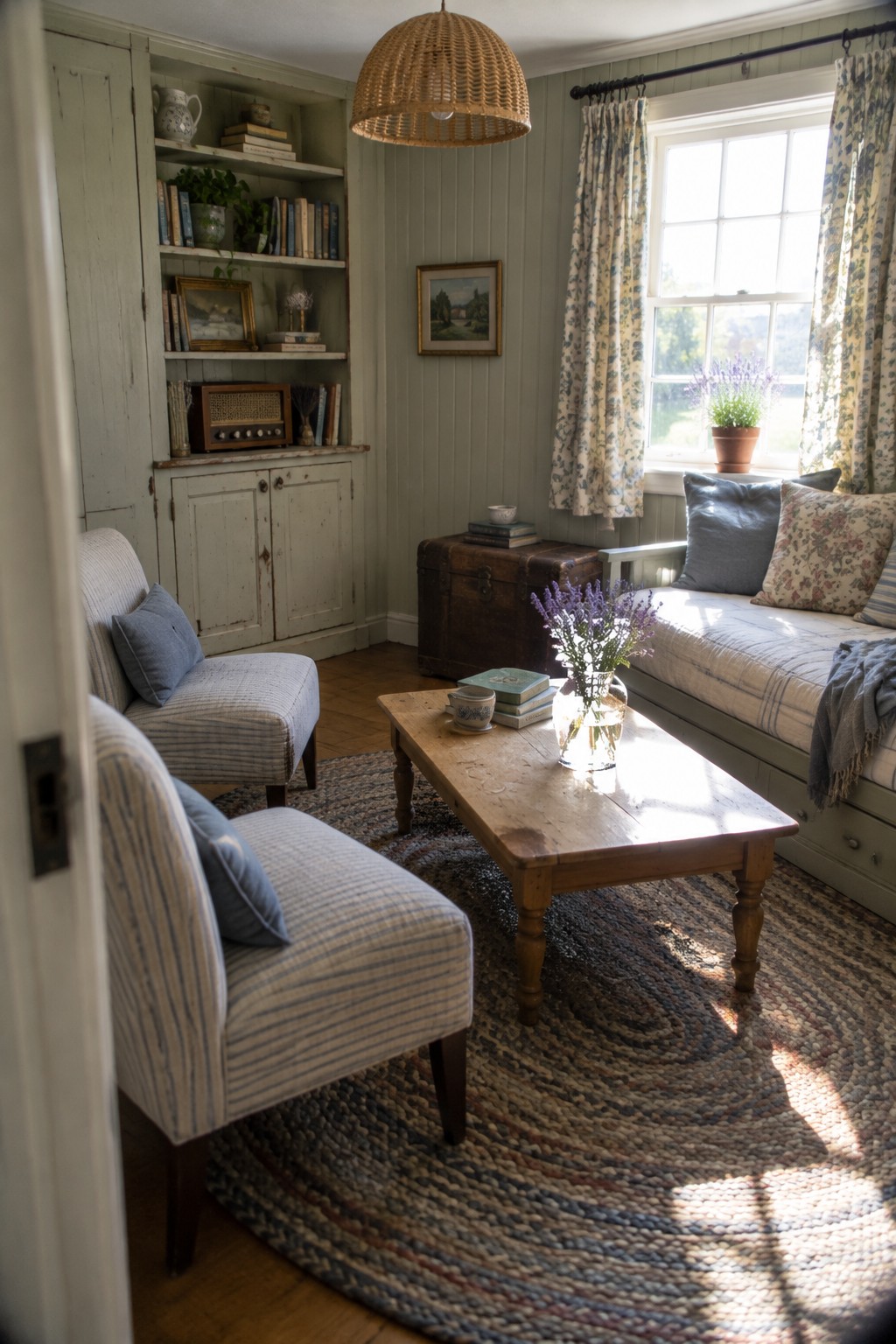
A built-in bookcase makes good use of wall space and leaves more room for chairs and a sofa. In a small living room, that can help keep the main walking area open instead of filling it with extra storage furniture.
If you have an alcove or an unused stretch of wall, consider adding shelves above closed cabinets. Keep the deeper pieces near the wall, and leave a clear route between the seating and the room’s entrance.
Leave A Straight Route Through The Room

A long runner can make a narrow living room easier to move through. Here, it runs alongside the sofa and keeps the path to the window clear, instead of putting a large rug under every piece of furniture.
This approach works well in a long room where people need to pass through the seating area. Keep the rug narrow enough to leave walking space beside it, and avoid placing stools or tables in the route.
Frequently Asked Questions
Q: How much space should I leave between the sofa and coffee table?
A: Aim for about 16 to 18 inches, enough room to reach a drink without squeezing past the table. If the walkway feels tight, try a smaller or round coffee table.
Q: How can I make a small living room feel cozy without blocking the path?
A: Keep the main route through the room clear, then bring in coziness with a soft rug, warm lighting, and a few cushions. A loveseat or apartment-size sofa can leave more breathing room than a bulky sectional.
Q: Where should I put the TV if the room has more than one entrance?
A: Place it on a wall that doesn’t sit directly in the path between doorways, and angle the seating toward it if needed. That way, people can move through the room without cutting between the sofa and screen.
Q: Can I float my sofa in the middle of the room?
A: Yes, as long as there’s enough space to walk comfortably behind it. A slim console table behind the sofa can make the arrangement feel intentional and offer a handy spot for a lamp.
