

Natural wood can soften a modern living room, but too much can make the space feel heavy or overly rustic.
I find the balance often comes down to how the wood relates to the room’s light, seating, and other finishes.
A warm coffee table or a few exposed beams can add texture while keeping clean-lined furniture from feeling stark.
The room still needs a layout that works for everyday life, with comfortable paths through the seating area and enough places to set things down.
I’d save the ideas that show how small wood details can make a room feel more settled without crowding it.
Use Brick to Give a Living Room Character
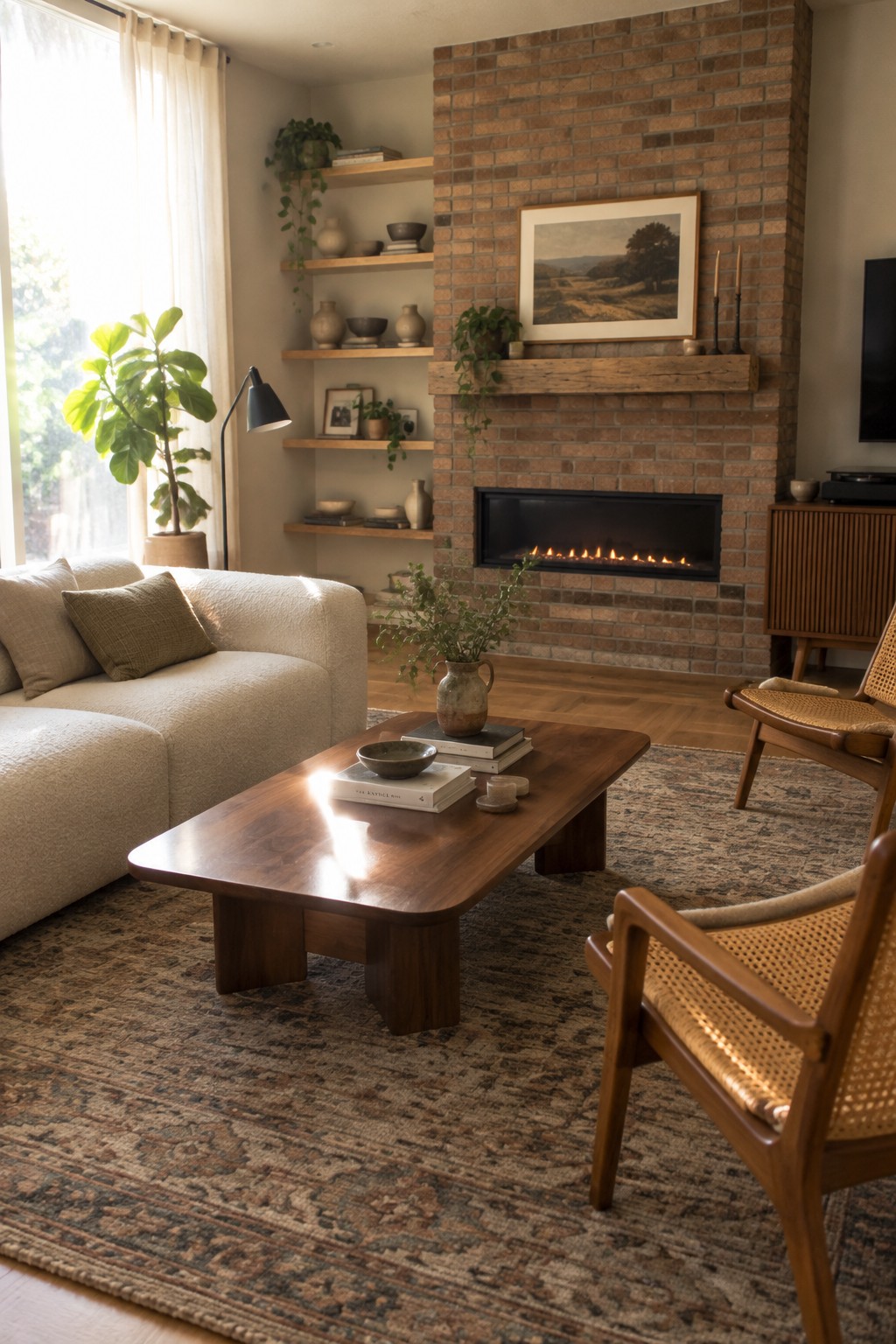
A brick fireplace can give a modern living room a more settled, lived-in feel. Here, the fireplace wall brings in texture, while the wood mantel keeps the treatment simple.
This idea works well in a room that needs one strong architectural feature. If you’re updating an existing fireplace, keep nearby finishes fairly quiet so the brick can stand on its own.
Built-In Shelves Add Useful Warmth

Wood built-ins can give a living room storage without bringing in more freestanding furniture. Open shelves make room for books and a few favorite objects, while closed cupboards below hide everyday clutter. The natural wood also helps the room feel comfortable rather than overly formal.
This works especially well in a living room with an empty wall or an awkward nook. Keep the shelves from looking crowded by leaving some open space around displayed pieces, and choose a wood tone that sits comfortably with the room’s other finishes.
Use Wood Slats To Add Character To A Living Room
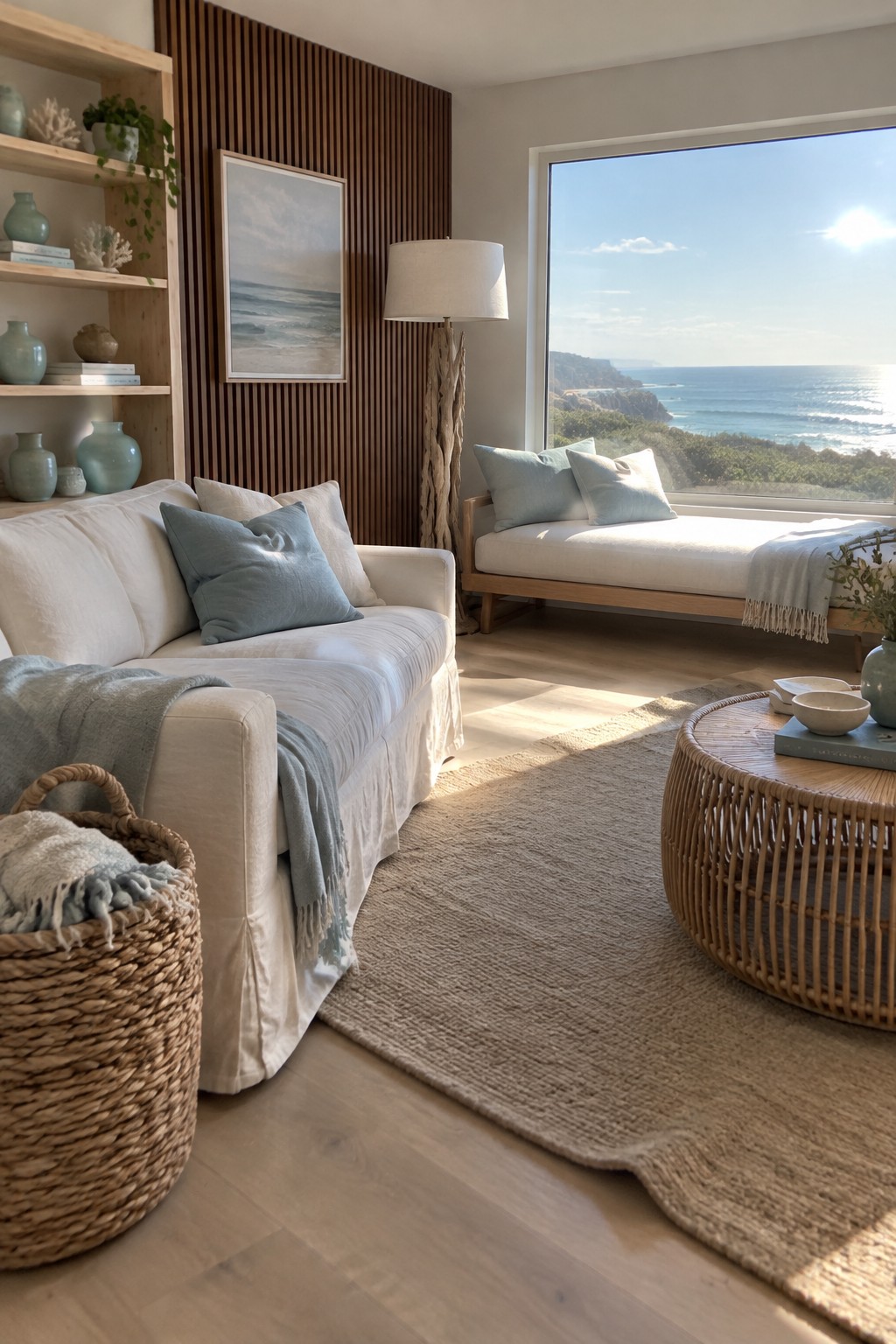
A wood slat wall is a simple way to give a living room more character without covering every surface in pattern or color. Here, the vertical boards make a clear feature behind the seating area while the rest of the room stays quiet.
This approach works well on one wall, especially in a room with light, relaxed furnishings. Keep the slats in a similar tone to nearby wood pieces, or use a darker finish for more contrast.
Let Natural Wood Lead the Room
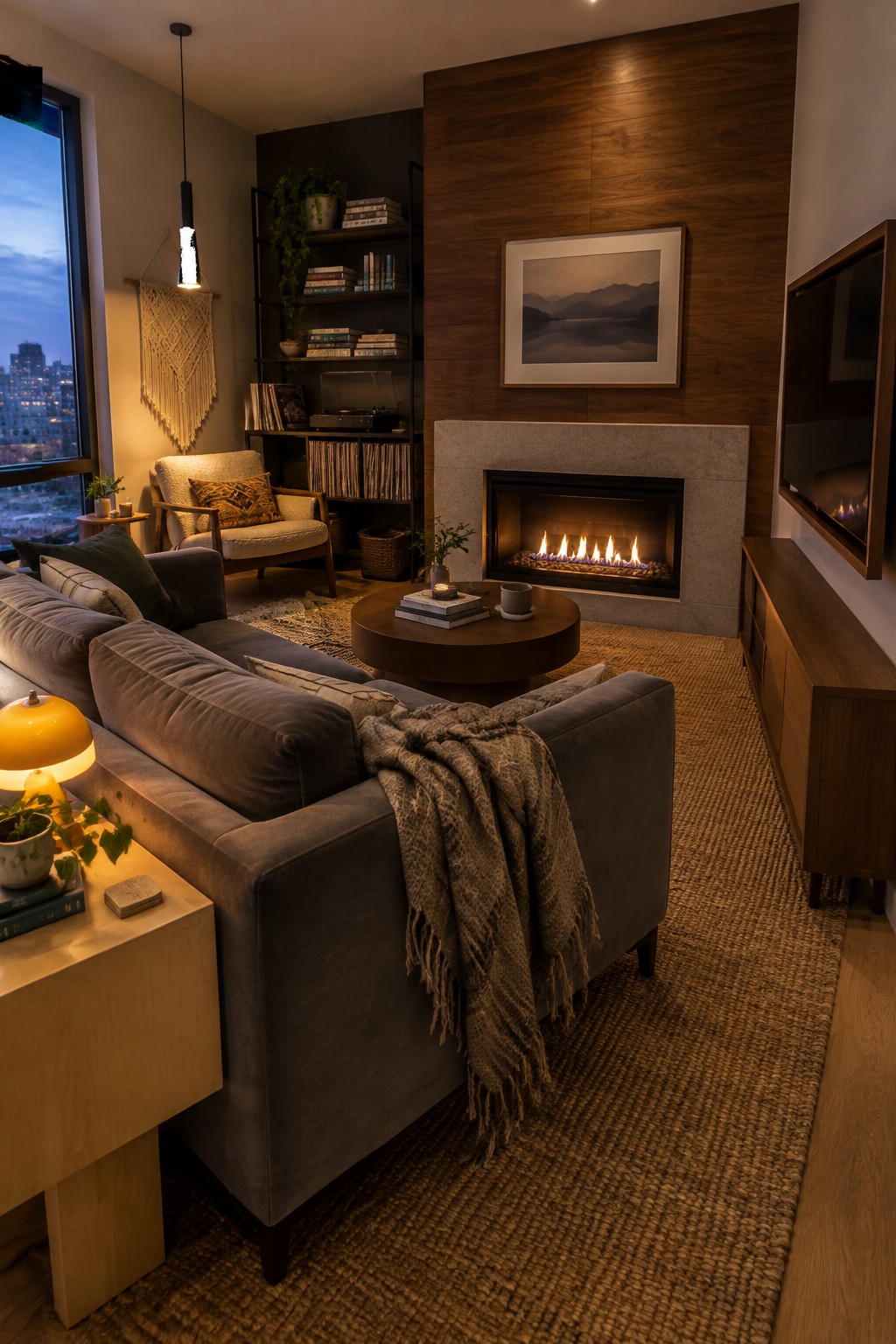
A wood feature wall can give a living room a clear focal point without adding more furniture or decoration. Here, the fireplace sits against walnut panels, making the wood part of the room’s architecture rather than a small accent.
This approach suits a modern room that needs a little more warmth. Use wood on one main wall, then keep nearby finishes fairly simple so the grain can stand out. If the room is small, lighter wood or a more limited panel area may feel easier to live with.
Let Exposed Beams Warm Up a Living Room
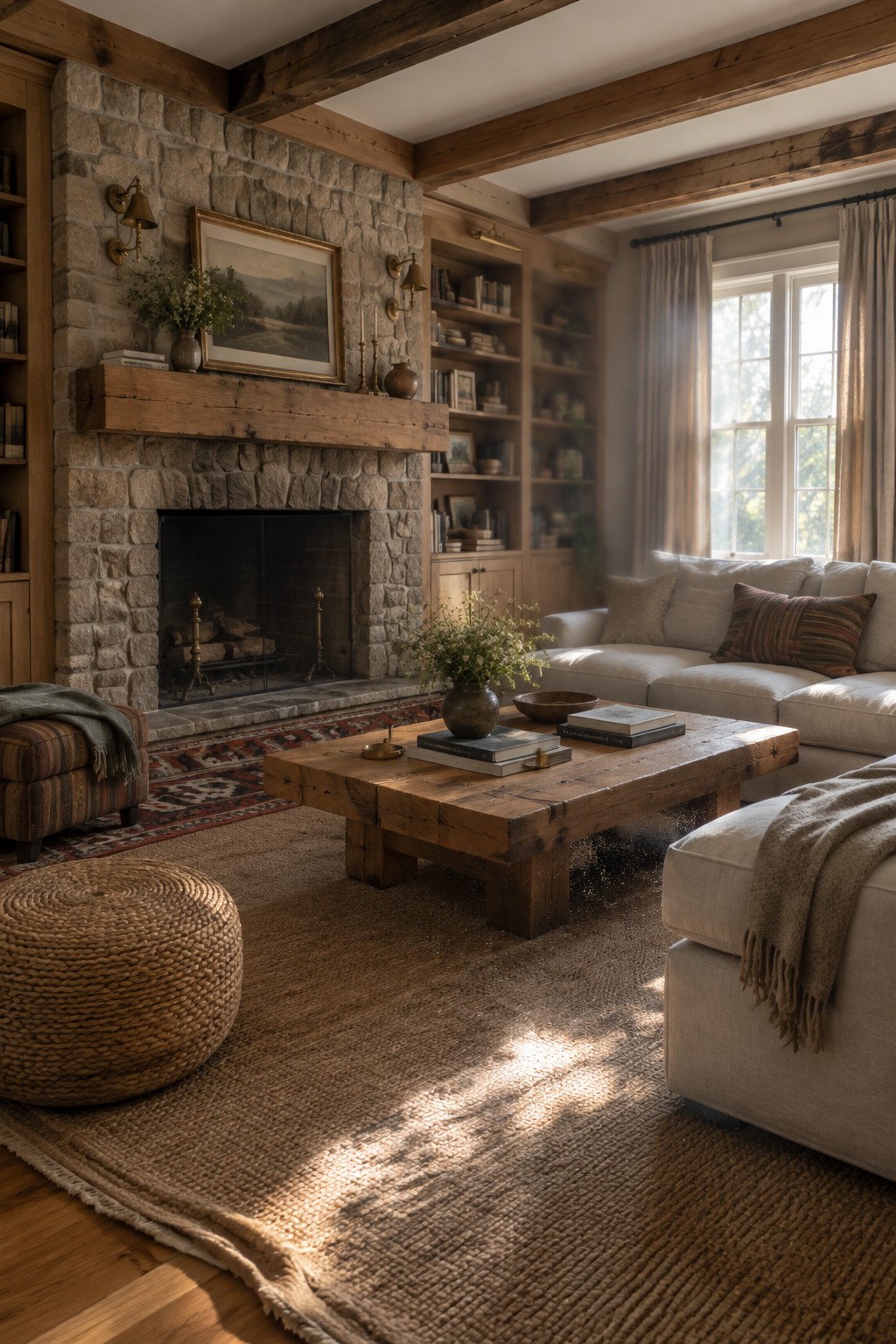
Exposed wood beams bring natural character to a living room without requiring much extra decoration. They work especially well in rooms with stone or plaster walls, where the contrast keeps the space from feeling too plain.
This idea suits cottages and older homes, but it can also work in a newer house with a simple ceiling. Keep the rest of the finishes fairly calm so the beams stand out without making the room feel crowded.
Use Shoji Screens to Bring Softness to a Living Room
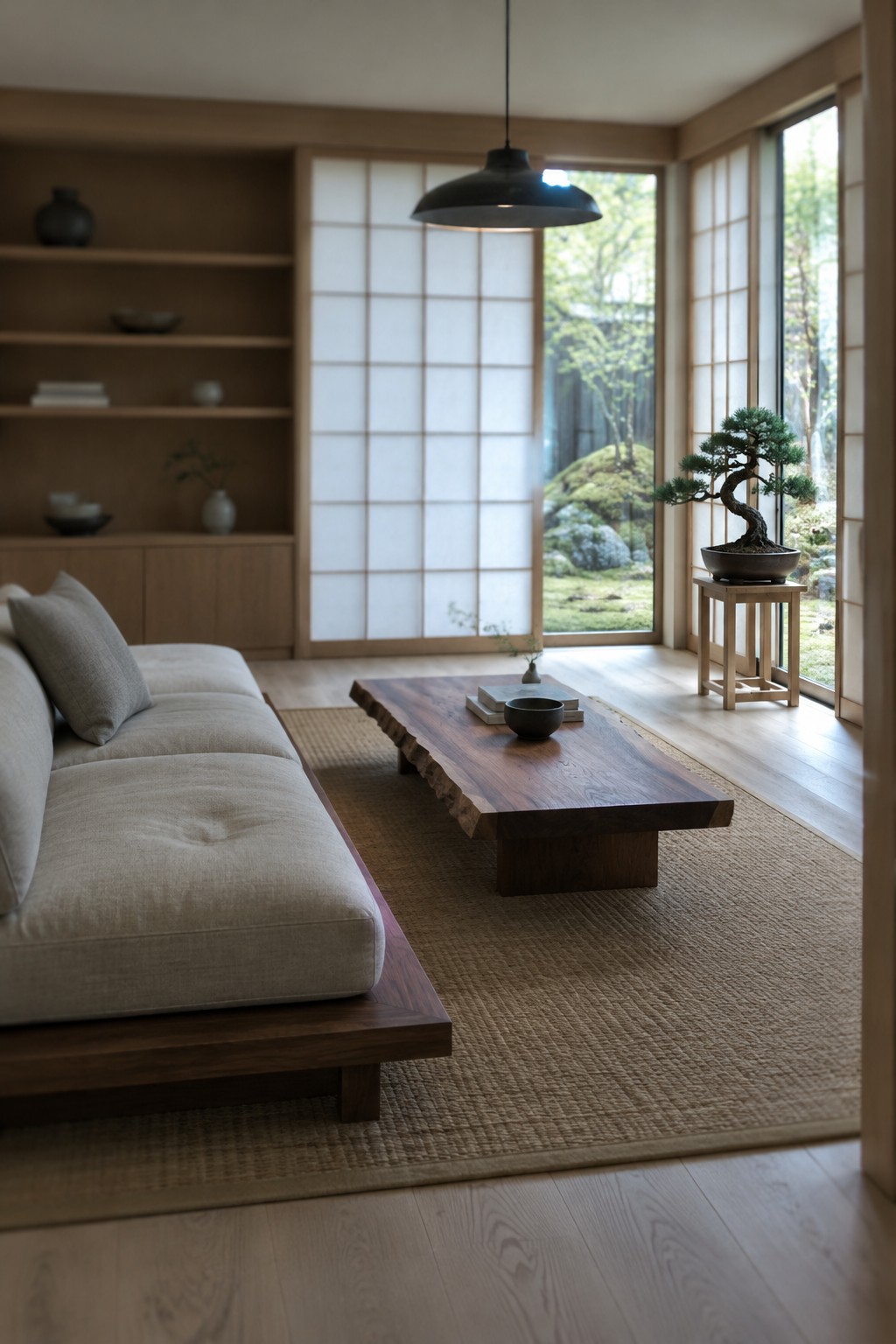
Shoji screens can give a living room a quieter feel while still letting daylight through. Their wood grid adds a simple architectural detail, and the paper panels offer more privacy than bare glass.
They work well in rooms with large windows or an open connection to a garden. Use them as sliding panels so you can adjust how much of the view is open, and keep nearby furniture fairly simple.
Make Open Shelves Part of the Living Room

Open shelves can provide everyday storage while giving a living room room for books, keepsakes, and plants. Here, the long wood shelves make use of a wall recess, so the display feels like part of the room rather than an extra piece of furniture.
This approach works well when you have a niche or an unused stretch of wall. Keep some items grouped in baskets and leave a little space between objects so the shelves stay useful without becoming cluttered.
Add a Window Seat for Extra Living Room Seating
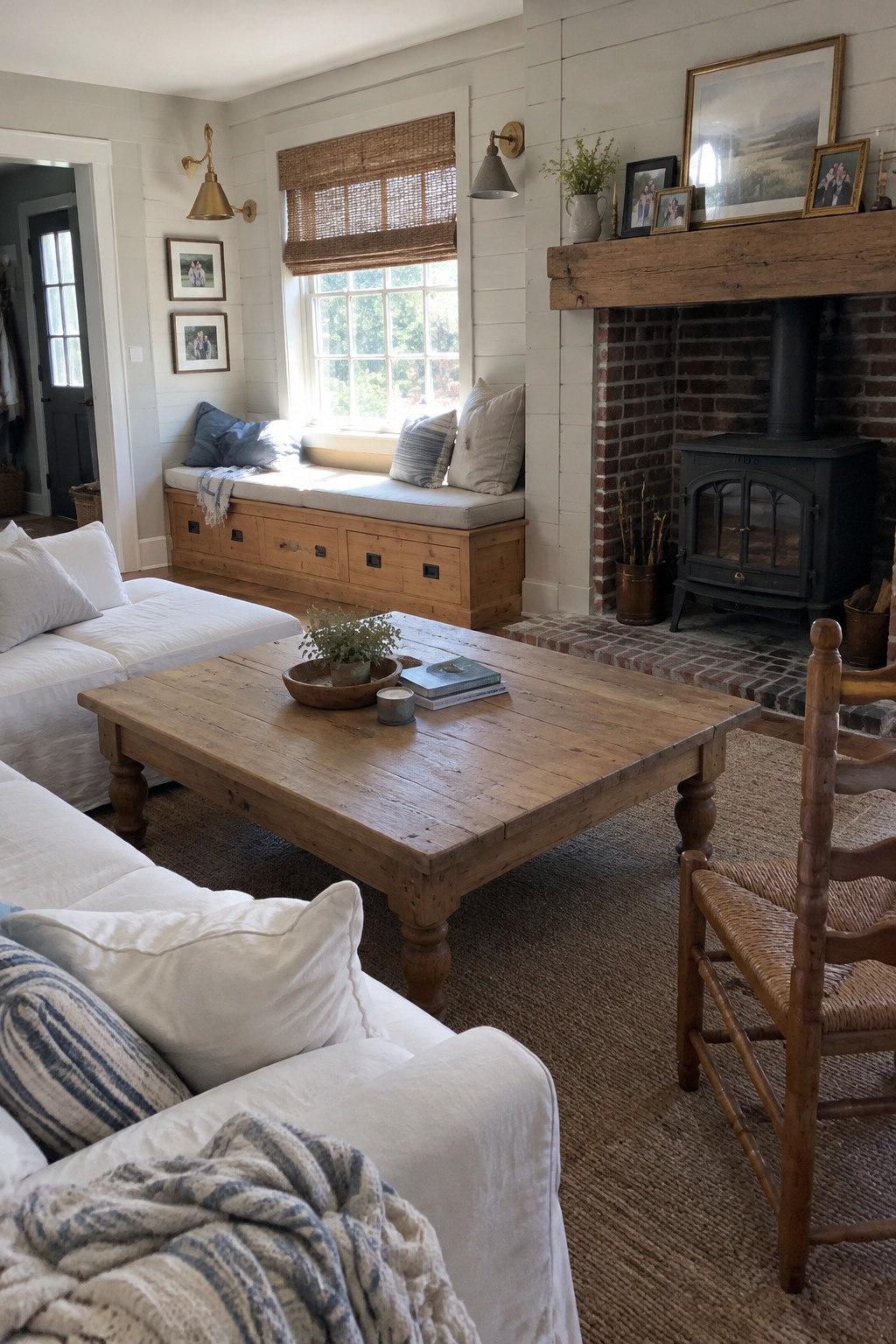
A built-in window seat makes a living room more useful without taking up much floor space. The wooden base here includes drawers, so it provides a handy place to tuck away throws or other small items.
This idea works well in a deep window alcove, especially in a smaller room where extra chairs might feel crowded. Add a cushion that fits the seat and keep the storage easy to reach.
Choose a Dark Sofa to Balance Warm Wood

A dark sofa can keep natural wood accents from making a living room feel too light or rustic. Here, the charcoal upholstery sits comfortably beside the wood shelves and table, giving the room a settled, relaxed look.
This idea works well in rooms with wood floors or shelving, especially when you want a little contrast. Choose a fabric with some texture, and check how it looks in your room’s light before settling on a very dark shade.
Use a Wood Console to Warm Up the Living Room
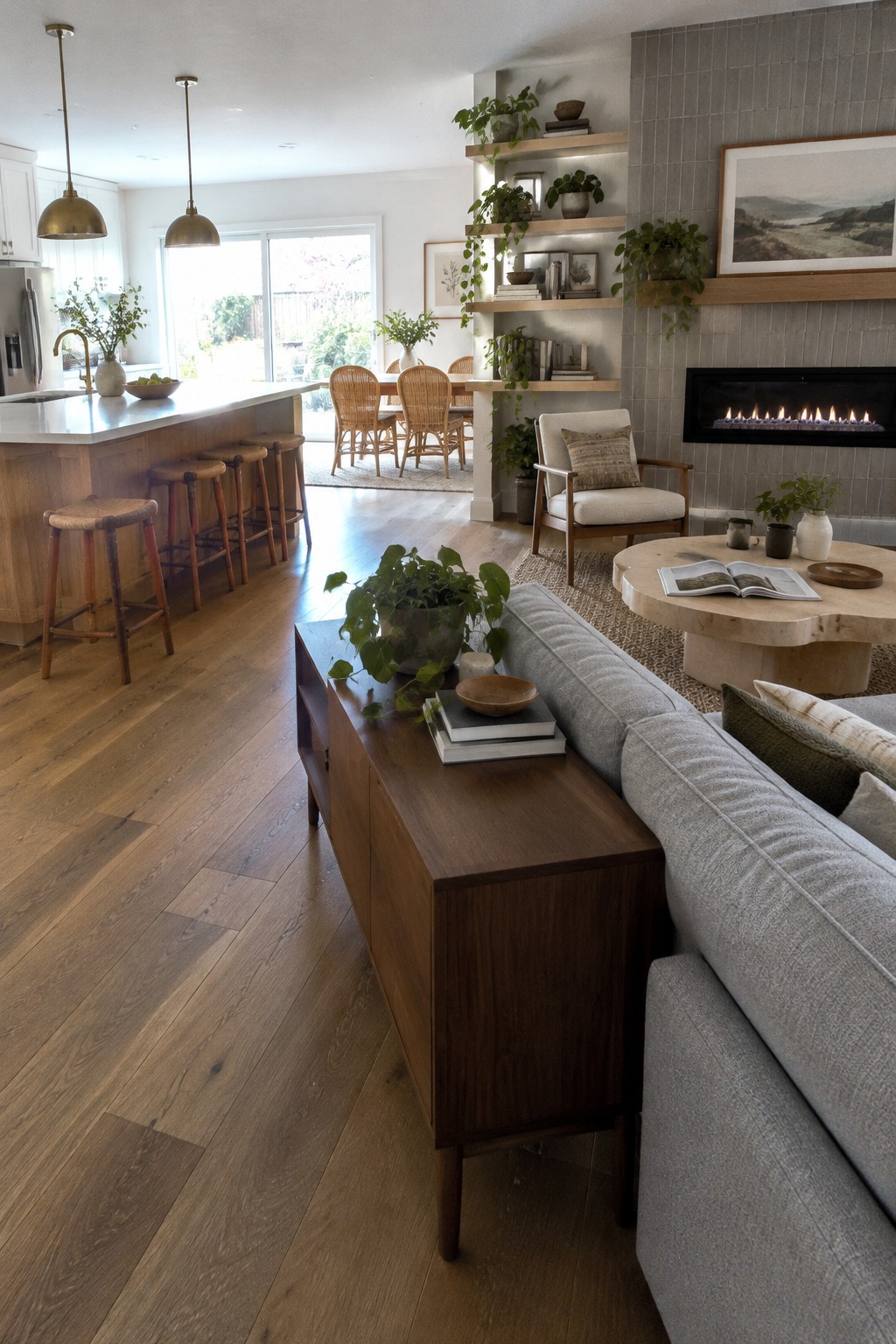
A wood console behind the sofa is a simple way to bring natural wood into a living room without adding another large piece of furniture. It gives the sofa a finished edge and provides a handy surface for a few books or a plant.
This works especially well in an open-plan room where the sofa faces away from the kitchen or dining area. Choose a console that sits just below the sofa back, and leave enough room to walk around it comfortably.
Use Natural Wood to Make a Cozy Living Room

Natural wood can bring a comfortable, lived-in feel to a modern living room. Here, the built-in shelves beside the fireplace give the room a warm wood detail without making the space feel overly rustic.
This idea works well in a smaller room, where shelves can use an awkward corner for books and everyday objects. Choose a wood tone that suits the floor or furniture, then keep the shelves from getting too crowded.
Use Exposed Beams to Add Warmth

Exposed wood beams give a living room character while keeping the rest of the design simple. The natural grain brings in a sense of warmth without needing lots of extra decoration.
This approach works especially well in rooms with high or sloped ceilings, where beams can make the open space feel more connected. Keep the surrounding finishes fairly quiet, as the beams already bring plenty of visual interest.
Use Natural Textures to Make a Living Room Cozy
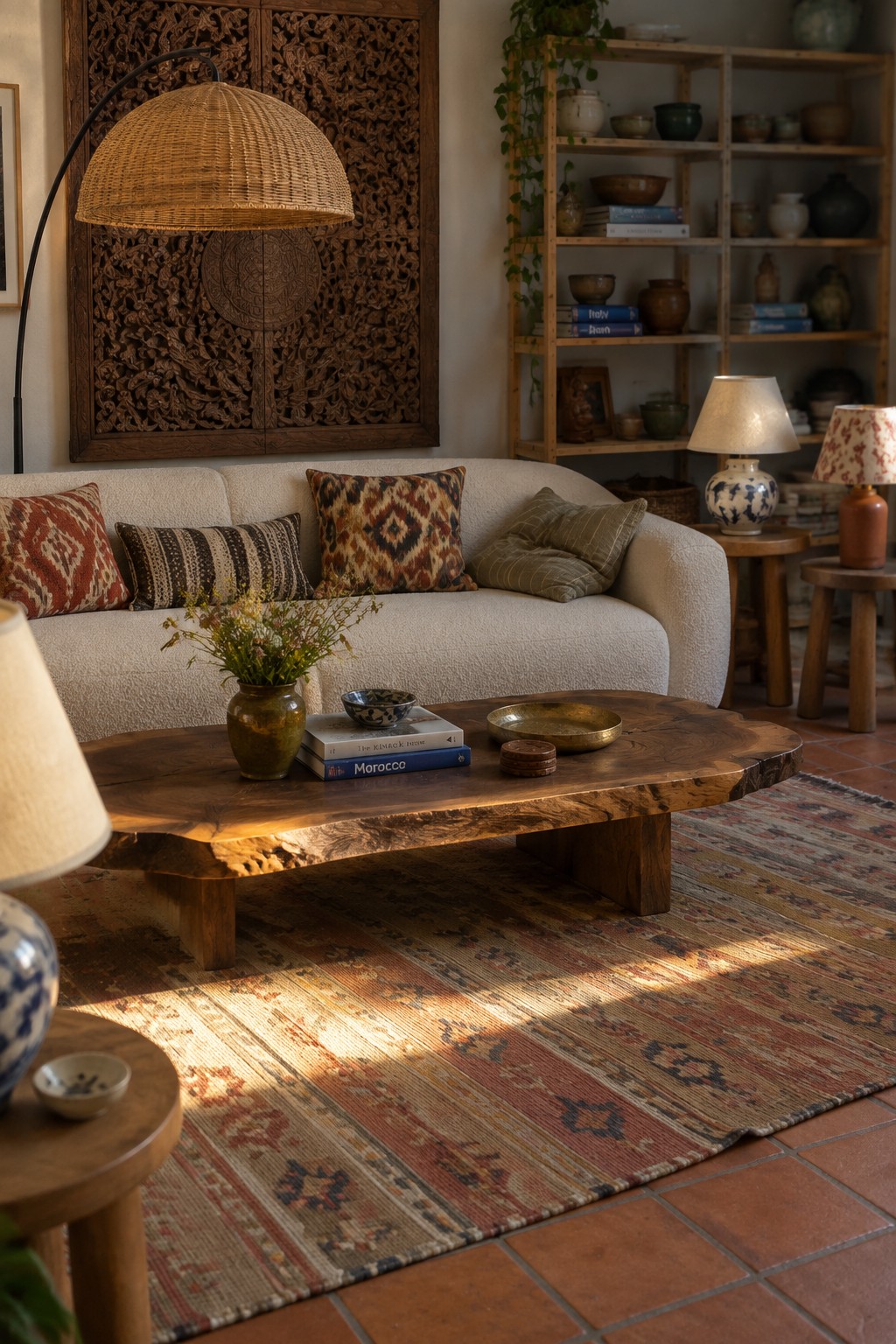
A cozy living room does not need a lot of decoration when the materials already have character. Here, a thick woven rug and a carved wood coffee table bring texture and an earthy feel to the seating area.
Try this approach in a room with simple upholstery, so the natural materials have room to stand out. A few patterned cushions can add interest, but keeping the larger pieces calm helps the space feel comfortable rather than busy.
Make a Fireplace Wall Part of the Built-In Storage
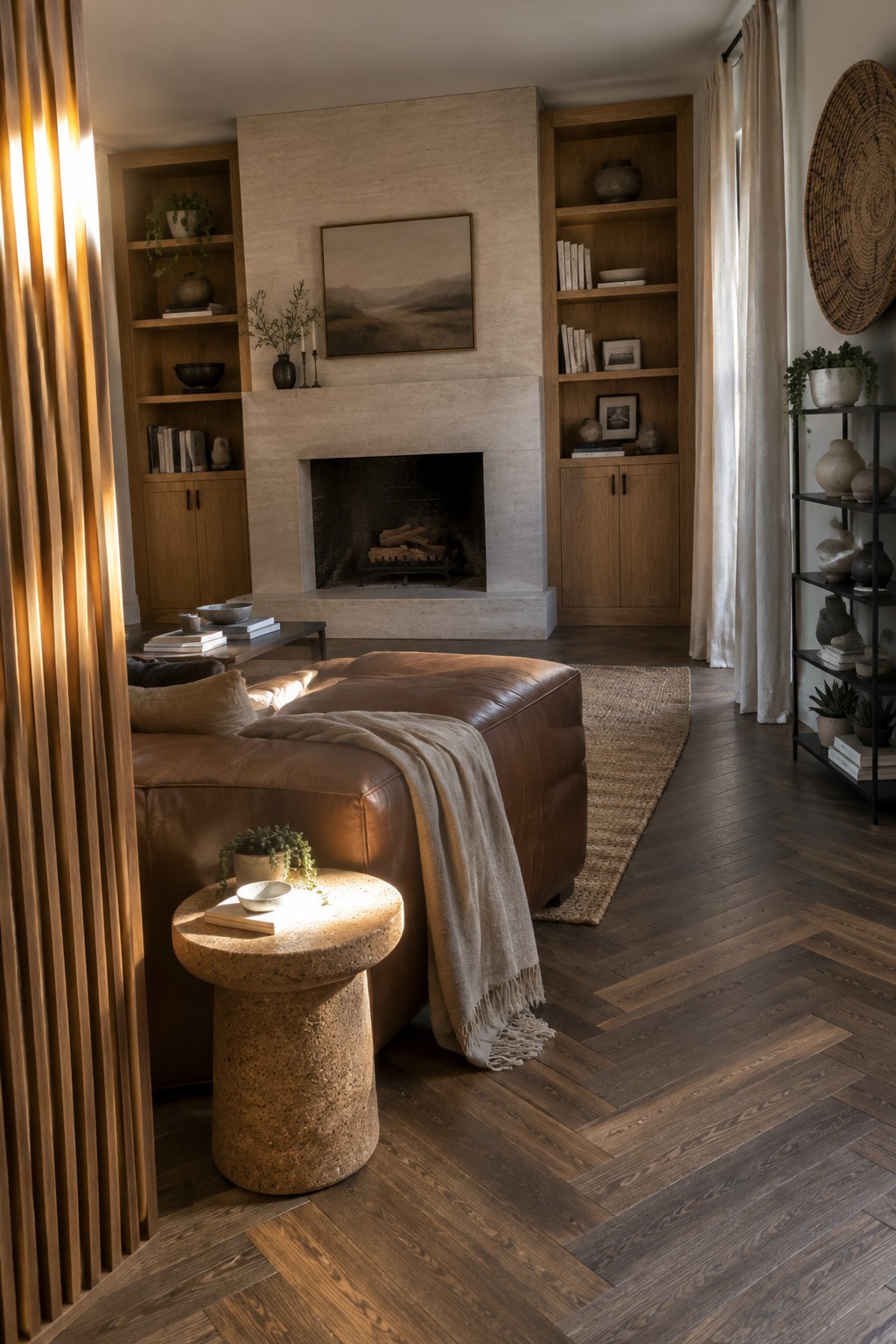
Built-in shelves around a fireplace make good use of wall space and give a living room a natural place for books and a few personal objects. Wood cabinetry also brings a useful contrast to a stone fireplace surround.
This approach works well when you want storage without adding bulky furniture. Keep the shelves fairly open, and use closed cabinets below for items you would rather tuck away.
Use Natural Wood Shelving for a Softer Living Room
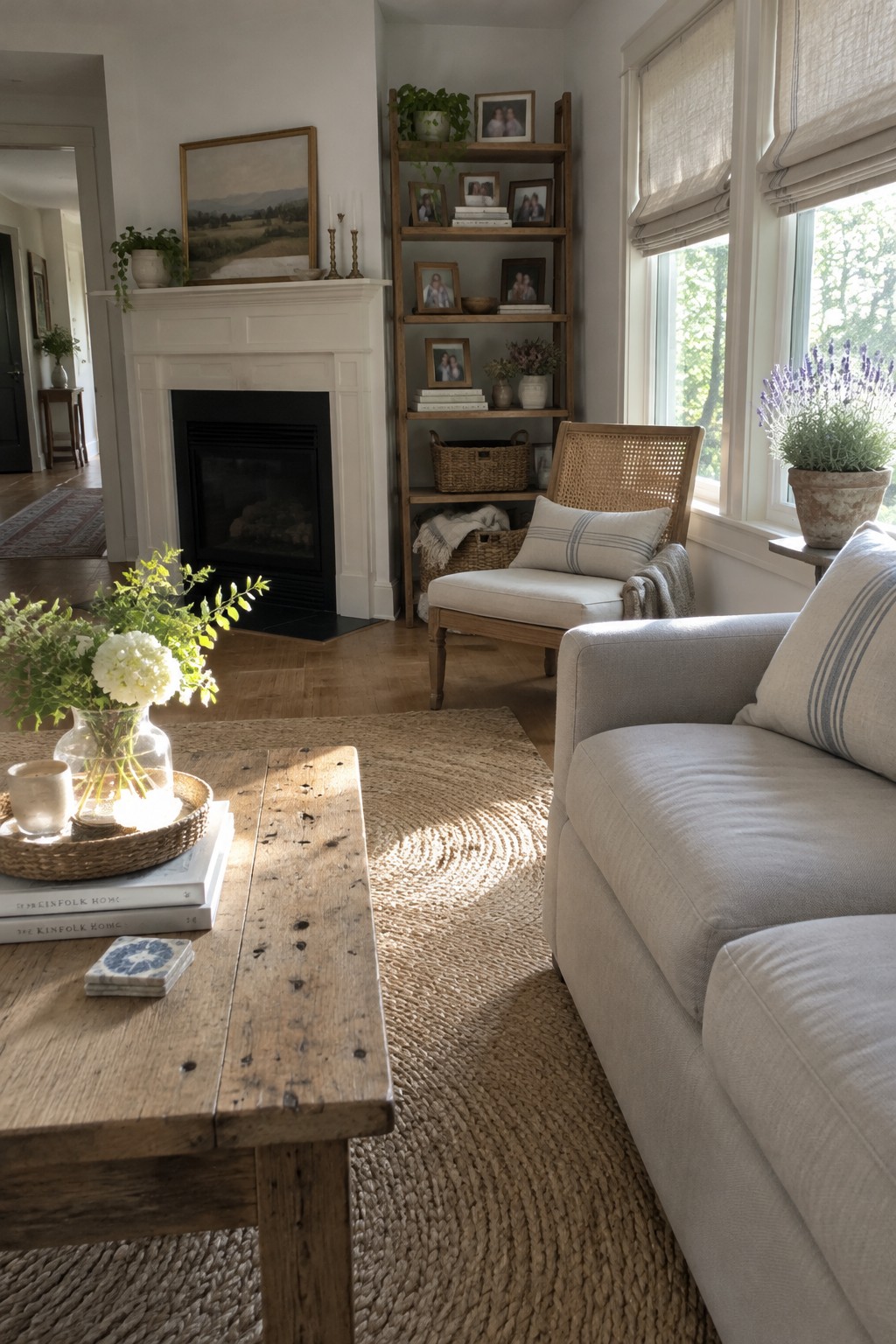
A tall wood bookcase can bring useful storage into a living room without making it feel too formal. The open shelves leave room for a few books and family photos, while the natural finish sits comfortably beside pale upholstery.
This idea works well in a corner that needs storage but still benefits from an open feel. Keep some shelf space clear, and use baskets on the lower shelves to tuck away everyday items.
Use Wood Paneling to Warm Up a Living Room
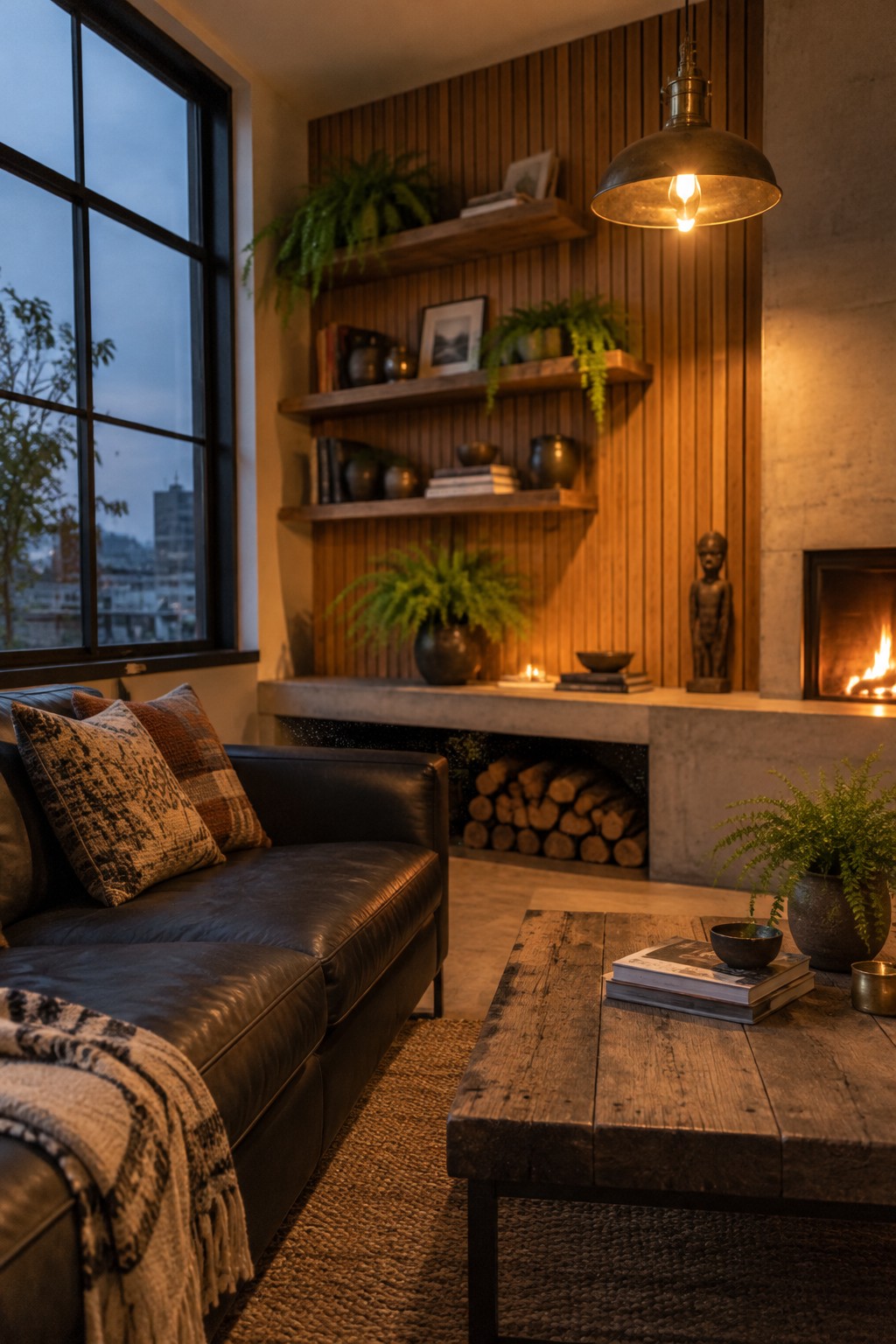
Vertical wood paneling can make a living room feel cozy without relying on lots of decoration. Here, the slatted wall gives the fireplace area a clear backdrop and makes the natural wood a noticeable part of the room.
This treatment works well on one feature wall, especially behind a fireplace or shelving. Choose a wood tone that suits the rest of the room, and keep the paneling to a limited area if you want the space to feel calm rather than busy.
Use Built-In Shelves for Simple Living Room Storage
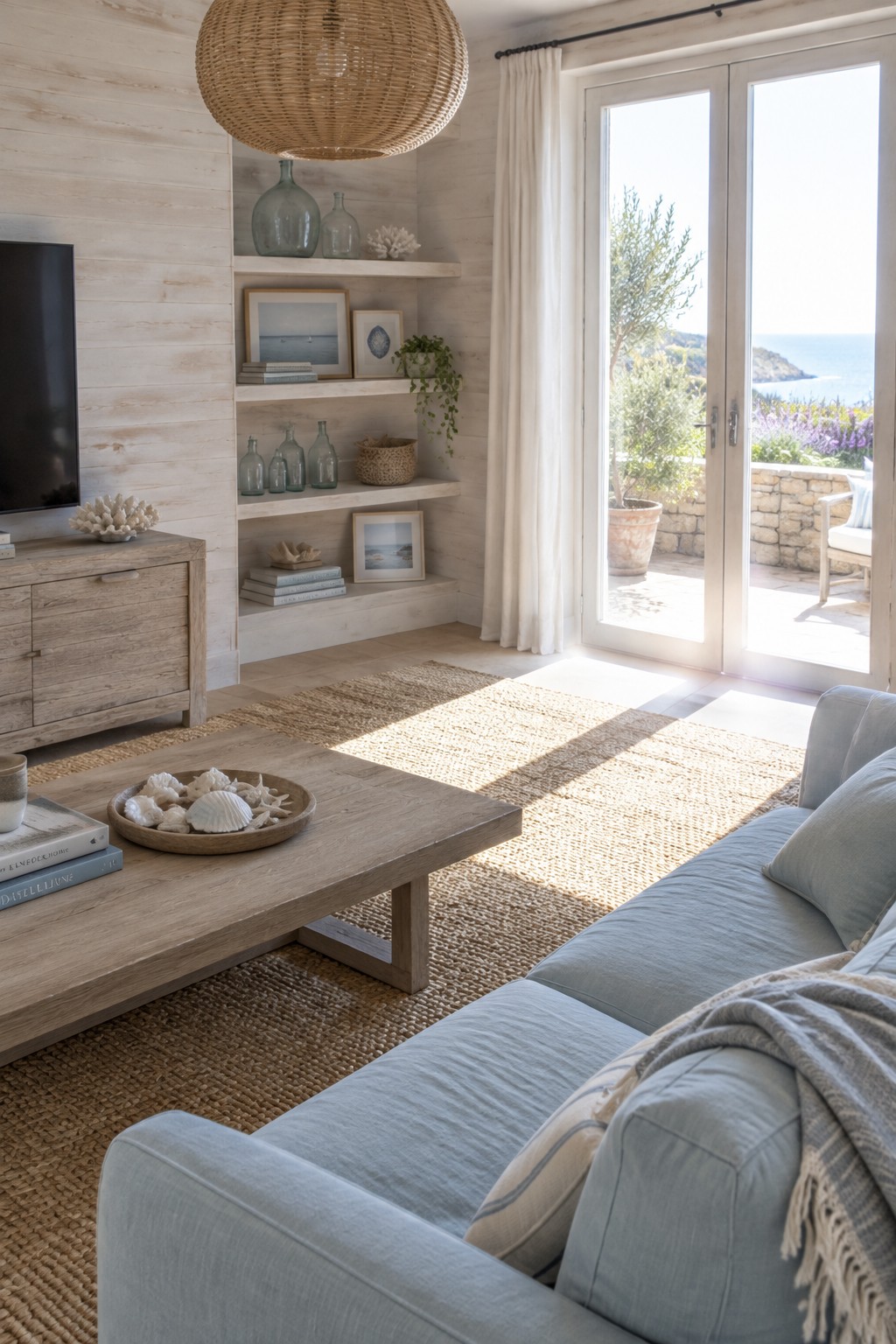
Built-in shelves make use of a wall that might otherwise sit empty, while keeping everyday storage close at hand. Here, pale wood shelves blend into the wall and leave room for a few books and personal pieces without making the nook feel crowded.
This approach works well in a living room where floor space is limited or you want storage to feel part of the room. Keep the shelves fairly open and leave some space between objects so they stay easy to use and pleasant to look at.
Make a Stone Fireplace the Living Room’s Main Feature
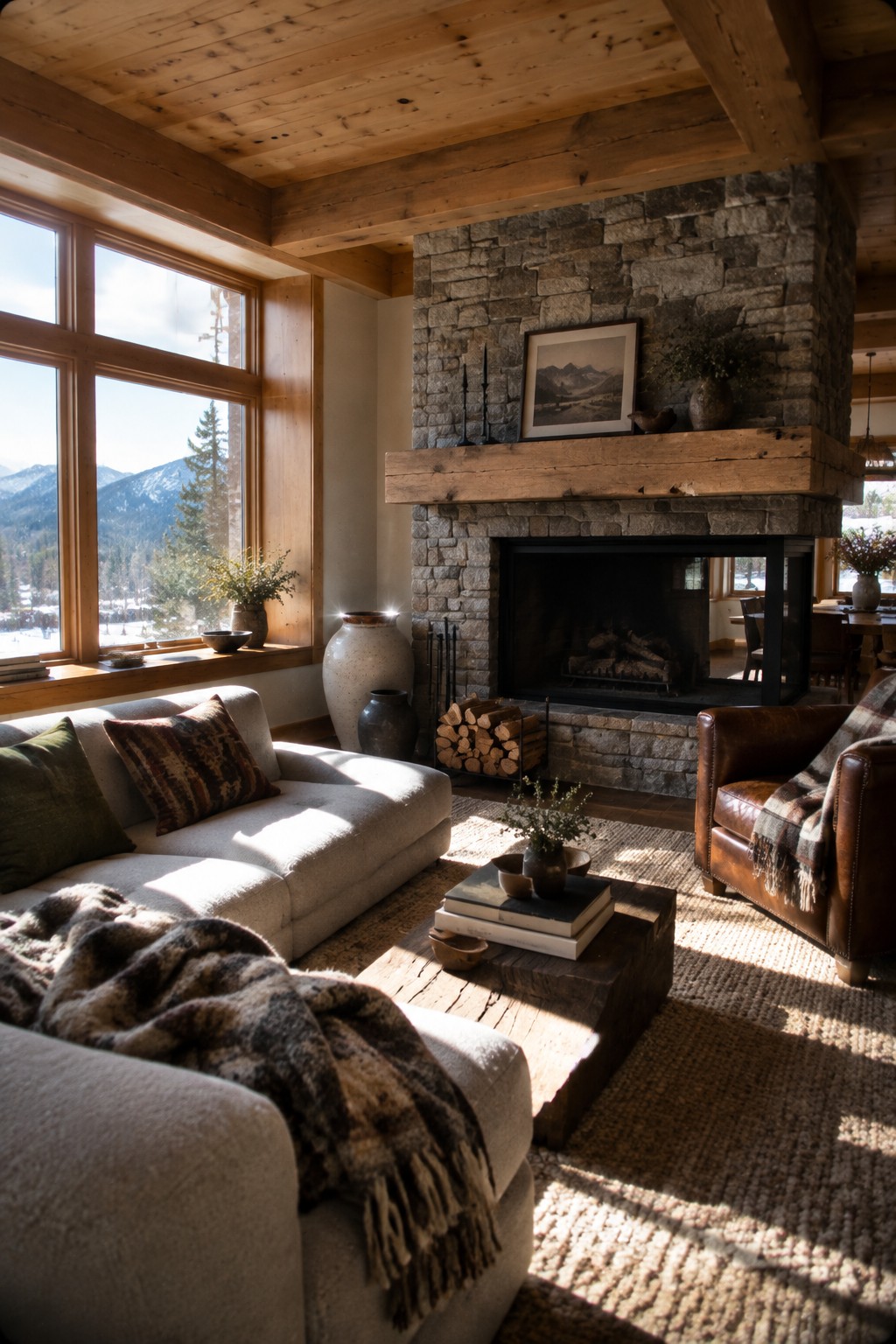
A large stone fireplace can give a living room a clear center and a more settled feel. A thick wood mantel adds a natural touch without making the stone seem too formal.
This idea works especially well in rooms with high ceilings or an open layout. Keep the surrounding furniture comfortable and simple so the fireplace remains the main feature without crowding the seating area.
Use Wood Paneling to Give a Living Room a Calm, Cohesive Feel
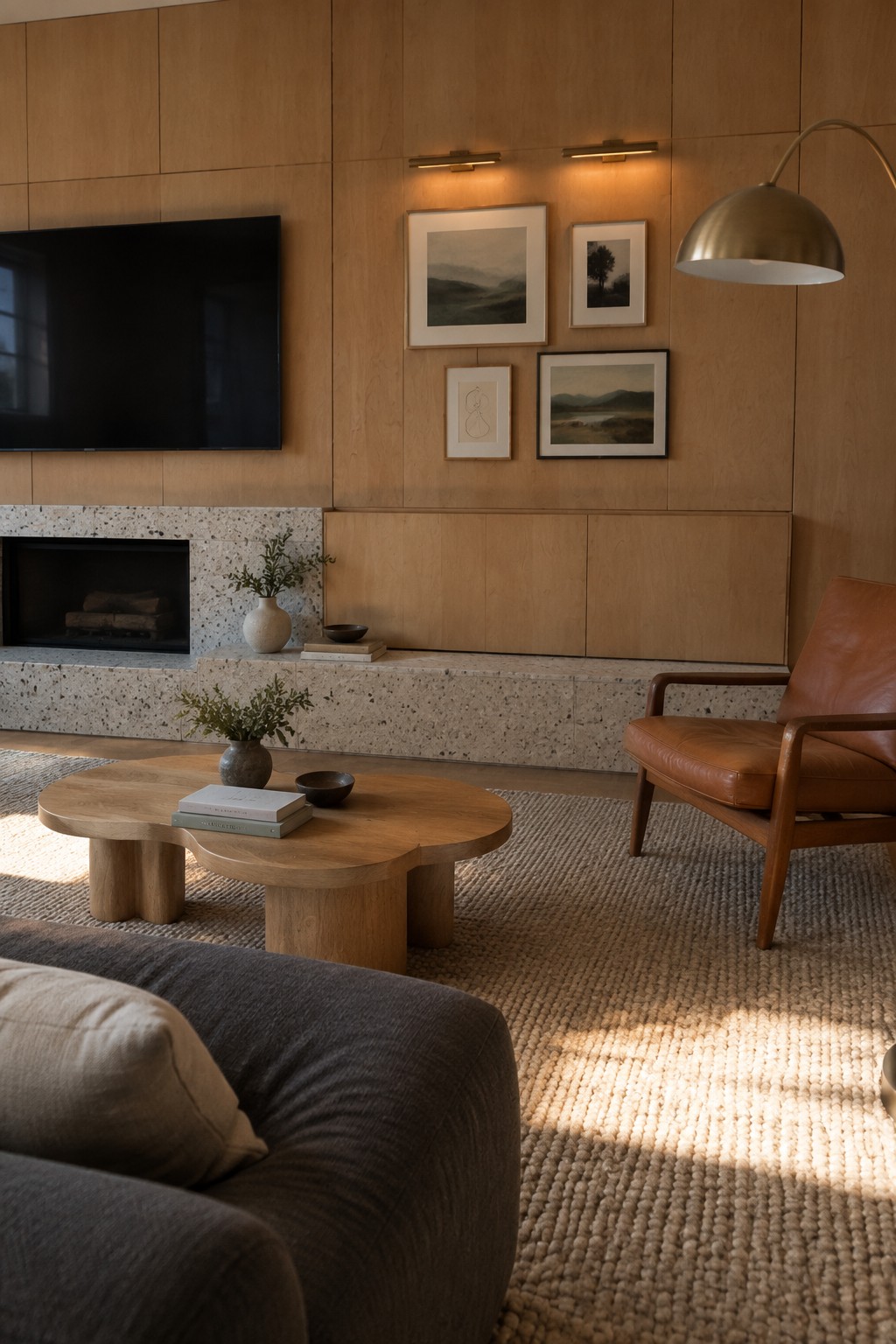
Wood paneling can make a living room feel settled without adding much decoration. Here, large panels cover the wall and conceal storage below, so the wood reads as one continuous feature rather than a collection of separate cabinets.
This approach works well in a room with a fireplace or television wall, especially when you want storage to blend in. Choose a wood tone that suits the rest of the space, and keep the panel joints simple so the wall stays restful.
Use a Wood Coffee Table to Warm Up the Living Room

A chunky wood coffee table can give a living room a practical center without making it feel too formal. The worn boards and dark metal corners here bring a little rustic character to the seating area.
This kind of table suits a room with a fabric sofa and a patterned rug, especially when you want a sturdy surface for everyday use. Keep the rest of the furniture simple enough that the table has room to stand out.
Let a Wood Dining Table Warm Up an Open Living Room

A wood dining table can help an open living room feel more settled without blocking the view across the space. Here, its simple shape and natural finish bring a warmer note to the seating area nearby.
This idea suits open-plan homes where the dining and living areas share one room. Choose a table with enough clearance for chairs to move comfortably, and keep its finish close to other wood accents for an easy connection.
Use Curved Seating to Make a Cozy Living Room

A curved sofa makes a living room feel a little less formal and helps the seating area flow naturally around a coffee table. Here, the rounded shapes work especially well with the room’s wood accents, without making the space feel busy.
This approach suits a living room where people gather and talk, especially if there’s enough floor space to let the sofa’s shape show. Keep the table low and rounded too, or choose a simpler shape if you want a bit more contrast.
Frequently Asked Questions
Q: How can I make a living room with lots of wood feel cozy instead of rustic?
A: Pair the wood with soft fabrics, rounded shapes, and a few modern finishes like black metal or simple ceramic. Keeping the wood tones fairly consistent also helps the room feel calm rather than cabin-like.
Q: What colors work well with natural wood accents?
A: Warm whites, muted greens, soft blue-grays, and earthy clay tones all sit comfortably alongside wood. If your room feels a little flat, try adding one deeper shade through a cushion, rug, or painted accent wall.
Q: Can I mix different wood tones in one room?
A: Yes. Aim for a clear contrast, such as pale oak with a deeper walnut, and repeat each tone at least once so the mix feels intentional. Wood pieces that are almost, but not quite, the same shade can look more accidental.
Q: How do I add natural wood accents without replacing my furniture?
A: Start small with a wooden side table, frame, tray, or lamp base. Even one or two pieces can bring warmth to the room without changing its whole style.
