
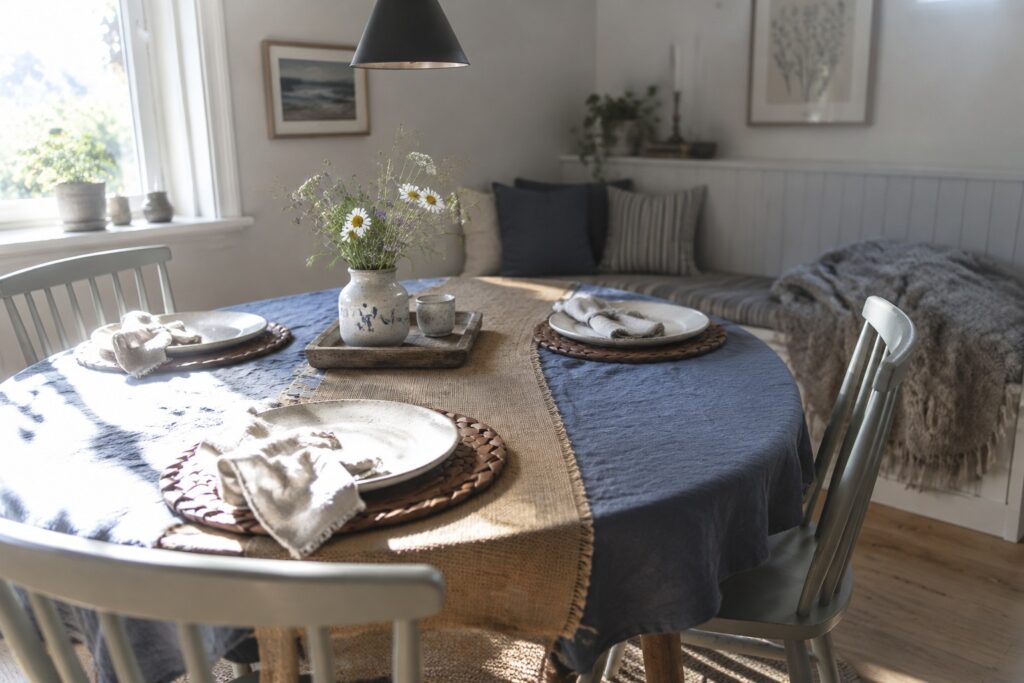
A dining table can look unfinished even when the plates and chairs are just right, because the layers beneath them help set the mood and bring the whole room together.
I’ve found that textiles work best when they add warmth without getting in the way of serving food or making conversation.
A simple tablecloth, runner, or set of woven placemats can change how the table feels, while smaller details like napkins and soft color contrasts keep the setting from looking too formal.
The most useful combinations are ones that suit the room and can handle everyday meals, not just a carefully staged photo.
I’d start with a texture or color you already have at home, then try a few of these ideas to see what feels natural around your table.
Use a Woven Runner to Dress the Dining Table

A woven runner gives a dining table a softer, more relaxed look without covering up the wood. It also helps define the center of the table, so a simple vase or centerpiece feels like part of the setting.
Choose a runner with enough texture to stand out from the tabletop, and let it hang naturally over the edge. This works especially well on a long wooden table, but keep the fabric clear of chairs and place settings so it stays practical for everyday meals.
Layer Textiles for a Relaxed Dining Table
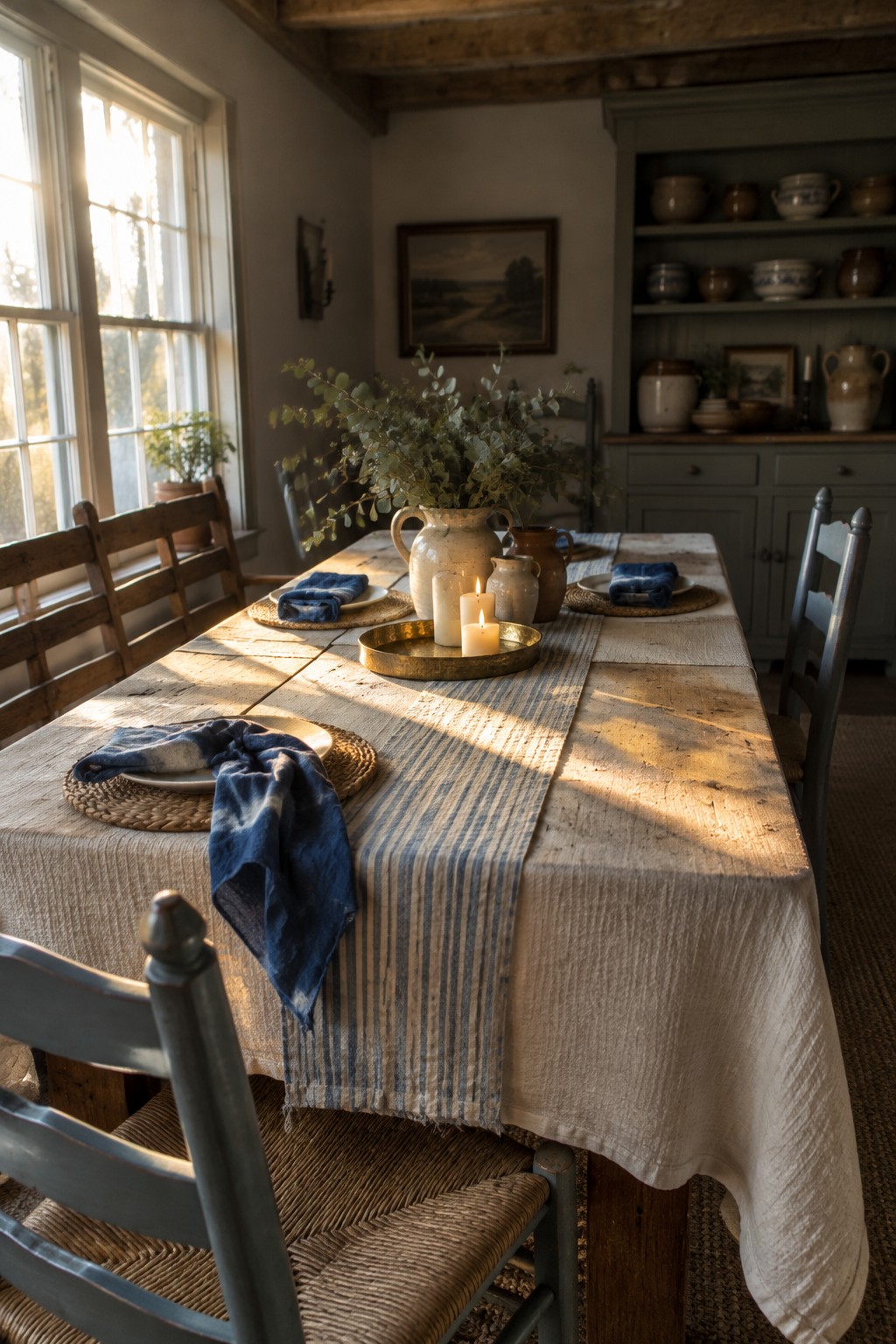
A simple way to make a dining table feel more welcoming is to layer a plain cloth with a narrower runner. The two fabrics give the table a little pattern and texture without needing much extra decoration.
For a relaxed look, let the runner fall naturally and keep place settings simple. A striped runner over a neutral tablecloth works well in a farmhouse dining room or a casual family kitchen. Avoid adding too many competing patterns.
Layer a Blue Tablecloth with a Woven Runner
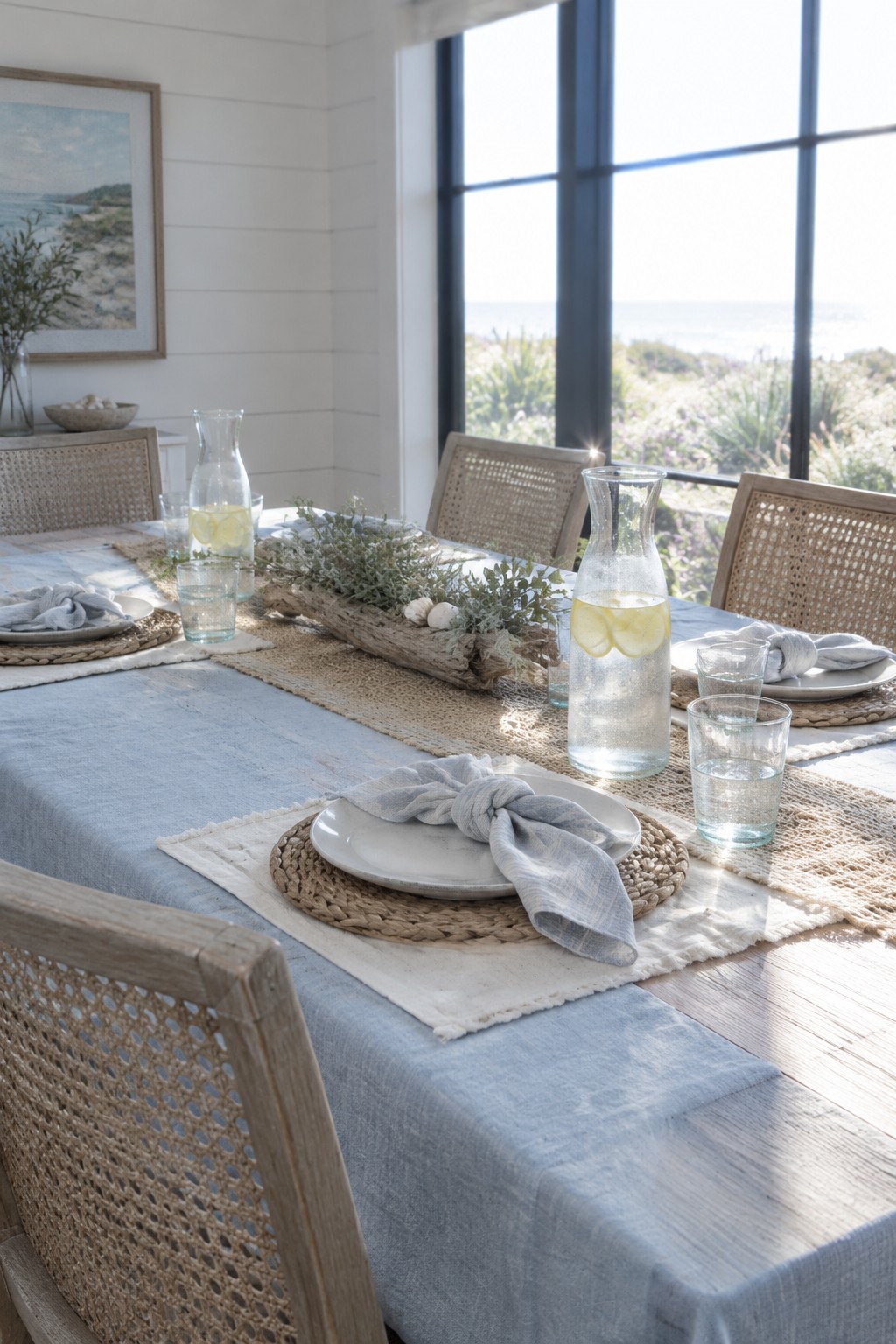
Layered textiles make a dining table feel more comfortable without much fuss. A pale blue tablecloth beneath a woven runner gives the setting a casual look, while keeping the table protected for everyday meals.
Try this approach on a long dining table, and let the base cloth show at the edges. Choose fabrics that are easy to wash, especially if the table gets regular use.
Use a Runner to Layer the Table
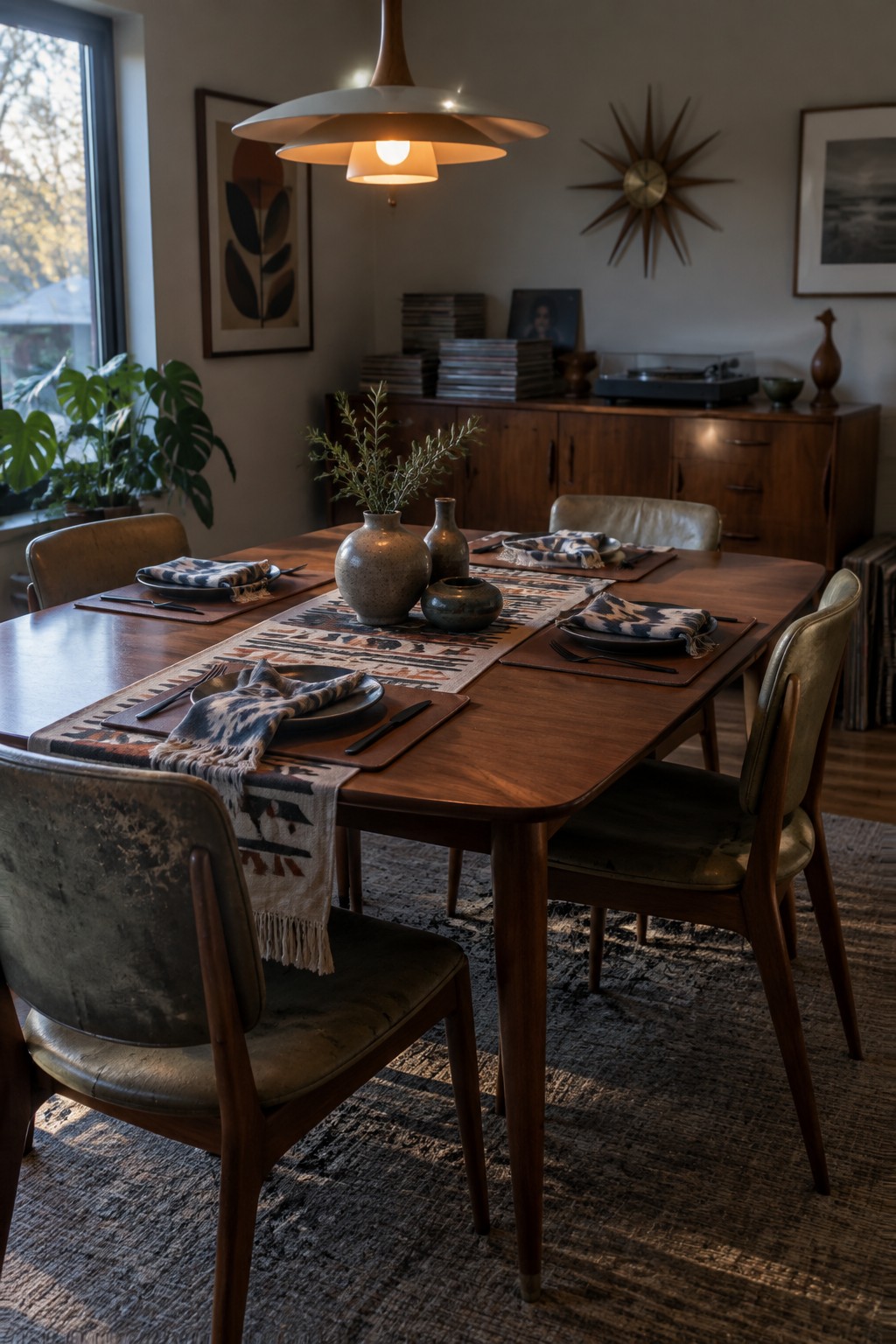
A patterned runner gives a dining table a little more character without covering its wood finish. It also helps tie together the place settings, especially when the napkins echo colors from the textile.
Choose a runner that leaves some tabletop visible on both sides, then keep the rest of the setting fairly simple. This works well on a long wood table, but check that the fabric does not bunch where people sit or eat.
Use Dark Napkins to Add Contrast

Dark cloth napkins stand out against lighter plates and give a dining table a simple point of contrast. Here, deep green fabric brings a little color to the wood table without needing a patterned cloth.
Try this idea when you want a natural, understated table setting. Fold the napkins loosely or use a plain ring, and keep the rest of the linens fairly simple so the dark fabric remains easy to notice.
Use a Floral Cloth as the Base Layer

A patterned tablecloth gives a dining table an easy, collected look, especially when its colors are a little faded rather than bright. A narrower floral cloth layered over it adds another pattern without making the table feel too formal.
Keep the layers in a similar color family, and let the base cloth show around the edges. This works well in a cottage-style dining room, but choose washable fabrics if the table gets everyday use.
Mix Patterned Textiles on the Dining Table
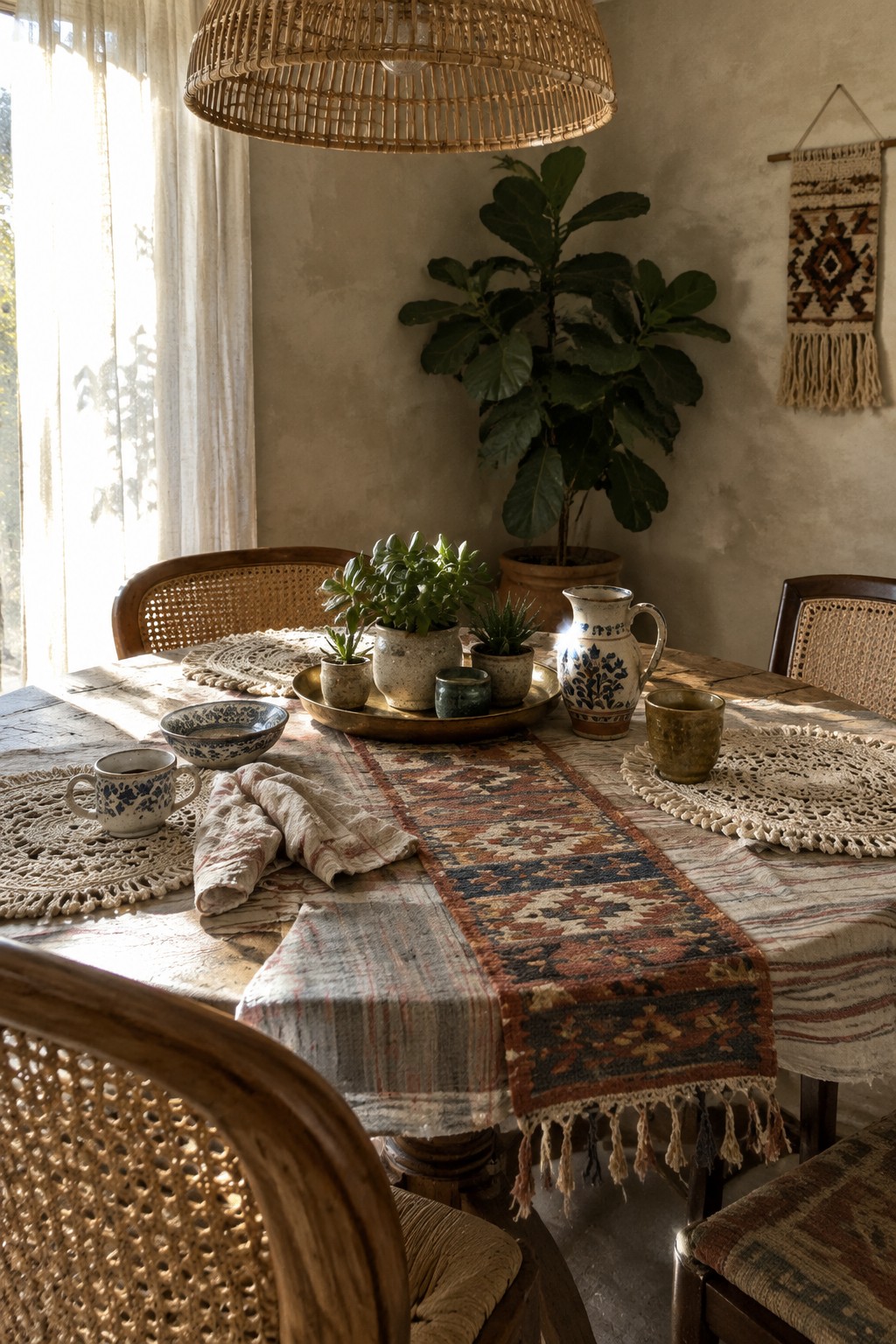
Layering a patterned runner over a softer tablecloth gives the dining table a relaxed, collected look. The different patterns feel connected when they share a few muted colors, while the woven runner helps define the center of the table.
Try this approach on a wooden table that could use a little extra coverage, or for a casual meal where a formal setting would feel out of place. Keep the runner narrower than the tablecloth so the fabric underneath still shows.
Use a Long Runner to Define Each Place Setting
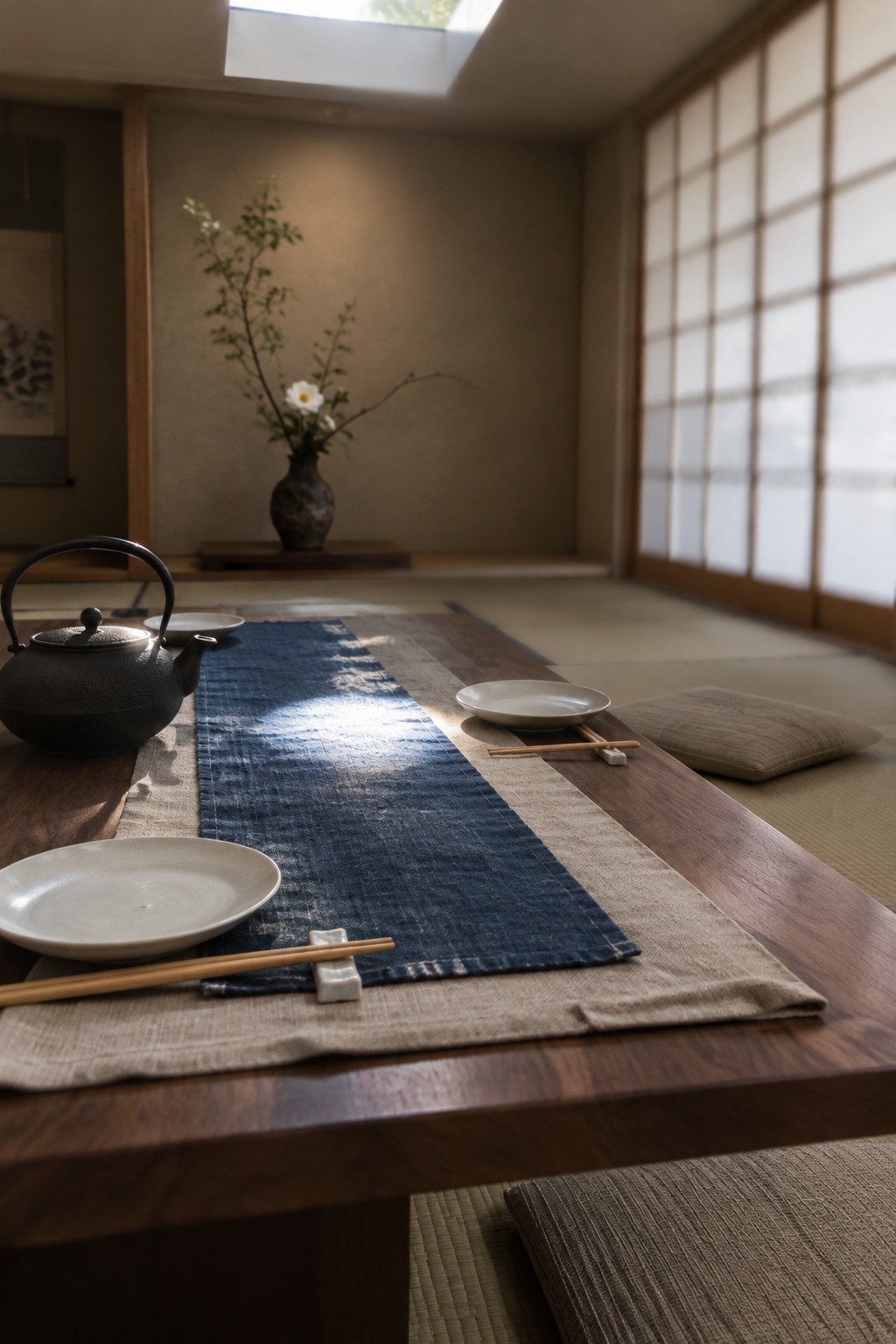
A long runner gives a low dining table a clear center and helps separate individual place settings without making the table feel formal. Here, a narrow blue textile sits over a wider neutral cloth, adding a simple layer of color and texture.
Try this approach on a low table or a narrow dining table, keeping the runner slim enough to leave room for plates and chopsticks. A plain base cloth makes it easier to change the look with a runner you already own.
Use a Checked Tablecloth as the Base Layer
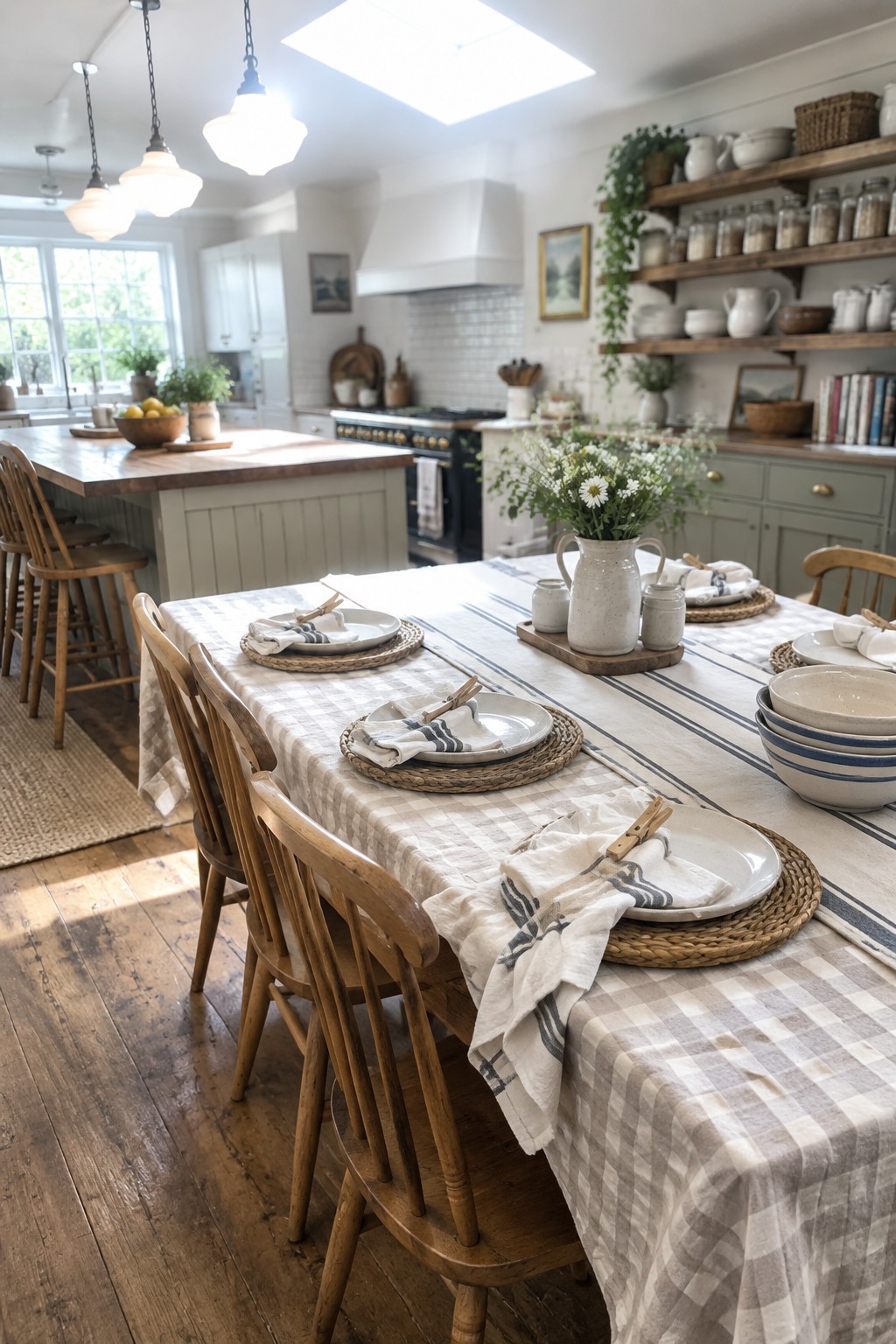
A checked tablecloth is an easy way to give a dining table a relaxed, collected look. It provides a clear base for the place settings, while a narrow striped runner adds another pattern without making the table feel too busy.
Keep the rest of the layers simple, such as plain plates and woven chargers. This approach suits everyday meals as well as a casual gathering, and the tablecloth can be swapped out when you want a different look.
Use an Embroidered Runner to Add Detail
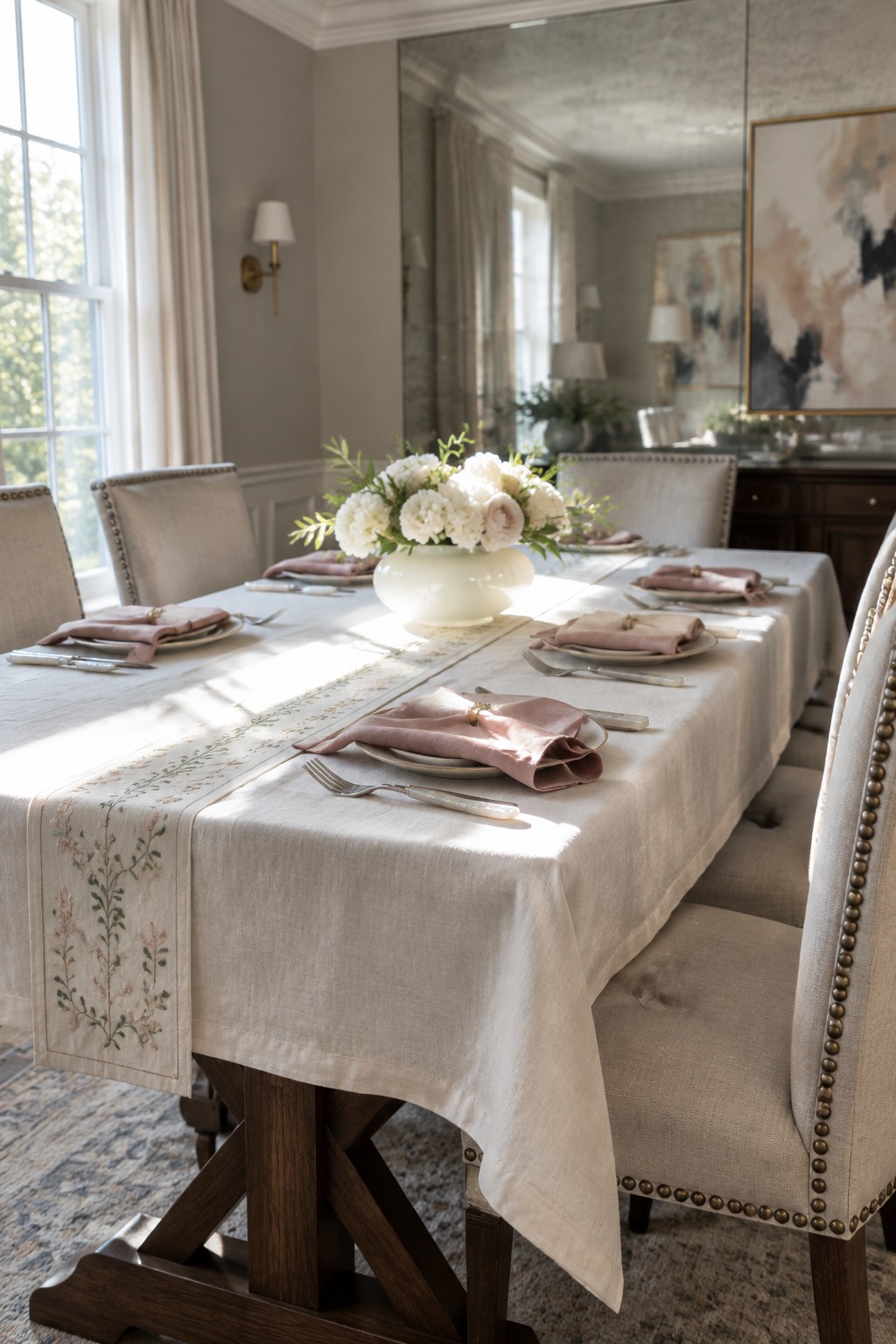
An embroidered runner gives a plain tablecloth a little pattern without covering the whole table in print. The narrow band of floral stitching here adds interest while leaving plenty of simple linen visible.
Try this on a long dining table, especially when you want the place settings to stay fairly understated. Choose a runner that sits flat and does not crowd the plates, and let its pattern do the decorating.
Use a Colorful Tablecloth as the Base Layer
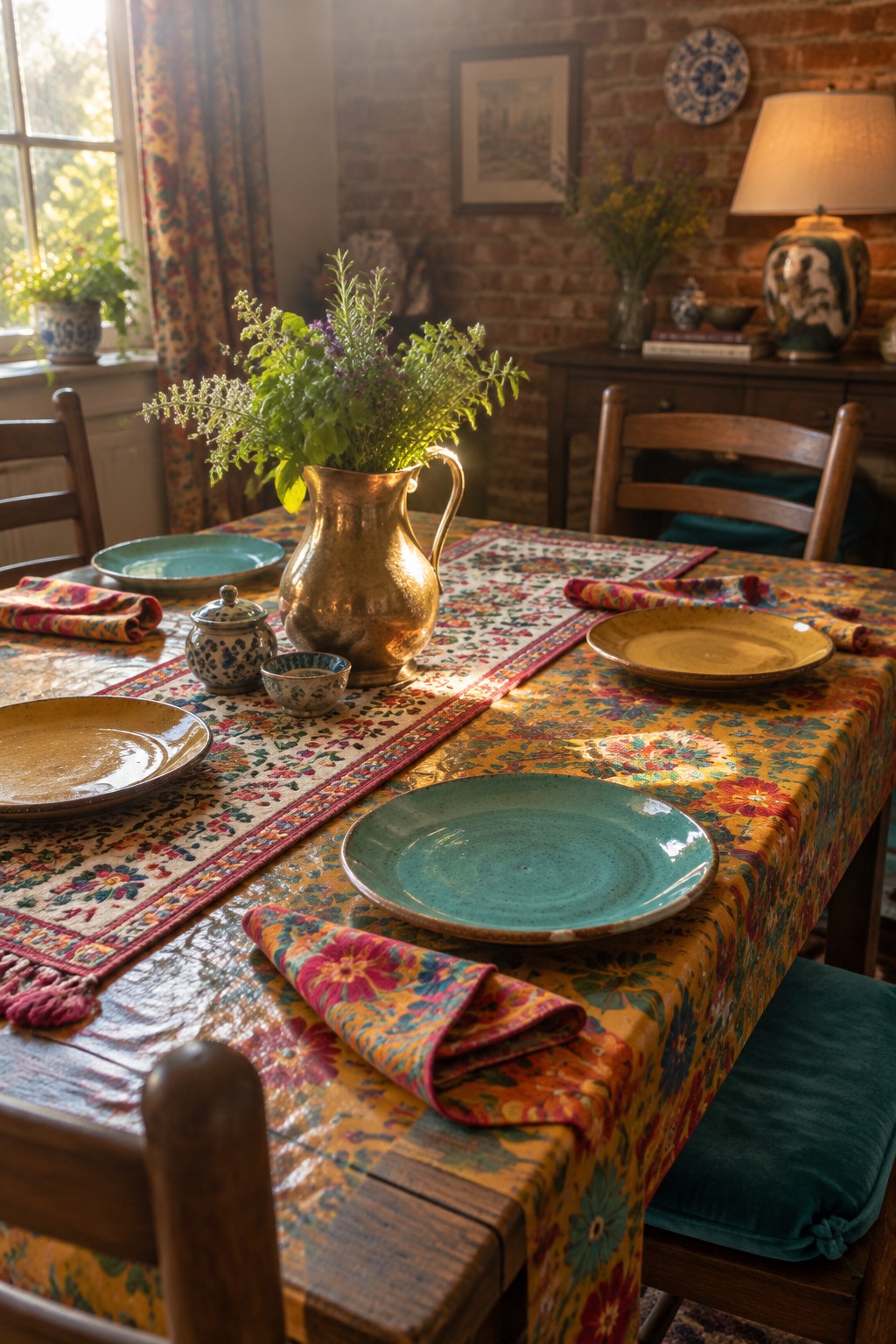
A patterned tablecloth is an easy way to give a dining table a relaxed, collected look. It also lets you bring in color across the whole table, while a narrower runner adds a second pattern without covering the cloth completely.
For a similar effect, choose prints that share a few colors, even if their patterns differ. This works especially well on a wooden table, where a glimpse of the tabletop can keep the layers from feeling too busy.
Use a Leather Runner for a Rustic Table
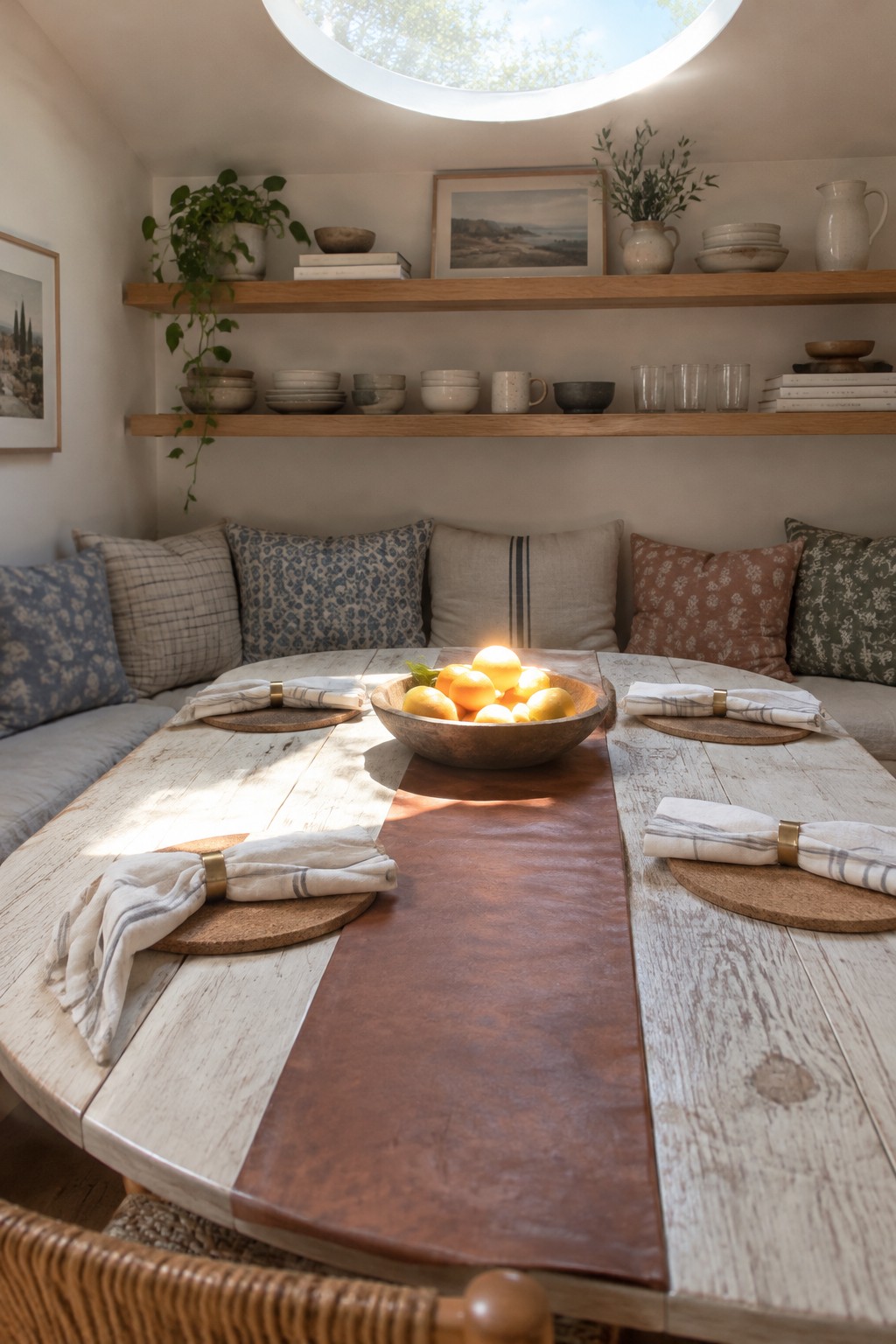
A leather runner is an easy way to give a dining table a distinct center without covering its wood surface. Here, the warm brown strip stands out against the pale, worn boards and gives the place settings a clear place to sit.
Try this on a long farmhouse-style table, especially if you want to show off the tabletop while adding a layer that can handle everyday use. Keep the runner narrow enough to leave plenty of wood visible, and choose cloth napkins in a simple pattern so the mix feels relaxed.
Use Woven Placemats to Layer the Table

Woven placemats give each place setting a clear base while letting the wood table remain visible. They bring a bit of texture to the table without needing a full tablecloth, which works well for everyday meals and more carefully set dinners alike.
Try them with a simple runner and plain napkins so the layers don’t compete. Choose placemats that are wide enough to hold a plate and cutlery, and leave a little space between settings for serving dishes.
Use a Table Runner to Set the Table’s Center
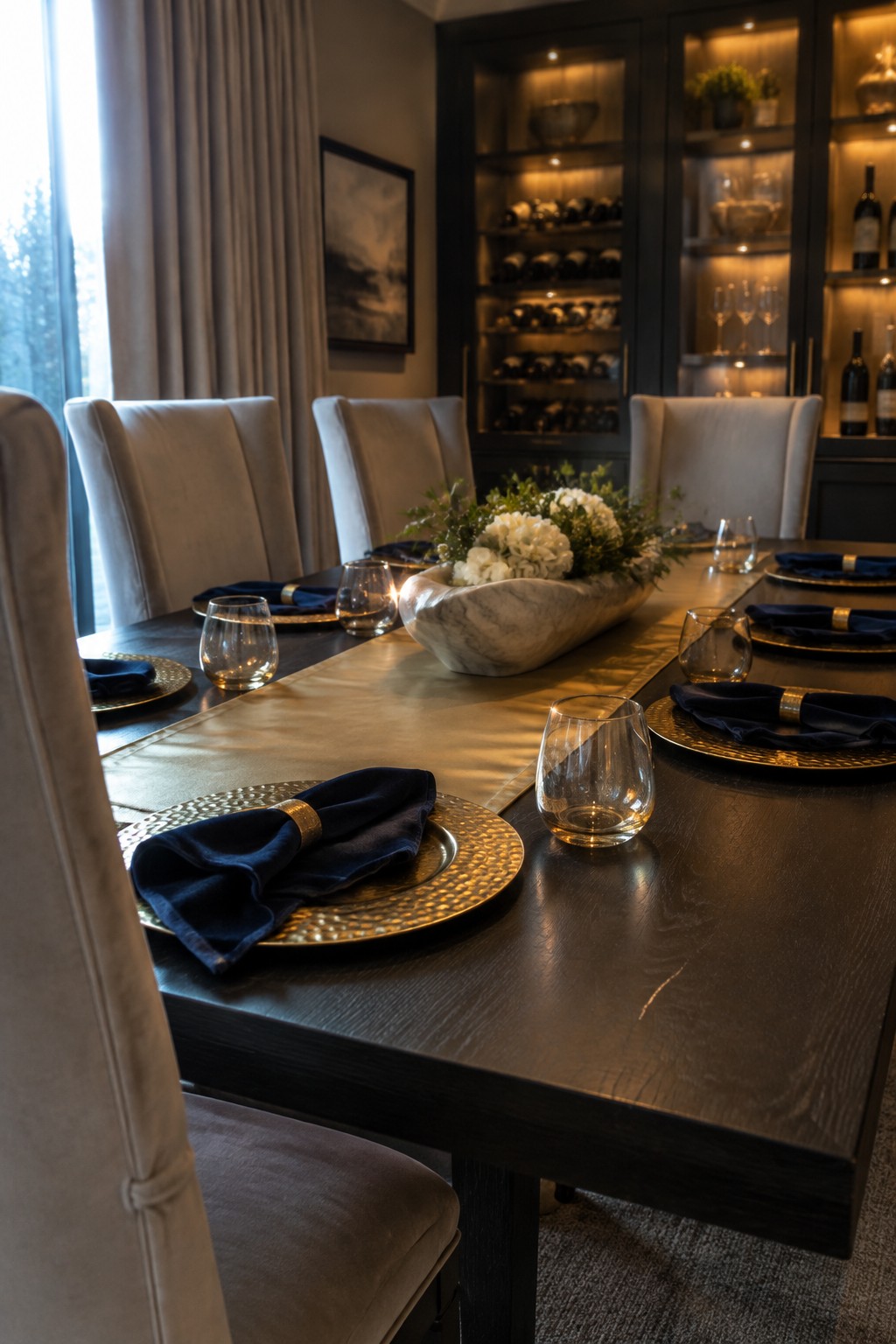
A runner gives a long dining table a clear center and makes the place settings feel connected. Here, a pale fabric runner stands out against the dark wood, while the simple contrast leaves room for the dishes and centerpiece.
For a similar look, choose a runner that leaves some tabletop visible at the sides. A neutral fabric works well with patterned or metallic plates, and it is easy to change seasonally without replacing the rest of the table linens.
Use a Neutral Runner to Highlight the Table Center

A small floral tablecloth can make a dining table feel relaxed and collected, especially when the rest of the setting stays simple. Here, the cloth gives the table a soft pattern without competing with the dishes.
For an easy layered look, start with a printed cloth and add plain napkins or a small lace layer. This works well in a cottage-style dining nook, but keep the patterns restrained so the table still feels comfortable for everyday use.
Let a Textile Runner Soften a Rustic Dining Table
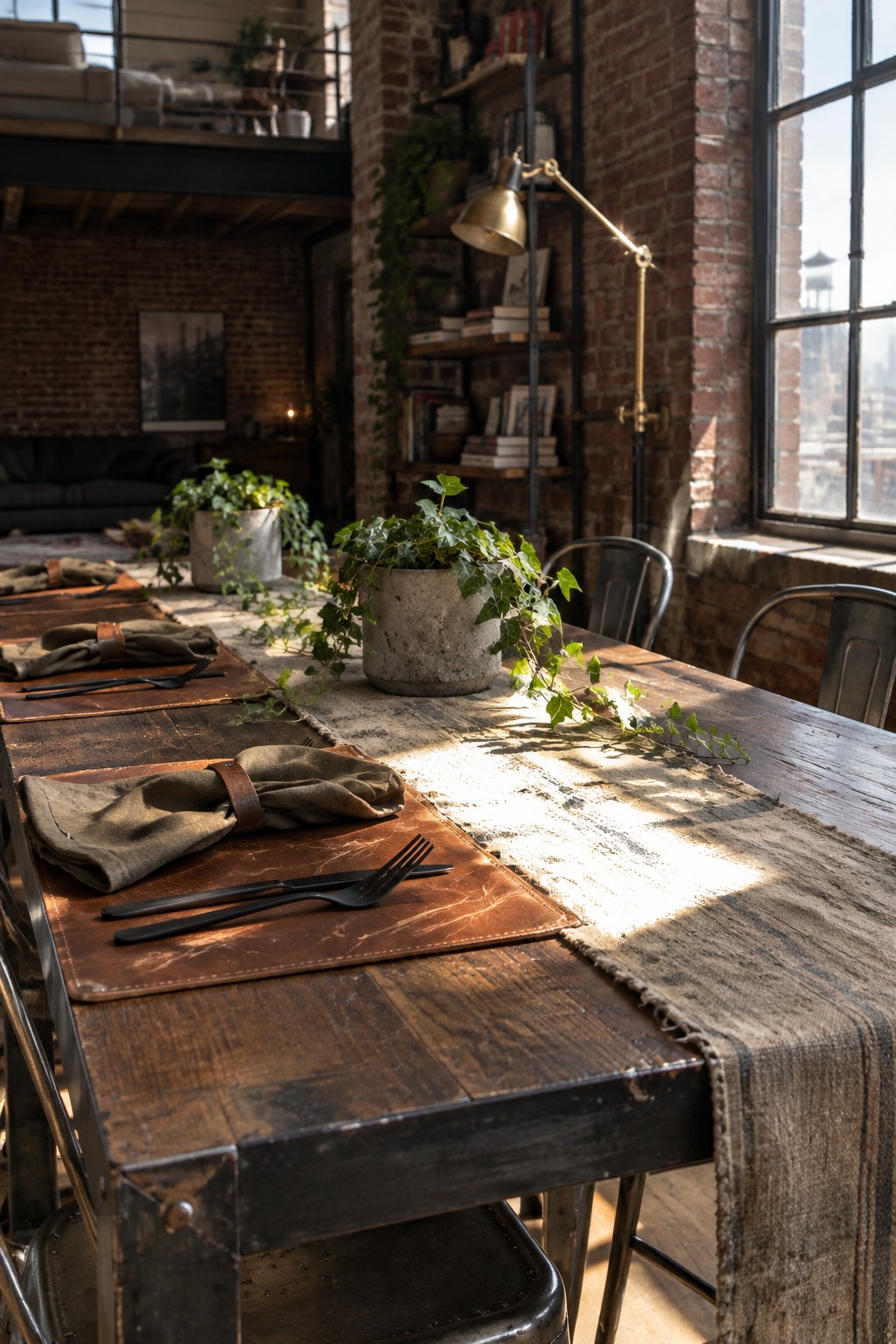
A long textile runner is an easy way to make a sturdy wooden dining table feel more ready for everyday meals. Its loose weave brings a softer surface to the table without hiding the worn wood.
Choose a runner that hangs past the ends, and keep the rest of the setting simple so the fabric can stand out. A neutral, textured style suits rustic or industrial rooms, though a washable runner is useful if the table sees frequent use.
Use a Linen Tablecloth for an Easy Base
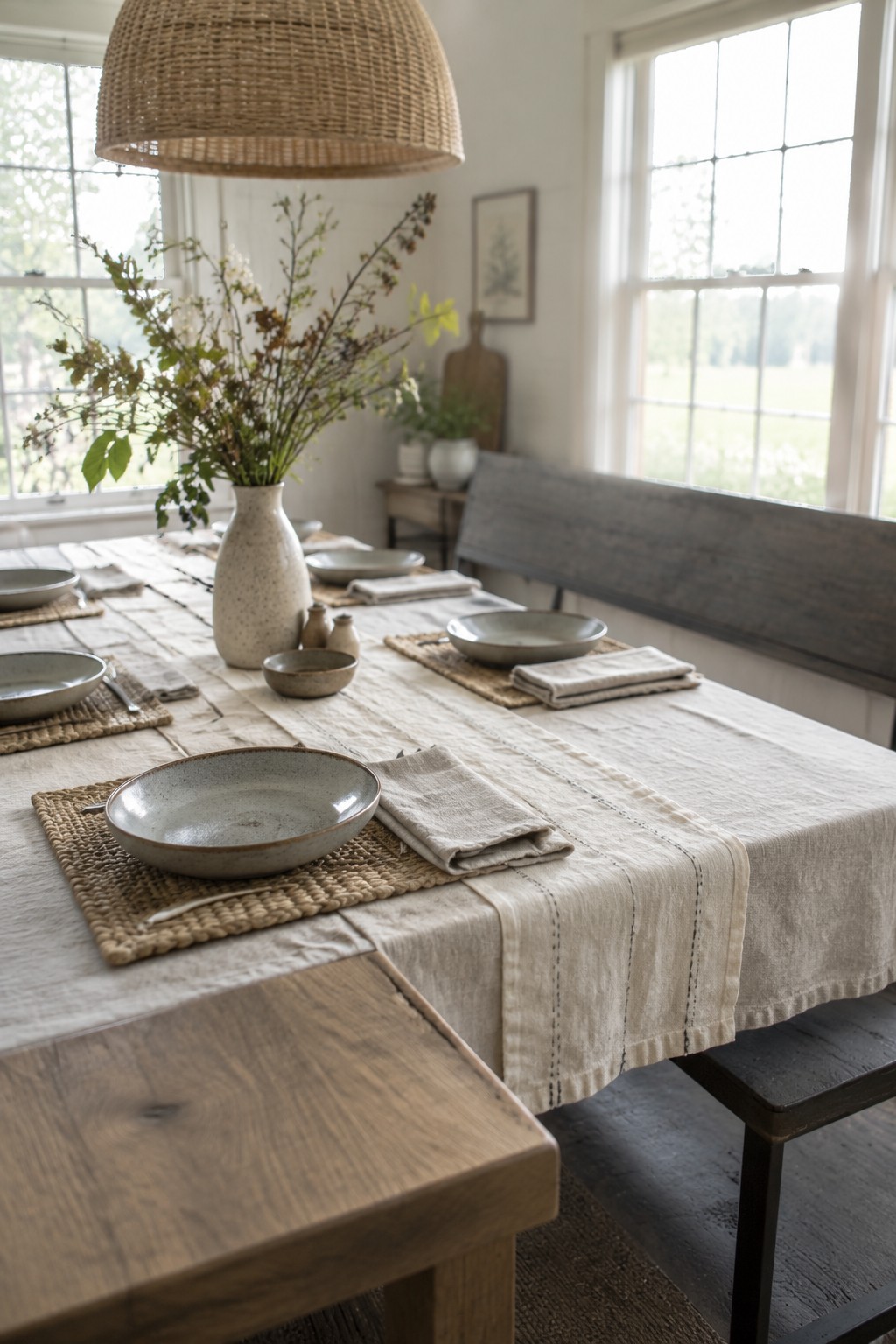
A simple linen tablecloth gives a dining table a relaxed starting point. Its natural texture suits everyday meals, while a few woven placemats help define each place without making the table feel too formal.
Choose a cloth that hangs generously over the edges, and keep the rest of the setting fairly simple. Neutral linen works especially well with wood furniture and handmade dishes, though it may need ironing if you prefer a neater finish.
Combine a Linen Runner with Woven Placemats

A simple linen runner can make a dining table feel more settled without covering up the wood. Here, its loose texture works well with woven placemats, so the setting feels comfortable rather than overly formal.
Try this on a solid wood table when you want to add a little softness but still show the tabletop. Keep the runner fairly plain, and let the placemats or napkins provide the extra texture.
Frequently Asked Questions
Q: How do I layer a tablecloth and runner without making the table look too busy?
A: Keep one layer quieter than the other. A solid tablecloth pairs nicely with a patterned runner, while two patterns work best when they share a color or have different scales.
Q: Can I use layered textiles on a small dining table?
A: Yes. Try a narrow runner over a bare tabletop instead of adding a full tablecloth, which can make a small table feel crowded. Keep the runner short enough that it doesn’t interfere with chairs or place settings.
Q: How do I keep a runner from sliding around during dinner?
A: Choose a runner with a bit of texture or place a thin, nonslip pad underneath it. A runner that’s close to the table’s length is also less likely to shift when people reach across.
Q: What’s the easiest way to mix colors and textures?
A: Start with a color already in your dishes or centerpiece, then repeat it in one textile. Add contrast with texture, like a nubby linen runner over a smooth cotton tablecloth.
