

A Scandinavian dining room can feel bright and calm, but it still needs to work for everyday meals, homework, and the occasional crowded dinner.
I find that the layout matters as much as the pale wood: chairs need room to pull back, and the table should suit the way people actually gather.
Light wood brings warmth without making the room feel heavy, especially when it sits alongside soft color, practical lighting, and a few textured details.
Too many pale surfaces can look flat, so contrast and natural variation help the space feel lived in.
I’d save the ideas that balance a clean look with comfortable, usable choices.
Choose a Long Light Wood Dining Table

A long dining table gives a Scandinavian dining room a practical center for everyday meals and larger gatherings. Light wood keeps a substantial table from feeling too heavy, while a narrow stone strip down the middle adds a small change in texture.
This look suits an open dining area where there is room to walk around the table. Leave enough space to pull out the chairs, and keep the centerpiece simple so the tabletop stays useful.
Choose a Round Dining Table for Easy Conversation

A round dining table makes it easier for everyone to talk, and it can be a good fit when you want a dining area to feel relaxed rather than formal. A light wood pedestal base also leaves more room for chairs and feet than a table with legs at each corner.
This kind of table works well in a breakfast nook or a smaller dining room. Check that chairs can pull back comfortably, and keep the tabletop styling simple so there’s room for everyday meals.
Choose a Light Wood Dining Table

A light wood table is a simple way to make a dining room feel relaxed and easy to live in. Its pale finish keeps the furniture from feeling too heavy, even when the table is large enough for everyday meals and guests.
For a similar look, choose a sturdy table with a straightforward shape and let the wood grain show. It works especially well in open-plan spaces, where the dining area needs to sit comfortably beside the kitchen. A linen runner is enough to dress it up without hiding the tabletop.
Use Light Wood for a Relaxed Dining Room

A round light-wood table is an easy way to make a dining area feel relaxed and welcoming. Its curved shape suits everyday meals and conversation, while the pale finish keeps the furniture from feeling too heavy.
This style works especially well in a smaller dining space, where rounded edges make it easier to move around the table. Choose simple woven chairs to complement the wood, and leave enough clearance for people to sit comfortably.
Make a Dining Bench Part of the Layout

A bench along one side of the table is a practical choice for a dining room that needs flexible seating. It can tuck neatly under the table when it is not in use, and a simple wood design suits a light wood dining set.
For extra comfort, add a washable cushion or folded throw, as shown here with the pale upholstered bench. This setup works especially well at a long table, though it helps to leave enough room behind the bench for people to sit down and get up easily.
Keep the Dining Room Simple and Natural

A light wood table can make a dining room feel relaxed without needing much extra styling. Its simple shape and natural finish work especially well with a muted wall color and a few woven place mats.
For a similar look, keep the tabletop mostly clear and choose chairs that feel comfortable for everyday meals. This approach suits open dining areas and smaller rooms alike, as long as there is enough space to pull the chairs out.
Use White Chairs Around a Light Wood Table

White dining chairs keep a light wood table feeling fresh without making the room look too formal. The simple contrast is easy to live with, and the wood still brings a natural feel to the dining area.
This approach suits a coastal home or any room that gets plenty of daylight. Choose chairs with a fairly open shape so they do not crowd the table, especially in a narrow dining space.
Use a Built-In Bench to Save Space

A bench along one side of the dining table can make a room feel less crowded than using chairs all the way around. It also gives the dining area a relaxed, everyday feel.
This setup works especially well in a narrow room or beside a wall. Choose a bench with a seat depth that stays comfortable without taking up too much floor space, and leave chairs on the open side for easier access.
Use a Round Table for a Small Dining Area
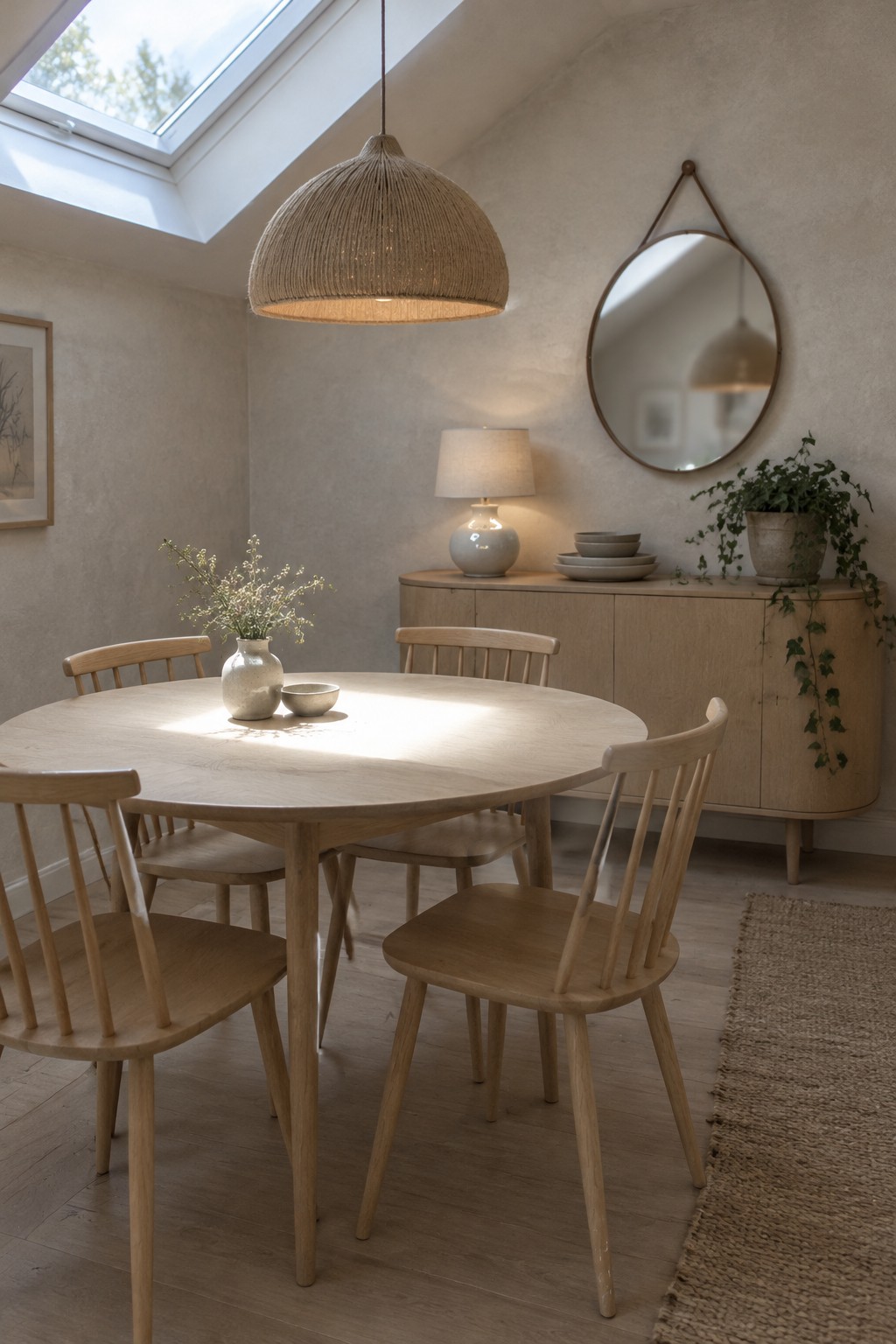
A round light wood table can make a dining area feel easier to move around. Without sharp corners, chairs can be pulled up from different sides, and conversation feels more natural.
This shape works especially well in a compact room or a corner dining space. Leave enough clearance around the table for chairs to slide back comfortably, and keep the tabletop styling simple so there’s room for everyday meals.
Choose a Round Table for a Small Dining Room
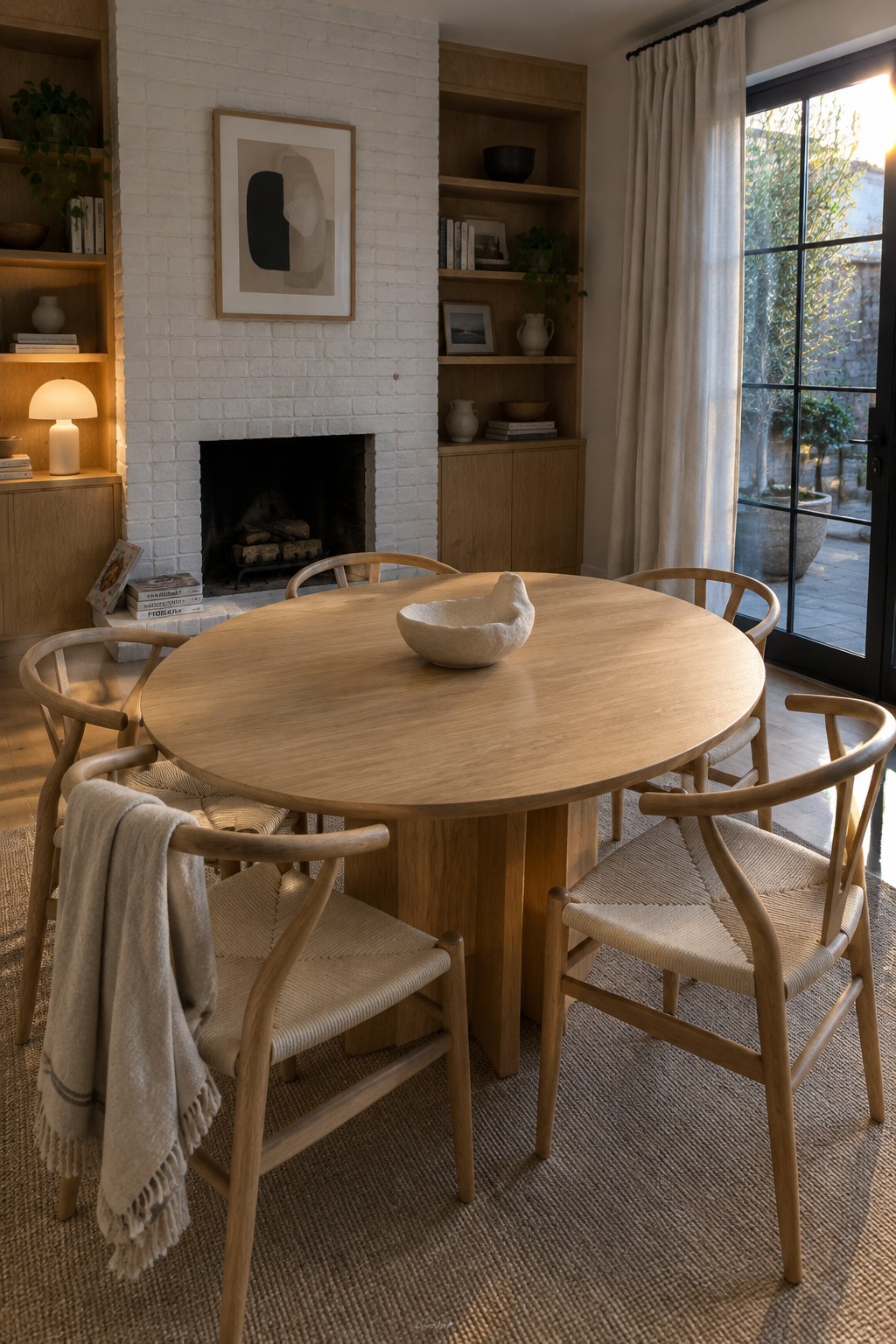
A round light wood table can make a dining area easier to move through, since it has no corners to bump into. It also gives everyone a clear place at the table without making the room feel too formal.
This shape works well in a compact room or an open-plan space where people need to pass between the dining area and other rooms. Leave enough room to pull the chairs out comfortably, and keep the table surface fairly clear so the rounded shape remains easy to see.
Let Natural Light Highlight Light Wood Furniture
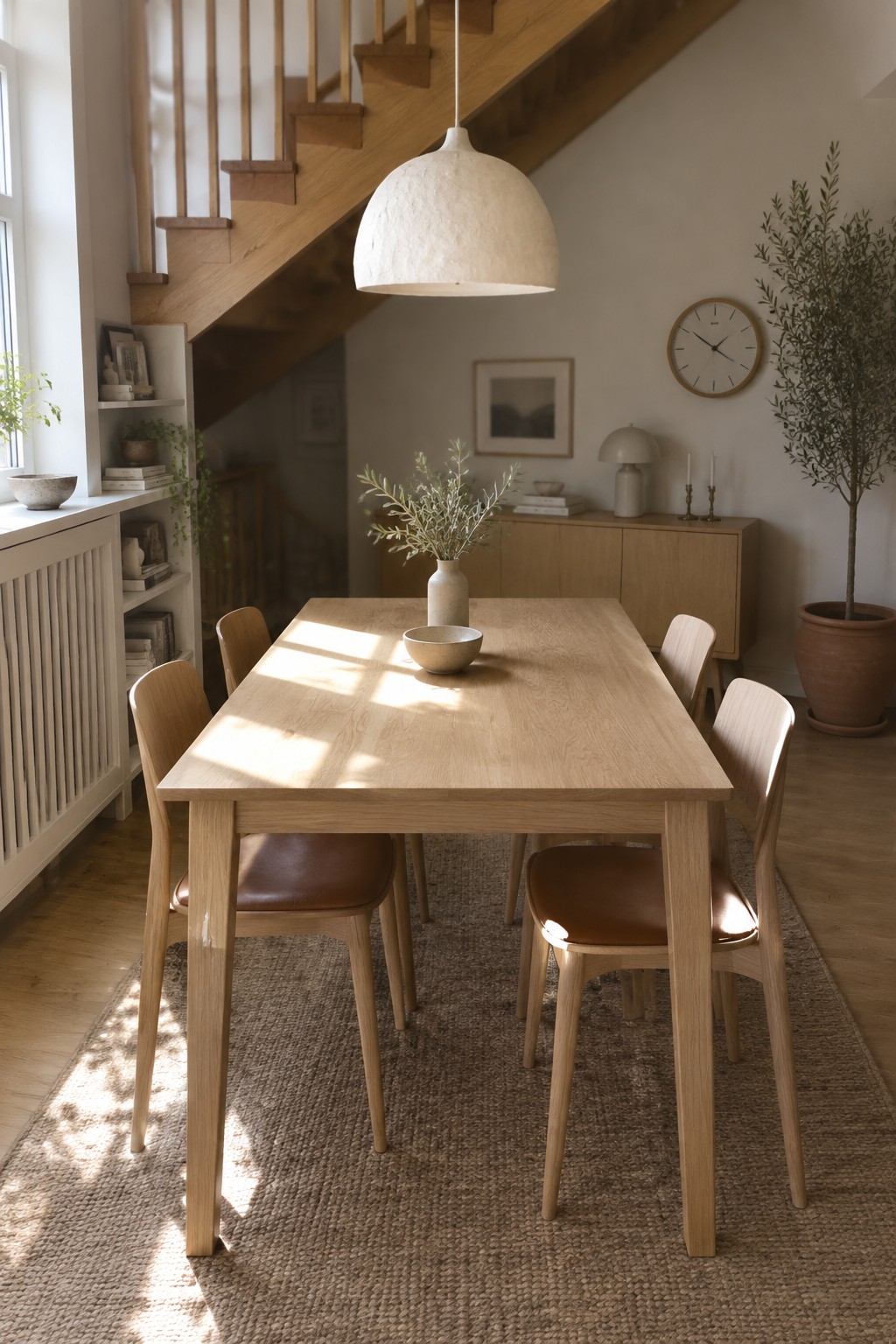
Light wood furniture works especially well in a dining room that gets plenty of daylight. The pale table reflects the light and keeps the room feeling open without needing much extra decoration.
Place the table near a window when the layout allows, and keep nearby finishes fairly simple so the wood remains easy to notice. This approach suits smaller dining rooms too, though a rug can help define the dining area in an open-plan space.
Use Plants Along the Center of the Table

Potted herbs make a simple centerpiece for a light wood dining table. They add a bit of greenery without taking up the whole surface, and they suit a casual dining space where the table is used every day.
Set a few small pots along the middle, leaving room for plates and serving dishes. Herbs are handy near a kitchen, but any compact plants will work. Keep the pots low so diners can still see each other.
Use a Banquette to Make a Small Dining Area Work

A built-in bench can make a dining nook feel like a natural part of the room while leaving more floor space for chairs and movement. Here, the bench follows the wall, with a round table set in front of it.
This setup is especially useful in a compact kitchen or breakfast area. Keep the table small enough for people to slide in and out comfortably, and add a cushion for everyday comfort.
Use a Pedestal Table to Keep the Dining Area Open

A round pedestal table gives a dining area a softer shape and leaves more room for chairs than a table with four corner legs. The single central base is especially useful when people need to move around the table often.
For a Scandinavian look, choose a light wood finish and keep the tabletop styling simple. This setup suits both compact dining rooms and open-plan spaces, though it’s worth checking that the base leaves enough legroom for everyone.
Set Up a Dining Table for Creative Work

A dining table can serve as more than a place to eat. A roomy light wood surface makes it easy to spread out sketchbooks or other projects, while keeping the room useful for everyday meals.
This idea suits an open dining area or a home studio that needs to do double duty. Choose a sturdy table with enough clear surface for your work, and keep supplies nearby so the space is easy to reset.
Use Folding Chairs in a Small Dining Room
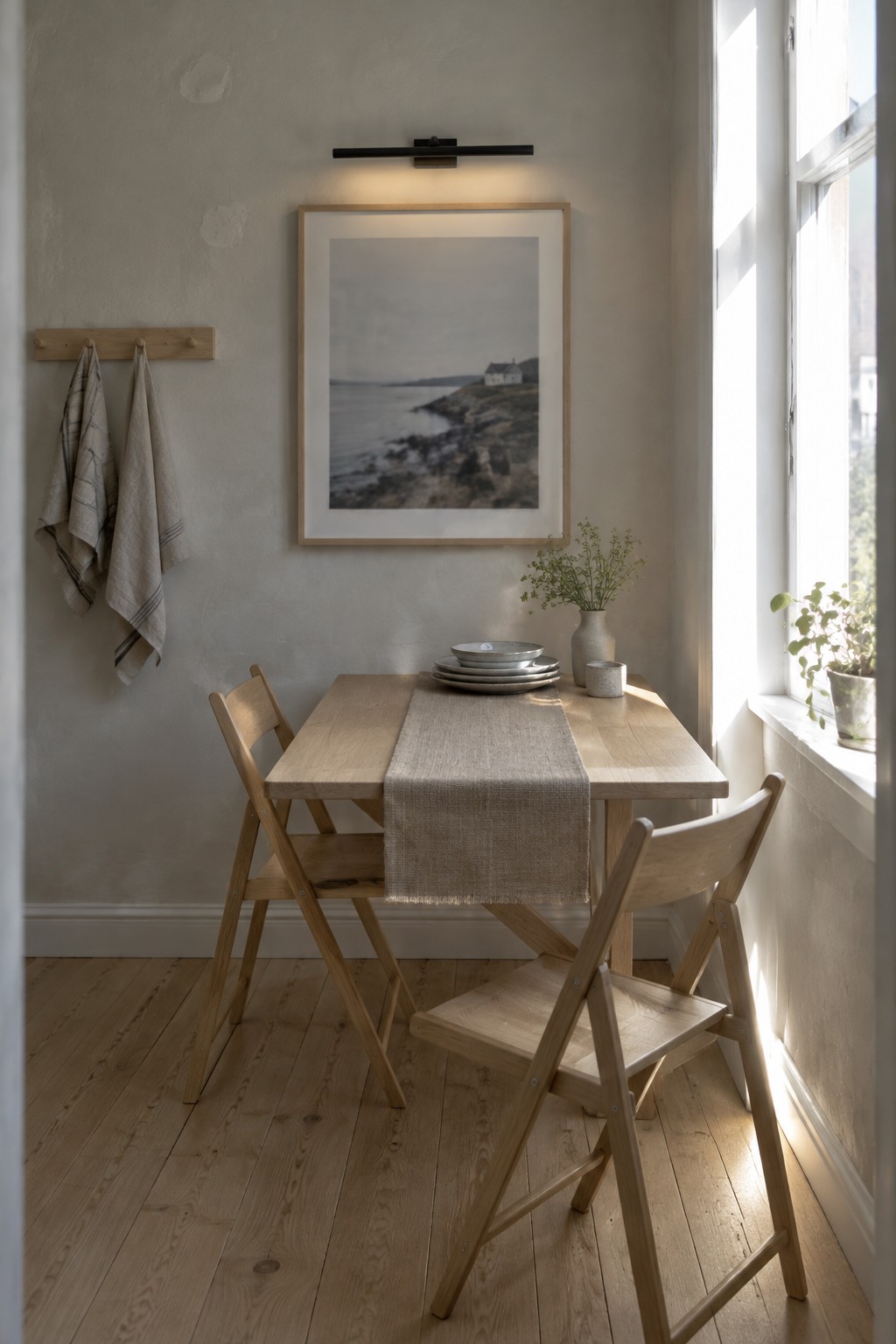
Folding chairs can make a small dining area easier to use without giving up a proper table. Light wood keeps them in step with the rest of the furniture, and they can be moved aside when you need more floor space.
Choose sturdy chairs that feel comfortable enough for everyday meals, then fold and store them when they are not needed. This approach suits a narrow dining nook or a room that serves more than one purpose.
Choose Warm Wood for a Calm Dining Room
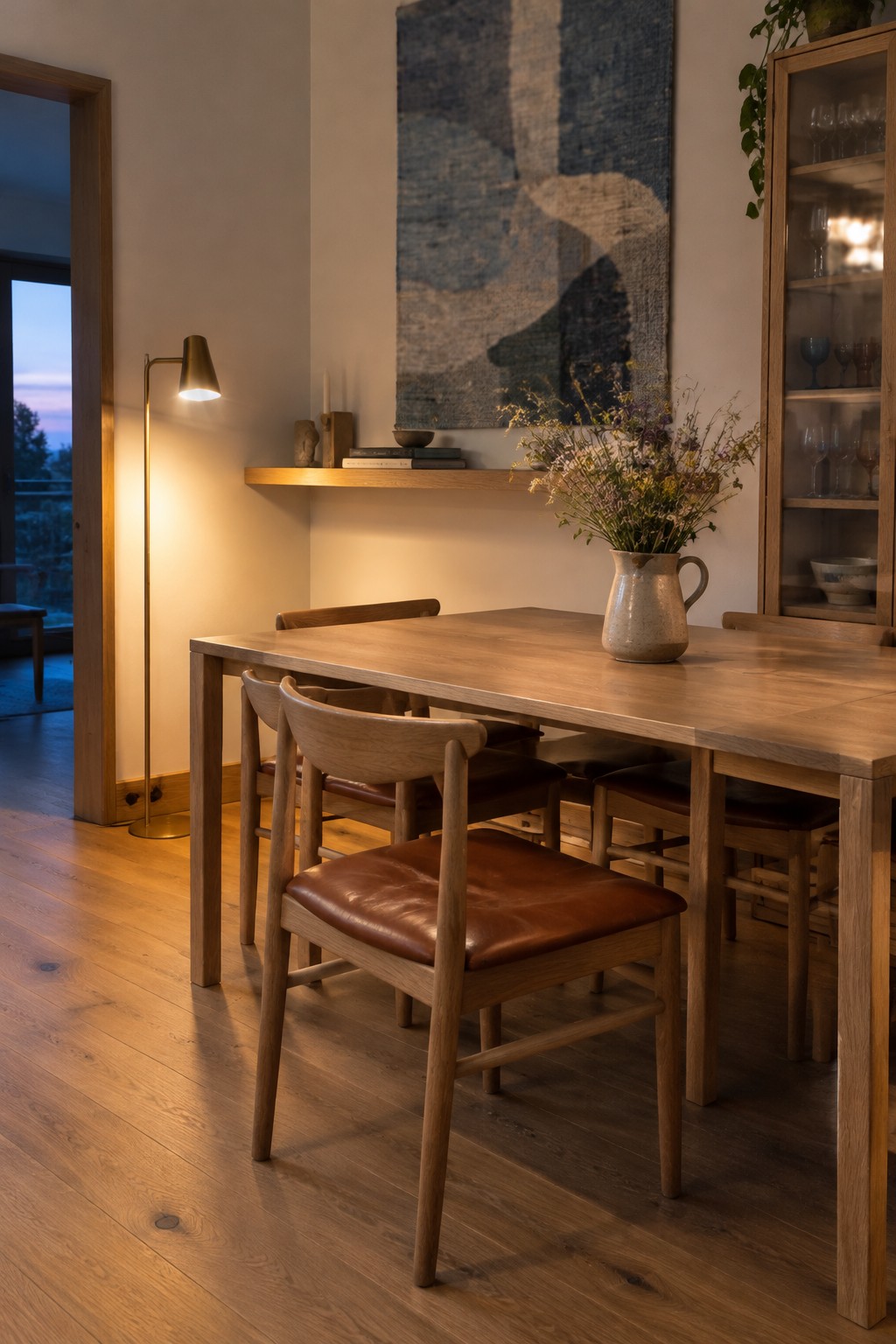
A light wood table and matching chairs give a dining room a simple, natural feel. The finish lets the furniture stand out without making the room feel busy.
This look works well in a Scandinavian-style home, especially when you keep the other finishes quiet. A leather seat cushion can add a practical bit of contrast, but too many competing materials may take away from the simplicity.
Use Stools to Keep a Small Dining Area Open
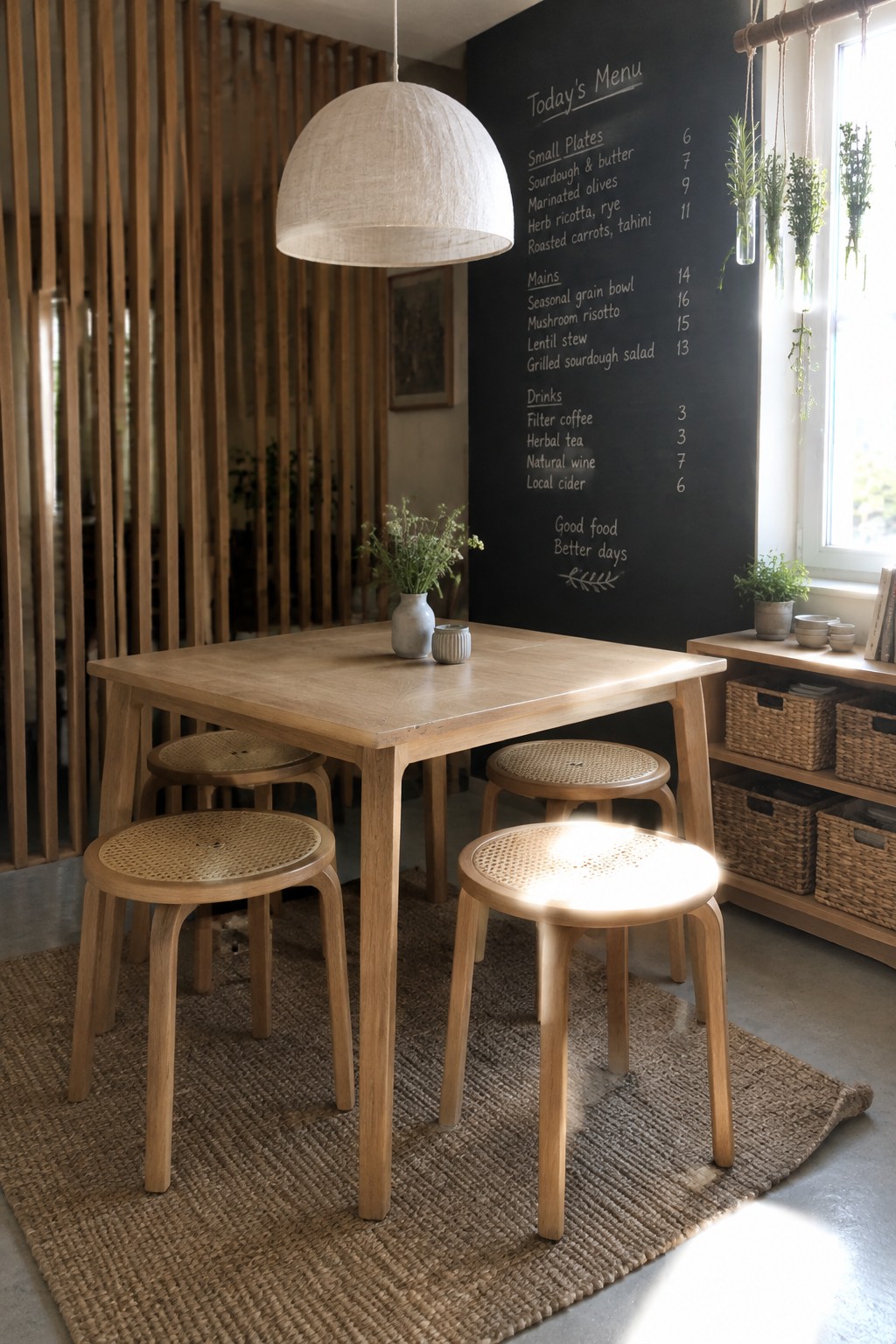
Light wood stools can make a dining area feel less crowded than a set of full-sized chairs. Their simple shape keeps the focus on the table, while woven seats bring in a little texture.
This setup works well in a compact kitchen or café-style nook where extra floor space matters. Choose stools that tuck neatly under the table, and check that they are comfortable enough for the way you plan to use the space.

A large round table makes it easy for everyone to face one another, which suits a dining room used for family meals or long visits. The light wood keeps the substantial tabletop from feeling too formal.
Leave enough room around the table to pull out chairs and walk past them comfortably. This shape works best when there’s open floor space around the dining area.
Use a Live-Edge Table as the Dining Room’s Main Feature

A live-edge light wood table brings natural character to a Scandinavian dining room without needing much extra decoration. Its irregular edge gives a simple dining setup a more relaxed, personal feel.
Keep the chairs and tabletop accessories fairly simple so the wood grain can stand out. This style suits a room with neutral finishes, but check that the uneven edge leaves enough comfortable space for people to sit.
Use Woven Chairs for a Lighter Dining Setup
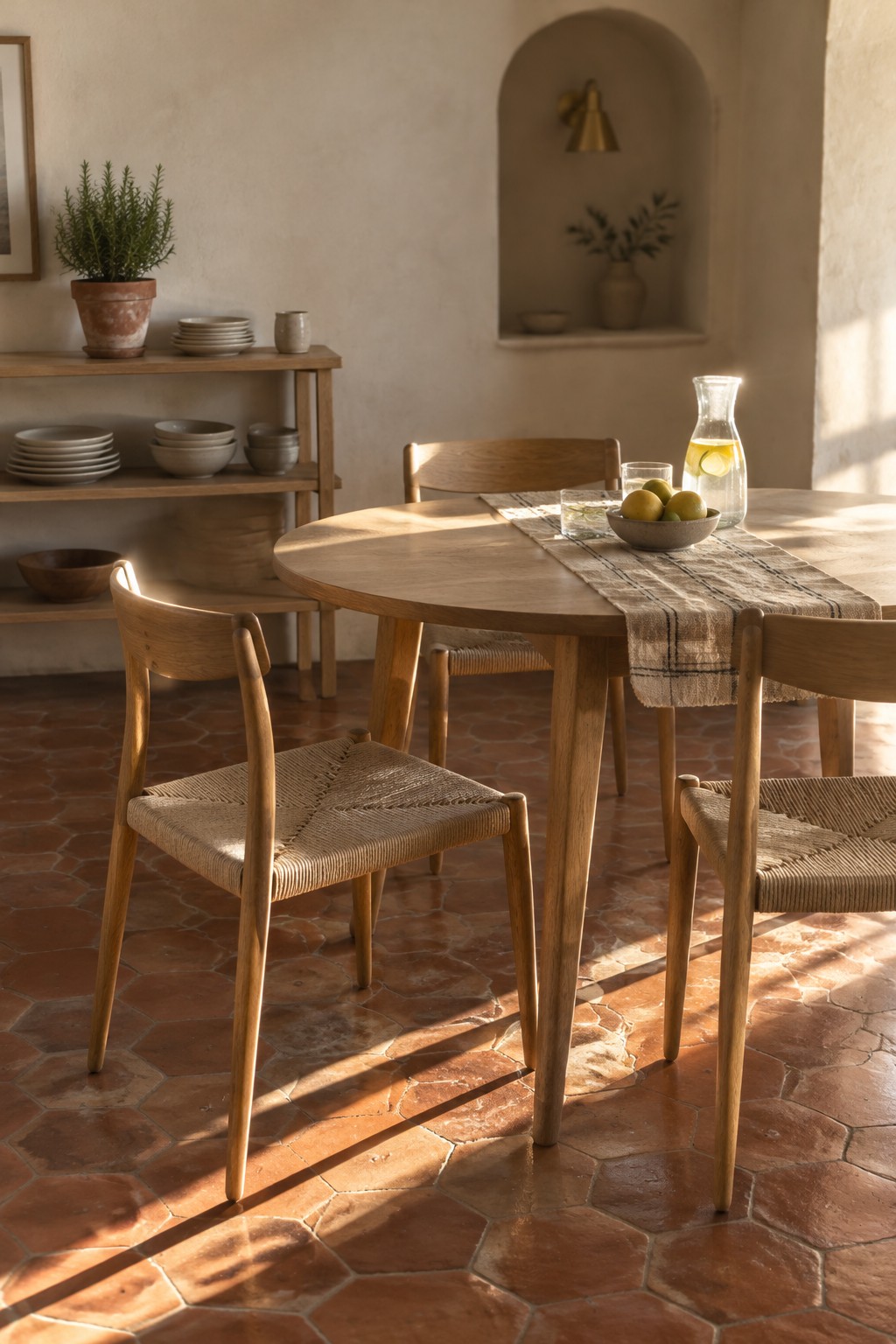
Woven seats are a practical way to bring texture to a dining room without making the furniture feel bulky. On light wood chairs, the natural cord keeps the look relaxed and works well with a simple wooden table.
This style suits casual dining spaces, especially when you want the chairs to feel comfortable but still easy to move around. Choose a durable weave, and leave enough room between chairs so the seats do not crowd the table.
Let a Sturdy Wood Table Set the Tone

A substantial light wood table can make a dining room feel settled without needing much extra decoration. Its simple shape and visible grain give the room a natural focal point, while upholstered chairs make the seating more comfortable for long meals.
This approach works well in a Scandinavian-style room where you want a practical table that still feels warm and relaxed. Choose chairs with a little cushioning, and keep the tabletop mostly clear so the wood remains easy to notice.
Keep Light Wood Furniture Simple
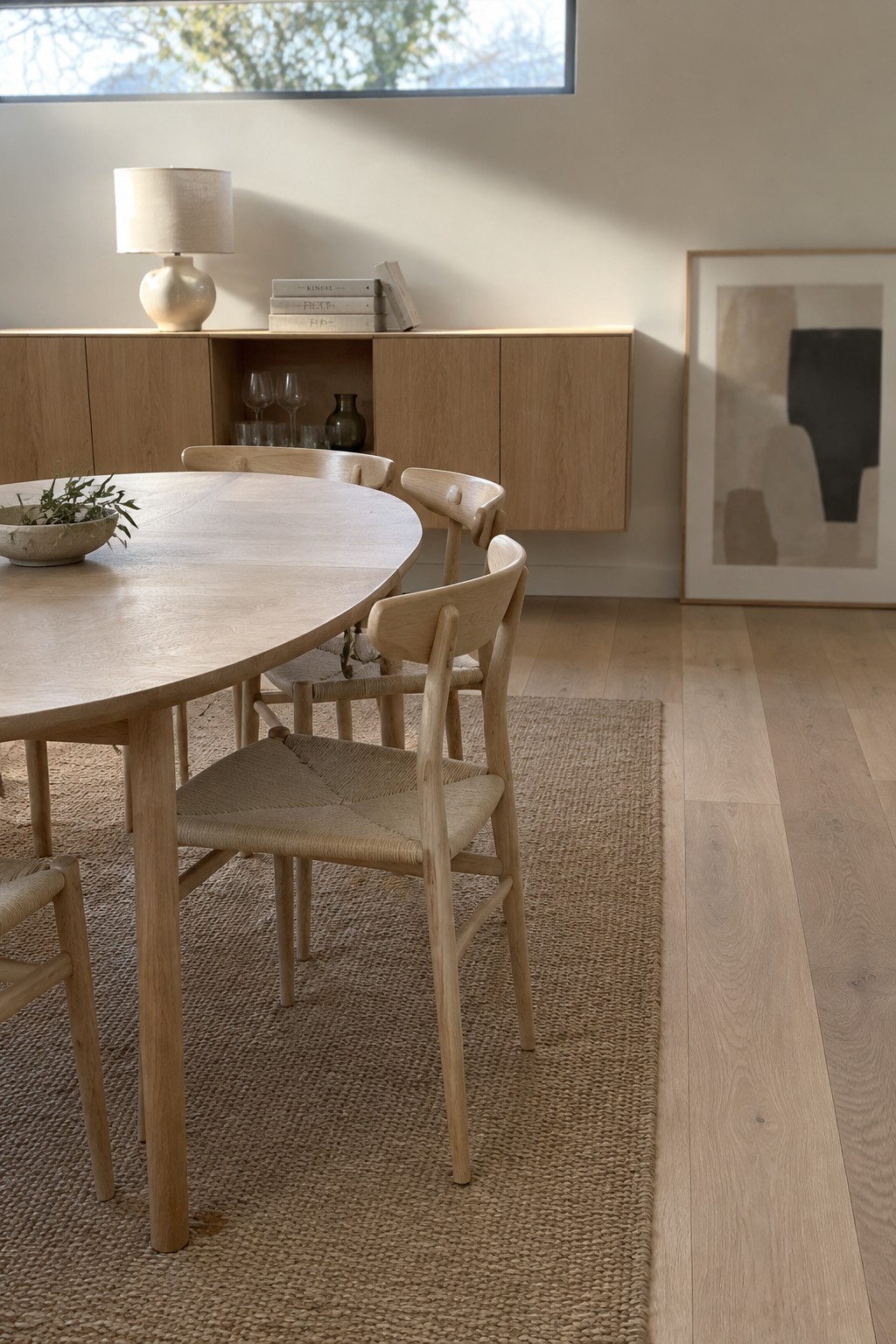
A light wood dining set can make a room feel calm without much extra styling. Here, the matching table and chairs keep the look consistent, while their simple shapes let the wood grain stand out.
This approach suits a Scandinavian dining room where you want a comfortable, uncluttered feel. Pair the furniture with a woven rug or a few natural accents, and keep the rest of the decor restrained so the room does not feel busy.
Frequently Asked Questions
Q: How do I keep a light wood dining room from feeling too pale?
A: Add contrast with a dark pendant, black chair legs, or a few deeper-toned accents. A textured rug or linen curtains can bring in warmth without making the room feel busy.
Q: Can I mix different shades of light wood?
A: Yes. Choose woods with similar warm or cool undertones, then let one finish lead and use the others in smaller pieces. A little variation makes the room feel collected rather than overly matched.
Q: What kind of rug works under a dining table?
A: Pick a low-pile rug that chairs can slide across easily, and make sure it extends past the chairs when they’re pulled out. A subtle pattern or natural texture suits Scandinavian style while helping hide everyday crumbs.
Q: How can I make a small Scandinavian dining room feel bigger?
A: Keep the furniture visually light, with slim legs and an open base, and avoid crowding the table with extra pieces. A mirror or simple pendant can add a sense of space without taking up floor area.
