
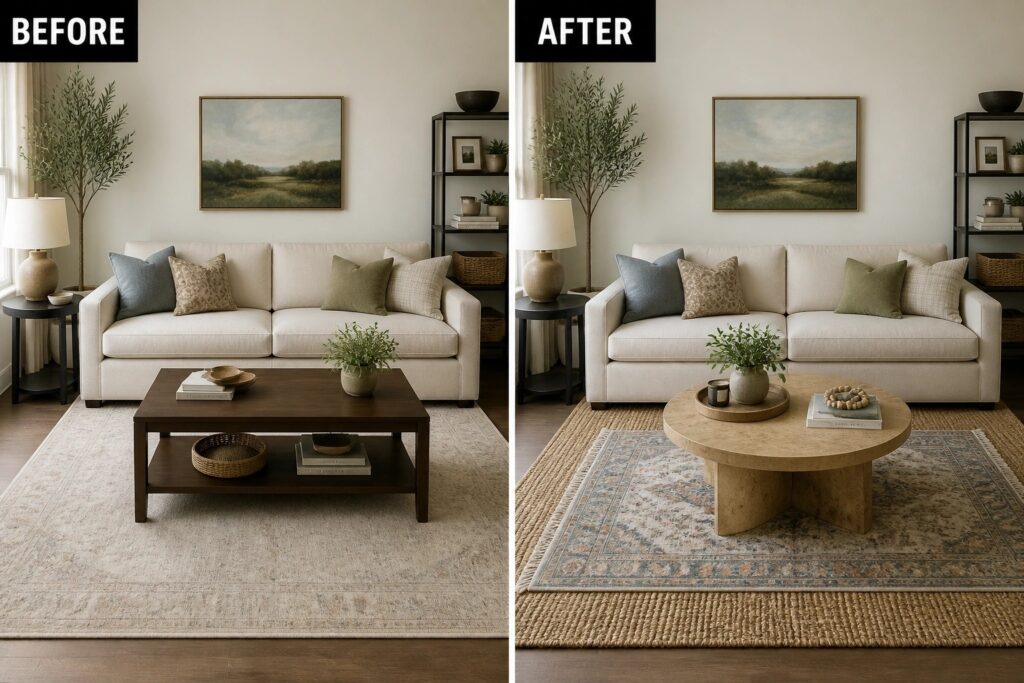
My living room often felt unfinished even with a sofa that still worked well enough for daily use.
I have noticed that adjusting the pieces around what is already in place tends to create a space that feels more settled without needing a full reset.
Small adjustments add up quickly.
Working with the sofa as the starting point lets the rest of the room gain purpose through better layout and a few thoughtful additions rather than replacements.
Some of these changes are the kind I would test first if a room starts to feel like it is missing its center.
Update The Coffee Table To Refresh The Room
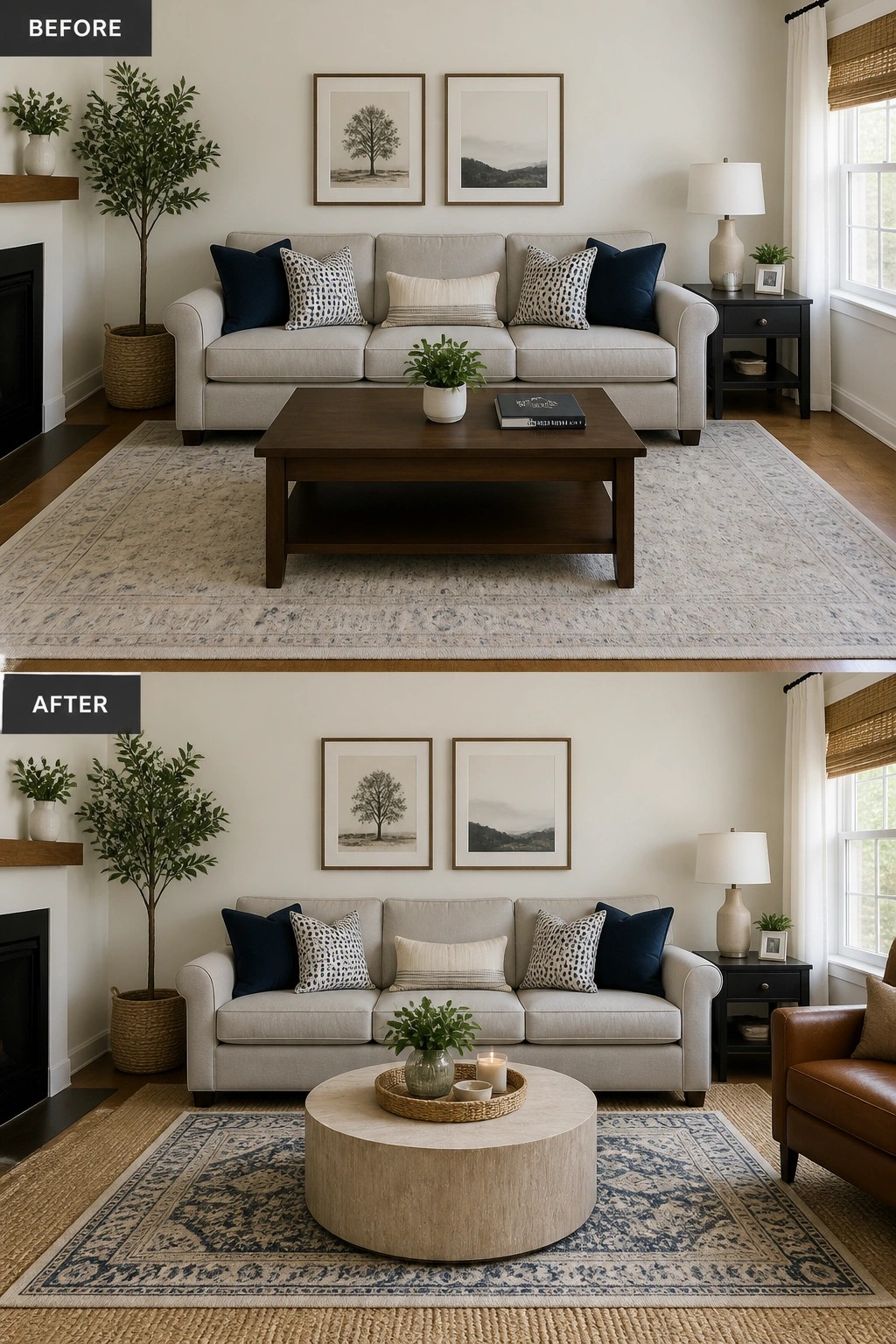
The before photo shows a standard rectangular coffee table sitting on a single large rug. In the after version the table switches to a round shape, the rug gets layered with a natural jute underneath, and a leather chair slides in on one side. Those two changes alone make the whole seating area feel lighter and more balanced while the sofa stays exactly where it is.
A round table works well when you want the flow around an existing sofa to feel easier. It softens the lines in a rectangular room and gives you a spot for a tray without crowding the walkway. If your sofa is already in place, start with the table shape and one extra chair before you buy anything else.
Make A Plain Living Room Feel Finished
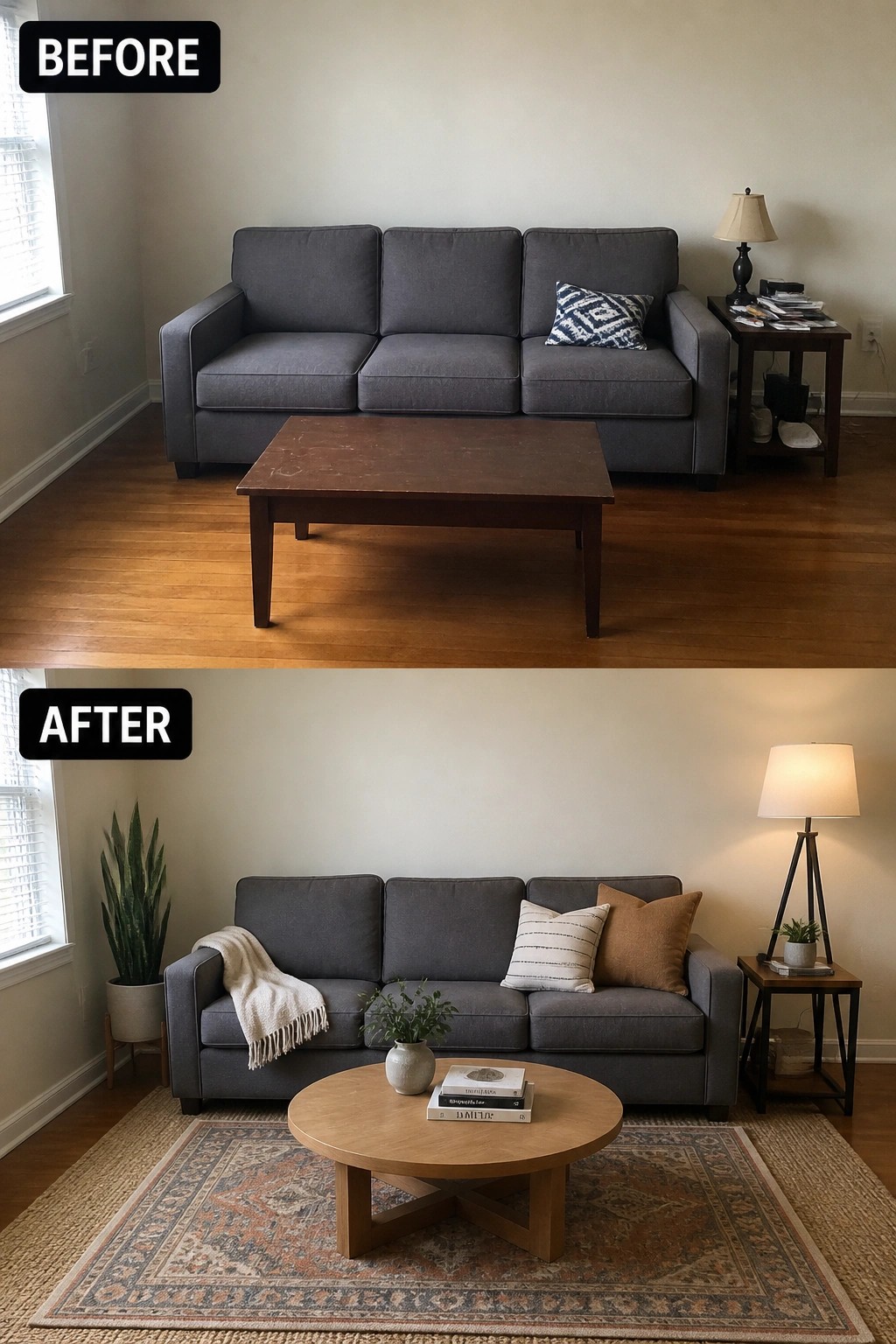
The before shows a basic sofa and coffee table sitting on bare wood floors with almost nothing else in the space. Adding a large rug underneath the seating instantly pulls the room together and makes it feel like a real living area instead of a few pieces placed in an empty room.
This works best in rooms that already have the main furniture but still feel cold or unfinished. Choose a rug big enough for the front legs of the sofa and chairs to sit on it, then add just a couple of pillows, a throw, and one or two plants. Keep the rest of the room simple so the rug stays the main anchor.
Paint The Wall Behind Your Sofa A Deep Color
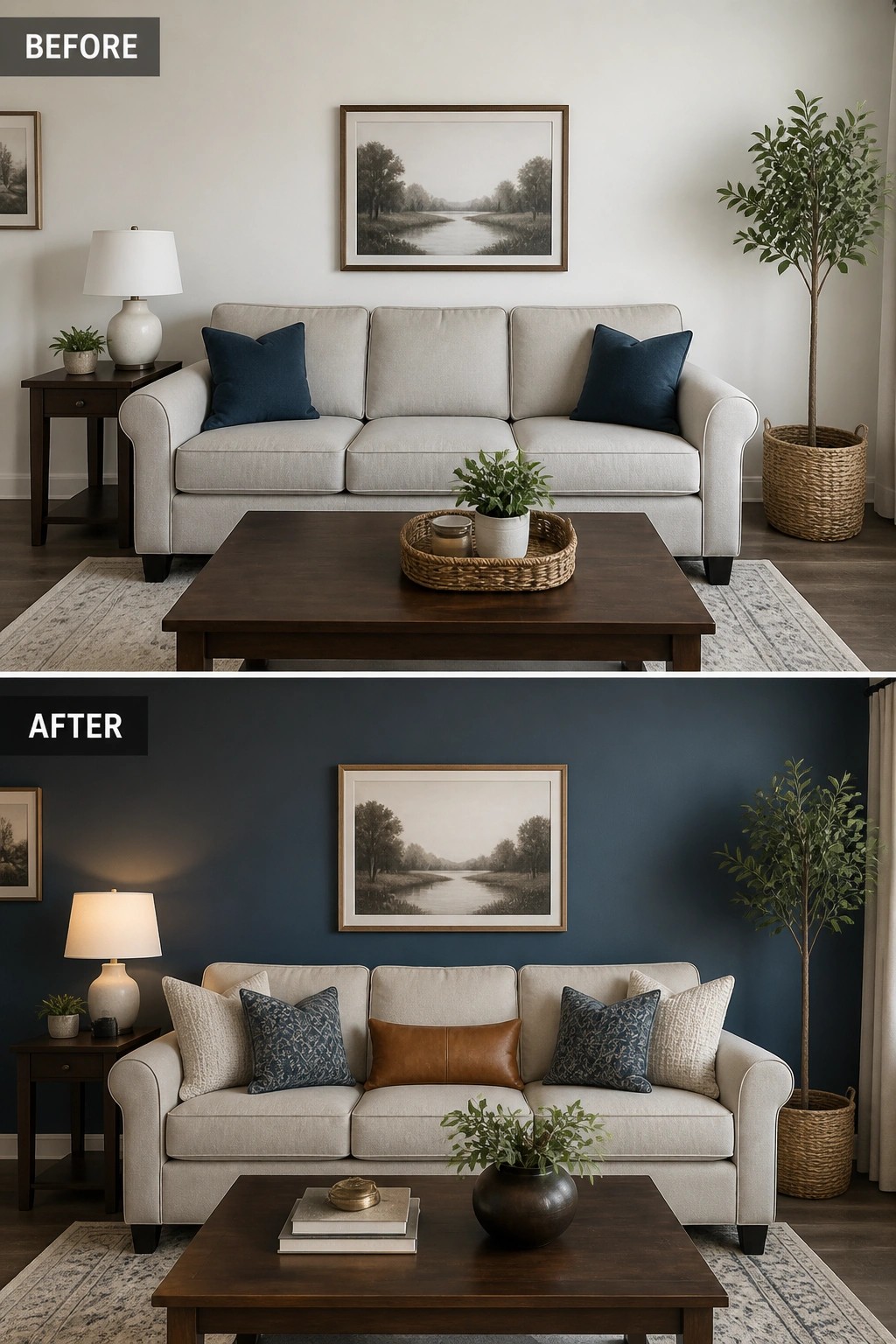
Painting the wall behind the sofa a deep navy blue makes the biggest difference in this room. The light walls in the before photo left the space feeling open but unfinished. Once the color went on, the same sofa and coffee table suddenly looked more settled and complete.
This approach works well when you already like your furniture but want the room to feel warmer without a full overhaul. Keep the other walls light so the space does not close in, and add a few extra pillows in matching tones if you want more softness. It is an easy change that lets the existing sofa stay in place while the room feels more put together.
Add An Accent Wall To Anchor Your Sofa
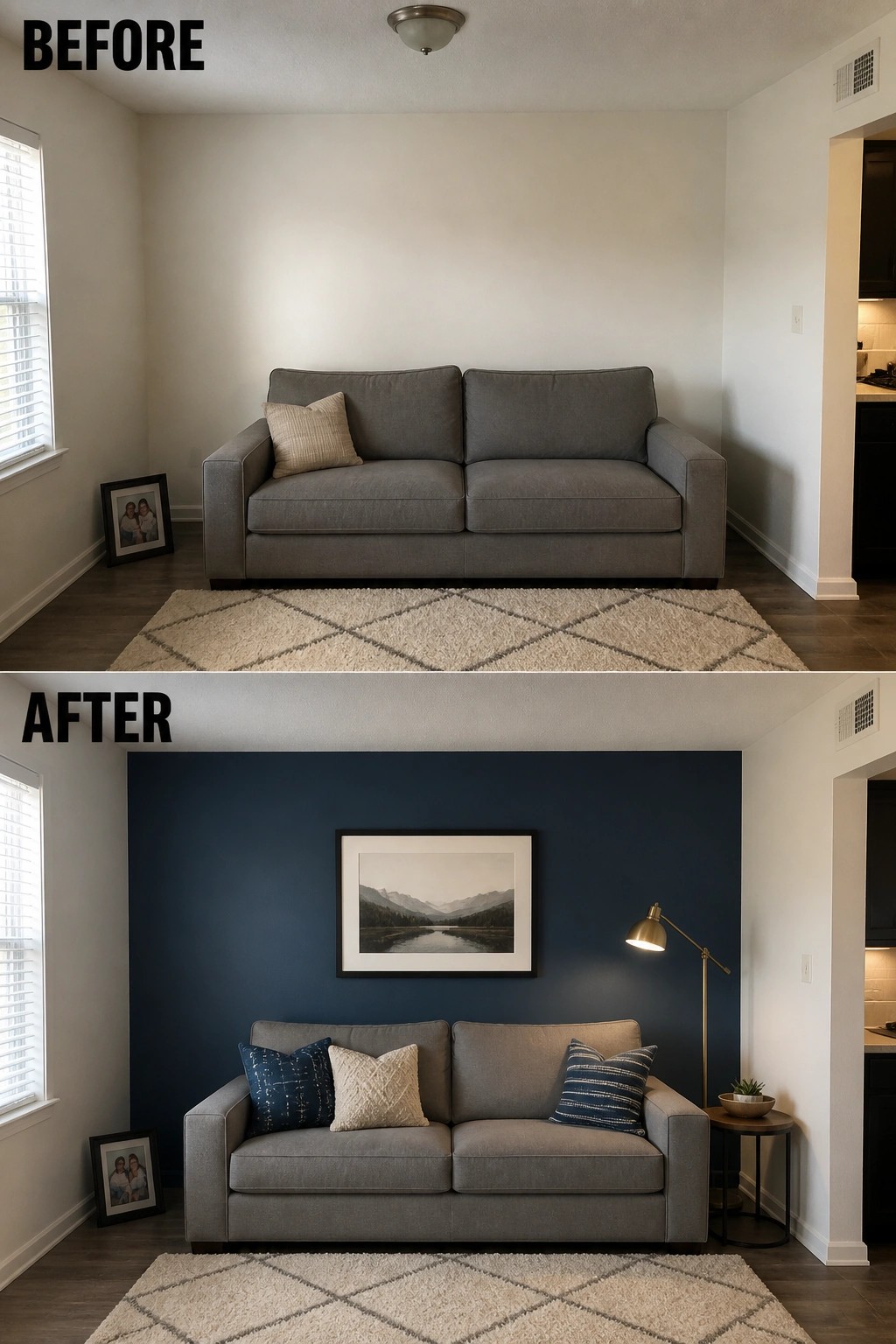
Painting one wall behind the sofa gives a plain room instant structure. The before version shows a blank wall that leaves the gray sofa floating without any real focus, while the after version uses a deep blue to pull everything together and make the seating area feel intentional.
This approach works best in rooms where the sofa sits on a long, empty wall with little else happening. Pick a color that contrasts with the sofa fabric, hang one large piece of art in the center, and add a tall lamp on one side so the space feels balanced without crowding it with more furniture.
Add Trim To A Plain Wall To Give It Structure
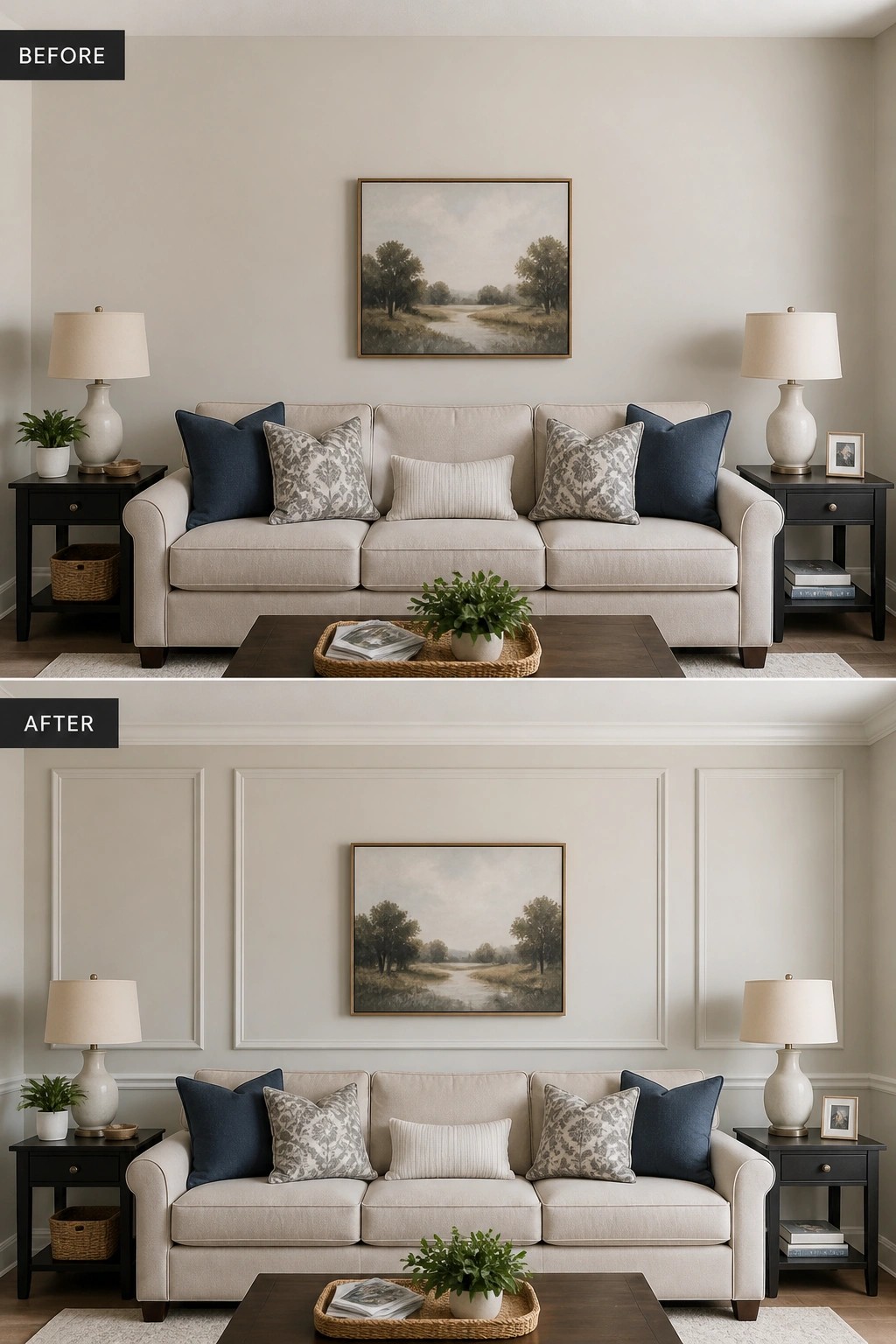
A plain wall behind the sofa often leaves a living room feeling a little flat even when the furniture is already in place. Adding simple panel molding creates depth and makes the seating area feel more defined. Here the flat wall gained clean lines that frame the art and pull the whole space together without any other major changes.
This idea works best in rooms that already have the right furniture but need one extra layer to feel complete. It suits homes with basic drywall where you want some character without repainting everything or buying new pieces. Keep the trim simple and paint it the same color as the wall so the change stays subtle and easy to live with.
Add Trim To A Plain Wall Behind The Sofa
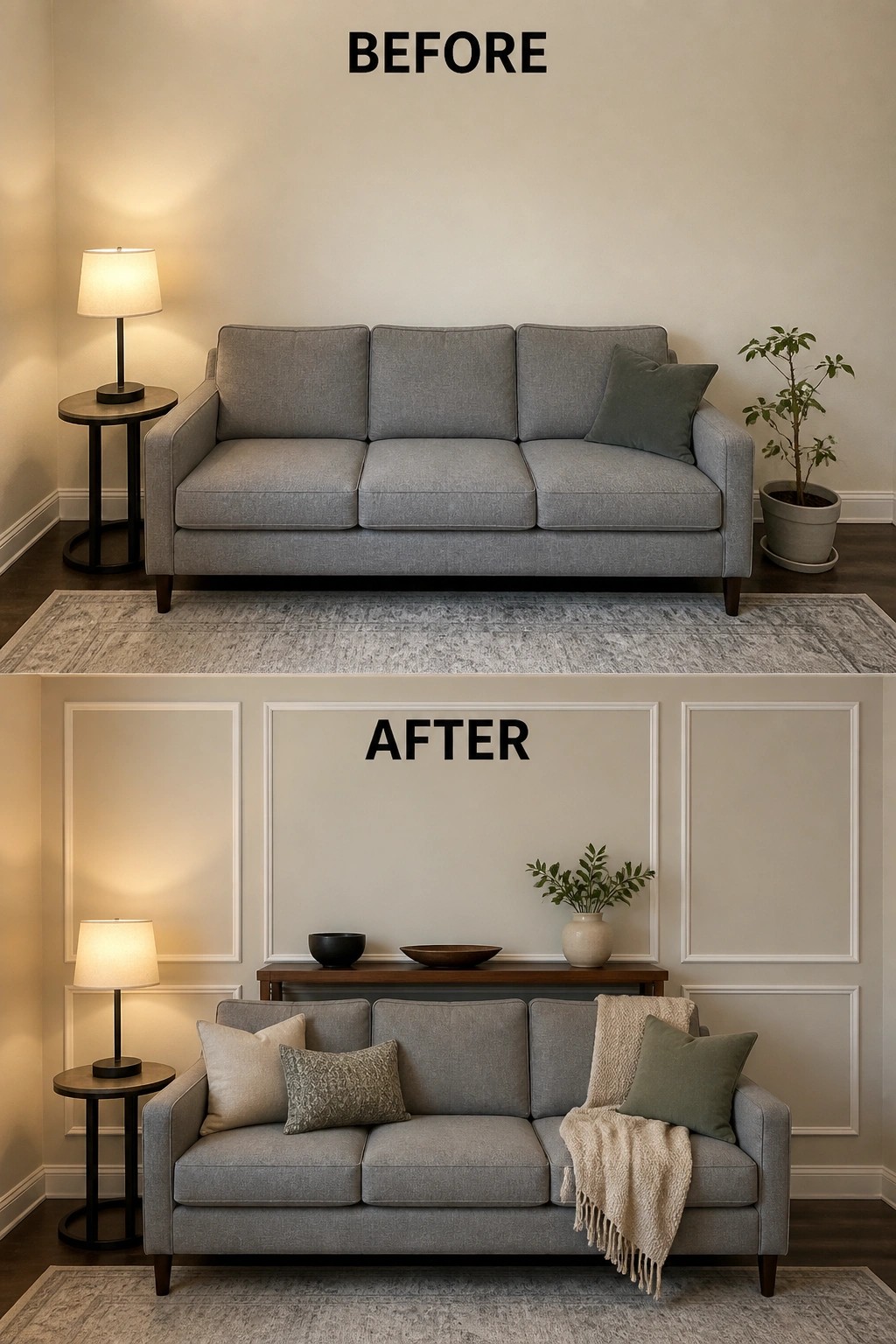
A flat wall can make even a decent sofa setup feel unfinished. In this case the before photo shows a bare surface with nothing to anchor the seating area. Adding simple white panel molding breaks up the space and gives the wall a finished look without major construction.
This works well in rooms where the sofa sits against a long blank wall. Keep the trim style simple so it does not compete with the furniture, and add a narrow console or a few small items along the bottom to tie the new detail together. It is an easy update for older homes or newer builds that lack any architectural interest.
Add Built-Ins To Frame An Existing Sofa
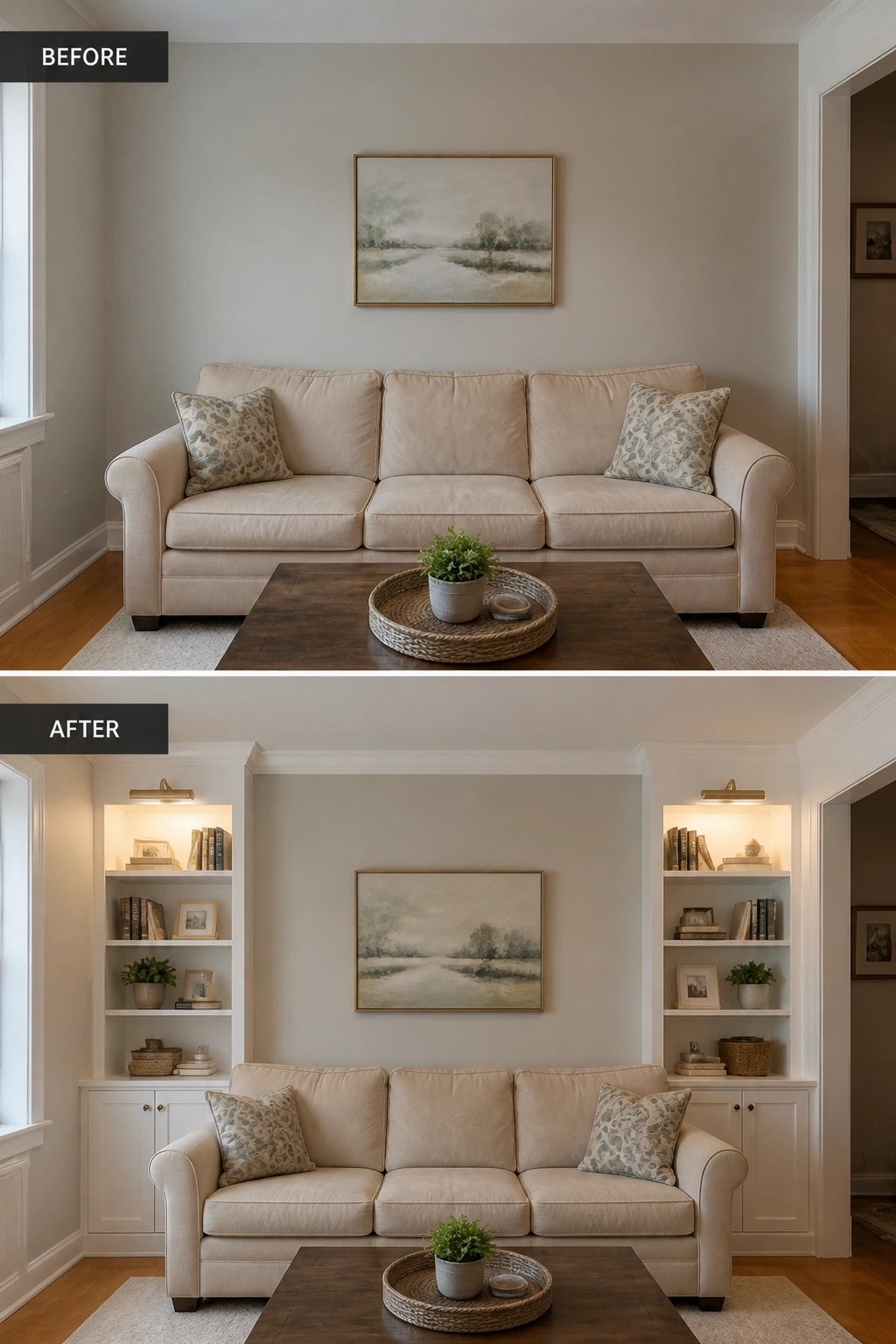
Adding built-in shelves on either side of a sofa is a simple way to give a plain living room more structure. The before photo shows a sofa sitting against a bare wall with just one piece of art above it. In the after version the same sofa now sits between two tall shelving units with lights and lower cabinets, which makes the whole wall feel finished and gives the room extra storage.
This works best in rooms where the sofa is the main piece of furniture and the wall behind it feels empty. Keep the shelves from getting too crowded so the sofa still stands out. Match the cabinet and trim color to the walls if you want the built-ins to blend in rather than take over.
Add Built-Ins Around Your Sofa For A Finished Look
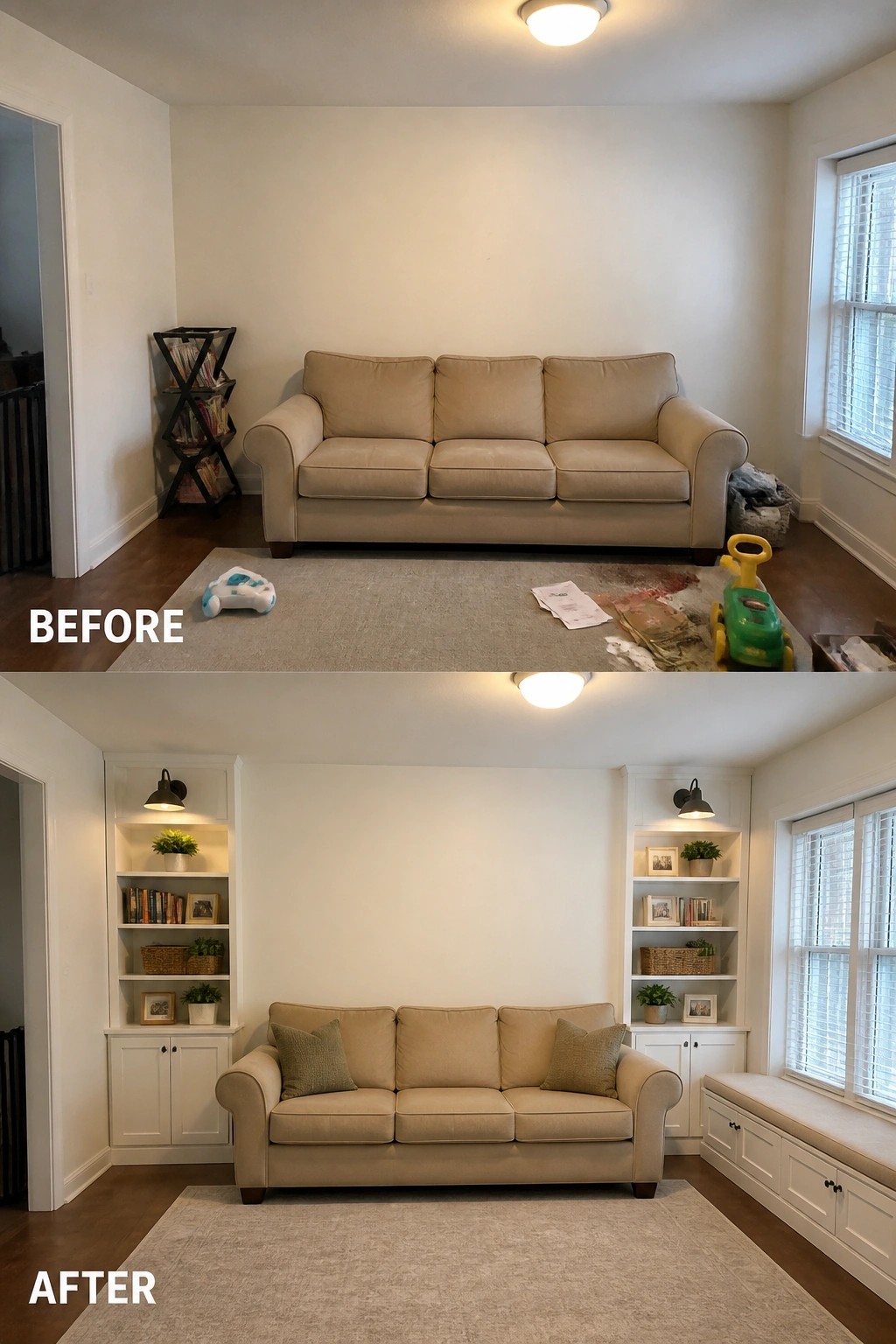
The before photo shows a sofa sitting against a blank wall with nothing to ground it. The after version adds matching built-in shelves and cabinets on both sides, which instantly makes the seating area feel like it belongs there. The window seat on the right also helps tie the whole wall together.
This approach works best in rooms where the sofa sits in the middle of a long wall with no natural focal point. Start by measuring the space so the shelves stay balanced with the sofa width, then decide if you want open storage, closed cabinets, or a mix of both. Keep the colors light if your room already feels small.
Layer Lighting To Finish A Living Room
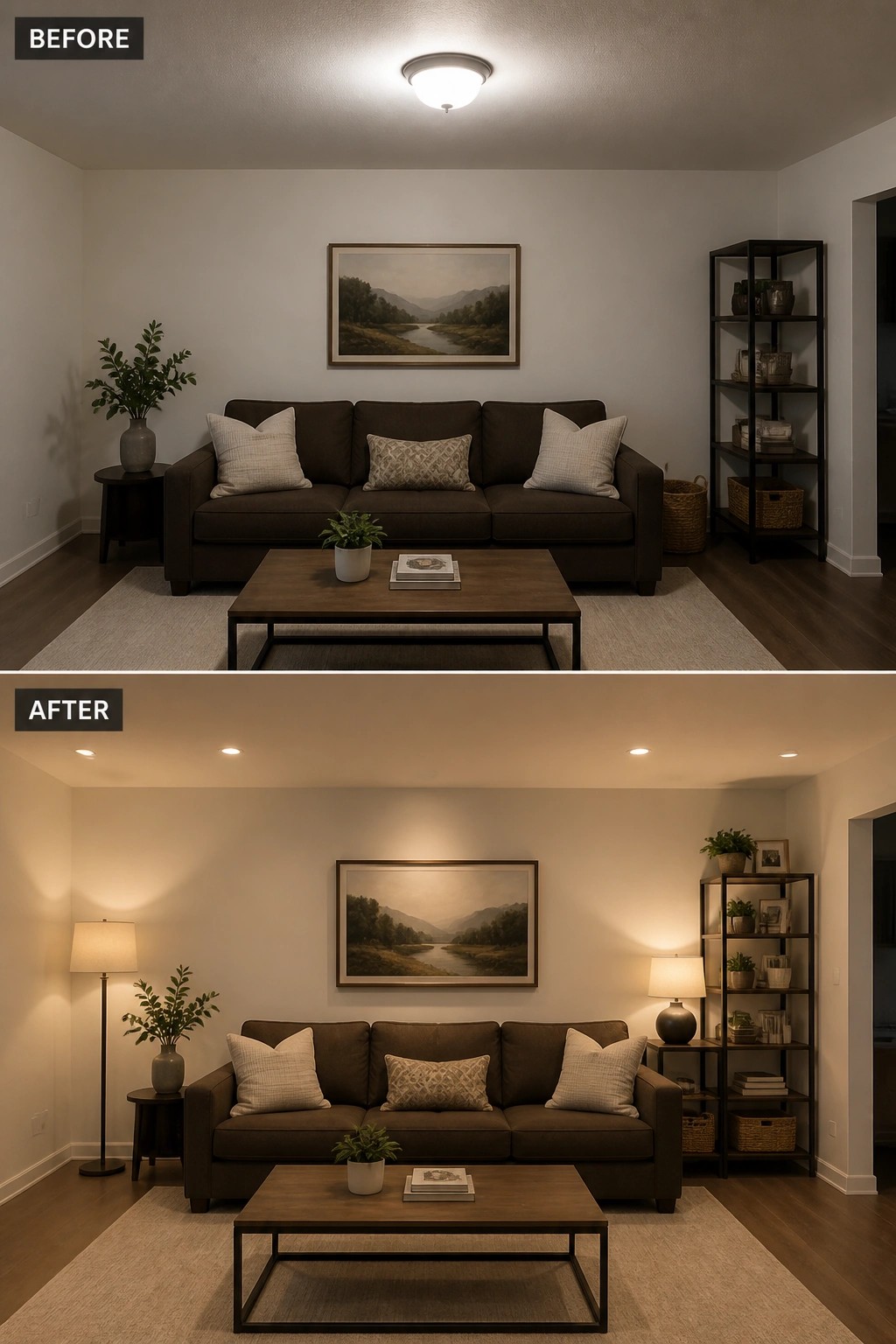
A single ceiling light often leaves a room feeling flat, even when the furniture is already in place. In this case, swapping that one overhead fixture for a mix of recessed lights, a floor lamp, and a table lamp created a much softer and more usable space without moving the sofa or changing the walls.
This approach works best in rooms that already have the main pieces but still feel unfinished. Start by adding one or two lamps at sitting height, then consider recessed or wall lighting if the ceiling allows it. Keep the sources at different brightness levels so you can adjust the mood without adding clutter.
Add Layered Lighting To Warm Up The Room

A single ceiling fixture often leaves a living room feeling flat, especially when the sofa and main furniture stay the same. Switching to a hanging pendant over the seating area and adding a pair of floor lamps on each side creates a softer, more even light that makes the whole space feel finished.
This approach works best in rooms where you want to keep the sofa but need more comfort at night. Place the lamps so they light the seating zone without glare, and keep the overhead light on a dimmer for flexibility. The change is simple and reversible if you rent or want to try it before buying new furniture.
Hang Curtains To Finish The Room

A living room with a solid sofa can still feel unfinished when the windows only have basic blinds. Adding floor-length curtains on both sides softens the space and makes the windows look taller and more balanced without changing anything else.
This works best in rooms where the main pieces are already in place. Hang the rods higher and wider than the window frames, and pick a neutral fabric that sits quietly against the wall so the curtains add warmth without drawing too much attention.
Make A Plain Living Room Feel Finished
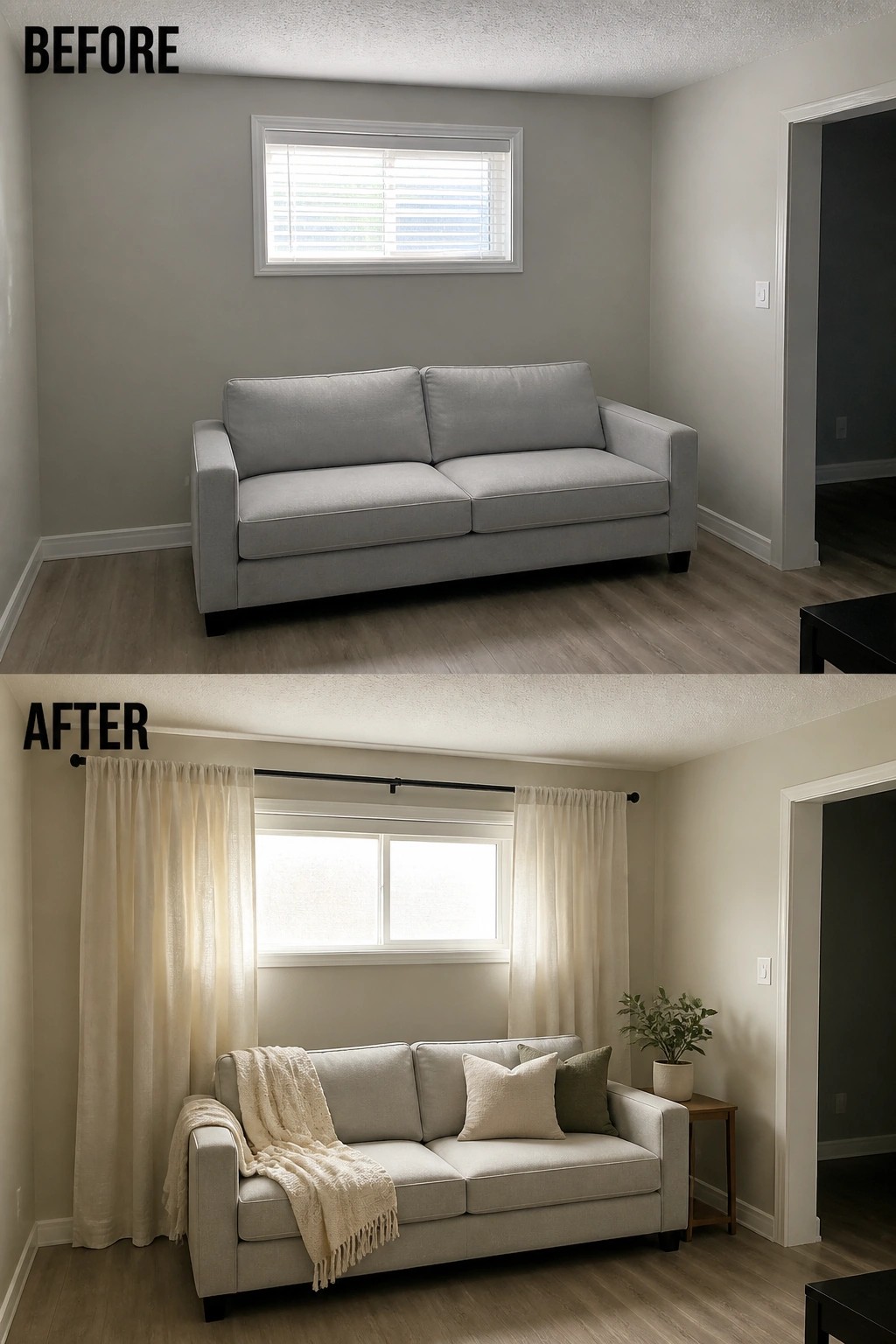
A room with just a sofa can feel half done even when the furniture is decent. The before photo shows exactly that. Once curtains go up around the window and a few textiles land on the sofa, the space suddenly reads as complete instead of empty.
This works best in rooms that already have the main pieces in place. Hang simple floor-length curtains a bit wider than the window frame so the opening feels larger, then add one throw and a couple of pillows in related tones. Keep everything in the same color family as the walls or sofa and the change stays calm rather than busy.
Replace Carpet With Hardwood To Refresh The Room
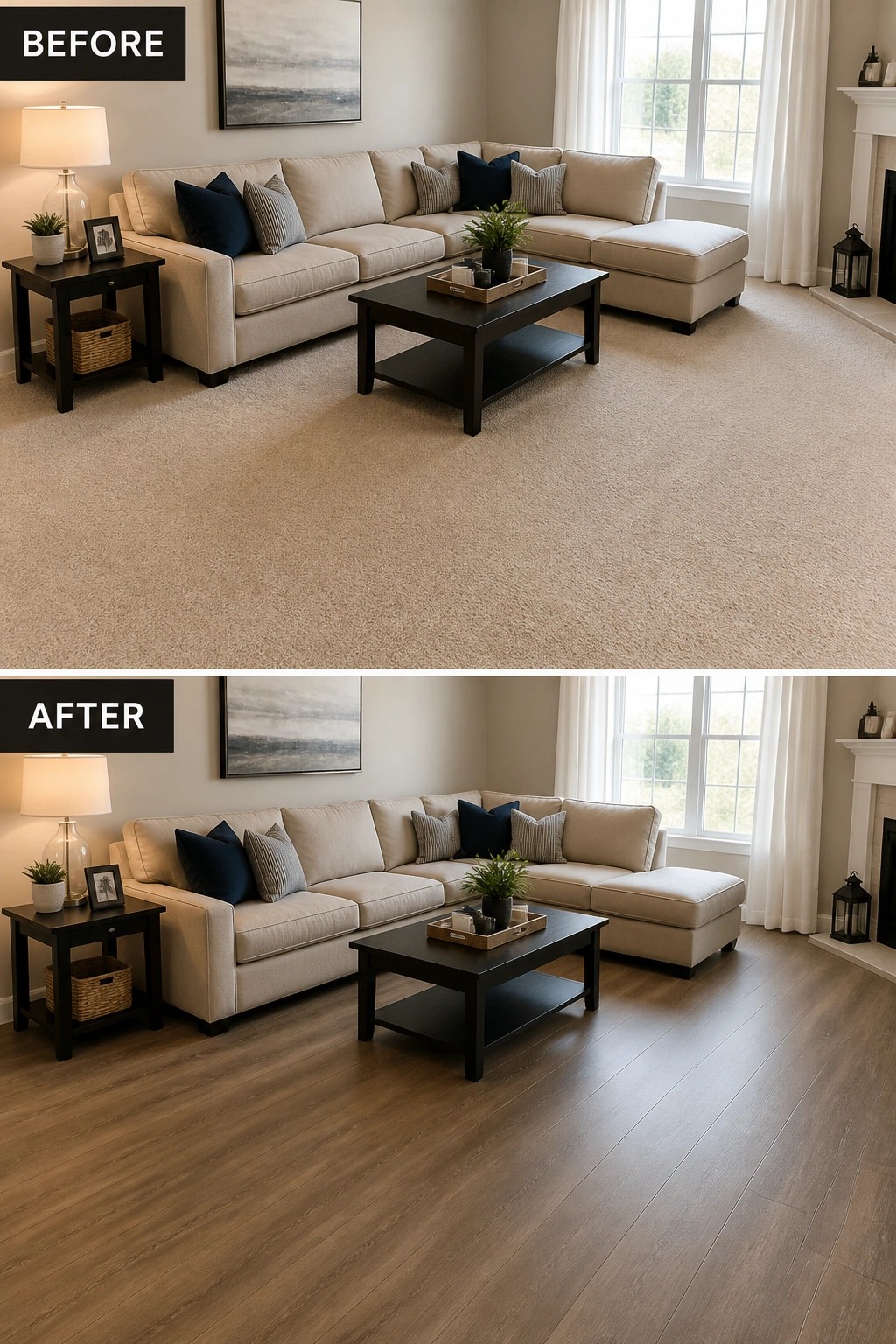
Many living rooms start to feel dated once the carpet shows wear or just looks flat next to everything else. Replacing it with hardwood gives the space a cleaner line and lets the existing sofa stand out without any other big changes.
This works best in rooms where the sofa and main pieces are already in good shape. Choose a medium wood tone that sits well with your current colors, and make sure the new floor runs in the same direction as the main traffic path so the room still feels balanced.
Use A Rug To Anchor The Seating Area
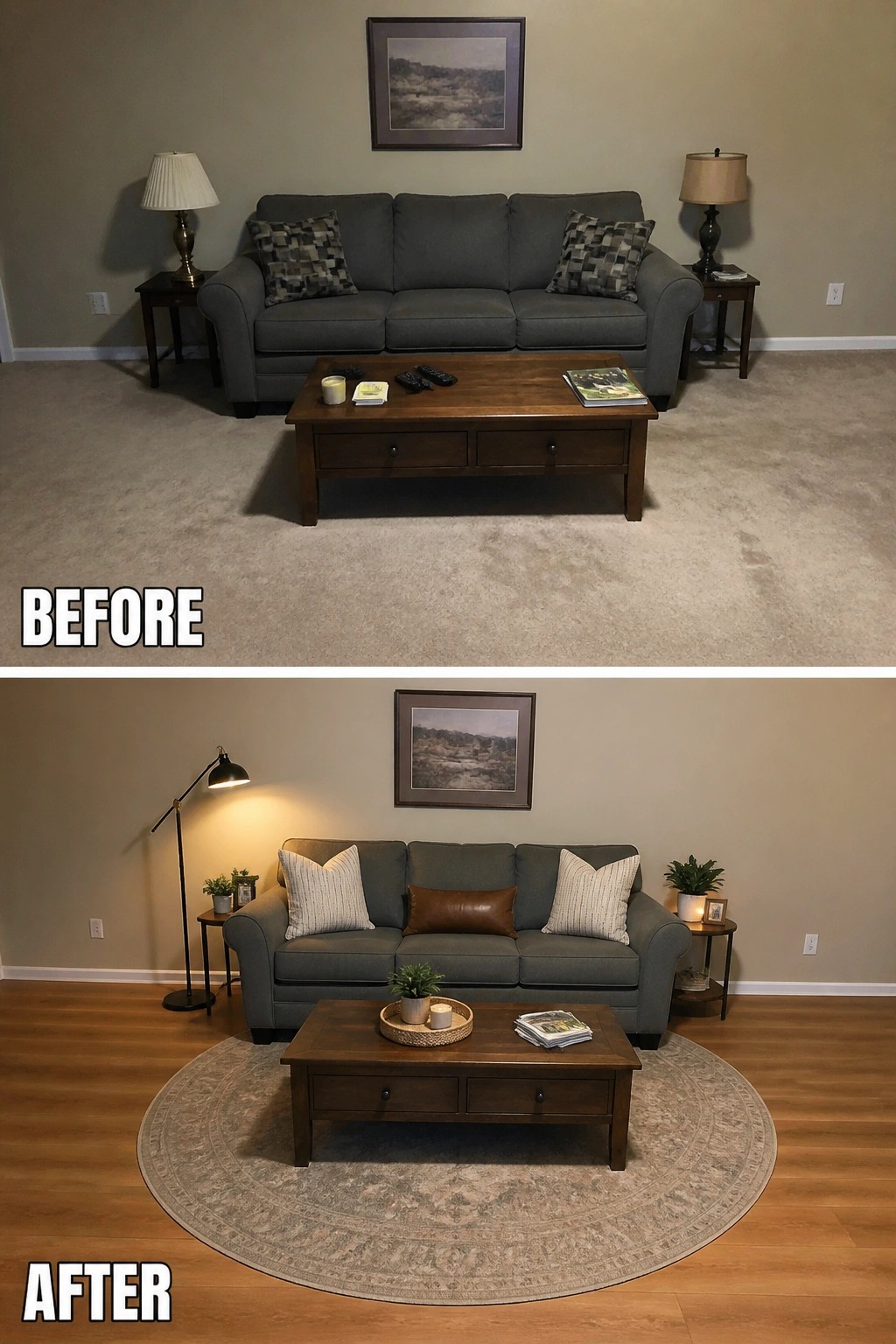
One change that stands out here is the addition of a large area rug under the coffee table and sofa. The before version had the furniture sitting directly on the carpet with no clear edge, which left the space feeling a bit loose. The rug creates a defined zone that pulls everything together and makes the arrangement feel complete.
This works best in rooms where the seating area needs more structure. Pick a rug big enough for the front legs of the sofa to rest on it, and keep the rest of the floor simple. It is an easy way to make a plain living room feel more settled without buying new furniture.
Make A Plain Living Room Feel Finished
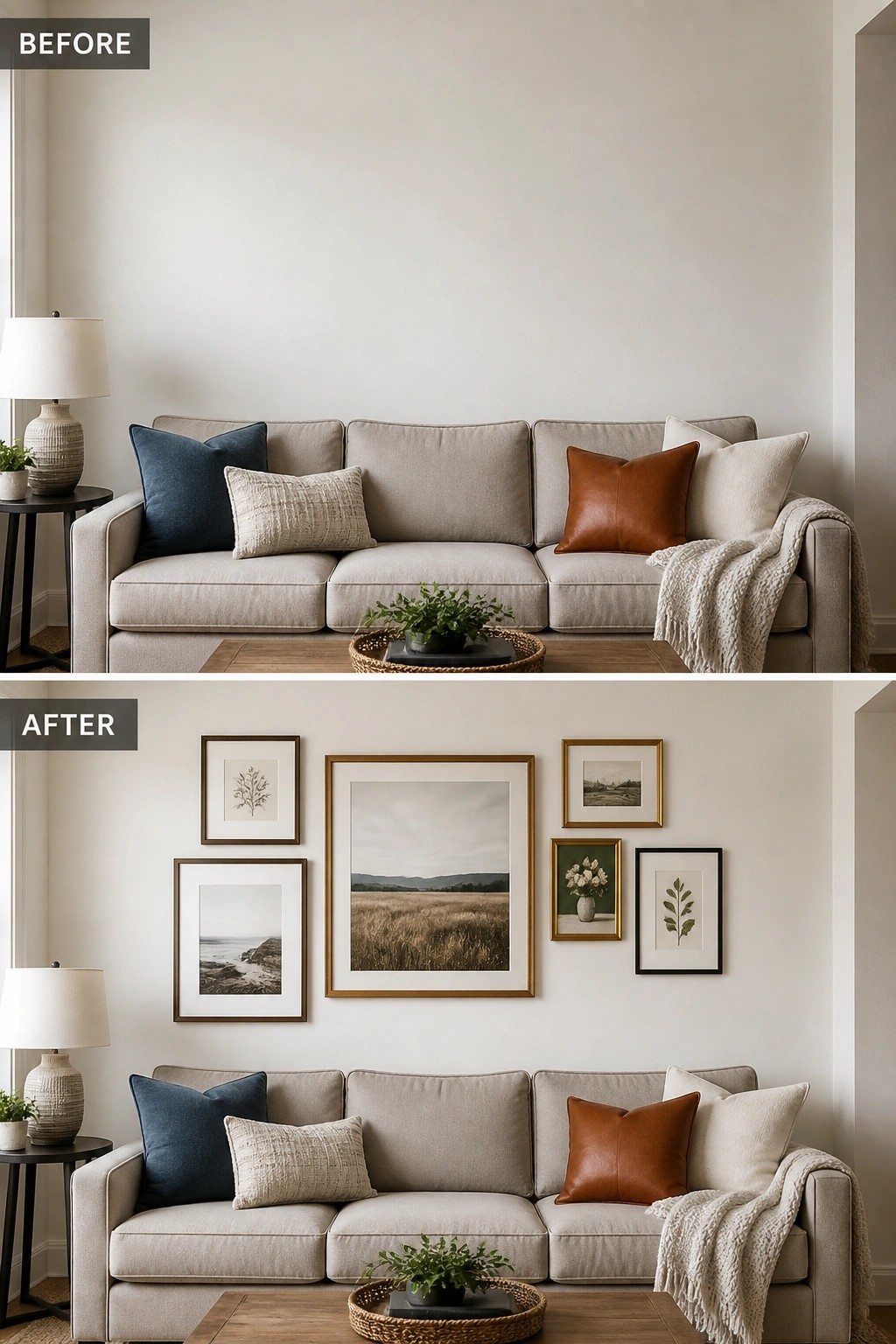
A sofa sitting against a completely bare wall often leaves the room feeling half done. Adding a group of framed prints above the seating gives the space a focal point without any major changes to furniture or color.
This idea suits rooms where the layout already works but the walls still feel empty. Start with a few pieces in similar frames, hang them loosely above the sofa, and stop once the wall feels balanced. It is an easy step that makes the room look more complete without needing new furniture.
Add A Gallery Wall Above The Sofa
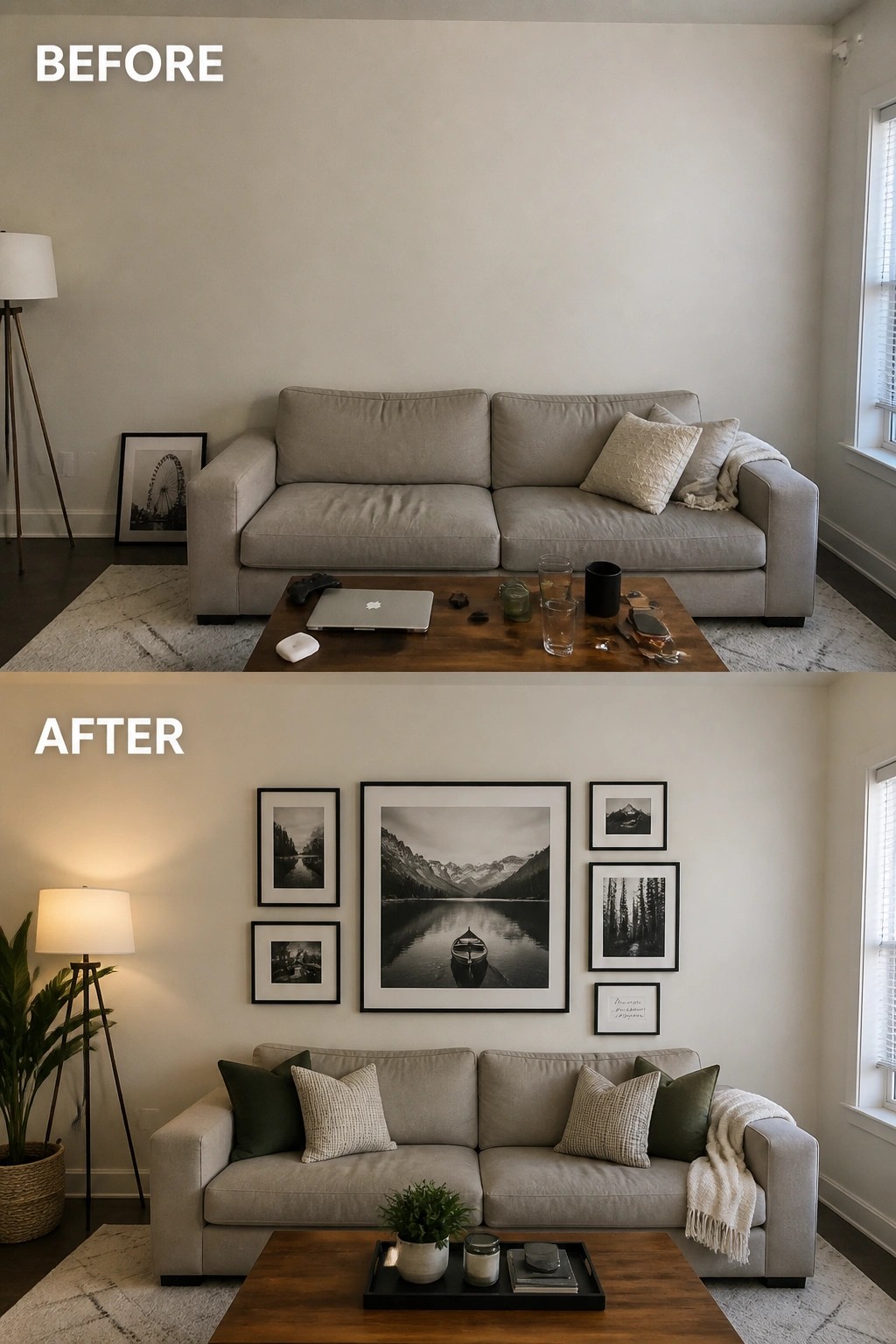
The before photo shows a plain wall that leaves the seating area feeling unfinished and a bit flat. Adding a gallery wall of black and white photos turns that empty space into the main focal point and gives the whole room more purpose.
This idea works in any living room where the wall behind the sofa looks bare. Start with a few larger pieces and fill in with smaller frames so the arrangement feels collected rather than planned. Keep the frames similar in style and stick to one color theme so the wall stays calm instead of busy.
Add A Large Rug To Pull The Room Together
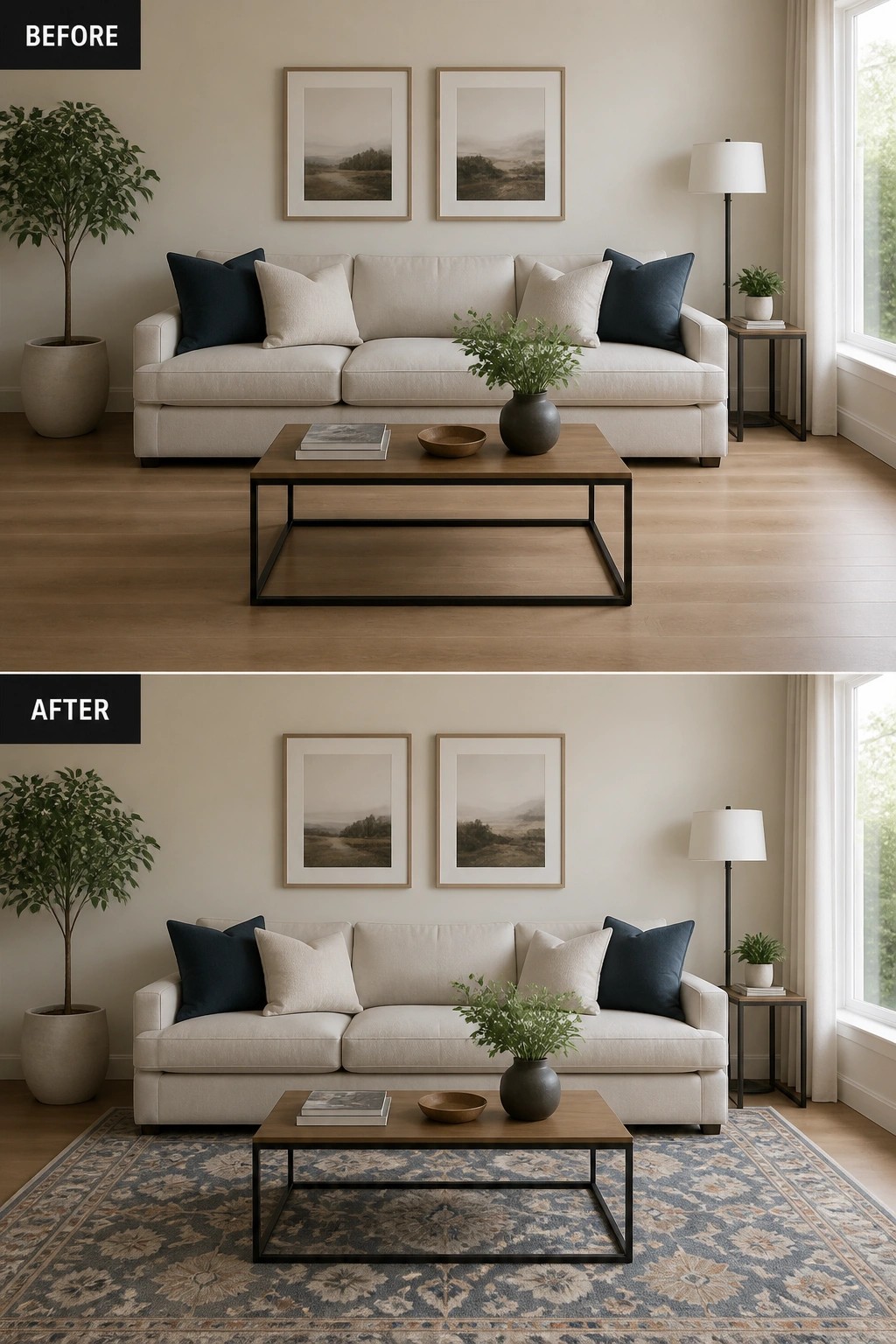
A bare wood floor can leave a living room feeling scattered even when the furniture is already in place. Adding one large rug underneath the coffee table and the front legs of the sofa instantly creates a defined zone. The pattern also softens the space without changing the wall color or buying new pieces.
This approach works best in rooms where the layout is already functional but still feels unfinished. Choose a rug that is big enough for all the main seating to sit on or at least touch it. Keep the colors in the same family as your existing pillows and throws so the update feels natural rather than like a full overhaul.
Use A Rug To Finish A Simple Living Room

The before shows the sofa and coffee table floating on a bare tiled floor. Adding a large patterned rug underneath pulls the seating area together and makes the room feel much more complete without changing the sofa or walls.
This idea works best in rooms with hard flooring or open layouts where furniture needs help staying visually connected. Pick a rug that is large enough for the front legs of the sofa to rest on it, and keep the colors neutral if your existing pieces are already in the same tone family.
Add A Console Table Behind The Sofa
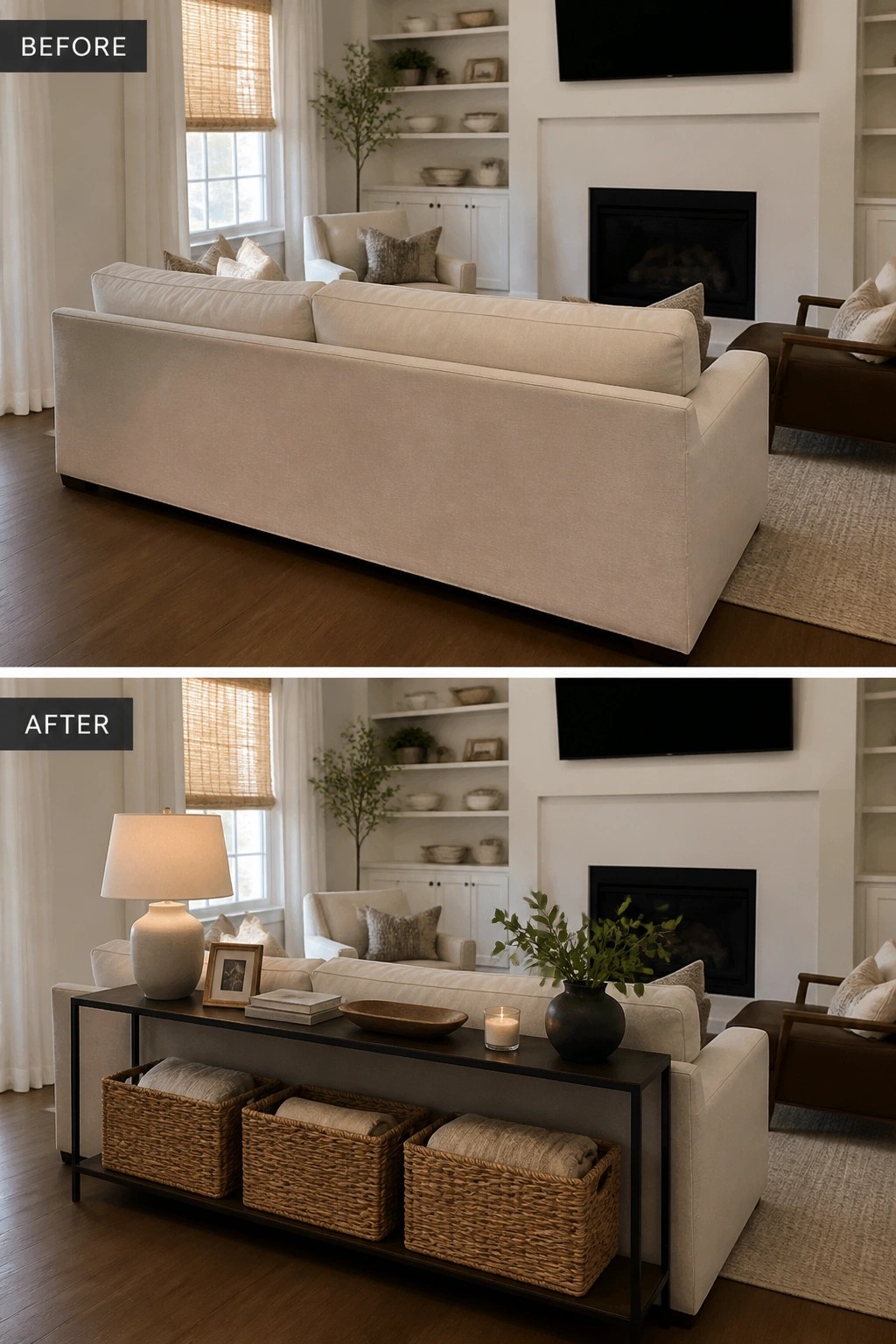
A long sofa sitting in the middle of a room can leave the back side looking unfinished. Adding a console table behind it gives the piece a clear purpose and creates a spot for storage and everyday items without crowding the main seating area.
This works especially well in open layouts where the sofa does not sit against a wall. Keep the table narrow so it does not block walkways, and use baskets underneath for blankets or toys. The result is a room that feels more settled without needing a full furniture overhaul.
Add A Console Table Behind The Sofa
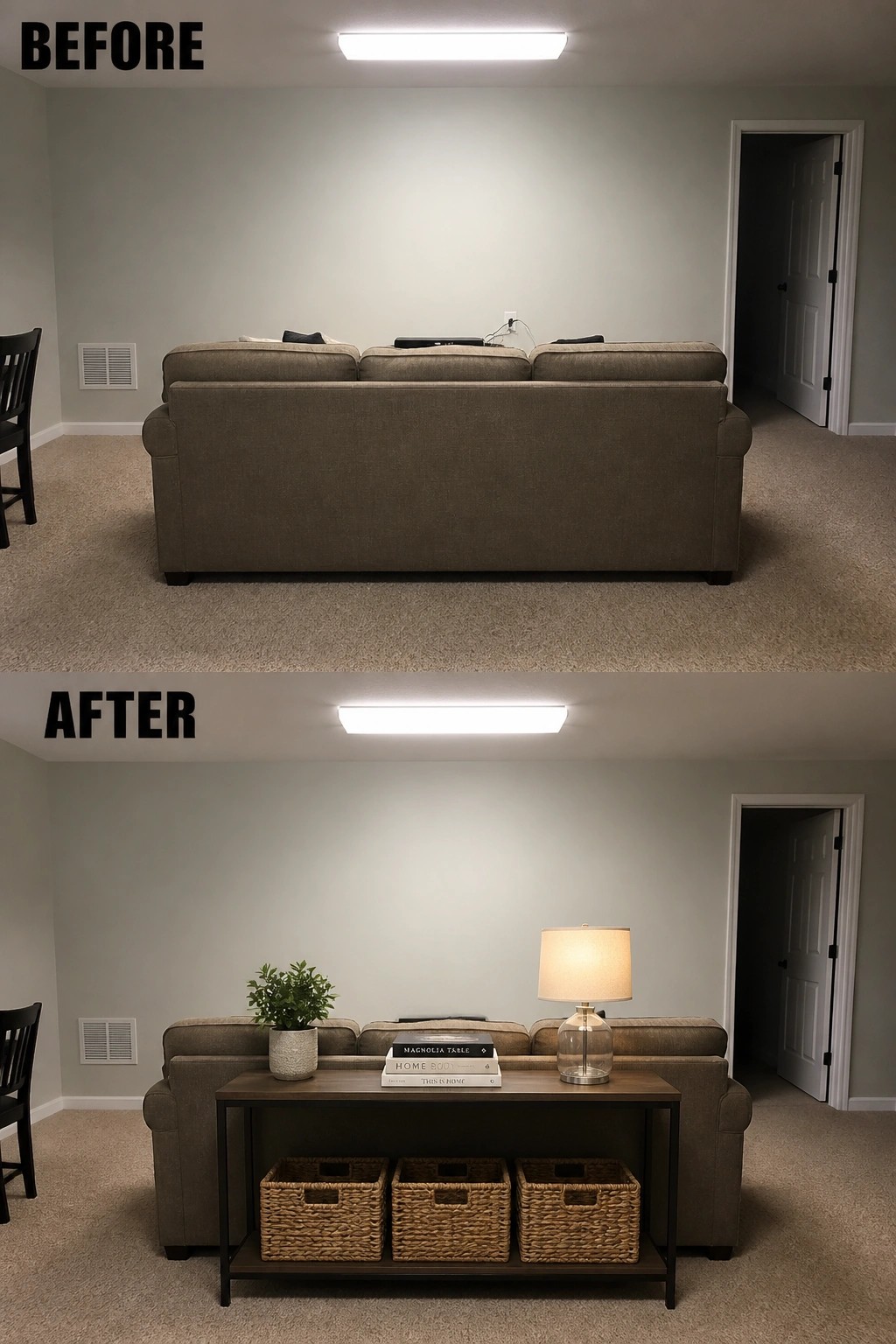
The sofa sat by itself with nothing to finish the space behind it. Placing a console table there gave the room a simple structure and added storage without crowding the floor.
This works best in rooms where the back of the sofa faces a walkway or open area. Keep the table narrow, use baskets for items you reach for often, and add just one or two lamps so the surface stays useful instead of cluttered.
Add Warm Lighting To Make A Neutral Living Room Feel Finished
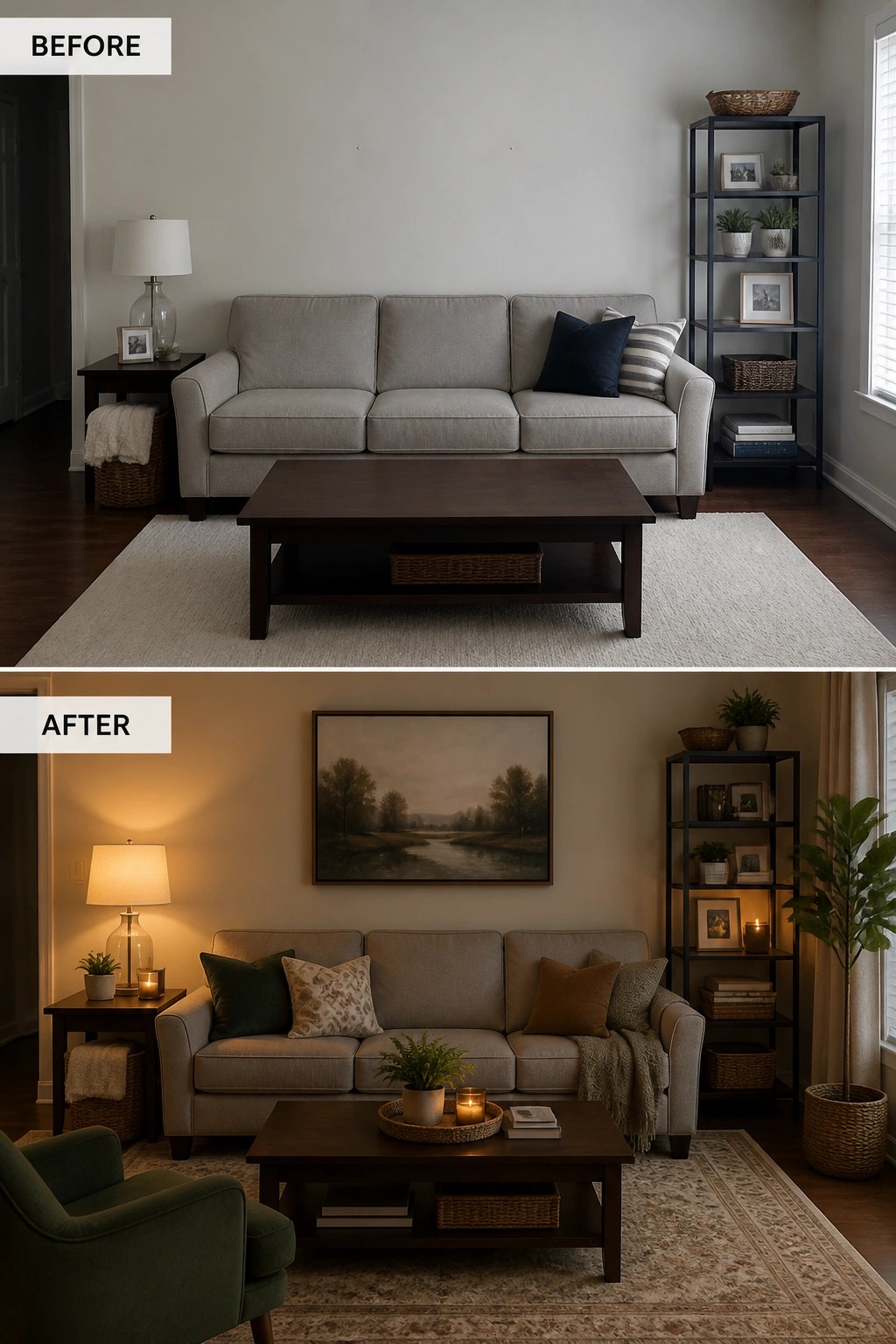
The before photo shows a living room that feels flat even with a sofa and coffee table in place. The after version uses a few lamps and candles to create a softer, warmer feel that makes the same furniture look more complete.
This idea works best in rooms with neutral walls and seating where you want comfort without a full overhaul. Place one or two lamps at different heights, add a couple of pillows in deeper tones, and keep extra pieces like a small chair to a minimum so the room stays easy to move around in.
Layer Soft Lighting To Warm Up A Neutral Living Room

The main change here is the addition of several low lamps and candles around the seating. The before version relied on one overhead source and felt flat in the evening. Once the floor lamp and tabletop lights were added, the same sofa and walls suddenly felt much more inviting without any big furniture swap.
This idea suits rooms that already have a solid sofa but lack evening atmosphere. Place one taller lamp in a back corner and keep a couple of small lights on the coffee table. Use just one or two new pillows or a throw so the light becomes the main update.
Frequently Asked Questions
Q: How can I update my space if the sofa takes up most of the room? A: Start by swapping out the pillows for ones in fresh patterns or textures. Then bring in a couple of side tables that add contrast without crowding things. This keeps the focus on what you already have.
Q: My sofa is pretty neutral. What colors work best for the rest of the room? A: Go for one main accent color in your throws and art to tie things together. Add a few plants to bring in some green and life. Avoid trying to match everything perfectly.
Q: What about adding art above the sofa? A: Pick pieces that pick up a color from your sofa cushions. Hang them at eye level so they draw the eye without overwhelming the space.
