
I often find that living rooms start to look unfinished when the layout stays fixed and there is no layering of smaller elements to soften the edges.
Rearranging accessories or introducing better lighting can make the same sofa and chairs feel like they belong in a more complete setting.
Small steps like these work best when tried one at a time.
I like to test ideas that focus on what is already in the room before bringing in anything new.
Over time those adjustments create a space that feels settled and ready for daily use.
Use Paint To Give A Living Room More Depth

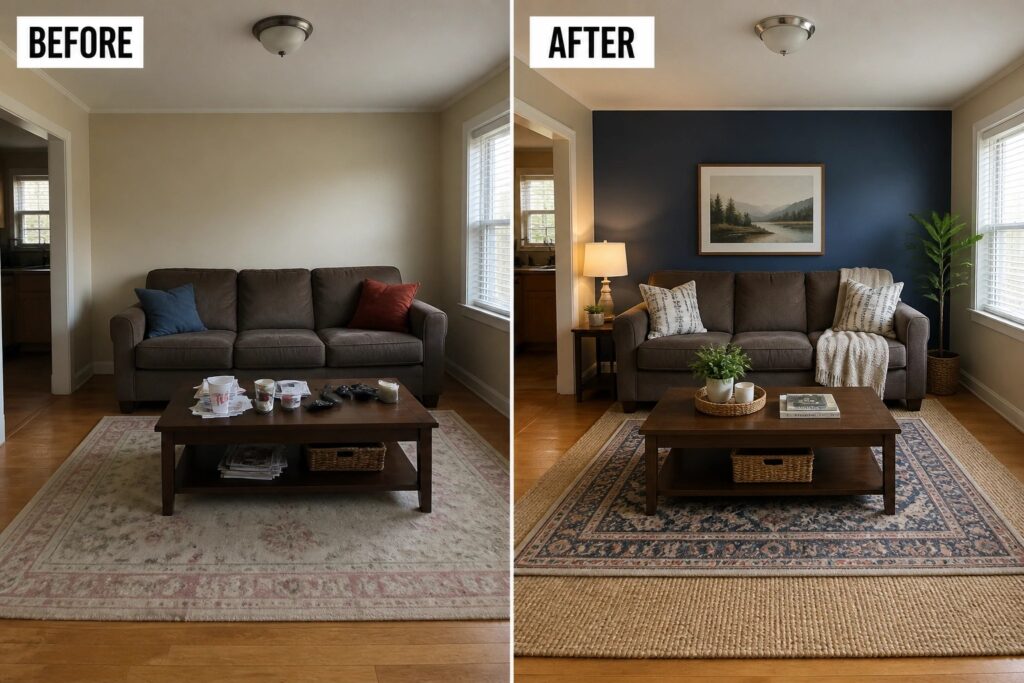
One simple way to refresh a living room without buying new furniture is to add an accent wall behind the main seating area. The shift from plain beige walls to a deep blue color makes the sofa stand out and gives the space a clearer structure.
This works best in rooms that feel flat or lack a focal point. Pick a color that contrasts with your sofa, keep the other walls light, and hang one piece of art centered above the seating. The change stays affordable and reversible if you want to try something different later.
Add Texture With An Accent Wall
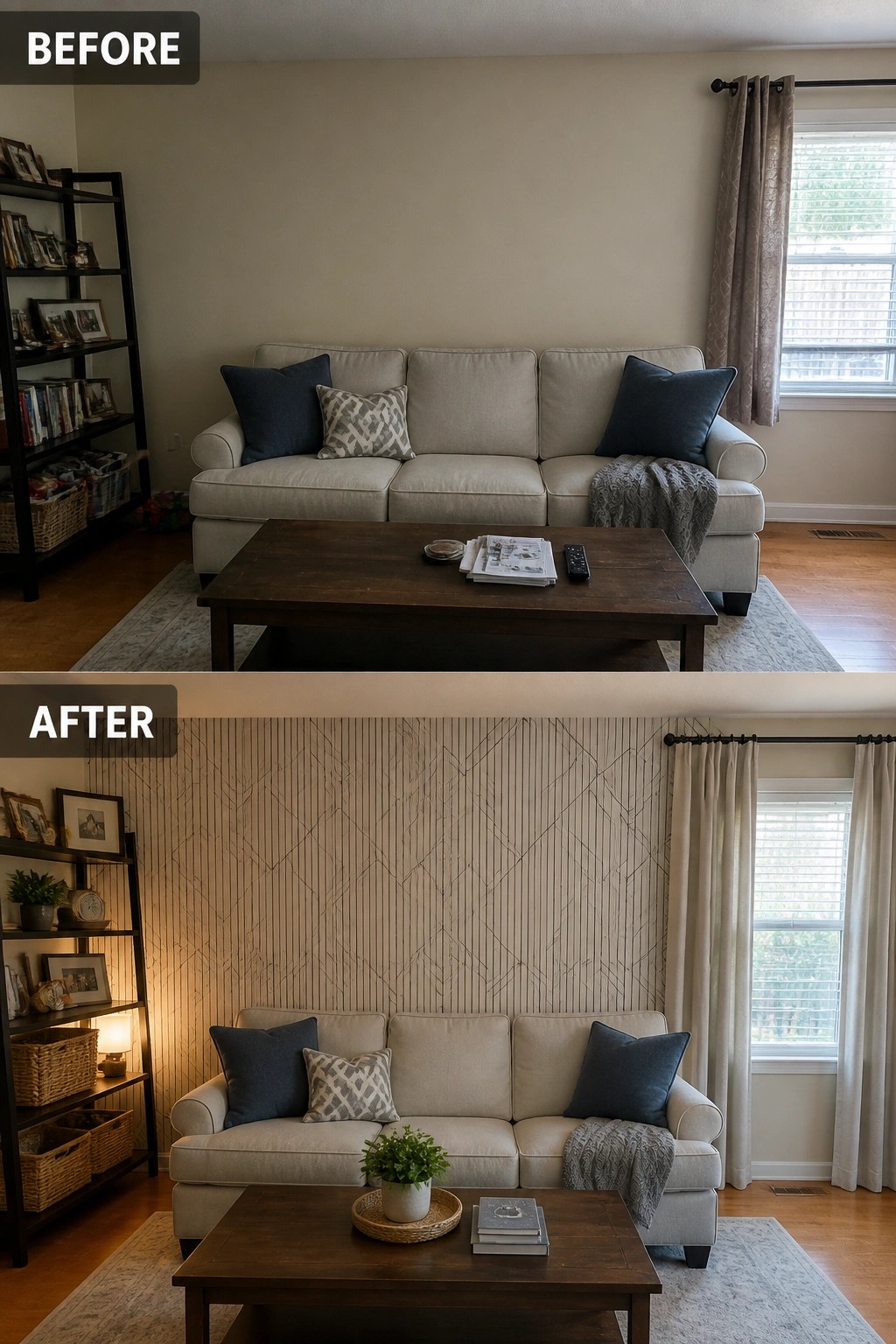
A plain wall behind the sofa often leaves a living room feeling flat. Adding a simple wood slat accent wall brings depth and warmth while keeping the existing furniture in place.
This works best in neutral rooms where you want one clear focal point. Use affordable panels or slats in a basic pattern and install them only on the main wall. It suits most standard living rooms and stays low cost compared to larger updates.
Use Layered Lighting To Finish A Living Room
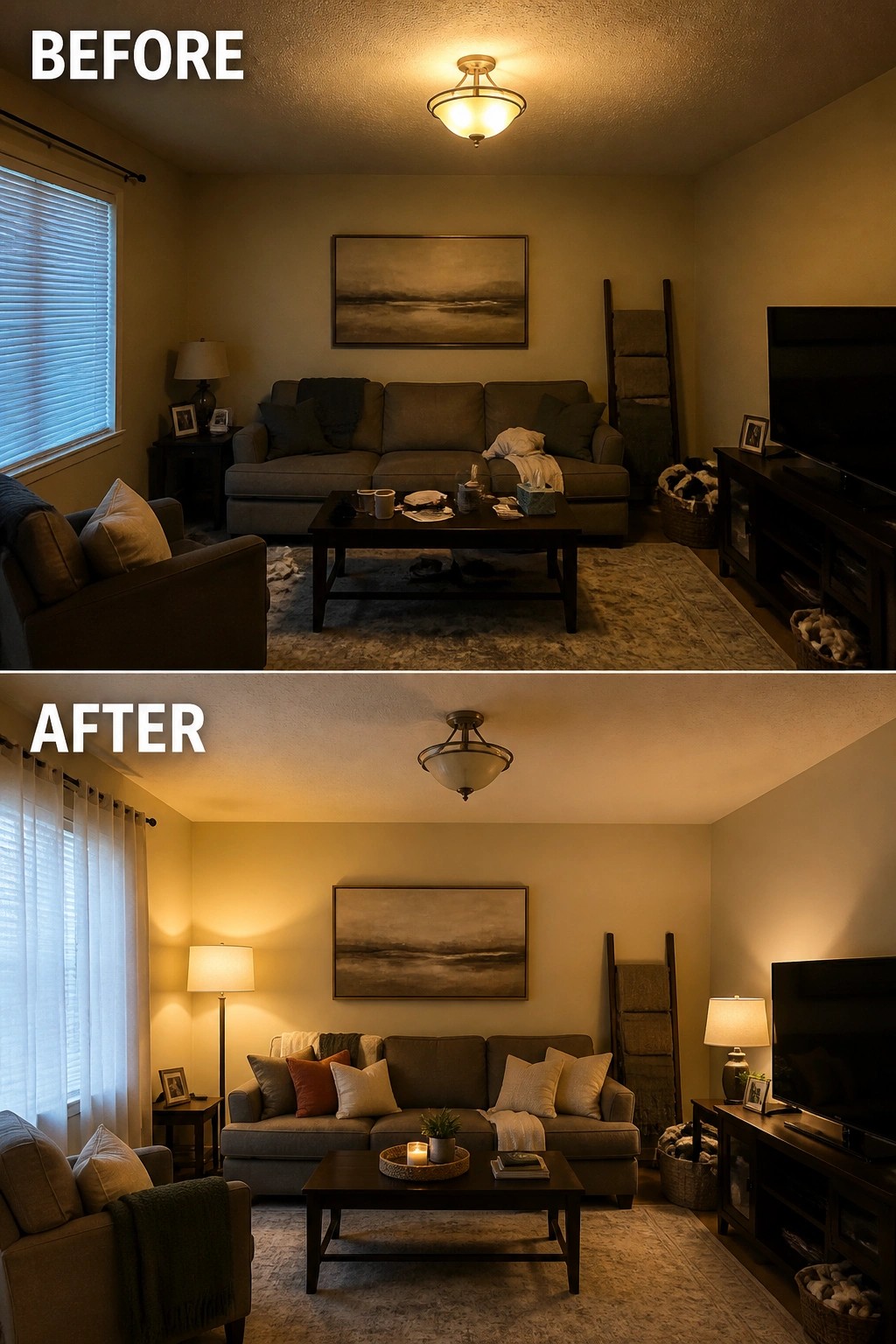
The main difference here comes from swapping one overhead light for several softer sources. A tall floor lamp on one side and a table lamp on the other create even light that reaches the corners. Adding simple curtains also helps the window look less bare and stops the room from feeling like it stops at the glass.
This approach works well in any living room that already has decent furniture but still feels flat. Start with one floor lamp and one table lamp placed where people actually sit. Keep the shades simple so the light stays warm rather than harsh. Once the lighting feels balanced, add one or two window treatments to soften the edges.
Add A Console Table Behind The Sofa

Many living rooms feel a little unfinished when the sofa floats in the middle of the space with nothing behind it. Adding a console table fills that gap, gives the seating area a defined back edge, and creates a spot for lamps and small decor without crowding the room.
This idea works best in rooms where the sofa sits away from the wall. Choose a narrow table that leaves enough walking room, and keep what you place on it low and simple so it does not block the view or feel cluttered.
Use Full-Length Curtains To Finish A Room

The short curtains in the before photo left the window area looking a bit bare and incomplete. Replacing them with floor-length panels that reach the floor gave the whole room a softer, more finished look without changing the furniture.
This works especially well in simple living rooms where you want to add height and warmth on a budget. Hang the rod near the ceiling and let the fabric fall straight down on both sides of the window. It is an easy update that suits most standard homes and makes the space feel more settled right away.
Turn A Blank Wall Into A Gallery Display
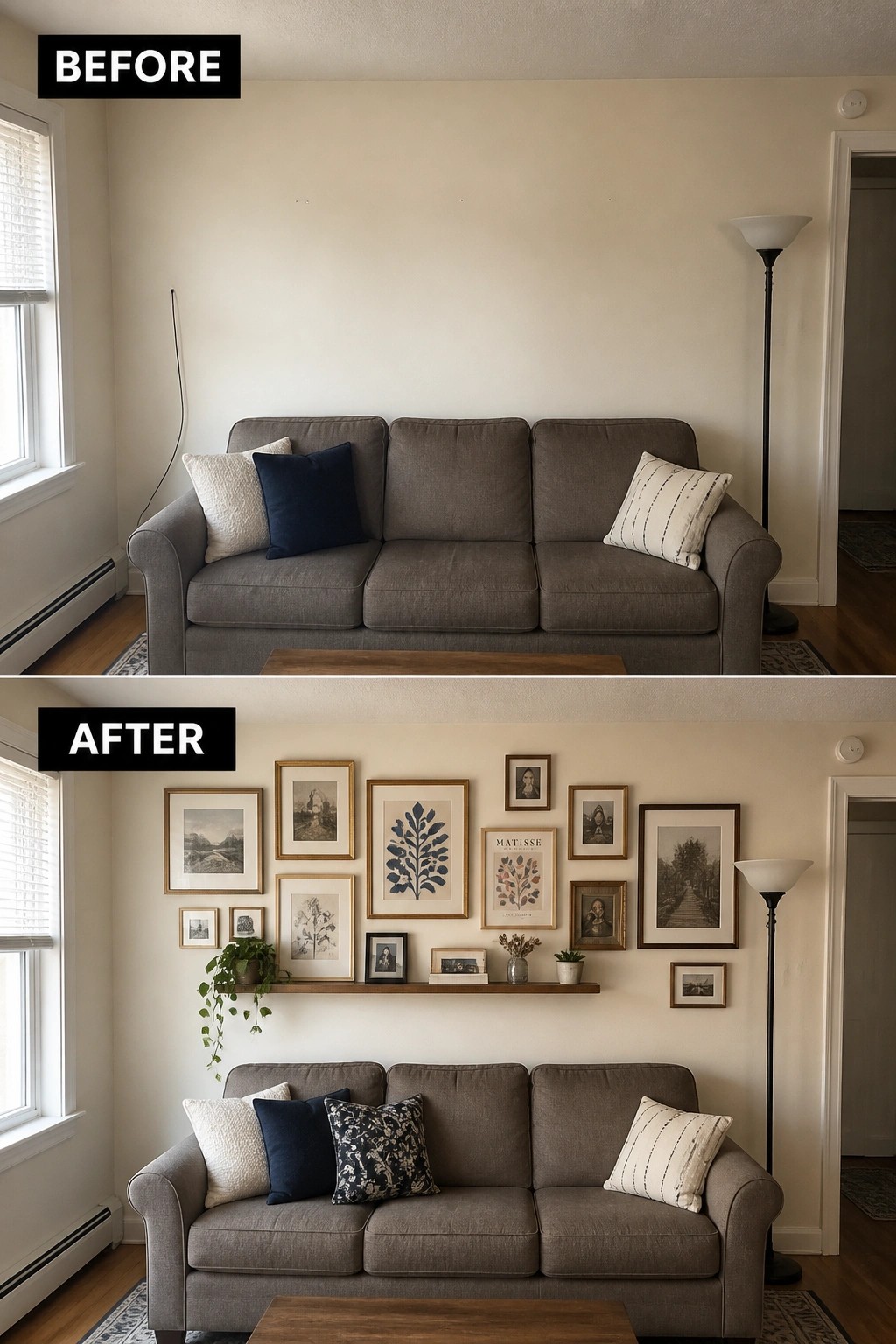
A plain wall above the sofa can make even a comfortable living room feel unfinished. Adding a collection of framed prints in different sizes along with one floating shelf filled with small plants and objects gives the wall purpose and draws the eye without any major changes to the furniture.
This idea suits rooms where the seating area lacks a clear focal point. Gather frames you already have or pick up inexpensive ones, lay out the arrangement on the floor first, and hang the largest pieces at eye level so the display feels balanced rather than scattered.
Paint Brick Fireplaces White To Brighten The Room
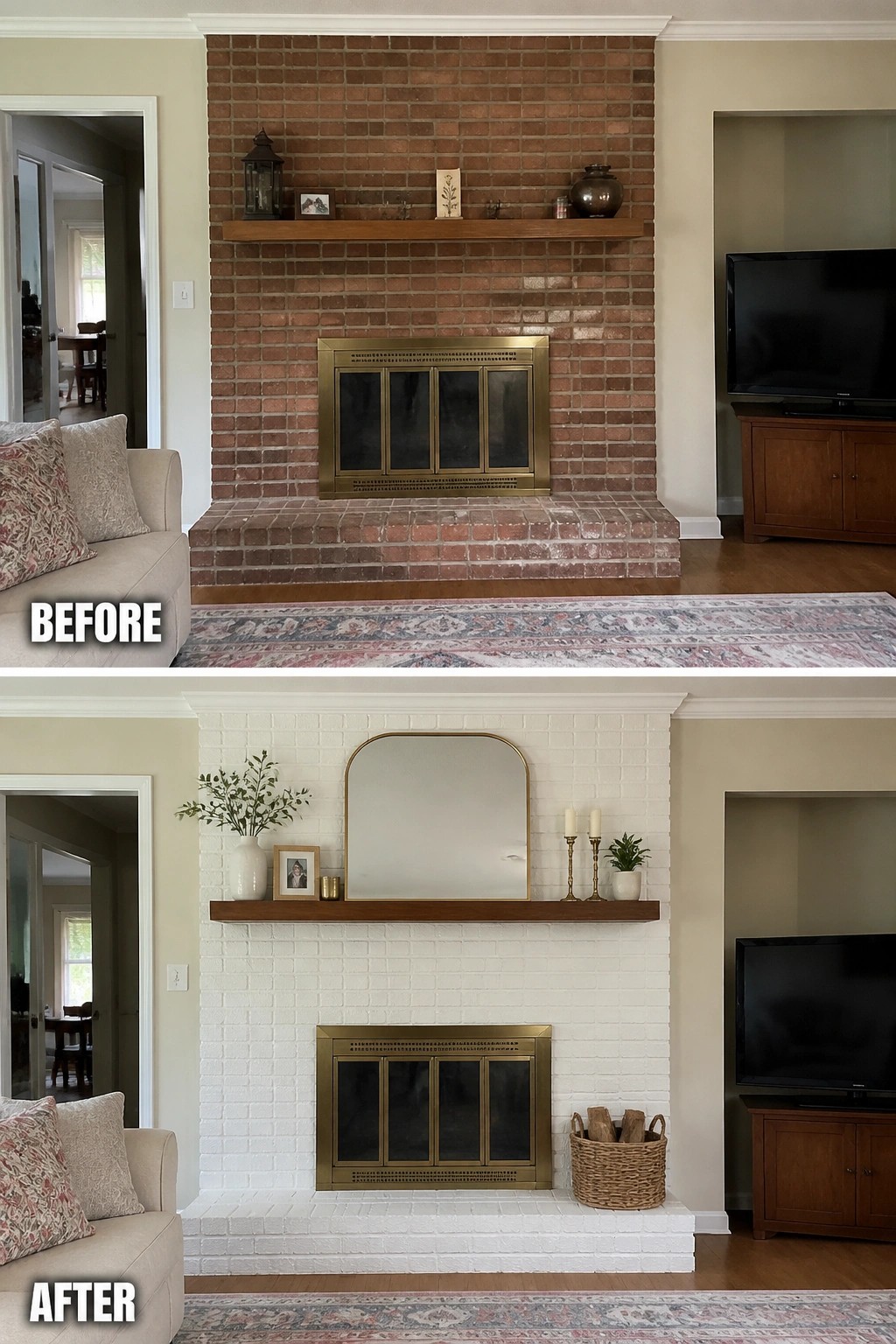
Painting the brick on a fireplace wall can quickly change how light and open a living room feels. The red brick was painted white, which removed the heavy look and let the mantel and simple decor take center stage instead.
This idea works best in older homes where the original brick feels dark or dated. Use a masonry primer first and choose paint made for brick so it lasts. Keep the rest of the furniture as is and let the lighter fireplace become the main feature.
Give A Blank TV Wall A Clear Purpose
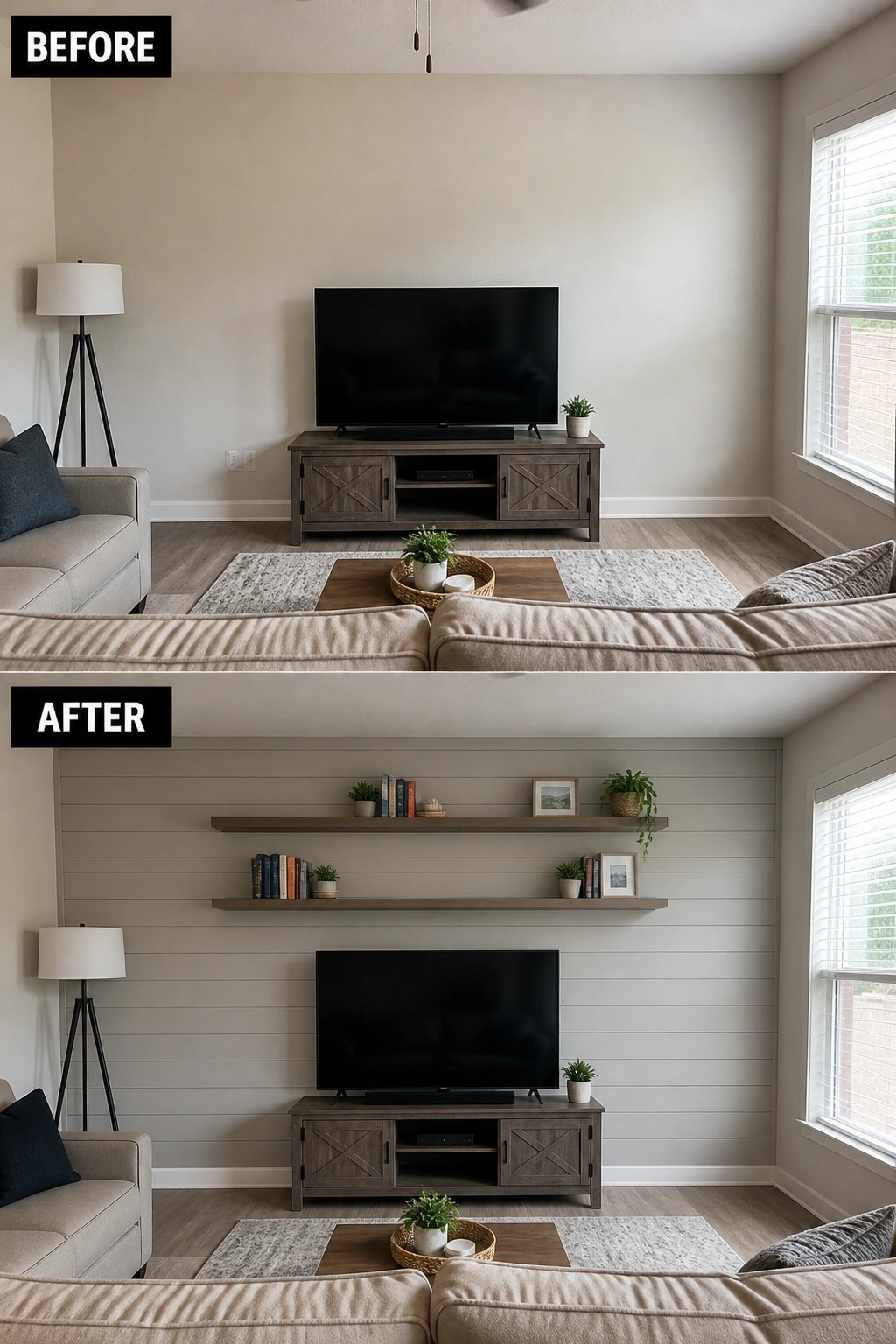
A large empty wall behind the TV often makes a living room feel unfinished even when the furniture is already in place. Adding horizontal shiplap and two floating shelves creates a simple focal point that pulls the eye without requiring new seating or a bigger console.
This approach works best in rooms where the TV sits against a long wall with no other features. Keep the shelves at different heights and limit what goes on them so the wall stays balanced rather than crowded. The paneling adds texture while the shelves give a place for a few books and plants without taking up floor space.
Add A Rug To Ground The Seating Area

The living room felt a bit loose before, with the sectional and coffee table sitting directly on the carpet. Adding a large area rug underneath pulled the furniture together and gave the space a clear center without moving anything major.
This works well in rooms that already have the right furniture but need more definition. A rug in a similar size to your seating group can make the arrangement feel intentional, especially on hard floors or in open layouts where zones tend to blur.
Update An Old Sofa Instead Of Replacing It
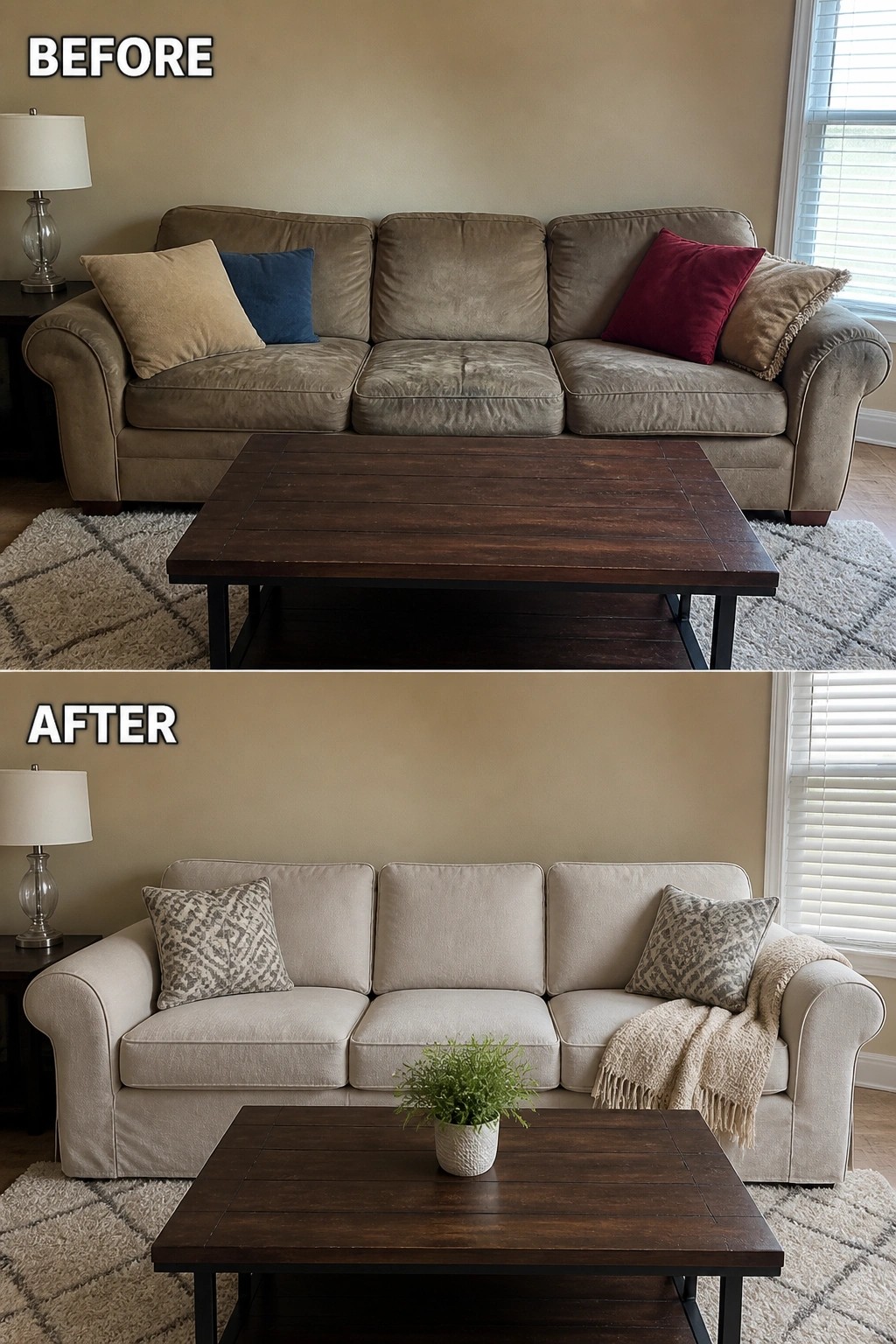
A worn sofa can make an entire room feel dated even when the rest of the space is fine. In this case the change came from covering the old brown upholstery with a lighter neutral fabric and swapping the mismatched pillows for a simpler coordinated set plus a throw. The room instantly feels calmer and more current without moving any major pieces.
This approach works well in homes where the sofa frame is still solid but the fabric has seen better days. Choose a slipcover or reupholstery fabric in a light color if the room feels dark, and keep new pillows to two or three patterns at most so the update stays easy to live with.
Use Baskets To Reduce Visual Clutter
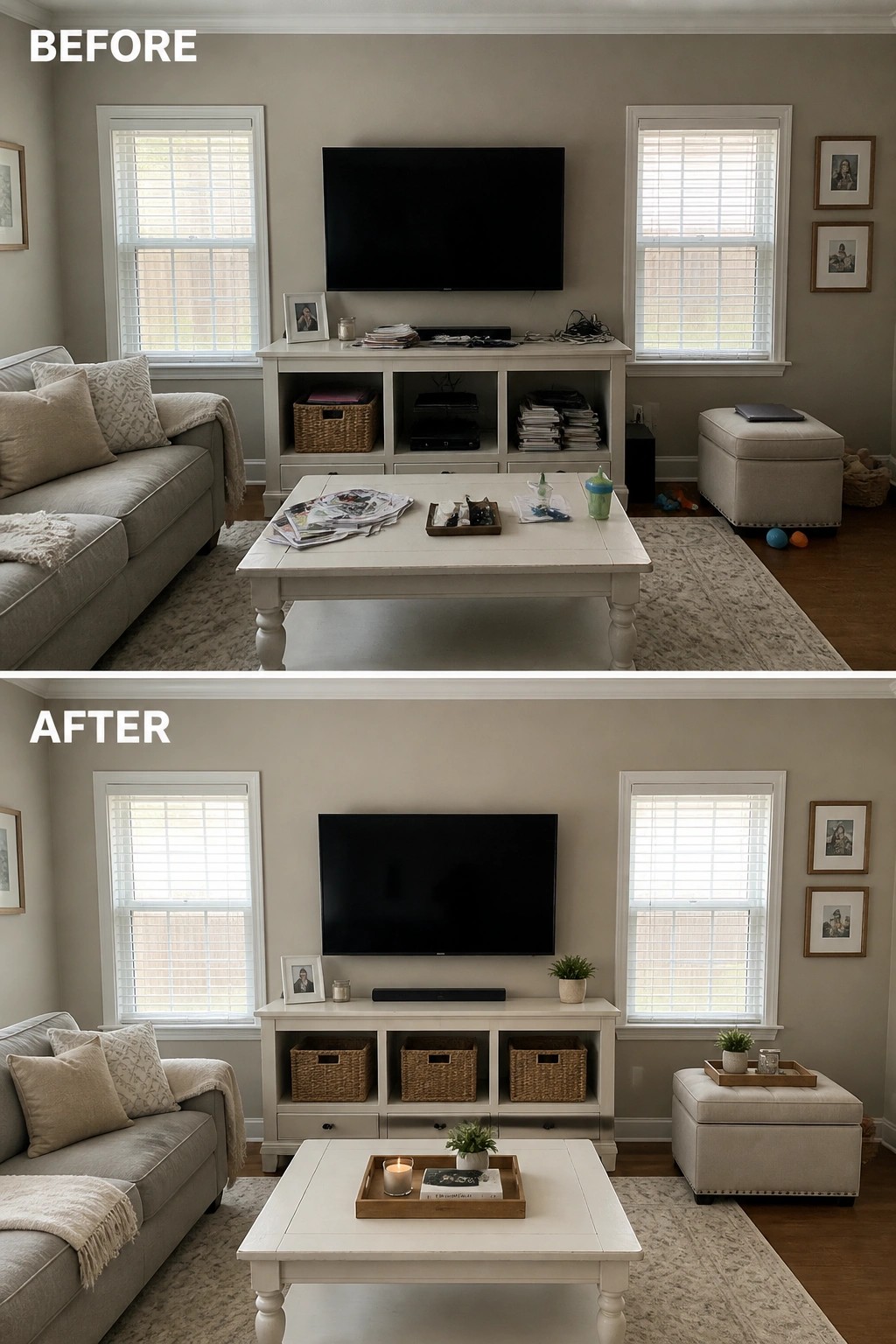
The biggest shift here came from clearing the messy piles off the coffee table and tucking the loose items into matching baskets on the console. That one change made the whole room feel calmer and more finished without moving any furniture or painting a wall.
This idea works well in any living room that has open storage. Start by gathering what actually gets used every day, then pick baskets that fit the shelves so everything has a place. It keeps the space looking tidy even when life is still happening on the surfaces.
Layer Plants And Lighting To Warm Up A Neutral Room
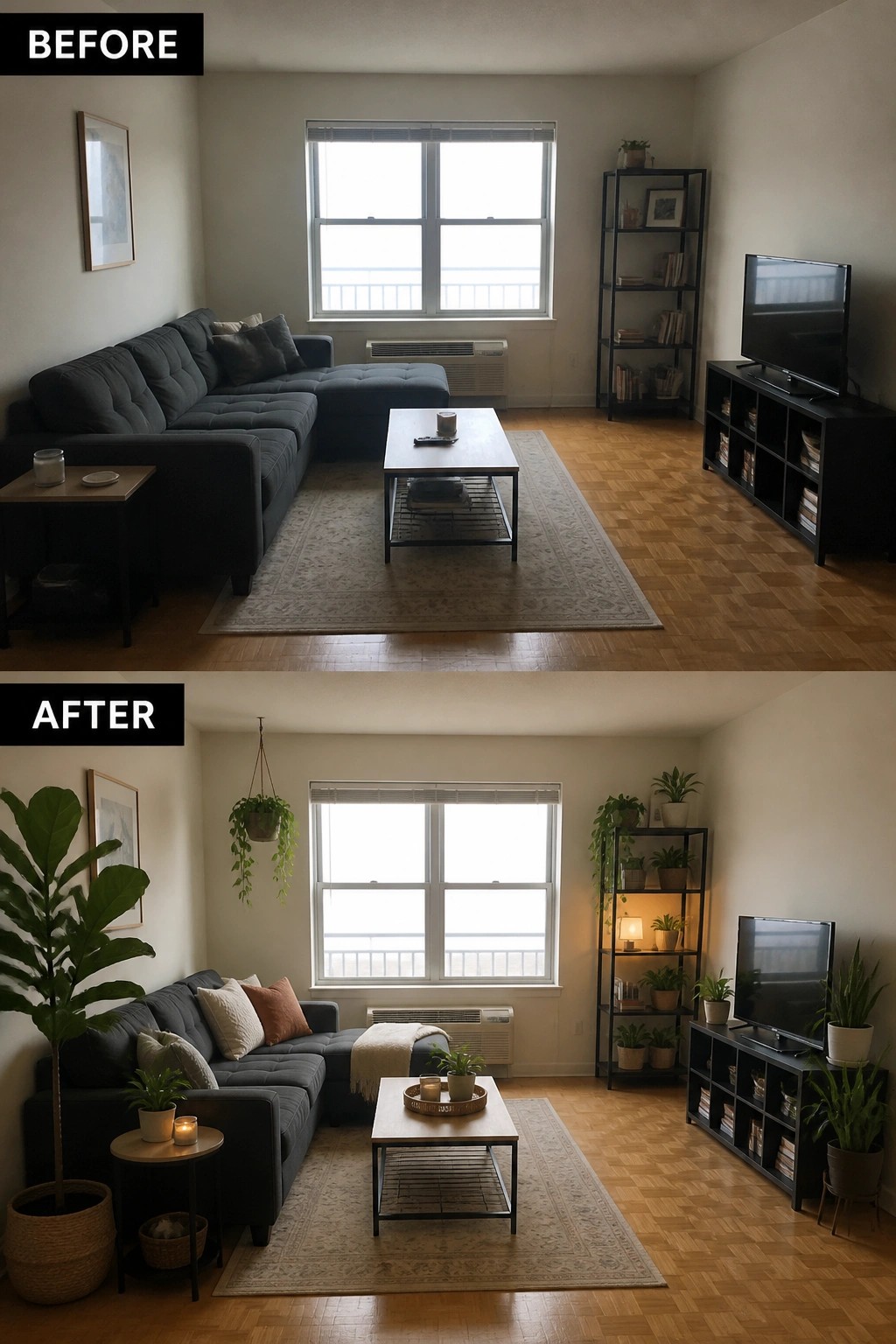
The living room felt empty and a little cold with just the sofa, coffee table, and TV stand in place. Adding several plants of different sizes along with warm lamps and candles made the space feel much more comfortable right away.
This idea works well in any plain room where the furniture is already in good shape. Start with one or two larger plants to anchor the corners, then fill in with smaller ones and a few sources of soft light. It keeps the budget low while making the room feel finished.
Paint An Interior Door To Add Character

Painting an interior door a deep color can change how a whole room feels without touching the furniture. In this case the white door became a dark green focal point, and swapping the plain pillow for one with a matching pattern tied the new color into the seating area right away.
This approach works well in rooms where the door is a visible feature but the budget does not allow for new pieces. Pick a color that already appears in small accents like pillows or art so the change feels intentional rather than random.
Add Trim To Plain Walls For More Character
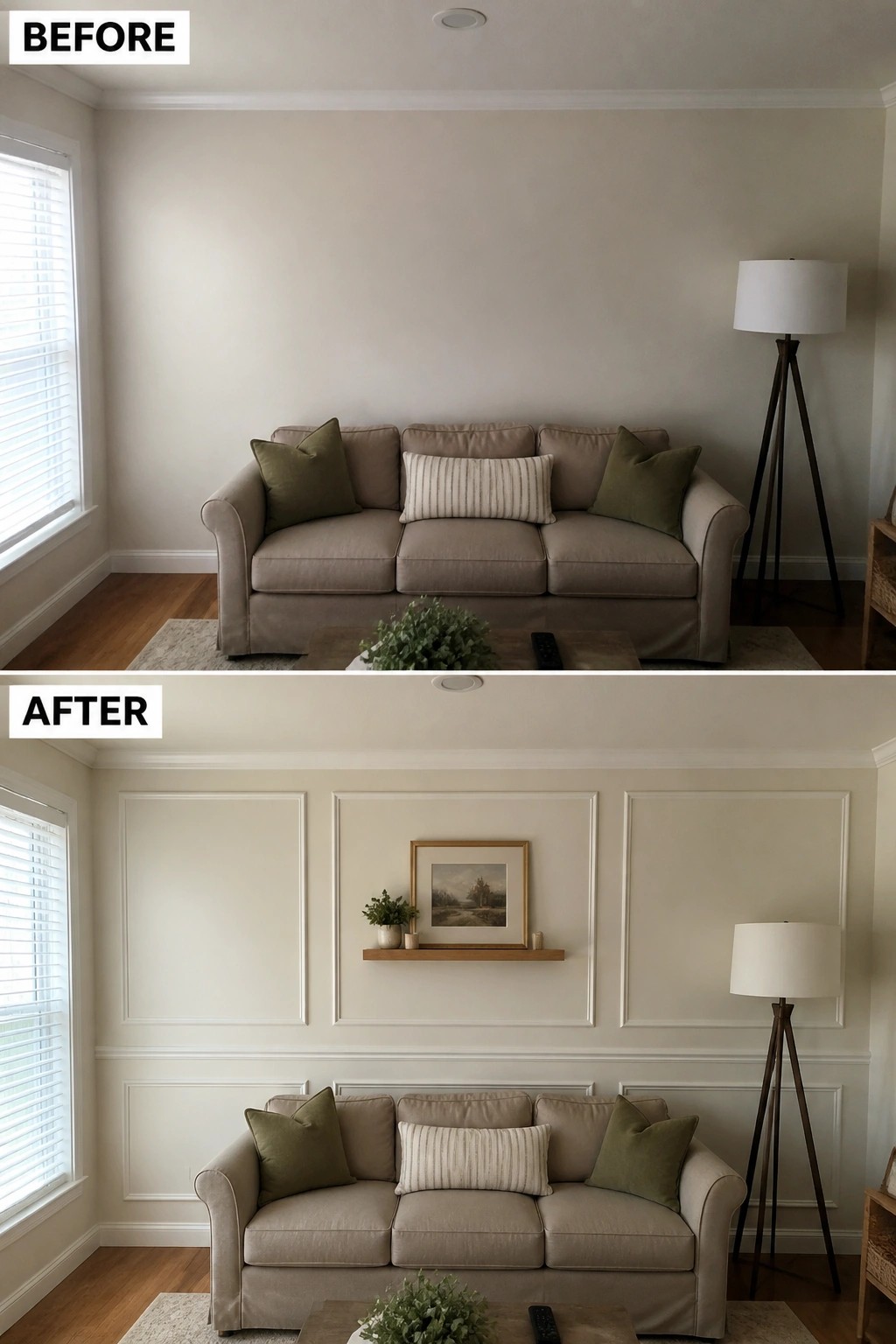
Many living rooms start with flat walls that leave the space feeling unfinished even when the furniture is in place. Adding picture frame molding creates panels that break up the wall and give the room a more structured look while keeping the same sofa, rug, and lighting.
This idea works well in homes where you want to change the feel without replacing major pieces. Measure carefully and use lightweight trim if you prefer an easier install, then paint it to match the existing trim for a cohesive result.
Refresh A Room With New Pillows And Art
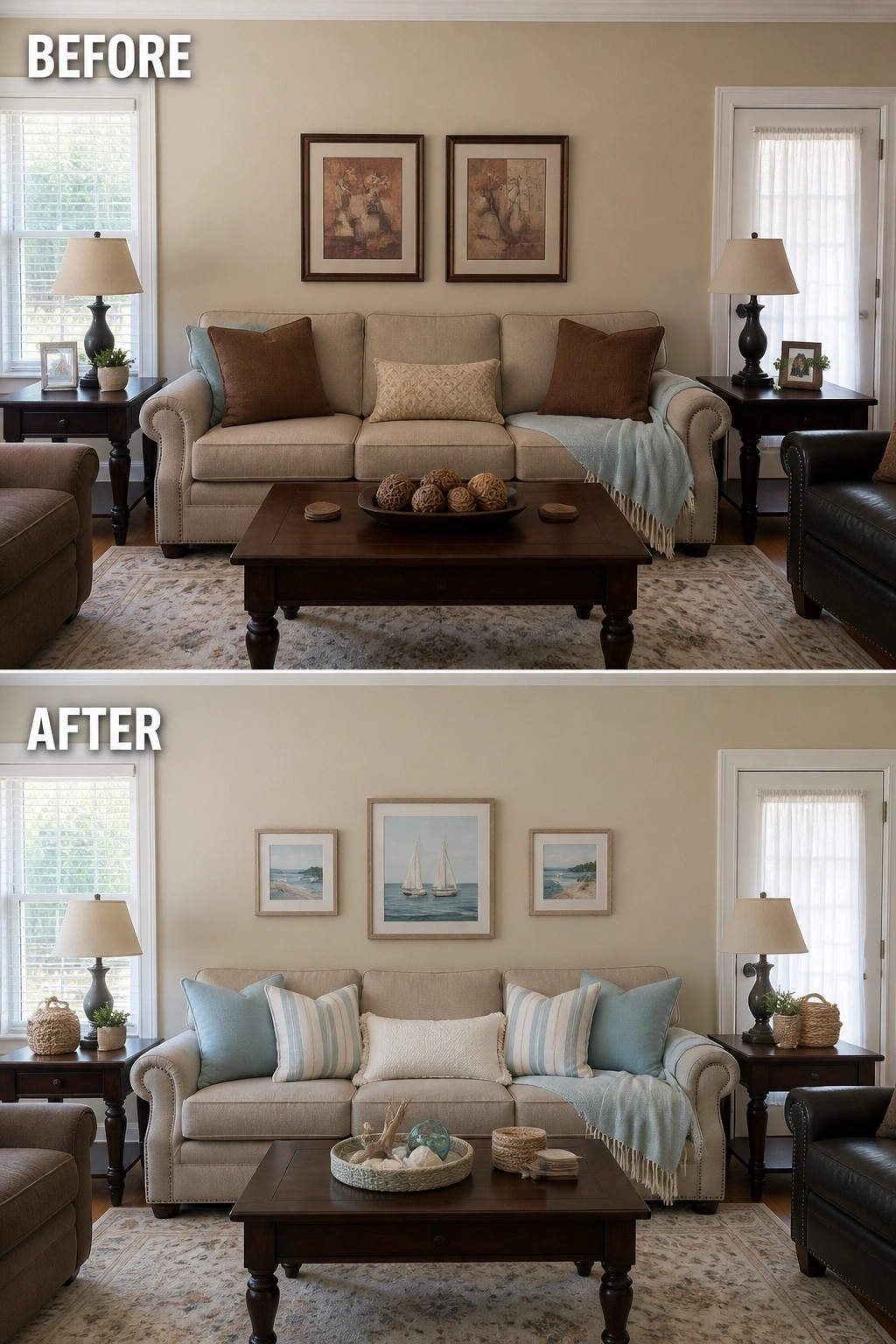
One of the easiest ways to change how a living room feels is to update the pillows, throws, and wall art while keeping the bigger pieces in place. In this case the sofa stayed the same, but the shift from heavy brown pillows to lighter blue and striped ones, plus new coastal prints on the wall, made the space look much brighter and more put together.
This approach works well when your furniture is still in good shape but the colors have started to feel tired. Choose one new color to repeat across the pillows, a throw, and a couple of art pieces so the room reads as intentional rather than just rearranged. It is a low-cost change that can be done in a weekend and still leaves room for bigger updates later if you want them.
Add A Bookshelf To Create A Reading Corner
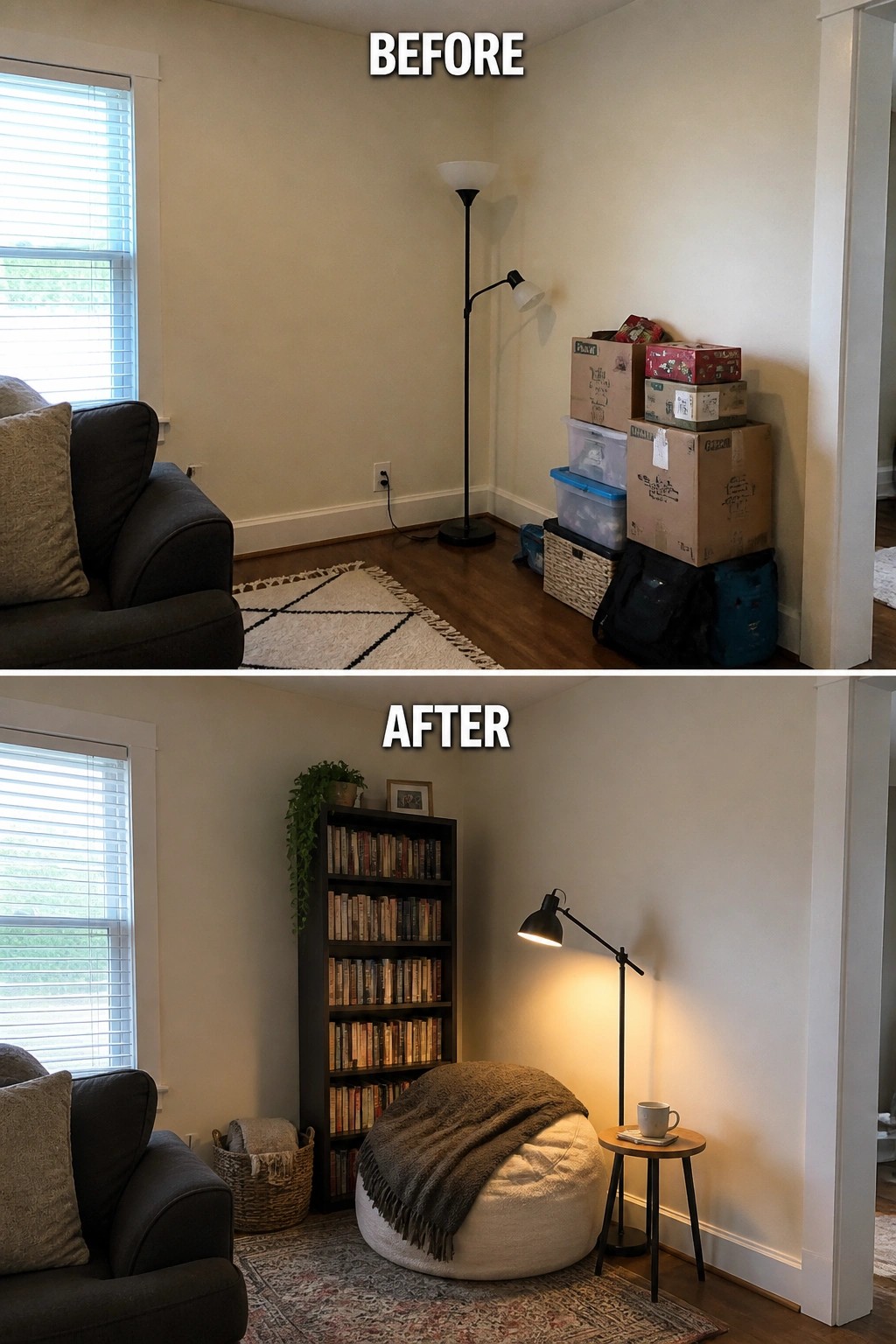
A cluttered corner full of boxes and bags can make a living room feel unfinished. Swapping that mess for a tall bookshelf and a simple seat turns the same spot into a place people actually want to sit.
This idea works best in rooms where you already have a sofa but need one more defined area. Clear the floor first, then place the bookshelf against the wall to give the corner a purpose. Add a low chair or pouf and one lamp so the space feels ready without buying new major pieces.
Add A Pendant Light To Warm Up A Living Room
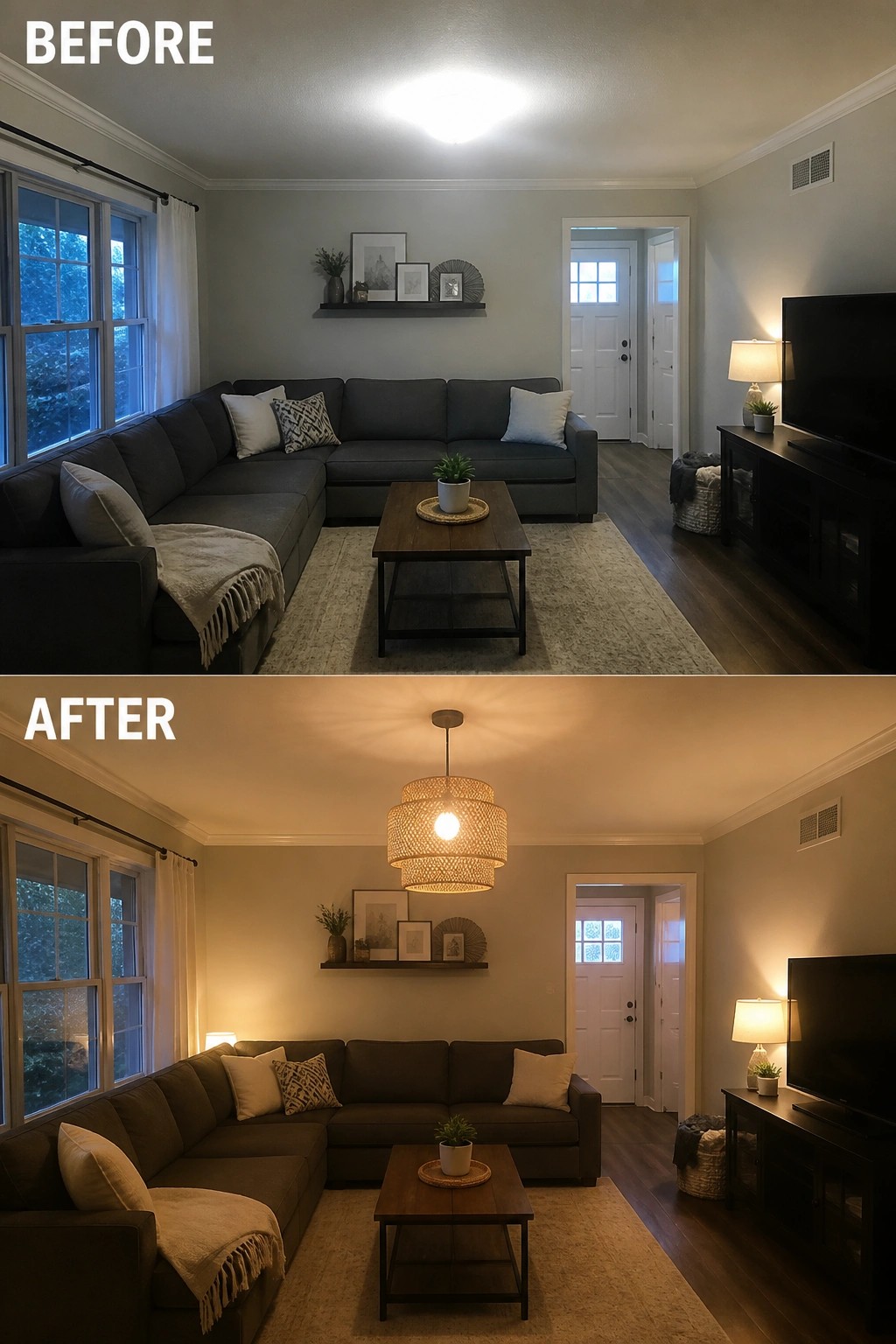
A single overhead light often leaves a room feeling flat and a little cold, even when the furniture is already in place. Swapping it for a woven pendant and adding a couple of table lamps changes the whole mood without touching the sofa or rug. The space feels softer and more inviting right away.
This approach works especially well in rooms that get used in the evenings. Start with one larger fixture over the seating area, then layer in smaller lamps on side tables or consoles. Keep the bulbs warm rather than bright white, and the room will feel finished without any big purchases.
Use A Large Rug To Anchor The Seating Area

A large rug can pull a loose furniture arrangement together without any big purchases. The before photo shows a small rug that only covered the area under the coffee table, leaving the armchair sitting apart on the bare floor. Once a bigger rug was added, the sofa, table, and chair all rested on the same surface and the seating area felt complete.
This idea works best in open living spaces where furniture can start to drift. Choose a rug large enough for the front legs of the main pieces to sit on it, then keep the pattern simple so it does not fight with your existing pillows and throws. It is an easy first step when you want the room to feel more settled.
Add Lighting Behind The TV To Make The Room Feel Finished

A plain wall behind the TV often makes the whole room feel unfinished. The before photo shows a flat gray surface with visible cables and no real depth. Adding a simple LED strip behind the screen and lighting the shelves on the side creates a soft glow that pulls the space together.
This approach works well in living rooms where the TV is the main focal point. Keep the lights on a warm setting and use them in the evening when the room gets darker. It is an easy update if your furniture is already in place and you just want the room to feel more inviting.
Make The Fireplace Wall The Main Feature
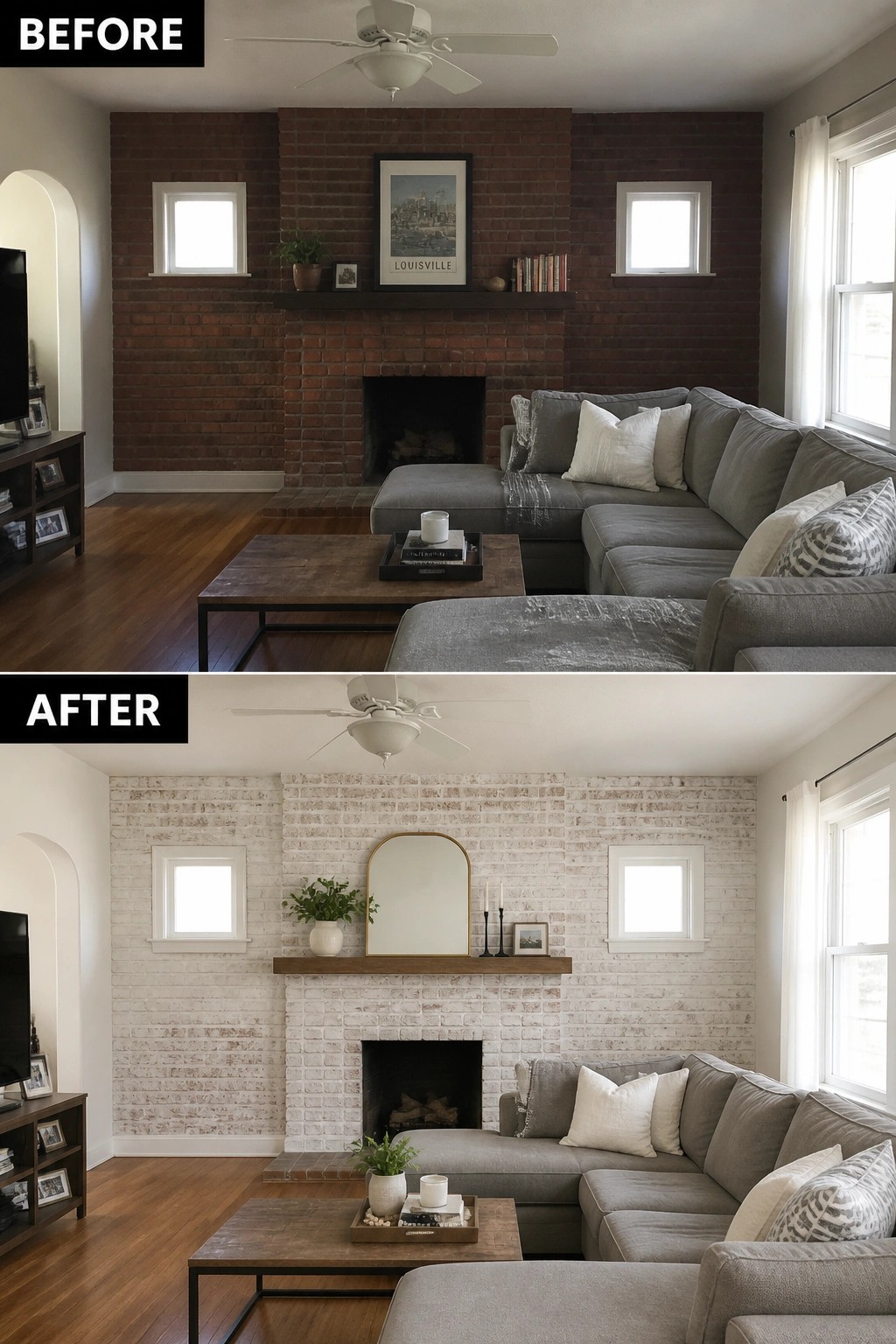
The dark brick fireplace wall made the room feel heavy and closed in. Lightening the brick to a soft white finish and adding a simple wood mantel with a centered mirror opened the space up and turned the fireplace into the clear focal point.
This approach works best when the fireplace already sits in the middle of the main wall. Focus on the brick color first, then keep any mantel items low and balanced so the wall itself stays the star.
Add A Window Seat For Extra Seating And Storage
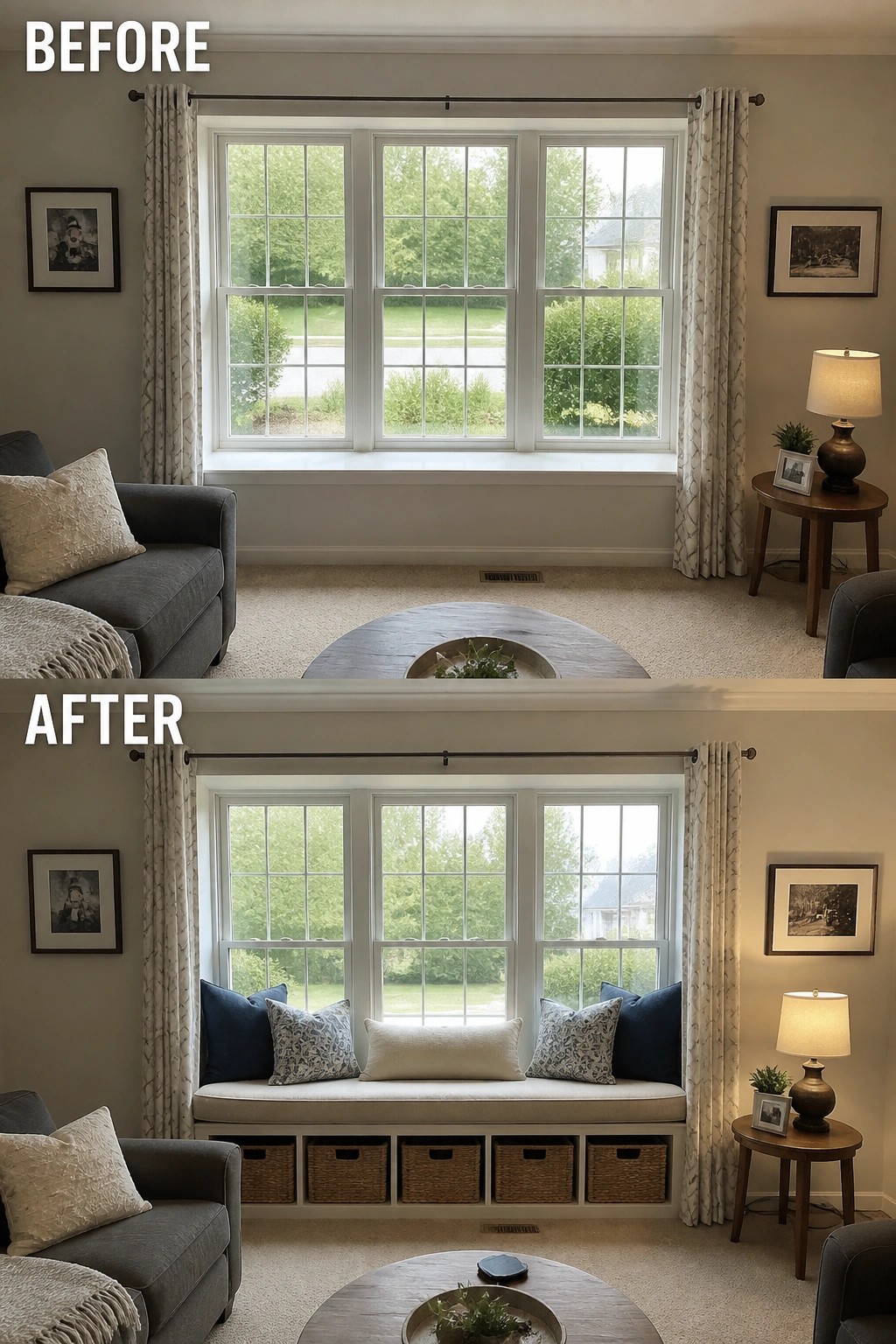
One simple way to use the space under a large window is to add a built-in bench with a cushion on top. Here the empty area below the window became a place to sit, with storage baskets tucked underneath to keep things organized. The change made the room feel more complete without bringing in new sofas or chairs.
This works best in rooms that already have decent furniture but lack seating near the windows. You can match the cushion fabric to what you already own and use the baskets for items you reach for often. It suits homes where the window gets good light and you want a quiet spot to sit without crowding the floor.
Hide Clutter Around The Tv With Baskets And Lighting
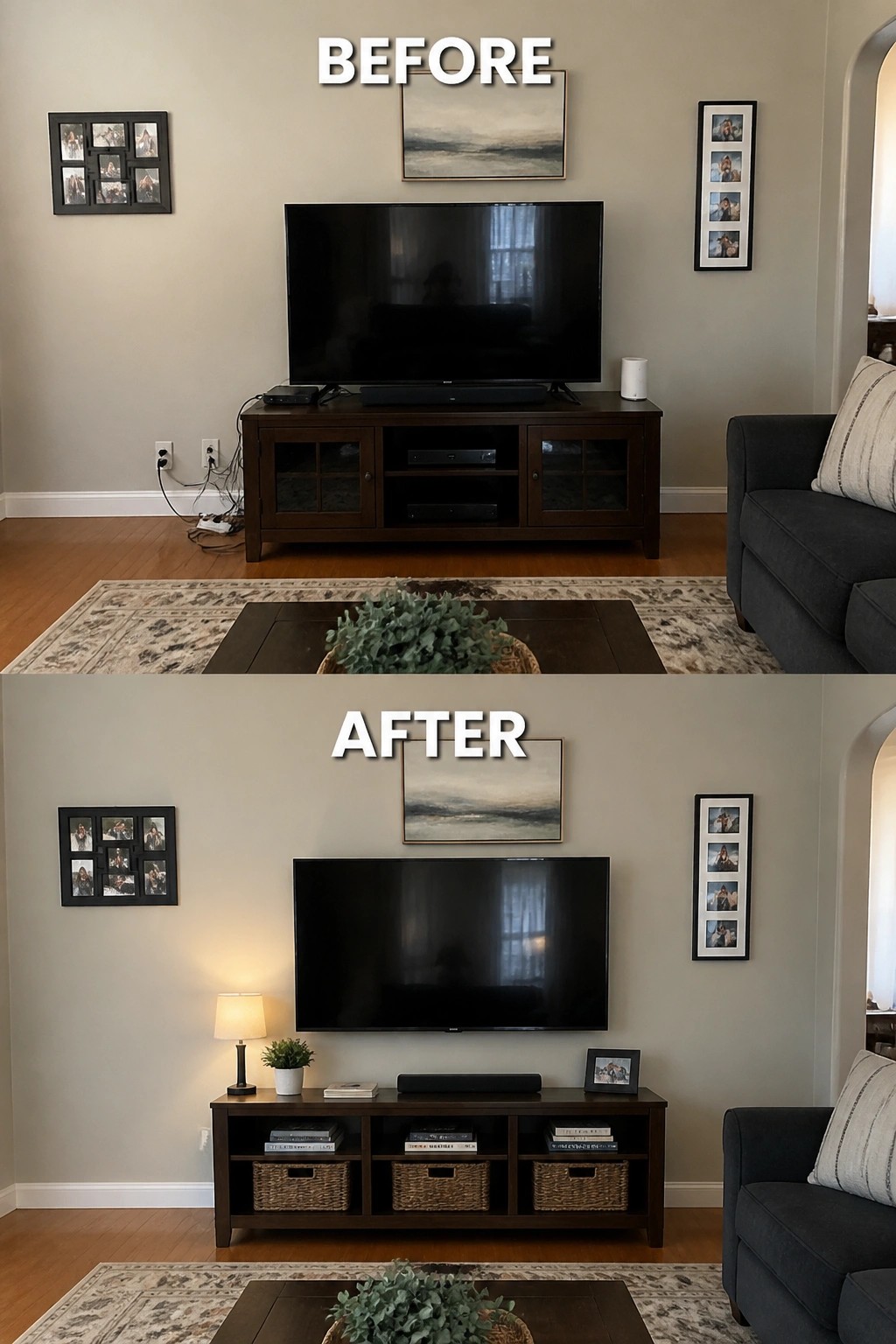
The before photo shows a media console covered in visible cords, devices, and random electronics that made the whole wall feel busy. Switching to open shelves with matching baskets and adding one table lamp on the side instantly made the area look calmer and more put together.
This idea works in any room where the TV stand ends up collecting daily clutter. Sort items into baskets so only a few things stay out in view, then add a lamp or two for softer light in the evenings. It keeps the existing furniture but makes the space feel finished without spending much.
Create A Workspace Zone With A Simple Divider
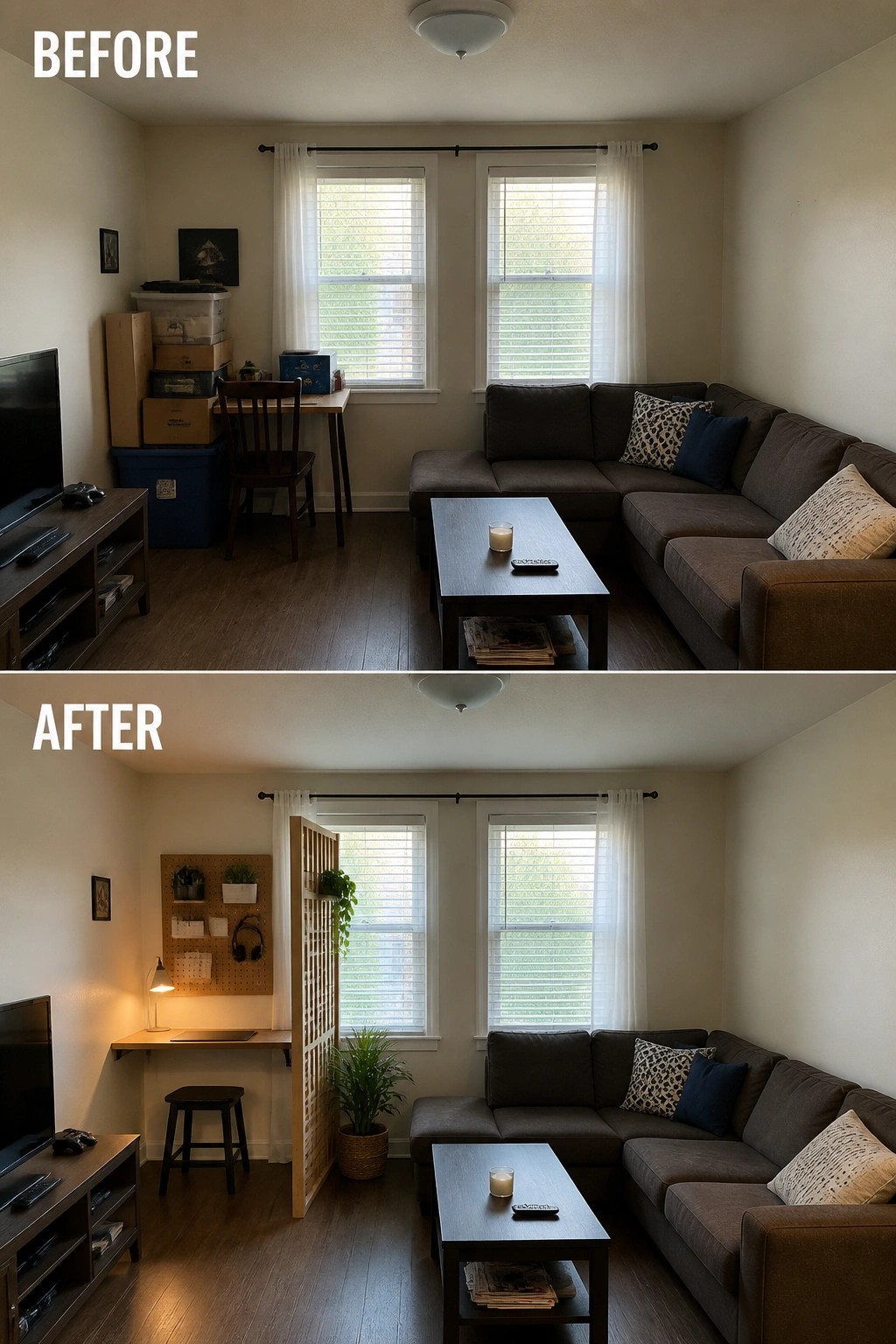
A cluttered side of the room filled with stacked boxes and loose items can make the whole space feel unfinished. Adding a room divider, a pegboard, and a small floating desk turns that messy area into a defined workspace while keeping the rest of the living room intact.
This works best in smaller homes or apartments where one room has to serve multiple purposes. Keep the divider open in style so light still moves through the space, and stick to wall-mounted storage to avoid crowding the floor.
Frequently Asked Questions
Q: Where should I start if I want a quick win on a weekend? A: Grab a few new pillow covers in colors that pull from your rug or art. Swap out the old ones and see how the whole sofa changes. Then move on to rearranging your lamps for better light.
Q: My room feels dark even with the lights on. What helps most? A: Try adding a floor lamp in a corner that gets no natural light. A warm bulb makes a bigger difference than you think. Move one table lamp to eye level on a side table.
Q: How do I know if my curtains are worth keeping? A: Check if they block too much light or look faded. Swap them for sheer panels if they do.
