

Beige rooms can start to feel a bit empty after a while even when they have all the basic furniture in place.
I usually find that the layout needs attention before any color or pattern gets added because that order prevents things from looking scattered later on.
Small updates like swapping out the rug or bringing in wood tones can pull the whole area together without a big overhaul.
It feels good when the room finally starts to look like it belongs to the rest of the house.
Testing one idea at a time has helped me avoid choices that do not actually improve how the space works day to day.
Layer Textiles And Lighting To Warm Up A Beige Room
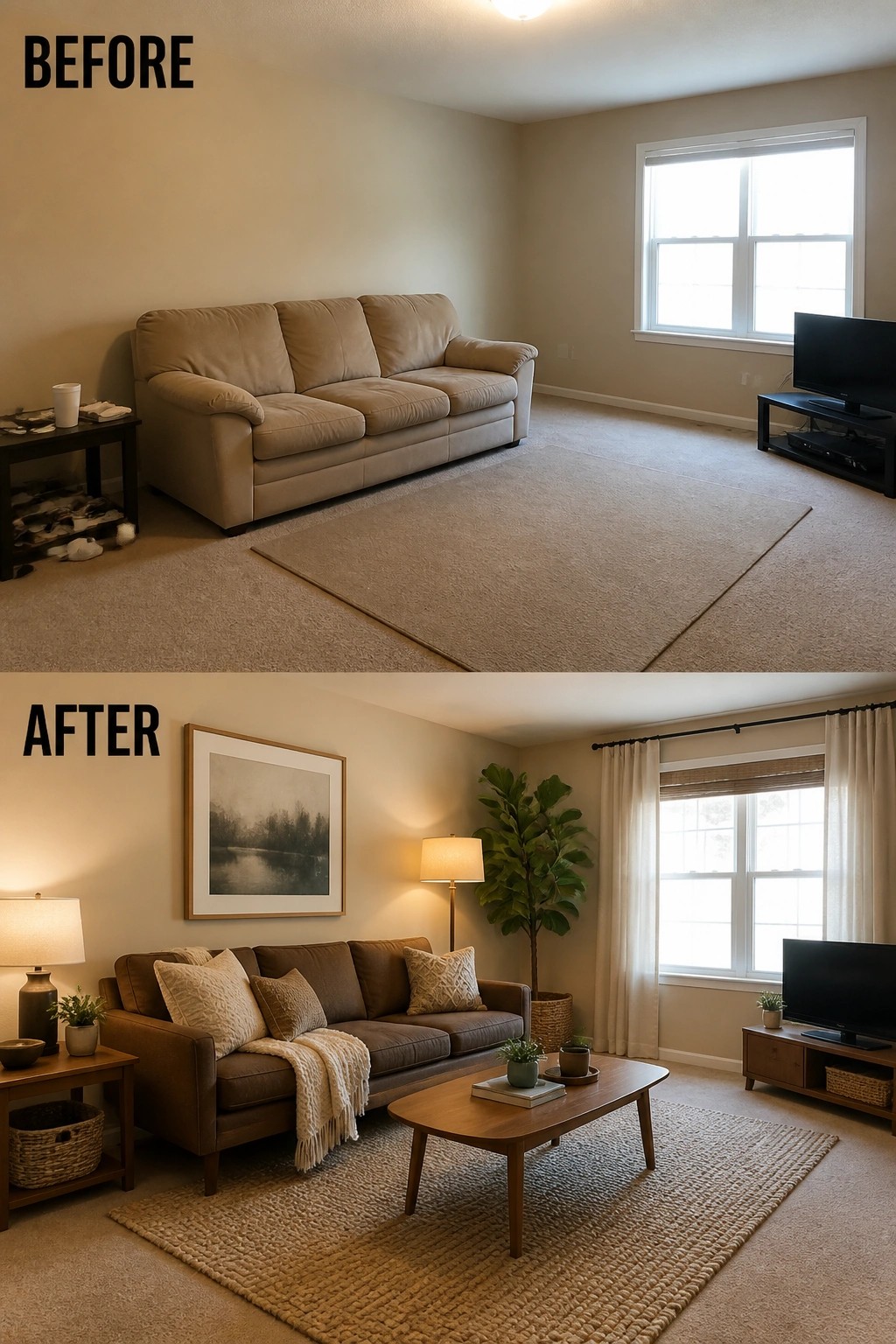
A beige living room often feels flat when it has little more than a sofa and a basic rug. Adding a larger textured rug, curtains, pillows, a throw, and a few lamps gives the space definition and makes it feel finished.
This idea works especially well in rentals or any room with neutral walls where you cannot paint. Start with the rug to anchor the seating, then bring in soft layers and warm lighting so the room feels comfortable instead of empty.
Add Trim To Give A Plain Living Room More Definition

Beige rooms often feel unfinished when the walls have no breaks or layers. Here the lower walls gained simple wainscoting and a softer gray tone while the upper walls stayed light. That single change created clear lines and made the space feel more settled without a full repaint.
This idea works best in rooms that already have decent furniture but lack visual weight on the walls. Keep the trim height around chair rail level, match the style to the home, and test the lower color on a small section first so it does not overpower the room.
Make A Beige Living Room Feel Finished With Flooring And Layers
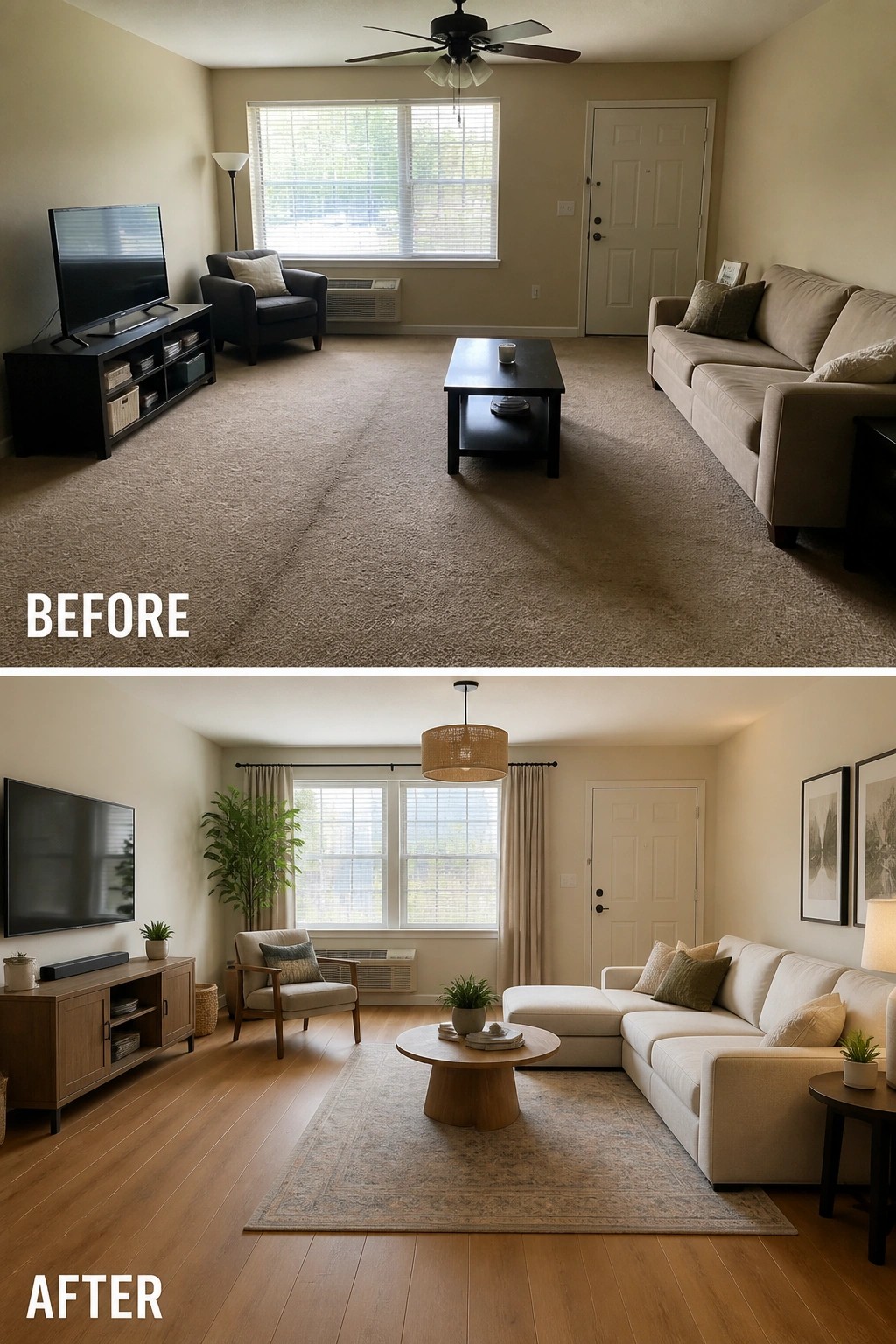
The biggest shift in this room comes from replacing the carpet with wood floors and adding a large rug to define the seating area. Curtains at the windows and a few plants help soften the space and give it a warmer feel without adding too much stuff.
This idea works best in rooms that already have decent bones but lack warmth. Start with the floor if you can, then focus on one large rug and simple window treatments. Keep the layout open so the room still feels easy to move through.
Add Layered Lighting To Warm Up A Beige Room
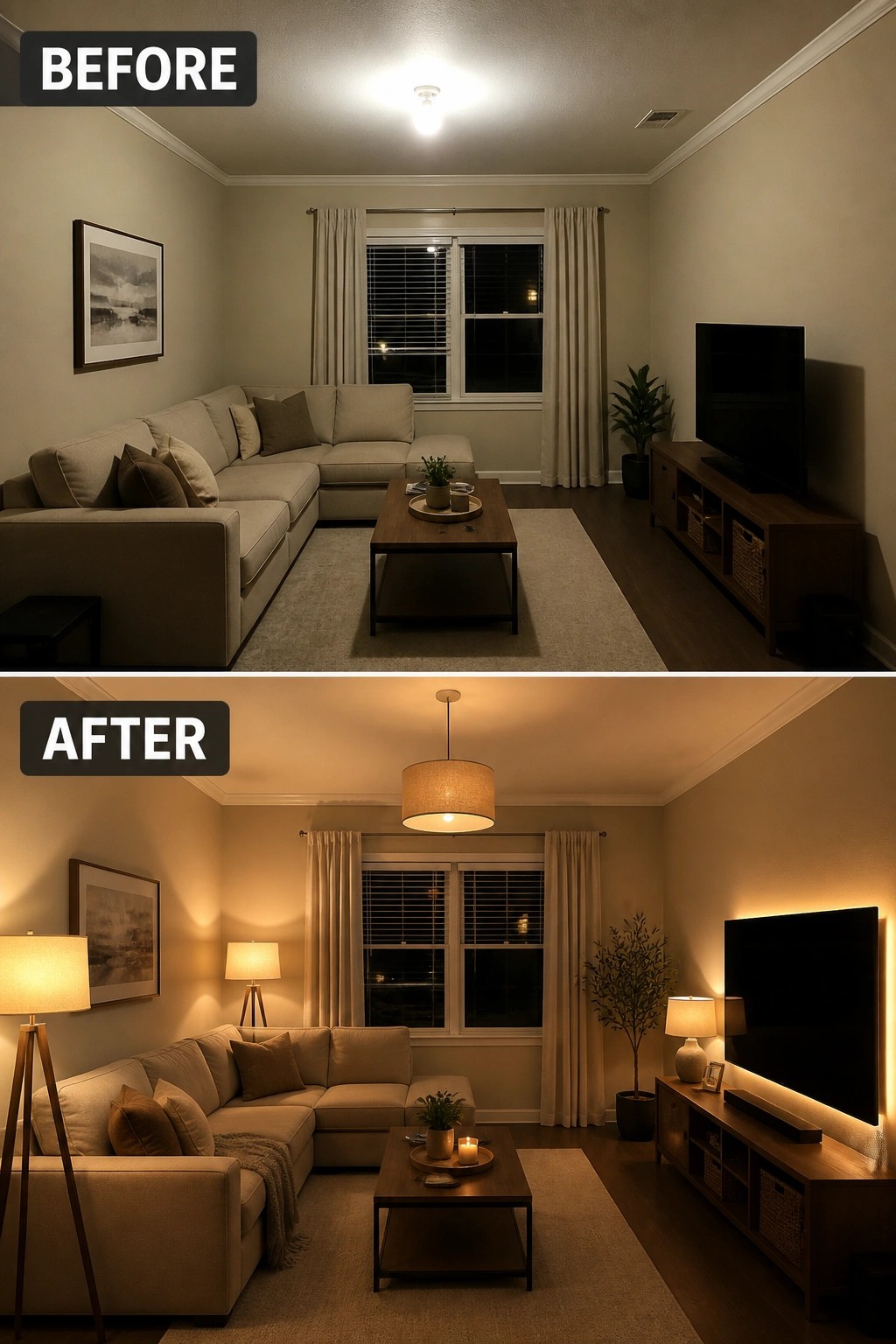
A single overhead light often leaves a beige living room looking flat and cold. In this case the room gained several lower light sources that spread a softer glow across the seating area and walls. The shift from one bright ceiling fixture to a mix of lamps and a pendant changed how the space felt without touching the furniture or paint.
This approach works well in rooms that already have decent layout and neutral tones. Start with one or two floor or table lamps near seating, then add a hanging light if the ceiling allows. Keep the bulbs warm rather than cool, and place them at different heights so the light fills the room instead of just shining down from above.
Add A Rug To Warm Up A Beige Living Room

A large patterned rug can pull a plain beige room together fast. The before version had open carpet with furniture just sitting on it, which left the space feeling scattered and flat. Placing the rug under the seating area gives the room a clear center and adds the color and texture the walls were missing.
This idea works in any neutral living room that needs more definition. Choose a rug big enough for the front legs of the sofa and chairs to rest on it, then add a few pillows and plants to build on the warmth. It keeps the room practical while making it feel more finished without major changes.
Make The Fireplace Wall The Main Feature
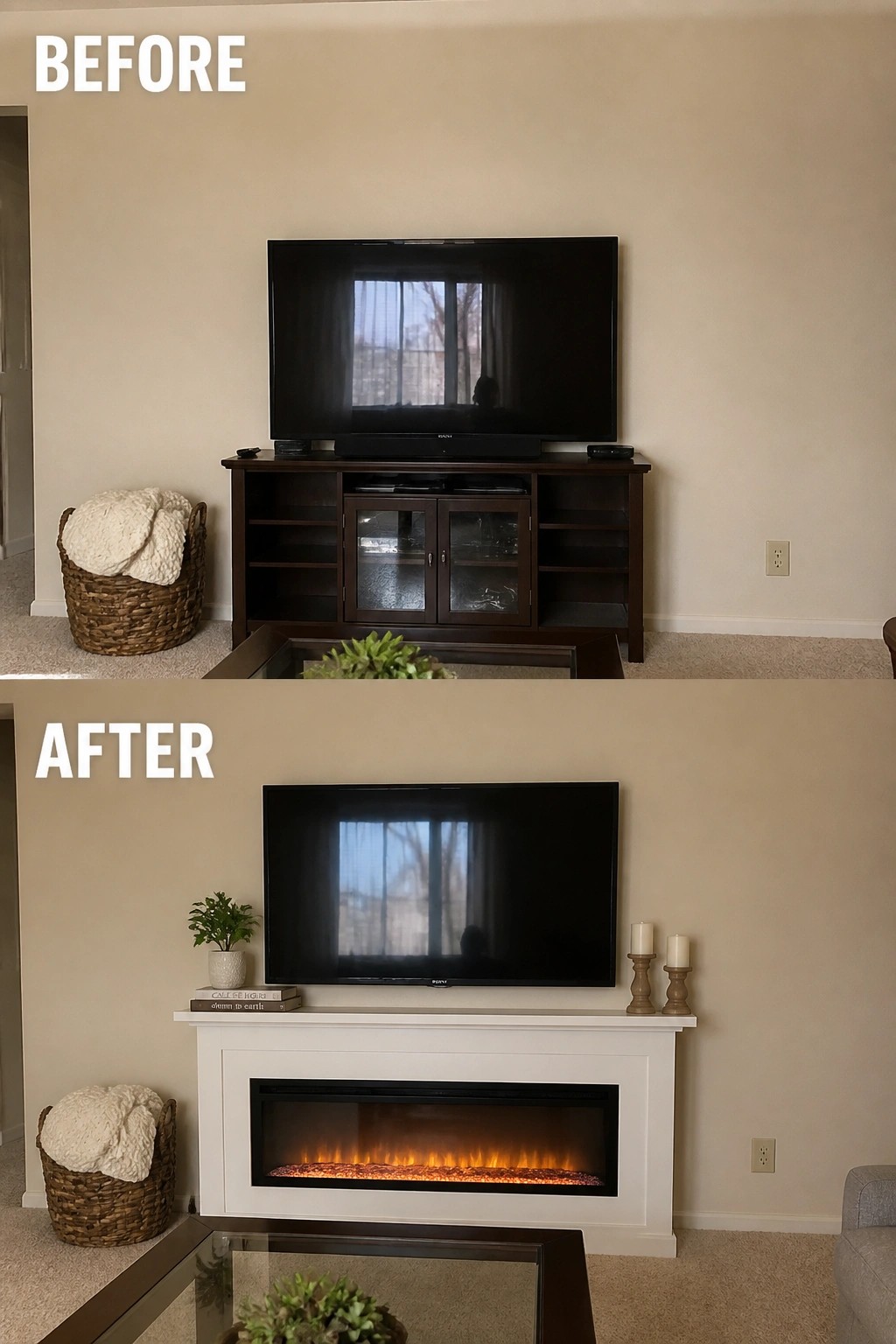
A plain TV console against a beige wall often leaves the room feeling unfinished. In this case the console was removed and a simple white mantel with an electric fireplace was added so the TV could sit above it. The change gives the wall a clear center point without any major construction.
This approach works well in rooms that already have neutral walls and carpet. Keep the mantel style simple, match the trim color if possible, and make sure the electric unit is the right width for the space. It turns a basic TV setup into something that feels more like a living room anchor.
Frame A Plain TV Wall With Built-In Shelving

Adding built-in shelves and cabinets on both sides of the TV turns a blank wall into the main feature of the room. The before photo shows the screen and console sitting alone with nothing to connect them to the rest of the space. Once the white shelving and lower cabinets are added, the area feels finished and gives a clear spot for books, plants, and everyday items.
This idea works best in rooms where the TV needs more presence without taking over. It suits neutral spaces that feel flat because they lack any built-in architecture. Keep the scale modest so the new pieces do not crowd the seating or block the flow through the room.
Frame A Bare Window With Curtains And A Console
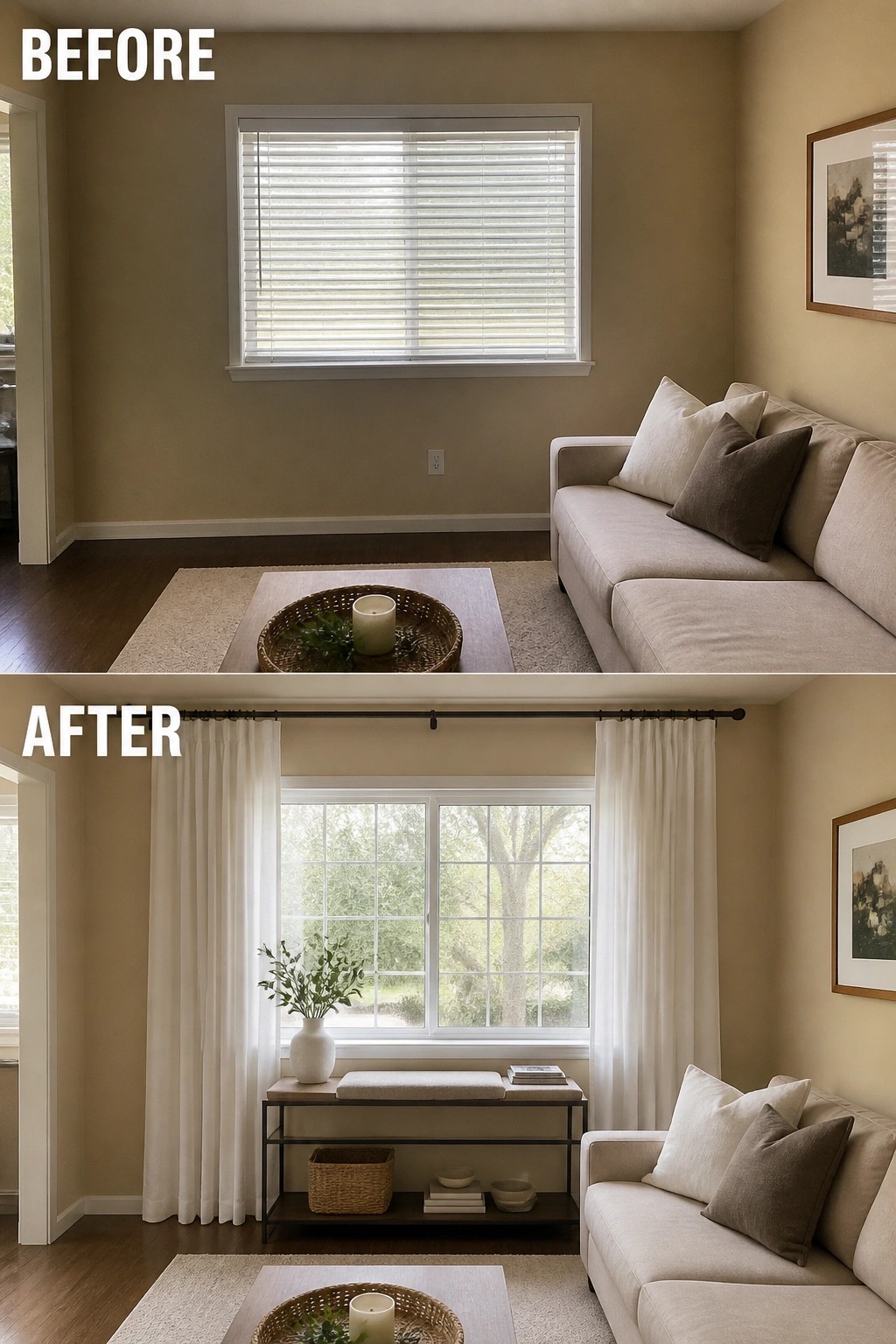
Many beige living rooms feel flat when the windows are left with just blinds. Adding simple floor-length curtains on both sides and setting a low console table underneath gives the wall a finished look and creates a natural spot for plants or books. The curtains soften the light and help the window feel more intentional.
This idea suits rooms where one window needs more presence without major changes. Keep the console narrow and the seating on top low so daylight still reaches the sofa. Match the curtain fabric to your existing sofa and rug tones so the addition feels like part of the room instead of something new.
Add A Gallery Wall Above The Sofa

A blank wall above the sofa often leaves a living room feeling unfinished, even when the furniture is already in place. Adding a gallery wall with a mix of frames and a simple shelf below it gives the space a clear focal point and helps the whole room feel more complete.
This approach works well in rooms with large empty walls that need structure without major changes. Keep the layout balanced by mixing a few larger pieces with smaller ones, then add a shelf for a couple of plants and small lights so the area feels warmer and more lived in.
Refresh A Beige Living Room With Color And A Rug

A plain beige living room often ends up feeling flat because everything blends together. In this case the change came from swapping the big neutral sofa for a blue one and adding two armchairs that bring in warm tones. The rug then pulls the seating together and makes the space feel like a real room instead of just furniture pushed against the wall.
This approach works well in any neutral living room that needs more life without a full renovation. Start with one or two pieces that introduce color, then add a rug to define where people actually sit. Keep the scale of the furniture realistic so the room still feels open and easy to move around in.
Layer Textiles And Plants To Warm Up A Beige Room
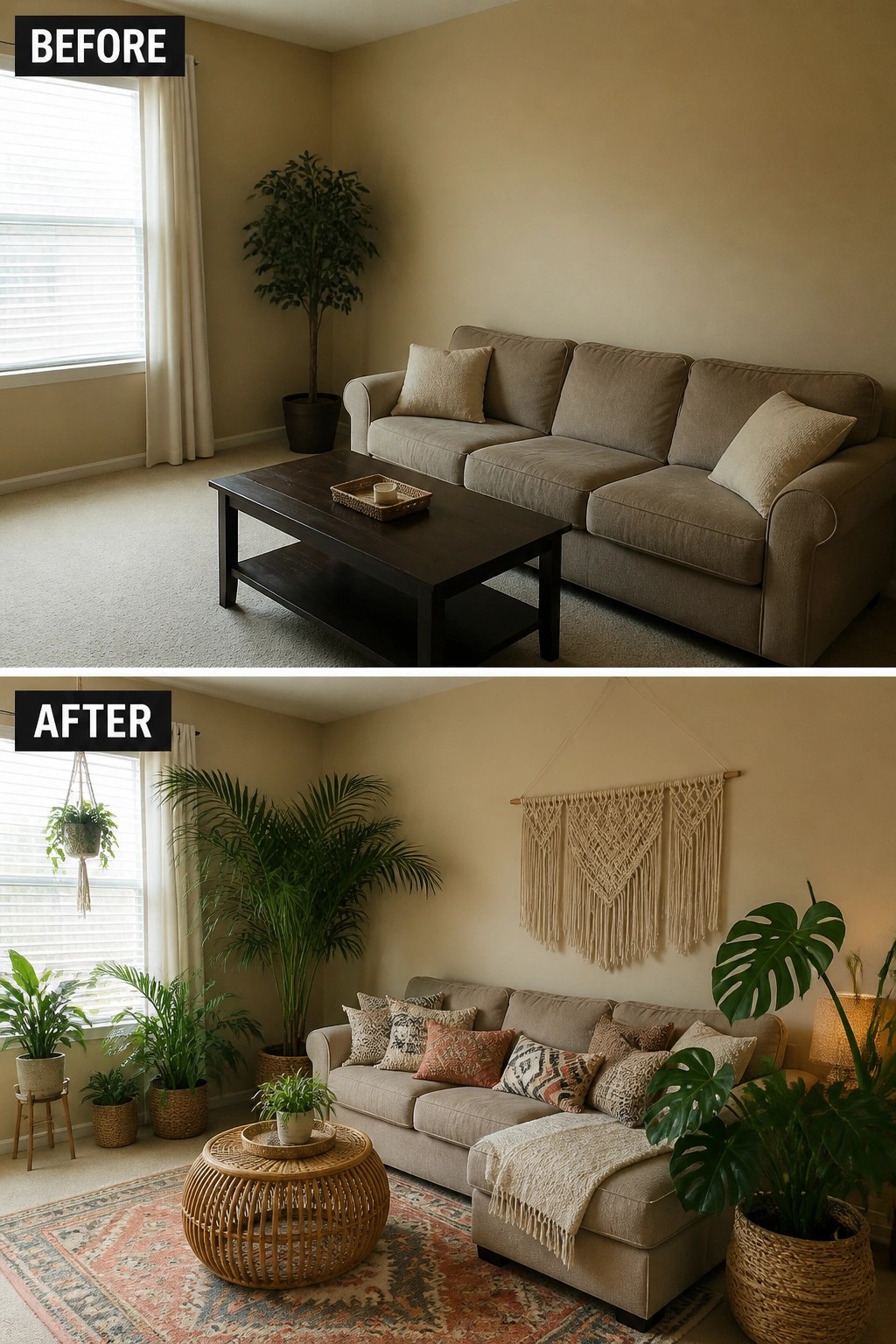
A beige living room can easily feel flat when it has only a few pieces of furniture and no layers. The change here came from adding a rug to anchor the seating, swapping in a lighter coffee table, and bringing in many plants plus patterned pillows and a throw. Those simple additions turned the space into something that feels lived in.
Start with a rug that has some color or pattern, then repeat natural textures through baskets, wood, and soft fabrics. Place plants at different heights near the windows so they get light and fill the corners. This works best in rooms that already have decent furniture but need more warmth and life.
Use An Accent Wall To Add Depth To A Beige Room
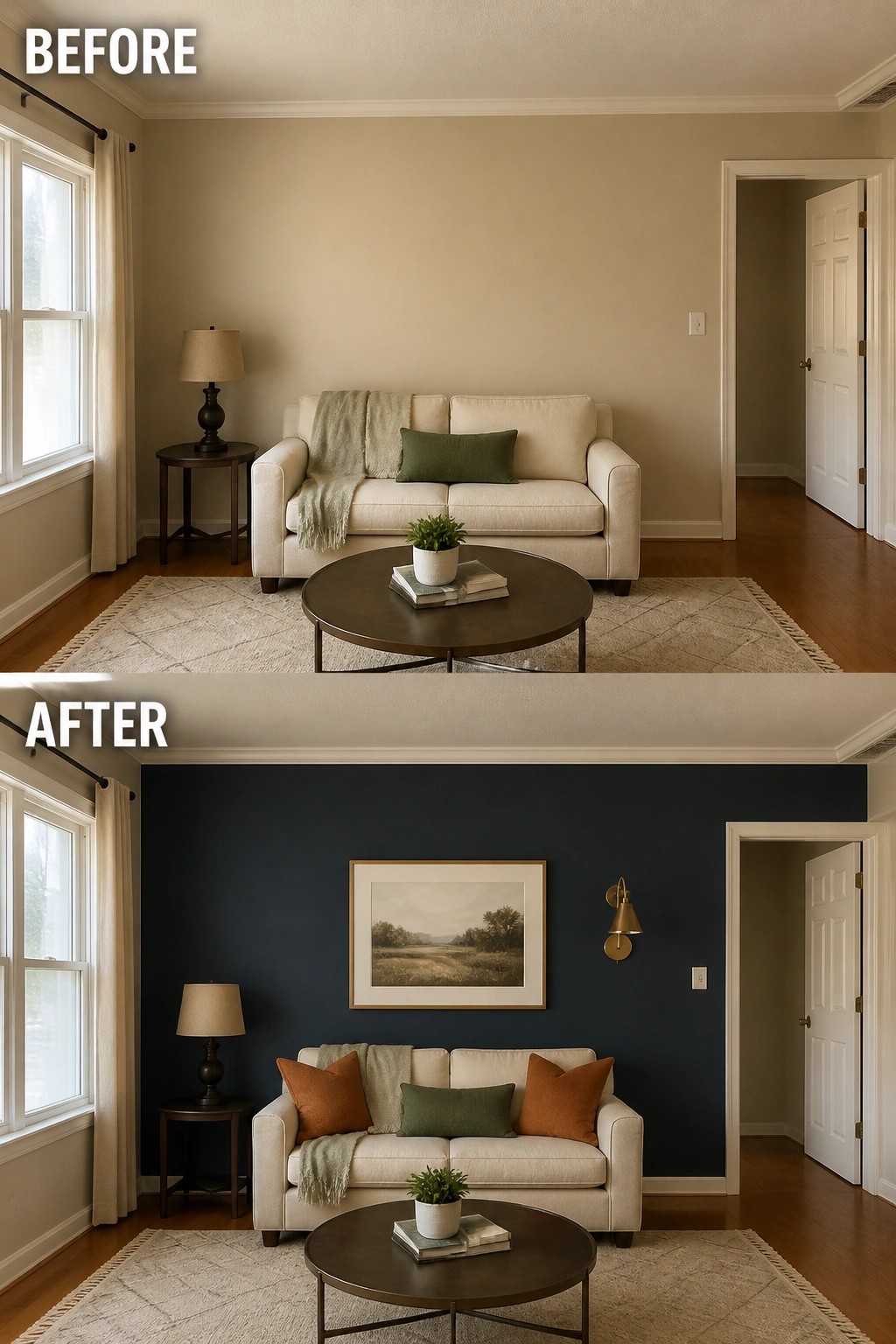
A room with all beige walls often ends up feeling flat because nothing stands out. Painting one wall a deep navy gives the space a clear focal point and makes the sofa and art feel more grounded without changing the rest of the room.
This idea works best in living rooms that already have decent furniture but need more shape. Keep the other walls light, pick a color that echoes your pillows or accessories, and hang one large piece of art so the dark wall does not overwhelm the space.
Replace An Open TV Stand With A Media Console
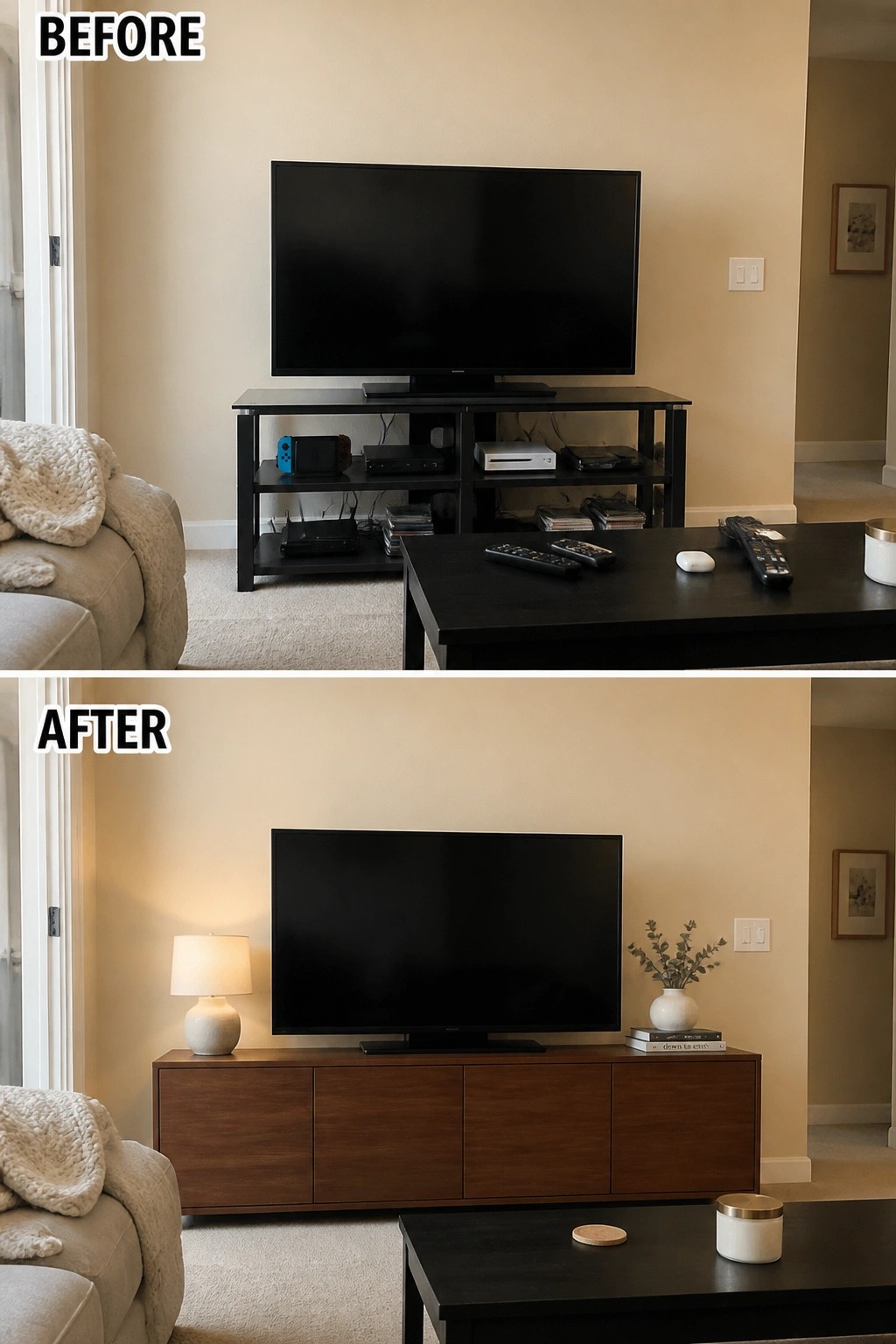
A tall open stand often leaves the TV floating against the wall with cables and devices on full display. Switching to a low closed console gives the screen a solid base and hides most of the clutter at once.
This change works best in simple beige rooms that need one clear focal point. Choose a cabinet in a warm wood tone that matches other furniture, then keep the surface mostly clear except for one or two small items.
Make A Plain Living Room Feel Finished

A flat beige living room often needs more than new pillows. Adding texture to the main wall and hanging a large mirror gives the space depth without crowding it. The change turns an empty stretch of wall into something that holds the room together.
This works best in rooms that already have decent furniture but still feel unfinished. Keep the texture subtle so it adds warmth rather than pattern, and let the mirror reflect light from the windows. Start with one wall so the rest of the room stays calm.
Make The Fireplace Wall The Main Feature

A fireplace can easily fade into the background when the wall around it feels plain. Replacing the old brick with a lighter stone surround and adding shiplap above the mantel gives the wall a clear purpose and turns the fire into the room’s natural center.
This idea works best in living rooms that already have a fireplace but lack focus. Choose materials that stay close to the room’s existing light tones, keep mantel styling simple, and make sure the new surround fits the scale of the opening so the change feels balanced rather than overwhelming.
Add A Window Seat To Give A Plain Room Purpose
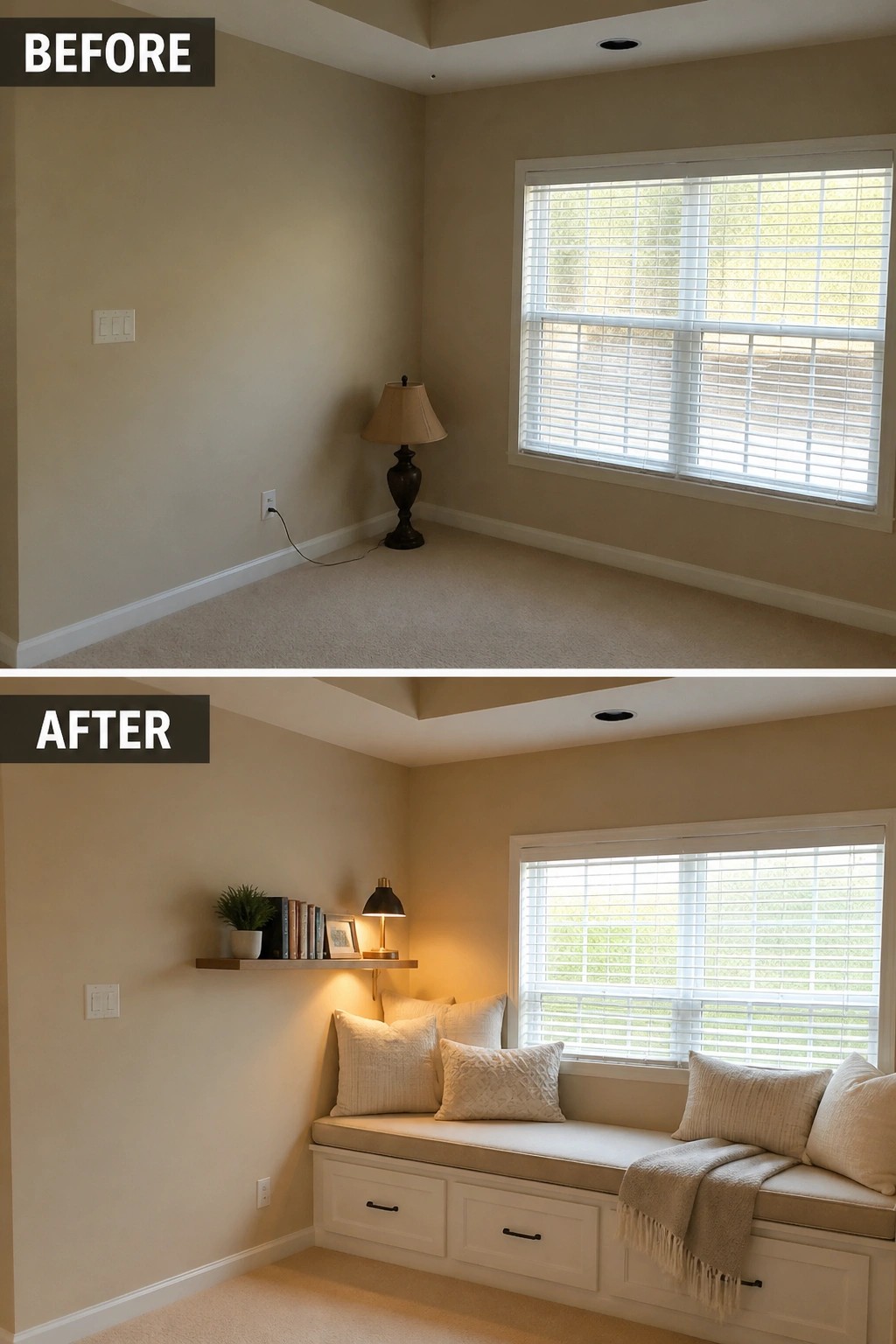
An empty corner under a window often feels like wasted space in a beige room. Adding a built-in window seat with storage drawers turns that spot into something useful. The seat creates a place to sit, while the drawers hide blankets or books, and the shelf above adds a spot for a lamp and a few small items without crowding the wall.
This idea works best in rooms that lack a natural focal point or need one more seating area. Keep the cushions and pillows in light neutral tones so they blend with the walls instead of fighting them. Measure the window first so the seat fits without blocking light or making the room feel smaller.
Make A Plain Beige Living Room Feel Finished
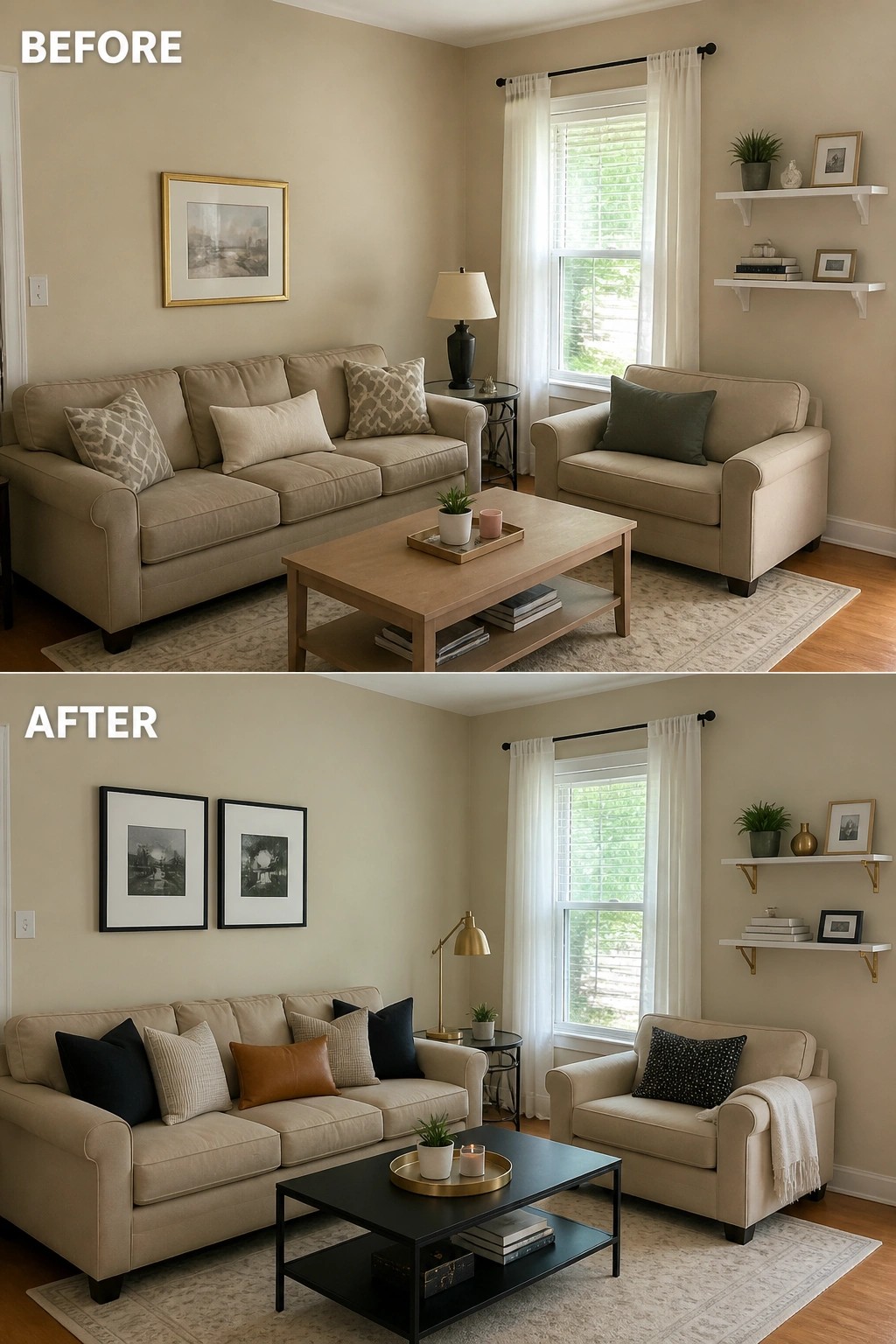
A beige living room often starts to feel flat once the furniture is in place. Here the room gained more life once the light wood coffee table was replaced with a darker one and the single framed print was swapped for two matching black frames. A few new pillows in navy and rust also helped break up the long sofa.
This idea works in any neutral room that already has decent furniture but lacks contrast. Focus on one or two changes that stand out against the walls, such as darker wood tones or framed art, and add pillows in a couple of deeper shades. Keep the rest of the room simple so the updates do not compete.
Swap The Sofa Color To Warm Up A Beige Living Room

A flat beige room often feels unfinished because everything blends together. Changing the sofa to a soft blue-gray color and switching the coffee table to a warmer wood tone gives the space an instant focal point and breaks up the monotony without needing a full repaint.
This approach works well in rental living rooms or older homes where the walls are already a neutral beige. Keep the change simple by picking one main piece in a new color, then repeat a few wood tones in the table and side pieces so the room feels pulled together rather than scattered.
Add Layered Lighting To Warm Up A Flat Living Room
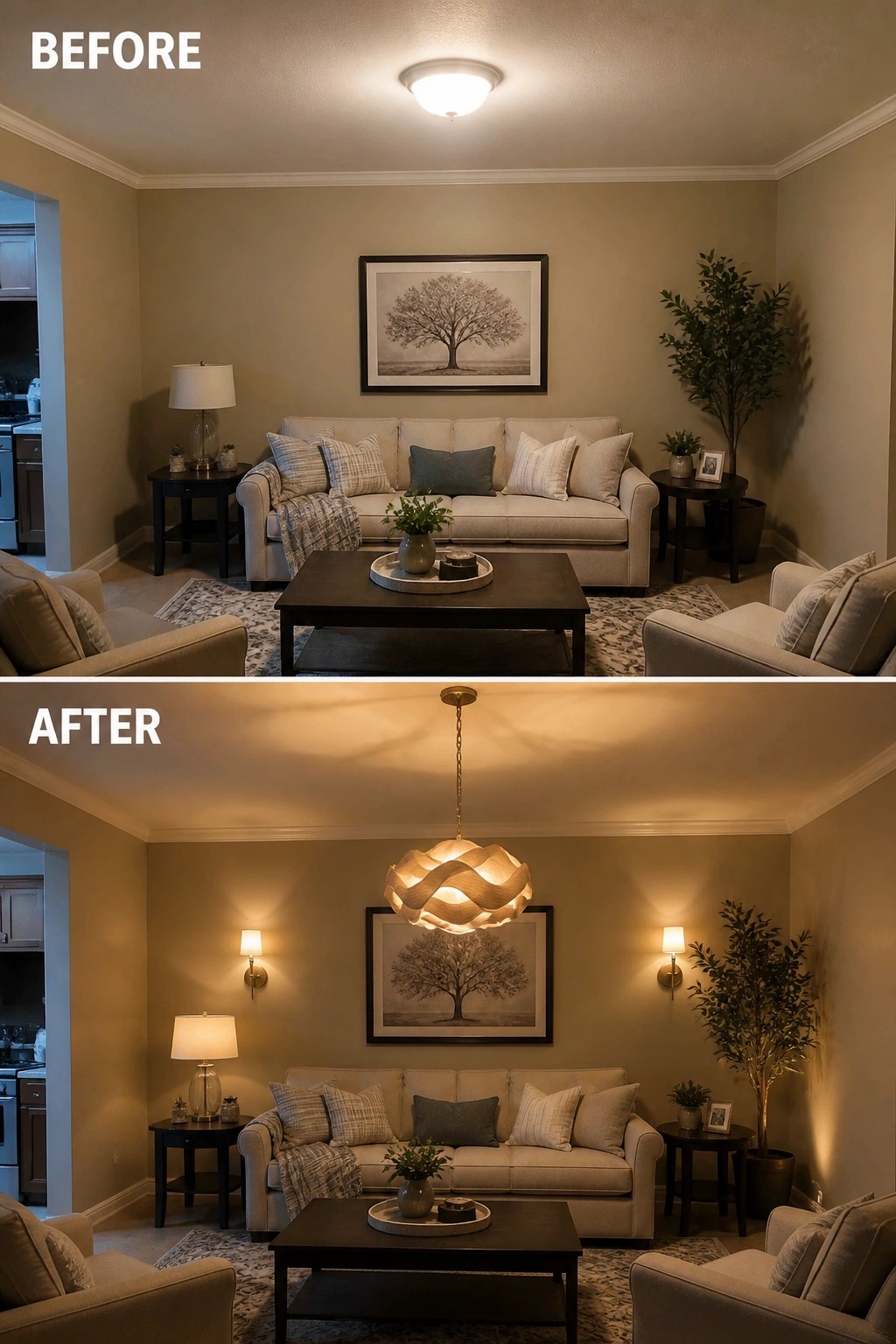
A single ceiling light often leaves a beige room feeling flat and unfinished even when the furniture is already in place. Switching to layered lighting changes the mood right away. In this case the overhead fixture was replaced with a hanging pendant, and a pair of wall sconces were added on either side of the art. The table lamp stayed but now works as part of a larger system instead of the only source of light.
This approach works well in living rooms that already have decent furniture but still feel cold at night. Start with one larger overhead piece for general light, then add two or three lower sources so the room has both brightness and shadow. Keep the fixtures simple and the bulbs warm so the beige walls pick up a softer tone instead of staying neutral.
Use A Rug And Textiles To Finish A Beige Living Room
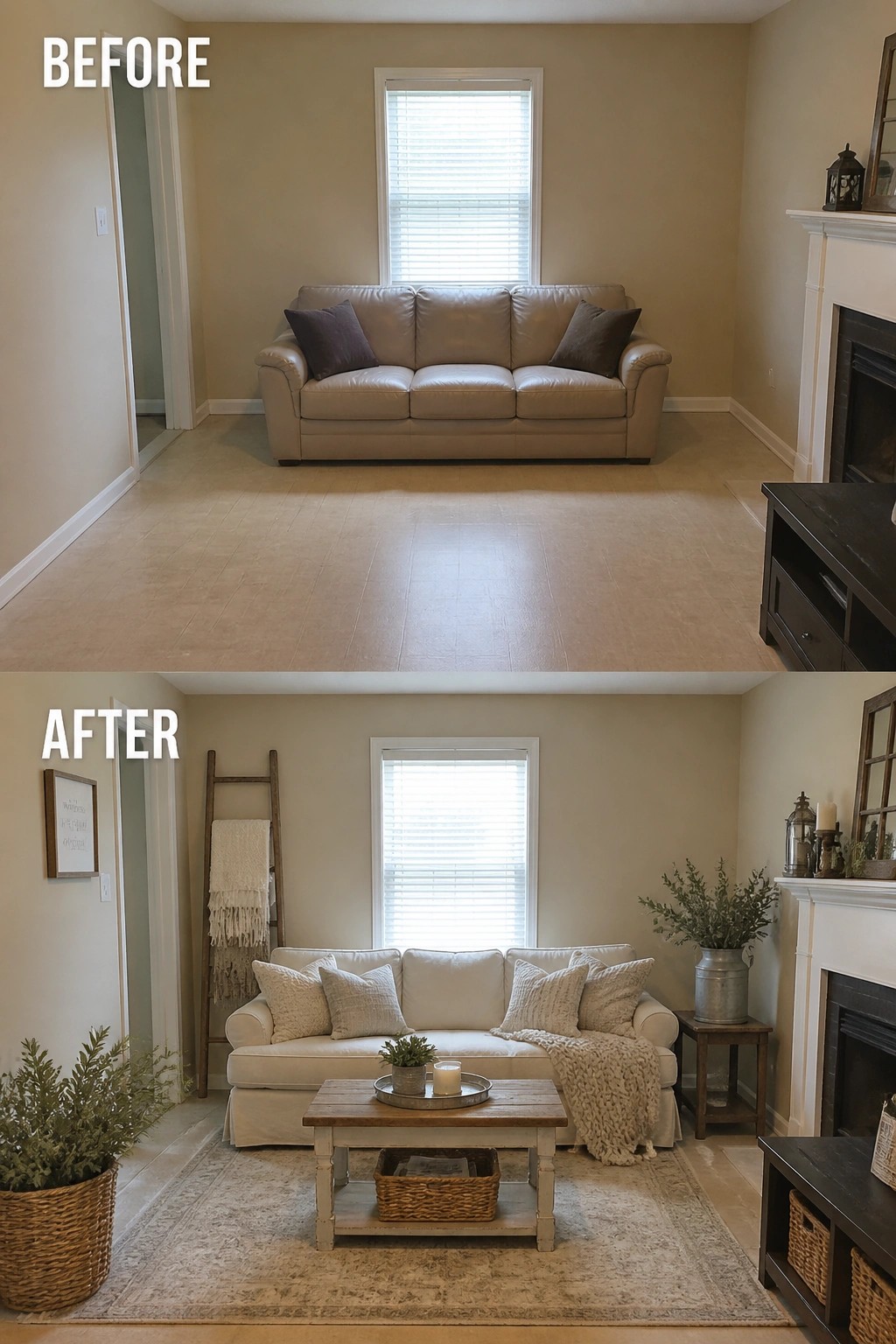
A plain beige room can feel flat when the floor and walls run together without any break. Placing a large rug under the seating and adding layered pillows plus a throw blanket creates instant separation and softness. The after version shows how these simple additions pull the space together without changing the walls or furniture.
This idea works best in neutral rooms that already have the basics but lack warmth. Start with one large rug to anchor the main seating area, then repeat similar textures across a few pillows and a blanket. It suits smaller living rooms or open spaces where you want comfort without crowding the floor.
Add Bold Artwork To Brighten A Flat Beige Living Room

A large colorful painting can completely shift the feel of a beige room that looks plain. In the before photo the wall only had a small neutral piece that blended in, while the after shows one big abstract painting that brings in blues, oranges, and reds. The new pillows pick up those same tones and tie everything together without needing a full repaint.
This idea works well in living rooms that already have decent furniture but feel washed out. Start with one large piece of art that has several colors, then add two or three pillows or a throw in matching shades. Keep the rest of the room simple so the artwork stays the focus.
Make The TV Wall The Main Feature

A plain wall behind the TV often leaves the room feeling unfinished. Adding a patterned tile surface and a simple wood shelf above the console gives the wall clear purpose and turns it into the natural center of the space. The before photo shows a flat beige surface with nothing to hold the eye. The after version uses texture and a narrow ledge to create that missing focus.
This approach works well in any living room where the TV sits against a long blank wall. Keep the shelf narrow so it does not compete with the screen, and choose tile with a subtle pattern that reads from across the room. The rest of the furniture and plants can stay as they are.
Declutter First In A Beige Living Room

A beige room often looks flat because of too many scattered items rather than the wall color itself. Clearing the floor and removing extra bins, toys, and loose decor lets the furniture and rug define the space properly, which is exactly what happened between the two photos here.
Start by pulling out anything that does not have a daily purpose or a proper home. Once the floor is clear, keep the coffee table simple and move stray pieces to storage or other rooms. This approach works especially well in neutral living rooms where the goal is calm rather than more layers.
Add Layered Lighting To Warm Up A Beige Living Room
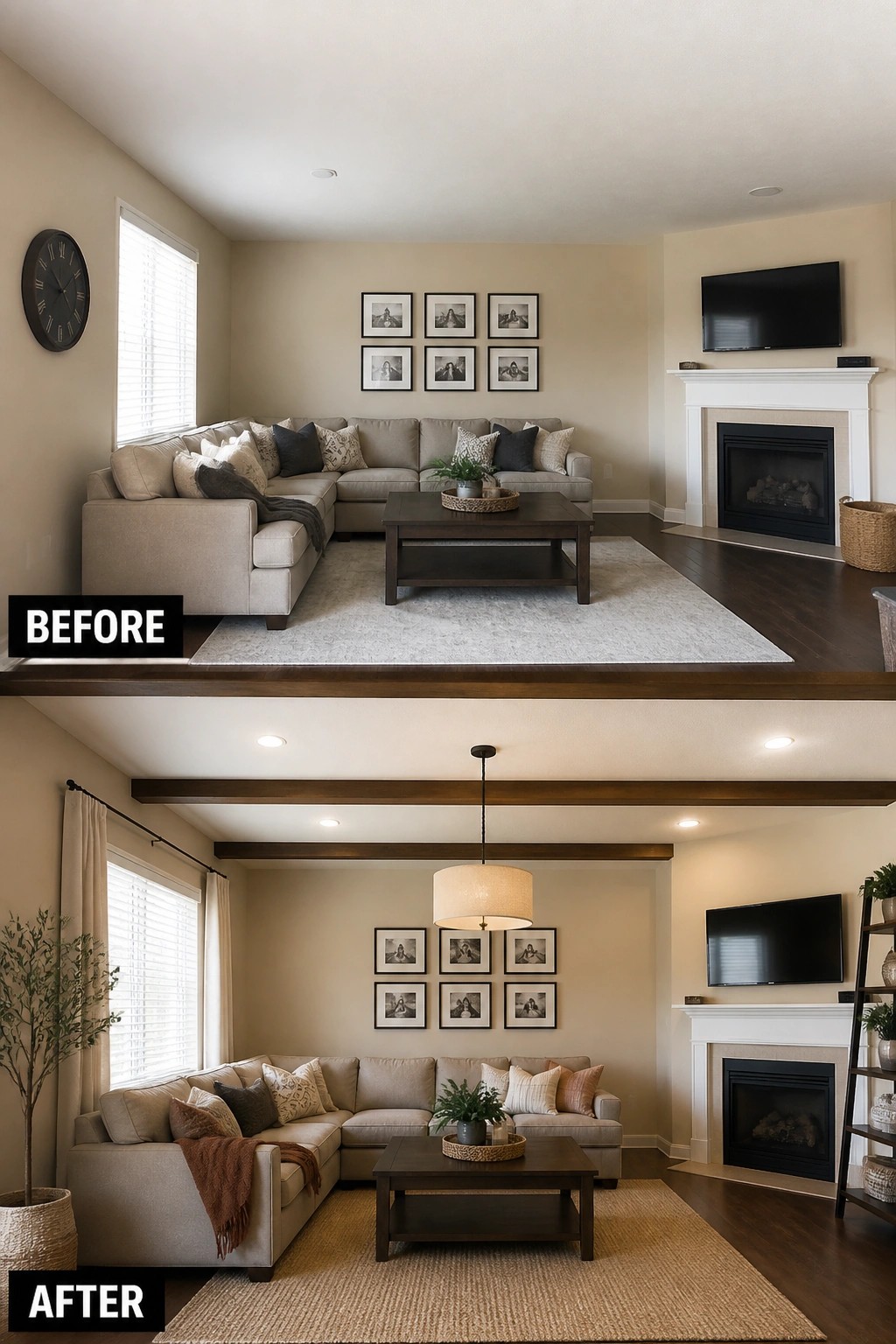
A plain beige living room often feels unfinished when the only light comes from recessed cans and there are no curtains or substantial rugs. Adding a large pendant light over the seating area and hanging simple curtains on the windows immediately makes the space feel more intentional and comfortable.
This idea works best in rooms with decent ceiling height where one main fixture can anchor the layout. Choose a light that matches the scale of your sofa, then repeat one warm material like wood or woven fibers in the rug and curtain rods so the changes feel connected rather than scattered.
Warm Up A Beige Living Room With Color Accents

A beige living room often feels flat when the palette stays too even across the walls, sofa, and accessories. Adding a few warm terracotta pillows, a matching throw, and one new chair in a deeper shade gave this space a clearer sense of warmth and made the seating area feel more complete.
This idea works best in rooms where the main furniture stays neutral. Start with two or three accent pillows and a throw in a warm tone, then see if one larger piece like a chair fits without crowding the layout. The key is keeping the base light so the added color shows up clearly.
Frequently Asked Questions
Q: How do I add color without repainting the whole room? A: Start with a few pillows and a throw in warm rust or soft olive. These bring in new tones right away and you can change them with the seasons. A couple of framed prints on the wall can pull the same shades through too.
Q: What works better for texture when the space still feels flat? A: Try a woven basket or two on the floor next to the sofa. They add depth without much effort. A nubby rug under the coffee table helps tie everything together.
Q: How do I brighten things up if the room gets little natural light? A: Swap in lamps with white or cream shades so the light bounces around more. Keep the bulbs warm rather than cool. One mirror across from the main light source can open the space even more.
