

I have walked into living rooms where the basics were in place but nothing quite held together yet.
The pieces sat there without a clear sense of how they should work with each other day to day.
Layout usually comes before anything else.
A few adjustments to seating and traffic paths can turn an awkward spot into one that actually gets used.
I tend to try those first in my own house because they show whether the room needs more or just needs to be rearranged.
Use A Rug To Finish An Empty Living Room

A living room with just a sofa and a lamp often feels half done because nothing ties the space together. Adding a large rug under the seating area creates a clear zone and makes the furniture feel like it belongs there instead of floating on the floor.
This approach works best in rooms with hardwood or simple flooring where you need one main anchor. Keep the rug big enough to fit the front legs of the sofa and any extra chairs, then add only a couple more pieces so the room stays open and easy to move around.
Add An Accent Wall To Finish A Plain Room

A long blank wall behind the sofa often leaves a room feeling unfinished. Painting that wall a deep color and adding simple white trim with a picture ledge gives the seating area a clear focal point without needing new furniture.
This approach suits any living room with a large empty wall and neutral flooring. Keep the other walls light, choose a color that works with your existing sofa and rug, and add just a few framed pieces so the wall feels balanced rather than busy.
Add Built-In Shelves To A Wall Niche

A recessed niche next to a fireplace often ends up with a freestanding shelf unit that feels temporary. Switching to white built-in shelves with lighting underneath each level gives the wall a finished look and turns the space into useful storage and display.
This idea works best in living rooms where the fireplace wall already has some trim or molding. Keep the shelves fairly shallow so they do not stick out too far, and run the lights on a dimmer so the glow stays soft in the evening. Use baskets on the lower shelves if you need to hide everyday items.
Make A Plain Living Room Feel Finished
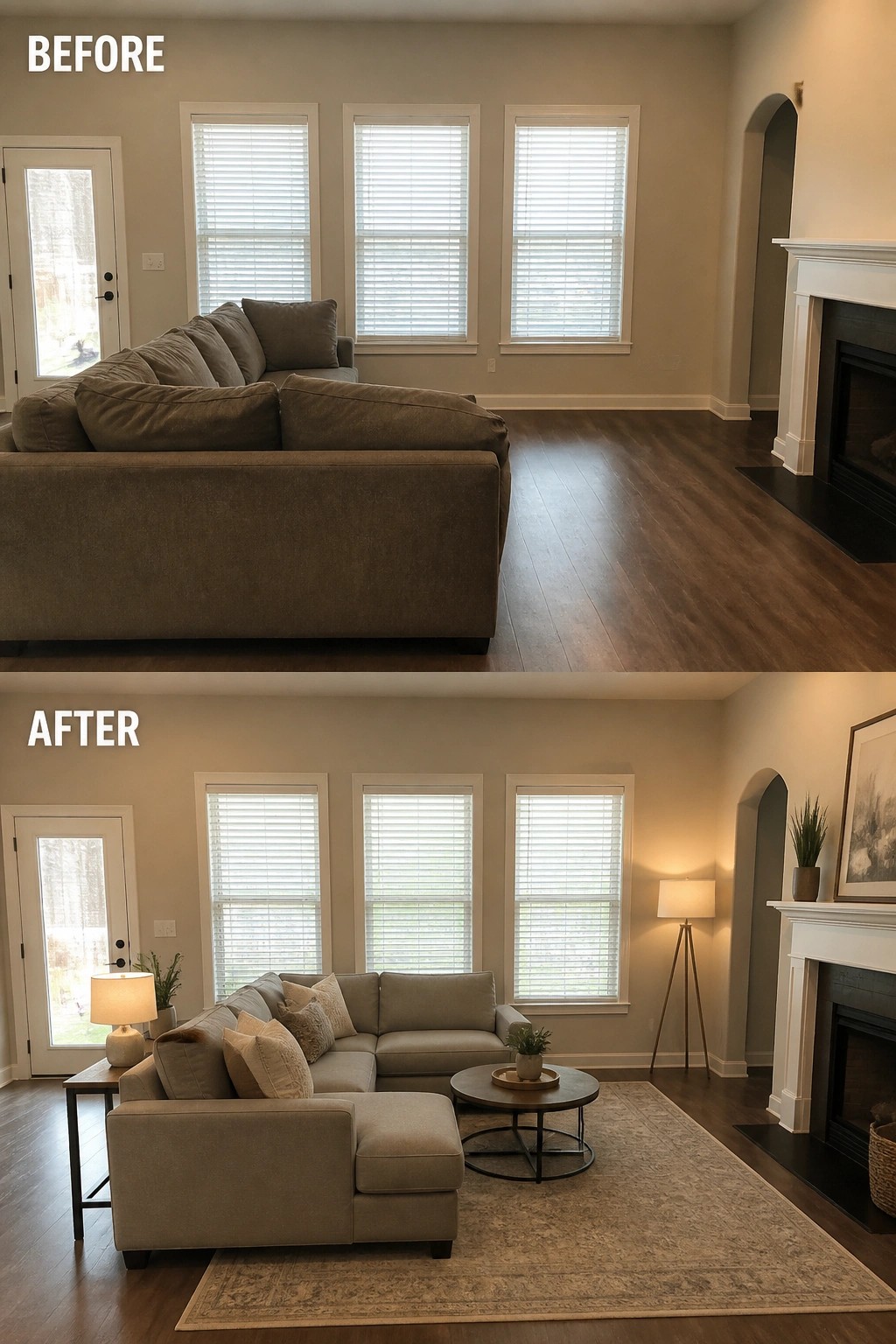
A big sectional can leave a room feeling half done when it sits alone on bare floors. Adding a rug underneath the seating area pulls the furniture together and gives the space a clear center without any big construction.
This approach works best in newer homes or rooms that still feel empty after the main pieces are in place. Choose a rug large enough for the front legs of the sofa to rest on it, then add one or two lamps to bring in light where people actually sit.
Layer Lighting To Finish An Incomplete Living Room
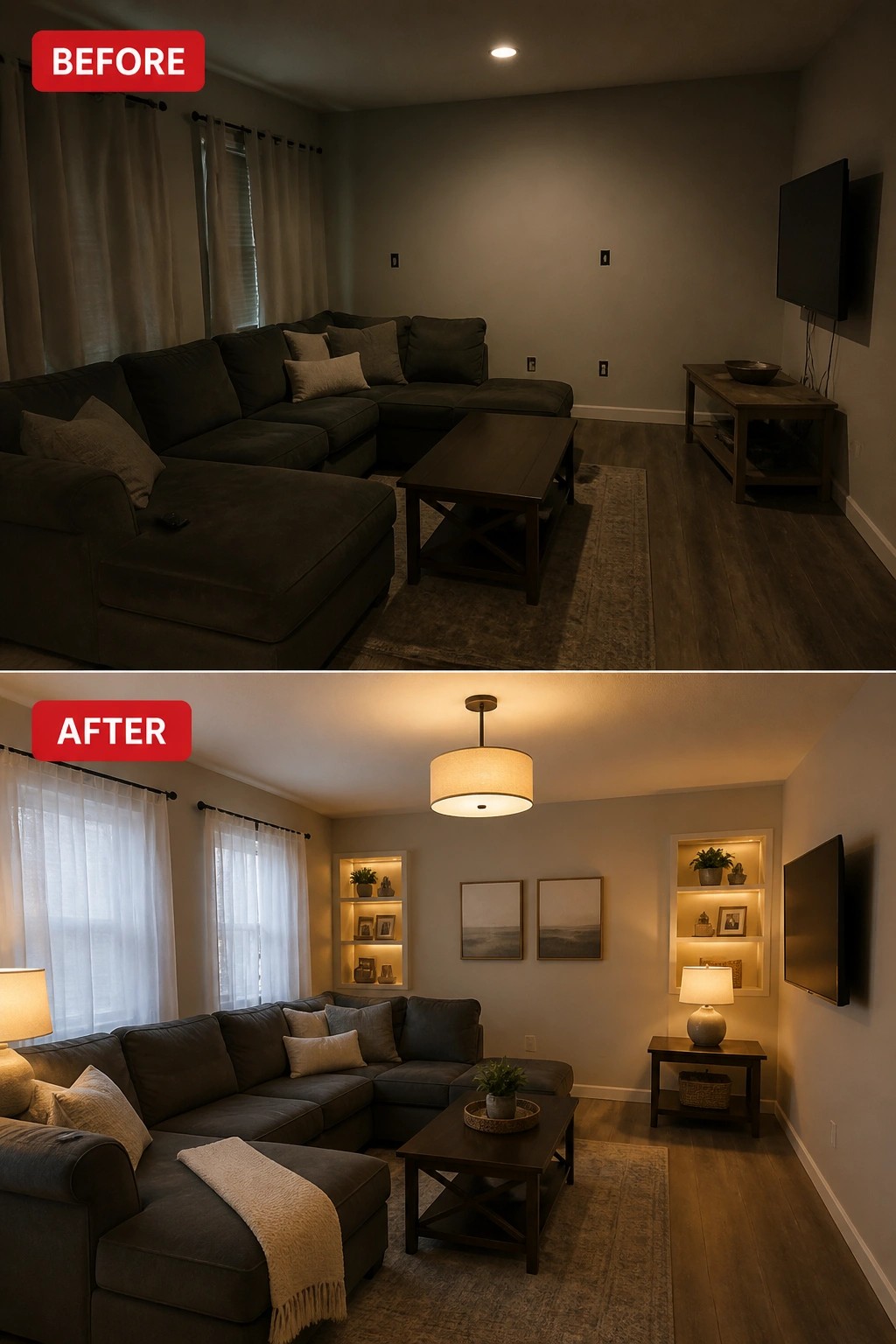
The room felt half done with only one ceiling light and bare walls. Adding a hanging pendant over the seating area plus a few table lamps made the space feel much warmer and actually usable at night.
This works best once the main furniture is already in place. Place one light source near seating level and another higher up so the room does not rely on a single harsh overhead bulb. Keep the lamps simple and repeat the same warm bulb tone throughout.
Add A Gallery Wall To Finish A Plain Living Room Wall
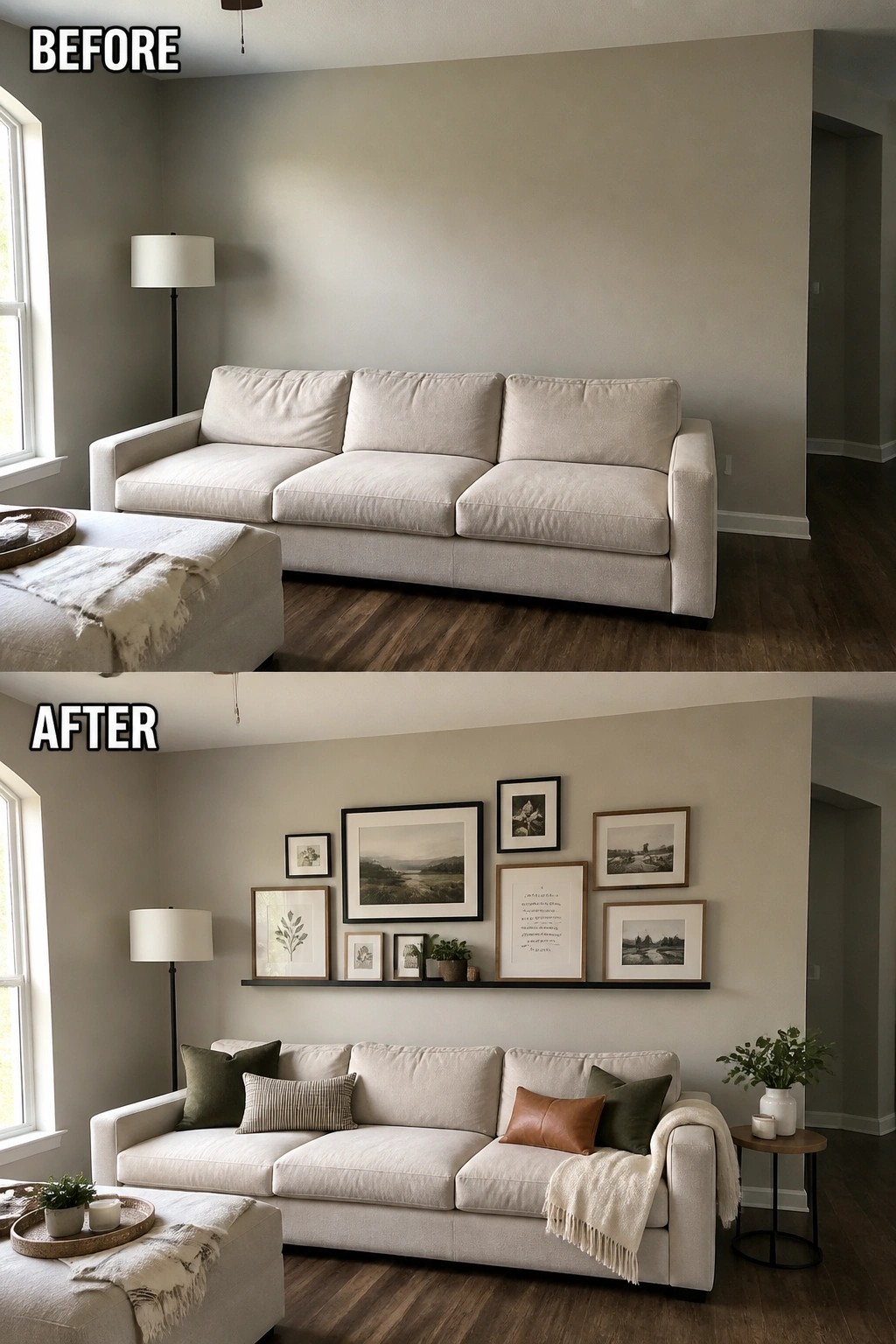
A large empty wall behind the sofa often makes a living room feel unfinished even when the furniture is in place. Adding a simple floating shelf and a mix of framed pieces above the couch gives the wall purpose and helps the whole room feel more complete.
This idea works best in spaces where the seating faces a big blank wall. Use a shelf first so you can shift things around easily, then fill it with frames in a few sizes. Stick to similar tones in the art so it feels calm instead of crowded.
Make A Plain Living Room Feel Finished

Many rooms end up feeling half done when the windows stay bare and the floor has nothing to anchor the furniture. Adding curtains that reach the floor and a rug under the seating area gave this space a much more settled look without changing the sofa or coffee table.
This idea works best once the main pieces are already in place. Focus on the windows first, then add one large rug that fits the seating group. Keep the rest simple so the room does not get crowded.
Make The Fireplace Wall The Main Feature

Painting the brick and swapping the heavy wooden mantel for a simpler white one can turn an outdated fireplace into the strongest part of the room. The dark brick and thick mantel once made the wall feel closed in, but the white finish opens it up and lets the shape of the firebox stand out without extra effort.
This approach works well in older homes where the brick is still solid but the color feels dated. Keep the new mantel trim clean and repeat one or two neutral tones in the accessories so the wall stays calm instead of busy.
Make A Plain Living Room Feel Finished
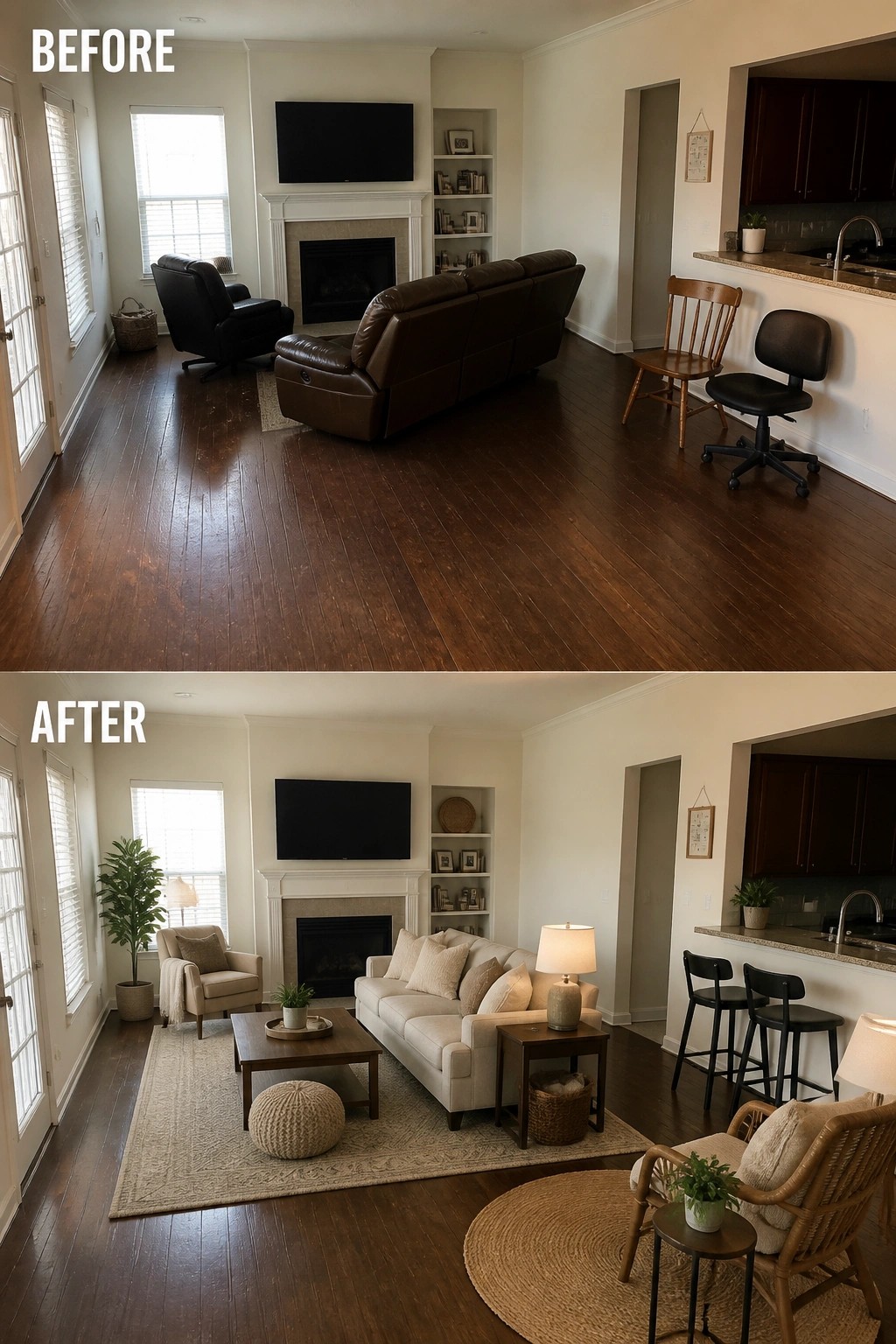
The living room looked half done with furniture placed around the edges and nothing holding the space together. Adding a large rug and pulling the seating into a centered group changed how the room reads right away. The pieces now feel connected instead of scattered.
This idea works best in open rooms where you need to show where the living area starts and stops. Choose a rug big enough for the front legs of the sofa and chairs to rest on it, then arrange everything to face the main focal point. It keeps the space from feeling like it is still waiting for the next step.
Anchor The TV With A Longer Media Console
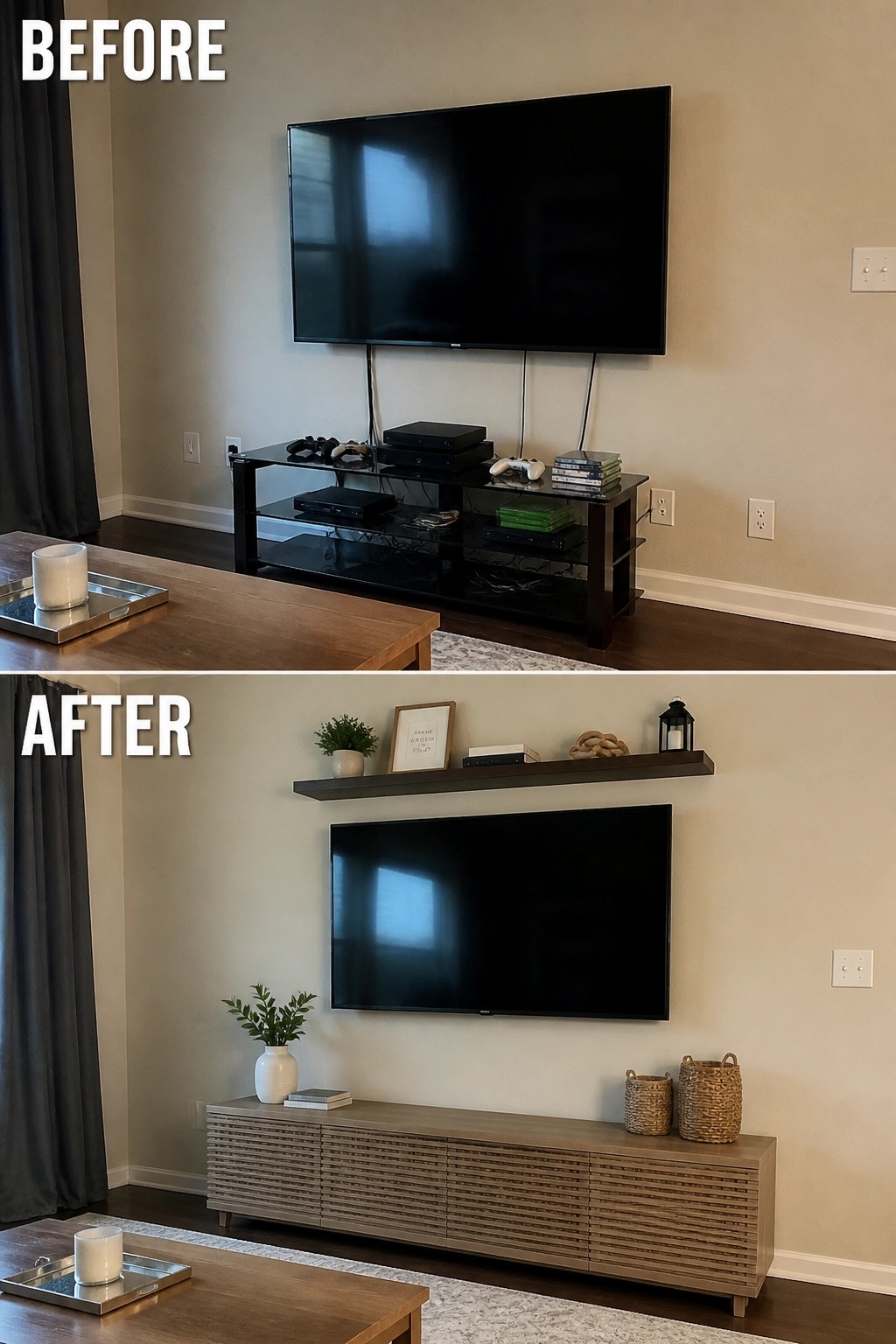
A high-mounted TV sitting above a small glass stand often leaves the wall feeling unfinished and the cords too visible. Switching to a long, low console lets the TV sit at a better height while the cabinet hides the equipment and gives the whole wall a solid base. Adding a simple floating shelf above keeps the look balanced without adding bulk.
This approach works well in living rooms where the TV is the main focal point. Keep the console roughly as wide as the screen or a bit wider, and choose a style that matches your other wood tones so the pieces feel connected rather than separate.
Make A Plain Living Room Corner Feel Finished
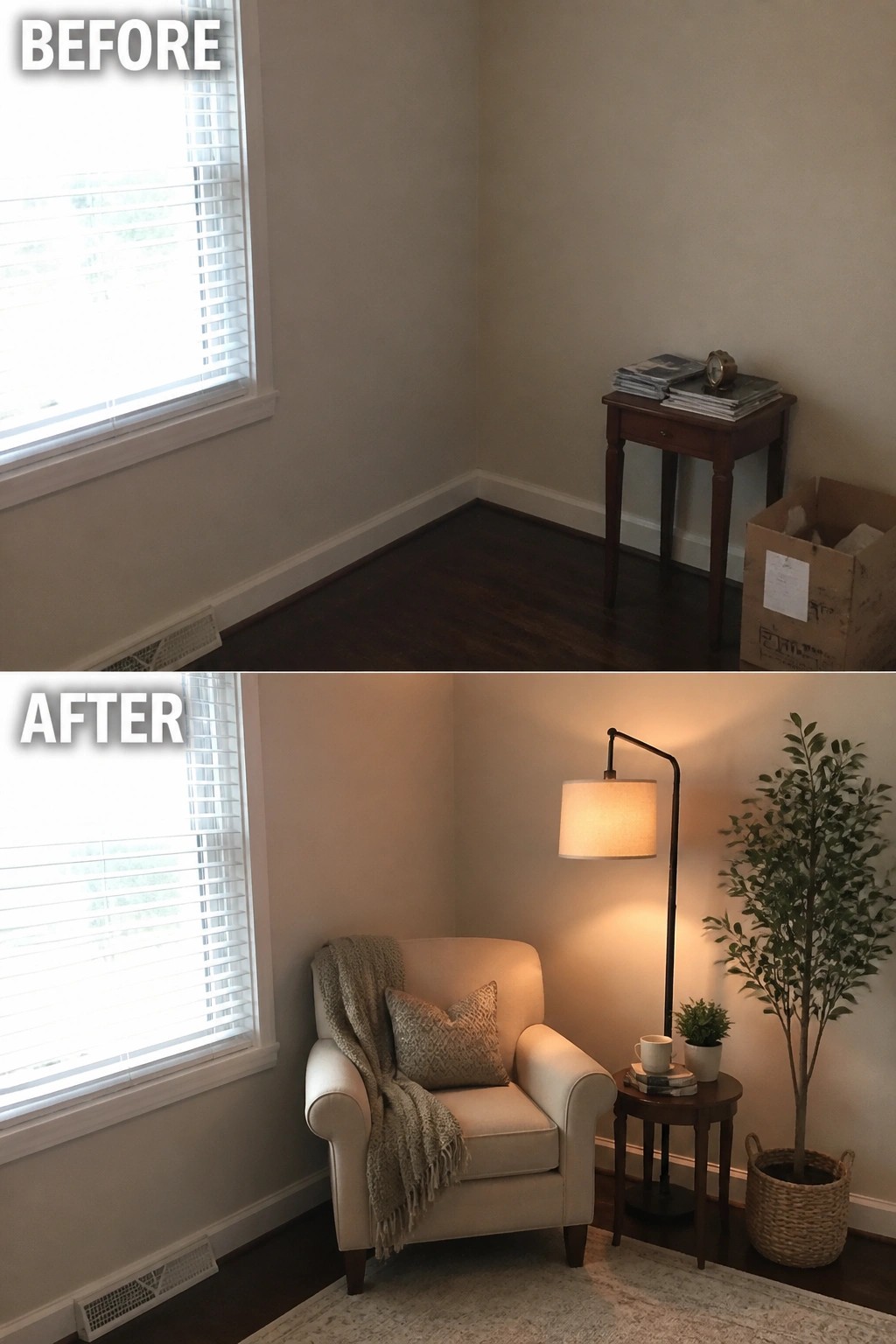
An empty corner often leaves a living room feeling unfinished even when the main pieces are already in place. Adding one comfortable chair, a floor lamp for evening light, and a small rug pulls the space together and gives it a clear purpose.
This approach suits rooms that have leftover wall space near a window. Keep the furniture scale modest, add just enough accessories to make the spot inviting, and stop once the corner feels usable rather than crowded.
Make A Plain Living Room Feel Finished

The before photo shows a room that still felt half done, with just a sofa sitting on bare floors. In the after version, a large rug pulls the seating together and the addition of lamps and an ottoman gives the space a clear purpose.
This approach works best in rooms that already have the main furniture but lack definition. Start with one large rug to anchor the seating area, then add a couple of lamps at different heights. It suits older homes or any living room where you want to avoid a full renovation.
Add A Mirror And Console To Finish A Bare Wall
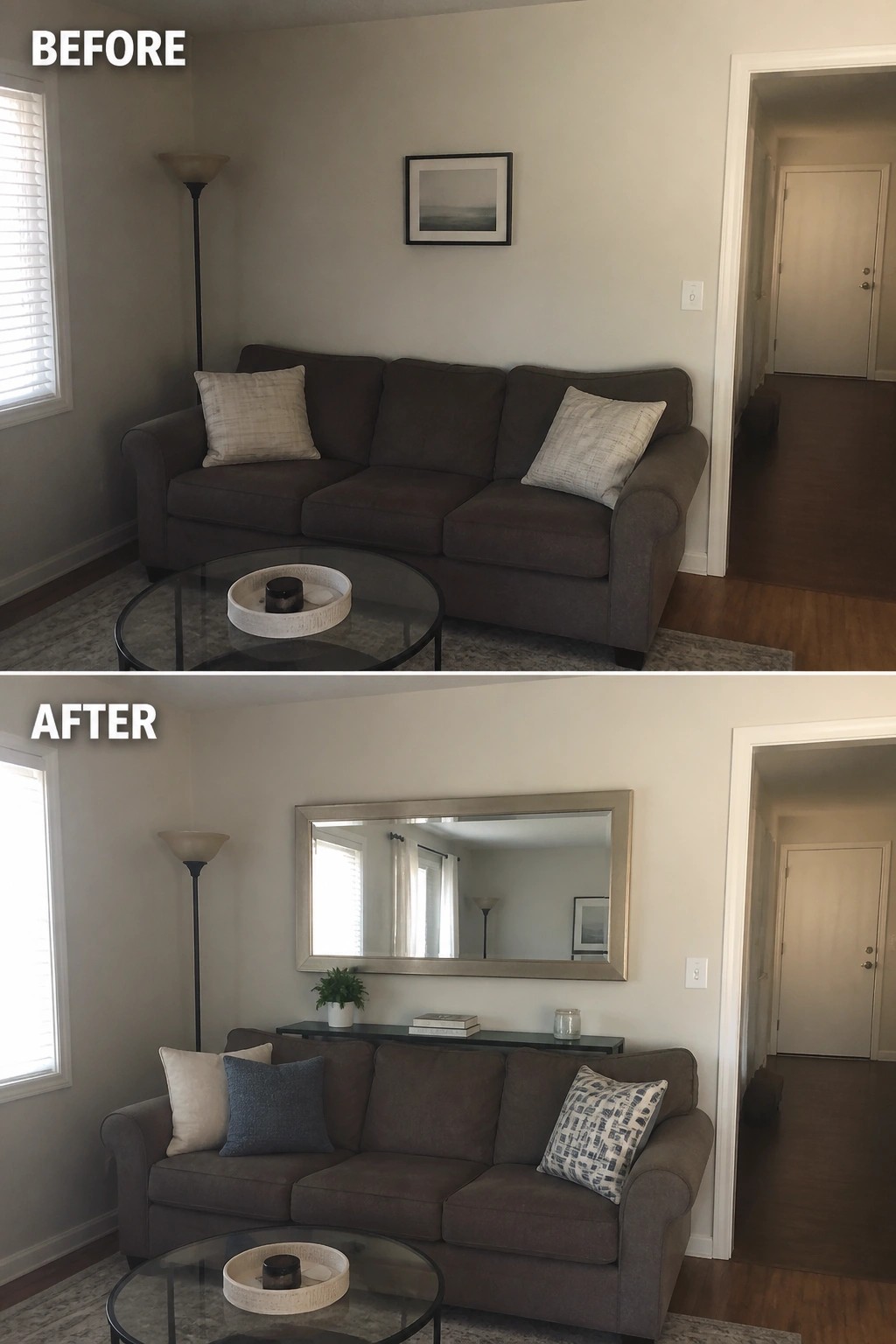
A plain wall behind the sofa often leaves a living room feeling half done. In this case the fix was simple. A large mirror was hung centered above a narrow console table, and a few small items were placed on the surface. The change gives the whole wall a purpose and pulls the seating area together without adding much clutter.
This idea works well in rooms where the sofa sits against a long empty stretch of wall. Choose a mirror that is roughly two thirds the width of the sofa and keep the console low and slim so it does not block walking space. The goal is to create one clear focal point rather than fill every inch.
Finish The Room With Fresh Pillows And A Throw
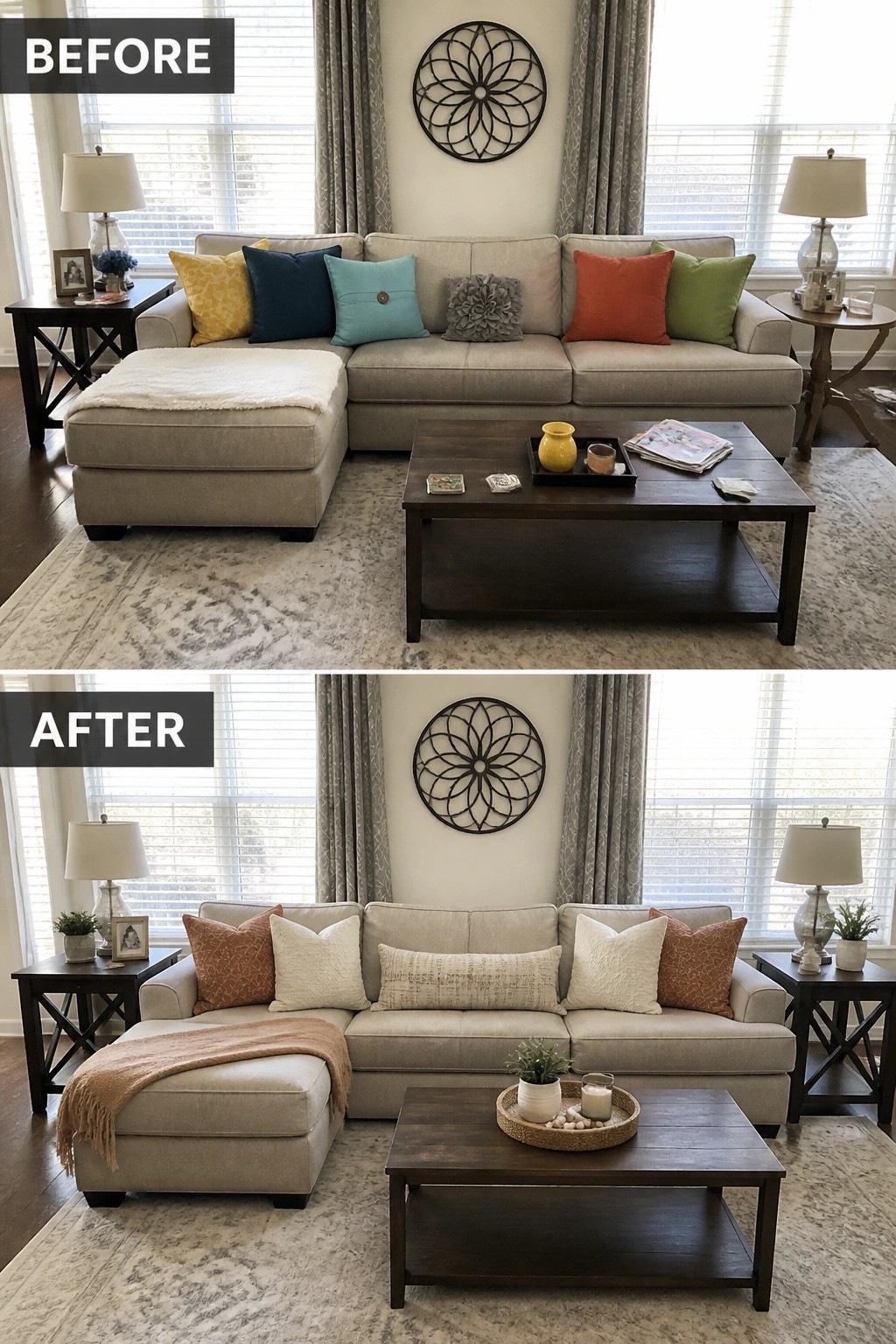
Many living rooms look almost done but still feel a little off because the pillows and soft layers are not quite right. In this case the change was simple. The bright mismatched pillows were swapped for a calmer mix of neutrals and rust tones, and a throw was added across the chaise. Those two moves pulled the whole seating area together without moving any furniture.
This idea works well in rooms that already have the big pieces in place but need one last layer to feel complete. Keep the pillow colors to two or three tones that repeat elsewhere in the room, and choose one throw in a soft texture. It is an easy update that can be done in an afternoon and makes the space feel finished rather than halfway there.
Make The Fireplace Wall The Main Feature

Adding plants around a fireplace wall can pull a whole room together when the rest of the space already has the basics in place. The before photo shows a clean but somewhat flat setup with just the TV and floating mantel, while the after version adds a tall tree to one side, smaller pots along the shelf, and trailing vines that soften the white wall.
This idea works best in rooms that already have the main furniture pieces but still feel a little unfinished. Start with one larger plant on the floor to balance the height of the TV, then layer a few smaller ones on the mantel. Keep the colors simple so the greenery stands out without competing with everything else.
Make A Plain Living Room Feel Finished

A room can look halfway done even when the big pieces are in place. Adding a rug under the sofa and placing matching lamps on both ends gave this space clear boundaries and balanced light, which made the whole area feel intentional instead of half empty.
This approach works well in any living room that has a sofa and a couple of side tables but still feels open and unfinished. Start with the rug size so the front legs of the seating sit on it, then repeat the same lamp style on each side to create symmetry without needing a lot of new furniture.
Add Built-Ins To Finish A Living Room
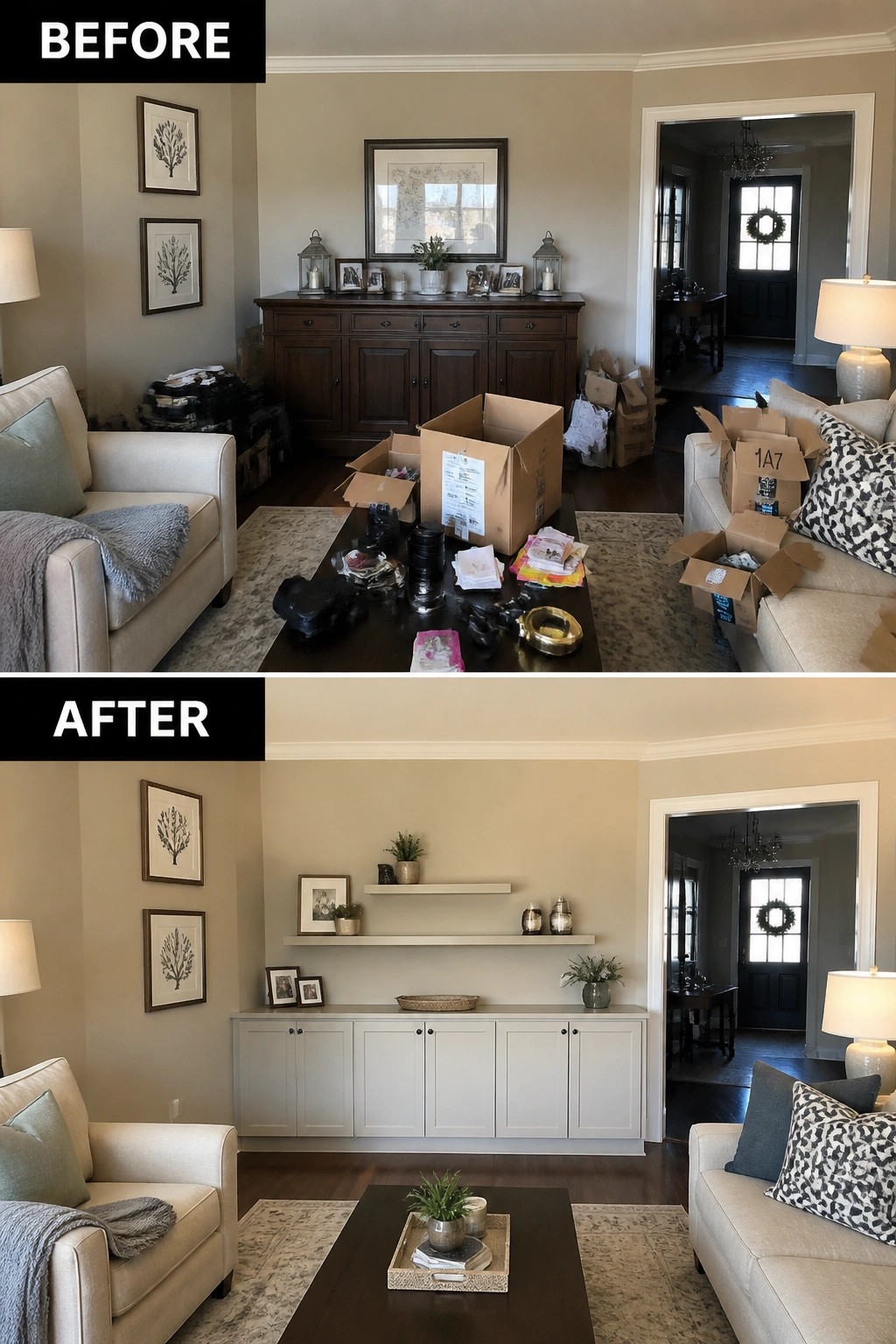
A room can feel half done when everything sits out in the open. Here the change came from adding a row of white cabinets along the back wall plus a pair of floating shelves above them. The boxes and scattered items disappeared, and the space suddenly looked settled instead of temporary.
This works best in rooms that already have the main furniture but still feel unfinished. Match the cabinet color to the trim so the new storage blends in, and keep the shelves simple with just a few objects. The goal is useful storage that also gives the eye a place to rest.
Make The Fireplace Wall The Main Feature

Many living rooms feel unfinished when the fireplace mantel stays bare. A few simple additions like candles, framed pieces, and a small wreath turn the wall into the natural center of the room without any big construction.
This idea works best when the fireplace already sits in a central spot. Keep the items in proportion to the mantel so the space still feels open, and repeat one or two materials so the styling looks pulled together rather than scattered.
Make A Plain Living Room Feel Finished
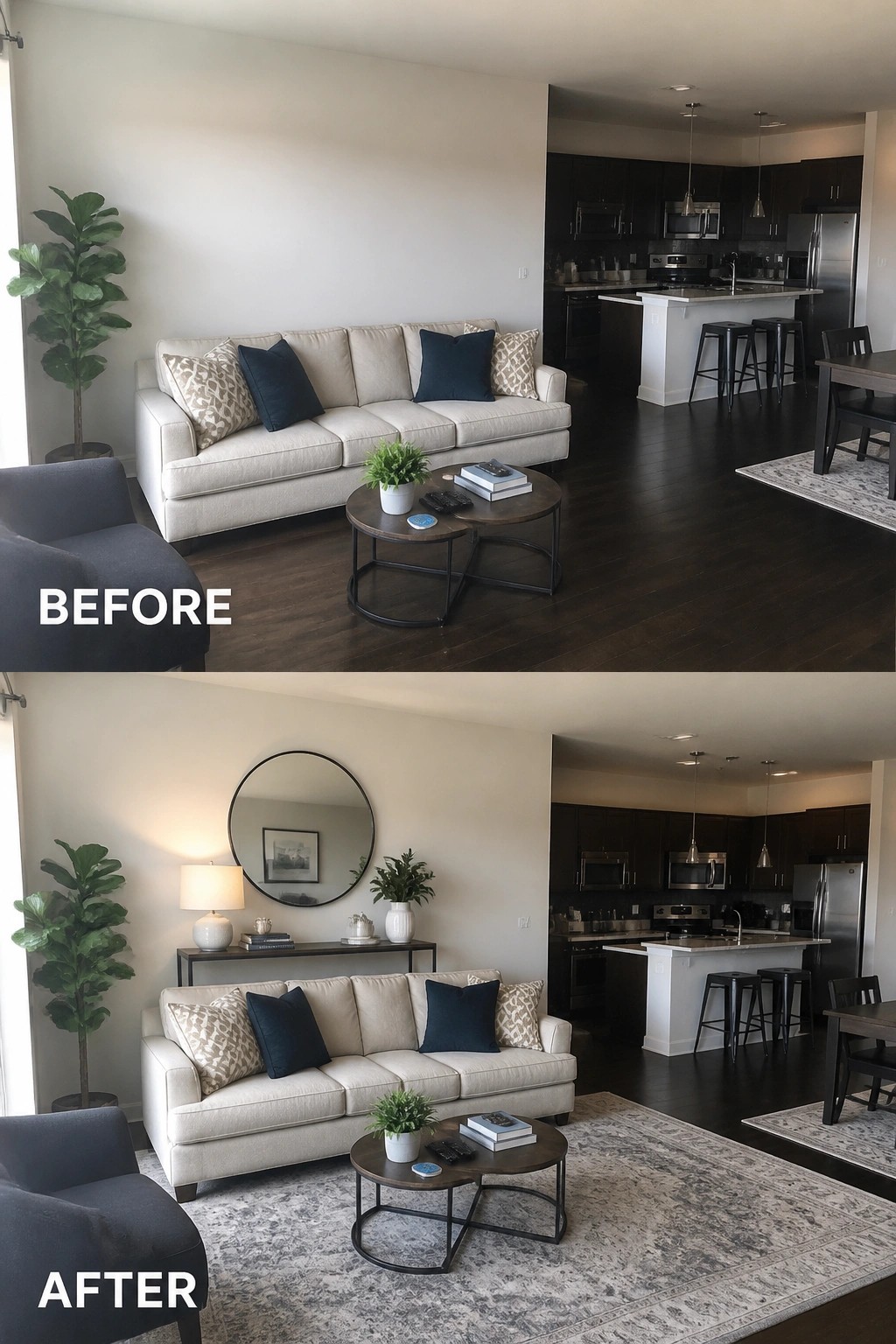
One simple way to finish a living room is to add a rug that defines the seating area. The before version had the sofa and coffee table floating on bare dark flooring, which left the space feeling open and incomplete. Adding the rug underneath the furniture immediately pulled everything together and made the arrangement look settled.
This idea works well in open layouts where the living area shares space with the kitchen. Choose a rug that is large enough for the front legs of the sofa and chairs to sit on it. Then add one wall element, such as a mirror over a narrow console, to fill the blank space behind the seating without crowding the room.
Make A Plain Living Room Feel Finished

The living room started with yellow walls and an old brown sofa that made the space feel dated and incomplete. A fresh coat of light gray paint and a large area rug under the seating gave the room an immediate sense of order and calm.
This idea works best when the furniture is still usable but the room lacks cohesion. Begin with paint and a rug to define the main area, then add a few pillows, updated lamps, and one piece of wall art. Most standard living rooms respond well to this approach without requiring new furniture.
Add A Rug To Finish The Room

Many living rooms have the main pieces in place but still feel incomplete. The before photo shows a space with a sofa and coffee table that worked fine on their own, yet the floor looked empty and the seating area had no clear boundary. Adding a large rug under the table and sofa changed that right away.
This idea works best in rooms with hard floors where furniture needs a visual anchor. Choose a rug big enough for the front legs of the sofa to rest on it, then keep any added items simple so the space stays comfortable rather than crowded.
Frequently Asked Questions
Q: My living room has a couch and TV but still feels unfinished. Where do I start?
A: Grab a few pillows and a throw in colors that match what you already own. Place them on the couch and drape the throw over one arm. This one change often pulls the whole space together fast.
Q: How do I add plants without creating more clutter?
A: Choose two medium plants that fit your light levels and set them on the floor next to a chair or table. Water them on the same day each week so they stay healthy. The greenery fills empty corners without extra stuff on surfaces.
Q: What if my room has odd corners left empty after the main pieces are in place?
A: Slide a small side table or stool into the corner and top it with a lamp. The light draws the eye and makes the spot feel used. Move the table around until the flow feels right before you buy anything else.
