

Many living rooms end up feeling disorganized because storage solutions do not match the way a family actually spends time in the space.
I often find that adding storage along the walls or under windows keeps the center open for play and relaxation.
It helps to choose pieces that blend with the existing style so the room still feels comfortable instead of like an extra closet.
Some ideas work better than others in smaller rooms.
Testing a couple of these options in my own home showed me which ones hold up once the kids start using them regularly.
Add Built-In Bench Storage For Daily Family Items
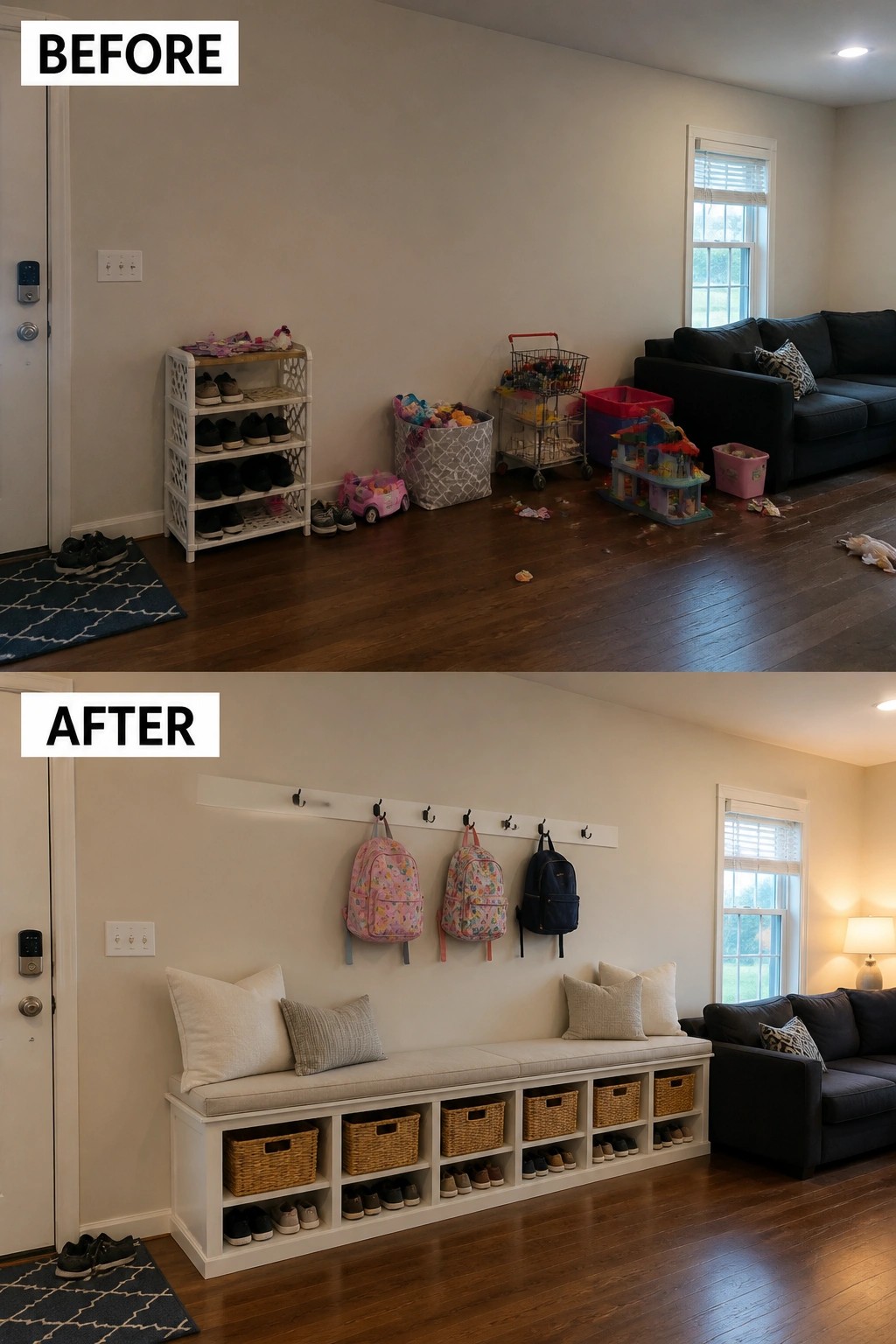
A storage bench along one wall can turn a messy entry area into a place that actually works for a busy household. The before photo shows shoes, toys, and bags scattered across the floor with no clear spot to put them. In the after, a long bench with open cubbies below and hooks above keeps everything off the floor and easy to reach.
This setup works well in living rooms that double as drop zones near the front door. Build or buy a bench that matches your room size, add baskets for smaller items, and keep the top clear for seating. It helps contain the clutter that comes with kids without needing a whole separate mudroom.
Add Built-Ins To Hide Living Room Clutter

The open console left baskets, cords, and electronics sitting out where they collected dust and looked messy. Wrapping the TV in a full set of cabinets and drawers kept everything in the same spot but out of sight, which made the whole room feel calmer and more finished.
This approach works best in family rooms that need real storage for games, blankets, and media gear. Measure the wall and TV first so the cabinets fit without crowding the seating area or blocking traffic paths.
Add Built-In Storage Seating To A Blank Corner

An empty corner often ends up as wasted space until you give it a clear job. Here the room went from a folding chair and scattered books on the floor to a long bench with open cubbies underneath and simple shelves above for books and bins.
This idea works best in living rooms that need extra seating without adding more furniture that takes up floor space. Build or buy a bench that matches the length of the wall and keep the storage open so kids can reach their own things.
Add Under-Sofa Storage For Family Clutter

A living room that doubles as a play space often ends up with toys scattered across the floor. The simplest fix is to add storage right where the seating already sits. Low drawers that slide out from under the sofa keep small items out of sight without needing extra furniture or taking up floor space.
This works well in homes with kids because everything stays within reach for quick cleanup at the end of the day. Choose drawers that match the sofa height so they do not change the look of the room. Pair them with one soft ottoman that can hold larger items, and the space stays usable for both play and relaxing.
Add Window Bench Storage For Family Toys And Games

Building a bench under a window turns empty wall space into both seating and storage. The open floor area becomes a place to sit while the bench hides toys, games, and other clutter inside divided compartments.
This idea works best in living rooms that already have a large window but lack places to store kids’ items. Keep the bench cushions simple and choose baskets that fit neatly inside so everything stays organized and easy to reach.
Choose A Coffee Table With Built-In Storage

A regular coffee table often ends up covered in toys, papers, and random items when kids are around. Switching to a lift-top style with an open storage compartment underneath keeps those things out of sight while still letting the table serve as a central spot in the room.
This works especially well in family living rooms where you want the space to feel usable but not constantly messy. Look for a table that opens easily and has enough room for bins or loose items so cleanup stays quick. Keep the top surface clear except for a small tray or plant so the room stays practical day to day.
Add Cabinet Doors To Built-Ins For Hidden Storage

Built-in shelves often fill up fast with kids books, toys, and random bins. Adding doors across the lower section hides most of the mess while leaving the top shelves open for books and a few simple items.
This works best in family living rooms where you need storage that looks calm but still holds a lot. Match the doors to the existing wood and keep the hardware simple so the change feels like part of the original built-ins rather than an add-on.
Add Built-In Storage To Handle Family Clutter

Scattered shoes and bags by the door make any living area feel less put together. A built-in bench with hooks above and cubbies below gives everything a set place and clears the floor right away.
This kind of storage works best in homes with kids or busy routines. Put it near the main entry so daily items land in one spot instead of spreading into the living room.
Add Built-Ins Around The Fireplace

Building storage into the wall on both sides of the fireplace gives a living room a place to keep everyday items without adding more furniture. The open space next to the mantel was turned into two matching units with shelves above and cabinets below. Baskets and small decor now sit inside the new storage instead of sitting out on the floor.
This idea works best in family rooms where the fireplace already draws the eye but clutter tends to collect around it. It suits homes that need room for books, toys, or seasonal items while keeping the floor clear for play or seating. Measure the wall first so the new units line up with the existing mantel and do not crowd the room.
Swap Open Shelves For Closed Storage

Open shelves tend to collect every game console, controller, and cable in plain view. A cabinet with doors and drawers pulls all of that out of sight while keeping the items easy to reach when needed.
This works especially well in living rooms used by kids, since it cuts down on daily tidying and keeps the space from feeling crowded. Choose a piece with sliding doors if floor space is tight, and add bins inside so smaller items stay sorted.
Add Storage Bins To Handle Toy Clutter

Many living rooms collect toy mess because there is no simple place to put things away at the end of the day. The scattered bins and pieces on the floor show how quickly play spreads when storage is missing or hard to use. A low cabinet with fabric bins gives each type of toy its own spot so cleanup stays quick.
This works best in rooms where kids actually play every day. Keep the unit against a wall so it does not take up floor space, and use icons on the bins so children can help put things back. Start with one main storage piece before adding more.
Add Built-In Storage Along A Blank Wall

A blank wall in the living room usually stays empty because people do not know what to do with it. Building a mix of tall cabinets, floating shelves, and a low bench with baskets gives the space real purpose while keeping the room open.
This idea suits family rooms that need extra places for books, blankets, and small items without adding more freestanding furniture. Match the finish to the wall color so the unit blends in, and leave enough floor space in front for normal traffic.
Build Storage Seating Under A Window

A window area with a radiator can easily become a spot for clutter when there is no clear purpose for the floor space. Building a bench across the front creates seating while the open sections below hold baskets for everyday items. The change keeps the radiator usable and turns an awkward corner into something practical.
This idea works best in family living rooms that need extra places to sit without adding more furniture. Measure the height so the seat stays comfortable and leave enough room for air to move around the radiator. It suits older homes where the window and heating setup cannot be changed.
Add Pegboard Storage For Family Items

A plain wall often ends up wasted when backpacks and gear get dropped on the floor. Adding a pegboard gives those items a clear place to land while keeping the area tidy and easy for kids to use on their own.
This setup works best near an entry or in a family room where daily clutter piles up. Paint the pegboard to blend with the wall, hang it low enough for small hands, and mix hooks with bins so everything from hats to books has a spot without crowding the floor.
Create Wall Niches For Everyday Device Storage

Many living rooms collect a tangle of charging cables and small devices on side tables or the floor. Adding a recessed niche into the wall gives those items a fixed place that keeps surfaces clear while still keeping everything within reach.
This idea works best in family rooms where several people share chargers and tablets. Plan the compartments around the actual items you use daily and leave a little extra room for future devices.
Add Built-In Storage Under The Stairs

Many homes end up with a messy pile of toys and bins under the stairs because the space feels awkward to use. Adding a set of simple cabinets and drawers turns that open area into real storage that keeps everything off the floor and out of sight.
This idea works best in family living rooms where kids play often but you still want the room to feel tidy. Match the cabinet style and hardware to the rest of the trim so it looks built for the house instead of added later.
Add Built-In Shelves Around The TV For Family Storage

One simple way to cut down on toy clutter is to add recessed shelves on both sides of the TV instead of relying on one wide console. The before setup had games and bins spilling out in front, while the after version uses the wall depth for hidden storage and keeps the floor clear. Woven baskets on the shelves make it easy to put things away without looking messy.
This approach works best in family rooms that already have a central TV and need more storage without adding extra furniture. It suits homes with kids because the baskets hide toys quickly and the lower floating unit still holds the main electronics. Just check that your wall can handle the recessed cutouts before starting.
Add Baskets To Built-Ins For Everyday Storage

Built-in shelves often collect too many small toys and loose items over time. Painting the whole unit a softer color and adding matching baskets on the bottom rows keeps the clutter out of sight while still letting the shelves hold books and a few favorite pieces on display.
This works best in rooms where kids actually play every day. Clear the shelves first, sort what stays visible, and use the baskets for anything that needs to be grabbed quickly or put away fast. The result feels calmer without losing the storage space the family already relies on.
Organize A Living Room Closet For Family Storage

A closet right off the living room often ends up as a catch-all for coats, shoes, and random items. Adding simple shelves and bins turns that same space into useful storage that keeps the main room clear and makes it easier for kids to find and return their things.
This setup works best in homes where the living room connects to a hallway or entry closet. Focus on open bins for toys and books at lower heights, and use the upper shelves for less-used items. Keep the system simple so it stays practical instead of becoming another spot that gets messy.
Add Hidden Storage Inside Your Sofa

A regular sofa can take up a lot of floor space without giving much back. In this case, swapping to one with a lift-up seat created a large hidden compartment that holds blankets and toys without adding any new furniture to the room.
This works well in family living rooms where clutter builds up fast. Look for a sturdy frame and choose a size that still leaves walking space around it. Nesting tables beside it keep the area flexible while the sofa does the main storage work.
Add Wall Storage To Hide Art Supplies

A cluttered art table can quickly take over a living room when kids are involved. Mounting a cabinet on the wall with labeled bins underneath keeps everything contained and off the floor. The space feels much more open once the table and extra chairs are no longer needed every day.
This approach works well in smaller homes where the living room has to serve multiple purposes. Choose a cabinet that sits at a comfortable height for kids to reach the bins on their own. It keeps supplies visible and easy to grab while still looking neat when everything is put away.
Add Storage Seating Next To The Fireplace

The main shift in this space came from swapping an open bench and scattered floor items for a closed storage bench with drawers. Shoes, bags, and toys now stay out of sight, while the bench still offers a spot to sit when needed.
This idea works best in homes where the fireplace area doubles as a drop zone. Keep the bench low enough to match the hearth height, and pick a cushion fabric that can handle daily use without showing wear.
Frequently Asked Questions
Q: Where do I stash the kids’ games and puzzles so they are easy to grab but not all over the floor? A: Try low cabinets with doors that blend into your walls. Kids can reach them without help. This keeps the room tidy after playtime ends.
Q: How do I deal with all the charging cables in a family room? A: Mount a power strip inside a side table (no visible cords). Run cords through a hole in the back. Everyone plugs in without seeing the tangle.
Q: Do built-in window seats really hold much storage for blankets? A: They hold plenty with a hinged lid. Just lift and toss blankets inside.
