

I have always noticed that a fireplace wall left in an older style tends to throw off the whole living room even when the furniture and lighting are decent.
It often helps to focus changes right there so the room starts to feel more balanced for everyday use rather than scattered.
Small adjustments here can make the room feel more put together.
I tend to try layout tweaks or simple built ins on that wall first because they show fast whether the rest of the space will come together without extra work.
Testing a few of these ideas at home reminded me how addressing one awkward spot can make daily time in the room feel less overlooked.
Update A Brick Fireplace Wall With Shiplap And Built-Ins

Many homes still have those big, dark brick fireplaces that take over the room. Painting over the brick with white shiplap and adding built-in shelves on one side lightens the whole wall and gives the space a cleaner, more balanced look while keeping the fireplace as the center point.
This works best in rooms where the brick feels too heavy for the rest of the furniture. Focus on covering the surround first and only add the shelving if you have room on the side, since that keeps the project simpler and avoids crowding the seating area.
Make The Fireplace Wall The Main Feature

A fireplace wall that feels dated can hold back the whole room, even when the rest of the space is fine. Replacing the old wallpaper and heavy wood mantel with a large tiled surface and a simple modern insert gives the wall a cleaner shape and makes the firebox the clear focus.
This idea works best in living rooms where the fireplace sits in the middle of a long wall and already has good sight lines. Remove the old surround first, then cover the area with one main material that reaches close to the ceiling. Keep any mantel or shelf very thin so it does not compete with the new firebox.
Update A Dated Fireplace Wall

A strong tile surround can easily take over a room and make everything else feel secondary. In this case, covering the green tile with a smooth plaster finish and adding two recessed niches on either side brought the fireplace back into balance with the rest of the space. The change keeps the original opening and hearth but removes the visual noise that once dominated the wall.
This approach works especially well in homes with older tile that no longer fits the current style. Keep the niches narrow and lit simply so they add interest without competing with the firebox. It is often easier to refresh just the surround than to replace the entire fireplace structure.
Make The Fireplace Wall The Main Feature

Painting the brick a deep black color and replacing the old insert with a long modern fireplace turns a dated wall into the clear center of the room. The television now sits centered above the fire, and simple sconces on either side add balanced light without any clutter on a mantel.
This approach works best in living rooms where the fireplace already takes up a large section of wall. Keep the rest of the room simple so the dark wall stays the focus, and make sure the new fireplace size matches how the seating is arranged.
Update A Dated Fireplace Wall
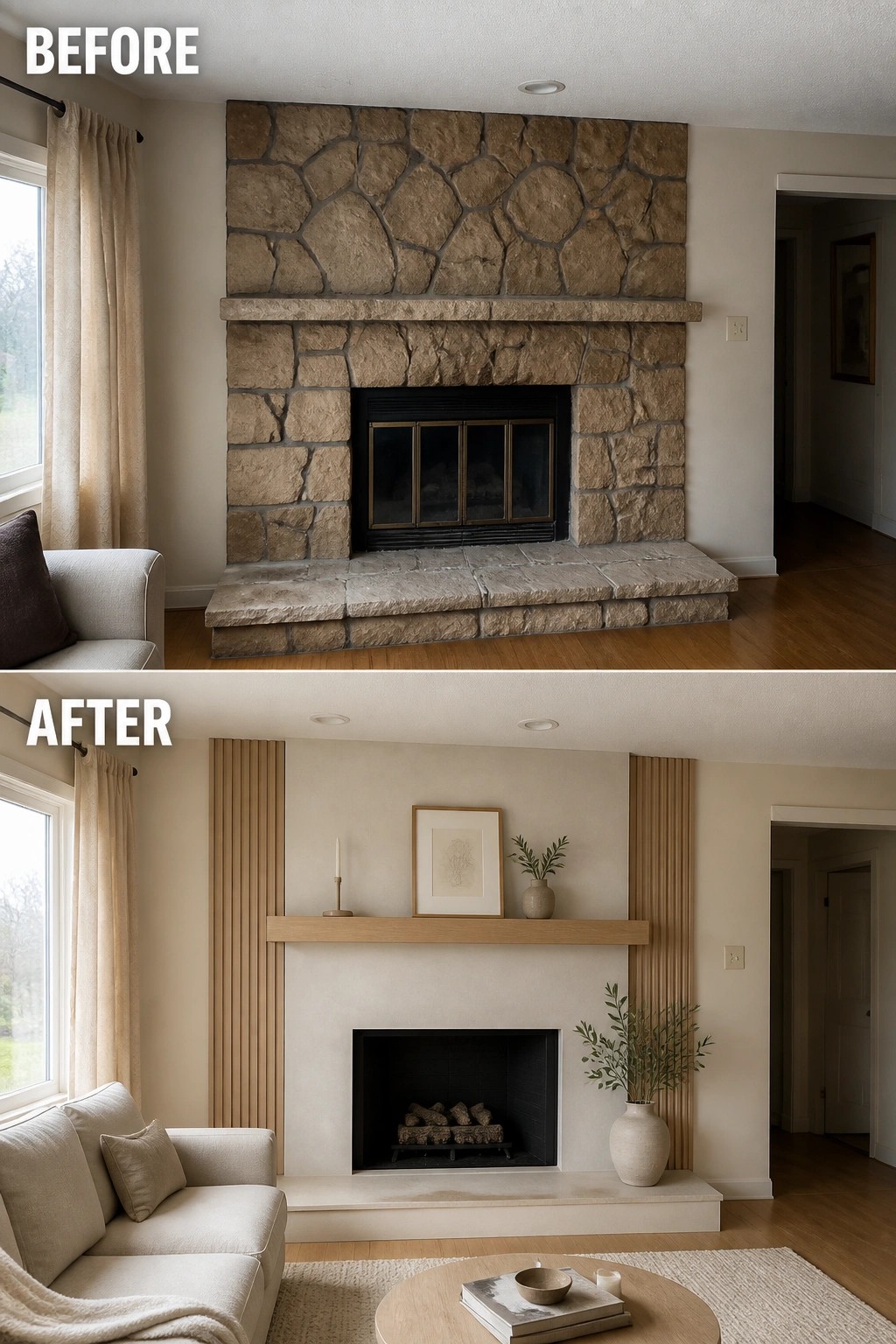
A heavy stone fireplace often dominates a room in an outdated way. Switching to a smooth plaster surround with a light wood mantel softens the look and lets the firebox remain the clear focal point without the visual weight of all that rock.
This works best in living rooms that need a calmer backdrop. Choose neutral tones for the new finish, keep the mantel simple, and add slim vertical wood panels on the sides if you want extra texture without adding bulk.
Turn The Fireplace Hearth Into Built-In Seating

A large raised hearth can make a fireplace feel dated and hard to use. Replacing it with a built-in bench turns the same space into seating and storage without adding extra furniture to the room. The change keeps the fireplace as the main feature while making the area feel more practical.
This idea works best in homes where the hearth already takes up floor space. Keep the bench height comfortable for sitting and use the cubbies for items you actually reach for often, like extra blankets or logs. It is a simple way to gain seating while keeping the layout open.
Make The Fireplace Wall The Main Feature
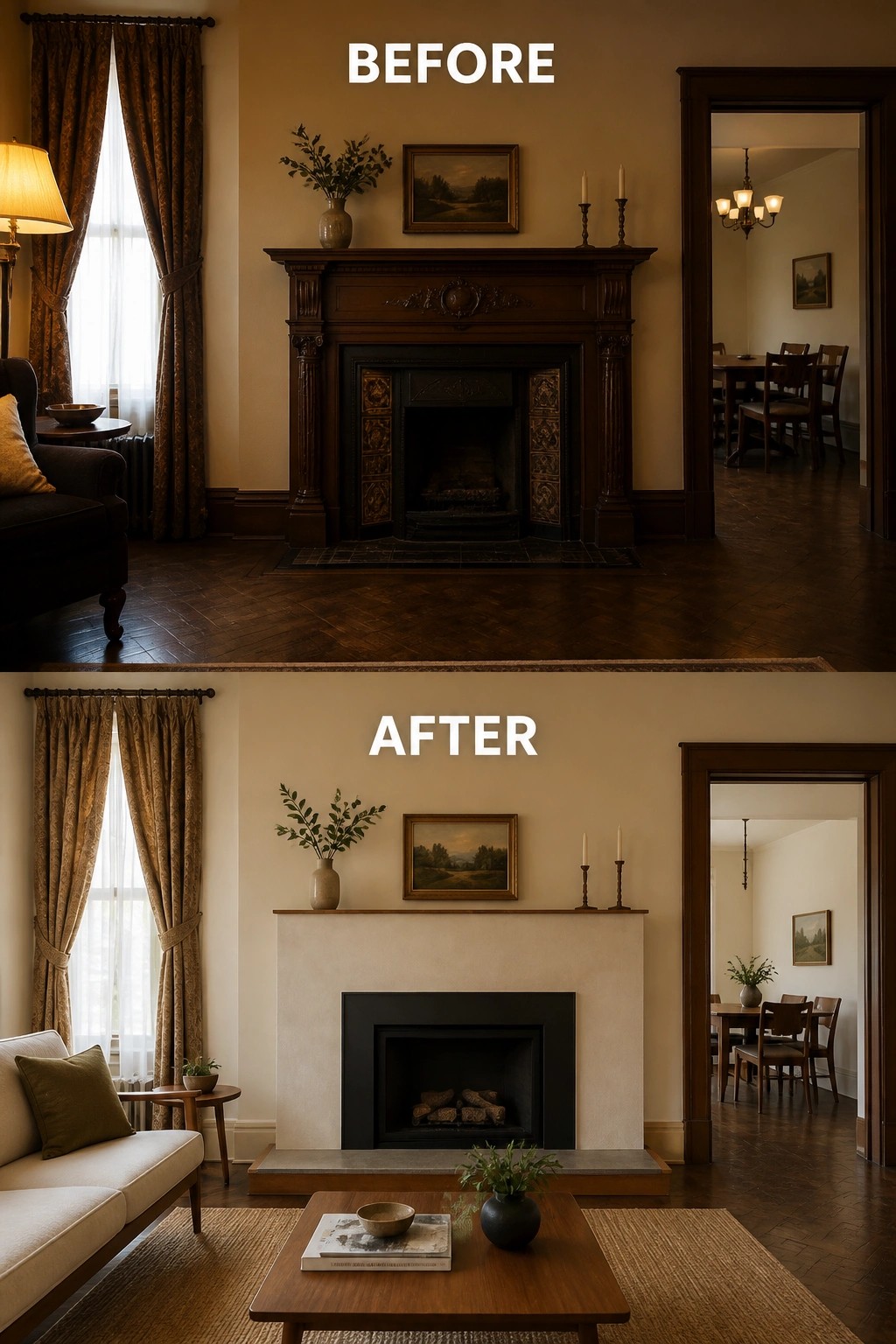
A heavy dark mantel can make a whole room feel weighed down. Replacing it with a simple light surround opens up the space and lets the fireplace become the clear focal point without competing details.
This idea suits older homes where the original mantel no longer fits the way the room is used. Keep the new surround plain, limit what sits on the mantel to one or two small items, and let the firebox itself do the work.
Make The Fireplace Wall The Main Feature

One simple way to update a living room is to stop centering the whole wall around the television and let the fireplace take the lead instead. Painting the built-ins a calmer gray and adding a white brick surround around the firebox helps the fireplace feel like the real focal point rather than just another shelf unit.
This approach works well in homes where the fireplace gets used regularly. Keep the shelves from looking crowded by reducing the number of small items, and choose a paint color that contrasts with the fireplace so it stands out clearly.
Make The Fireplace Wall The Main Feature

The main change here is the fireplace wall. The dark wood paneling and heavy mantel made the room feel closed in. Switching to white brick with a simple wood mantel and black firebox opening gives the space a lighter feel and makes the fireplace the obvious center.
This idea works best when the fireplace sits in a natural spot in the room. Keep any decor on the mantel small and balanced so the brick stays the main view. It suits older homes where the fireplace already draws the eye and you want to keep that without adding more weight to the wall.
Make The Fireplace Wall The Main Feature
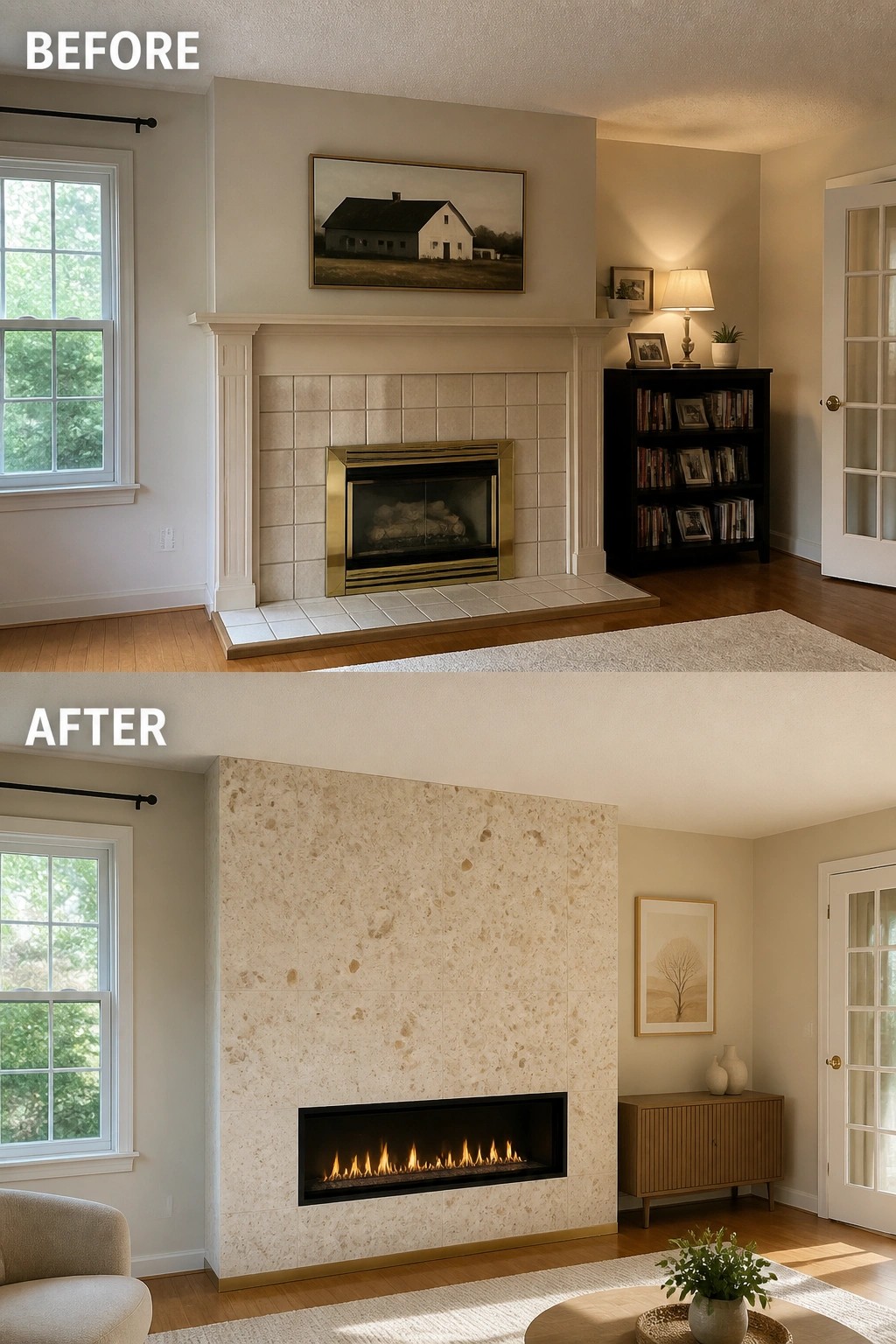
A common issue with older fireplaces is that the surround feels too small for the wall and ends up looking dated. In this case the fix was to cover the entire wall in a light stone tile and swap the old insert for a wide linear fireplace set low. The result is a much stronger focal point that still works with the rest of the room.
This approach suits homes where the fireplace sits in a large blank wall and needs more presence. Keep the surrounding furniture and art simple so the new wall stays the center of attention, and choose a material that runs from floor to ceiling for the cleanest look.
Make The Fireplace Wall The Main Feature

One of the simplest ways to update a living room is to focus on the fireplace wall instead of changing the whole room at once. Covering the heavy stone with vertical slats and adding a clean wood shelf above the opening gives the wall a lighter look and turns it into the clear center of the space.
This idea works best in older homes where the fireplace already sits in the middle of the room. Keep the surrounding furniture low and simple so the wall stays the focus, and choose a mantel depth that fits the size of your seating area.
Turn A Dated Fireplace Into A Bar Area

A plain fireplace wall often ends up as a catch-all for frames and clutter when it no longer feels like the right focal point. In this case the owners removed the mantel, covered the wall in dark tile, and added floating shelves, a counter, and a sink to create a working bar. The change gives the whole room a clearer purpose and makes the wall useful again instead of just decorative.
This idea works best in living rooms where the fireplace sees little use or where extra seating for guests is needed. Keep the bar depth shallow so it does not crowd the floor space, and match the cabinet and tile colors to the rest of the room so the new feature feels like it belongs.
Make The Fireplace Wall The Main Feature

A plain white tile fireplace often fades into the background and leaves the room feeling unfinished. Replacing the tile with a full mosaic mural instantly gives the wall purpose and makes it the natural center of the living room.
This idea works best when the fireplace already sits in a main spot. Keep the rest of the furnishings low and simple so the new tile can stand out without competing for attention.
Make The Fireplace Wall The Main Feature

A cluttered mantel full of small frames can make even a nice fireplace feel busy and dated. In this case the fix was straightforward. Adding cabinet doors on both sides of the firebox gave the wall a built-in look, while clearing the mantel and using just one larger piece of art let the fireplace itself become the focus.
This approach works well in older homes where the fireplace is already centered on the wall. Keep the styling simple on top, repeat a couple of materials or finishes, and make sure the new cabinets match the existing trim so the whole wall reads as one piece rather than a collection of separate parts.
Update A Dated Fireplace With Stacked Stone

Many older fireplaces end up with peeling paint and cracked tile that makes the whole wall feel tired. Cladding the surround in stacked stone covers those problems at once and gives the fireplace a solid new presence in the room.
This works best in living rooms where the fireplace already sits in the center of the wall. Keep the new mantel simple and let the stone texture carry the update. It suits homes with wood floors and neutral furniture since the stone adds interest without competing with everything else.
Make The Fireplace Wall The Main Feature

Painting the brick a deep dark color turns the fireplace into the clear center of the room. In the before photo the red brick blends into the background and feels flat. Once the wall is painted, the mantel and opening stand out without any other major changes.
This idea works best in living rooms where the fireplace sits on a long wall and needs more presence. Use a primer made for masonry, pick a matte or eggshell finish in black or charcoal, and add simple sconces on either side of the mantel. The dark surface also helps hide soot marks over time.
Make The Fireplace Wall The Main Feature

Many fireplaces sit in a room without much purpose beyond the fire itself. Extending the hearth into a long bench adds seating, creates storage for logs, and gives the whole wall a clear job.
This idea works well in living rooms where the fireplace already has a deep base. Match the bench material to the existing stone, add a few cushions and a throw, and keep one side clear for a lamp. The result feels practical and keeps the focus on the fire without adding clutter.
Make The Fireplace Wall The Main Feature

Many older living rooms end up with a fireplace that feels heavy and dated because of dark wood and lots of detail. Removing the ornate mantel and replacing it with a simple white surround and ledge lets the fireplace become a quiet focal point instead of the busiest part of the room.
This approach works well in homes that still have traditional trim but need a lighter feel. Keep the wall color soft and limit the art to one side so the fireplace stays the main element. It is an easy update when you want the room to feel finished without adding more furniture or color.
Make The Fireplace Wall The Main Feature

One simple way to refresh a living room is to give the fireplace a stronger presence instead of leaving the wall plain. Replacing the old narrow insert with a wider modern firebox and clean black frame turned the stone into a clear focal point, while adding a sofa and ottoman directly in front helped tie the seating area together.
This idea works best in rooms where the fireplace already sits in a large wall but feels forgotten. Keep the surrounding furniture low and in proportion so the new firebox stays the center without the space feeling crowded.
Make The Fireplace Wall The Main Feature

Many living rooms still have an older fireplace that no longer fits the rest of the space. Swapping the traditional insert for a low linear model and extending the tile upward gives the wall a much cleaner, updated look while keeping the fireplace as the center point.
This idea works best in rooms where the fireplace sits on a large wall and needs to stay practical. Mount the TV above the new unit, add a simple media console below, and use a pair of lamps on either side for balance. The key is keeping the surrounding area open so the fireplace remains the main focus rather than competing with too many extras.
Make The Fireplace Wall The Main Feature
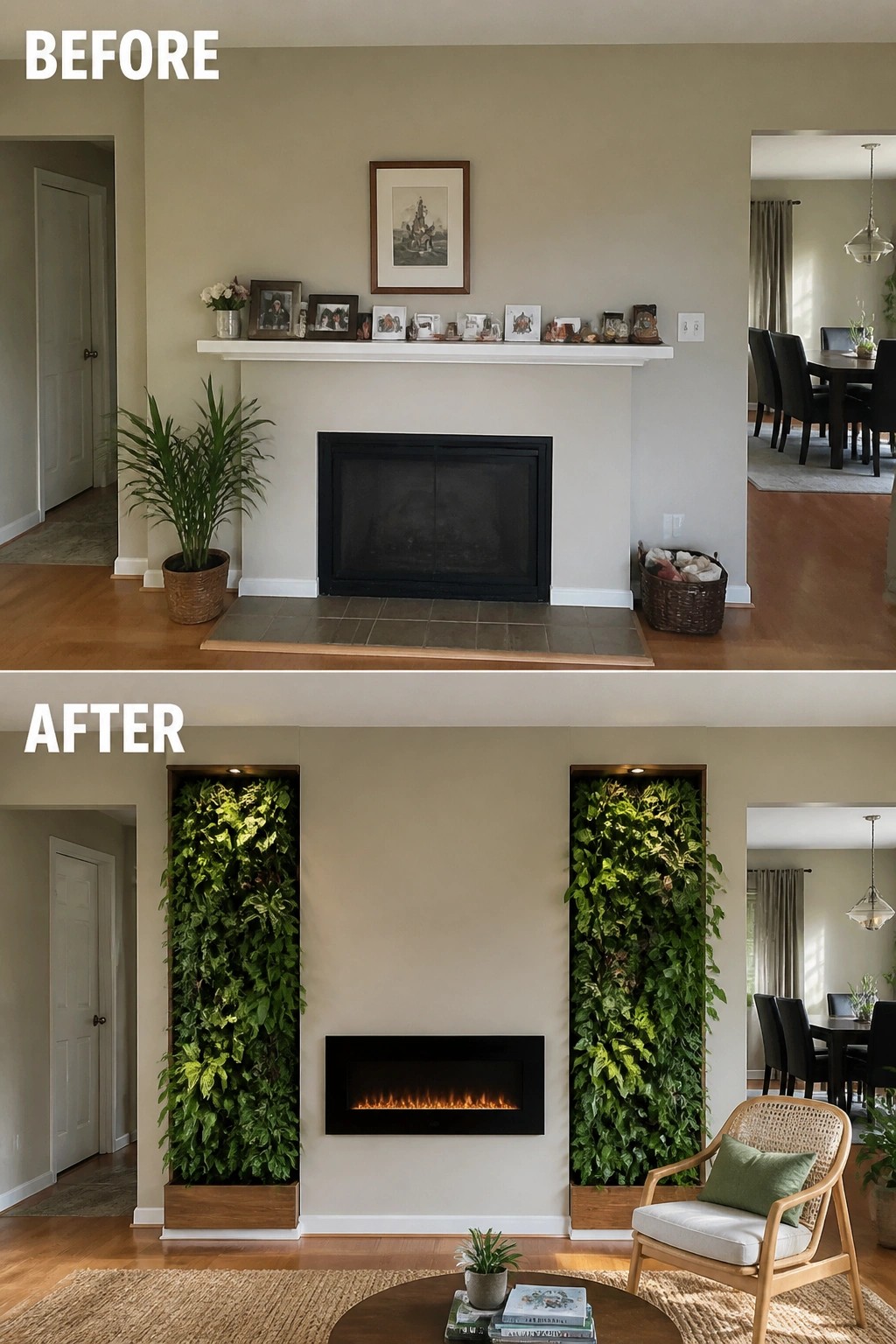
A plain fireplace wall often gets overlooked when it is surrounded by clutter or mismatched details. Replacing the old mantel and adding tall vertical plant walls on both sides gives the fireplace a strong presence while keeping the rest of the room open.
This idea works best in living rooms where the fireplace sits on a large blank wall. The vertical gardens add height and texture without crowding the floor, and the modern insert keeps the look simple. It suits homes that already have decent light and want a natural element that does not require constant rearranging.
Make The Fireplace Wall The Main Feature

A dated fireplace often sits in the middle of a living room but still feels heavy and disconnected. Here the old stone surround and thick wood mantel were replaced with a painted white wall and a pair of floating wood shelves that frame the firebox. The change makes the fireplace the obvious center of the room without adding bulk.
This idea works best in rooms where the fireplace is already centered on a long wall. Keep the new shelves shallow and match their finish to other wood tones already in the space. The television can stay off to the side so it does not compete with the updated fireplace.
Make The Fireplace Wall The Main Feature

The plain white fireplace wall blended into the background and left the room feeling unfinished. Painting the wall a deep color and adding a simple wood mantel gave the fireplace a clear purpose as the main focal point.
This approach works best in living rooms where the fireplace already sits in the center of the longest wall. Keep the rest of the room light so the painted area draws attention, and add just a few pieces like art or sconces to finish the look without crowding the space.
Update A Dated Fireplace With A Wood Stove

Many older brick fireplaces end up looking closed off and underused once the original insert ages. Swapping in a freestanding wood stove and opening one side of the firebox for stacked wood turns the whole wall into something practical instead of just decorative.
This approach works best in homes that already have a solid brick surround and good chimney access. Keep the scale of the stove modest so it does not overwhelm the opening, and make sure the wood storage stays low enough to reach easily without cluttering the hearth.
Make The Fireplace Wall The Main Feature

A fireplace wall often ends up looking plain when the mantel and surrounding surfaces stay too simple. Adding wallpaper behind the firebox and replacing the old mantel with a floating stone shelf gave this wall more weight and made the whole room feel more pulled together.
This approach works best when the fireplace itself is in decent shape but needs better presence. Start with one textured wall treatment and a new mantel style, then add floating shelves on one side only so the focus stays on the center.
Frequently Asked Questions
Q: How can I update a dated fireplace wall on a tight budget?
A: Paint the surround in a fresh neutral that matches your room’s main color. Add a few open shelves on the sides and style them with plants or framed photos. This draws attention to your new setup without any demolition.
Q: What should I do if the fireplace no longer works?
A: Fill the opening with a stack of logs or a row of pillar candles for instant warmth. Hang a big piece of art right above it to turn the wall into a focal point. Keep nearby seating angled toward this spot.
Q: How do I blend a modern sofa with an old fireplace?
A: Choose fabrics in soft tones that pick up hints from the brick or stone. Layer in a couple of textured throws to tie the old and new pieces together.
