
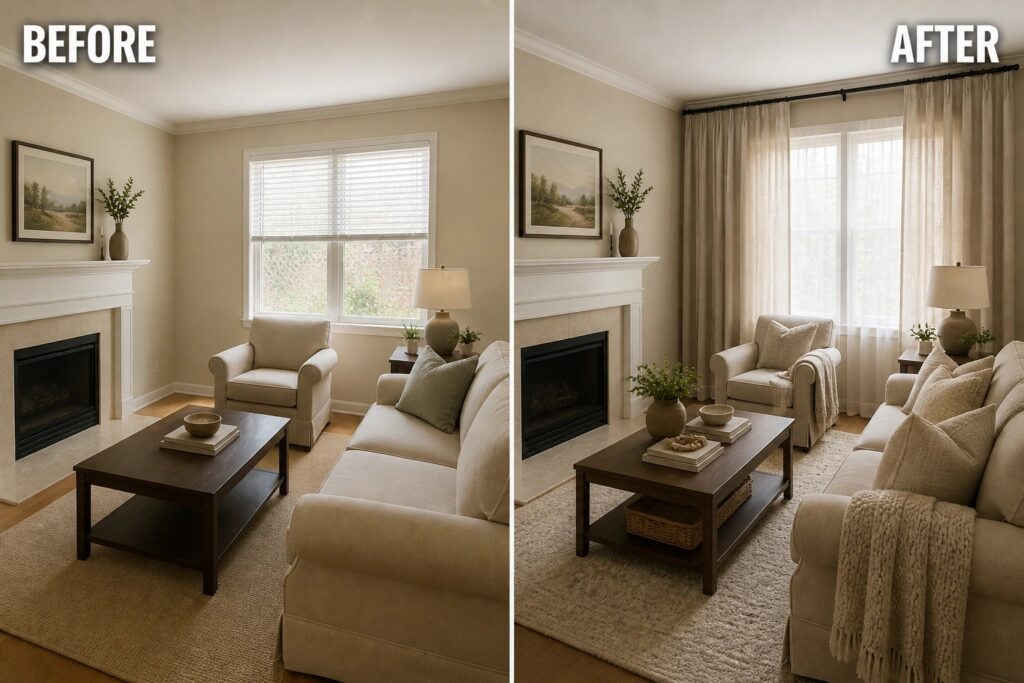
Many living rooms end up looking unfinished once the main pieces of furniture are placed and the walls and windows stay bare.
Layering textures through fabrics, rugs, and finishes can add depth that makes the space feel more settled and comfortable.
I like to begin with the windows.
Window treatments often shape how light enters the room, and I have learned that trying out a few simple options early helps the rest of the layout fall into place more easily.
Ideas like these tend to work well when adapted to what a room already has rather than starting from scratch.
Add Curtains To Finish A Living Room
The before photo shows a living room that felt unfinished because the windows only had basic blinds. Adding floor-length curtains made the space feel softer right away and gave the windows more presence. Changing out a couple of pillows and adding a throw on the sofa brought in extra texture that matched the new curtains.
This idea works best in rooms that already have their main pieces but still feel bare. Hang simple neutral curtains first, then add pillows in a mix of fabrics so the textures build gradually. It suits homes with plain trim and helps the seating area feel more settled without needing new furniture.
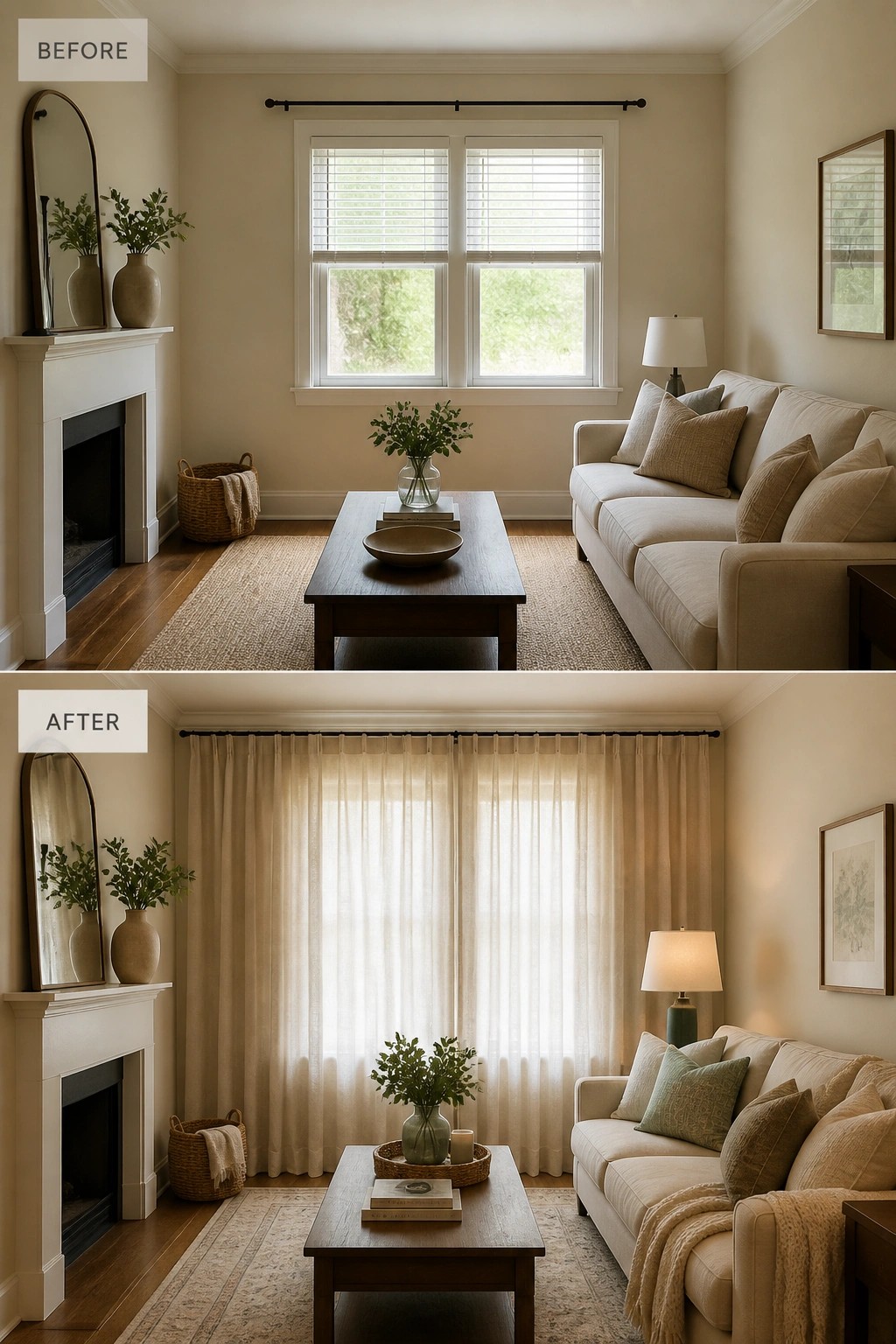
Use A Rug And Curtains To Finish A Plain Living Room
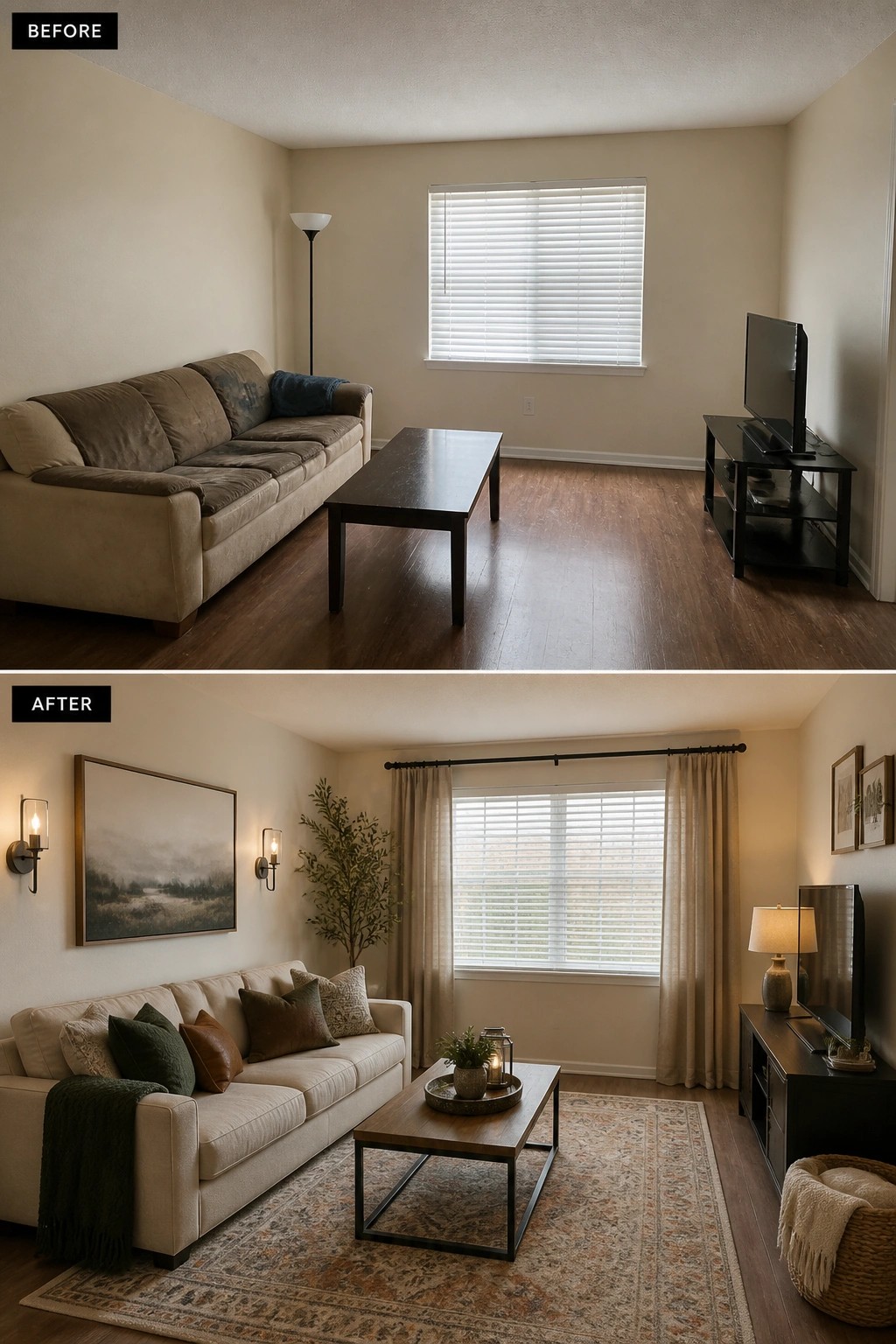
A bare floor and uncovered window can make even a decent sized room feel unfinished. Adding a large patterned rug and floor length curtains gave this space clear boundaries and a softer feel without changing the furniture or paint.
This approach works especially well in rentals or rooms with builder grade details. Start with the rug to anchor the seating area, then hang simple curtains that reach the floor so the windows feel more substantial. Keep the layers light so the room still feels open.
Refresh The Exterior With Fresh Paint And Defined Planting
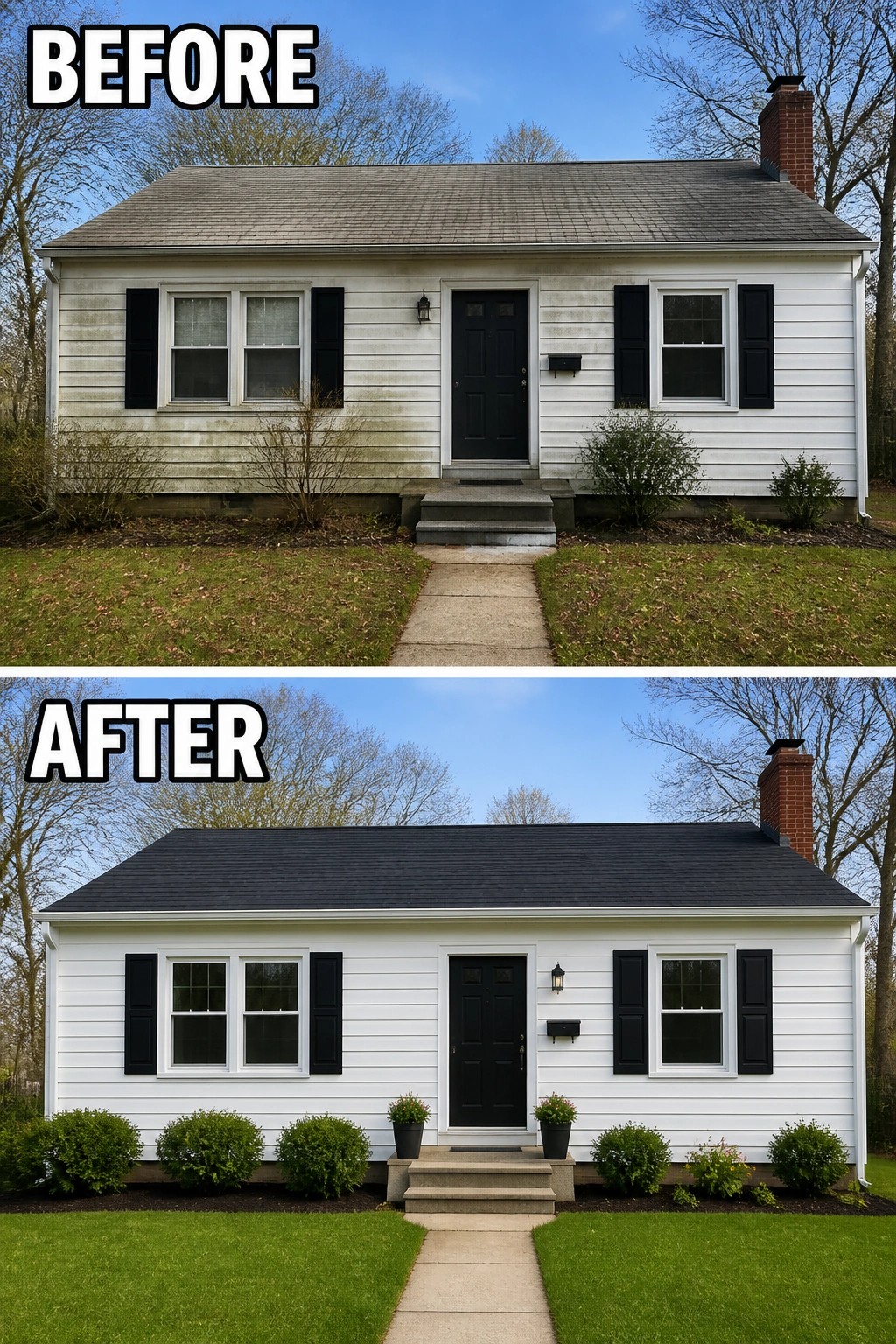
The house looked worn down with its faded siding and patchy yard. A coat of bright white paint on the walls, a darker roof, and a row of shrubs planted along the front gave it a much cleaner and more cared-for appearance.
This approach works best on smaller single-story homes where you want to improve curb appeal without big structural changes. Focus first on the paint and roof color, then add low shrubs in a straight line to frame the windows. Keep the plantings simple so they stay easy to maintain and do not crowd the walkway.
Layer Curtains And Rugs To Brighten A Dark Living Room
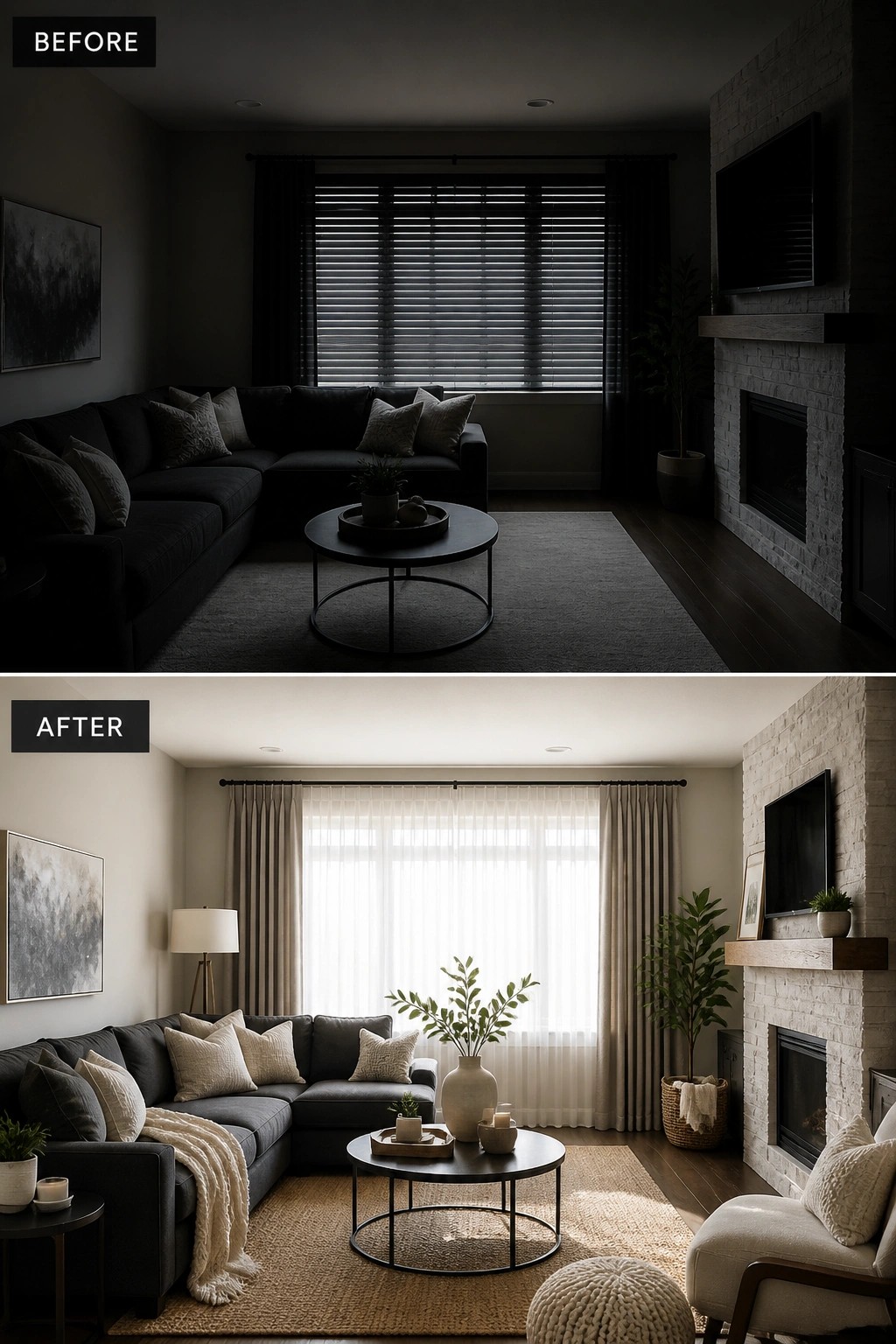
The before photo shows a living room that feels closed off because of the heavy blinds and dark rug. Replacing the blinds with layered curtains and switching to a lighter woven rug makes the space feel much brighter and more inviting right away.
This idea works best in rooms that already have decent windows but still feel heavy. Start by adding sheers for light and privacy, then layer a simple drape on top. A lighter rug helps define the seating area without darkening the floor. Keep the rest of the furniture and build warmth through pillows and throws instead of buying new pieces.
Swap Heavy Curtains For Lighter Window Treatments
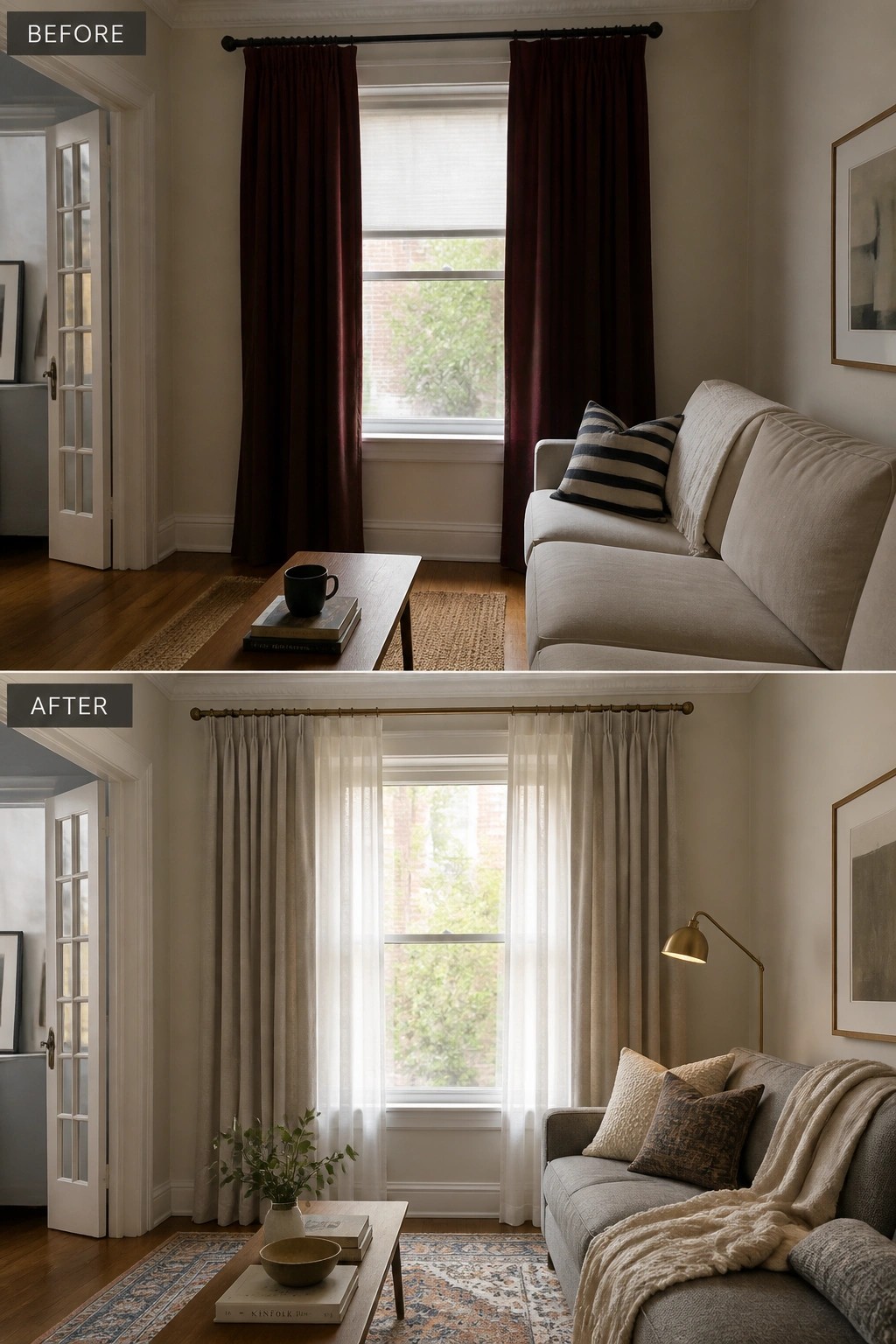
The dark red curtains in the before photo made the room feel closed off and heavy. Replacing them with lighter neutral drapes and sheers opens the space up and lets in more daylight while still offering some privacy. The addition of a patterned rug and a few textured pillows on the sofa adds just enough layers to make the room feel finished.
This idea works best in rooms that already have decent furniture but lack warmth. Choose curtains in a soft fabric that filters light, then repeat one or two textures like wool or linen through pillows and throws. It suits smaller living rooms where you want to keep the look simple and avoid adding too many new pieces.
Shape A Sloped Yard With Retaining Walls
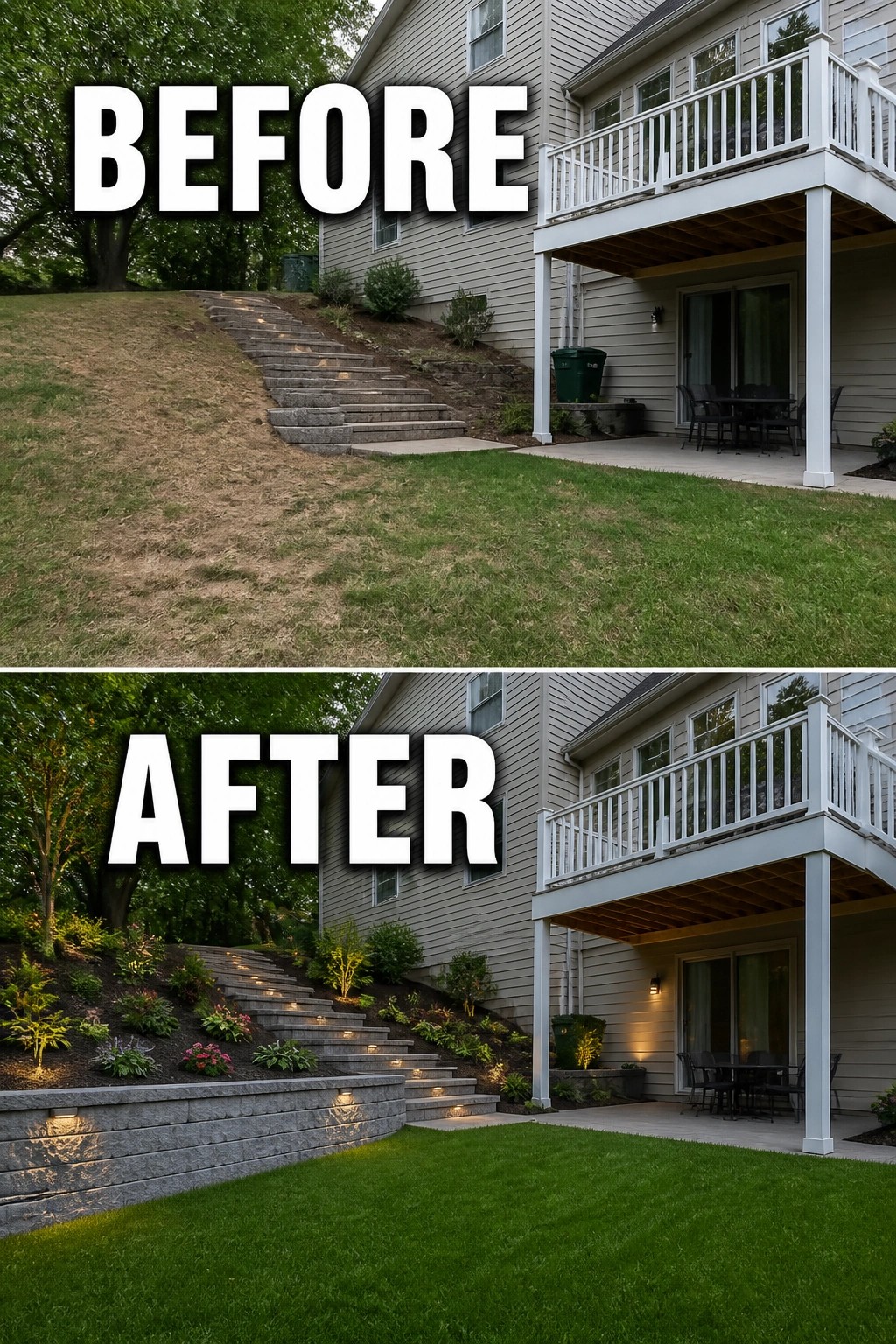
The bare slope next to the house felt unfinished, with just a set of stairs cutting through patchy grass. Adding low stacked stone walls created flat terraces that hold the soil and give the area a clear structure.
This idea works best on homes with noticeable grade changes. Build the walls first to form the beds, then add plants that suit the light and your local conditions. Keep the scale modest so the walls do not overwhelm the space.
Layer Curtains Over Blinds To Soften A Room
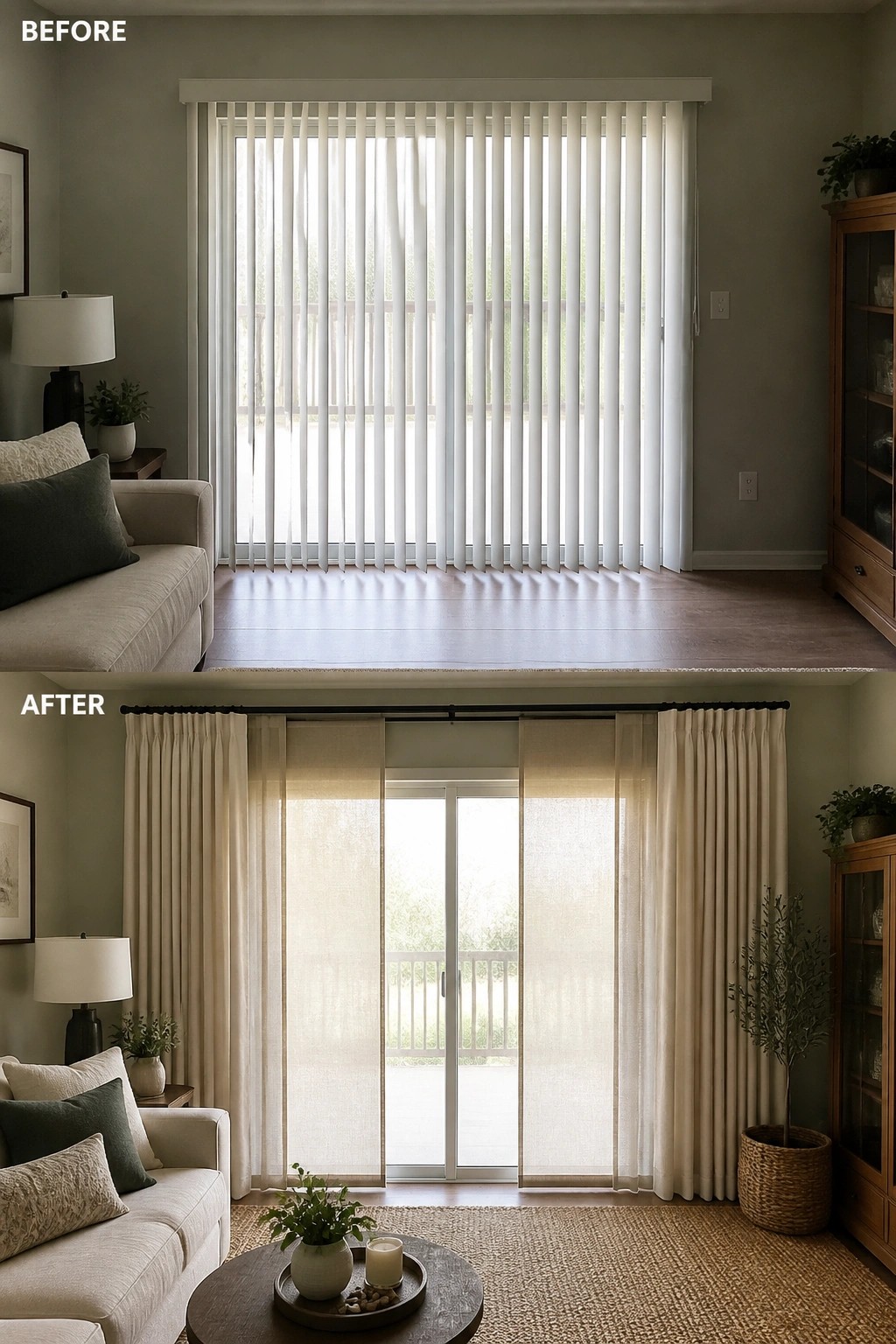
Vertical blinds often leave a living room feeling flat and unfinished. Replacing them with floor length curtains layered over sheer panels instantly warms up the space and makes the windows look larger and more intentional. The addition of a simple area rug helps tie the seating area together and gives the room a clear sense of purpose.
This approach works especially well in rooms with large sliding doors or wide windows. Start with a neutral curtain fabric that matches your walls, then add a light sheer layer behind it for privacy without blocking all the light. Keep the rest of the furniture simple so the windows become the main feature.
Rearrange Furniture To Improve Room Flow
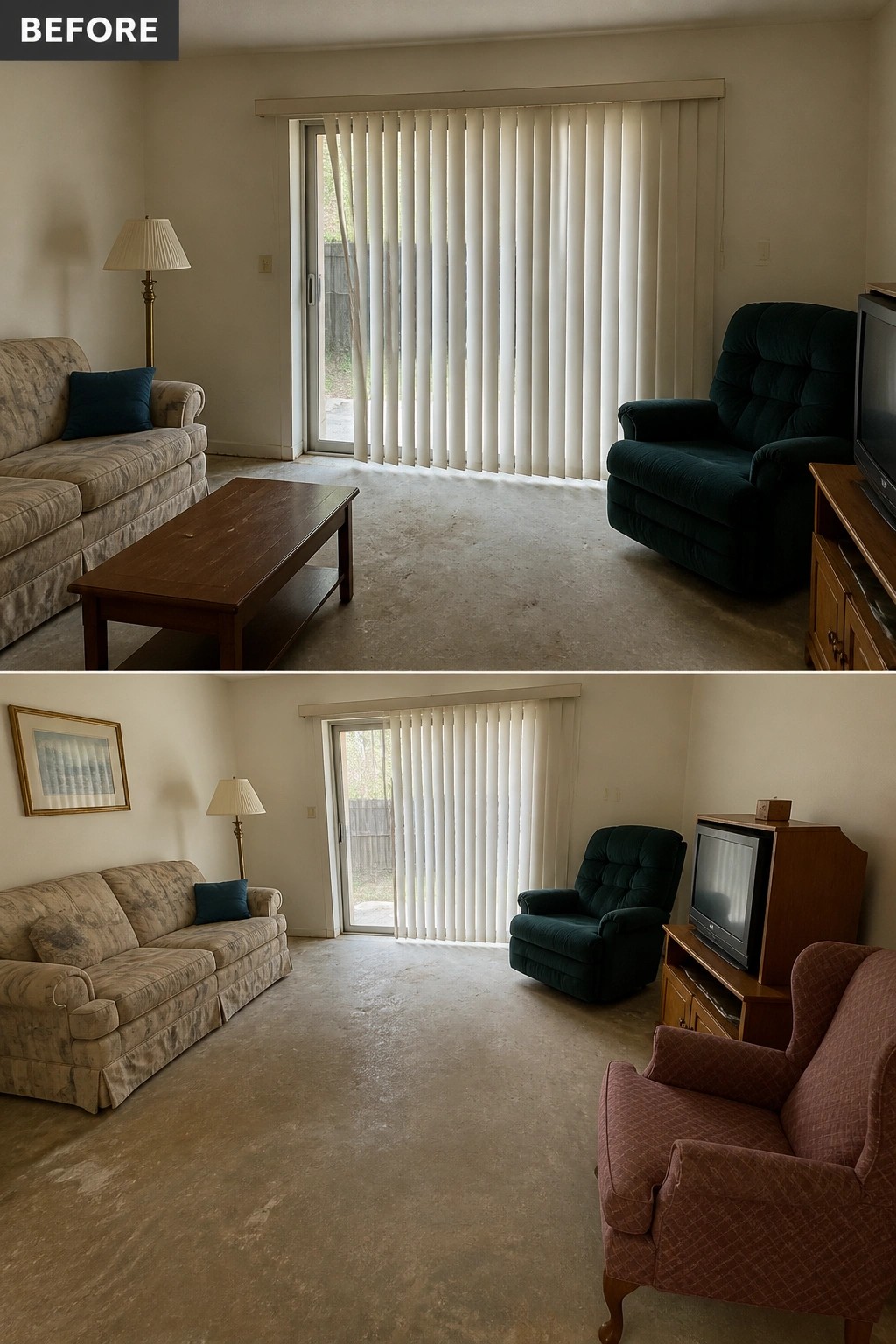
Moving the recliner away from the corner and adding a second chair created a much clearer path through the space. The before photo shows the large chair pushed against the TV stand, which made the seating feel crowded and one-sided. Shifting pieces around opened up the center and gave the room two distinct seating zones without adding much new furniture.
This approach works best in rectangular rooms where traffic paths get blocked. Start by pulling larger pieces off the walls, then test a few layouts that face each other rather than all pointing at the television. Keep the scale of new pieces modest so the room does not feel smaller once everything is in place.
Layer Curtains To Soften A Living Room
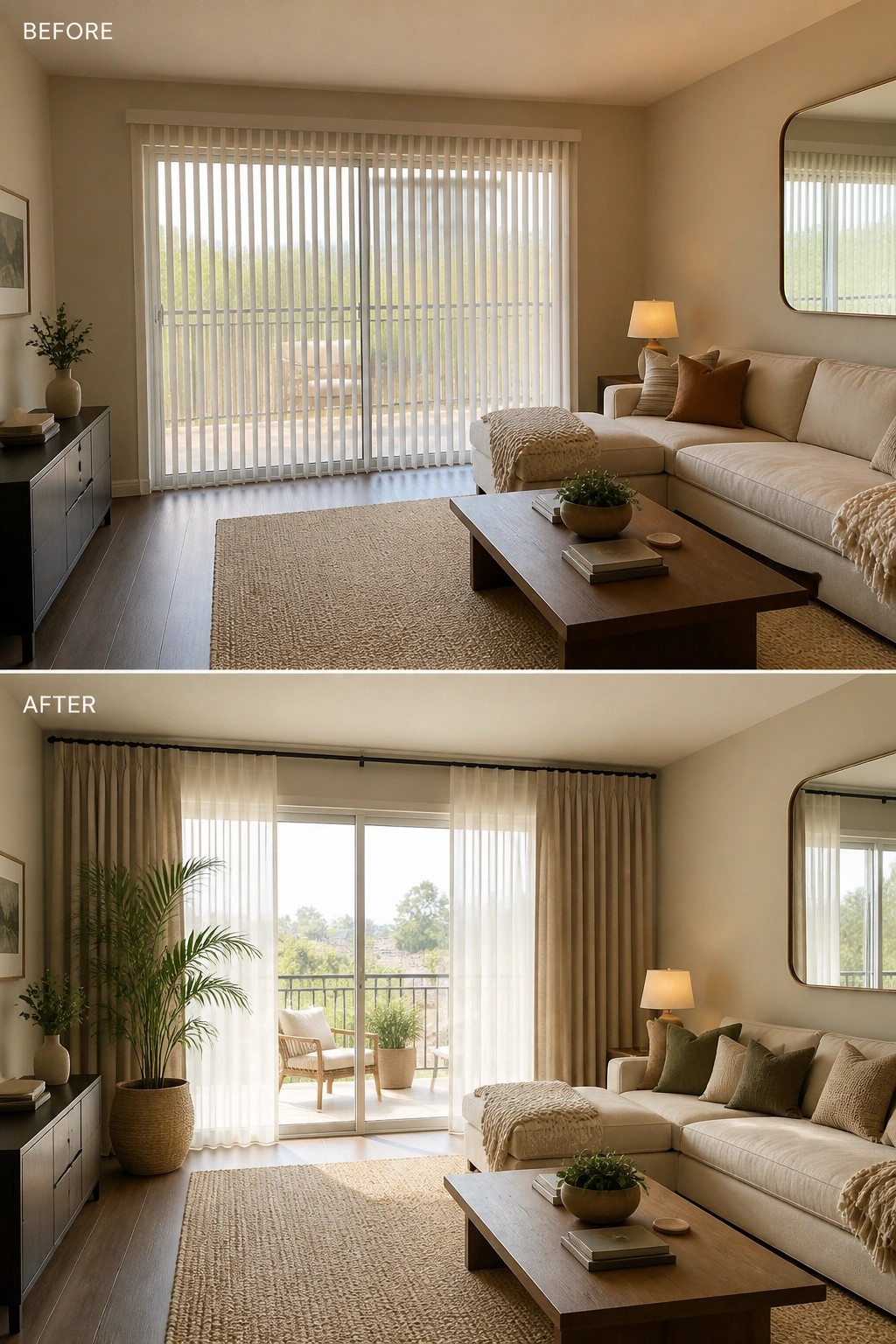
Many living rooms with sliding glass doors end up looking a bit stark when the only window covering is vertical blinds. Replacing those with a simple layered treatment of sheer panels plus full-length drapes makes the whole space feel warmer and more finished without changing the furniture or layout.
This approach works well in rooms that already have decent light but need a softer edge. Keep the hardware simple and choose drapes in a neutral tone that matches your walls. The key is letting the fabric stack to the sides during the day so the view stays open while still adding texture and depth around the glass.
Refresh A Dated Shower With Simple Tile And Glass
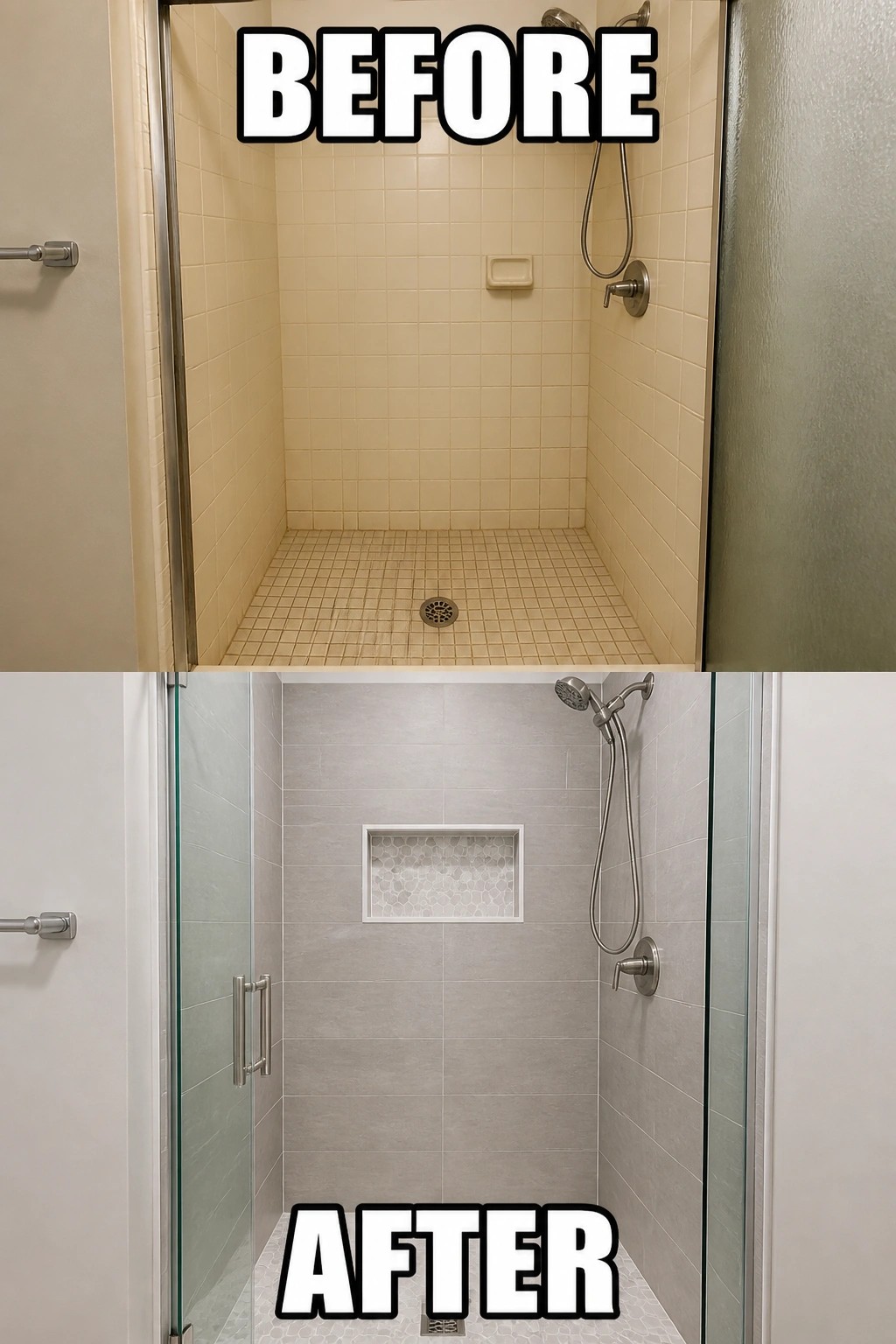
The old beige tiles made the shower feel closed in and dated. Switching to a calm gray tile, adding a small niche, and replacing the old door with clear glass opened the space up and gave it a much cleaner look.
This approach works best in small bathrooms where you want to keep things practical but still modern. Stick with one neutral tile color throughout, keep the hardware simple, and let the glass do most of the work to make the room feel larger.
Add Curtains To Warm Up A Plain Living Room
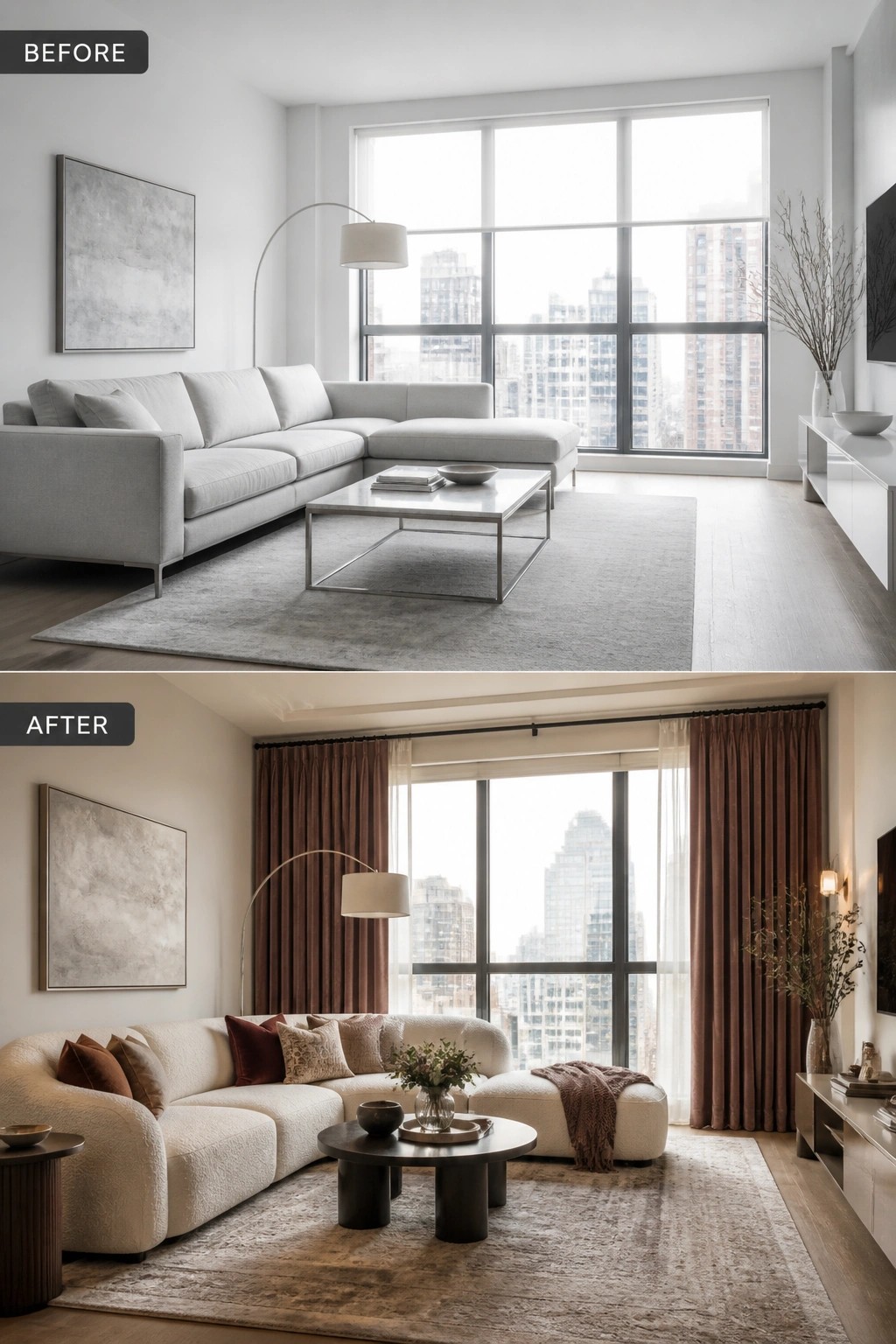
A large window wall can make a room feel bright but also a little empty. Adding floor-length curtains in a soft fabric gives the space something to hold onto visually and cuts down on the harsh light that bounces around all day. The room then feels calmer without losing any of the natural light.
This approach works well in apartments or newer homes that came with plain white walls and big windows. Start with the curtains first, then add a few textured pillows and a throw so the sofa does not feel bare. Keep the rest of the furniture simple so the layers do not fight each other.
Layer Textiles And Curtains To Finish A Plain Living Room
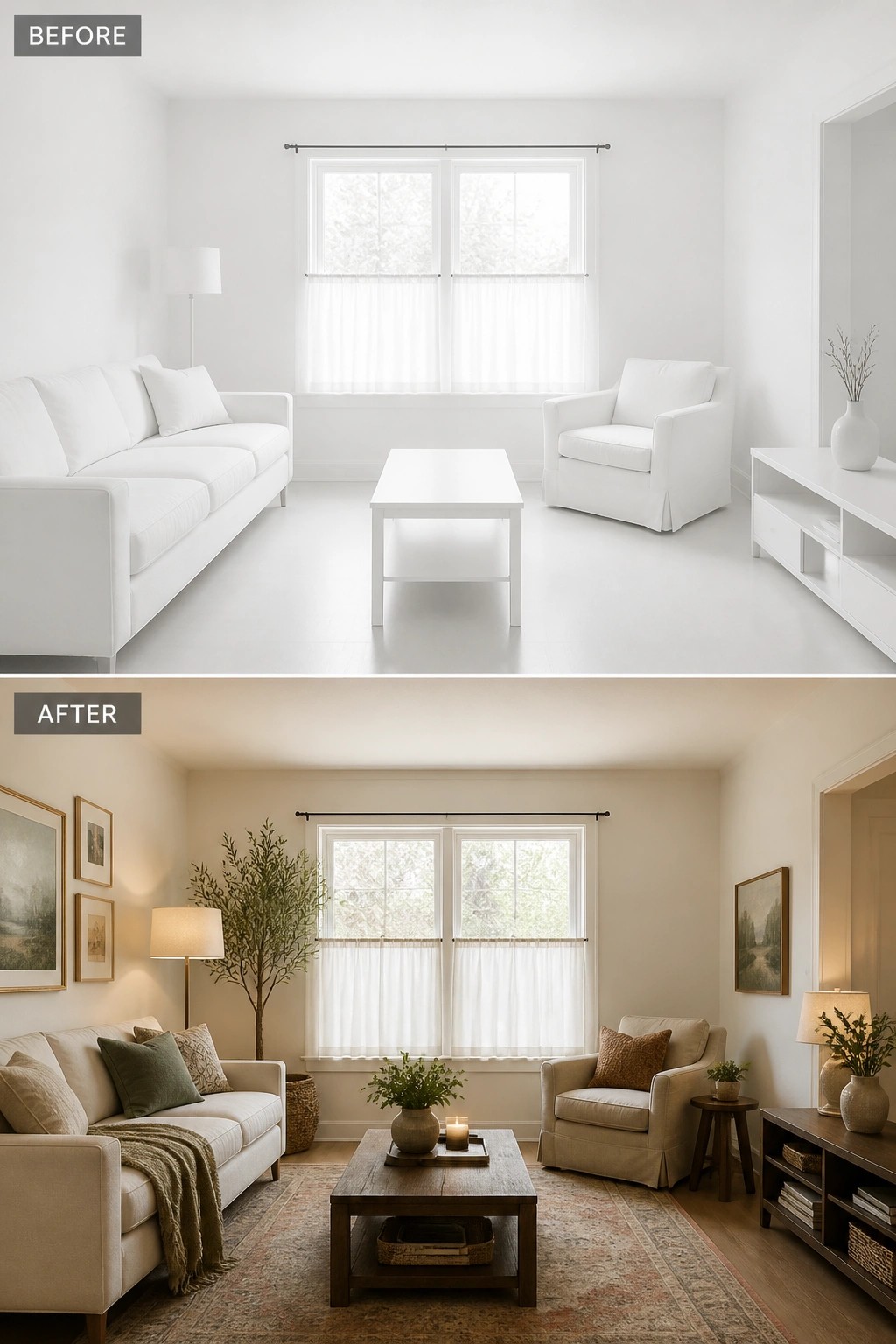
A bare room with white walls and simple furniture often feels unfinished even when it is clean. Adding a large rug, a few textured pillows, a throw, and simple curtains brings warmth and pulls the seating area together without major changes to the layout.
Start with the rug to define the space, then layer softer pieces on the sofa and chair. One or two lamps add evening light while a few framed pieces on the wall keep the look from feeling empty. This approach works well in any small to medium living room that needs a bit more comfort.
Frequently Asked Questions
Q: How do I layer textures without the room looking messy? A: Start with one big texture like a chunky knit throw on the couch. Add a second one with a woven basket or a velvet pillow next to it. Stop there and see how the light hits everything before you add more.
Q: What if my window treatments clash with the pillows and rugs I already have? A: Pick curtains in a neutral shade that picks up one color from your textures. Hang them so they frame the window and let the patterns do the talking. Swap out one pillow if it still feels off.
Q: How can I make sure the layers actually change the feel of the room? A: Walk in from another room and notice what catches your eye first. Adjust the window treatments to let in softer light if the textures look flat. One good change often makes the rest fall into place.
