

I’ve always found that long narrow living rooms tend to resist standard furniture placement no matter how many times you rearrange things.
The real issue usually starts with the flow along the walls and how little usable space remains in the middle once a sofa and chairs go in.
Small adjustments to scale and placement can open up daily movement without requiring a full redesign.
I’ve noticed that ideas focused on visual breaks and flexible seating often hold up better once the room starts getting used again.
A couple of those approaches are the ones I keep in mind when a space still feels off after basic updates.
Use A Sectional To Make The Most Of A Narrow Room

A long narrow living room often feels cramped when furniture is placed straight across the space. In this case the dark sofa and separate tables broke up the room and made it feel smaller. Switching to a light L-shaped sectional that runs along one wall opened up the center and gave the room a clearer flow.
This layout works well in older homes or apartments where the living room is basically a long rectangle. Keep the sectional low and light in color, then add one long rug underneath to tie everything together. Leave enough walking space on the other side so the room does not feel pinched.
Add Built-Ins Along One Wall To Organize A Narrow Room
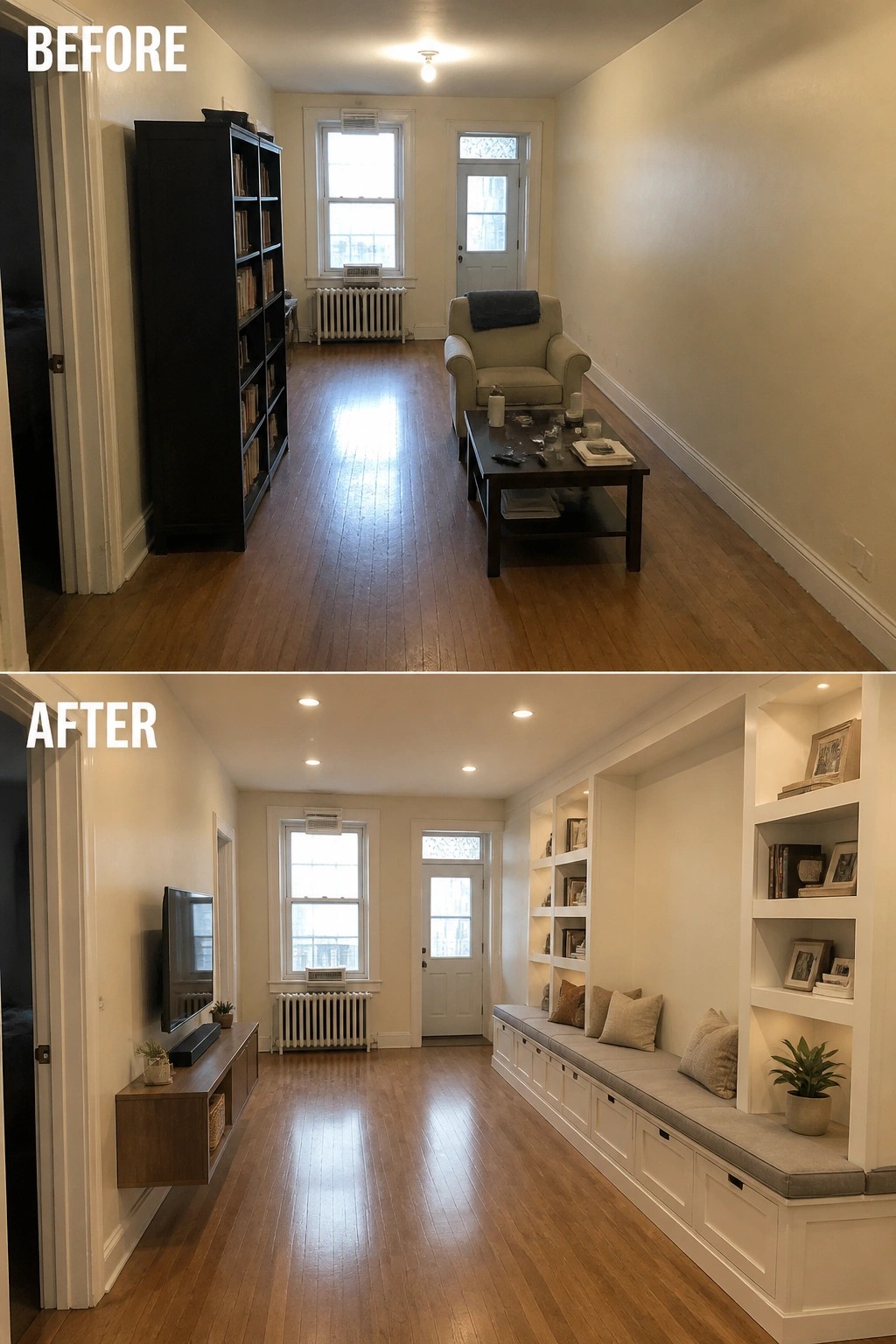
In a long narrow living room, scattered furniture often leaves the space feeling empty and hard to navigate. The main change here was adding a long built-in bench with drawers and open shelves along the side wall, which turned that blank stretch into storage, seating, and display all at once.
This approach works best in older homes where the room shape limits options. It keeps the floor open for walking through while giving you practical places to store items and sit without adding more freestanding pieces that can make the space feel tighter.
Scale Furniture To Fit A Long Narrow Room
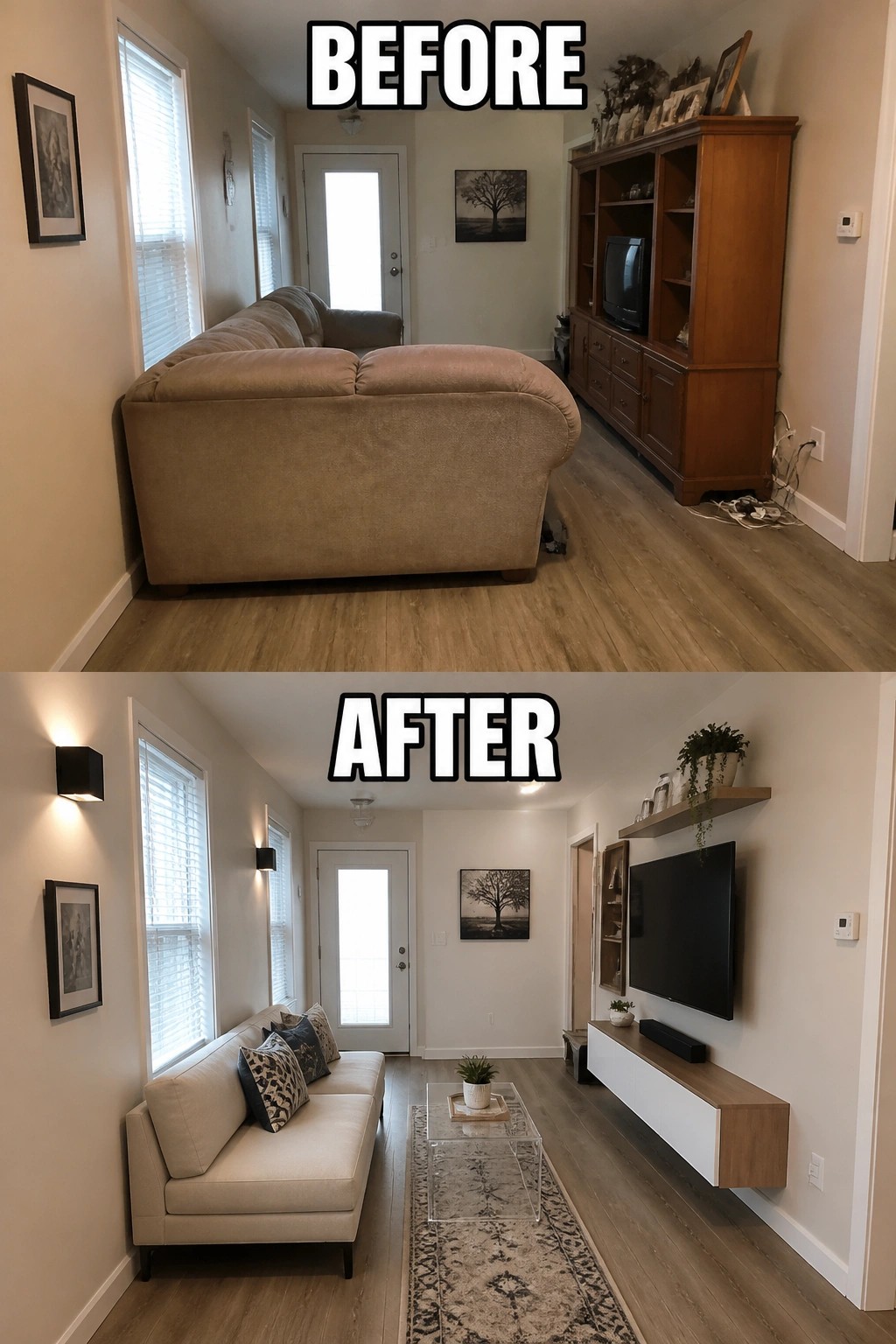
A large sectional sofa can quickly overwhelm a narrow living room and cut off any sense of flow. Replacing it with a smaller sofa placed along one wall and mounting the TV instead of using a bulky cabinet opens up the floor and lets the room feel longer rather than crowded.
This works best in rooms where walking space matters more than extra seating. Measure the width first and choose pieces that leave at least three feet of clear path so the layout stays practical instead of tight.
Arrange Furniture Along The Length Of A Narrow Room

A long narrow room often feels empty when all the seating sits at one end. In this case the before photo shows a single sofa pushed against the far wall with little else to break up the space. The after version moves the main seating to the sides and adds a long rug that runs down the center. This simple shift makes the room feel more balanced and actually usable.
The same layout works well in many older homes or apartments where the living area doubles as a hallway. Keep the largest piece on one wall and balance it with a pair of chairs on the other side. A long rug helps tie everything together without crowding the walkway.
Define A Narrow Room With One Large Rug

A long narrow living room often feels empty and hard to use until you give it a clear center. Adding one oversized rug pulled all the way under the seating area instantly pulls the furniture together and stops the space from looking like a hallway. In this case the dark floors and single sofa were replaced with a light rug, balanced seating, and full curtains that soften the far window and make the proportions feel more even.
The same approach works in any narrow room where furniture tends to line the walls. Start with the rug size first, then add a couple of lamps so the seating zone has its own light instead of relying on one overhead source. Keep the rest of the floor clear so the room still feels open rather than crowded.
Simplify Furniture To Open Up A Narrow Room

A long narrow living room often feels cramped when it holds too many dark pieces and scattered items. In this case, swapping the heavy armchairs and overloaded console for a light sofa, slim tables, and just a few simple accessories made the space feel wider and easier to move through.
The same approach works well in similar rooms. Start by removing anything that blocks the main walkway, then choose seating and tables in lighter colors and thinner frames. Keep the console or entry surface mostly clear so the eye can travel the full length of the room without stopping at clutter.
Anchor A Long Room With One Large Area Rug

In a long narrow living room the furniture often ends up pushed against the walls, which makes the space feel even more stretched out. The before photo shows exactly that problem, with pieces scattered and no clear center. The after version brings the seating in around one large jute rug and a round coffee table, which creates a defined living area that stops the eye from running the full length of the room.
This approach works best in narrow rooms where you need to break up the length without adding walls. Keep the rug large enough for the front legs of the sofa and chairs to sit on it, and place the main seating so people face each other instead of lining up along the walls. It is a simple change that makes the room feel more balanced and usable.
Build A Window Seat To Anchor A Narrow Room

In a long narrow living room, the wall with the main window often ends up as dead space. Building a window seat with shelves on both sides turns that wall into the main feature and gives the room a natural stopping point instead of leaving furniture floating in the middle.
This idea works best when the room is tight on width. Keep the bench shallow enough to leave walking room, match the paint to the walls, and use the shelves for a mix of books and small baskets so the storage feels useful rather than decorative.
Lighten A Narrow Living Room With Neutral Furniture And Sheer Curtains
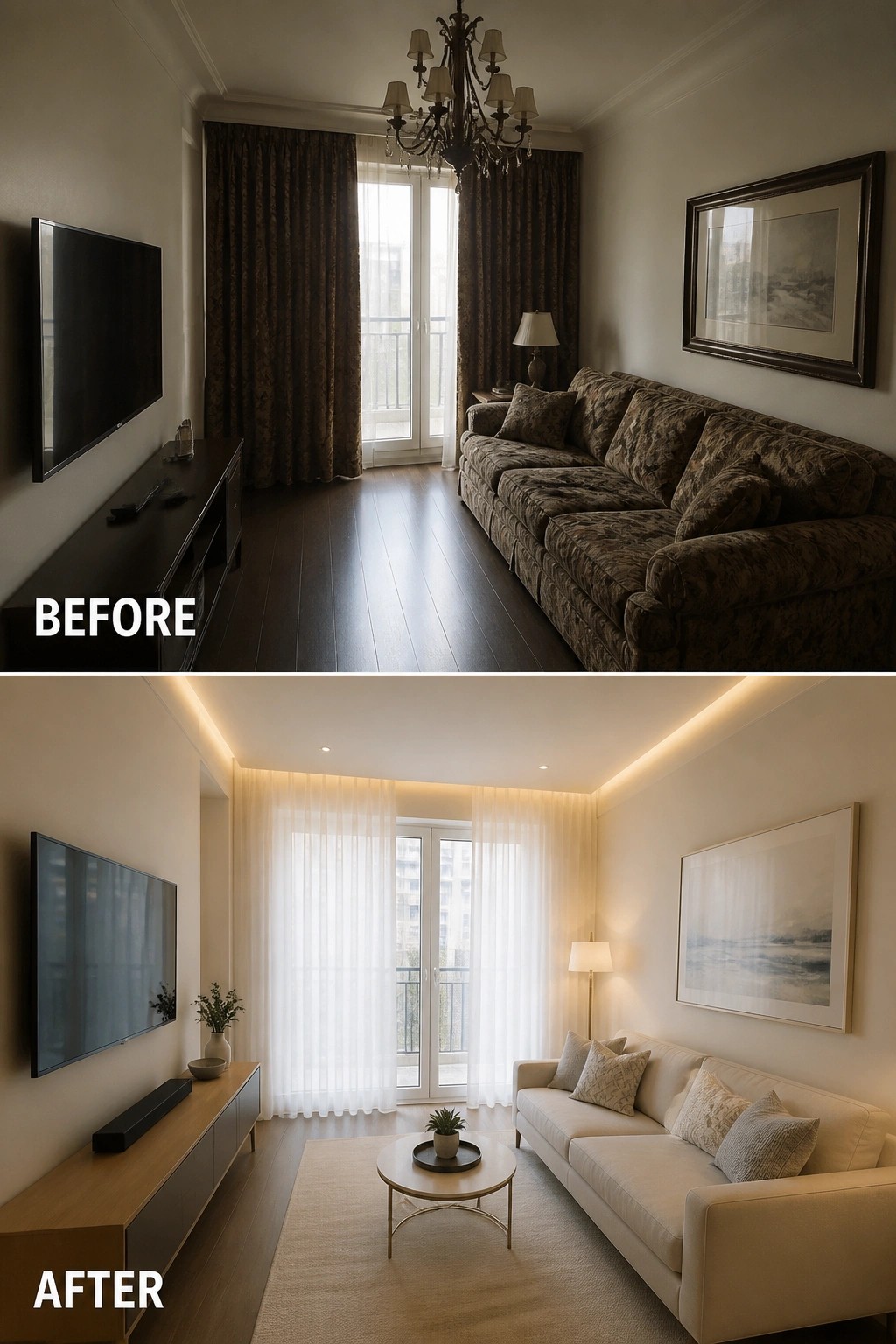
A dark patterned sofa and heavy curtains can make a long narrow room feel closed in and dated. Switching to a light neutral sofa, pale wood tones, and sheer window panels opens up the space and lets more natural light reach the back of the room. The change is simple but effective because it removes visual weight without moving any walls.
This approach works best in rooms with limited width where every dark surface adds to the squeeze. Start with the biggest pieces like the sofa and window treatments, then add a light rug and a few lamps so the room does not feel flat at night. Keep the color palette consistent so the eye moves easily from one end to the other.
Use A Large Rug To Anchor Seating In A Narrow Room
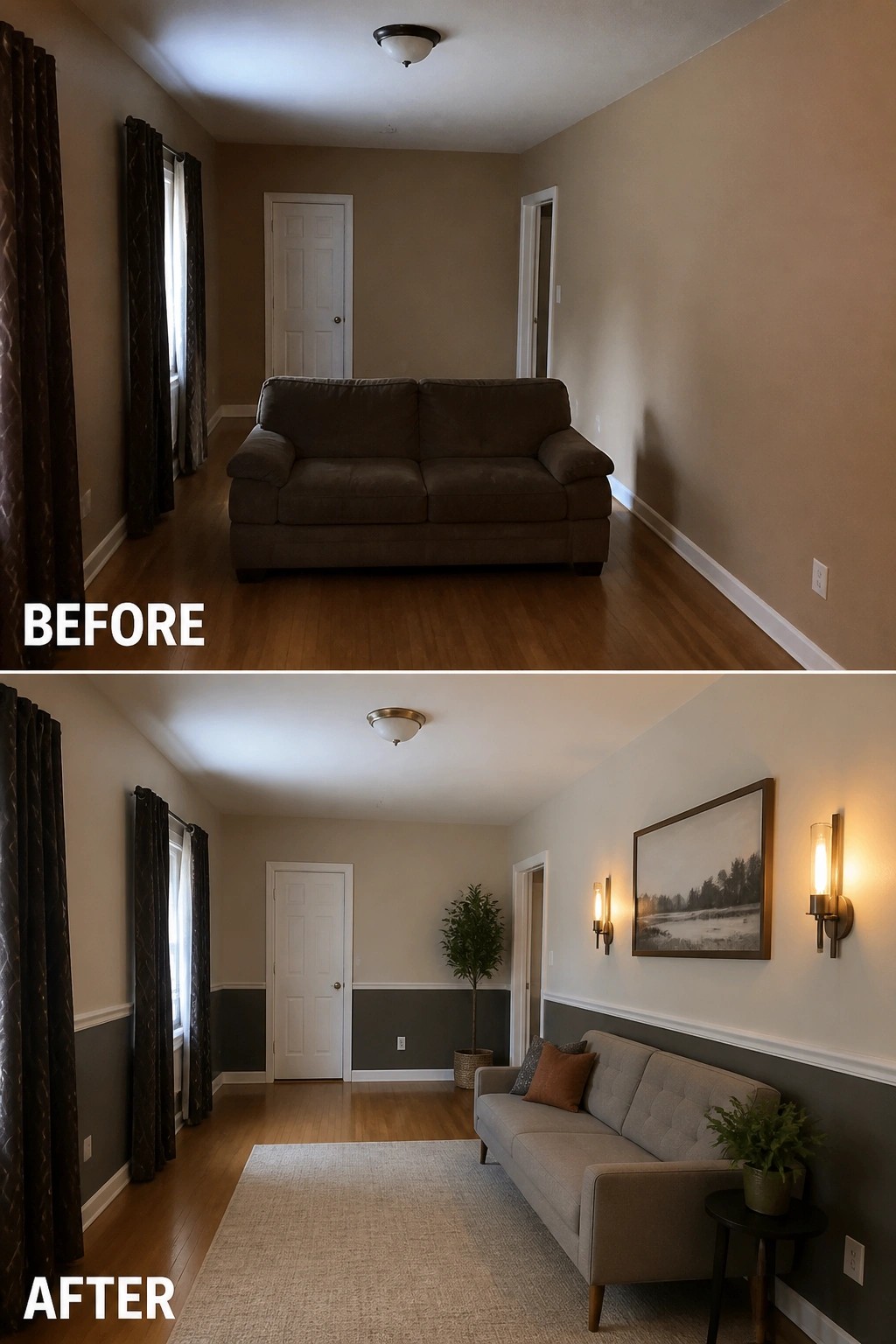
A long narrow living room often feels empty when furniture sits in the middle with nothing to tie it together. Adding one large rug and pulling the sofa against the long wall gives the space a clear purpose and stops it from looking like a hallway.
This idea works best in older homes or apartments where the room shape is fixed. Pick a rug big enough for the front legs of the sofa to rest on it, then keep the rest of the floor open so people can walk through easily.
Replace Bulky Storage With Open Shelving

A long narrow living room often feels tighter when one wall is taken up by a big dark cabinet. Swapping that piece for open shelves lightens the whole space and keeps the room from feeling boxed in. The before photo shows how the heavy unit dominated the length of the room, while the after version uses simple shelves to hold the same items without blocking sight lines.
This approach works well in older homes or apartments where the living room is basically a hallway with windows. Keep the shelves shallow so they do not eat into the walkway, and stick to a few baskets or bins for anything that looks messy. The result is a room that feels wider without moving any walls.
Replace Tall Shelving With A Low Console In A Narrow Room
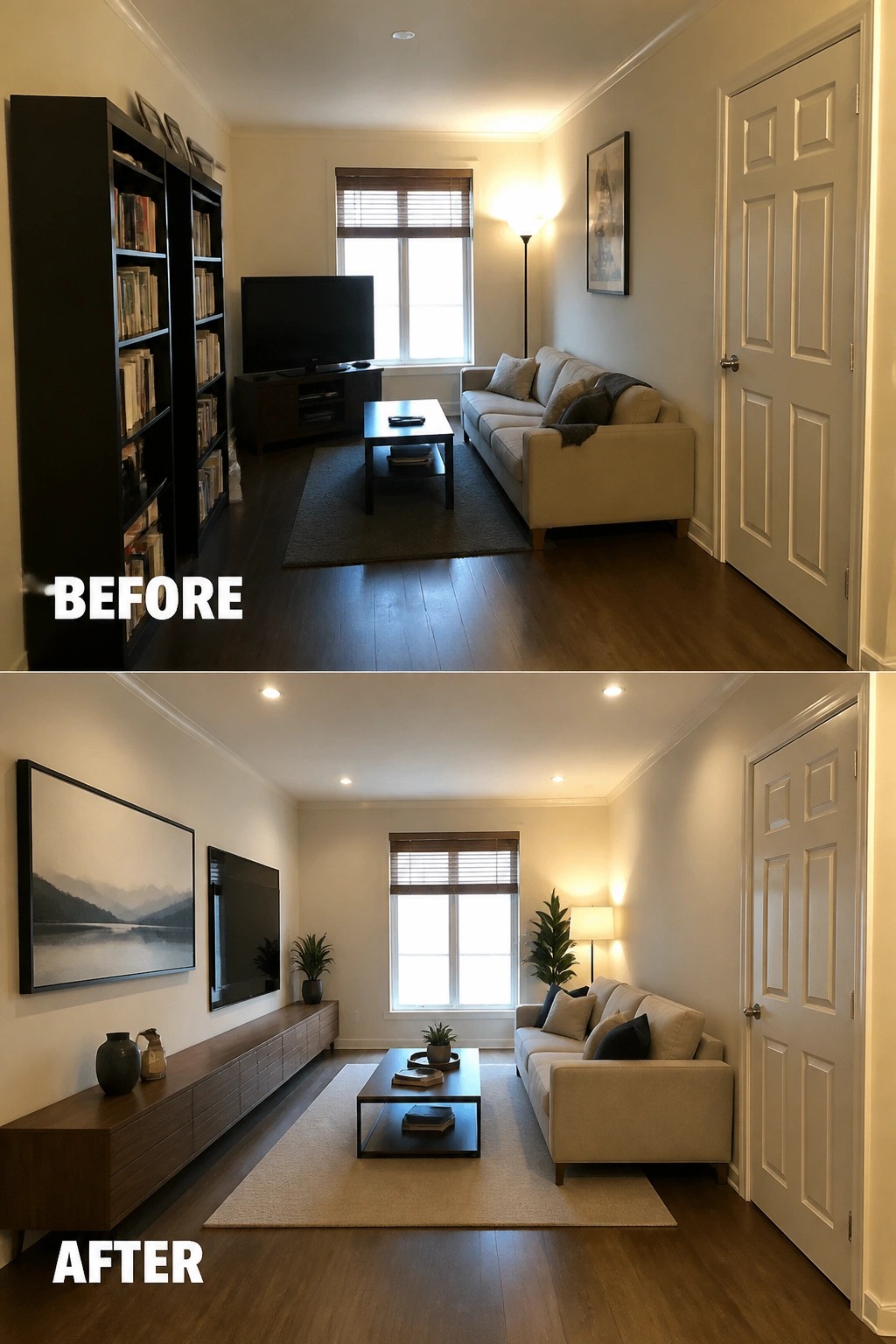
In a long narrow living room, tall pieces like bookcases along the side walls tend to close the space in and make it feel tighter than it really is. Removing the tall black shelves and switching to a low media console lets the eye move more freely across the room, while mounting the TV keeps the wall clean and open.
This approach works best in rooms where you need better traffic flow and a wider feel without moving walls. Keep the console at a height that stays below the window line, choose a rug large enough to pull the seating together, and avoid adding new tall storage on the long walls if you can help it.
Define The Space With A Large Rug

A long narrow room often feels scattered when furniture lines both walls with no clear center. Adding a rug under the seating area pulls everything together and gives the space a more settled layout. In this case the bulky desk setup was swapped for a slim wall-mounted version, which freed up floor space and let the rug do its job without competing for attention.
This approach works well in rooms where walking paths run the full length. Keep the rug large enough to fit under the front legs of the sofa and any side tables so the zone reads as one unit. Avoid small rugs that float in the middle, since they tend to make the room feel even longer and more divided.
Define The Seating Area With A Long Runner Rug

In a long narrow living room, seating can end up feeling scattered along the walls. A single long rug helps pull the sofa and chairs into one clear zone so the space reads as intentional rather than leftover. Switching the heavy coffee table for a clear glass version also keeps the view open from one end of the room to the other.
This approach works best in older homes where the main seating faces a television or window at the far end. Keep the rug a few feet narrower than the room so there is still walking space on both sides, and choose a light color that reflects daylight instead of absorbing it.
Use A Sectional Sofa To Work With A Long Narrow Room
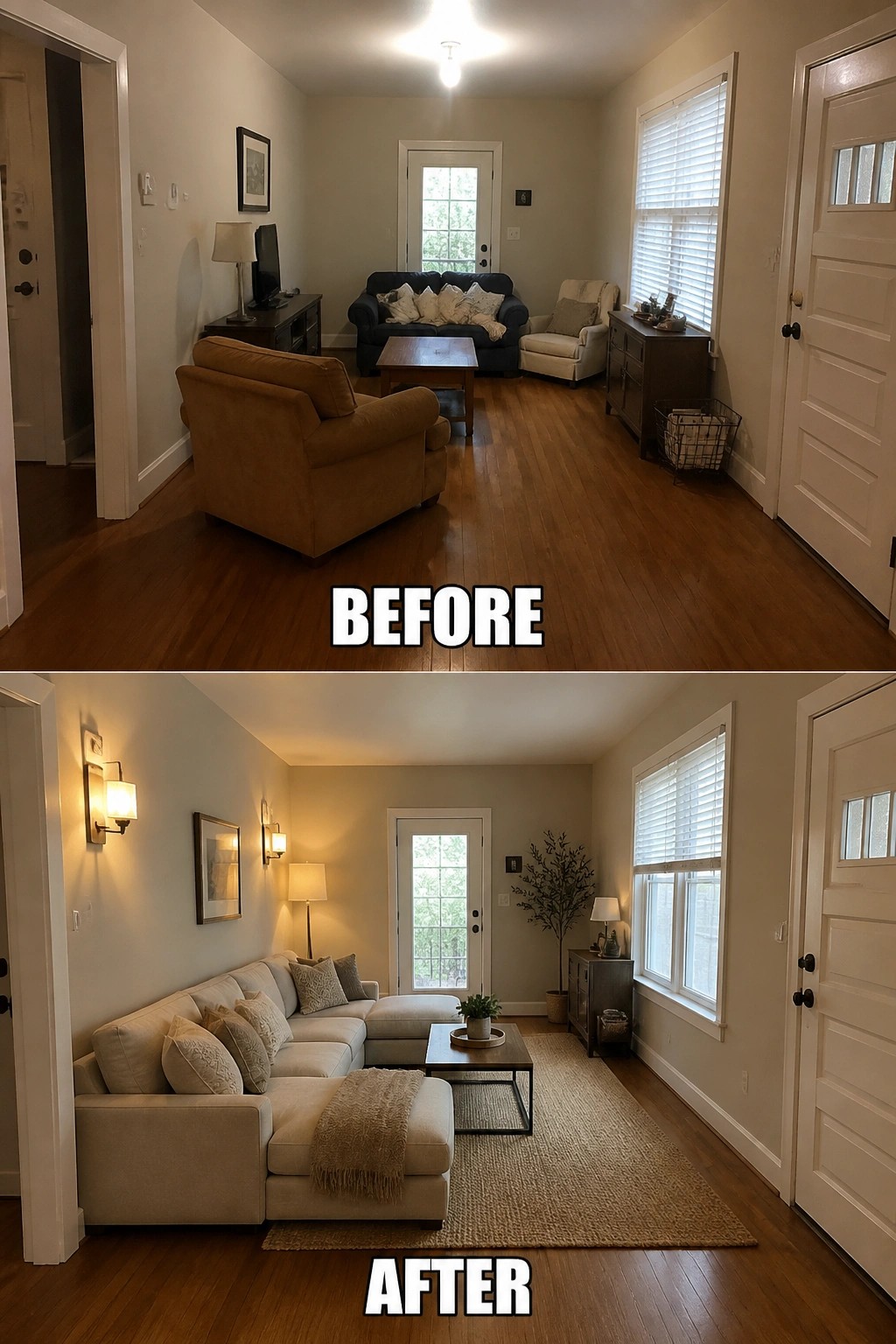
A long narrow living room often ends up with furniture pushed against the walls or scattered in a way that makes the space feel choppy. In this case, replacing the separate sofa and chair with one sectional created a single seating area that follows the length of the room instead of fighting it. Adding a rug underneath pulled everything together and gave the seating zone a clear start and finish.
This approach works best when the sectional is sized to leave walking space on both ends. Keep the rest of the furniture low and simple so the room does not feel crowded. A rug helps mark the living area without needing extra walls or dividers.
Use Vertical Storage To Open Up A Narrow Room
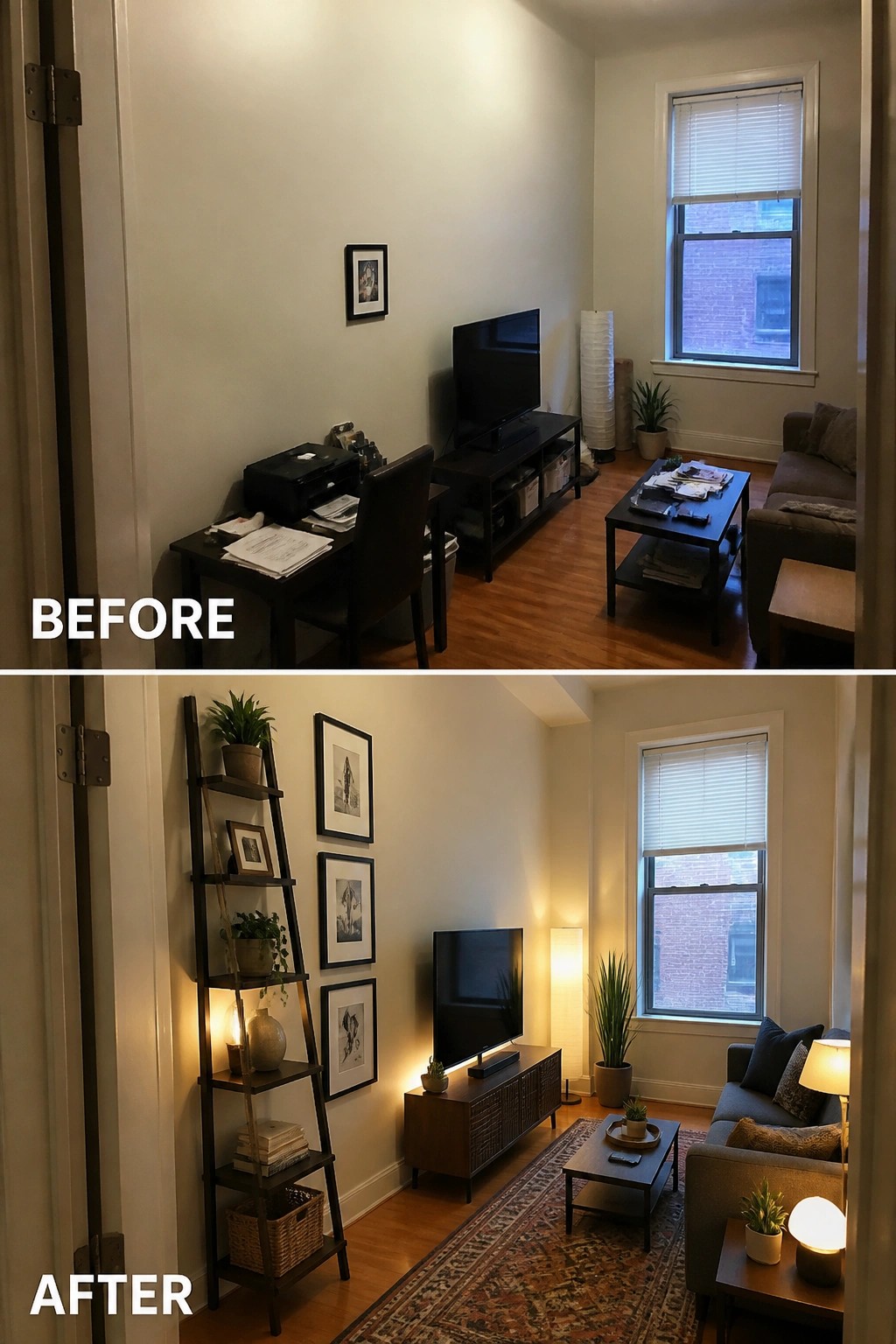
The before photo shows a desk and printer taking up floor space along the long wall, which made the room feel crowded and hard to move through. Replacing that setup with a tall ladder shelf cleared the floor and gave the space a cleaner line.
This works best in long narrow rooms where wall space is limited but height is available. Keep the shelf open and not too deep, then place seating and the coffee table along the opposite wall so the room keeps a clear path down the middle.
Add An Accent Wall To Give A Narrow Room Focus
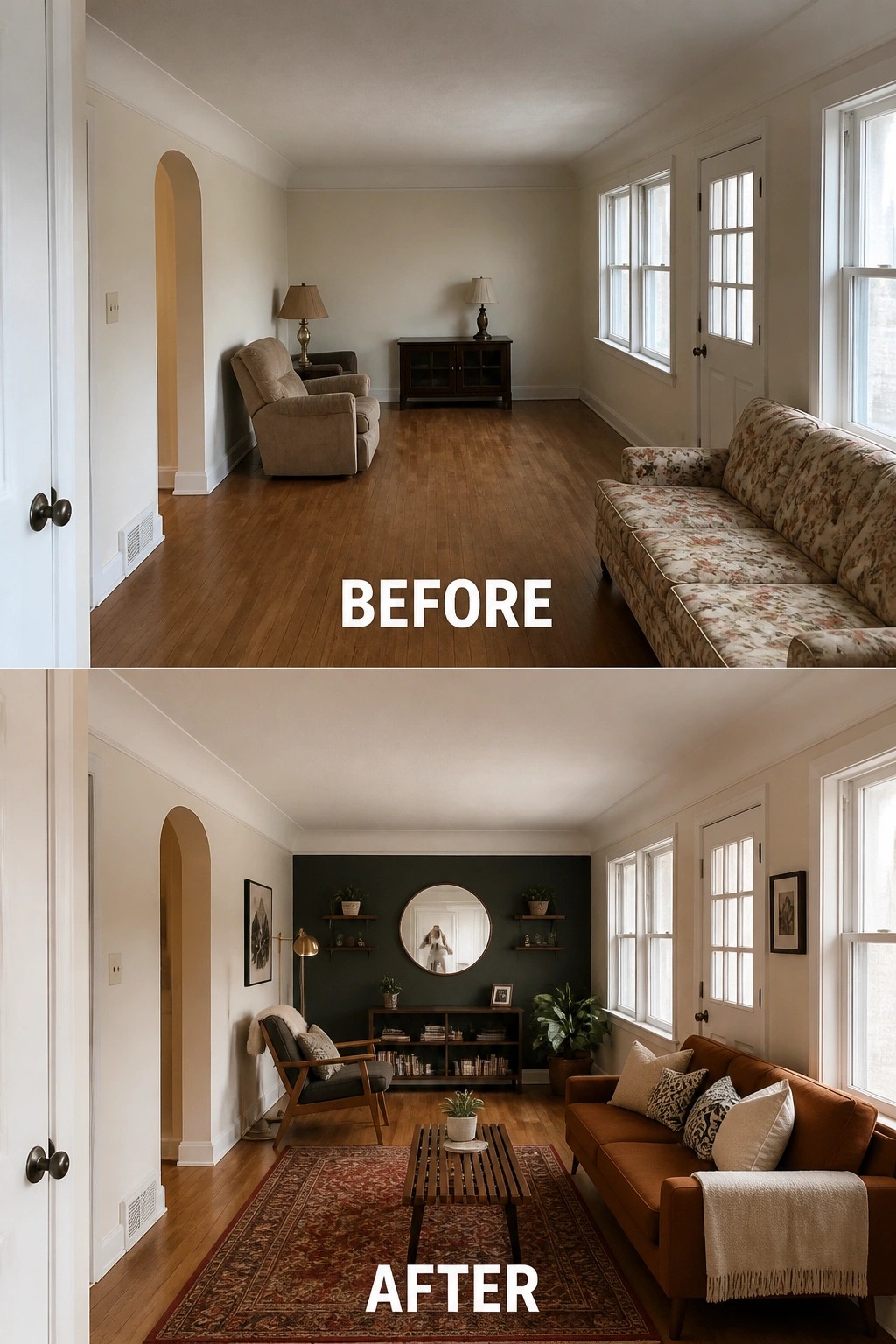
A long narrow living room often feels scattered when every wall stays the same light color. Painting one end wall a deep shade creates a clear stopping point that pulls the space together and makes it feel less like a hallway.
This works best in older homes where the floors and trim are already in good shape. Keep the other walls light, place a mirror or art on the darker wall, and arrange the main seating to face that direction so the room gains a natural center without needing a lot of extra pieces.
Define The Seating Area With A Large Area Rug
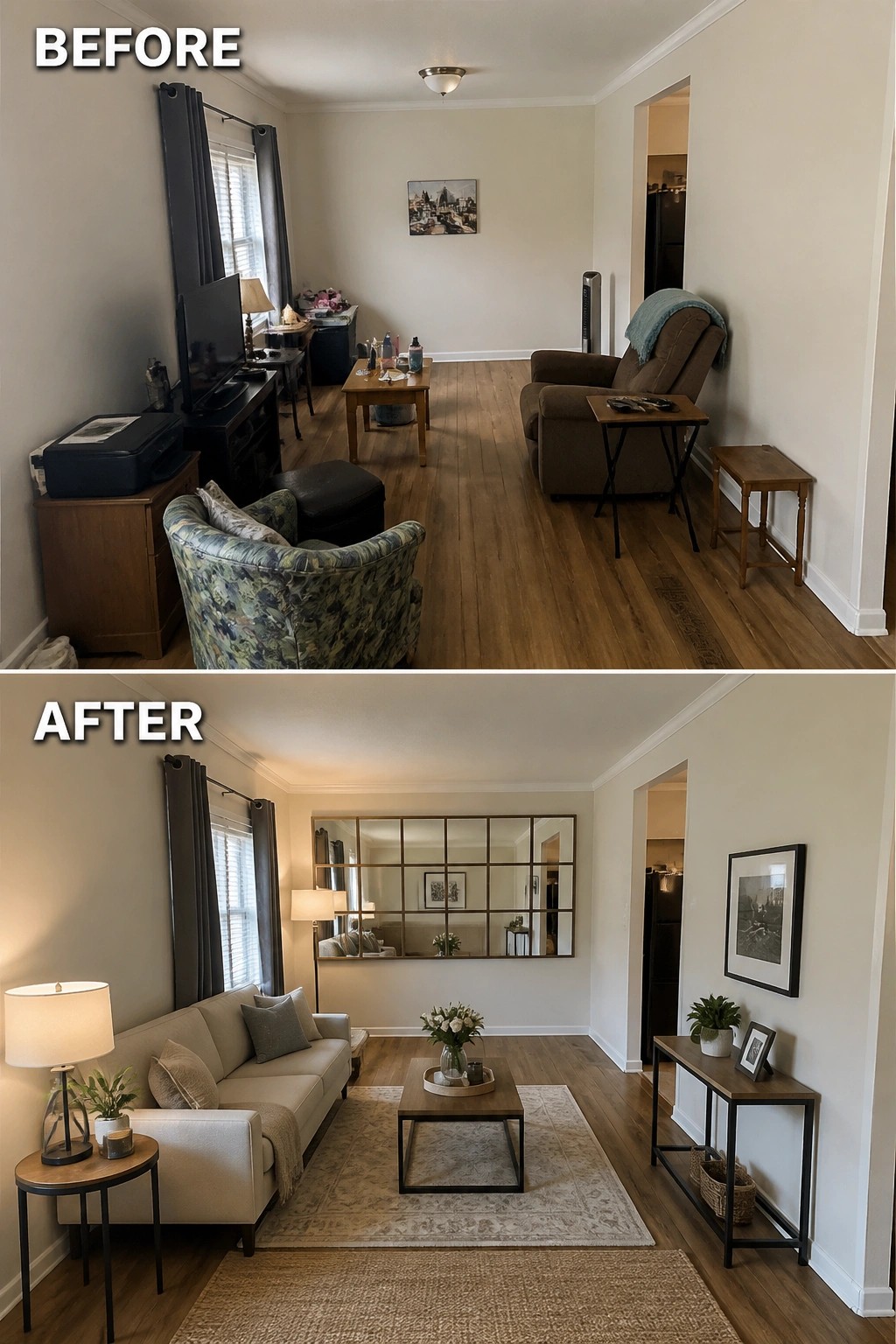
A long narrow living room often feels scattered when furniture sits along the walls with no clear center. Adding a large rug under the main seating group pulls the pieces together and gives the space a more settled layout. The before photo shows mismatched chairs and tables spread out with little connection. The after version uses one rug to anchor the sofa and coffee table so the room reads as one usable area instead of a hallway with furniture.
This approach works especially well in apartments or older homes where the room shape limits options. Keep the rug large enough that the front legs of the sofa and chairs rest on it. Place the main seating parallel to the long walls and leave clear walking space on both sides. The result is a room that feels balanced without needing major construction or new built-ins.
Group Seating To Open Up A Narrow Room

The before photo shows a long room that felt chopped up by a round table sitting right in the walkway and a sofa pushed against one wall. Moving the main seating into a compact sectional and placing a rug underneath pulled everything into one clear zone while leaving the rest of the floor open.
This layout works well when the room is tight on width because it keeps traffic moving along one side instead of cutting across the middle. Try anchoring your seating with a rug first, then add a slim table or folding chairs only where they will not block the length of the space.
Frequently Asked Questions
Q: How do I keep the room from feeling like a tunnel? A: Place your largest pieces along the longer walls. This opens up the center for better movement. Try angling one chair to break the straight lines.
Q: Should the rug run the full length of the room? A: Pick a rug that stops short of the walls on the sides. It defines the seating area without emphasizing the narrow shape.
Q: How do I light the whole space evenly? A: Use floor lamps at both ends instead of one overhead light. Wall sconces along the long sides add depth too. Keep cords hidden along baseboards for a clean look.
