

Large windows can make a living room feel bright and open, but the room still needs a layout that works once people settle in.
I find that seating feels most comfortable when it makes use of the view without blocking the paths people naturally take through the space.
Light colors and warm textures can soften all that glass, while a few darker accents help the room feel grounded rather than washed out.
These rooms show how furniture placement, window treatments, and layered lighting can shape a space that feels cozy both during the day and after sunset.
I’d save the details that suit the way you actually use your living room, then adapt them to your own light and layout.
Let Large Windows Shape The Living Room Layout

A living room feels more open when the seating leaves the windows clear. Here, the sofa sits to one side, so daylight can reach across the room without furniture blocking the glass.
Try this in a narrow room by keeping the main seating along one wall and using a low coffee table in the center. It works especially well when the windows are a strong feature, though a little space beside the sofa helps keep the route through the room comfortable.
Let Large Windows Shape The Seating Layout
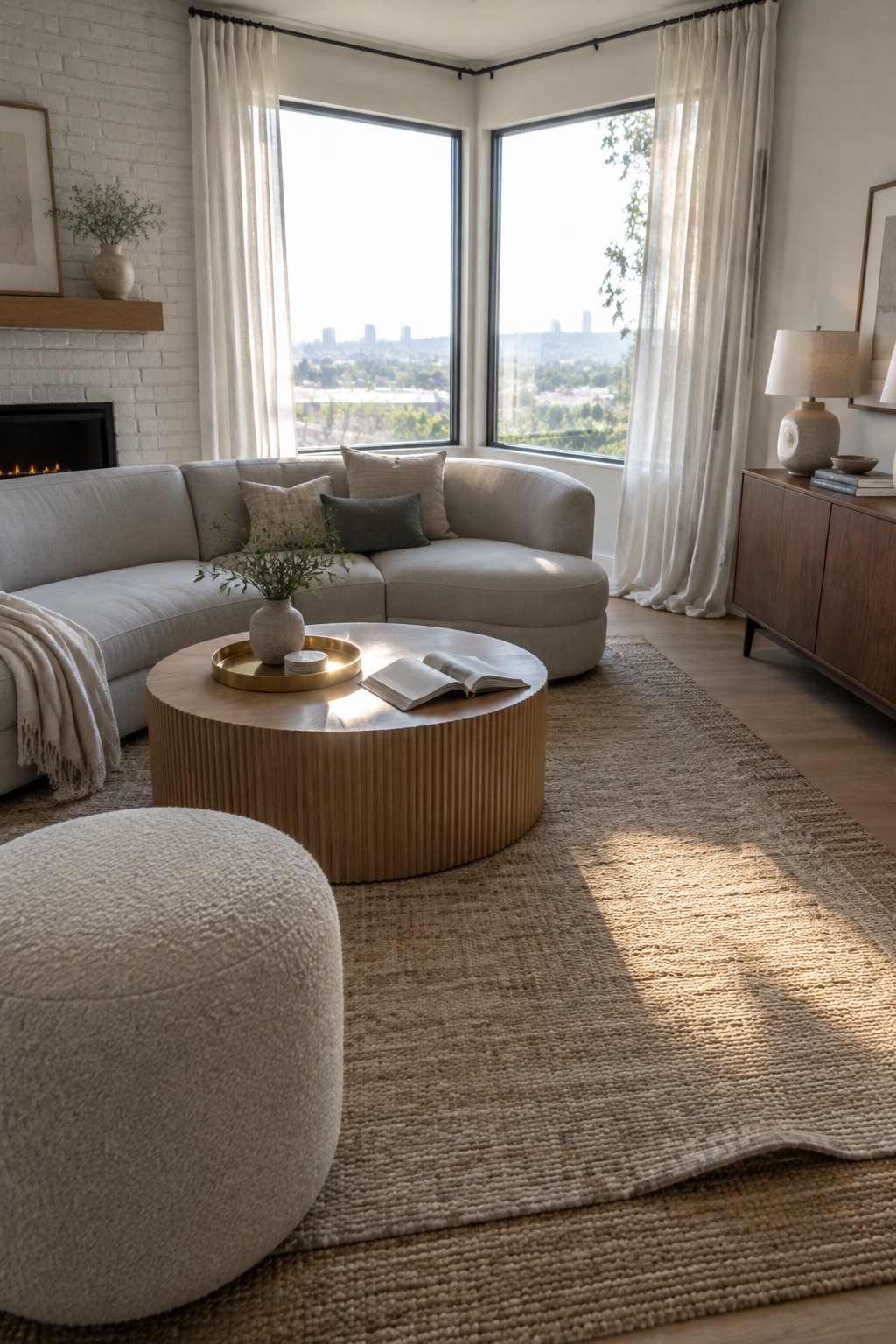
A large corner window can help set the living room layout. Placing a curved sofa along the glass keeps the view open while giving people a comfortable place to sit together.
This works well in a bright room where the windows are a main feature. Choose low furniture and simple window treatments so the seating does not block the view.
Make a Window Seat Part Of The Living Room

A built-in window seat can turn a large window into useful seating instead of leaving that area as a pass-through. Here, the pale bench cushions keep the seat comfortable and make it feel like part of the room.
This idea works especially well in a bay window or a wide alcove. Add drawers below for extra storage, and leave enough room for people to move around the seat comfortably.
Let Large Windows Shape The Seating
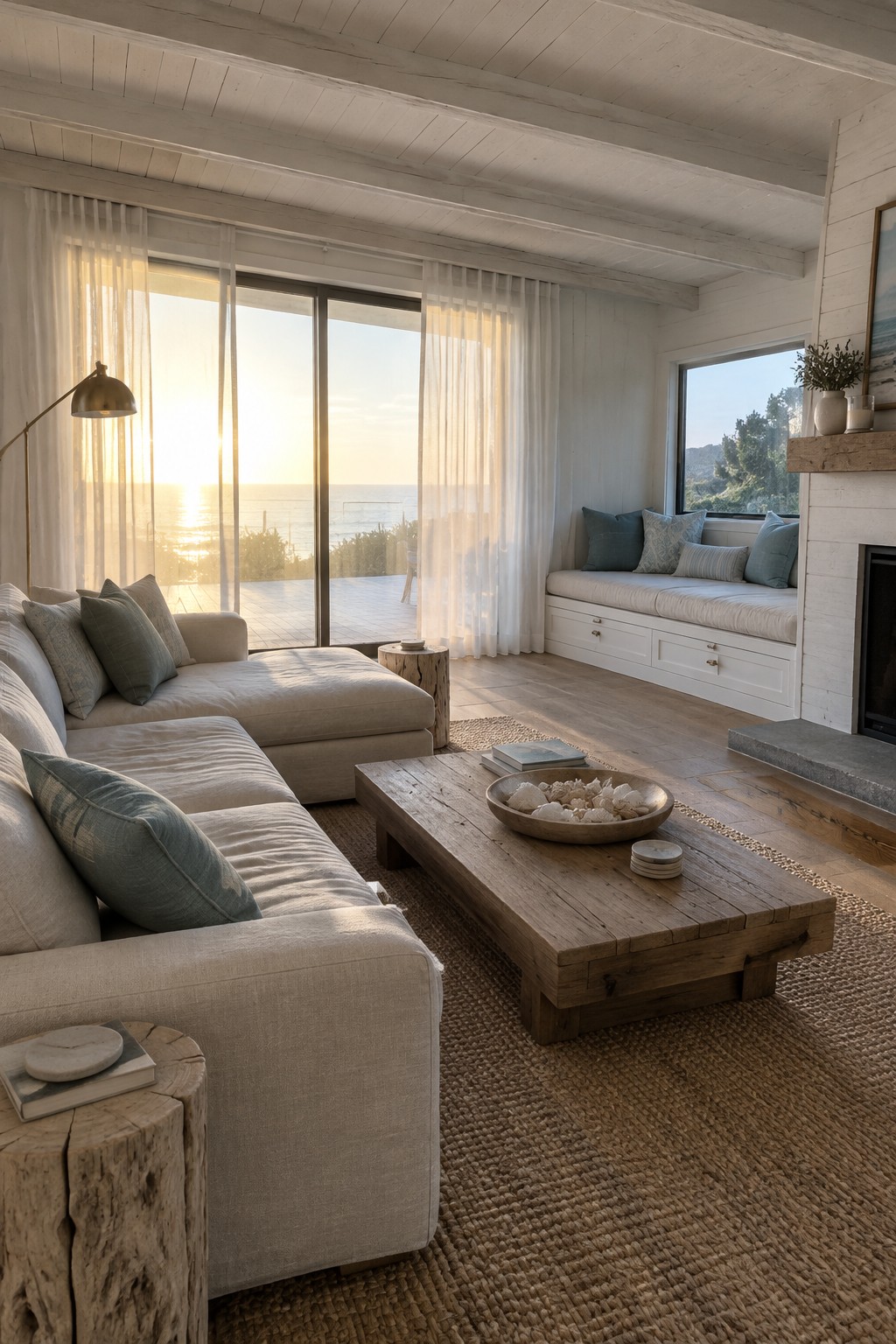
When a living room has wide windows, arrange the main seating so people can enjoy the view without blocking the light. A low sofa and a clear path to the glass help the room feel open, while curtains can soften the window without hiding it.
This layout suits rooms that face a garden, water, or another pleasant view. Keep taller furniture away from the glass, and choose light window coverings that can be drawn aside easily.
Keep Window Treatments Minimal

Large windows can brighten a living room without much extra styling. Leaving the glass mostly uncovered keeps the room open and lets the daylight reach deeper inside.
This approach suits windows set high on the wall, like those above the wood sideboard here. If privacy is not a concern, skip heavy curtains; where you need them, choose a simple shade that can be raised out of the way.
Use Light Curtains Around Large Windows

Light curtains can give a room privacy without hiding the windows that make it feel open. Here, sheer panels sit to the side, leaving the dark window frames visible while keeping the seating area from feeling too exposed.
This approach works well when you want daytime light but still need a little softness at the glass. Choose simple panels that can be pulled fully aside, and avoid heavy fabric that covers too much of the window.
Keep the Window Wall Open

In a living room with large windows, keeping bulky furniture away from the glass helps the daylight reach farther into the space. A low sofa and a clear path beside the windows let the seating feel comfortable without blocking the view.
This approach suits an open-plan room, especially when the windows stretch close to the floor. Place the main seating along the side of the room, then keep taller pieces toward a solid wall.
Use Soft Neutrals Around a Large Window
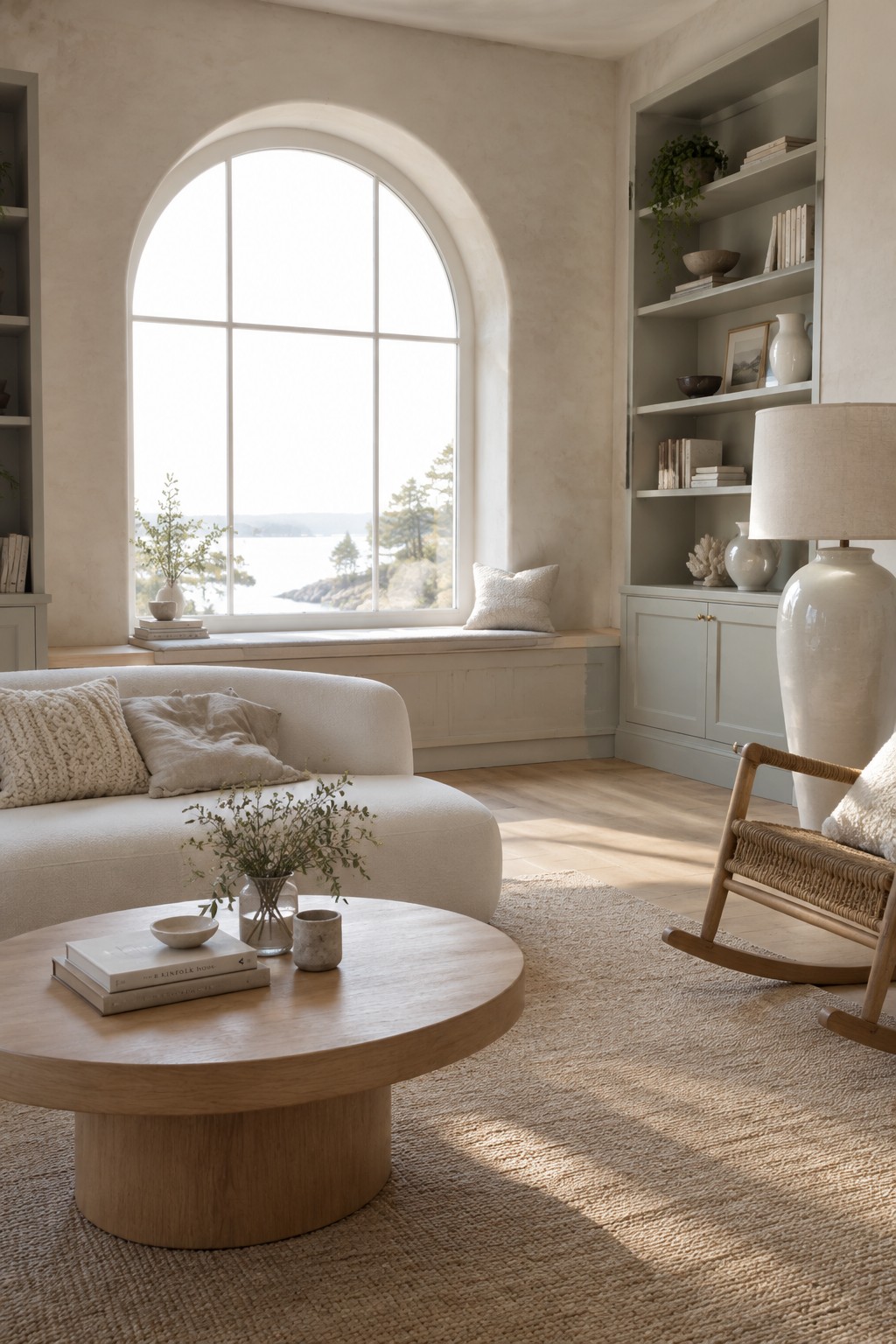
A large window can be the main feature of a living room without needing much extra decoration. Soft neutral colors let the window stand out, while still keeping the space comfortable and easy to live in.
For a similar look, use warm white or beige on the walls and choose a sofa in a related shade. Keep the window area fairly simple so the light and view stay clear. This approach works especially well in rooms with a large architectural window, such as an arched one.
Keep the Seating Low Near Large Windows

Low-profile seating lets a large window stay open and keeps the room feeling connected to the view. Here, the sofa sits below the broad panes, so daylight can reach well into the living area.
This approach works especially well in rooms with floor-to-ceiling glass. Choose a sofa with a low back, and avoid placing tall furniture in front of the windows.
Use a Built-In Window Seat for Extra Seating

A built-in seat beneath a large window makes use of space that might otherwise go unused. Here, blue cushions and a few pillows make the long seat comfortable without taking attention away from the window.
This idea works well in living rooms where a window runs along one wall. Add drawers or cabinets below for handy storage, and keep the cushions simple so the seat stays easy to use every day.
Choose Low Furniture For Large Windows

A low, simple seating arrangement lets a large window stay open and keeps the room feeling connected to the view. Here, the sofa sits below the glass rather than blocking it, so the window remains a natural focal point.
This approach works well in living rooms with floor-to-ceiling windows. Choose furniture that sits comfortably below the main sightline, and leave enough space around it for easy movement.
Keep Seating Low Around Large Windows

Low, open seating lets a large window stay the main feature without making the room feel sparse. Here, wooden chairs sit below the sill, so the view remains clear and the daylight can reach further into the living area.
This approach works well in rooms where the window wall is a major source of light. Choose chairs with open backs and avoid placing tall furniture in front of the glass. A sofa can sit nearby, as long as it does not block the view.
Use Large Windows to Bring Light Into a Cozy Living Room

Large windows can make a living room feel open while the rest of the space stays warm and comfortable. Here, the low sofa leaves the window wall clear, and the neutral upholstery keeps the seating area easygoing rather than formal.
This approach works well in rooms where the windows are a main feature. Keep bulky furniture away from the glass, and use soft, light-colored fabrics to make the room feel cozy without blocking the view.
Make a Built-In Window Seat the Room’s Main Seating
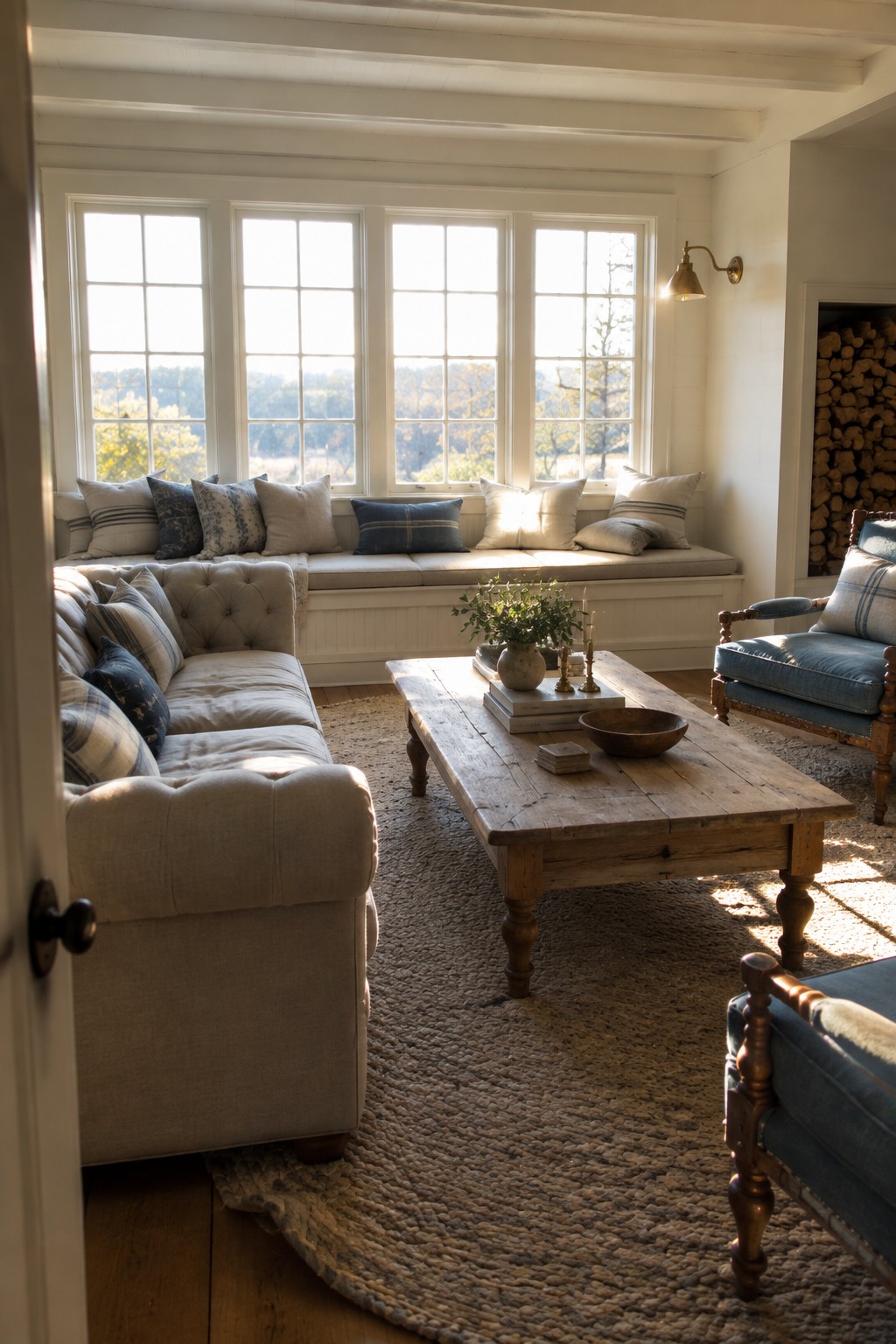
A long window seat can give a living room plenty of seating without blocking the view. Cushions and a few pillows make it comfortable, while the built-in design keeps the area neat and simple.
This works especially well beneath a row of windows, where a freestanding sofa might take up more floor space. Add a seat cushion deep enough for lounging, and keep the pillows easy to move when you need the full bench.
Use Arched Windows to Bring Height Into the Living Room

Tall arched windows make a living room feel more open without needing a complicated layout. Their shape gives the wall character, while slim dark frames keep the windows from feeling too heavy.
This approach works especially well in rooms with high ceilings and a simple furniture arrangement. Keep window coverings minimal so the arches stay visible, and use low seating nearby to leave more of the window wall in view.
Keep the Window Wall Open
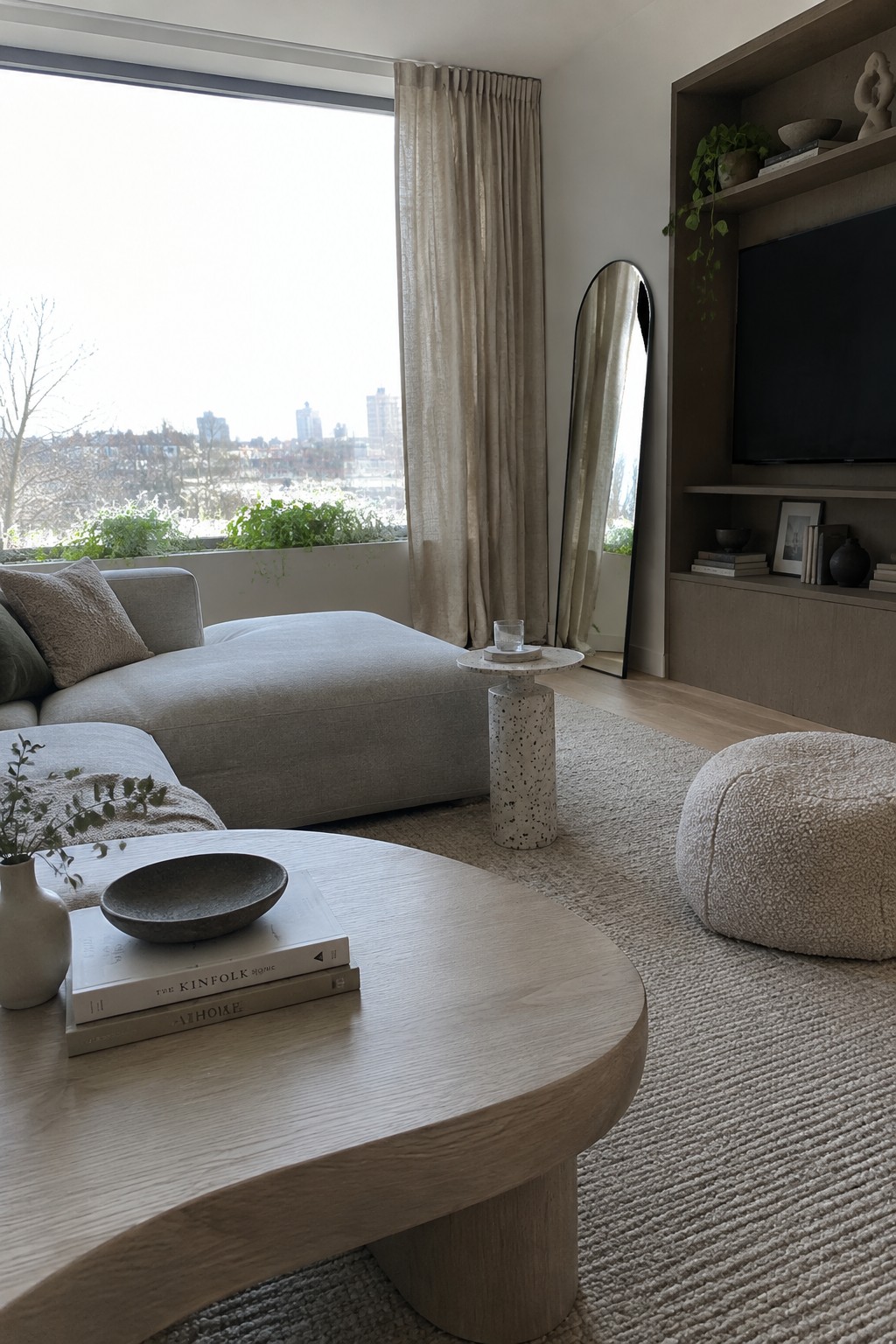
Leaving the area in front of a large window mostly clear helps daylight reach farther into the living room. Here, the sofa sits to one side, so the window remains the main source of light without making the seating feel disconnected.
Try this in rooms where the window is a feature and the floor space allows furniture to sit nearby rather than directly in front of it. A low sofa or a small side table can still work close to the glass, but avoid crowding the window with tall pieces.
Keep Large Windows Open to the Room

Leaving the area around large windows clear helps daylight reach farther into a living room. Here, the low sofa and open space beside the glass keep the window wall from feeling crowded.
This works especially well in smaller rooms or homes with built-in shelves, where extra furniture can quickly make the space feel busy. Keep taller pieces away from the glass, and choose simple window coverings if you need privacy.
Use Tall Windows To Shape The Living Room Layout
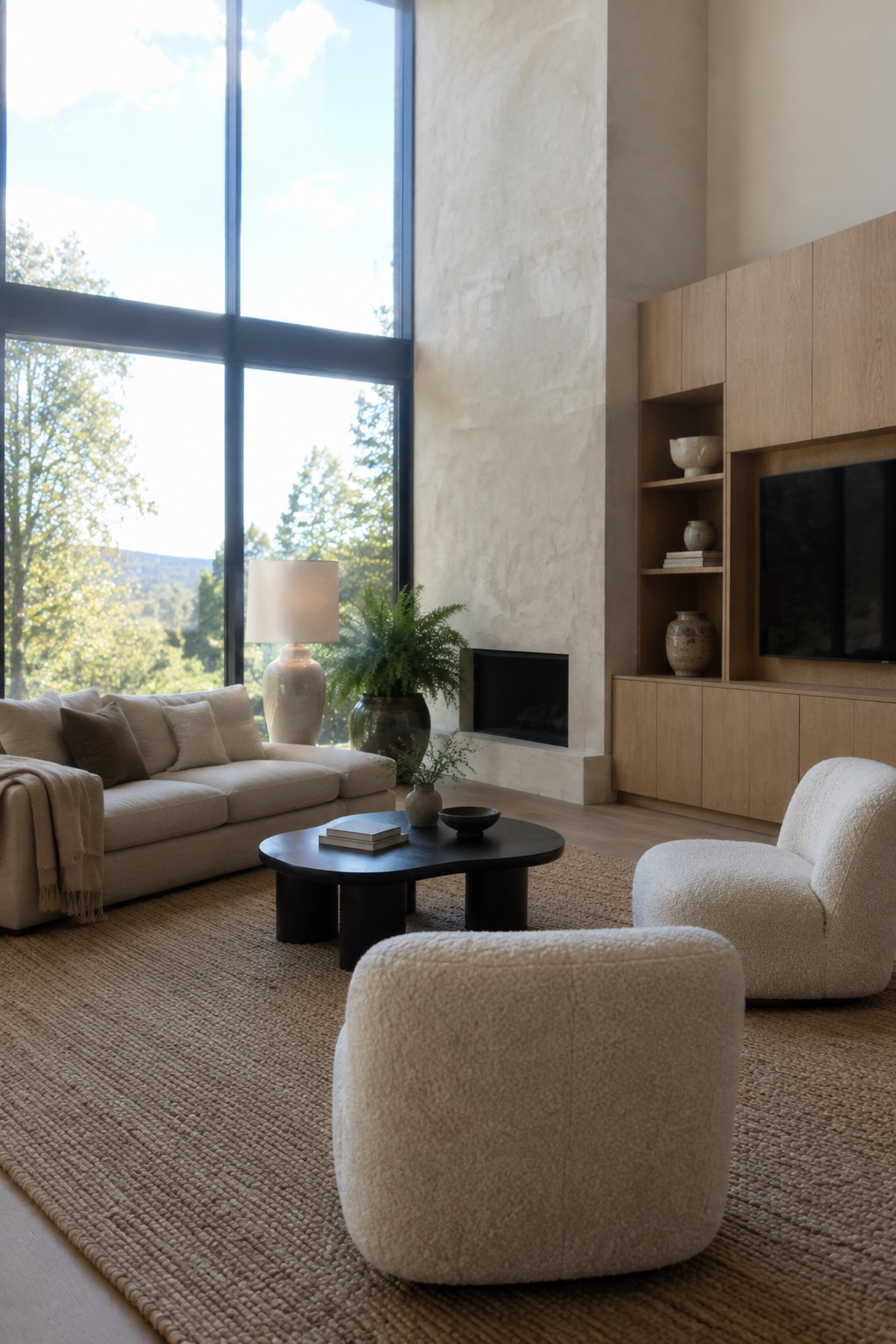
Tall windows can guide the furniture plan instead of leaving the seating arrangement to chance. Here, the sofa sits along the window wall while the chairs face inward, keeping the view open and making the seating area feel connected.
This layout works well in rooms with a large glass wall, especially when you want a comfortable conversation area without blocking the windows. Keep larger pieces low near the glass, and leave enough space to walk through the room easily.
Use Built-In Shelving Beside the Fireplace

Built-in shelves beside a fireplace make good use of wall space while giving a living room room for books and a few personal pieces. Here, the shelving sits beside a tall fireplace surround, so it feels like part of the room rather than a separate storage unit.
This approach works well when you want storage without adding bulky furniture. Keep the shelves fairly open, and use closed cupboards below for items you would rather tuck away. It suits a living room with an unused wall beside the fireplace.
Use Natural Materials Around Large Windows

A large window can make a living room feel open, while natural materials keep it comfortable and lived-in. Here, a rough wood coffee table gives the seating area a practical, substantial center without blocking the view.
Try this approach in a room with a simple window wall and plenty of daylight. Choose a few pieces with visible wood grain, and keep the larger furniture low enough that the view stays clear.
Let a Large Window Define a Cozy Seating Nook

A large window can make one part of the living room feel like its own quiet corner. Keeping the seating low nearby helps preserve the view and lets daylight reach farther into the room. Here, a built-in window seat gives that sunny spot a clear purpose.
This works especially well in a room with a deep window recess or a wide sill. Add a firm cushion and a couple of pillows, and keep the nearby furniture modest in height so the window stays open to the room.
Frequently Asked Questions
Q: How can I keep a large-window living room cozy at night?
A: Add soft lamps around the room so you’re not relying on one bright overhead light. Curtains, a warm rug, and cushions also make the space feel snug once the view outside gets dark.
Q: Will furniture block too much light if I put it near the windows?
A: Low-backed chairs and sofas usually let daylight pass through while still giving you a comfortable place to sit. Keep taller pieces to the sides of the windows, where they’re less likely to cast shadows across the room.
Q: What kind of curtains work well with large windows?
A: Light-filtering curtains soften harsh sun without hiding the windows or making the room feel heavy. If you want more privacy at night, pair them with a simple shade.
Q: How do I protect a sofa from fading in a sunny room?
A: Choose fade-resistant fabric when you can, and shift cushions around now and then so the same spots don’t take all the sun. A sheer curtain can also soften direct light without shutting out the view.
