
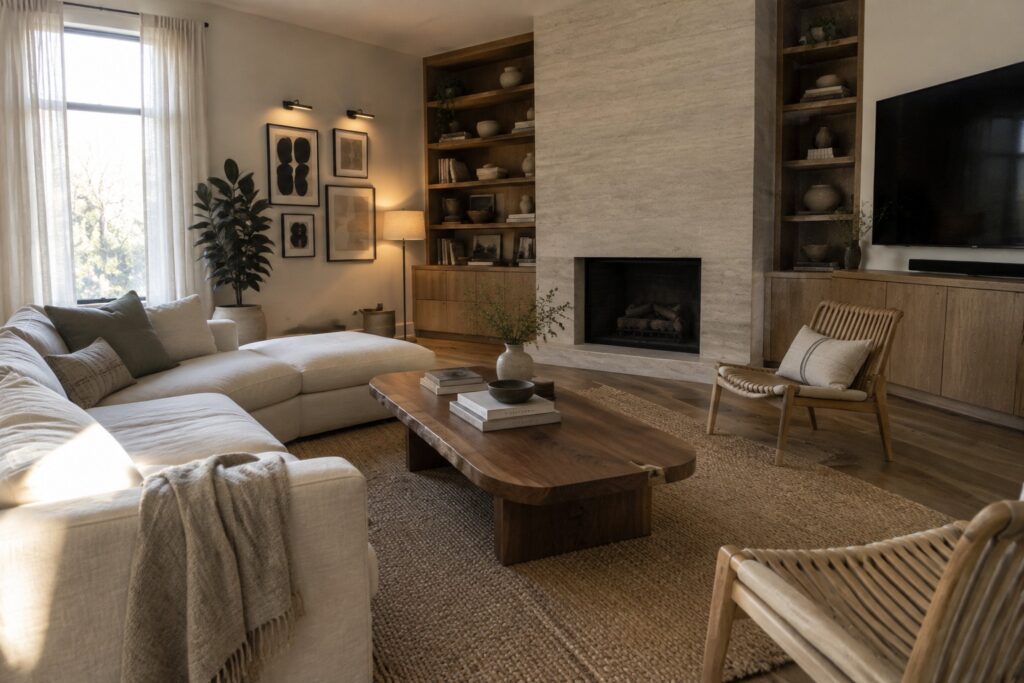
Stone and wood can make a living room feel grounded, but the balance matters: too much of either can leave the space feeling heavy or unfinished.
I notice the best rooms let their textures do different jobs, with stone adding weight and wood bringing warmth without crowding the layout.
Natural finishes also need practical choices around them, from comfortable seating and clear walkways to surfaces that can handle everyday use.
Small shifts in tone, grain, and texture can change how the whole room feels.
I’d save ideas that show a thoughtful mix of materials, then adapt the proportions and finishes to suit the light and routines in my own home.
Use Stone for a Simple Fireplace Feature
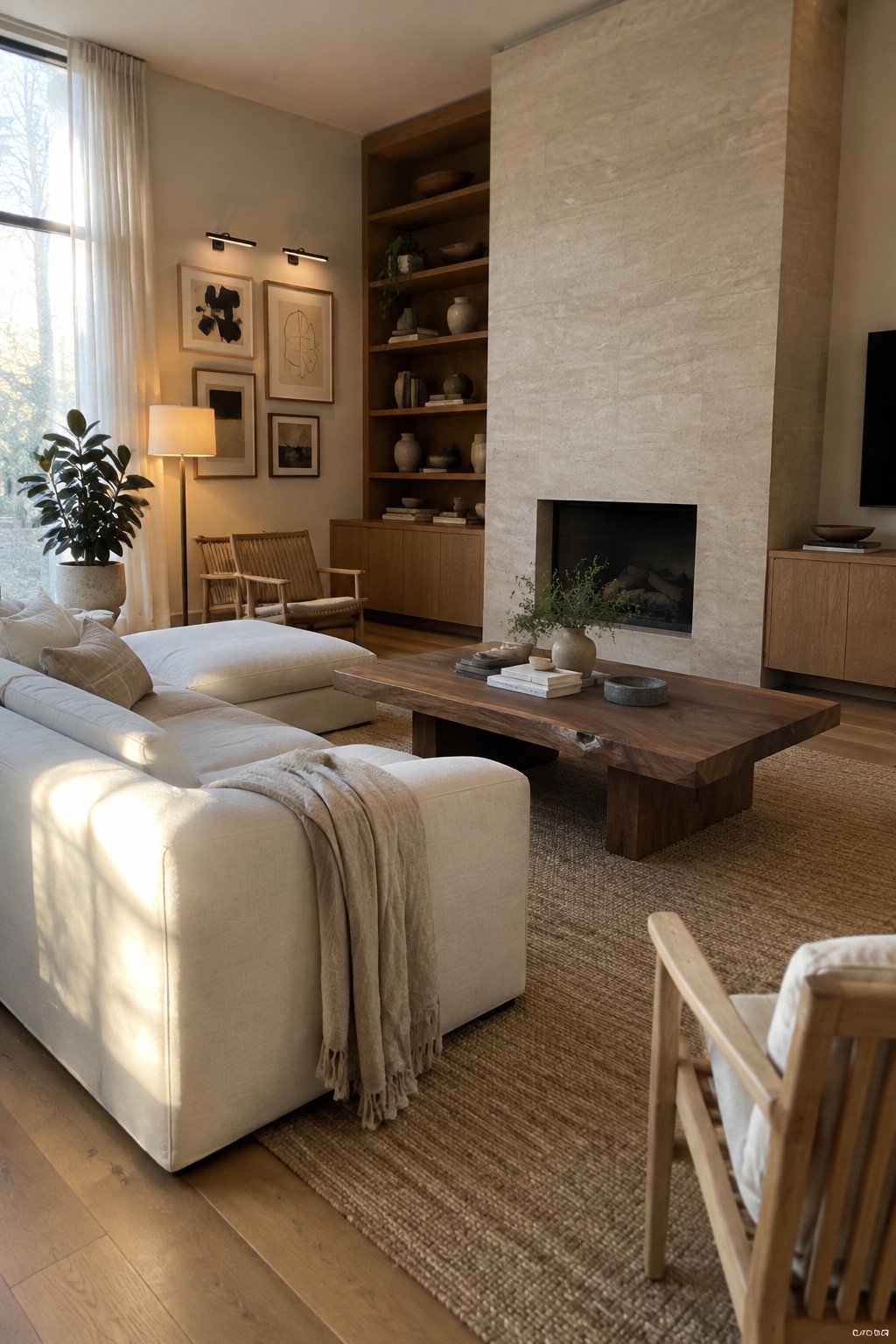
A stone fireplace can give a living room a clear focal point without adding much decoration. A broad stone surround feels substantial, while nearby wood shelving keeps the look from becoming too formal.
This approach works especially well in open living spaces where the fireplace can be seen from several angles. Choose stone with a quiet texture, and keep the surrounding finishes simple so the fireplace does not overwhelm the room.
Use Stone to Add Character to a Living Room
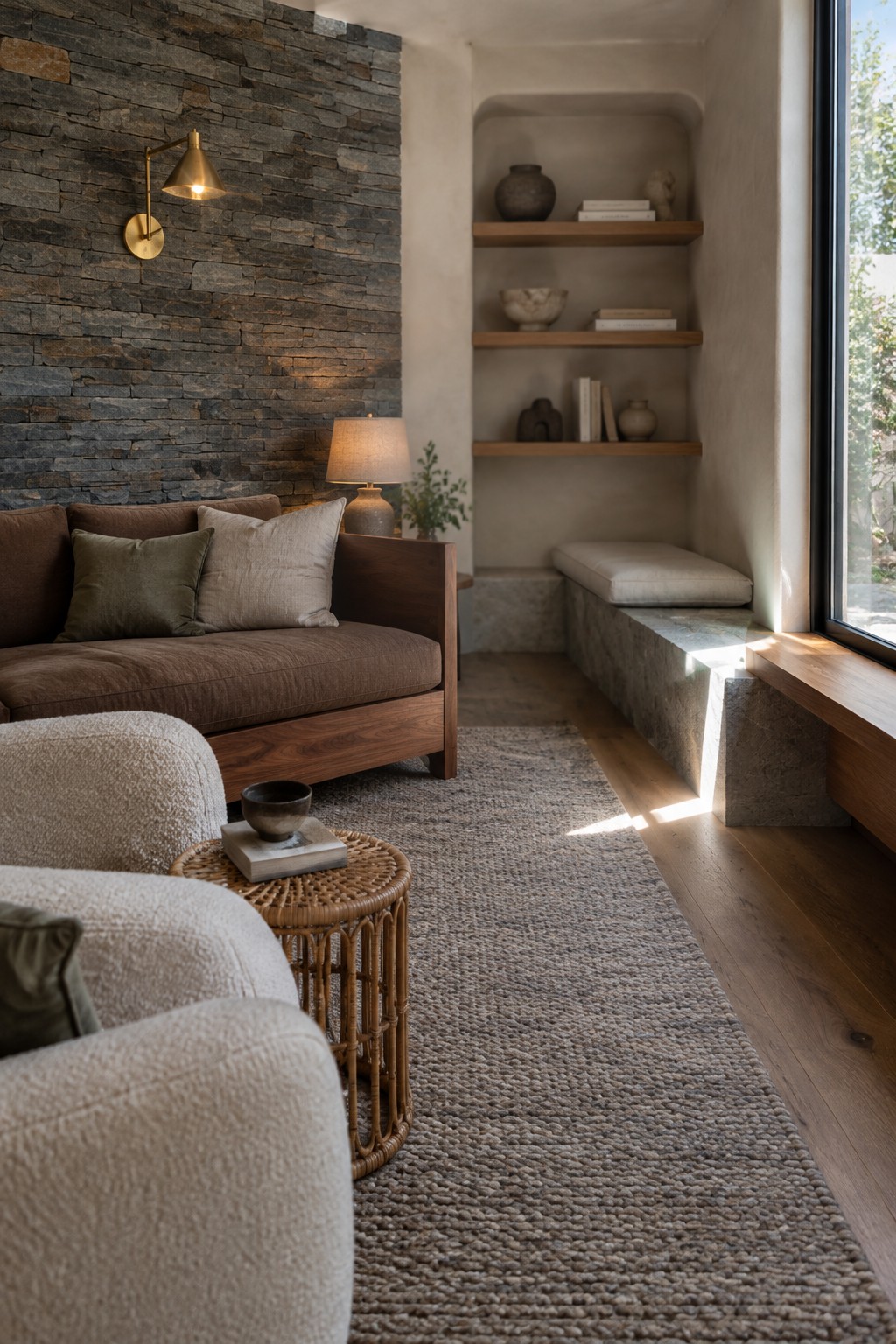
A stone feature wall can give a living room a more settled feel without needing much decoration. Here, the dark, uneven stone adds texture behind a simple wood-framed sofa, while the rest of the room stays fairly quiet.
This idea works well in a room with neutral furniture and natural materials. If you use stone on a large wall, keep nearby finishes simple so the texture has room to stand out.
Use Stone and Wood to Warm Up a Living Room
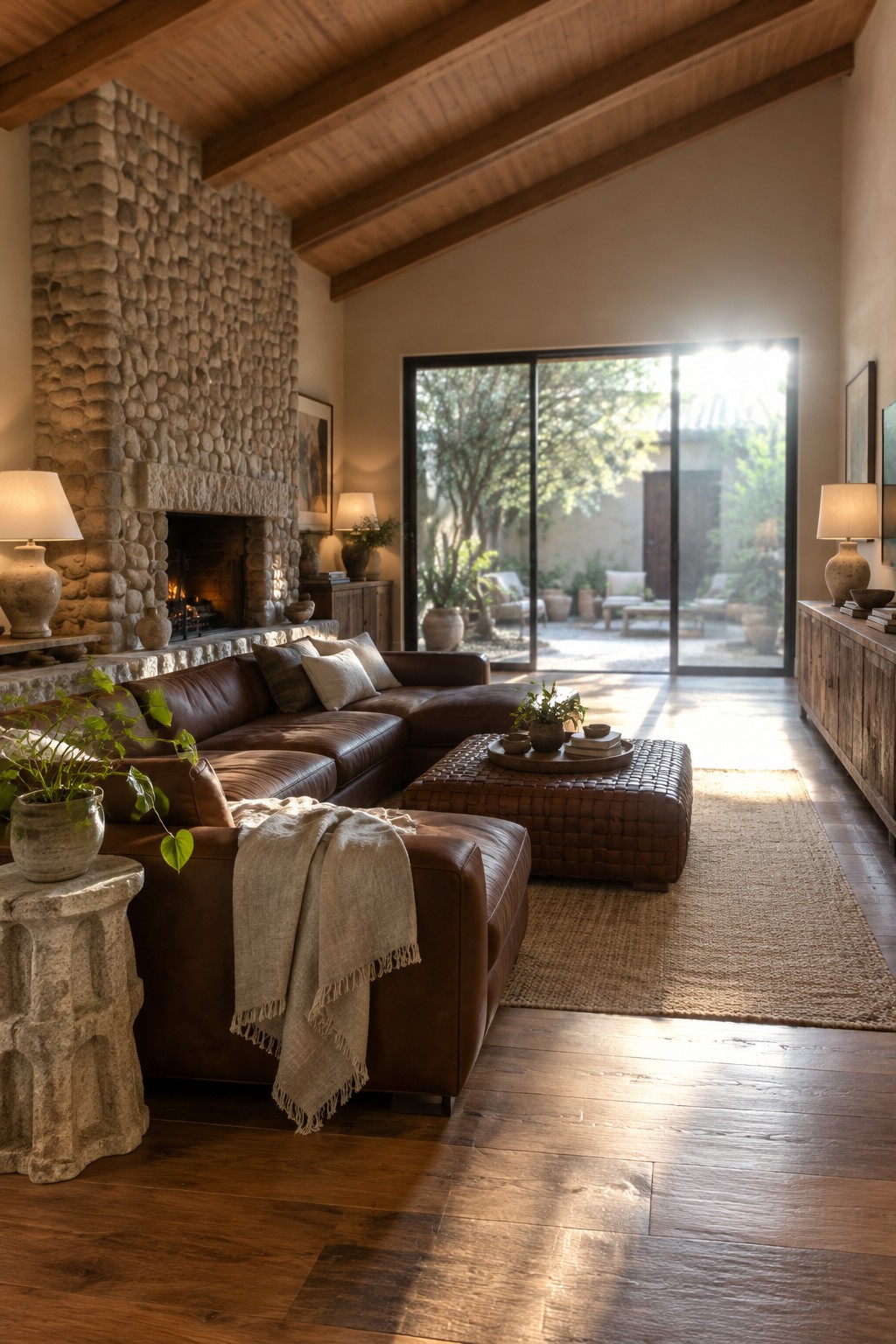
Stone and wood can give a living room a comfortable, natural feel without much extra decoration. A tall stone fireplace beside exposed wood ceiling beams makes a strong feature, while the materials still suit everyday furnishings.
This approach works especially well in rooms with high ceilings, where wood beams can help the space feel more settled. If you use both materials, keep the finishes fairly simple so their textures can stand out.
Use a Wood Screen to Separate Living and Dining Areas
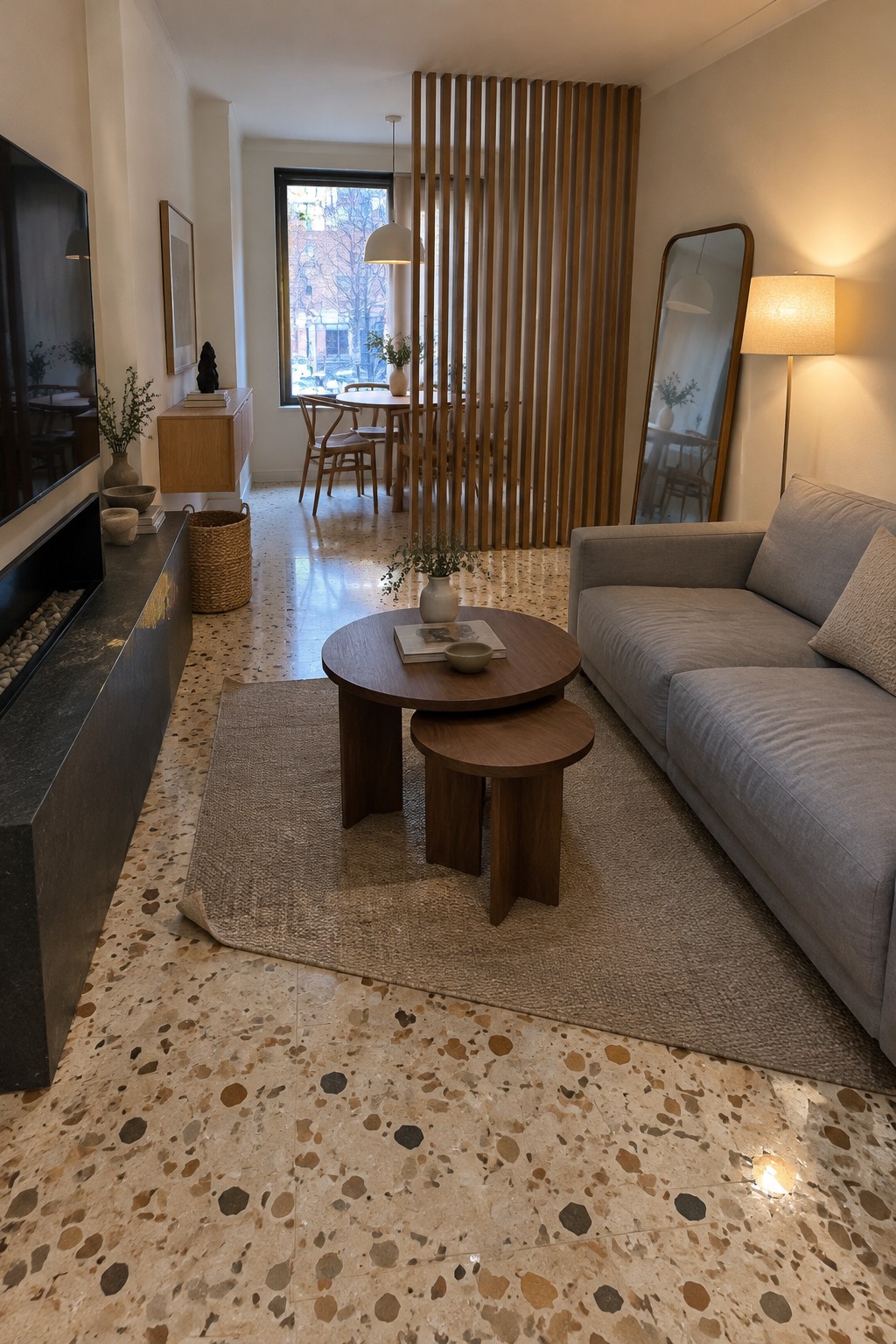
A slatted wood divider can mark the change from living space to dining space without closing off the room. It gives each area a little definition while letting light and conversation pass through.
This approach works well in an open-plan room where a full wall would feel too much. Leave space between the slats so the divider stays airy, and choose a wood tone that fits the rest of the room.
Use Built-In Shelves to Mix Stone and Wood
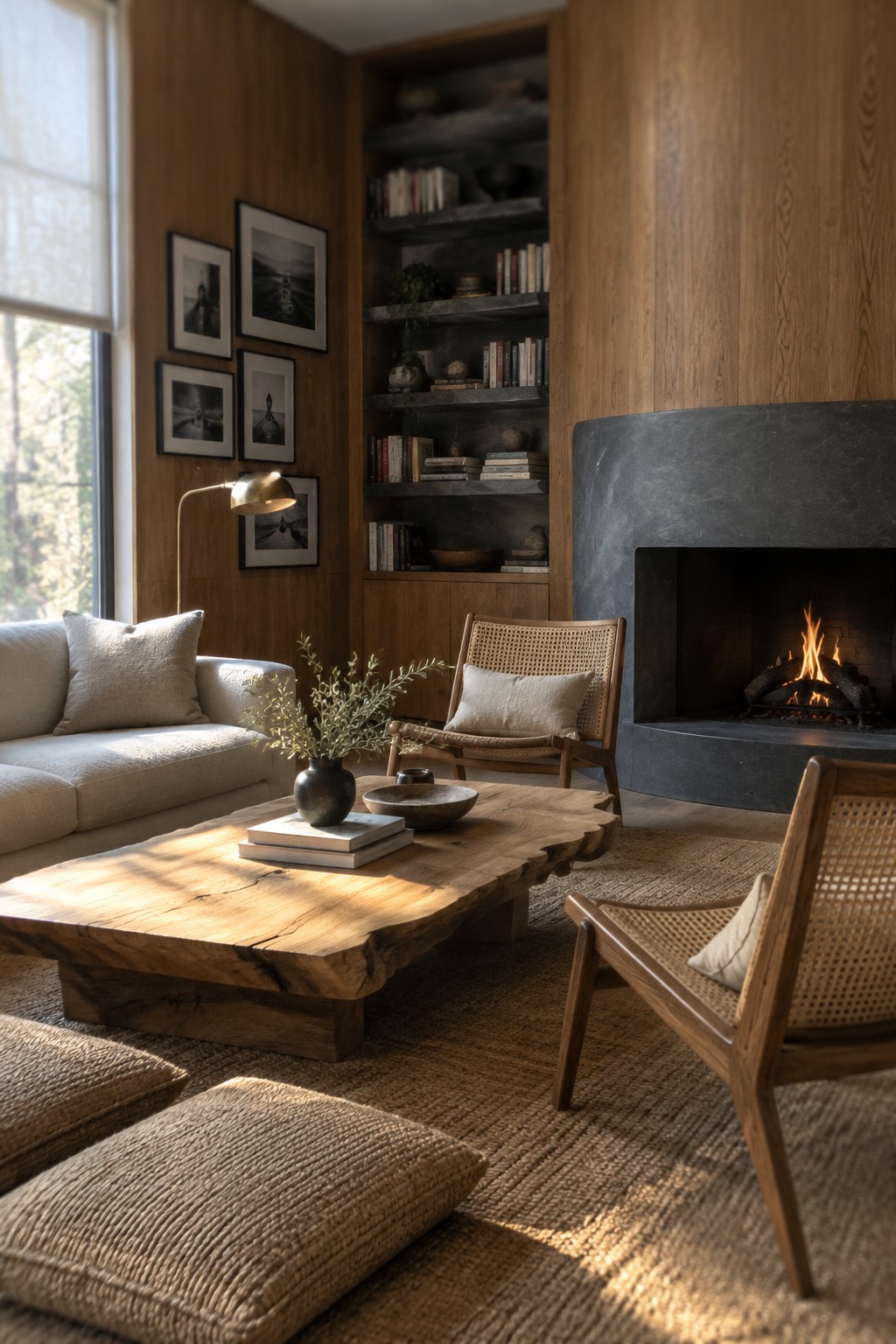
Built-in shelves can make a living room feel settled without adding more freestanding furniture. Here, dark stone shelves sit inside warm wood paneling, giving books and a few small objects a natural place to live.
This approach works well beside a fireplace or in an unused wall alcove. Keep the shelves edited and leave some open space so the stone and wood remain easy to notice.
Use Dark Stone to Give a Living Room Structure

A dark stone fireplace can give a living room a clear focal point without making the space feel formal. Here, the low stone hearth adds a solid base, while the wood mantel brings in a lighter, more familiar material.
This approach suits rooms with simple furniture and a restrained color scheme. Keep the stone finish fairly matte, and use wood in a nearby detail so the fireplace feels connected to the rest of the room.
Let Wood Furniture Warm Up a Stone Fireplace
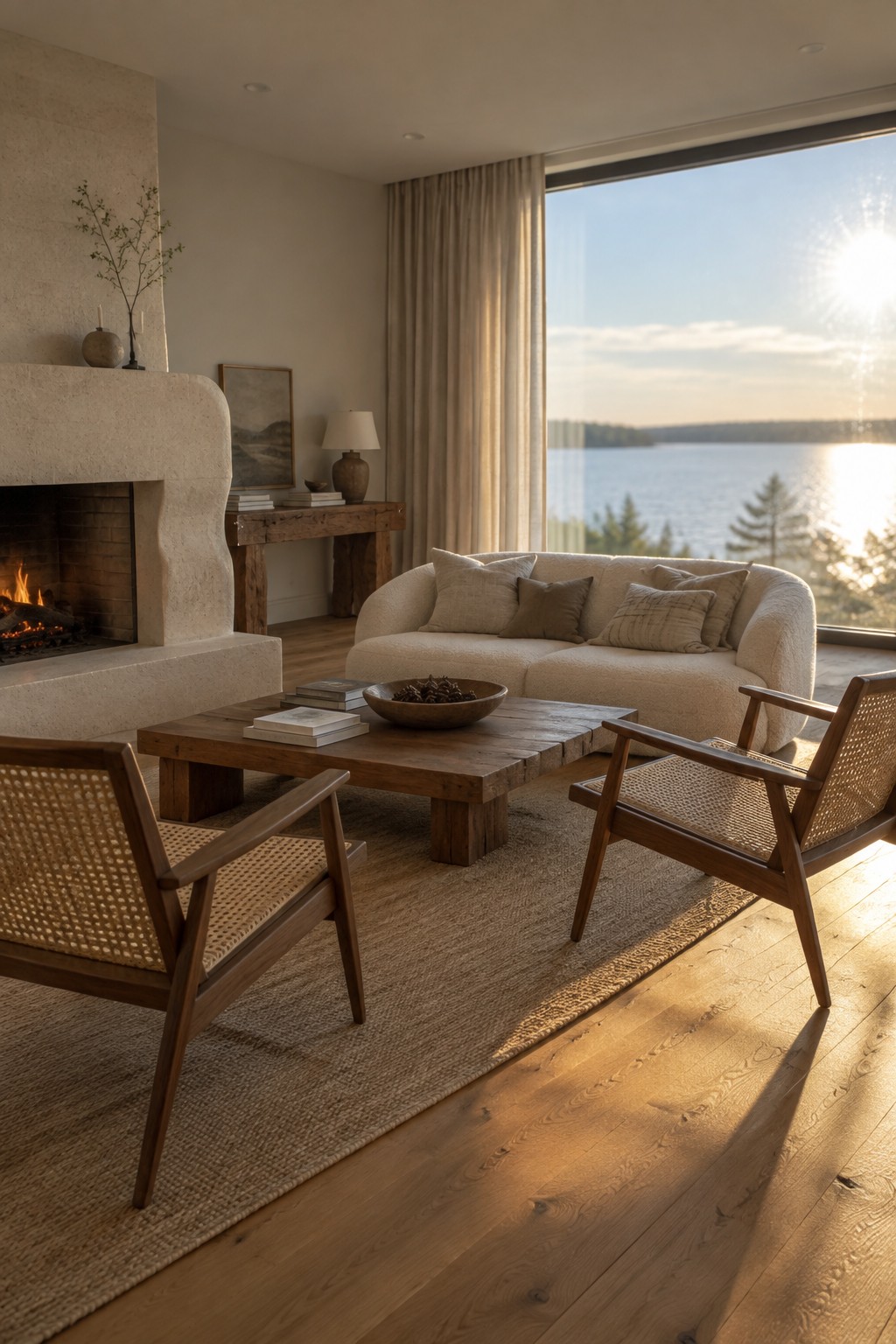
A stone fireplace can feel less formal when the rest of the room uses natural wood. Here, the chunky wood coffee table and woven chairs bring a more relaxed feel to the pale stone.
Try this mix in a living room where the fireplace is a strong feature. Choose wood furniture with simple shapes, and keep the stone finish fairly quiet so the room still feels comfortable rather than busy.
Use a Tall Stone Fireplace Wall as a Room Feature
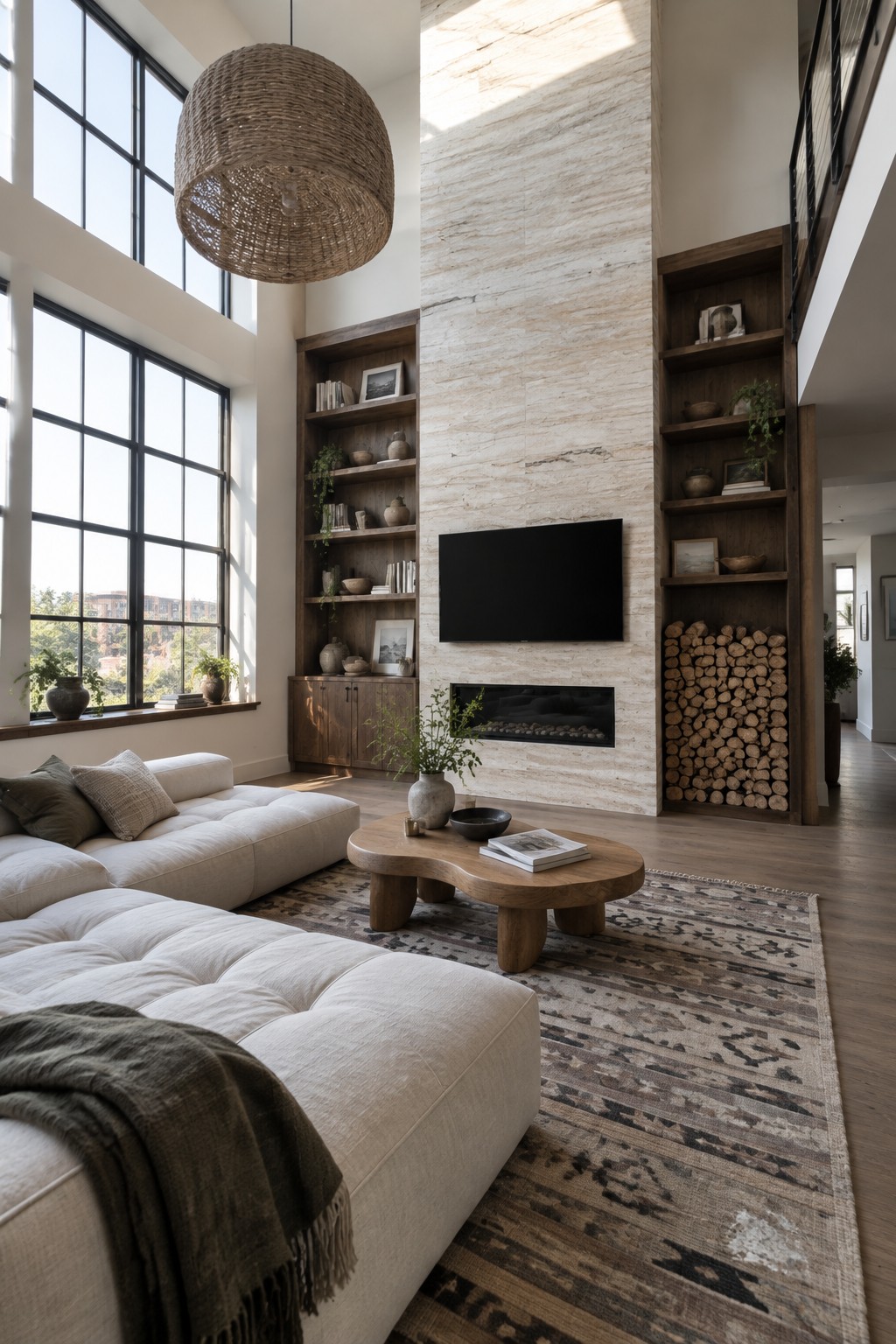
A floor-to-ceiling stone wall can give a living room a clear focal point without relying on extra decoration. Here, the built-in fireplace and TV sit within the stone, while dark wood shelving adds a practical place for books and keepsakes.
This approach suits rooms with high ceilings, where a smaller fireplace might feel lost. Choose stone with a quieter pattern if you want the wall to feel calm, and use wood shelves to bring in contrast without covering too much of the stone.
Use a Stone Wall to Shape the Living Room

A stone fireplace wall can give a living room a clear focal point without adding much decoration. Here, the rounded stones cover the wall around the fireplace, while a low wood cabinet keeps the rest of the room feeling simple.
This approach works well when you want natural materials to do most of the decorating. Use stone on one main wall, then bring in wood through furniture or cabinetry so the room doesn’t feel too rugged.
Use Natural Materials to Warm Up a Living Room
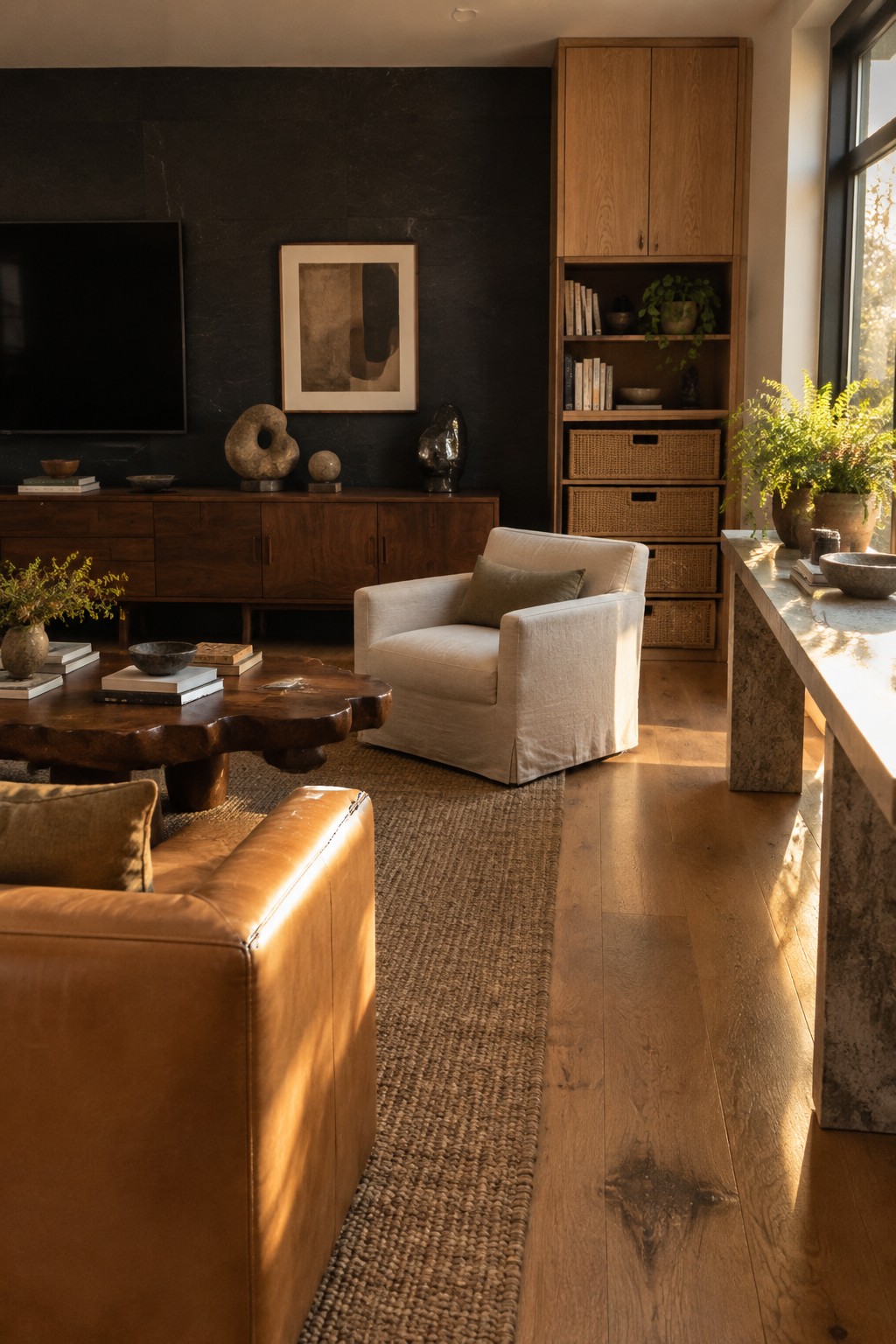
A dark stone wall can give a living room a clear focal point, while wood cabinetry keeps the room from feeling too stark. The contrast works especially well when the finishes have visible texture rather than a glossy, uniform look.
Try this mix in a room that needs some structure but should still feel comfortable. A wood media cabinet or bookcase can bring in the warmer material without covering the stone, and a few natural-texture furnishings can help the two finishes feel at home together.
Make a Stone Fireplace Wall Part of the Room
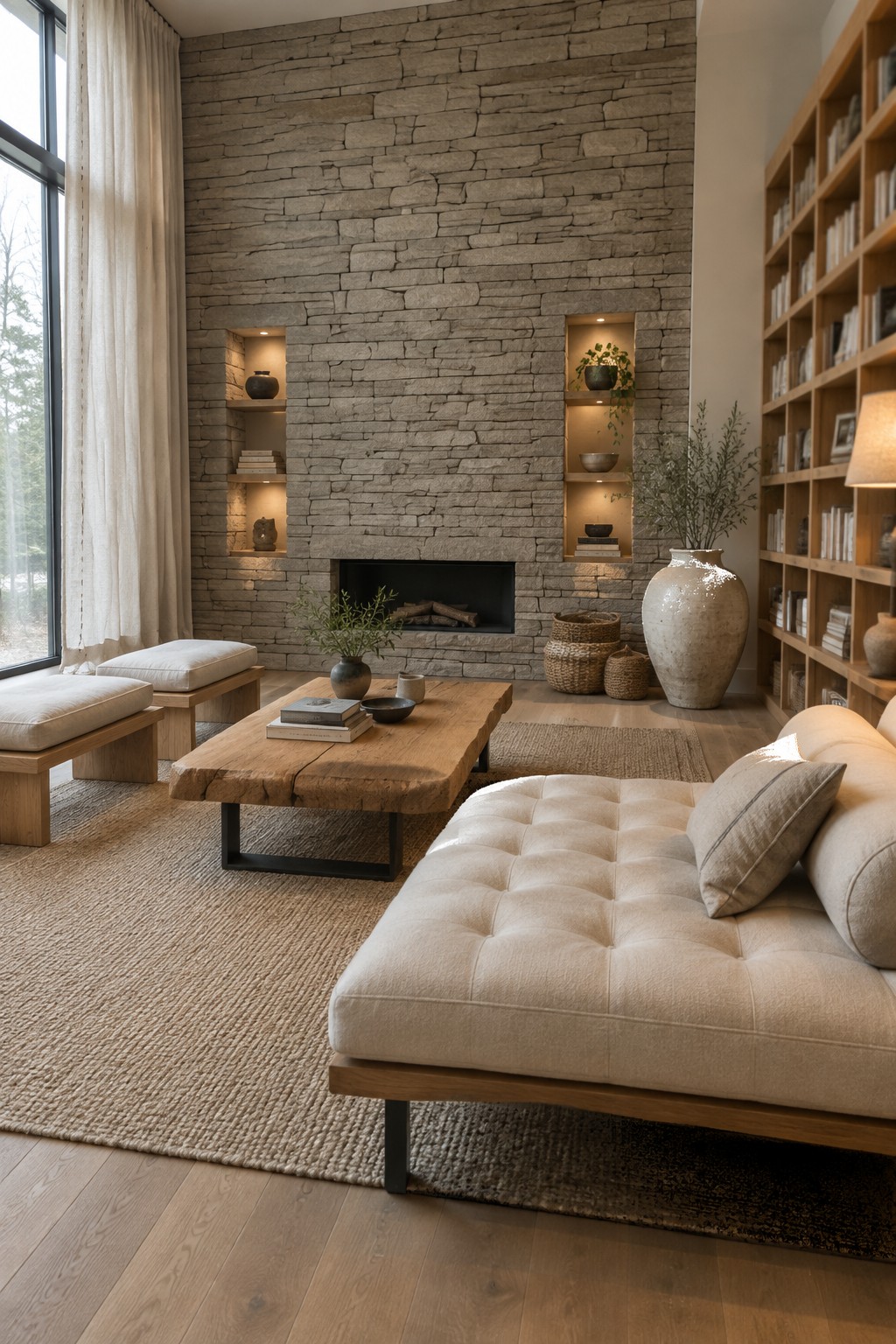
A full-height stone wall can give a living room a clear focal point without relying on extra decoration. Keeping the fireplace and display niches within the same stonework makes the feature feel like part of the home’s architecture.
This approach suits a room with enough wall space to let the stone read as one continuous surface. Choose a stone tone that works with the wood furnishings, and keep nearby finishes fairly simple so the wall does not feel too busy.
Use Curved Furniture in an Open Living Room
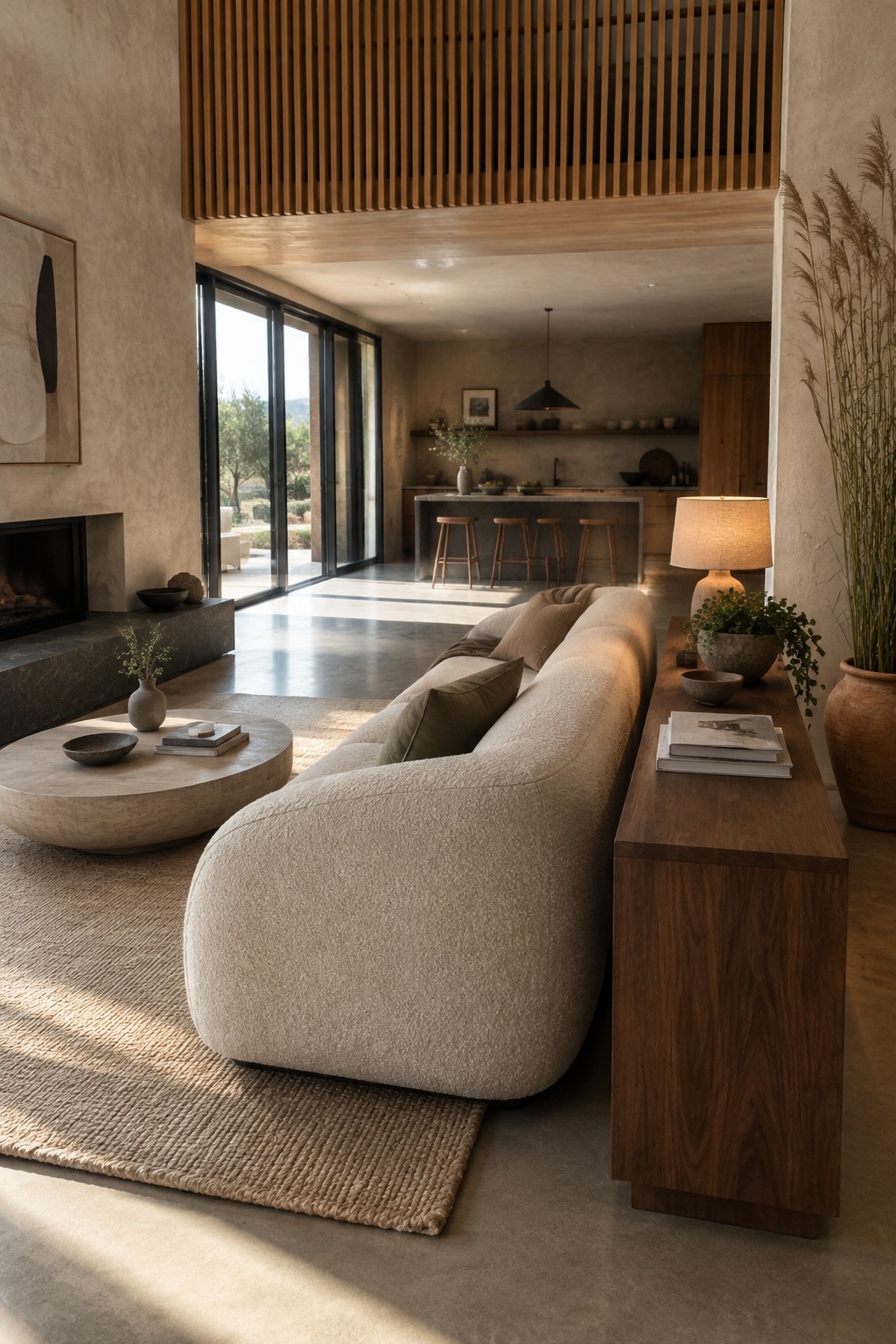
A curved sofa can make an open living area feel more relaxed without dividing it into separate zones. Its rounded shape also brings a softer contrast to straight-edged wood furniture and stone surfaces.
This works well in larger rooms where the sofa can sit away from the walls and help define the seating area. Keep nearby tables simple and leave enough space to walk around the sofa comfortably.
Use Stone for a Built-In Living Room Bench
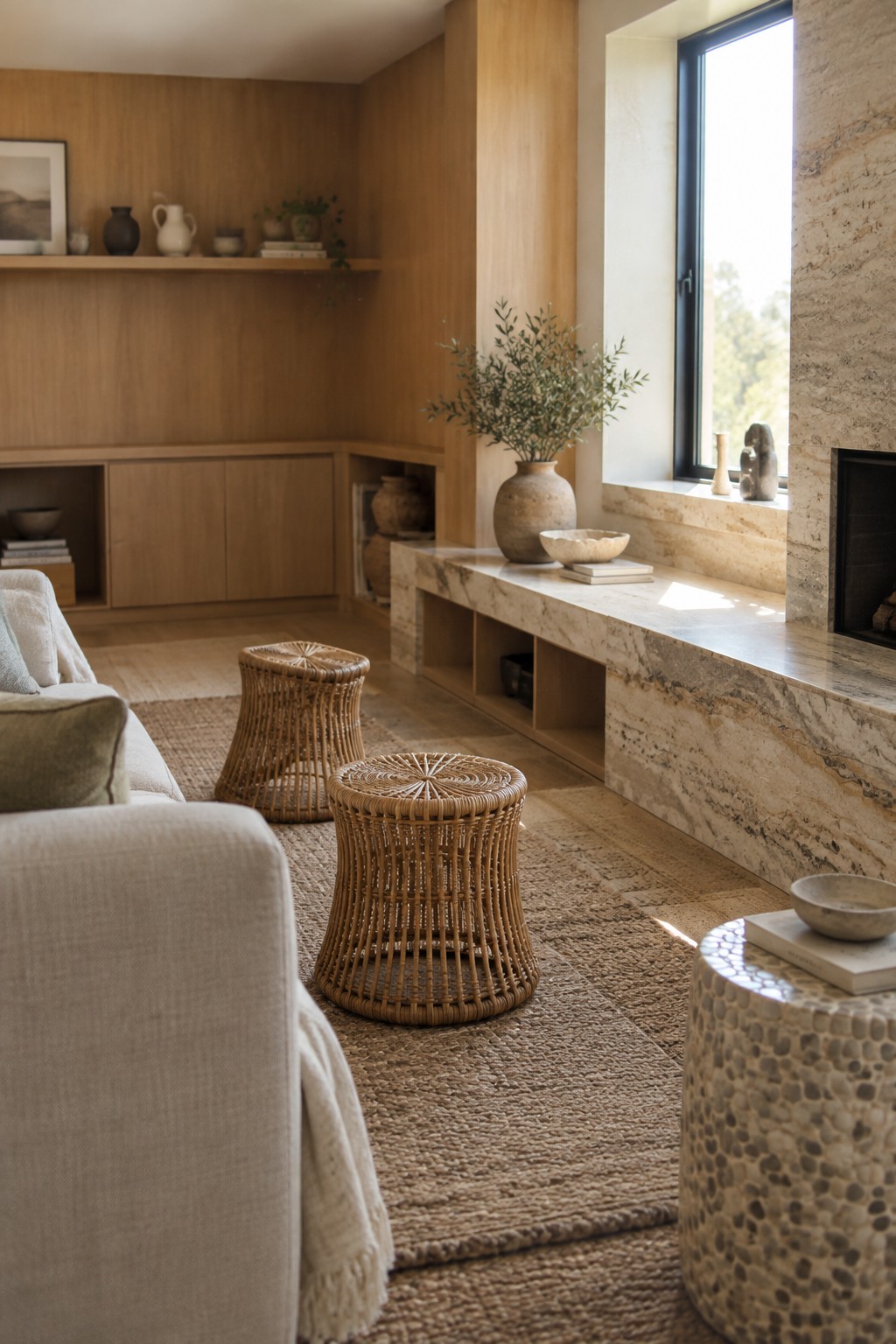
A built-in stone bench can make a living room feel settled without adding more furniture. Here, the long bench below the window also provides open storage, while the wood cabinetry keeps the stone from taking over.
This approach works well in a room where a fireplace or window already gives you a natural place to build around. Keep the seat depth practical, and use a cushion if you plan to sit there often.
Mix Rustic Wood With Simple Stone Details
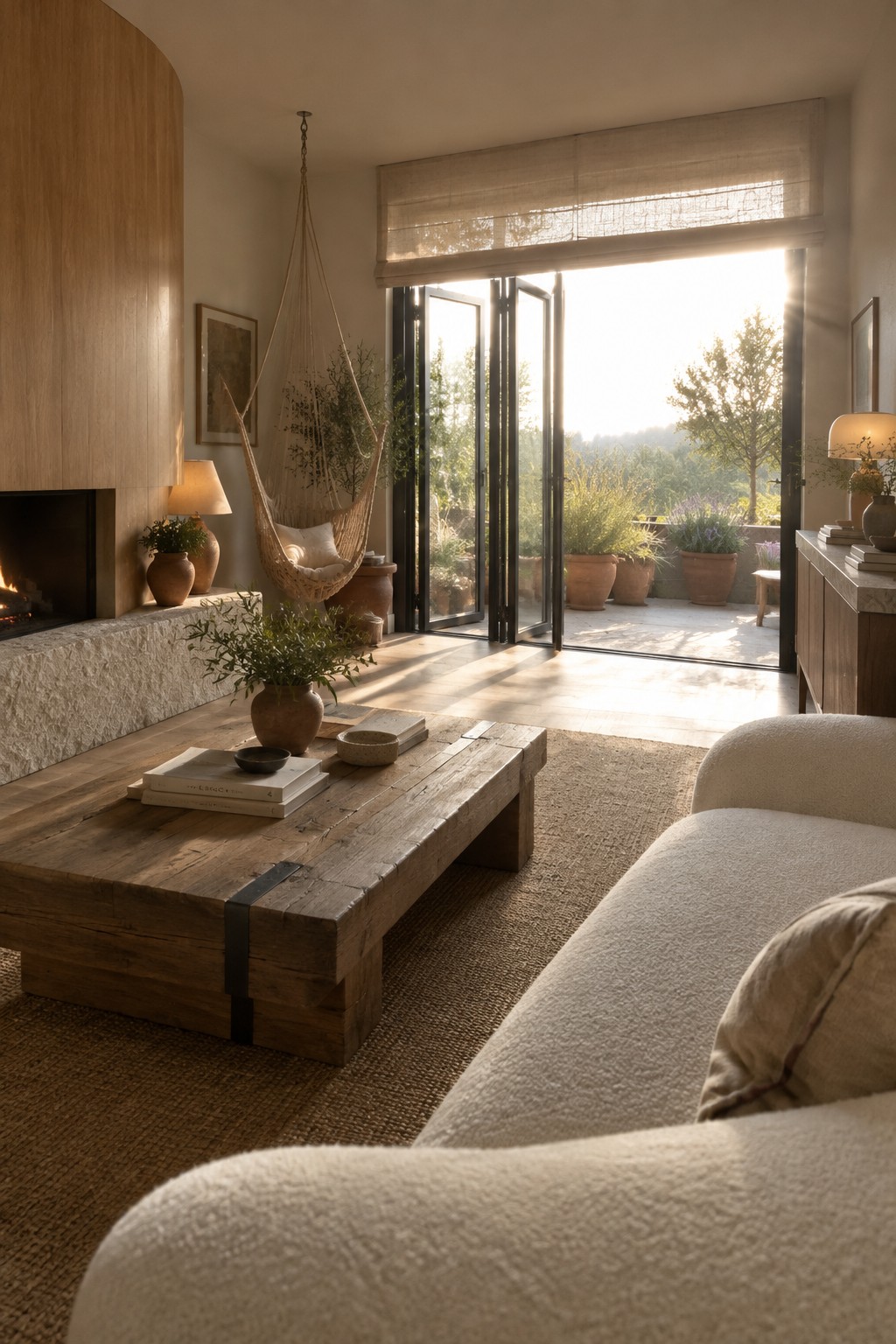
Natural wood can keep a living room from feeling too formal, especially when it sits beside a stone fireplace. Here, the rough coffee table and pale stone hearth bring different textures into the room without making the materials compete.
Try this mix in a living room with a neutral base and a few sturdy wood pieces. Keep the stone to one feature, such as a hearth or fireplace surround, so the room still feels easy to live in.
Use a Wood Ceiling to Warm Up a Stone Living Room
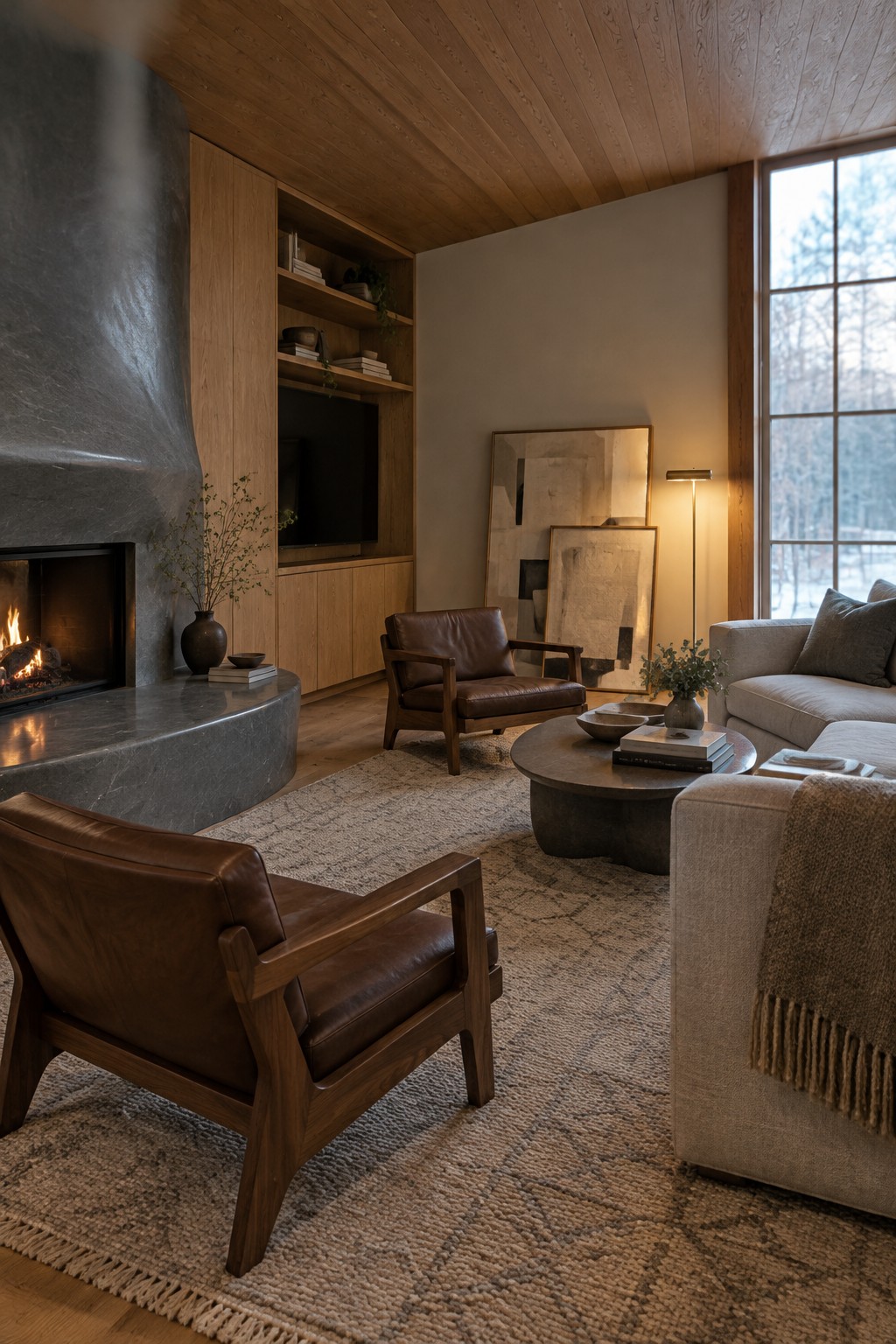
A wood-plank ceiling is a simple way to make a room with a stone fireplace feel less cool. It brings a softer finish overhead, while the stone keeps its natural, substantial look.
This idea works well in a living room with a high ceiling or a large stone feature. Keep the ceiling boards in a natural finish, and let the stone remain the main feature rather than adding several competing materials.
Use a Stone Coffee Table as a Living Room Centerpiece
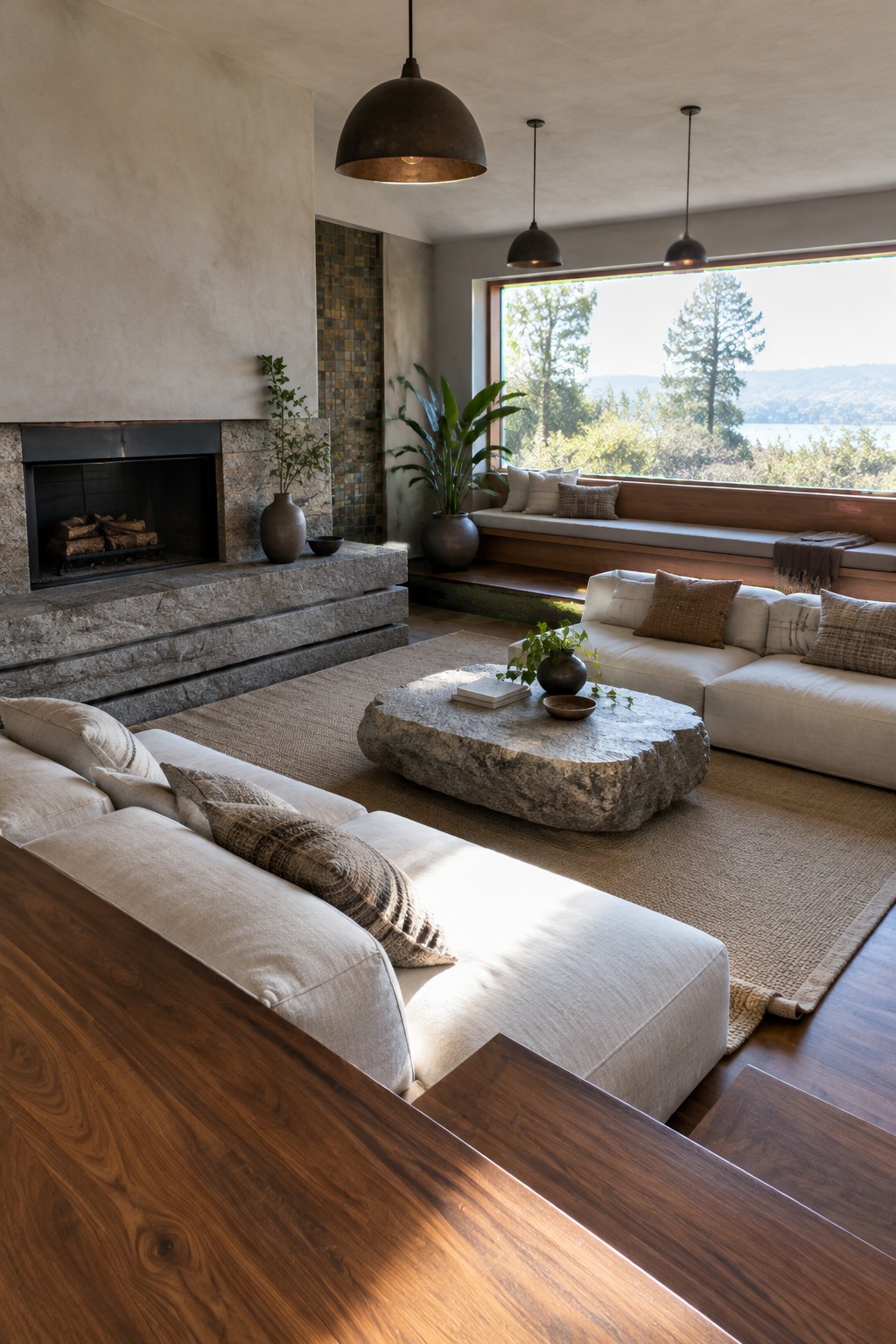
A low stone coffee table can give a seating area a clear center without making it feel formal. Its rough surface brings a natural touch into the room, while a simple shape keeps it easy to live with.
This idea works well with roomy sofas and a wood floor, where the table can stand out without competing with other furniture. Leave enough space around it for people to pass comfortably, and keep the tabletop styling simple.
Use Wood Furniture to Balance a Stone Living Room
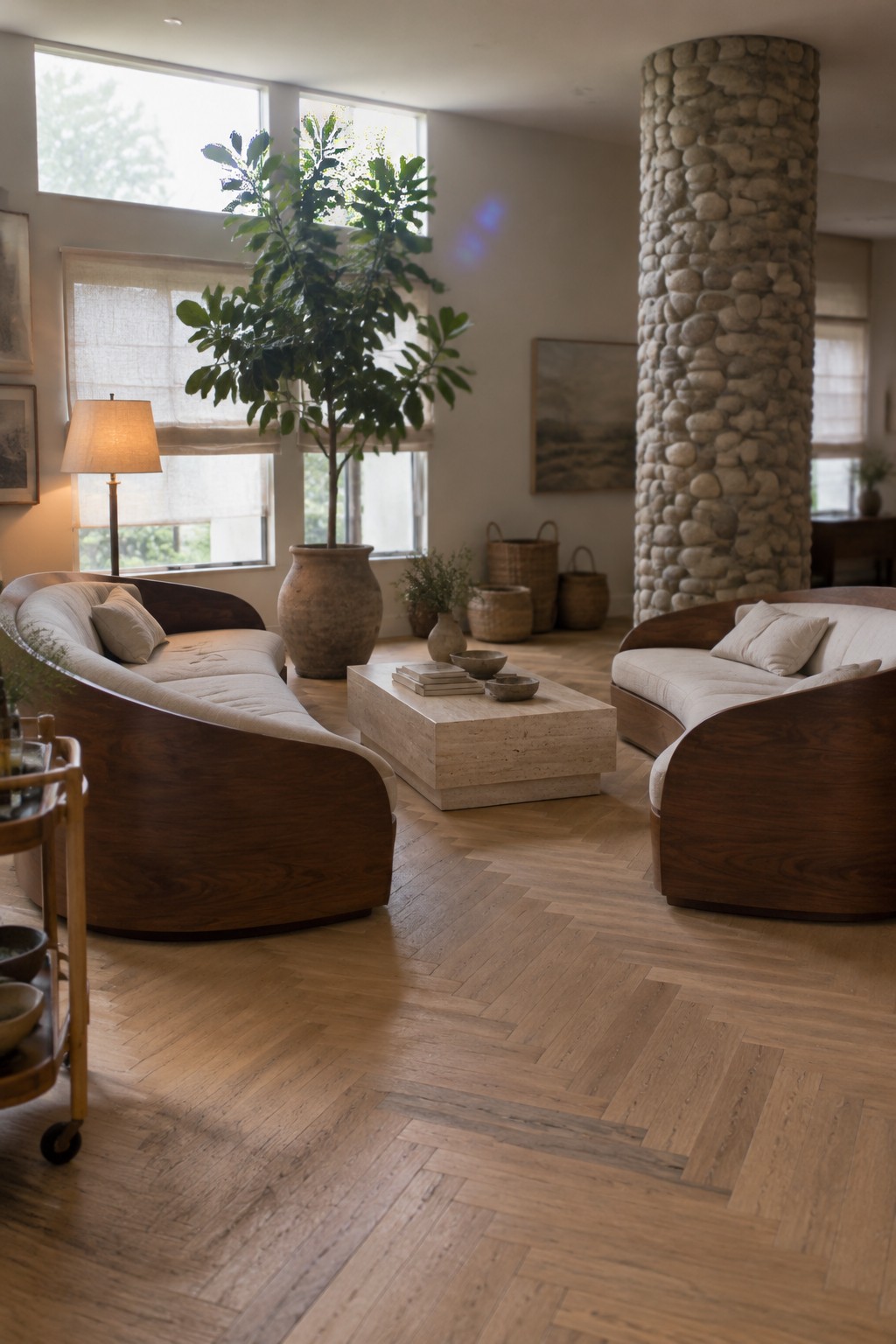
Curved wood-backed sofas are a useful choice in a living room with a prominent stone feature. Their rounded shape keeps the seating area from feeling too rigid, while the wood brings a natural note into the room.
This approach suits open living rooms where furniture needs to define a comfortable place to gather. Keep the upholstery simple and let the wood show, so it works alongside stone rather than competing with it.
Use Built-In Shelves to Bring Wood Into a Stone Living Room
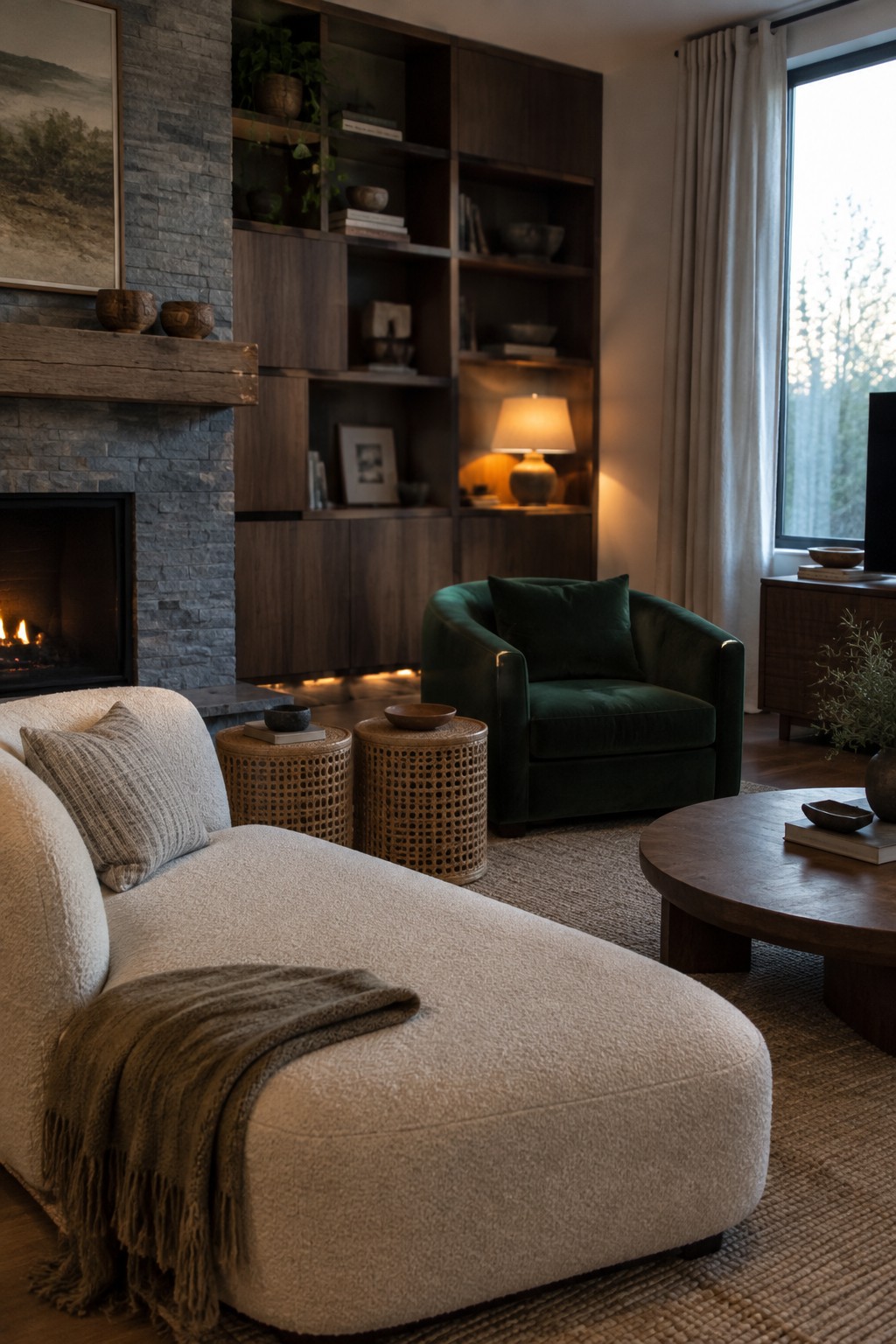
Built-in wood shelves are a practical way to bring a warmer material into a living room with a stone fireplace. They also make room for books and a few personal pieces without adding another bulky cabinet.
This works especially well when the shelves reach up the wall beside the fireplace. Keep some sections closed for storage and leave others open, but avoid filling every shelf. A little empty space helps the wood and stone remain easy to see.
Use Fluted Stone to Add Texture to a Living Room
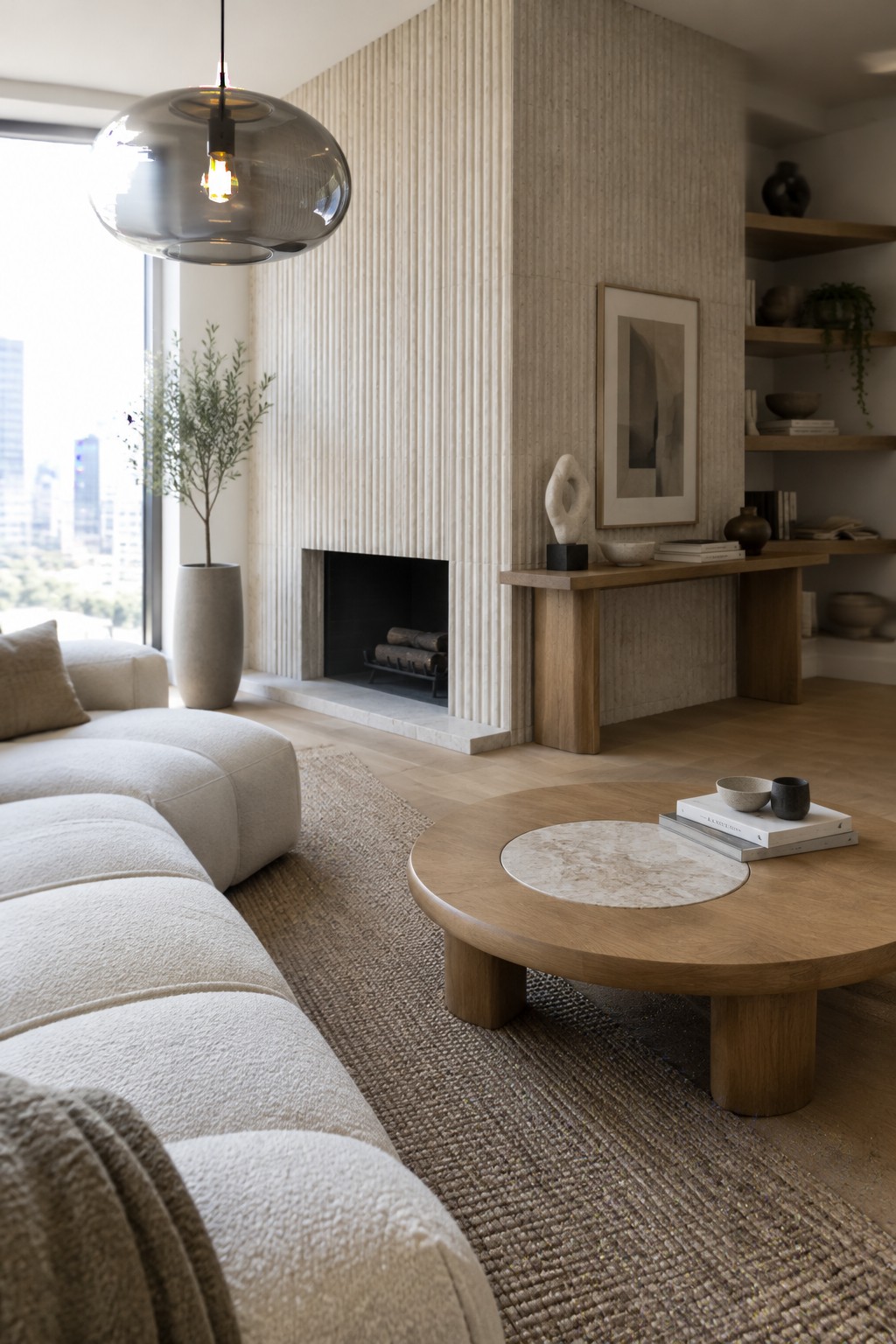
A fluted stone fireplace wall gives a living room texture without relying on a strong color or busy pattern. The narrow vertical grooves bring a little variation to a pale stone surface, while the wood console nearby keeps the look from feeling too formal.
This approach works well when you want a fireplace to feel built into the room rather than treated as a separate feature. Use it on one wall, and keep nearby finishes fairly simple so the stone texture can stand out.
Use Wood Slats to Break Up a Stone Feature Wall

Vertical wood slats give a large stone wall a more finished look without covering up the stone. Here, the slats sit at the sides of the TV area, adding a warmer material and helping the broad wall feel less solid.
This approach works well when a living room has one main feature wall. Keep the stone and wood tones fairly close, and use the slats in a limited area so the wall still feels calm.
Use a Stone Fireplace to Add Texture
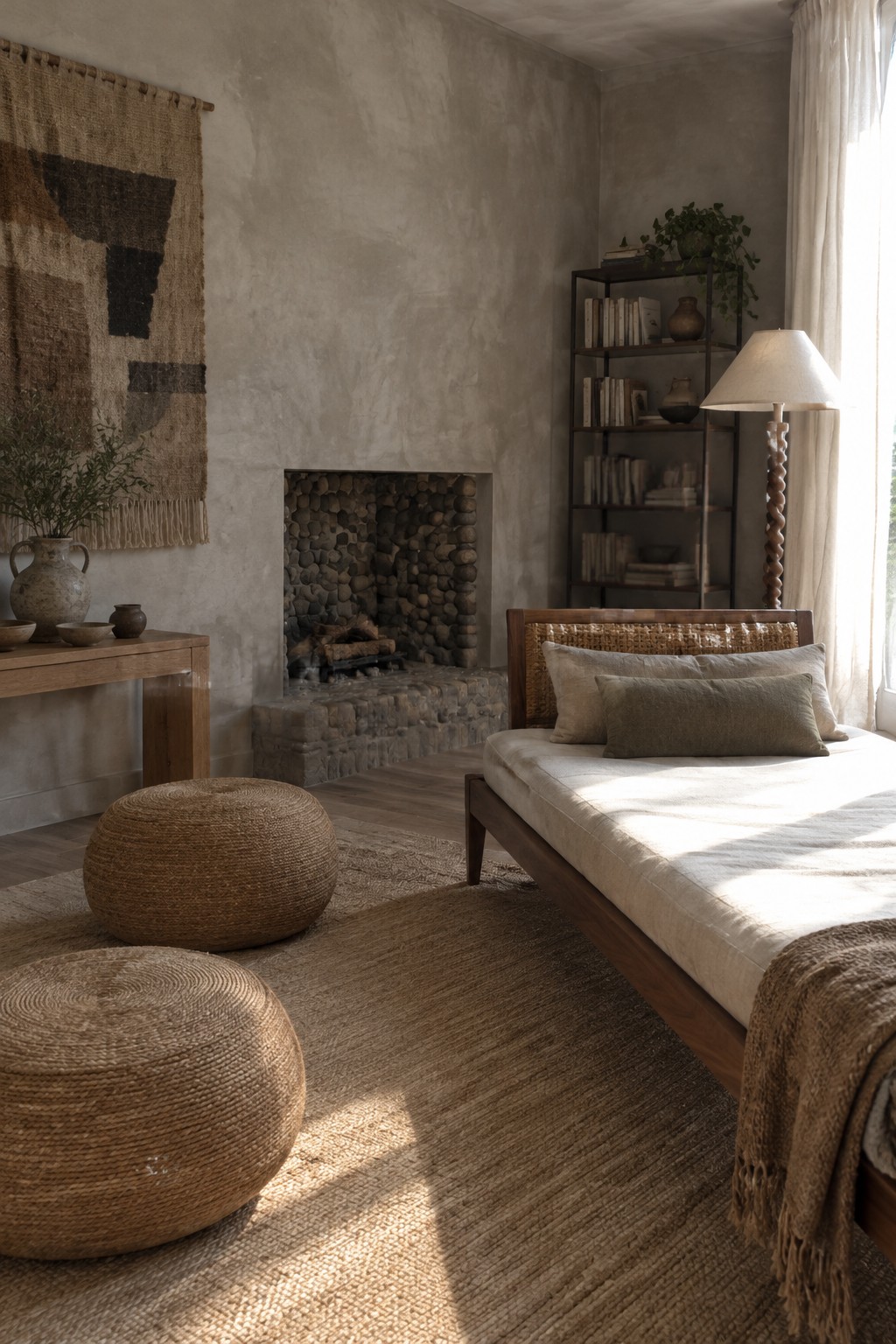
A stone-lined fireplace gives a living room a rough, natural feature without needing much decoration around it. Here, the stone sits within a plaster wall, so the materials feel related rather than busy.
This approach works well in a room with simple wood furniture and neutral fabrics. Keep the stone’s shape and color fairly restrained if the fireplace is small, so it adds character without taking over the room.
Use a Sofa Table for Living Room Storage

A narrow table behind the sofa is a handy way to add storage without taking up much extra room. Here, open shelves hold woven baskets, keeping toys and other everyday items close by but out of sight.
This setup works well when a sofa sits away from the wall and leaves a little space behind it. Choose a table that sits just below the sofa back, and leave enough room to walk around it comfortably.
Use a Built-In Bench to Make the Most of a Window

A built-in bench can turn an awkward stretch of wall into useful seating. Here, the long stone-topped bench sits beneath a wide window, while wood slats below provide discreet storage.
This idea works well in a living room, reading nook, or any space where a standard sofa would crowd the walkway. Keep the seat deep enough to lounge on, and add a few cushions for comfort.
Use a Stone Coffee Table to Bring Natural Materials Together
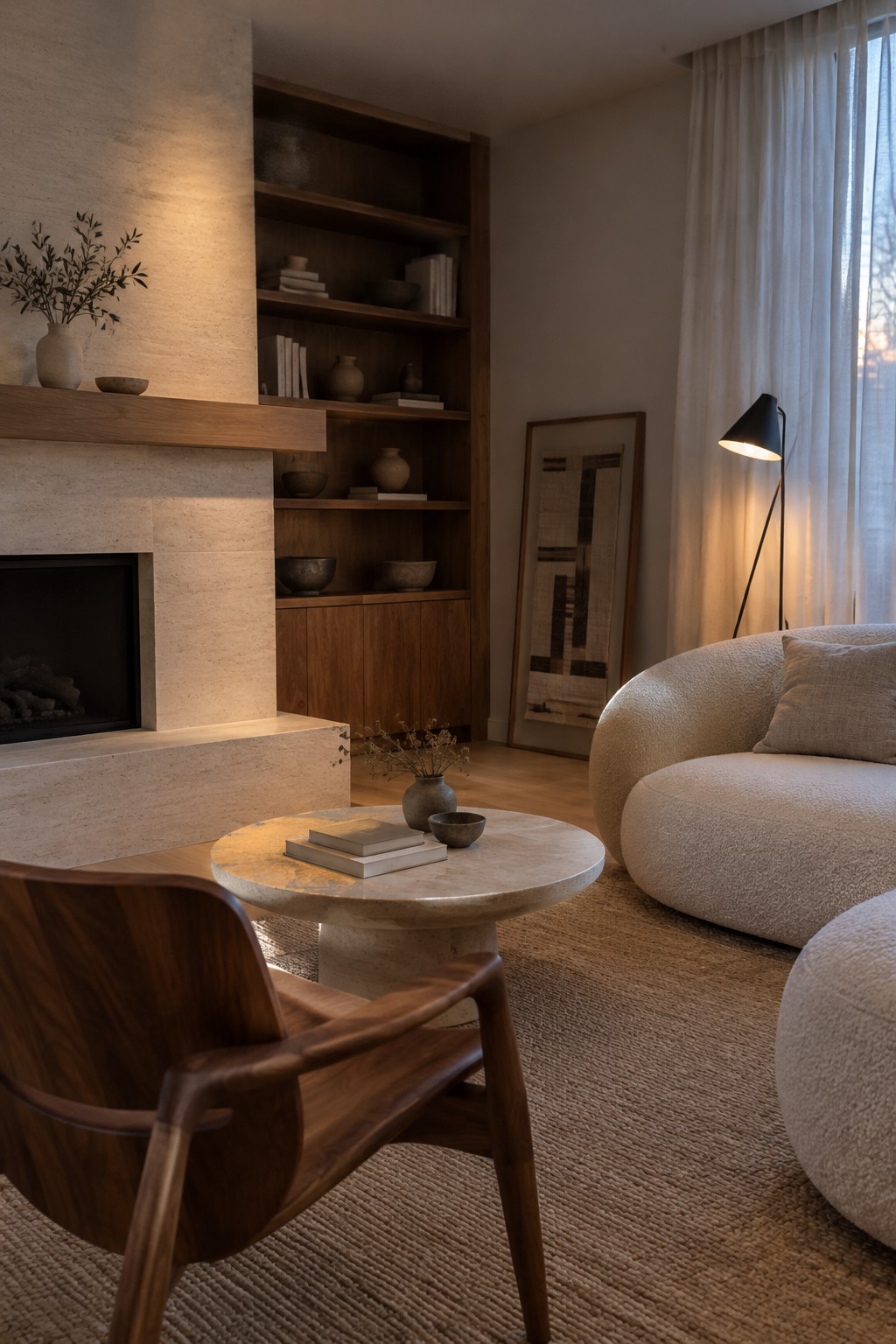
A stone coffee table can make a living room feel cohesive without adding more decor. Here, the pale stone tabletop sits among warm wood furniture and built-in shelving, so the materials feel connected rather than matched.
This idea works well in a room with wood floors or a timber fireplace surround. Keep the table simple and leave some open surface; a few books or a small bowl are plenty.
Frequently Asked Questions
Q: How do I keep stone and wood from making a living room feel too heavy?
A: Balance their texture with soft fabrics and plenty of natural light. A light rug, linen cushions, or a simple cream sofa can give the room some breathing space.
Q: Can I mix different wood tones in an organic modern living room?
A: Yes. Aim for tones that feel related, such as warm oak with walnut, and repeat each one at least once so the mix feels deliberate. You don’t need every wood piece to match.
Q: What kind of stone works best if I want a softer, more relaxed look?
A: Choose stone with gentle variation and a matte finish, such as limestone or honed travertine. Polished stone can feel more formal, while a softer finish sits easily alongside natural wood.
Q: How can I try this style without replacing my furniture?
A: Start with one stone accent, like a side table or a small tray, then add a wood piece with a natural grain. A few thoughtful changes can bring in the look without a full room makeover.
