

Scandinavian modern rooms can feel calm without becoming spare, but the balance depends on how the furniture, light, and everyday belongings fit together.
I notice the light wood first, then how it warms up simple shapes and keeps the room from feeling cold.
Soft textiles, layered lighting, and a few personal details help these spaces work for real routines, not just quiet photographs.
The layout matters too, especially when an open living area needs to make room for conversation, reading, and a clear path through the space.
I’d save ideas that suit the room’s natural light and test small changes first, since even a rug or lamp can shift the whole feel.
Use Light Wood Built-Ins for Practical Storage

Light wood built-ins can make a living room feel orderly without making it feel heavy. Open shelves keep everyday storage easy to reach, while matching cabinetry gives the room a clean, simple finish.
This works especially well in smaller rooms where freestanding storage might crowd the floor. Use a few open shelves for books and useful objects, and keep closed cabinets for items you would rather tuck away. Vertical wood slats can tie the built-in to the rest of the room, but keep the finish fairly simple.
Make a Window Seat Part Of The Living Room

A built-in window seat can turn unused space into a comfortable place to read or take a break. It also gives a living room useful storage without bringing in another bulky piece of furniture.
This idea suits rooms with a wide window and works especially well when the seat includes drawers or cabinets below. Keep the cushion simple, and choose light wood that fits the rest of the room.
Use Light Wood Built-Ins for Everyday Storage

Built-in shelving can make a living room more useful without taking up floor space. Here, the open shelves keep everyday items close by, while closed cabinets above give the wall a tidy look.
This approach works especially well in a smaller room where freestanding storage might feel bulky. Light wood keeps the built-ins in step with Scandinavian-style furniture, and baskets help corral the smaller things.
Built-In Shelving Around the Fireplace

Built-in shelves can make a living room feel more settled while keeping storage close at hand. Here, the wood shelving sits beside the fireplace and gives books and everyday objects a place without adding extra cabinets to the room.
This approach works well in a living room with an unused wall or fireplace alcove. Keep the shelves a comfortable depth, and leave some open space so the display stays easy to live with.
Arrange Seating to Keep the Room Open

A sofa placed near the center of the room can define the living area without closing it off. Here, the seating faces the media wall, while a slim console table behind the sofa keeps the arrangement useful without taking up much floor space.
This layout works well in open-plan homes where the living room shares space with a dining area. Leave a clear path around the sofa, and choose a narrow console so the walkway stays easy to use.
Use a Wood Fireplace Wall As a Focal Point

A light wood fireplace wall can give a living room a clear center without making it feel formal. The simple paneling and matching mantel keep the feature calm, while the dark firebox adds a bit of contrast.
This idea works well in a room with plain walls and a straightforward layout. If you use wood across a large surface, keep the grain and finish fairly subtle so the fireplace feels connected to the room rather than overpowering it.
Use a Bookcase To Make a Corner More Useful

A tall built-in bookcase can turn an awkward living room corner into practical storage without taking up much floor space. Light wood keeps the shelves from feeling too heavy, even when they hold plenty of books.
This works especially well in a smaller room or beside a reading spot. Keep some open space on the shelves and mix in a few simple objects so the bookcase stays easy on the eye.
Use Wood Slats to Add Interest to a TV Wall
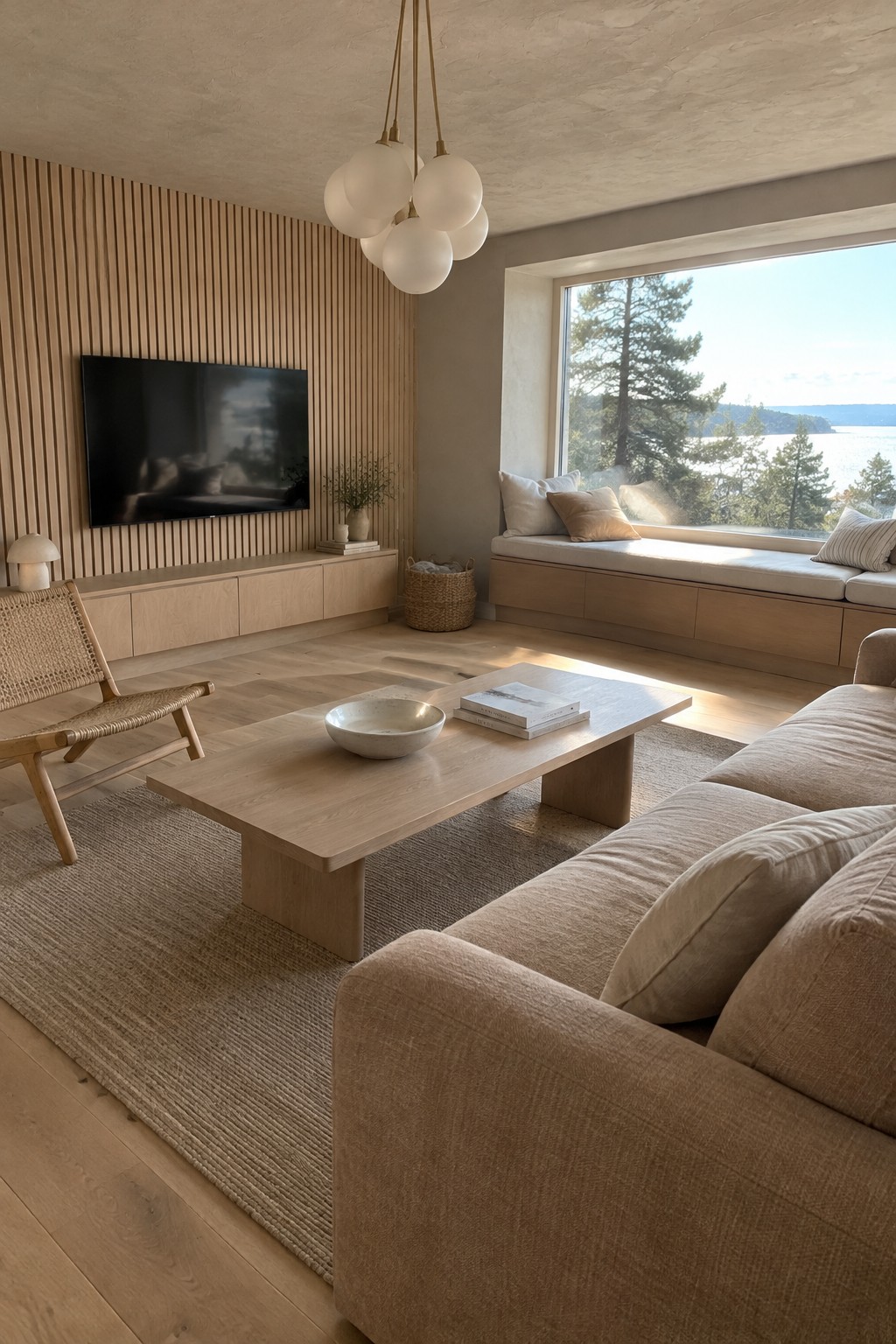
A slatted wood wall gives a TV area a little more character without needing artwork or extra decoration. The narrow vertical boards bring in texture while keeping the look simple, which suits a calm Scandinavian-style living room.
This treatment works well behind a wall-mounted TV, especially when the rest of the room stays fairly plain. Keep the wood tone close to nearby furniture, and make sure the slats don’t compete with the screen.
Use Light Wood Coffee Tables to Keep the Seating Area Open

Round coffee tables with sturdy, simple bases suit a cozy living room without making the seating area feel crowded. Their curved edges are also handy when people move around a large sofa or chaise.
Try two nesting tables in a smaller room, or place them in front of a sectional for flexible surface space. Light wood works well with neutral upholstery, but keep the tabletops fairly clear so they remain useful.
Keep an Open Flow Between the Kitchen and Living Room

An open layout lets the kitchen and living room feel connected without making either one feel cramped. Here, the kitchen island marks the change in use while leaving a clear path through the room.
This arrangement works especially well in long, narrow homes. Keep the island compact enough for people to pass comfortably, and place living room furniture so it doesn’t block the route to the kitchen or windows.
Use Open Shelving to Divide a Living Room

An open wooden bookcase can separate the living area without closing it off. Here, the shelves mark the edge of the seating space while still letting light and sightlines pass through.
This works well in an open-plan room that needs a little definition but not another solid wall. Keep the shelves useful and fairly uncluttered, so they provide storage without making the room feel boxed in.
Make a Window Seat Part of the Living Room
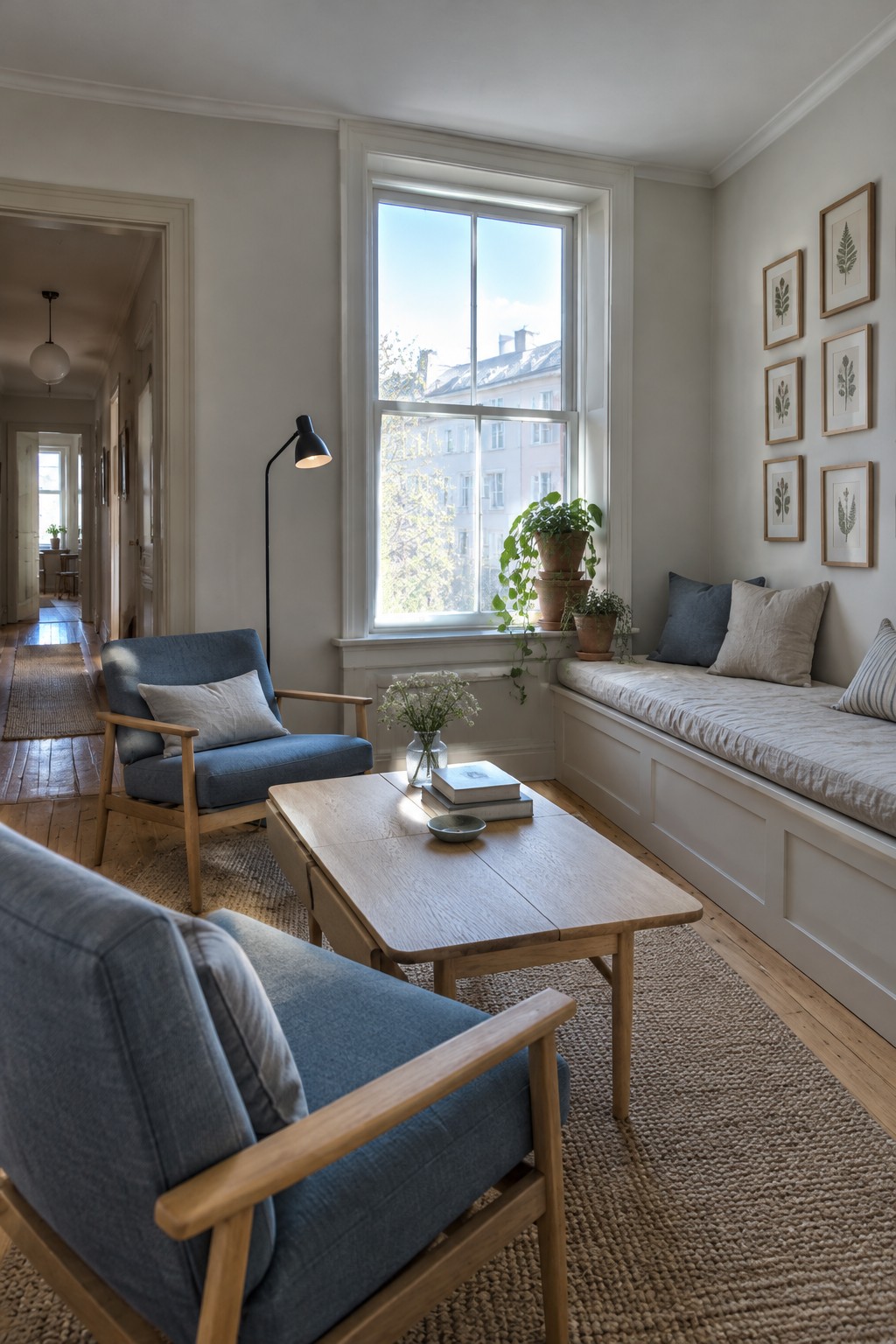
A built-in window seat can give a living room extra seating without taking up much floor space. It also makes an awkward wall area more useful. Here, the seat runs along the wall beneath the window, with storage built into its base.
This works especially well in a narrow room or a home with a deep window recess. Keep the seat cushion simple, and leave enough room for people to move comfortably around the coffee table.
Use a Cozy Chair to Make a Reading Corner

A single comfortable chair can make a quiet corner feel useful without filling the room with extra furniture. Here, the light wood floor lamp and small side area keep the seat ready for reading or a few minutes of rest.
This works well in living rooms with an unused corner near a window. Choose a chair that suits the room’s scale, then leave enough space around it to move through comfortably.
Let Exposed Beams Shape the Living Room

Exposed wood beams can give a living room character without adding more furniture or decoration. Here, the pale timber ceiling is the main architectural feature, while the simple furnishings let it remain noticeable.
This idea works especially well in an attic or a room with a sloped ceiling. Keep the beam finish close to the floor or furniture tones for a connected look, and use a lighter finish if you want the ceiling to feel less heavy.
Build Storage Into the Living Room

Built-in shelving can make a living room more useful without taking up extra floor space. Here, the light wood shelves sit beside the window seat, giving everyday items a place while keeping the room’s storage in one tidy area.
This approach works especially well in a small living room or along an unused wall. Keep the shelves fairly open and leave some room for books or baskets, so they stay practical rather than crowded.
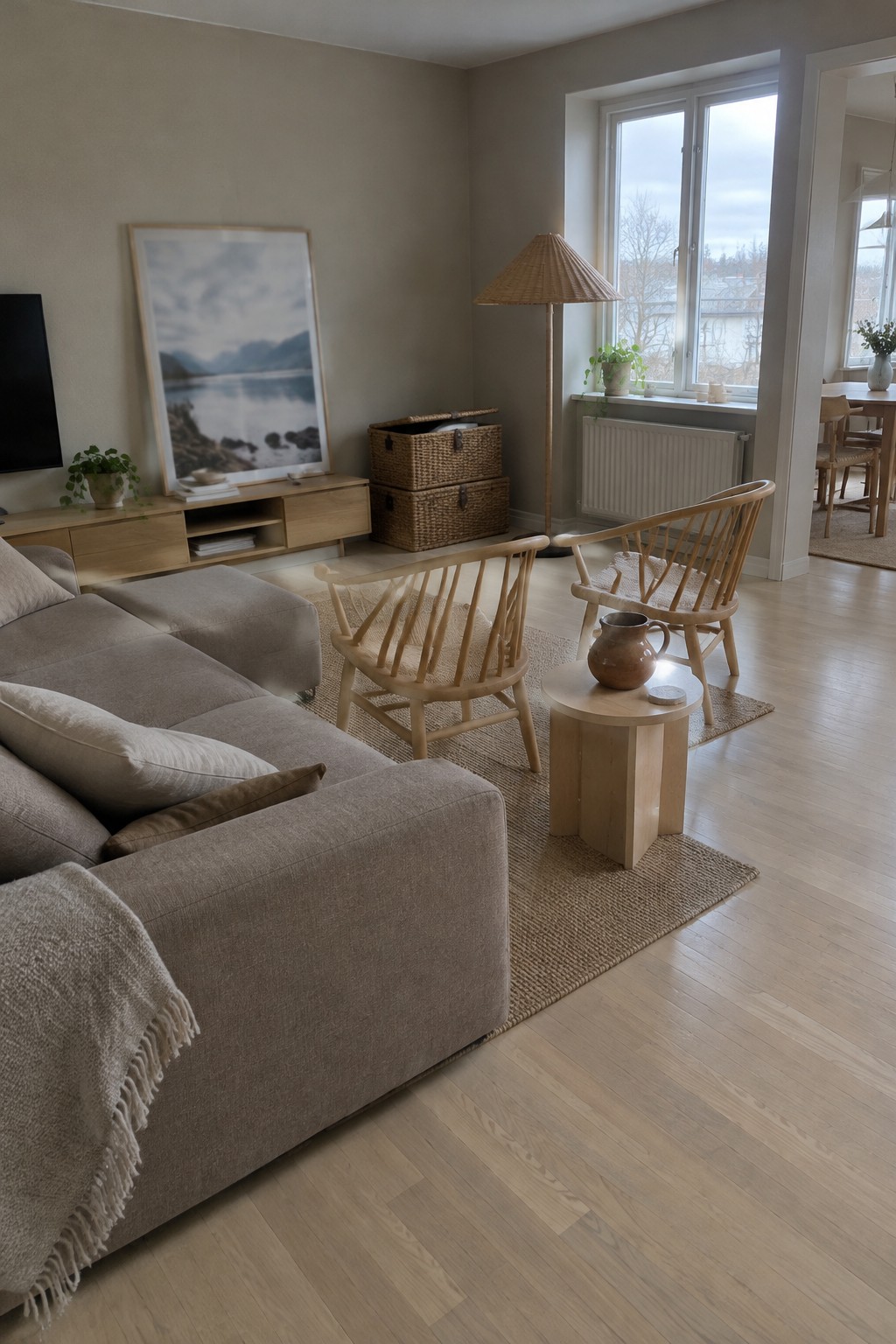
A rug can help define the seating area in an open living room without closing it off. Here, two light wood chairs sit across from the sofa, making the space feel set up for conversation rather than focused only on the TV.
Use a rug large enough for the main seating pieces to touch or sit partly on it. This works well in a combined living and dining space, where the rug gives the lounge area a clear boundary while leaving an easy path through the room.
Use an Arched Niche for Living Room Storage

An arched built-in gives everyday storage a softer look than a plain wall of shelves. Here, light wood shelves make room for books and a few display pieces without taking over the living room.
This idea suits a small alcove or an unused wall beside the seating area. Keep the shelves lightly filled so there’s still space for the things you use regularly.
Let Built-In Shelving Do More Than Store Books

Built-in shelving can make a living room more useful without taking up extra floor space. Here, light wood shelves include closed cupboards below and an integrated desk, so storage and a small work area fit neatly into one wall.
This approach works well in family rooms where toys, books, and everyday supplies need a place to go. Keep the lower cupboards simple and use baskets on open shelves to make small items easier to tidy away.
Use a Low Coffee Table to Keep the Seating Area Open

A low, round coffee table is an easy fit for a cozy living room. It gives you a handy place for a cup or a small vase without taking up as much visual space as a larger, taller table.
Look for a simple shape and light wood or another pale, quiet finish. Leave enough room around it to move comfortably, especially if the seating area is compact.
Use Pale Wood and Soft Textures for a Cozy Living Room

Light wood furniture works well in a Scandinavian-style living room because it keeps the look simple without making the space feel bare. Here, a low wood media cabinet sits alongside a pale, textured rug, giving the room a relaxed feel.
Try this approach in a room with neutral walls, and let the wood furniture do its job without adding too many decorative pieces. A few soft textiles can make the seating area comfortable while keeping the overall look uncluttered.
Use Natural Wood for a Warm, Simple Living Room

Light wood can make a living room feel cozy without making it look heavy. Here, the wooden folding screen beside the balcony door gives the room a clear feature while keeping the rest of the decor quiet.
Try this approach in a room that needs a little more warmth or definition. A screen or slatted partition can also offer some separation near a doorway, but leave enough open space for the room to feel easy to move through.
Use Light Wood to Connect Storage and Seating

Light wood cabinetry can make a living room’s storage feel like part of the furniture rather than a separate feature. Here, the built-in desk and cupboards carry the same pale finish as the low coffee table, giving the room a simple, consistent look.
This approach works well in smaller living rooms where storage and a work spot need to share space. Keep the cabinet fronts plain and let the wood grain show, so the larger built-in does not feel too heavy.
Use Light Wood Shelves to Keep Storage Open

Open shelving gives a living room useful storage without making the wall feel closed in. Here, pale wood shelves sit above lower cabinets, leaving space for books and a few favorite objects while keeping everyday items tucked away.
This approach works well in a room that needs storage but should still feel airy. Keep the shelves lightly filled, and use closed cabinets below for things you do not want on display.
Use Natural Materials to Keep a Living Room Cozy

A few natural materials can make a living room feel comfortable without adding much decoration. Here, light wood furniture and woven cane chairs bring texture to the soft, neutral seating, while the simple shapes keep the room from feeling crowded.
This approach works well in a smaller living room or any space where you want a calm, easy-to-live-with feel. Start with one or two wood pieces, then add a woven texture; too many competing finishes can make the room feel busy.
Use Built-In Shelves to Keep a Living Room Organized
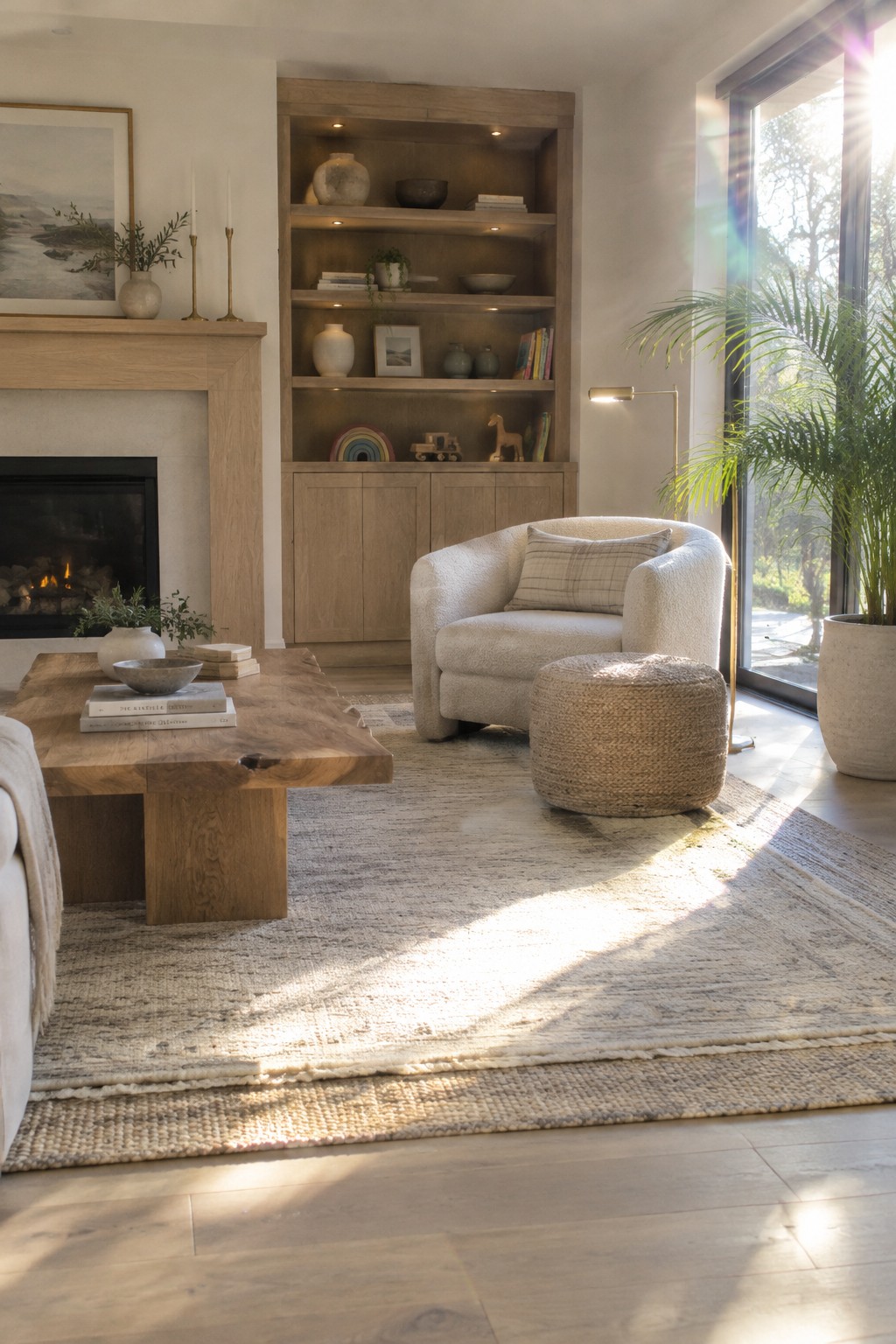
Built-in shelves can give a living room useful storage without taking up extra floor space. A light wood finish helps them sit comfortably beside other wood furniture, while open shelves leave room for a few favorite objects.
This idea works well beside a fireplace or on an empty wall. Keep everyday items in lower cupboards and leave the shelves lightly arranged so the room stays easy to use.
Frequently Asked Questions
Q: How do I make light wood feel warm instead of washed out?
A: Pair it with soft whites, cream, and a few deeper touches like charcoal, forest green, or warm brown. Natural textures such as wool, linen, and woven baskets add warmth without making the room feel busy.
Q: Can Scandinavian modern style work in a small living room?
A: Yes. Keep the main pieces simple and leave some floor space visible, which helps the room feel open. A light wood coffee table or slim-legged sofa can bring in the style without crowding the space.
Q: What kind of lighting suits a cozy Scandinavian living room?
A: Use a mix of gentle light sources, such as a floor lamp beside the sofa and a small table lamp in a darker corner. Warm-toned bulbs make pale wood and neutral fabrics feel inviting after sunset.
Q: Do I need to use only pale wood?
A: Not at all. A darker wood accent, like a side table or frame, can give the room a little contrast while keeping the overall look calm.
