
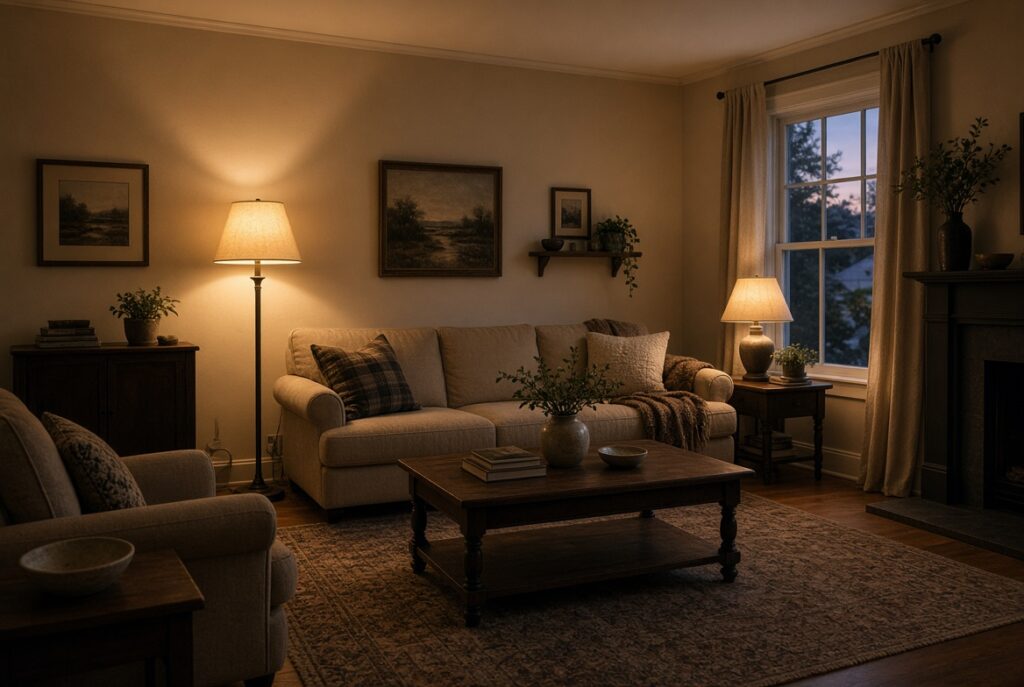
Lighting is the shortest path between a house that works and a house that feels like home. The same sofa, paint, and floor can look unfinished at 8 p.m. under one cool ceiling disc and settled under two warm lamps. You do not need a rewire to get most of that shift.
This is a practical bridge, not a fixture catalog and not a smart-home setup guide. For living-room specifics, use how to layer living room lighting. For the order of work, stay with the makeover plan.
What light is doing in a room
Ambient light lets you walk without hitting a chair. Task light lets you read, chop, or find a key. Accent light keeps a far wall from dying so the room does not feel like a cave with one spotlight.
Most tired rooms have only ambient light, and it is the wrong color. A bright cool-white ceiling fixture is efficient and unkind. Faces look gray. Warm wood looks dirty. White paint looks like an office.
Color temperature before new fixtures
Read the box. 2700K is the common warm-white household temperature and matches most lampshades and oak or walnut furniture. 3000K is a little cleaner and can work in kitchens if you already have warm materials. 4000K and “daylight” belong in laundry rooms, garages, and closets more often than in evening sitting rooms.
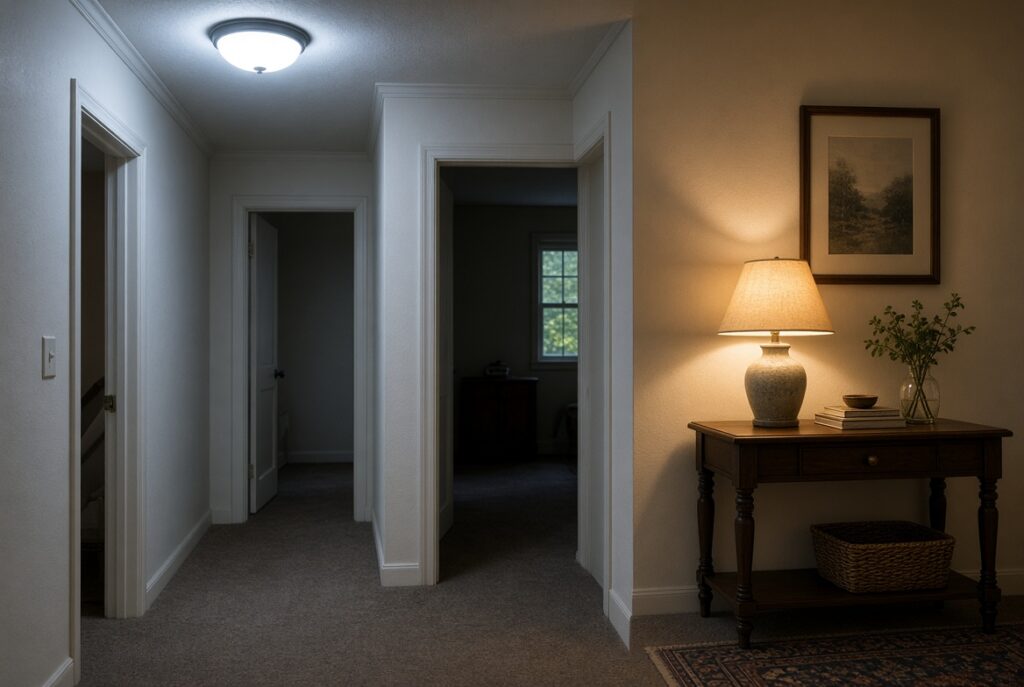
Mixing 2700K lamps with a 5000K ceiling in the same view will always look unfinished. Pick one temperature for the rooms that open into each other. That single decision does more for cohesion than a shared throw-pillow color.
Brightness is separate from temperature. A dim 2700K bulb can still be too weak to cook under. A bright 2700K bulb can still feel homelike if it is shaded. Buy for the job, then dim if you can.
Put light at the height of the work
Overhead light is good at floors and bad at faces. A lamp at shoulder height when you sit, or at counter height when you cook, is the missing layer in most makeovers.
Living room: one lamp beside the main seat and a second source across the room. Kitchen: the sink and the main cutting board need light that does not put your own shadow on the work. Bedroom: a lamp you can switch from the bed. Entry: a source that turns on before you step on shoes.
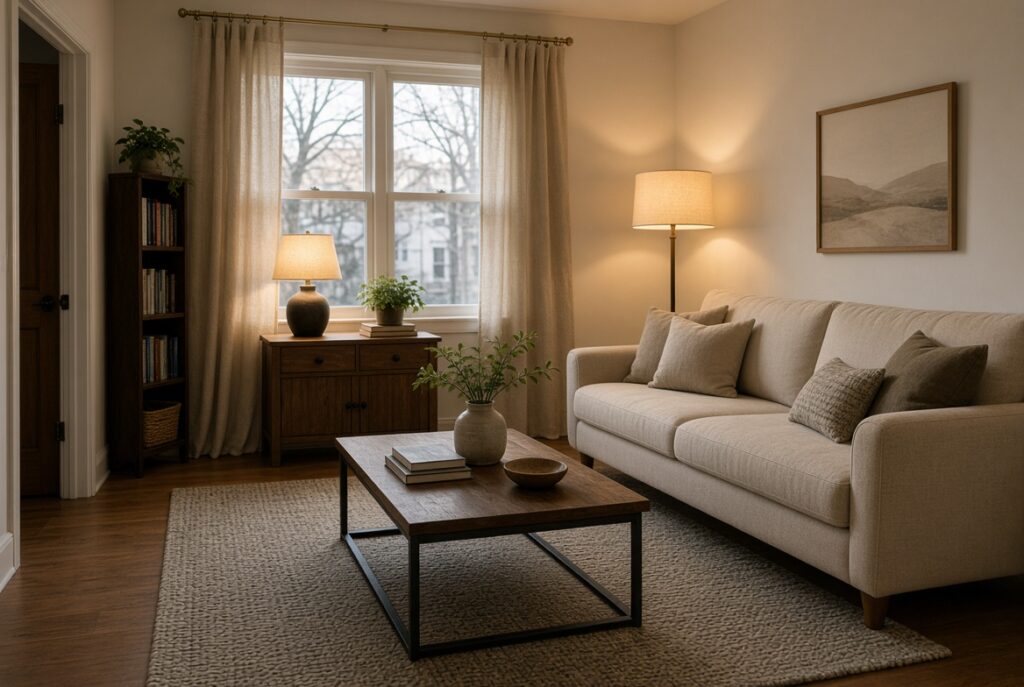
Shades matter. A bare bulb in a hallway is glare. A linen or parchment shade hides the source and throws light onto walls, which is what makes a room feel larger than a spotlight on the rug.
You can layer without opening a ceiling
Plug-in lamps, plug-in pendants, and plug-in wall sconces exist because most houses have more outlets than ceiling boxes. A cord run neatly along a baseboard or down from a hook is ordinary, not a failure. If a plug-in lamp later sits on a timer or a smart plug, that is optional. The lamp is the makeover.
Floor lamps solve dark corners that have no table. Table lamps need a surface that is not already a dumping ground. If every table is full, you have a clutter problem, not a lighting-store problem. Clear the surface first using the mistakes checklist.
Under-cabinet puck lights, battery or plug-in, can rescue a kitchen that only has a ceiling globe. Aim them at the counter, not at your eyes.
Dim at night, not only less wattage
A room needs more light at 5 p.m. in December than at 8 p.m. after dinner. Dimmers, three-way bulbs, and lamps with two sockets give you that range. If you cannot dim the ceiling, treat the ceiling as a daytime or cleaning light and use lamps after dark.
Three-way bulbs are underrated. They cost little and do not require a dimmer switch. Put them in the sitting-room floor lamp.
Room notes without a full redesign
Living rooms fail when the only light is above the coffee table or above the TV. Move one lamp to the darkest corner even if that corner is “finished.” Walls need light or they recede into nothing. More on seating and lamps is in the cozy living room hub.
Kitchens fail when the island is lit and the sink is not, or when cool cans over a warm wood cabinet fight each other. Match temperature first. Then add one source over the place you actually cut vegetables.
Bedrooms fail when the overhead is the reading light. That light hits the page and the partner at the same time. A small shade at bed height is the functional makeover. See also bedroom makeover examples for rooms that already did the bigger work.
Hallways fail when they are brighter and cooler than the rooms they connect. The house should not change climate at every doorway. Use the same temperature and a shade if the fixture is a bare globe.
A weekend lighting pass
- Walk the house after sunset with every ceiling light on. Note glare and rooms that feel like parking garages.
- Read every bulb box you can reach. Group cool bulbs into utility rooms.
- Put 2700K in living rooms, bedrooms, and dining.
- Add or relocate two lamps in the room you use after dinner.
- Turn the ceiling off and sit for twenty minutes. If you cannot read or see faces, add task light, not another ceiling watt.
That pass is usually cheaper than paint and faster than furniture. It is also the test you should run before you decide a room “needs a remodel.”
When lighting is not enough
If the room is still grim after temperature and two lamps, look at window coverings that eat daylight, paint that is too cool, or furniture that blocks the window. Light cannot fix a sofa in front of the only glass. Those are layout and cohesion problems, not bulb problems.
If a fixture is broken, smoked, or unsafe, replace it. Do not layer lamps over a hazard. Electrical work beyond a bulb, plug-in lamp, or existing switch is outside this guide.
Lighting earns its place in a makeover because it changes function and atmosphere at the same time. That is the bridge this whole section is for: the house works better, and it feels more like a place to stay.
Glare, TV, and the evening living room
If the television faces a bare bulb or an undimmed disc, you will raise the set brightness and the room will still feel harsh. Sit in the main seat and look at the screen. If you see a fixture in the glass, move the lamp or dim the ceiling. Do not buy a larger television to outrun glare.
Shades should hide the bulb from the seated eye. A short shade on a tall lamp is a spotlight. Raise the shade or change the lamp. This is cheaper than new seating.
Kitchens and baths without a new electrical plan
Hardwired under-cabinet lighting is excellent and it is not a weekend upgrade for most people. Plug-in or battery bars are the makeover version. Put them where the knife meets the board. In a bath, a shaded sconce or a well-placed lamp on a vanity (away from water) beats a bare globe that turns every mirror into an interrogation.
Keep fixtures away from showers and follow basic wet-location common sense. If you are unsure, leave the fixture and change the bulb temperature only.
Kids, night paths, and safety
A low night light in a hallway that is not blue-white will let people walk without waking the house with the overhead. Motion night lights are optional. A cheap warm plug-in is enough. Do not leave cords across the walking lane to feed a new lamp. That is a new problem, not an upgrade.
If a room has no outlet where the chair sits, run the cord along the baseboard with proper cord covers, or pick a different corner. Do not stretch a cord across a doorway.
