

A mid-century modern living room can look tidy in a photo but feel awkward at home if there is nowhere to put the things we use every day.
I find that the rooms that work best pair clean lines and warm wood with storage that fits naturally into the layout, rather than making every surface do double duty.
Low cabinets, built-in shelves, and furniture with concealed compartments can keep clutter out of sight without losing the open feel that makes this style appealing.
The details matter.
I’d look for ideas that suit the room’s proportions and offer storage where it is genuinely useful, so the space stays comfortable as well as considered.
Use Furniture That Hides Everyday Storage

A coffee table with a lower shelf gives you a handy place to keep books and remotes close without leaving them scattered on the top. It suits a living room where you want the familiar look of mid-century wood furniture but need a little extra room for everyday things.
Look for a table with an open shelf or a lift-top compartment, depending on what you need to store. Keep the storage easy to reach, and leave enough clear space around the table to move comfortably.
Use Built-In Cabinets To Hide Living Room Clutter

Built-in storage can make a living room easier to keep tidy without adding bulky furniture. Here, the wood cabinetry combines closed doors with a small open shelf area, so everyday items can be put away while a few books and objects stay on display.
This idea works especially well in a room with a clear wall that can take a full-height unit. Plan for closed storage where clutter tends to collect, and keep open shelves limited so they stay easy to maintain.
Choose an Ottoman With Hidden Storage

A storage ottoman can keep a living room tidy without adding another cabinet. This one has a lift-up top and divided compartments inside, making it easy to tuck away remotes and small everyday items.
Use an ottoman that’s sturdy enough to serve as a footrest or extra seat, and check that the lid opens easily. It works especially well in a smaller room where storage space is limited.
Use Built-In Cabinets To Hide Living Room Clutter

A full wall of built-in cabinetry can make storage part of the room instead of an extra piece of furniture. Closed cabinets keep everyday items out of sight, while a few open shelves leave room for books and display pieces.
This works especially well in a narrow living room, where separate storage units can crowd the floor. If you’re planning built-ins, include drawers or cupboards near the places where clutter tends to collect, and keep the open shelving simple so the wall stays useful.
Use Storage Tables To Keep Clutter Out of Sight

A coffee table can do more than hold a few books. This room uses a round table with a lower compartment for storing smaller items, keeping them close at hand without leaving them scattered across the living area.
Look for a table with a lift-off top or a divided lower section if you want a place for remotes, magazines, or games. It works especially well in a seating area where there isn’t much room for another cabinet.
Add Storage Behind the Sofa
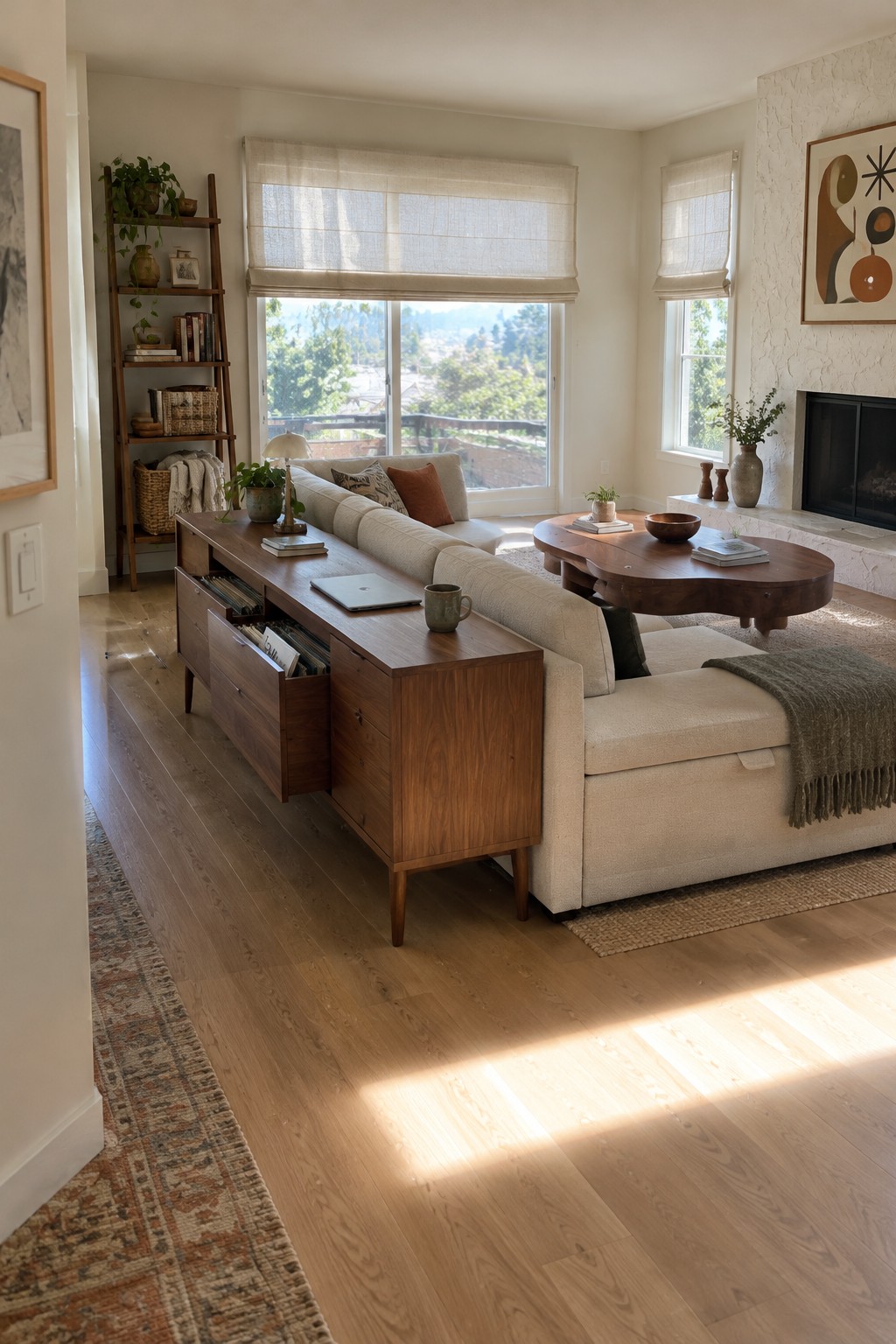
A slim console behind the sofa can keep everyday items close without adding another large piece of furniture. Here, the wood console has drawers and open shelves, so books and smaller items have a place to go while the sofa stays clear.
This setup works well when a sofa sits away from the wall, especially in an open living room. Choose a console that is slightly lower than the sofa back, and leave enough space to walk comfortably behind it.
Use a Low Cabinet To Keep Clutter Out of Sight

A low cabinet can provide useful storage without making a living room feel bulky. Here, a wood cabinet beneath the TV keeps the wall neat while giving everyday items a place to go.
This works well in rooms where open shelves would add too much visual clutter. Choose a cabinet with enough closed space for the things you use often, and leave the top mostly clear so it stays easy to use.
Add Storage Beneath a Window Seat
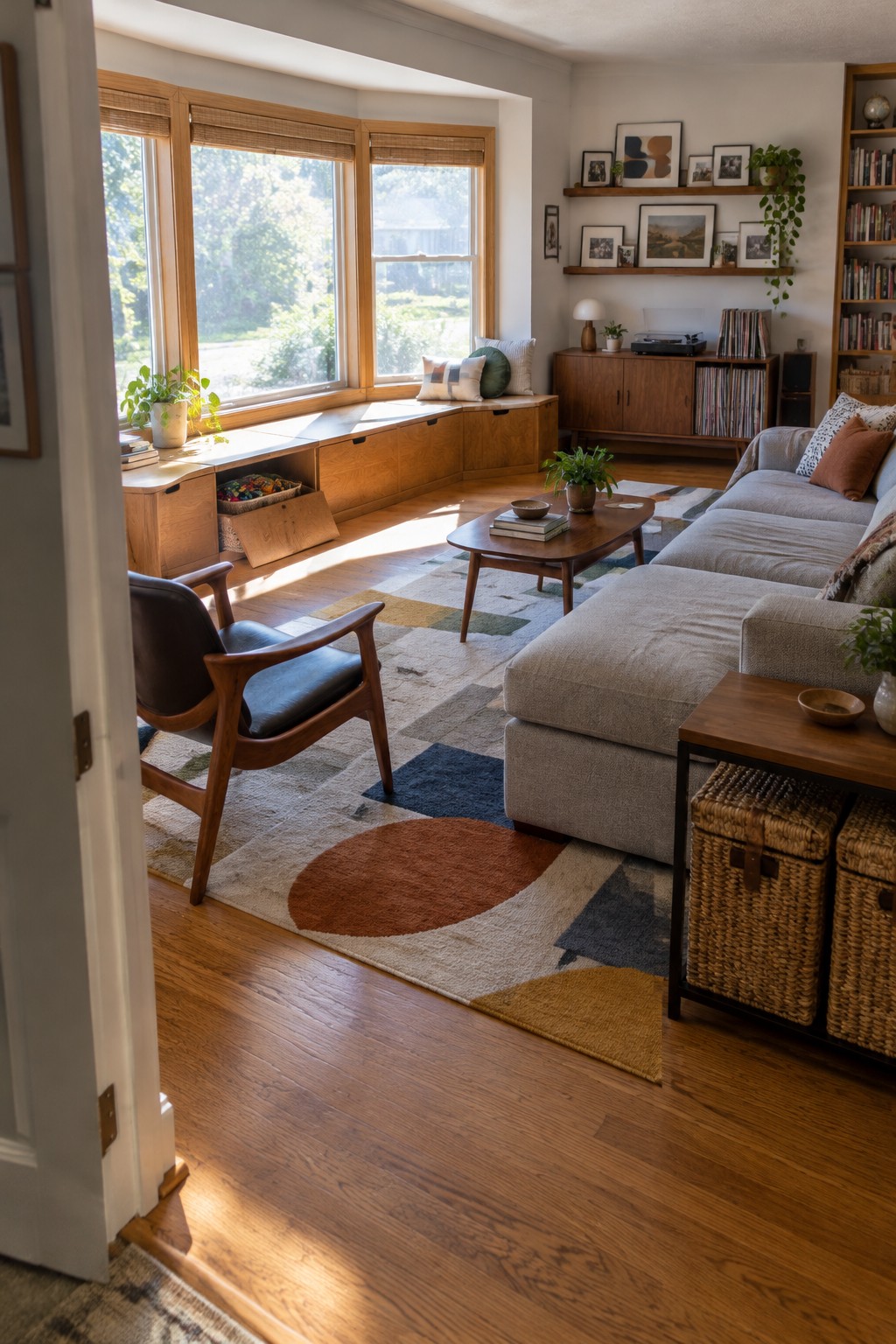
A window seat can make good use of space that might otherwise go unused. Built-in cabinets and drawers beneath the bench hide toys, blankets, or other everyday items while keeping them close at hand.
This idea works especially well in a living room with a wide window and enough wall space for a deep seat. Add lift-up lids or cabinet doors, and keep the cushion easy to remove so the storage stays practical.
Use Built-In Shelves To Keep Storage Tidy
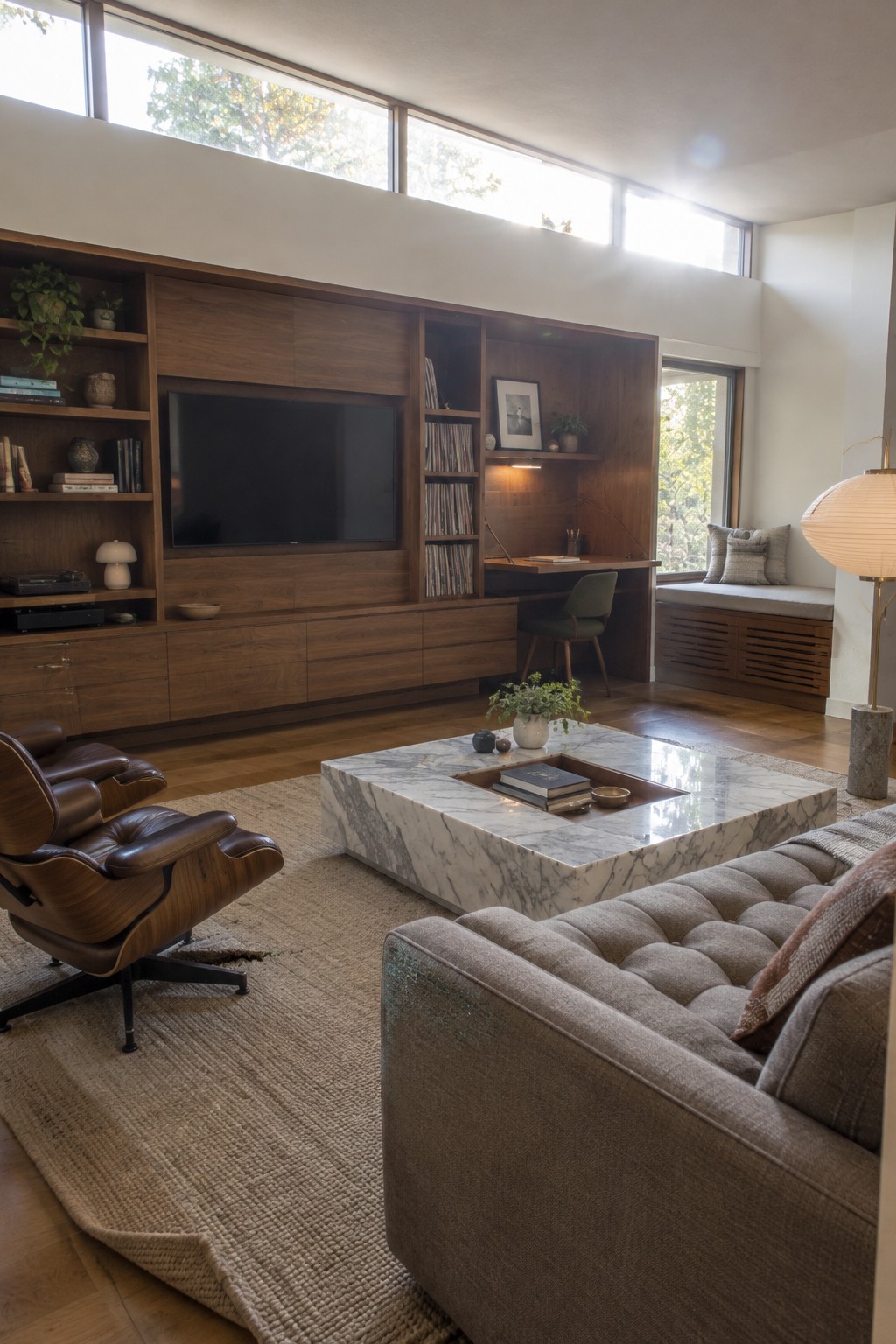
Built-in shelving can make a living room feel organized without adding bulky furniture. Here, closed wood-front cabinets sit alongside open shelves, so everyday items can be tucked away while a few books and objects stay on display.
This approach works especially well on a long wall or in a room where storage needs to serve more than one purpose. Keep the open sections simple, and use the closed cabinets for things you do not want out in view.
Use a Cabinet To Keep Living Room Clutter Out of Sight

A tall wood cabinet gives a living room useful storage without making the space feel like a row of open shelves. The sliding doors keep most belongings out of view, while a small open section can hold items used more often.
This idea works well in a compact room where storage needs to do more than one job. Choose a cabinet with a simple shape and a finish that suits the rest of the furniture, and leave a little open space around it so the room does not feel crowded.
Use Wall Shelves To Keep Storage Off the Floor
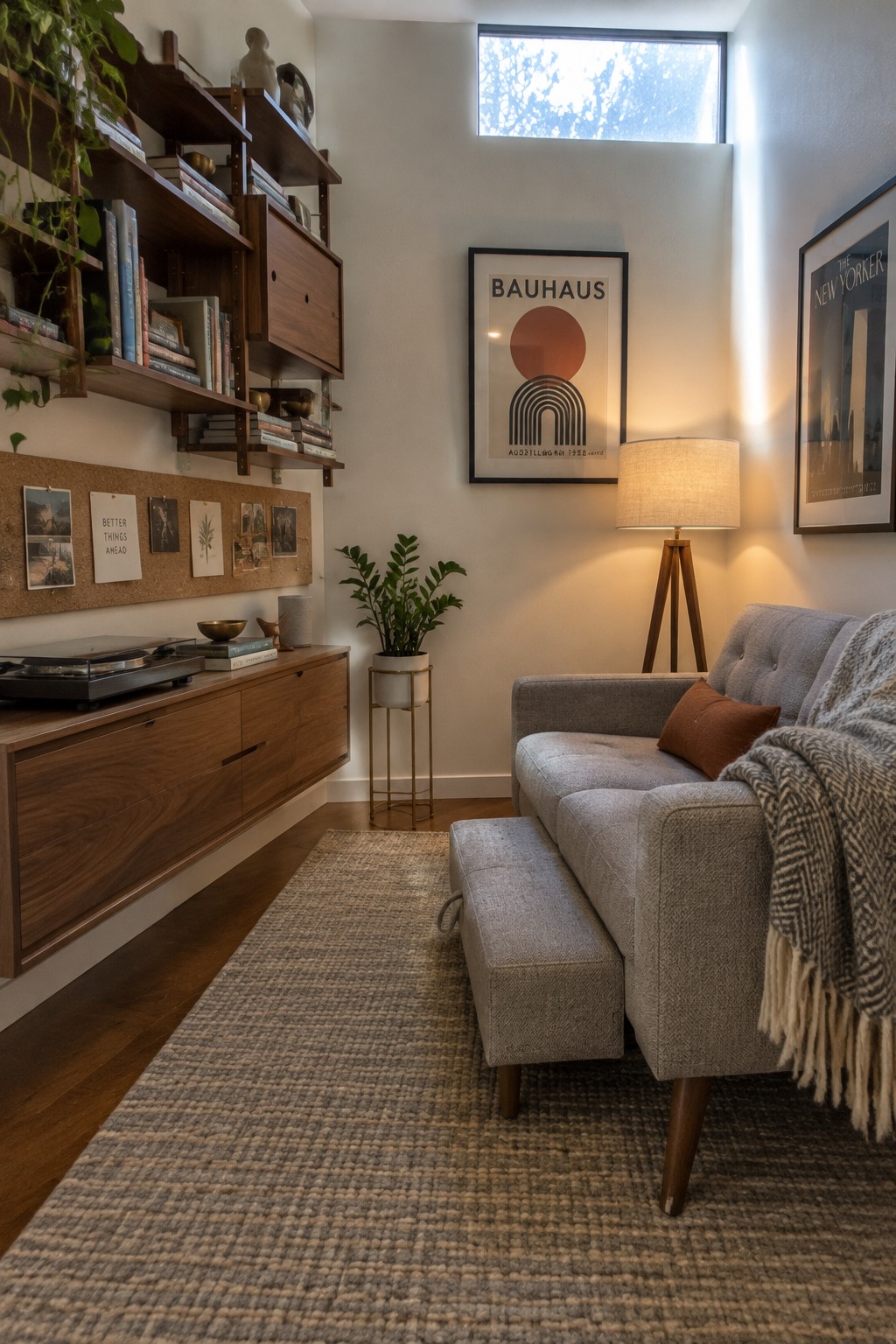
Wall-mounted shelving can hold books and display pieces without taking up valuable floor space. A cabinet section built into the shelves also gives small items a place to go, so the living room can stay tidy without adding another piece of furniture.
This approach works well in a narrow room where every bit of floor space matters. Keep everyday items on the lower shelves and use closed compartments for things you would rather keep out of sight.
Build Storage Into the Media Wall
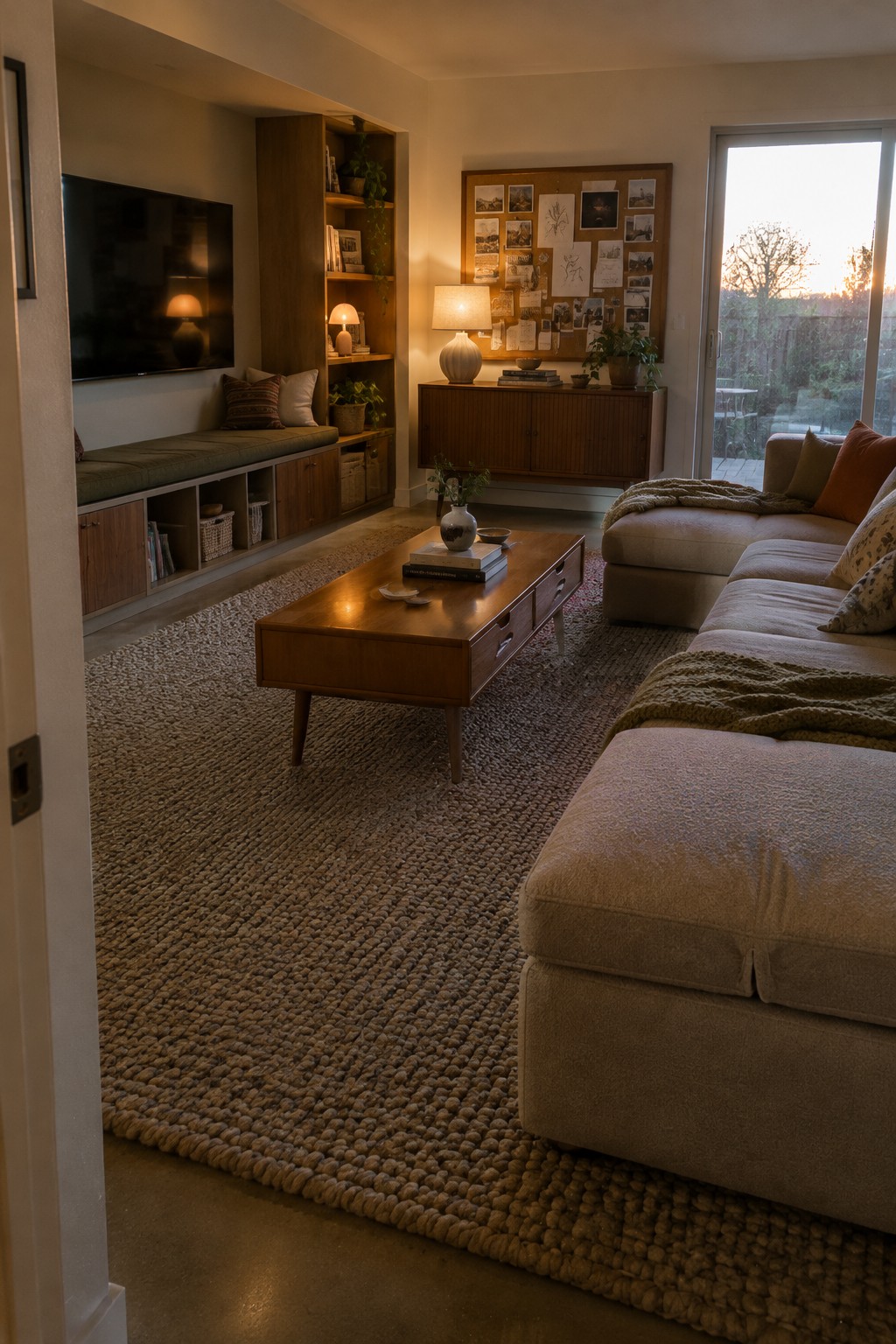
A media wall can do more than hold a television. Built-in shelves and lower cabinets provide useful places to tuck away books, baskets, and everyday clutter, while keeping the living room’s main storage in one spot.
If you’re planning one, mix closed cupboards with a few open shelves so the setup doesn’t feel like a row of solid cabinets. A cushioned bench can fit into the same wall when there’s room, adding a handy place to sit without taking up much floor space.
Use a Full Wall Of Cabinets For Hidden Storage

A wall of built-in cabinets can keep everyday living room items out of sight without adding separate storage pieces around the room. Here, the wood cabinetry also includes a few open niches, so useful items can stay handy while the rest remains tucked away.
This approach works well in a living room that needs to serve more than one purpose, such as a space that also holds books or serving pieces. Plan the cabinet depth around what you need to store, and leave a few open sections so the wall does not become a solid block of doors.
Use a Coffee Table With Hidden Storage
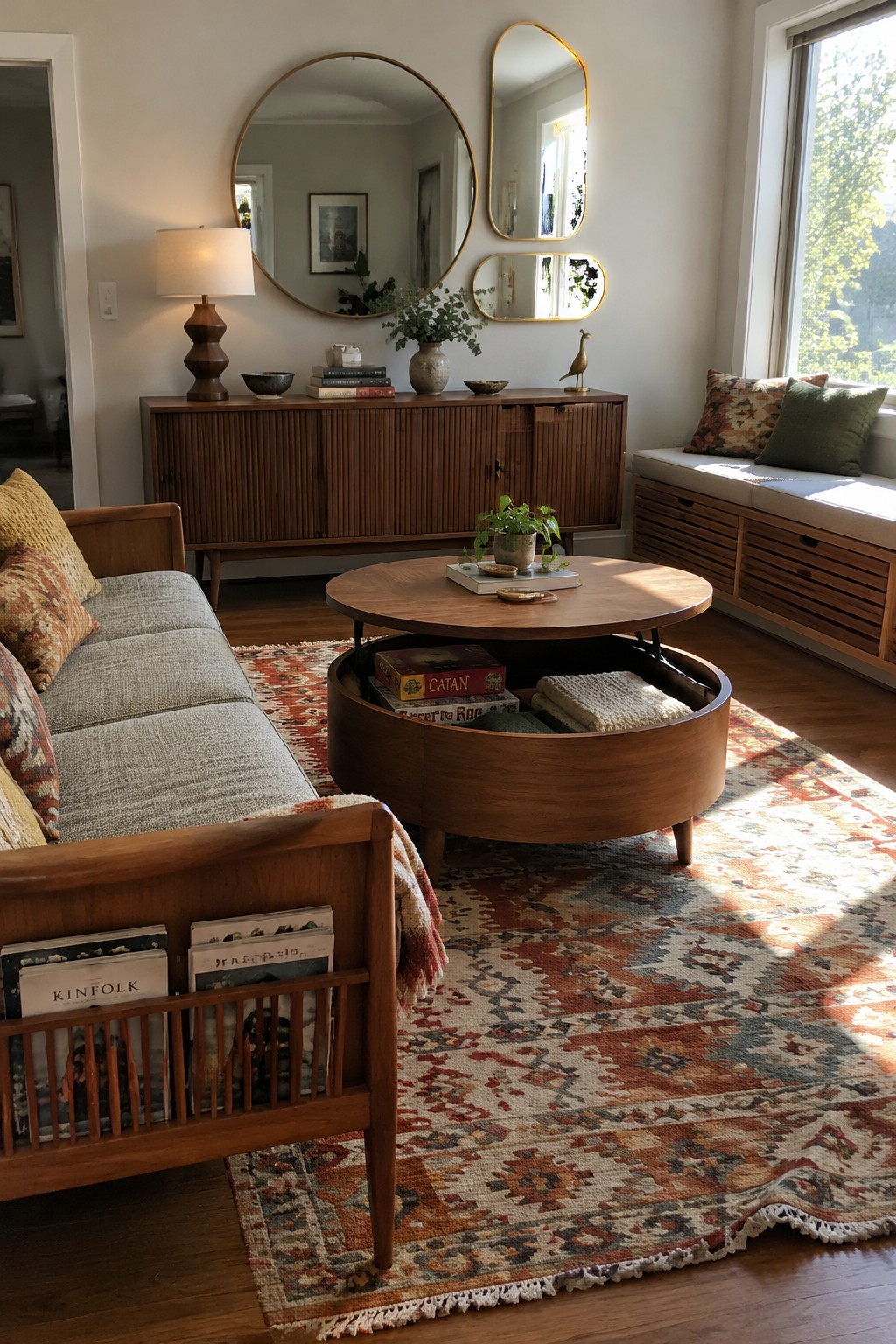
A lift-top coffee table can keep games and blankets close at hand without leaving them spread across the room. The round design here has a roomy compartment beneath the tabletop, so everyday items can be tucked away while the table stays useful.
This works well in a living room where the coffee table gets regular use and storage is limited. Choose a size that leaves enough room to walk around, and keep the items inside light enough to lift easily.
Add Storage Beneath a Window Seat

A window seat can do more than provide a place to sit. Built-in cubbies below the cushion make room for baskets, books, or extra blankets while keeping everyday items close at hand.
This works especially well in a living room with an unused stretch beneath a large window. Add a hinged lid or open cubbies to suit what you need to store, and keep the seat cushion simple so the area stays comfortable.
Hide Storage in a Built-In Media Wall

A media wall can do more than hold a television. Here, closed cabinets keep everyday items out of sight, while open shelves leave room for books and a few personal pieces. It makes the wall useful without adding separate storage furniture.
This approach works especially well in a living room where floor space is limited. Plan for a mix of cabinet sizes and open shelving, and keep the finish simple so the built-in feels like part of the room.
Use a Sideboard To Hide Living Room Clutter

A long sideboard can provide useful hidden storage without making a living room feel crowded. Its low profile keeps the wall open, while closed doors give everyday items a place to go.
Try one behind a sofa or along the edge of a seating area, especially in an open-plan room. A wood finish suits mid-century furniture well, but leave enough space around the cabinet for easy movement.
Use a Lift-Top Coffee Table For Hidden Storage

A lift-top coffee table gives you a handy surface for snacks or a laptop, then opens to tuck away the things you want close by but out of sight. The rounded wooden table here shows how this kind of storage can fit naturally into a mid-century living room.
Choose a table sized to leave room to walk around it, especially in a smaller seating area. Look for a lid that lifts easily and enough interior space for books, remotes, or blankets.
Use Built-In Shelving To Keep Storage Organized

Built-in shelves can give books and everyday belongings a place to go without adding bulky furniture. In a mid-century modern living room, wood shelving with closed lower cabinets keeps the room useful while leaving the display area open.
Use open shelves for a few books or objects, and tuck less attractive items behind cabinet doors. This works especially well when a wall has enough space for a fitted unit, but avoid filling every shelf so the room still feels calm.
Choose a Coffee Table That Hides Clutter

A storage coffee table is handy in a living room where blankets, books, or remotes tend to collect. A lift-top or lidded design keeps those everyday things close without leaving them on display.
Choose a shape and wood finish that suit the rest of the room, and check that the top is easy to open and close. A round table can work well beside a curved sofa, but leave enough space to walk around it comfortably.
Add Storage Beneath a Window Seat
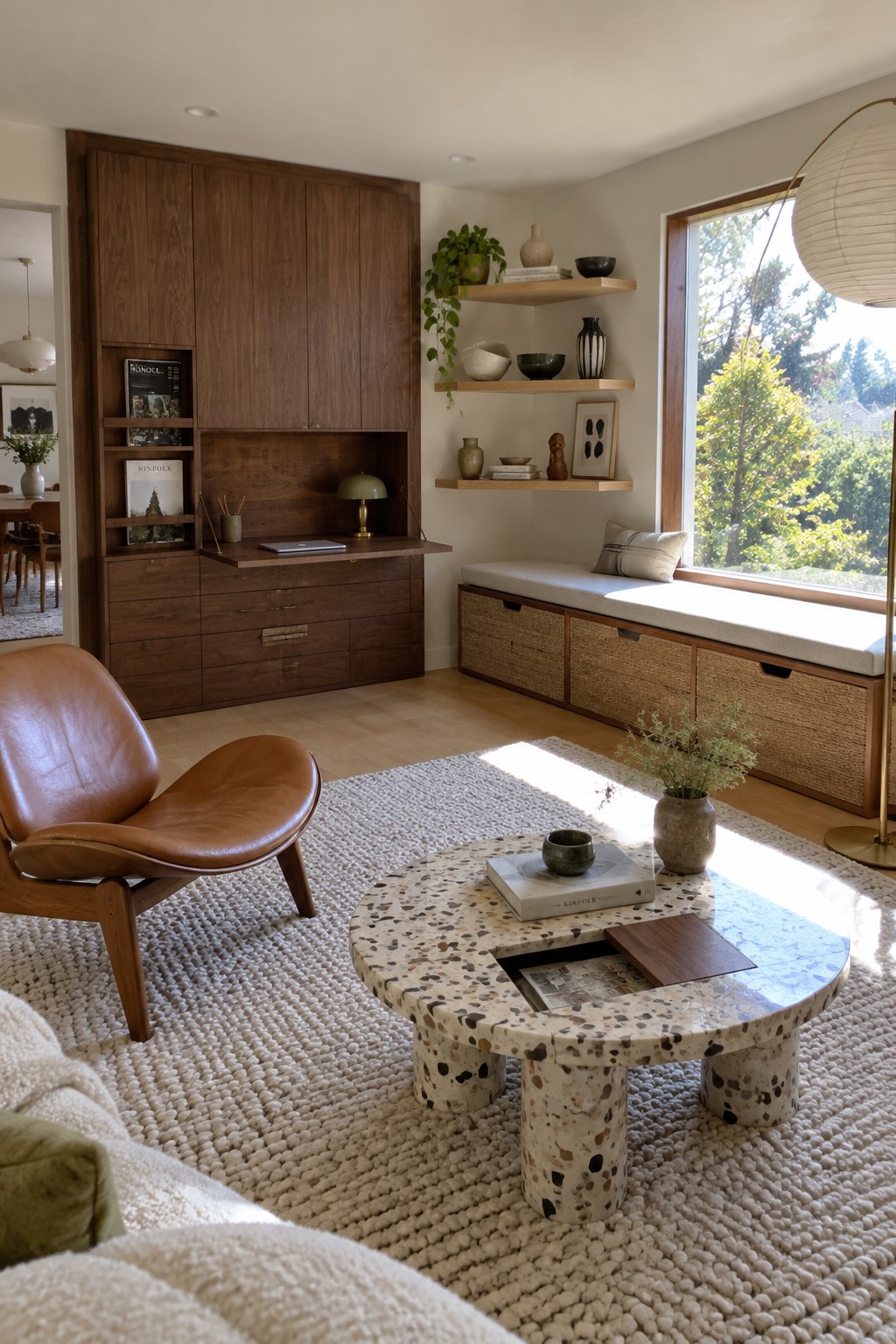
A window seat can do more than provide a place to sit. Built-in drawers or baskets below the cushion give everyday items a home without adding another piece of furniture to the room.
This works especially well in a living room with an unused stretch of wall beneath a window. A simple upholstered cushion keeps the seat comfortable, while baskets make it easy to tuck away throws or books. Check that the seat depth leaves enough room to walk past it.
Use Built-In Cabinets Around the TV

A built-in media wall can hide a surprising amount of everyday clutter while keeping the TV area neat. Here, closed wood cabinets sit below and beside the screen, so storage feels like part of the room rather than an extra piece of furniture.
This approach works well in a living room where the TV needs to share space with books, games, or other household items. Plan a mix of closed cabinets and open shelves, and leave enough room around the screen for easy viewing.
Use a Wall-Hung Sideboard To Free Up Floor Space
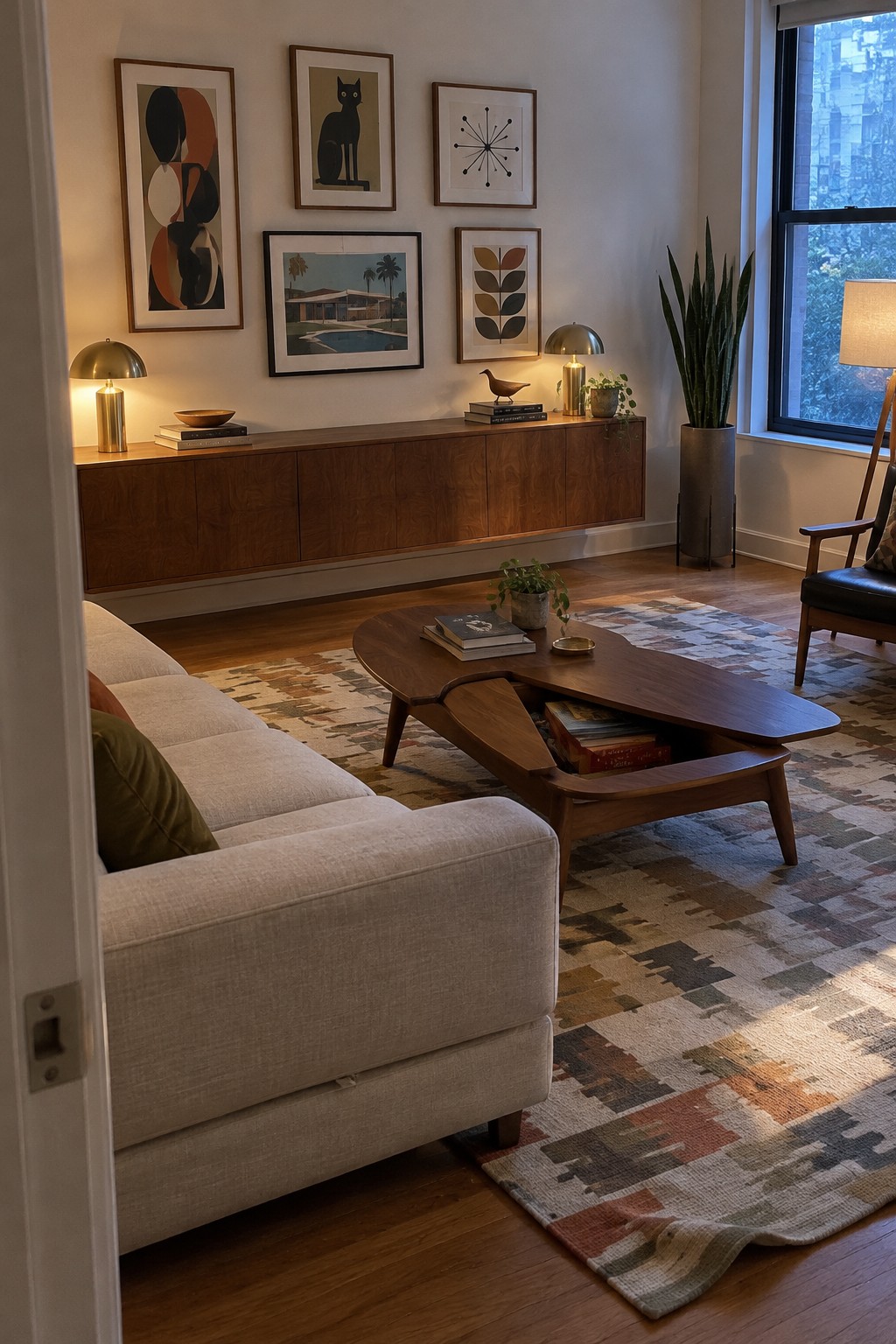
A long sideboard mounted below the artwork offers plenty of closed storage without taking up floor space. That can be especially useful in a living room where a sofa and coffee table already fill much of the room.
Choose a shallow cabinet with doors to tuck away games, cables, or extra linens, and leave the top fairly clear for a lamp or a few everyday items. Make sure it is securely fixed to the wall and mounted at a comfortable height.
Make a Corner Bench Work Harder
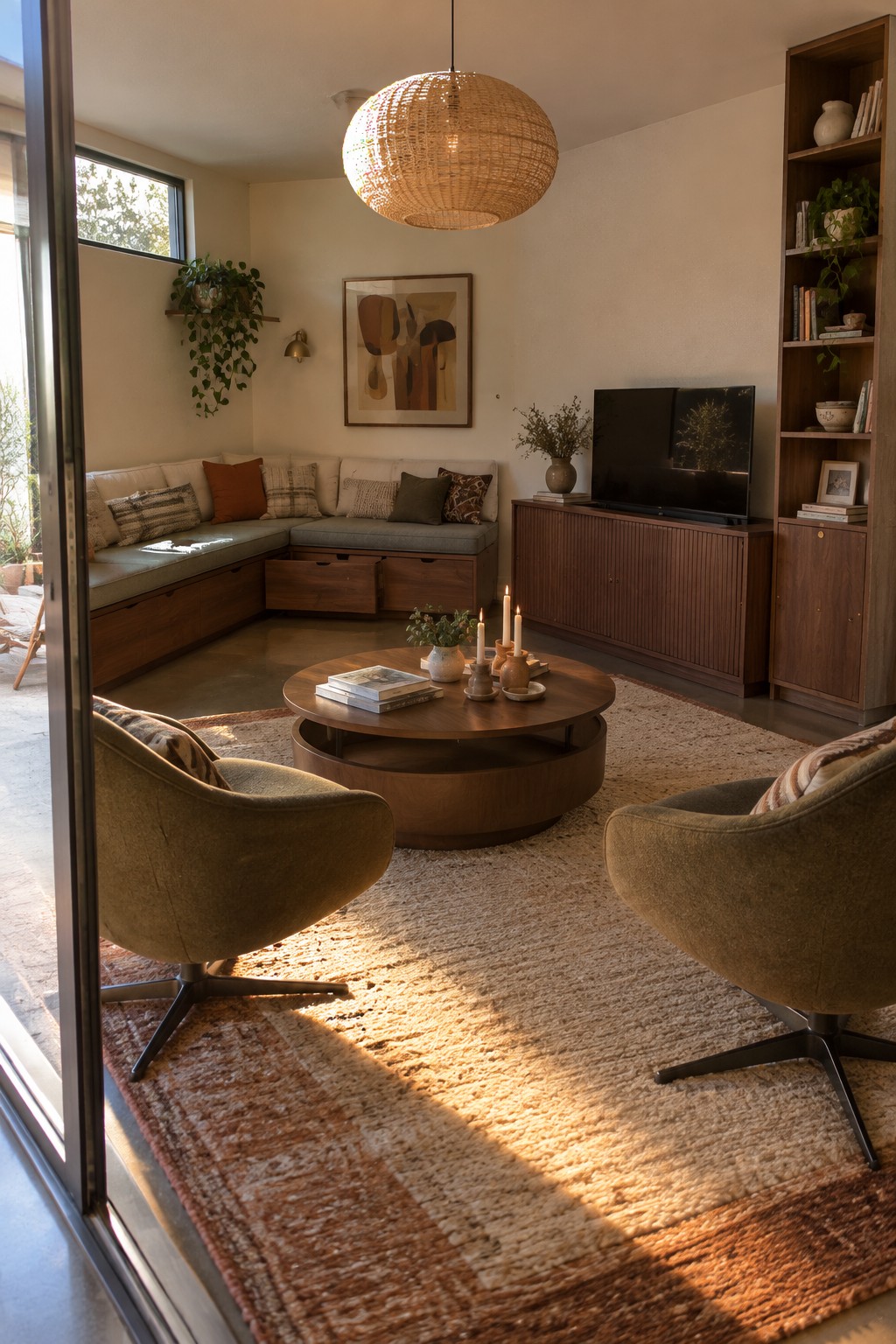
A built-in corner bench can do more than provide seating. Drawers beneath the cushions keep everyday items close by but out of sight, which helps a living room stay tidy without adding another piece of furniture.
This setup works especially well in a smaller room or an awkward corner where a standard sofa might waste space. Use drawers for things you reach for often, and make sure they can open easily without moving the coffee table.
Use a Vintage Sideboard for Hidden Storage

A low wooden sideboard can keep everyday living room clutter out of sight while still giving the room a simple, mid century look. Choose one with closed cupboards or drawers, and use the top for just a few useful items.
This works especially well along a wall where you need storage without adding a bulky bookcase. Leave enough room to open the doors, and avoid filling the top with so many things that it becomes another clutter spot.
Frequently Asked Questions
Q: How can I add hidden storage without losing the clean mid century modern look?
A: Choose pieces with simple shapes and smooth fronts, such as a low credenza or a coffee table with a lift-up top. Keep handles small or recessed so the storage blends into the furniture.
Q: What’s a good way to hide blankets and remotes in a small living room?
A: Try an upholstered storage ottoman near the sofa. It can hold everyday items while doubling as a footrest or extra seat.
Q: How do I keep a storage-heavy room from feeling cluttered?
A: Give each hidden compartment a clear purpose, then keep the surfaces above it fairly open. A few well-chosen objects will let the wood tones and furniture lines stand out.
Q: Can open shelving still work in a room with hidden storage?
A: Yes. Use closed cabinets for items you don’t want on display, and reserve a small section of shelving for books or a favorite ceramic piece.
