
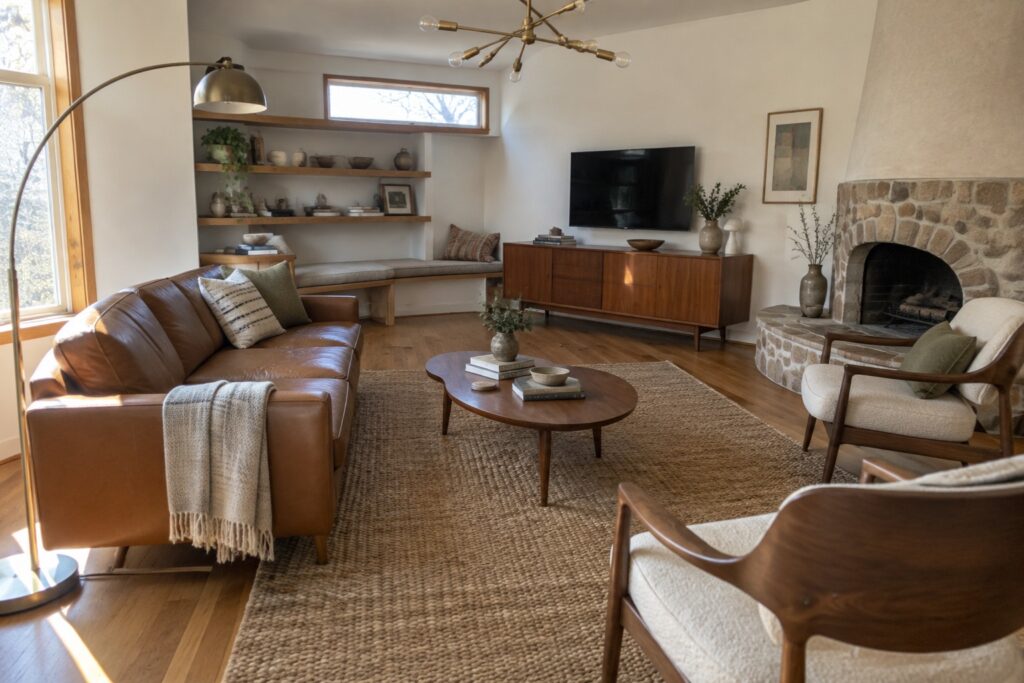
White walls can make a living room feel open, but they need warmth and texture to keep the space from feeling bare.
I find that wood furniture and accents work best when they balance the room’s clean lines without crowding the layout or competing with everyday use.
Mid century modern pieces bring shape and character, while rugs, lighting, and soft furnishings help the room feel settled and comfortable.
The details people notice first are often simple, like the grain of a timber table against a pale wall or a chair that makes a quiet corner useful.
I’d save ideas that suit the way you live, then test one or two changes at home before reworking the whole room.
Use Built-In Shelving to Make a Living Room More Practical

Built-in shelves can make use of a wall that might otherwise sit empty, while giving books and a few favorite objects a regular place to go. Here, open wood shelves sit above a small built-in bench, so the storage also serves as a spot to sit.
This approach works well in a living room alcove or beside a media area, especially when floor space is limited. Keep some shelf space open, and repeat the wood tone elsewhere in the room so the built-in feels connected to the furniture.
Use Wood Slats to Define the TV Wall

Vertical wood slats give the TV area a clear place in the room without needing a bold paint color or a bulky cabinet. Here, they sit beside a recessed wall niche, while the wood console keeps the setup practical for everyday use.
This approach works well in a living room with white walls, especially when you want a focal point that still feels simple. Use slats on just one section of the wall, and keep their tone close to other wood furniture so the room feels consistent.
Use Wood Ceilings to Warm Up White Walls

A wood ceiling is a useful way to bring warmth into a living room without covering the walls in color. Here, the exposed beams and ceiling boards give the pale walls a more relaxed feel while keeping the room bright.
This idea works especially well in a mid-century home with a simple shape and open living areas. If your ceiling is low, use slimmer beams or lighter wood so the detail doesn’t make the room feel crowded.
Use Wood Built-Ins to Warm Up a Living Room

A wood built-in can bring useful storage and a warmer feel to a living room with white walls. Open shelves above closed cabinets give books and a few favorite pieces a place to sit, while the lower cupboards keep everyday clutter out of sight.
This idea works especially well on a blank wall or in an alcove. Choose a wood tone that suits the room, and keep the shelves from getting too crowded so the storage still feels easy to use.
Use a Wood Fireplace Wall as a Focal Point

A tall wood surround can give a living room a clear focal point while keeping the rest of the walls simple. Here, the fireplace sits within a floor-to-ceiling wood surface, so the room feels cohesive without needing extra wall decoration.
This approach works well when you want a fireplace to feel built into the room rather than added on. Keep the wood finish close to other wood furniture, or let the fireplace wall stand apart with a deeper tone. In a smaller room, a simpler profile can keep the feature from feeling too imposing.
Use a Wood Slat Wall to Give the TV a Home

A wood slat wall gives the TV area a clear place in the room without needing a bulky cabinet or a strong paint color. Against white walls, the vertical boards bring in a warmer surface and make the screen feel more at home.
This idea works well in a living room where the TV is a main feature. Keep the slats to one wall, and choose a wood tone that suits the floor or other furniture so the room still feels connected.
Use a Patterned Rug to Warm Up the Room

A patterned rug is an easy way to bring color and comfort into a living room with white walls. The muted rust and ochre tones here work well with the wood floor and keep the room from feeling too plain.
Choose a rug large enough for the main seating area, so the sofa and coffee table feel connected. In a smaller room, a quieter pattern can add interest without making the floor feel too busy.
Choose Curved Seating for a Cozy Corner
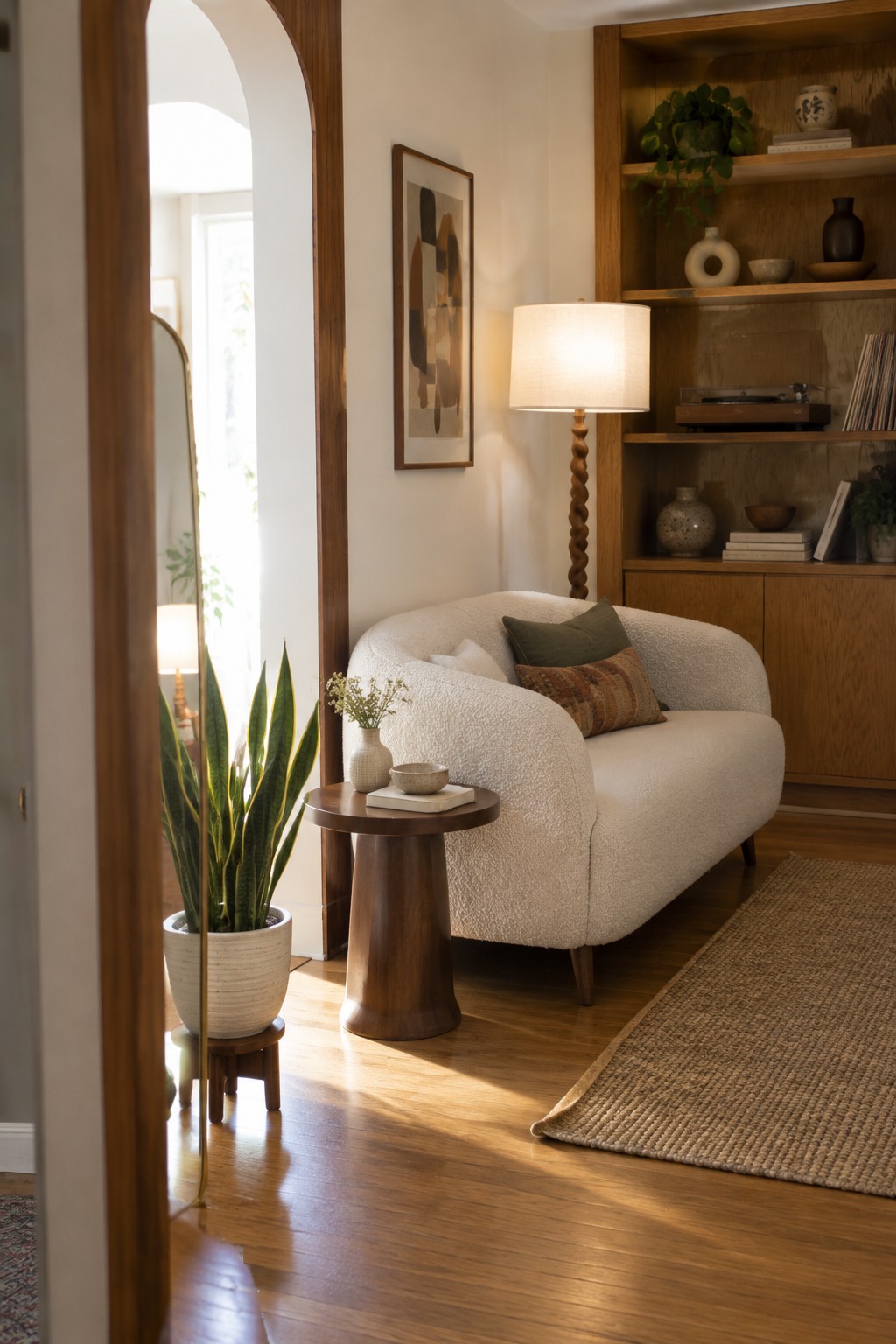
A rounded chair can make a living room corner feel comfortable without taking up the visual space of a bulky sofa. Here, the nubby white upholstery keeps the shape from feeling too formal, while the chair still offers a proper spot to sit and read.
This works well in a small sitting area or beside built-in shelving. Keep the nearby furniture simple so there is room to move around the chair, and use a couple of cushions for extra comfort.
Use a Brick Fireplace to Add Character

A brick fireplace can give a living room a strong focal point without making the room feel formal. A simple wood mantel keeps the look relaxed, while white walls and light upholstery let the brickwork stand out.
This idea works especially well in a home with built-in shelves or an older fireplace worth keeping. If you’re adding brick, choose a muted tone and keep nearby finishes simple so the fireplace doesn’t overwhelm the room.
Use a Wood Feature Wall to Give the TV a Place

A wood wall behind the TV makes the screen feel like part of the room instead of an object hung on a plain wall. The broad panels here also suit the low wood cabinet beneath it, so the main living-room wall feels considered without needing much extra decoration.
This approach works well when a TV has to be visible but you do not want it to dominate. Use wood in a tone that relates to other furniture, and keep the surrounding walls light so the feature does not make a smaller room feel enclosed.
Let a Wood Ceiling Set the Tone

A vaulted wood ceiling can bring warmth to a white living room without covering the walls in color or adding lots of decor. The exposed beams also give the tall room a more comfortable scale.
This idea works especially well in open living areas with high ceilings. Keep the walls and larger furnishings simple so the wood remains the main feature, and use a few smaller wood accents to carry it through the room.
Let Natural Woodwork Warm Up White Walls

White walls can feel comfortable rather than stark when natural wood appears in the furniture and lower wall trim. The wood wainscoting here gives the room a warmer, more settled look without covering up the light wall color.
This approach suits a mid-century living room where you want a simple backdrop for wood furniture. Try it on one section of wall, or use wood trim around the room, and keep the finish close to the tone of the furniture for an easy match.
Use a Wood Fireplace Wall to Bring Warmth to White Walls

A wood fireplace wall can make a living room feel settled without needing much extra decoration. Here, the dark wood surrounds the fireplace and gives the white walls a warmer feel, while the built-in shelves make the feature useful as well as attractive.
This idea suits a room with a simple layout and enough wall space for a clear focal point. If you use dark wood, keep nearby furniture and finishes lighter so the room does not feel too enclosed.
Use Low Wood Furniture to Keep a Living Room Open

A long, low sideboard can provide useful storage without taking over a room. Its simple shape also suits mid-century furniture, and the wood brings a natural note to white walls.
This approach works well in open-plan spaces where a tall cabinet might block sightlines. Choose a piece that leaves some wall visible above it, and keep the top lightly styled so it remains practical.
Use a Bay Window to Add a Cozy Seating Area

A bay window can make a living room feel more open while giving it a natural place to pause. The wood trim around this one helps the window feel connected to the rest of the room, rather than like a separate feature.
This idea works well in rooms with a wide window nook, especially when there’s enough space to keep the main seating area clear. Use a low bench or a few small pieces nearby, and keep the window area simple so it stays useful.
Use a Wood Slat Wall to Make the Fireplace Stand Out

A wood slat wall can give a living room a clear focal point without adding much decoration. Here, the vertical boards continue behind the fireplace and artwork, making that wall feel like one considered feature.
This idea works well in a room with simple finishes and plenty of natural wood. Use narrow slats for a quieter look, and keep the surrounding walls light so the wood remains the main feature.
Use Natural Textures to Warm Up White Walls

Natural materials can keep a white living room from feeling plain. A patterned rug is an easy place to start, especially when it brings in earthy colors and a worn-in look.
Choose a rug that suits the room’s scale, then let it bring color to simple seating and wood accents. In a busy room, keep other patterns restrained so the rug has space to stand out.
Use Wood Paneling to Give the Fireplace Wall Character

Wood paneling can make a fireplace wall feel like a natural part of the room instead of a feature added later. Here, the broad wood surface gives the fireplace a clear place in the layout, while the white walls keep the room from feeling too enclosed.
This approach suits a living room where you want one strong wood element without covering every wall. Pair it with simple furnishings, and keep the paneling’s color and grain in mind so it works with the rest of the wood in the room.
Frequently Asked Questions
Q: How do I keep white walls from making a mid century living room feel cold?
A: Add warmth through wood furniture, textured rugs, and soft fabrics in colors like rust, ochre, or olive. Warm white bulbs help, too.
Q: What wood tones work well with white walls?
A: Walnut brings a rich, classic mid century feel, while lighter oak keeps the room airy. You can mix wood tones, but repeating each one somewhere else in the room helps it feel intentional.
Q: Can I use a patterned rug without making the room feel busy?
A: Yes. Choose a pattern with a simple shape or a limited color palette, then keep nearby pillows and curtains quieter.
Q: How can I add mid century style without replacing all my furniture?
A: Start with one or two signature touches, like a tapered-leg side table, a sculptural lamp, or a warm wood frame. A few thoughtful details can shift the feel of the room without a full makeover.
