
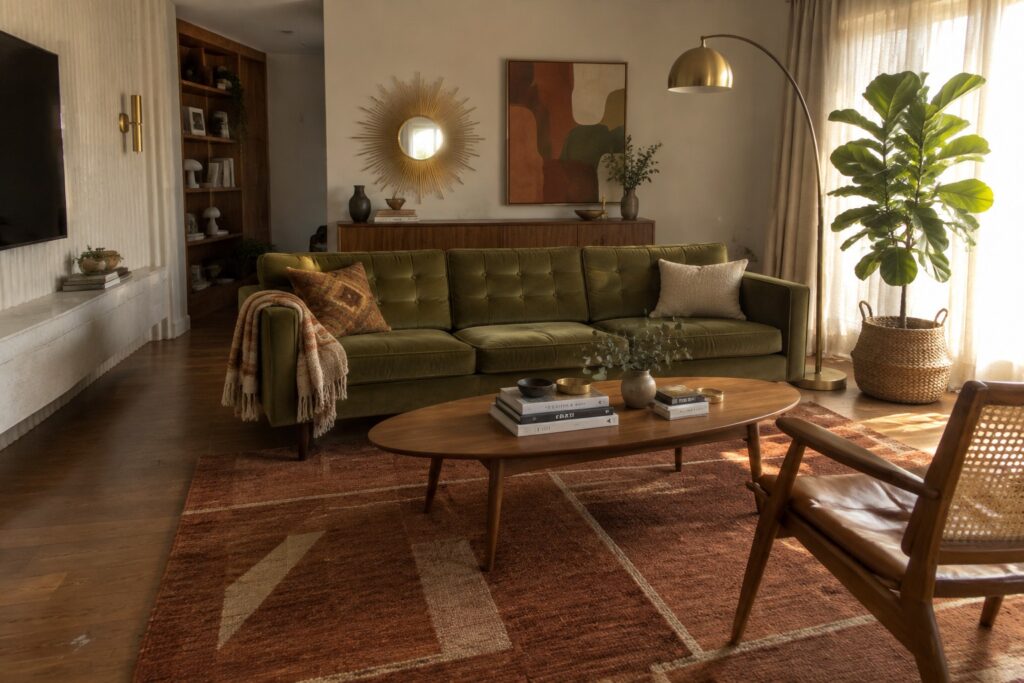
Olive and rust can make a living room feel warm without making it feel dark, but the balance depends on how the colors sit alongside the furniture, light, and finishes already in the space.
I find that olive works best when it has room to breathe, while rust can bring focus through a chair, cushions, or a piece of art.
The first thing I notice in a room is often whether its colors feel connected to the materials around them, especially wood, metal, and textured fabrics.
In a mid-century modern setting, simple shapes and thoughtful contrast help these earthy shades feel lived-in rather than overly coordinated.
I’d save the ideas that suit your room’s natural light and test the colors in smaller details before committing to a larger change.
Use Olive Green And Rust For A Warm Living Room
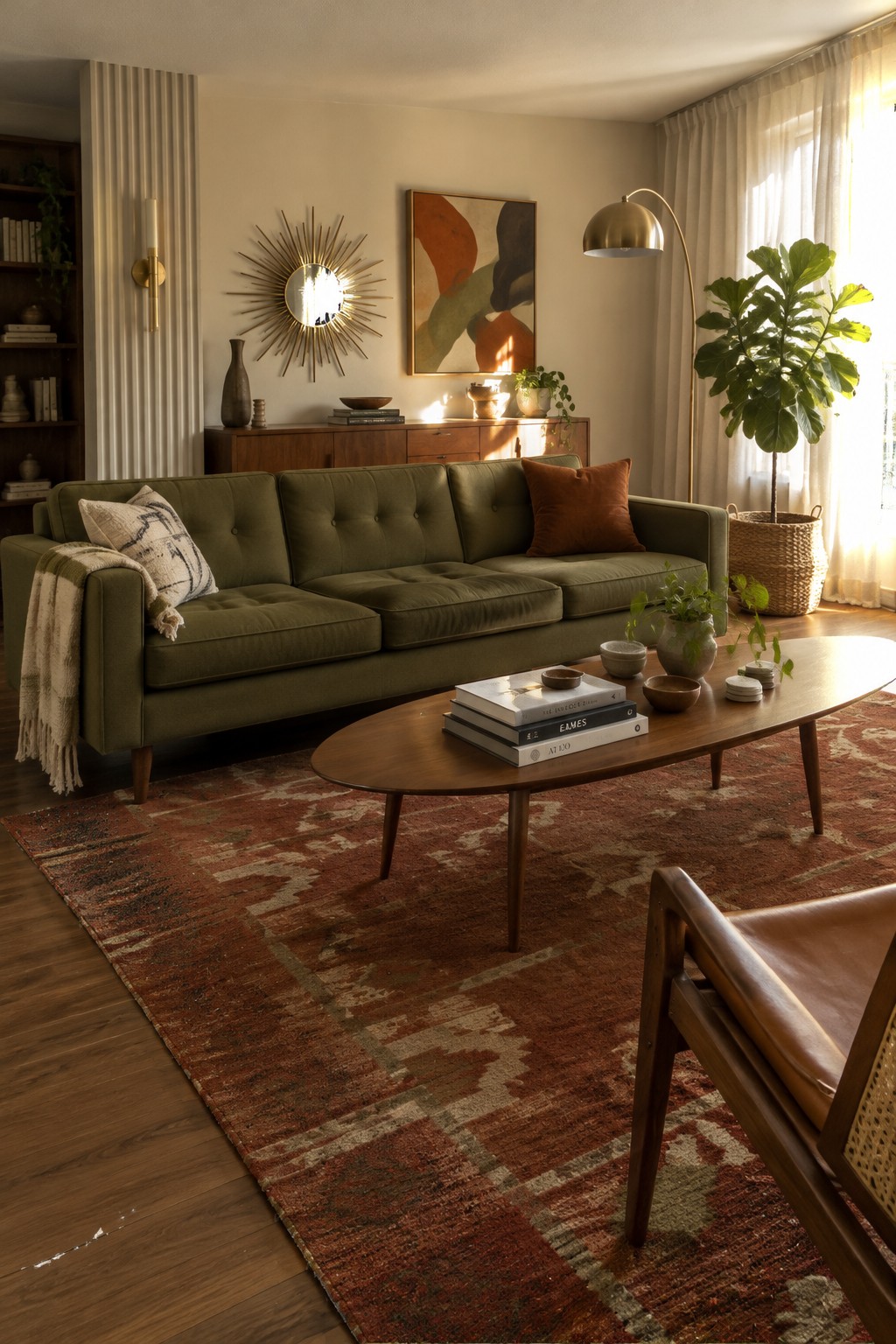
Olive upholstery is a comfortable way to bring color into a mid century modern living room, and rust gives it a bit more character. A single rust-colored cushion is enough to show how the two shades can work together without making the room feel busy.
Try this combination on a simple sofa, then repeat the rust in a rug or small piece of art if you want the colors to feel connected. It suits rooms with wood furniture especially well; keep the larger pieces in muted shades so the stronger colors have room to stand out.
Use Olive Walls As A Backdrop For Rust

Olive walls give a living room a settled, easygoing feel, while rust-colored seating brings in a warmer note. This combination works especially well when the larger pieces stay simple, so the color can carry the room without making it feel busy.
Try the pairing in a room with good natural light, and bring in rust through a sofa or one accent chair. If you’re unsure about painting every wall, start with a single olive wall and keep nearby fabrics in quieter shades.
Use Olive and Rust in Separate Pieces
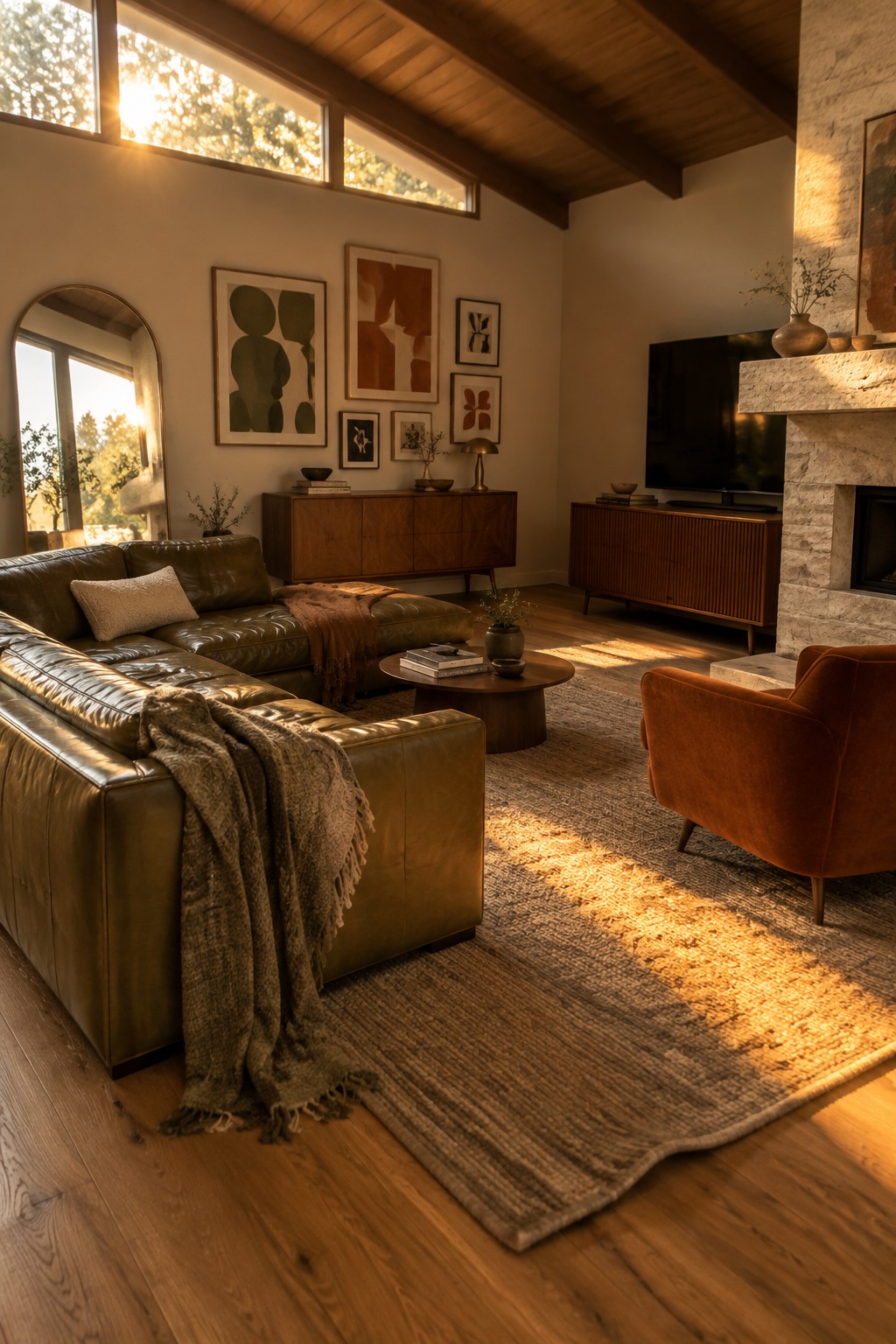
Olive seating and a rust-colored accent chair bring both shades into the room without making the palette feel busy. The colors feel at home with mid-century furniture, especially alongside warm wood.
Try this approach in a living room with a neutral rug or walls, so the two stronger colors have room to stand out. If you’re choosing an olive sofa, a single rust chair or cushion can be enough.
Use Olive and Rust for a Cozy Mid-Century Living Room

Olive upholstery and a rust-colored wall make a comfortable color combination for a mid-century living room. The olive feels calm, while the rust gives the room a clear focal point without needing a lot of extra decoration.
Try the colors on a sofa or daybed and one wall, then keep the larger pieces simple. This approach works especially well in a room with warm wood, but use rust on a smaller area if you want a quieter look.
Use Olive Seating To Add Color

Olive chairs are an easy way to bring color into a mid-century living room without committing to painted walls. Their muted tone works well with warm wood and leaves room for rust accents elsewhere in the space.
Try this approach in a neutral room, especially if you want to keep larger pieces like the sofa simple. A rust-colored rug or throw can carry the second color through the room without making the palette feel too busy.
Use Olive Built-Ins To Set The Room’s Color

Olive built-in shelving is a practical way to bring a deeper color into a living room without covering every wall. Here, it gives the shelving a clear place in the room, while the rust-colored sofa keeps the overall palette warm.
This approach works well when you want color and storage to feel connected. Use olive on a bookcase or cabinet wall, then bring in rust through a sofa or a few smaller pieces. In a smaller room, keep the rest of the walls fairly light so the built-ins don’t feel too heavy.
Use Rust Wallpaper To Set The Living Room Palette
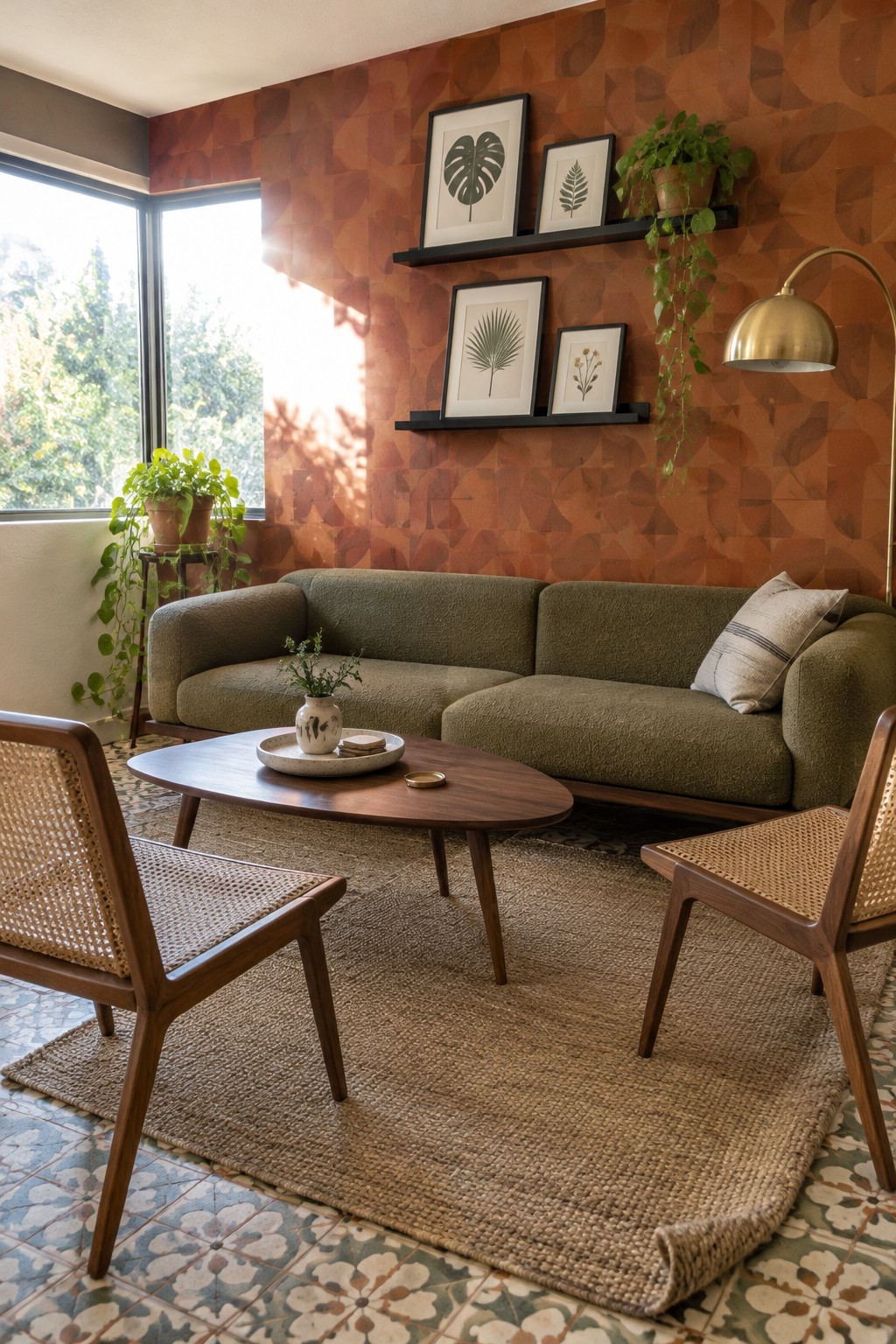
A patterned rust wall gives an olive sofa a clear place to stand out. The earthy colors feel at home together, while the print brings interest without needing more bold color elsewhere.
For a similar look, keep the larger furniture in a muted shade and use framed prints or small accents to pick up the wall’s tones. This can work well in a mid-century living room, but sample the wallpaper first since rust shades can look quite different in a sunny room.
Use Olive Seating To Ground Rust-Toned Walls
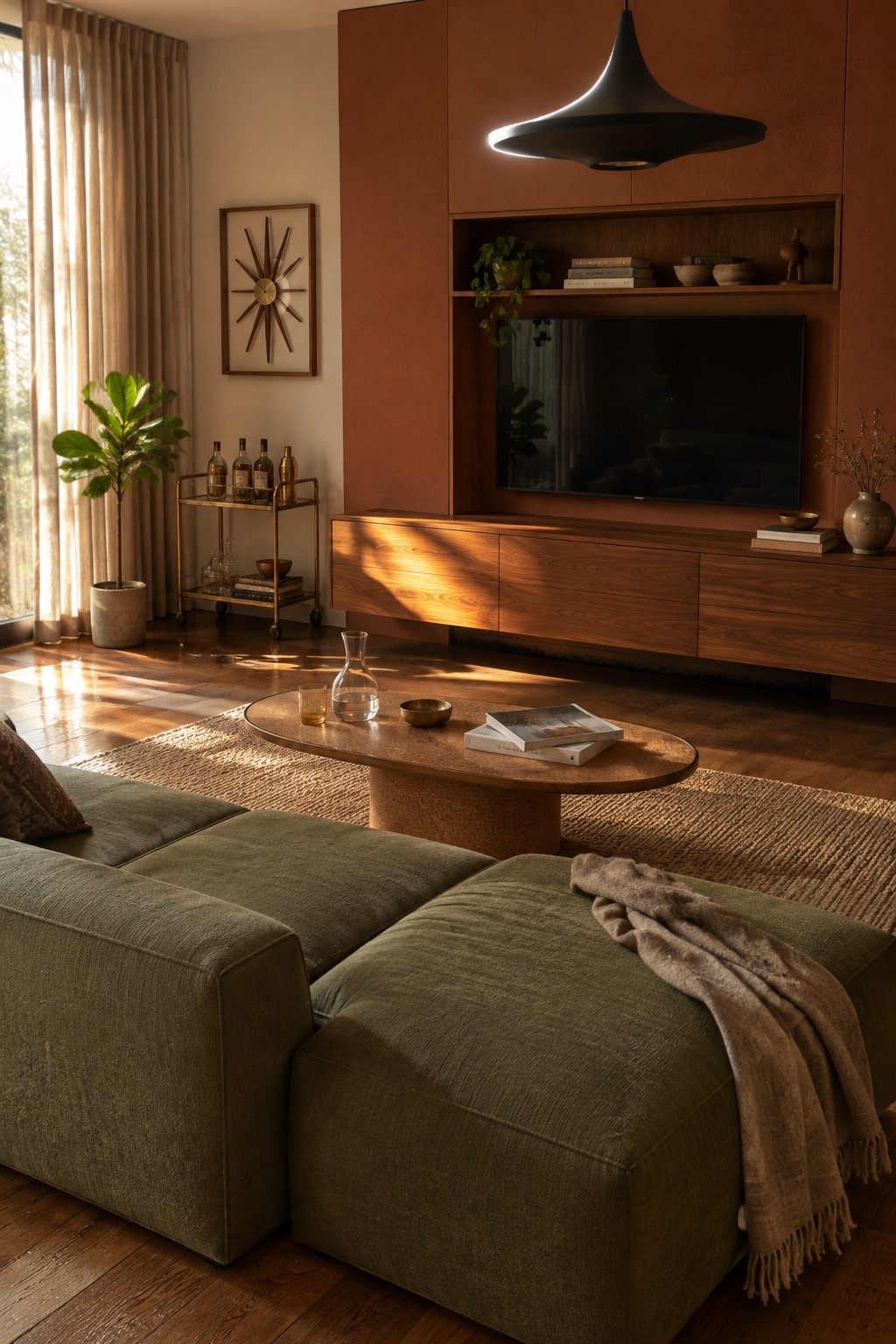
Olive upholstery is a practical way to bring color into a mid-century living room without making the whole palette feel busy. Against rust-colored wall panels, an olive sofa gives the room a steady base while letting the warmer color remain the main backdrop.
This approach works well when you want a colorful room but prefer to keep the larger furniture pieces calm. Try olive on a sofa or ottoman, then repeat it in smaller touches if needed. Keep the rust to one main wall or feature so the two shades have room to stand apart.
Use Wood Slats To Add Mid-Century Character
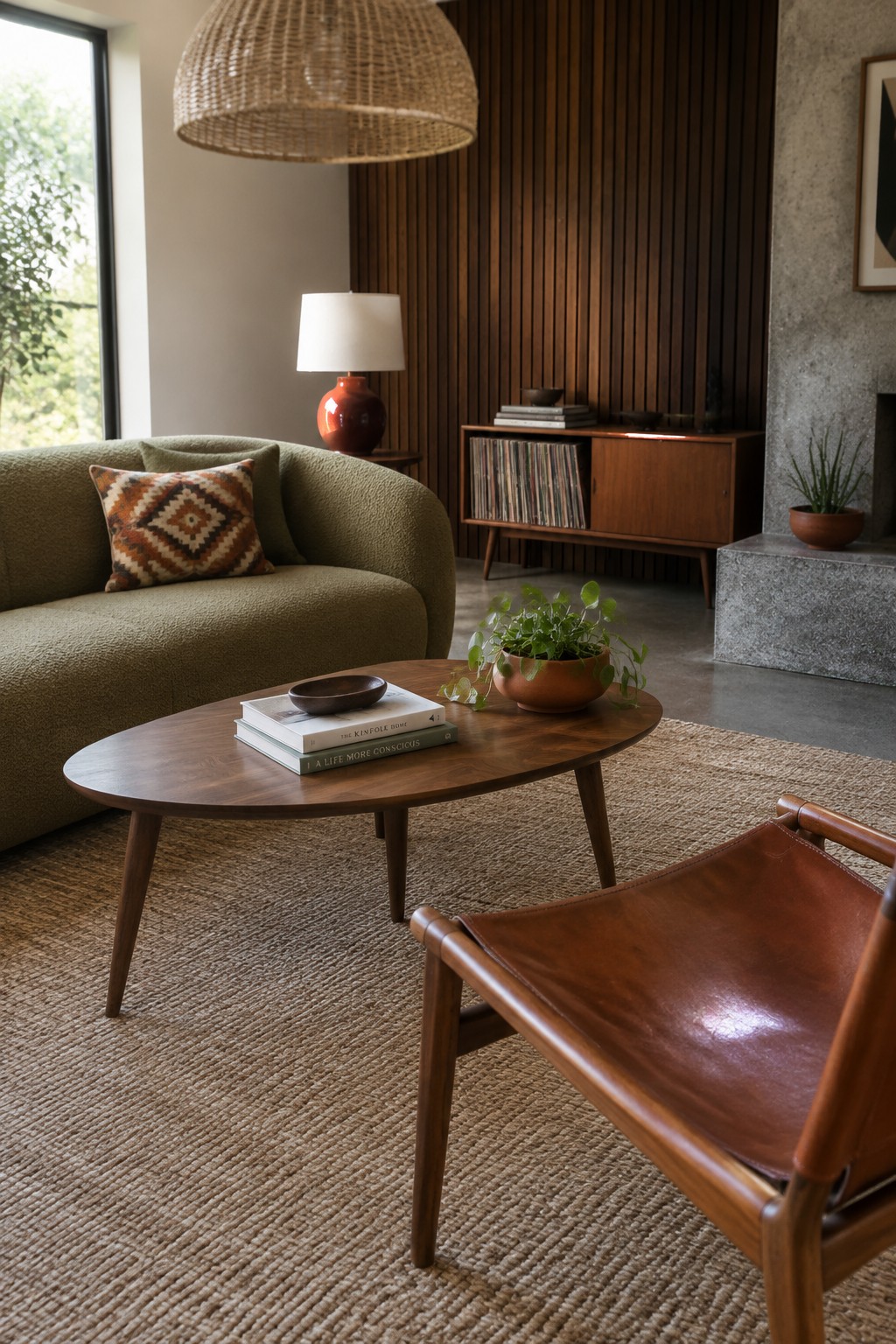
A vertical wood-slat wall is a simple way to give a living room a mid-century feel. The dark timber adds a clear backdrop for olive and rust, so those colors can show up in smaller pieces instead of covering every surface.
This works well on one wall behind a sofa or media cabinet. Keep the slats in a warm wood tone, then bring in olive upholstery or a rust-colored accent to tie the wall into the room.
Use Rust Upholstery In An Olive Living Room
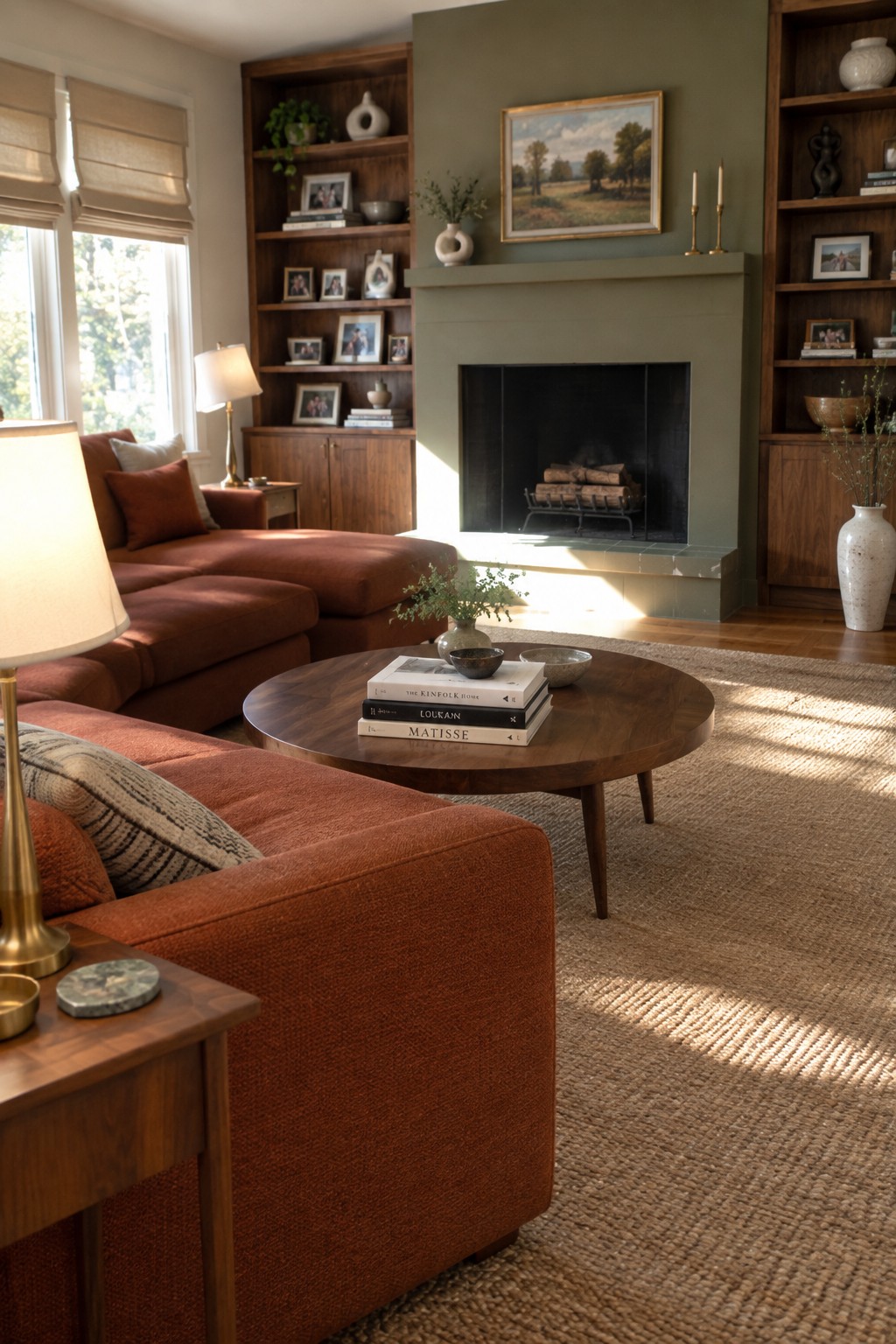
Rust-colored seating brings a clear mid-century feel to a living room, while olive on the walls gives the color a quieter place to sit. The two shades feel comfortable together without making the room look overly matched.
Try rust on a sofa or chair and keep the larger wall area olive, as seen around the fireplace here. This works especially well in a room with warm wood, but use a few lighter neutrals to keep the darker colors from taking over.
Use Rust Upholstery With Olive Accents
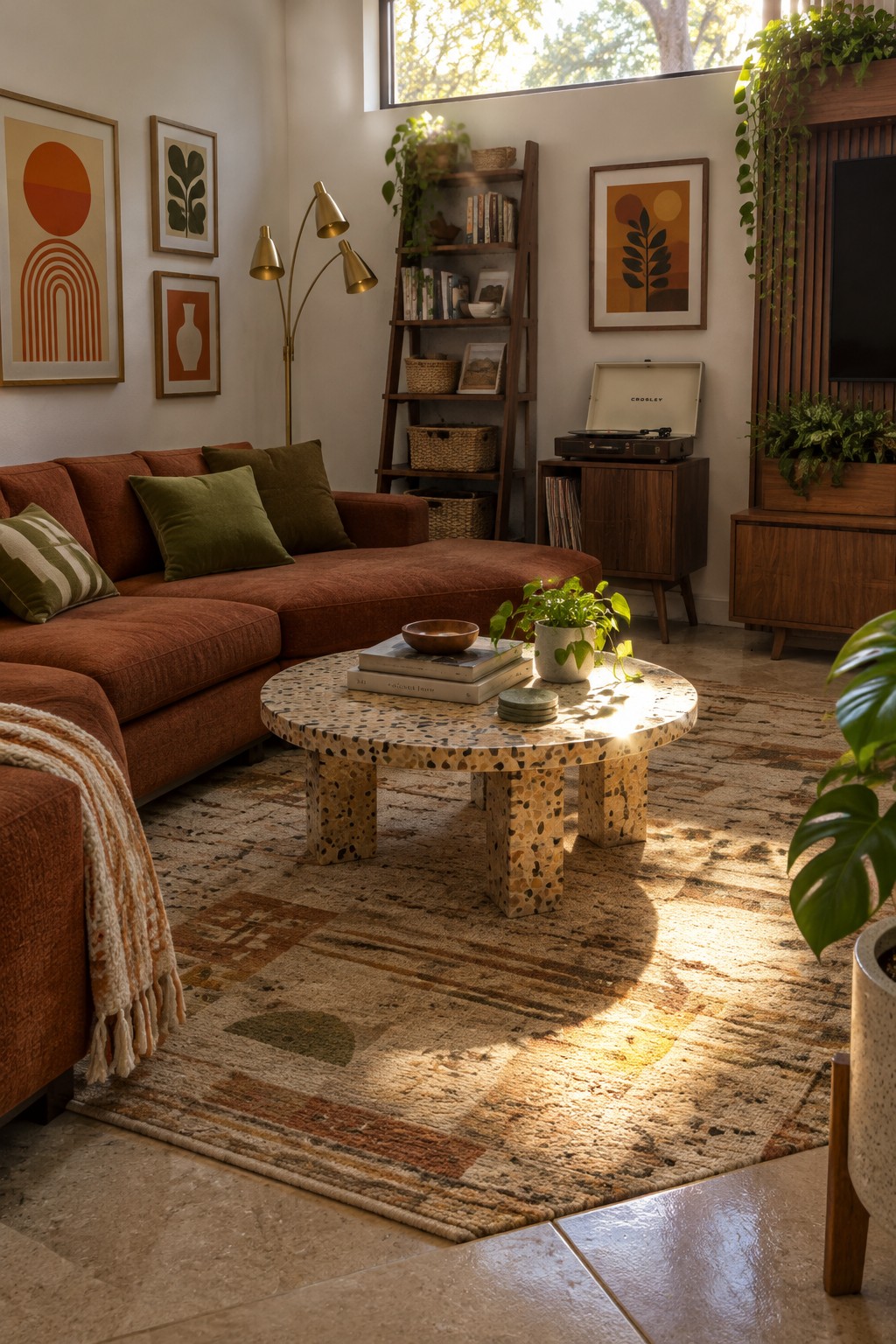
Rust-colored seating gives a mid-century living room a warm, relaxed base. Olive cushions bring in a quieter contrast, so the color scheme feels easy to live with rather than overly bold.
Try this combination on a sofa and a few cushions, then keep the larger surfaces fairly simple. It suits rooms with warm wood and natural materials, but use olive sparingly if the space already has several strong colors.
Use Rust And Olive In Mid-Century Furniture

Rust and olive can share a living room without competing when each color appears on a main piece of furniture. Here, an olive sofa sits beside a rust-patterned armchair, giving the room a relaxed mid-century feel.
Try this approach in a room with mostly neutral walls and wood finishes. Keep the patterns fairly simple, so the two strong colors have room to stand out.
Use Olive Upholstery As A Room’s Main Color

An olive sofa is an easy way to bring color into a mid-century living room without making the whole space feel busy. Its muted tone works well with the warm wood often found in this style, while rust-colored cushions or a throw add a little contrast.
Try olive on the largest seat in the room, then keep rust to a few smaller accents. This approach suits neutral walls and simple furnishings, and it gives you room to change the accents later.
Use Olive Walls With Rust-Colored Leather
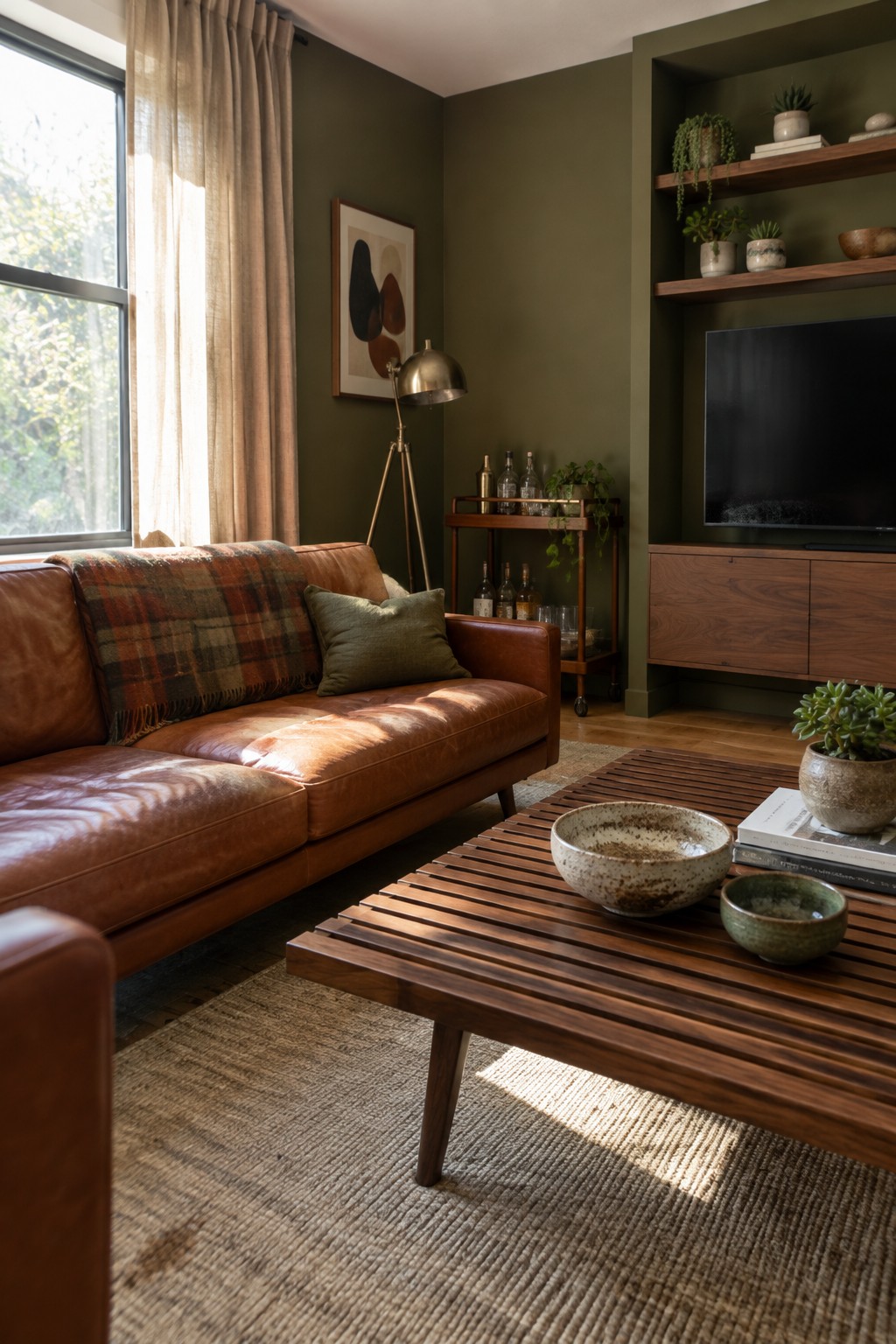
Olive walls give a living room a strong color base, while rust-colored leather brings in a warmer note. The two colors suit mid-century furniture especially well, and a simple olive cushion can help the leather feel at home.
Try this approach in a room with good natural light, since deep green can feel quite dark in a smaller or shaded space. If you want to keep the wall color, start with one rust-colored chair or sofa rather than using it on every large piece.
Use Olive And Rust On Different Furniture Pieces

Olive and rust can share a living room without competing when each color has its own place. Here, an olive sofa and a rust armchair give the room a clear mid-century feel while keeping the color mix easy to live with.
Try this approach when you want color but prefer not to paint the walls. Keep the larger seat in olive and use rust on a single chair or smaller accent. Warm wood furniture helps the two shades sit comfortably together.
Use Olive And Rust In A Small Living Room

Olive and rust can work well in a smaller living room when they appear on a few key pieces rather than across every surface. The olive chair and rust sofa give the room distinct color without making the seating area feel too busy.
Try this approach in a room with neutral walls or natural wood floors, and let the furniture carry most of the color. A patterned rug can include both shades, but keep its pattern muted so the larger pieces stay easy to live with.
Use an Olive Built-In As The Room’s Main Color

A large olive built-in gives a living room a clear color direction without needing to paint every wall. Here, the rust sofa brings in a warm contrast, while the green cabinetry keeps the television and storage in one tidy area.
This works especially well in a room with a long wall that can hold custom shelving and cabinets. If you want to try the idea on a smaller budget, paint existing shelves olive and use rust in a sofa, chair, or a few cushions.
Use Rust Wood Paneling For A Warm Living Room

Rust-colored wood paneling gives a living room a strong mid-century feel without relying on lots of decoration. It works especially well alongside olive upholstery, since the two colors feel natural together rather than overly matched.
Try this on one main wall, then keep the larger furniture simple so the paneling can stand out. It suits a room with warm wood or vintage pieces, but a smaller space may feel crowded if every wall is paneled.
Use a Rust Rug to Bring Olive Seating Together

A rust-colored rug is an easy way to bring olive furniture into a warmer color scheme. Here, the rug gives the seating area a clear center, while the olive sectional keeps the larger piece of furniture calm and practical.
This idea works well in a mid-century living room with wood floors and simple furniture. Choose a rug large enough for the main seating to sit partly on it, and repeat rust in a pillow or chair if you want the colors to feel connected.
Use Rust Accents To Warm Up Olive Seating
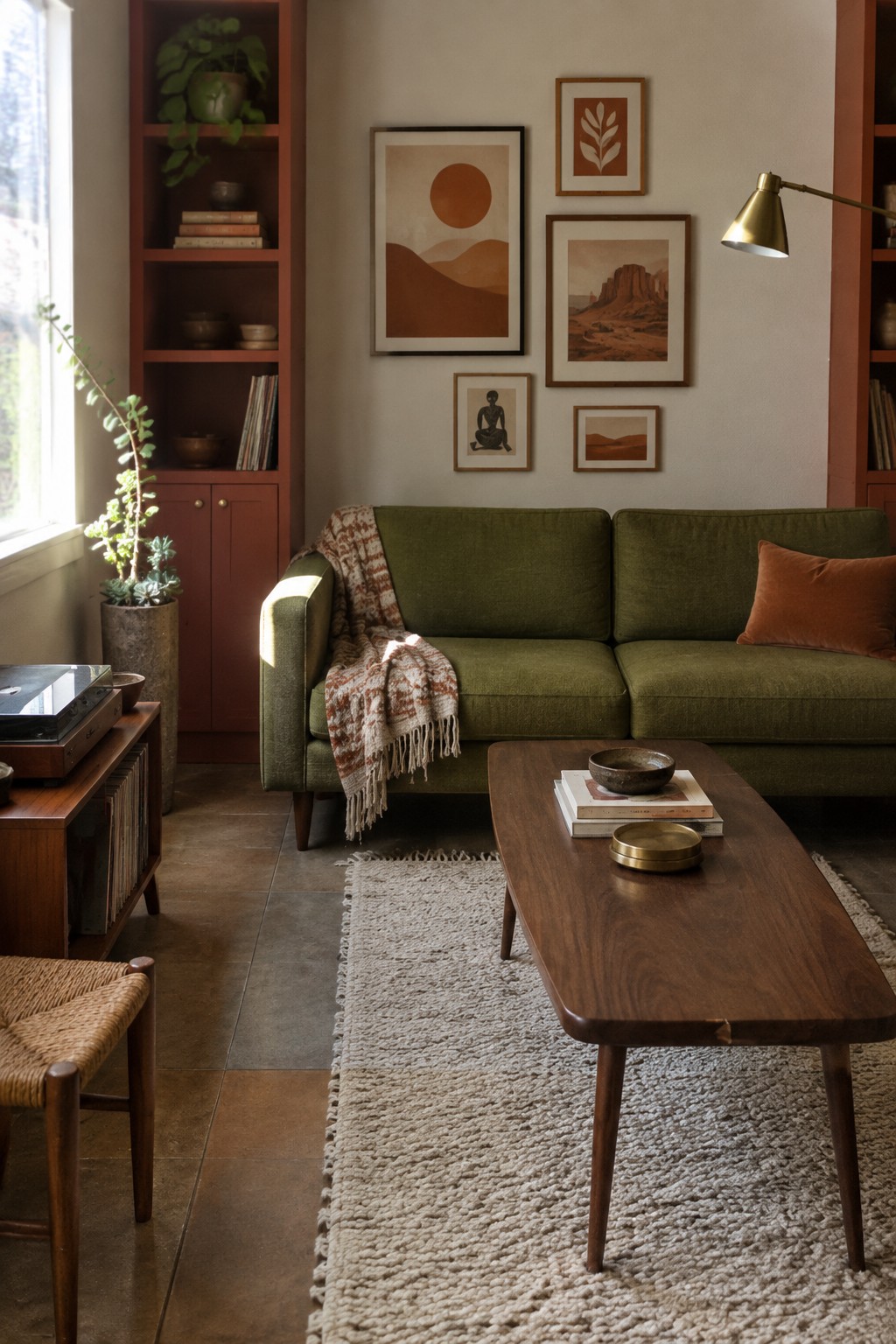
An olive sofa can be a comfortable starting point for a mid-century living room. Rust-colored touches bring in a warmer note, while the earthy colors feel at home alongside wood furniture.
Try a rust cushion or a patterned throw before adding more. This works especially well when you want a colorful room without painting the walls, and a few accents are usually enough.
Frequently Asked Questions
Q: How can I use olive and rust without making my living room feel too dark?
A: Keep the larger pieces, like walls or a sofa, in a lighter neutral, then bring in olive and rust through cushions, a rug, or an accent chair. Warm wood and a few cream details help the colors feel balanced rather than heavy.
Q: What colors go well with olive and rust in a mid-century modern room?
A: Cream, warm white, and walnut are easy companions. A little mustard or muted blue can add contrast, but let olive and rust stay the main colors.
Q: Can I use olive green on the walls if my living room is small?
A: Yes, especially if the room gets good natural light. Try olive on one wall first, and keep the ceiling and larger textiles light so the space still feels open.
Q: What’s an easy way to try this palette without buying new furniture?
A: Swap in olive and rust pillow covers, then add a throw or a small piece of art in a similar tone. It’s a low-commitment way to see how the colors work with your existing wood and fabrics.
