
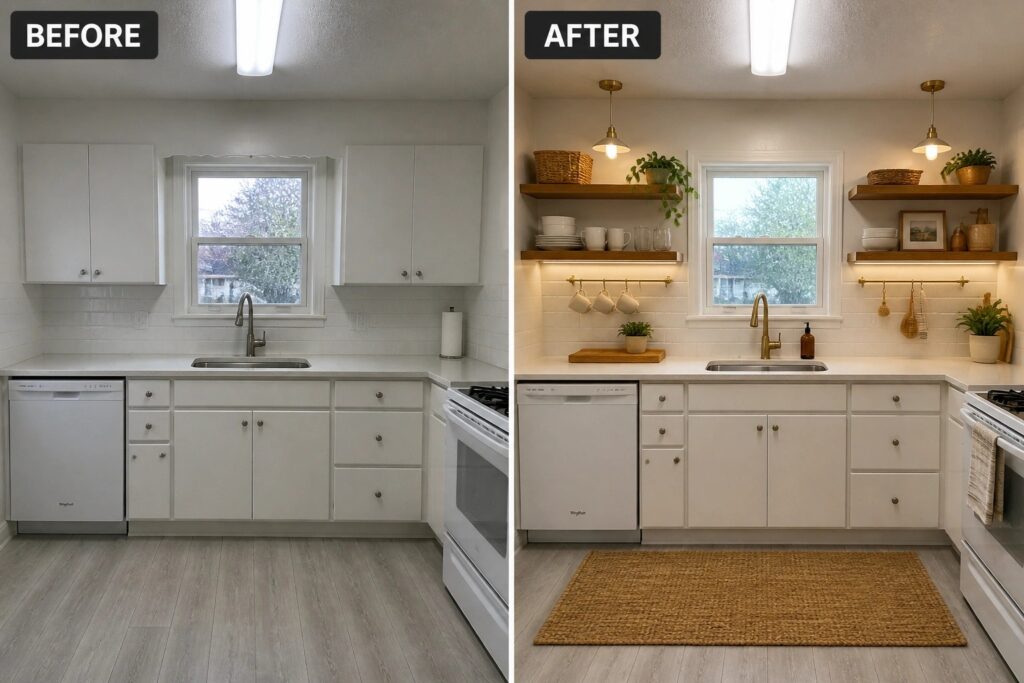
White kitchens can end up feeling bare when every surface stays bright and smooth with no variation to break it up.
I have found that adding wood tones or softer textiles often makes the space feel more settled without needing a full overhaul.
It is the kind of shift that shows in how the room gets used day to day.
Layering in a few warmer elements tends to pull everything together in a way that lasts.
Some of these updates are the kind I would test first if my own kitchen started to feel too stark again.
Add Wood Shelves And Pendant Lights To Warm Up A White Kitchen

A white kitchen often feels cold when the surfaces stay flat and there is no variation in texture or light. Here the main change was adding a few open wood shelves above the counters and hanging two simple pendant lights over the sink area. That single shift broke up the blank wall space and brought in a softer, more lived-in feeling without replacing any cabinets.
This idea suits small to medium kitchens where you want warmth but do not need more closed storage. Use the shelves for everyday items like plates and glasses rather than filling them with too many pieces. Warm bulb pendants make the biggest difference once the sun goes down.
Bring In Wood To Warm Up A White Kitchen

White kitchens often feel cold when every surface stays bright and cool toned. Replacing the white island with a solid wood version and swapping the metal stools for wooden ones with woven seats instantly softens the space. The addition of two amber glass pendants over the island adds a gentle glow that helps the rest of the room feel more balanced.
This idea works best in kitchens that already have solid cabinetry and layout but need more warmth. Start with one large wood element like an island or a new table, then bring in matching stools or chairs. Keep the rest simple so the wood can do the main work without crowding the room.
Add Lighting To Make A White Kitchen Feel Warmer
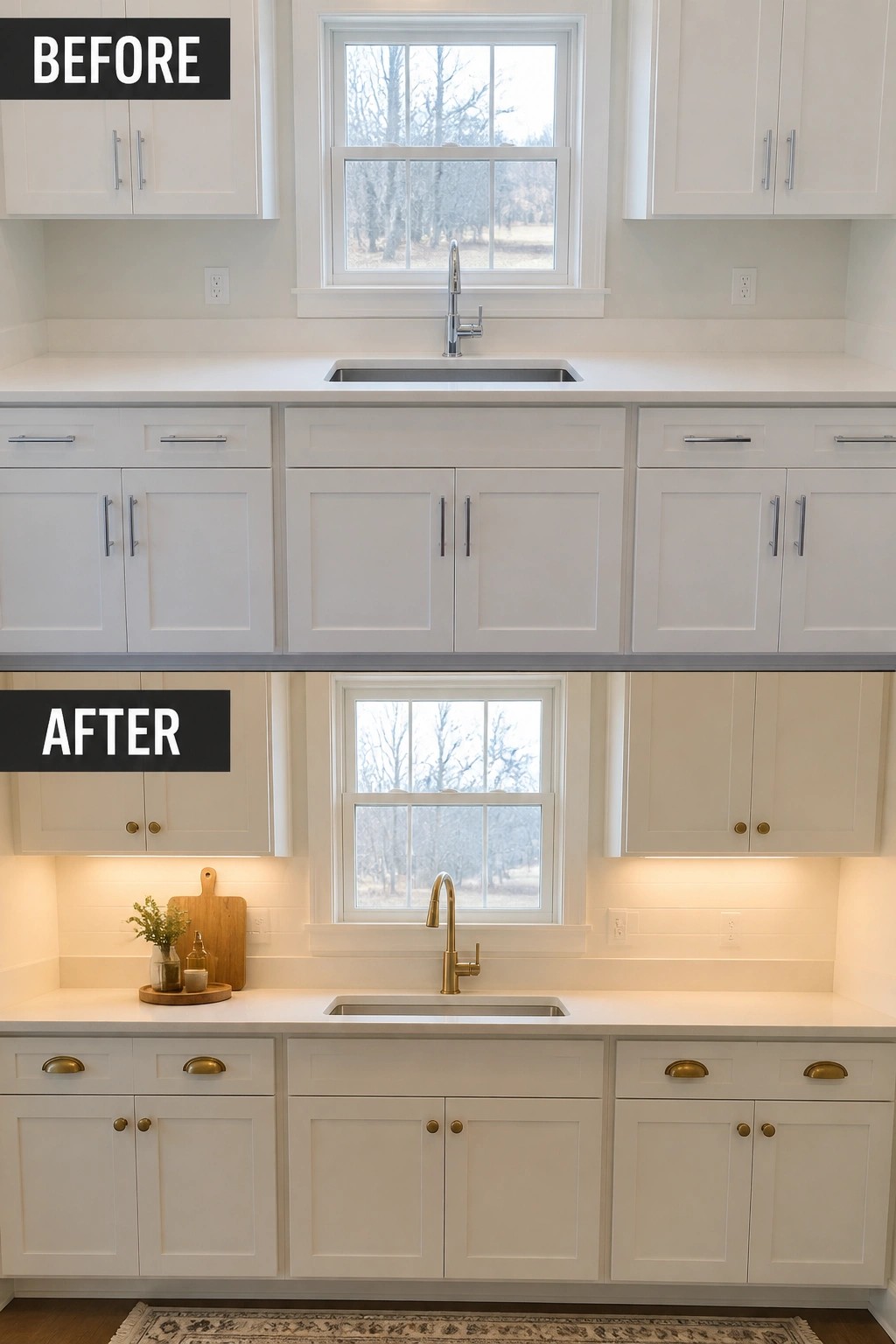
White kitchens can look flat and cold when everything stays the same bright tone with no contrast. In this case the change came from adding a strip of warm light under the upper cabinets along with new gold hardware and a few simple items on the counter. The light fills the space below the cabinets and creates a softer glow that makes the whole room feel more inviting without changing the cabinets themselves.
This works best in kitchens that already have decent storage but lack any source of low light. Try placing the lights on a dimmer so you can adjust them in the evening. Keep the rest of the counters fairly clear so the light has room to show.
Add A Warm Backsplash To Balance Cool White Cabinets

Many white kitchens start out looking clean but end up feeling a little stark once everything is installed. Swapping out a plain white tile backsplash for something with color and texture makes the biggest difference here. The orange terracotta tile brings immediate warmth while the added wooden shelf gives the wall a bit more purpose without crowding the space.
This approach works best in kitchens that already have white cabinets and counters but need one strong element to stop them from feeling cold. Keep the change focused on the main cooking wall so it stays simple to manage. A single warm material like tile or even a painted surface can shift the whole room without requiring new cabinets or counters.
Paint The Lower Cabinets A Different Color
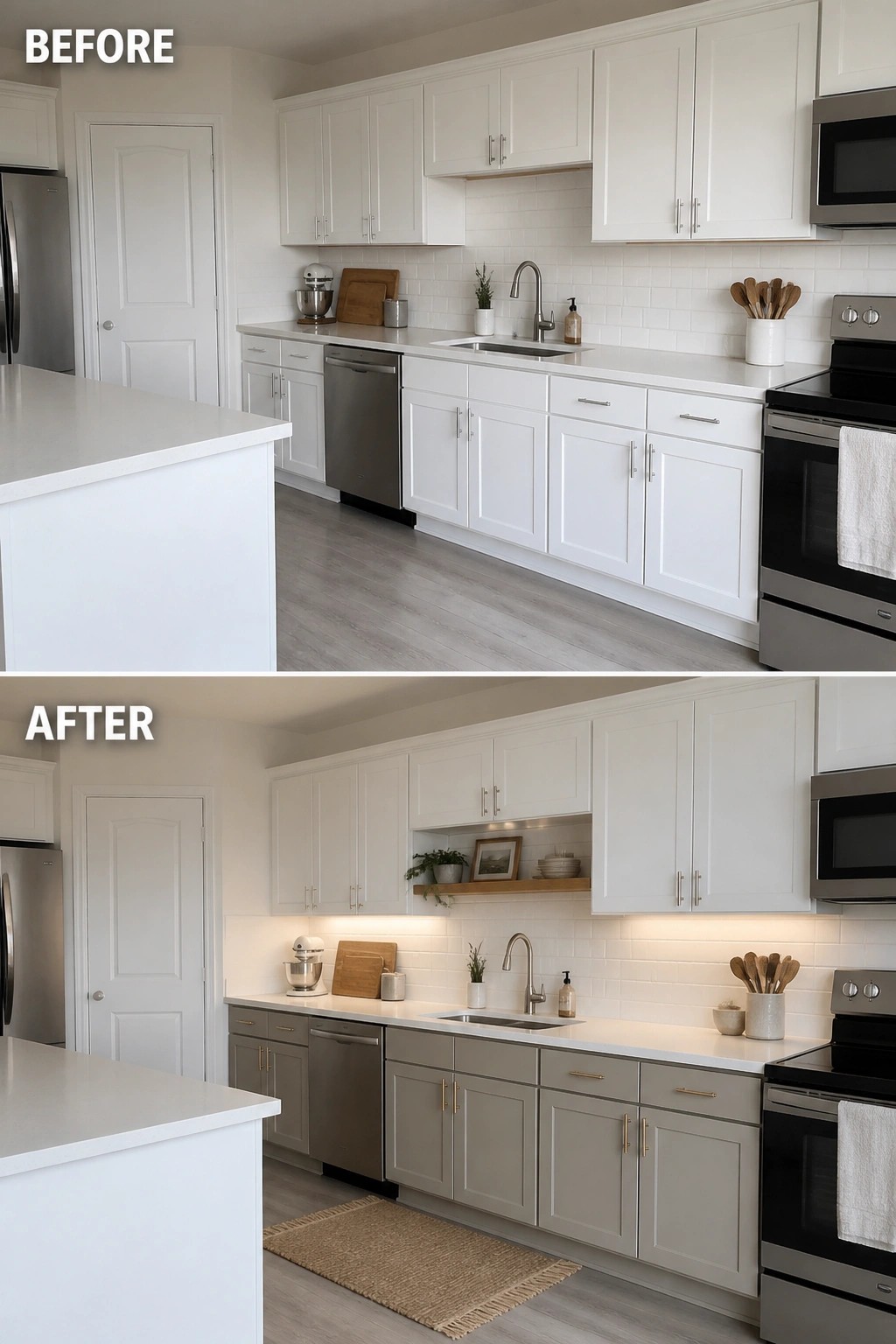
One simple way to make an all-white kitchen feel less stark is to paint just the lower cabinets a softer shade. In this case the base cabinets were changed from white to a warm gray, which immediately grounds the space and reduces the cold feeling that comes from too much white cabinetry. The under-cabinet lighting helps too, but the color shift does most of the work.
This approach works well in kitchens that already have decent layout and storage. Choose a color that still reads neutral so it blends with the upper cabinets rather than fighting them. Keep the rest of the room simple so the new cabinet color stays the main change.
Make A White Kitchen Feel Warmer With Wood

Many white kitchens start out feeling flat because every surface reflects the same cool tone. Switching the countertop to wood changes that right away by bringing in a natural material that absorbs light instead of bouncing it back. The under-cabinet lighting in the after photo also helps by casting a soft glow across the new surface instead of leaving the counters in shadow.
This idea suits any all-white kitchen that looks too bright during the day and empty at night. You can start with just the counters if a bigger remodel is not in the budget, then add simple lighting strips under the upper cabinets where you actually prep food. Keep the wood tone medium so it contrasts without overwhelming the white cabinets.
Add Rugs And Curtains To Warm Up A White Kitchen
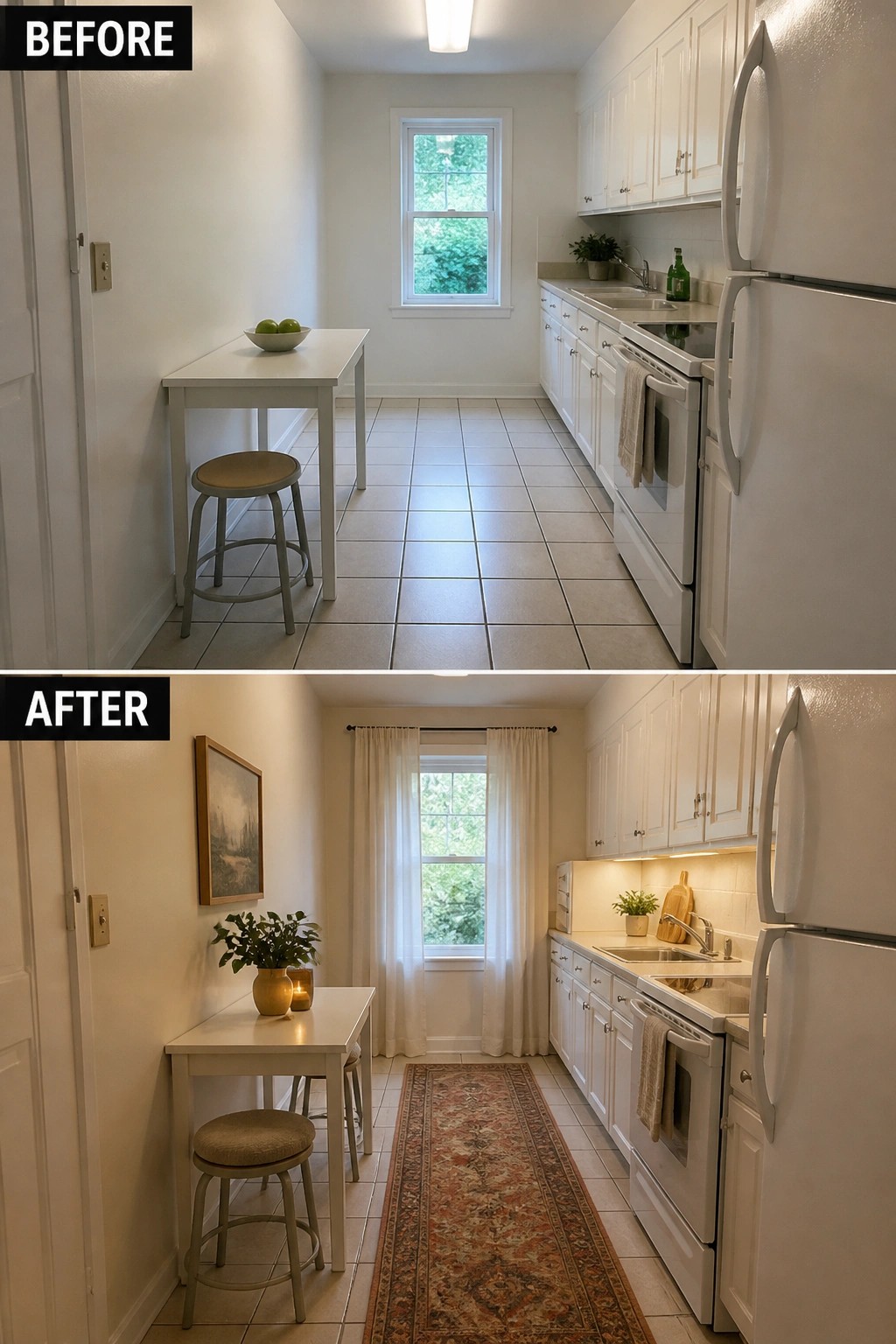
A long white kitchen can feel chilly when the surfaces are all the same and nothing softens the lines. In this case, adding a runner rug down the center and hanging simple curtains at the window made the space feel finished and much less stark. The rug breaks up the tile floor and the curtains add a bit of texture and depth around the window.
This approach works well in narrow or all-white kitchens where you want warmth without changing the cabinets or counters. Start with one rug that fits the length of the walkway and pick curtains that hang just below the sill so they do not crowd the space. Keep the rest of the styling light so the room stays practical for daily use.
Add Pendant Lights Over The Island

White kitchens often feel cold when the only light comes from recessed ceiling fixtures. Adding pendant lights above the island brings the light source lower and creates a softer, warmer glow that makes the whole room feel more inviting.
This change works best in kitchens with a large island that doubles as a seating area. Use two or three lights spaced evenly, and pick warm bulbs so the light feels gentle instead of clinical. Keep the shades simple so they do not compete with the white cabinets.
Paint The Walls To Warm Up A White Kitchen

A cold white kitchen often feels flat because everything blends together. Painting the walls a warm terracotta color gives the space an instant shift in mood. The change turns the cabinets into a softer backdrop instead of the main feature. Adding simple open shelves on either side of the window also helps break up the blank wall space and brings in a bit of natural texture.
This idea works best in smaller or medium kitchens where you want warmth without a full renovation. Choose a color that leans slightly earthy rather than bright orange so it still feels calm. Keep the shelves light and do not overload them with too many items. The goal is just enough contrast to make the room feel lived in.
Switch To Wood Flooring To Warm Up A White Kitchen

A white kitchen often feels cold when the floors are all hard, shiny tile. Changing to wood planks adds a softer tone and some natural variation that makes the whole space feel more comfortable without changing the cabinets or counters.
This idea works best in kitchens that connect to living areas or get plenty of natural light. Pick a medium wood tone with a bit of grain so it does not look too perfect, and keep rugs or other layers minimal so the floor stays the main source of warmth.
Add Natural Textures To Warm Up A White Kitchen

Many white kitchens start out looking clean but end up feeling flat. The open shelves in the before photo sat mostly empty, which left the space feeling bare and a little cold. Adding woven baskets, a few textiles, and some small plants filled the same area without making it busy.
This approach works best in kitchens that already have plenty of white cabinets and counters. Start with one or two baskets on open shelves to hide less attractive items, then add a towel or runner in a natural fiber. Keep the number of new pieces small so the room still feels simple.
Add Wood Trim To The Range Hood
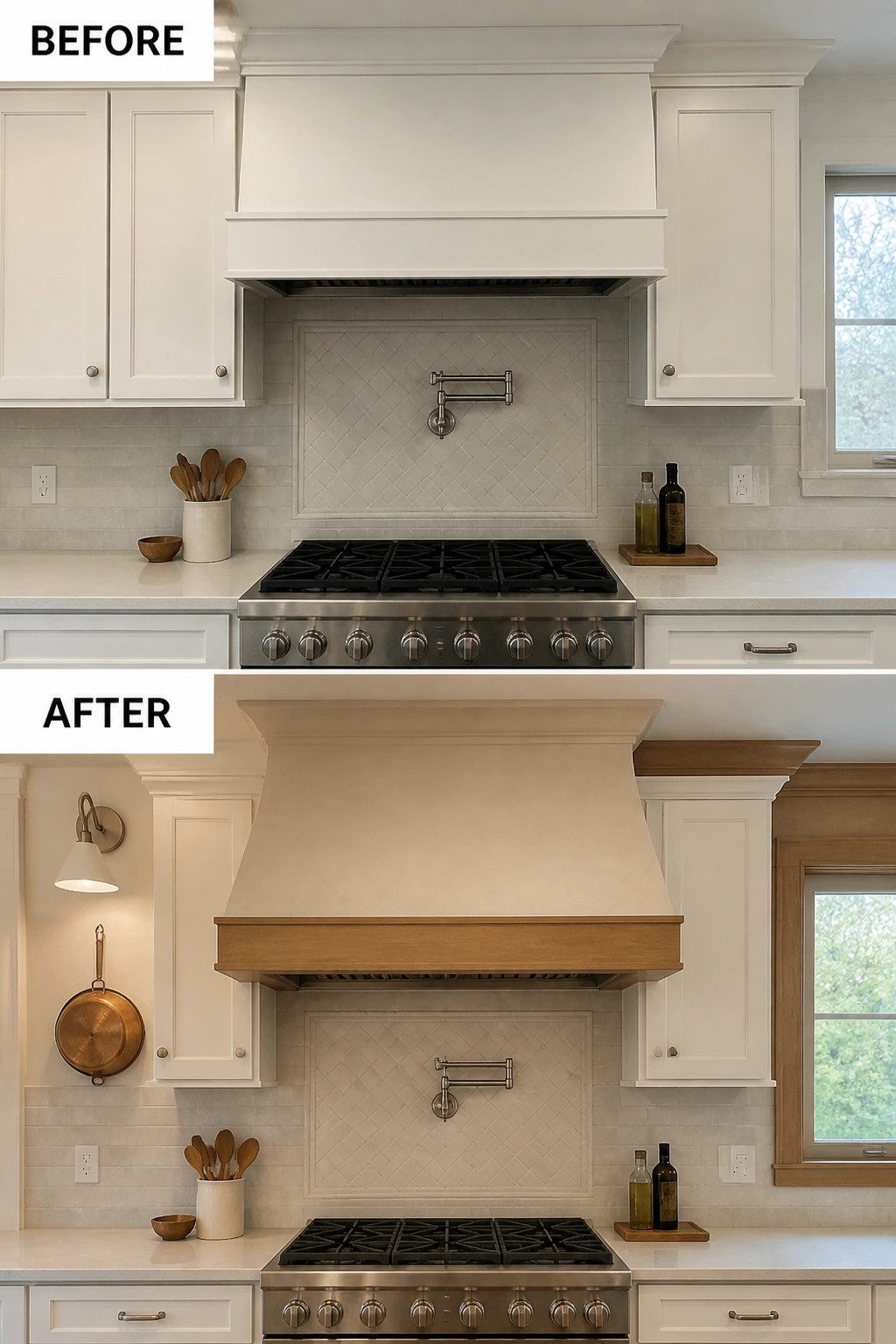
A simple way to warm up a white kitchen is to add a wood band along the bottom edge of the range hood. The change pulls the eye to the cooking area and stops the all-white surfaces from feeling flat and cold.
This idea works best when the hood sits between cabinets and needs a stronger presence. Match the wood tone to window trim or open shelving so it feels like part of the original design rather than an afterthought. Keep other surfaces light so the wood adds just enough contrast.
Soften A Plain Kitchen Window With Curtains And A Shelf
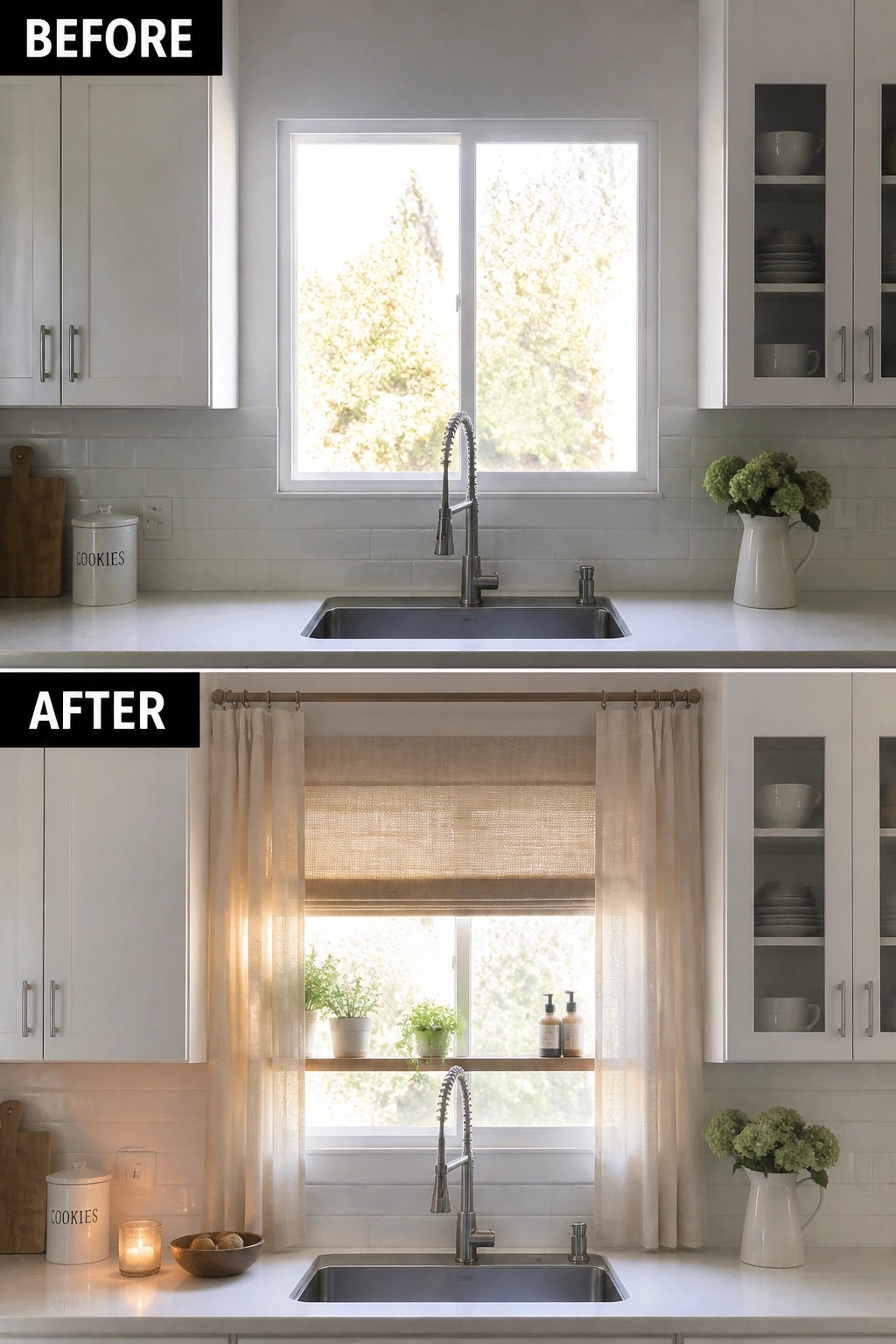
A bare window above the sink often makes a white kitchen feel colder than it needs to. Adding a simple rod with light curtains on each side and a narrow shelf across the middle brings in the softness and texture that was missing before.
This idea works best in kitchens where the cabinets and counters are staying the same. Use sheer or lightweight fabric so the window still gets plenty of light, and keep the shelf narrow enough that it does not get in the way of daily use.
Add Patterned Flooring To Warm Up White Tiles

A plain white floor can leave a kitchen feeling stark even when the cabinets are nice. Switching to a patterned tile with warm tones gives the space more life and helps tie the whole room together.
This works best in smaller or galley kitchens where the floor is a big visual surface. Choose a durable tile that can handle daily use and keep any added rugs simple so the pattern stays the main feature.
Add Baskets And Lighting To Warm Up A Pantry
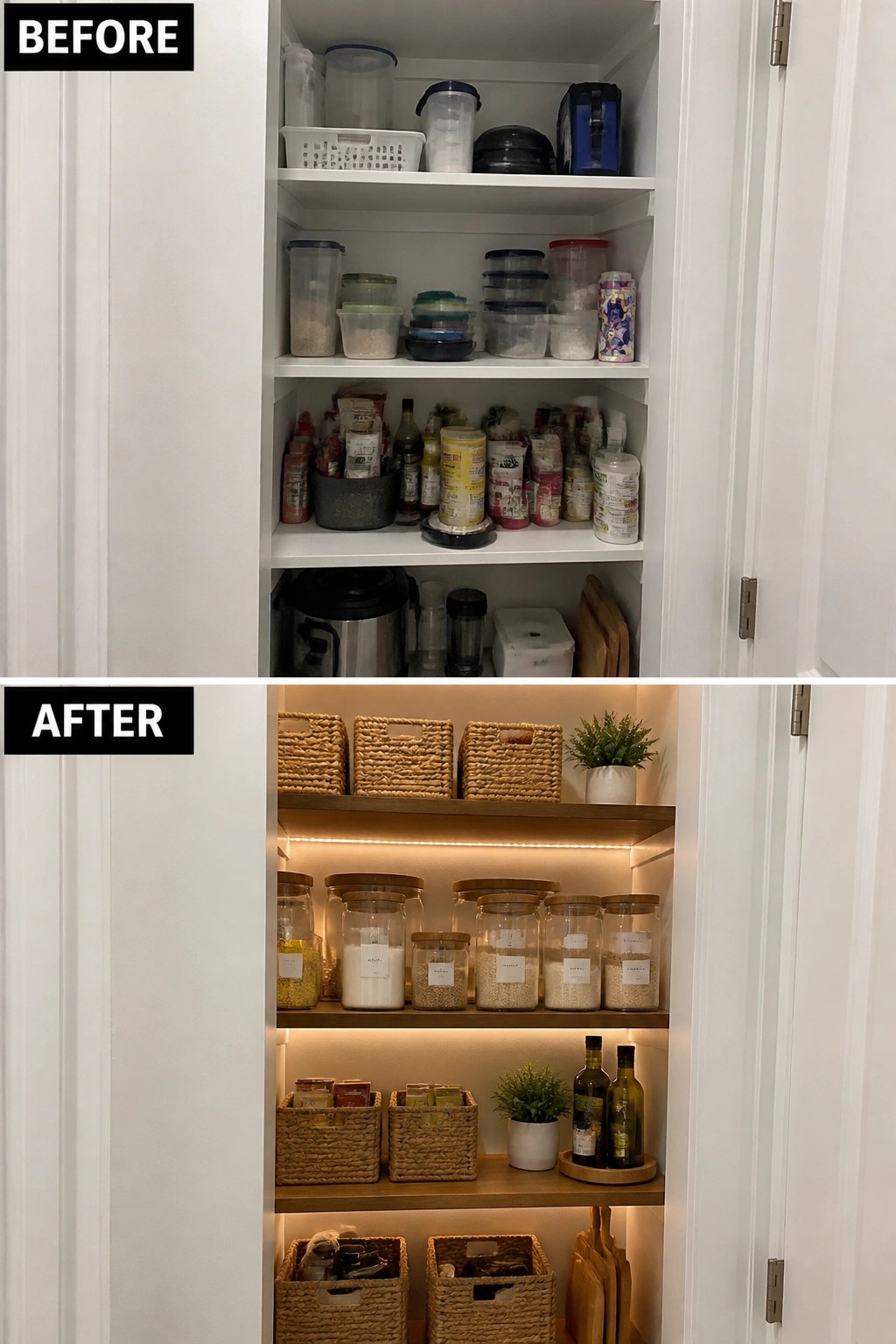
A plain white pantry can feel stark when everything sits out in mismatched containers. Switching to woven baskets on the shelves and uniform glass jars with labels gives the space order while the wood tones and soft lighting add the warmth that white cabinets often lack.
This approach works well in any kitchen where storage sits behind open doors or in a walk-in area. Start by clearing the shelves completely, then group items by type so each basket or jar has a clear purpose. The lighting strips under the shelves make it easier to see what you have without adding much cost or effort.
Replace Solid Cabinet Doors With Glass And Lighting

One simple way to warm up a white kitchen is to open up the upper cabinets. Here the solid doors were replaced with glass fronts set in wood frames, and small lights were added inside so the dishes show through instead of hiding behind a blank surface.
This idea works best when your cabinets are still in good condition and you want to add visual interest without a full renovation. It suits kitchens that already have enough storage and can handle a bit of open display. Keep the items inside fairly uniform so the look stays calm rather than busy.
Layer Textiles And Lighting To Warm A White Kitchen Nook
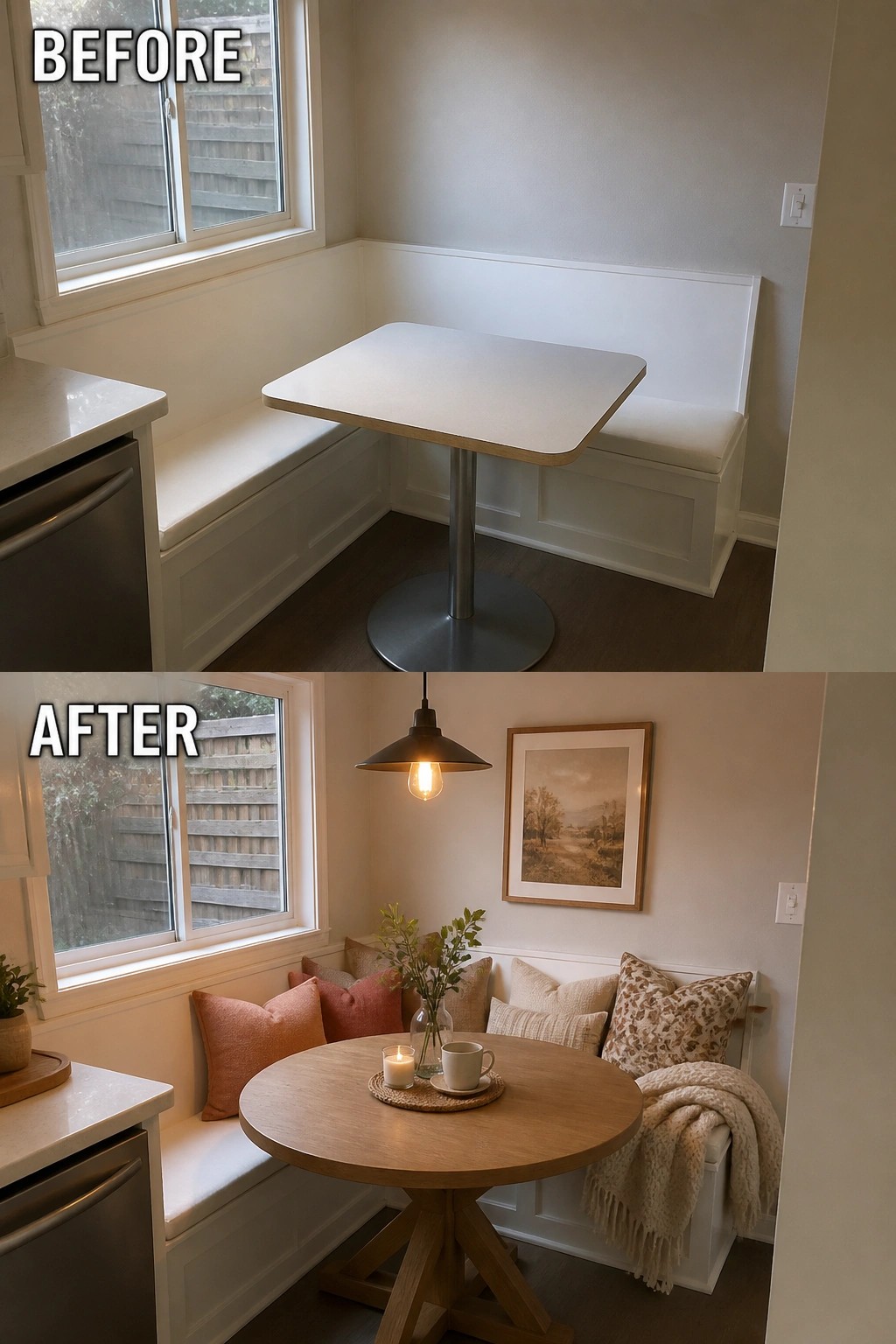
A plain built-in bench next to a simple table often leaves a white kitchen feeling bare and chilly. Adding a mix of pillows in soft colors, a throw, and a hanging pendant light brings in warmth without changing the cabinetry or walls. The round wood table also helps by softening the sharp lines that made the space feel stark.
This approach works well in small kitchen corners where you want people to linger. Start with a few pillows in different textures and add one light source that hangs low over the table. Keep the bench cushion light so the added layers stand out and the whole spot feels inviting rather than crowded.
Add A Windowsill Herb Garden

A single plant on the sill can leave a white kitchen feeling a bit bare. Swapping it for several terracotta pots filled with different herbs turns the same spot into something useful and alive. The earthy pots and fresh green leaves bring warmth without adding clutter.
This idea works best in kitchens that get steady light. Keep the number of pots modest so the sill stays clear for everyday tasks. Choose herbs you actually cook with and let them stay in simple matching containers.
Add A Wood Beam To Warm A White Kitchen
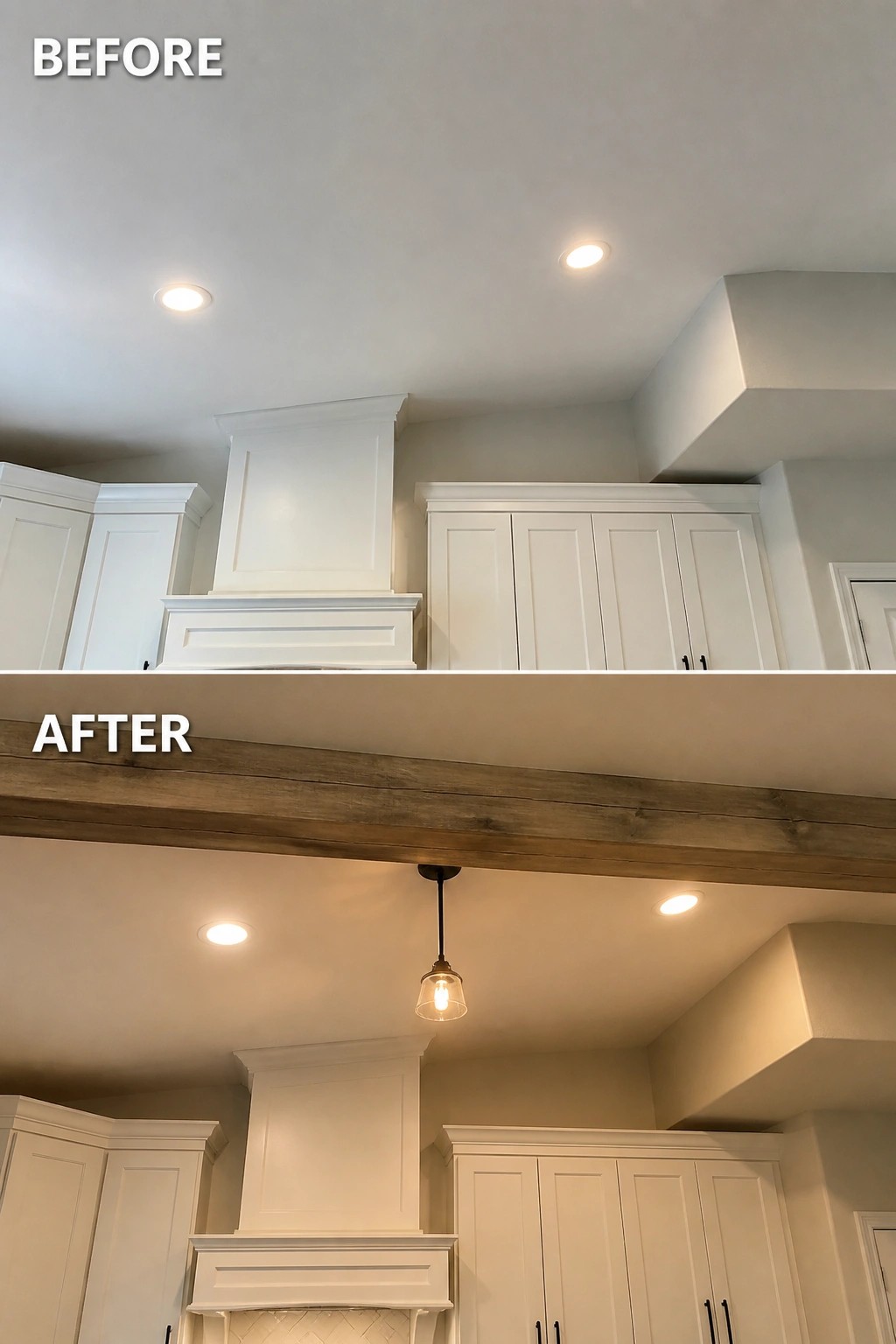
White kitchens often feel cold when the ceiling and upper walls stay flat and plain. Adding a wood beam across the open area above the cabinets gives the space a focal point and brings in natural texture that softens all the white.
This idea works best in homes with higher ceilings where the space above the cabinets looks empty. Keep the beam simple and let one pendant light hang from it so the warmth comes from the wood itself rather than from extra decor.
Add Open Shelving With Lighting To Warm A White Kitchen

A long stretch of blank wall above the counters can make even a clean white kitchen feel a little cold. Adding a pair of simple wooden shelves breaks up that empty space and gives you a place to keep the things you actually use, like plates, bowls, and a few small pieces of pottery. The lights tucked under the shelves add a soft glow that changes the mood without needing to repaint or replace the cabinets.
This idea works best in kitchens where the cabinets are already in good shape but the room still feels flat. Keep the shelves fairly shallow so they do not crowd the workspace, and use them for items you reach for often rather than just decoration. A single warm wood tone is usually enough to soften all the white.
Frequently Asked Questions
Q: How much wood is too much in a white kitchen? A: Add just two or three wooden pieces like open shelves and a stool. This keeps the look balanced while warming up the cold surfaces. Watch how the light plays off the grain.
Q: What lighting works best for coziness here? A: Swap your bulbs for warmer tones first. Then hang a pendant over the table with a fabric shade. The soft glow makes evenings feel inviting.
Q: Should I add color or stick to neutrals? A: Pick one soft tone like warm gray for the counter stools. It ties everything together without fighting the white. Start small so you can tweak later.
