

Basement laundry rooms can feel dim and awkward, especially when supplies, baskets, and appliances compete for the same limited floor space.
I find that using the walls well can make the room easier to move around in without requiring a major renovation.
Shelves, cabinets, and hanging storage can give everyday items a place while helping an unfinished corner feel more organized and considered.
The best changes are the ones that make laundry tasks simpler and leave the room looking less forgotten.
I’d save the ideas that fit your layout and adapt them to the storage you actually need.
Add Vertical Storage To A Basement Laundry Room
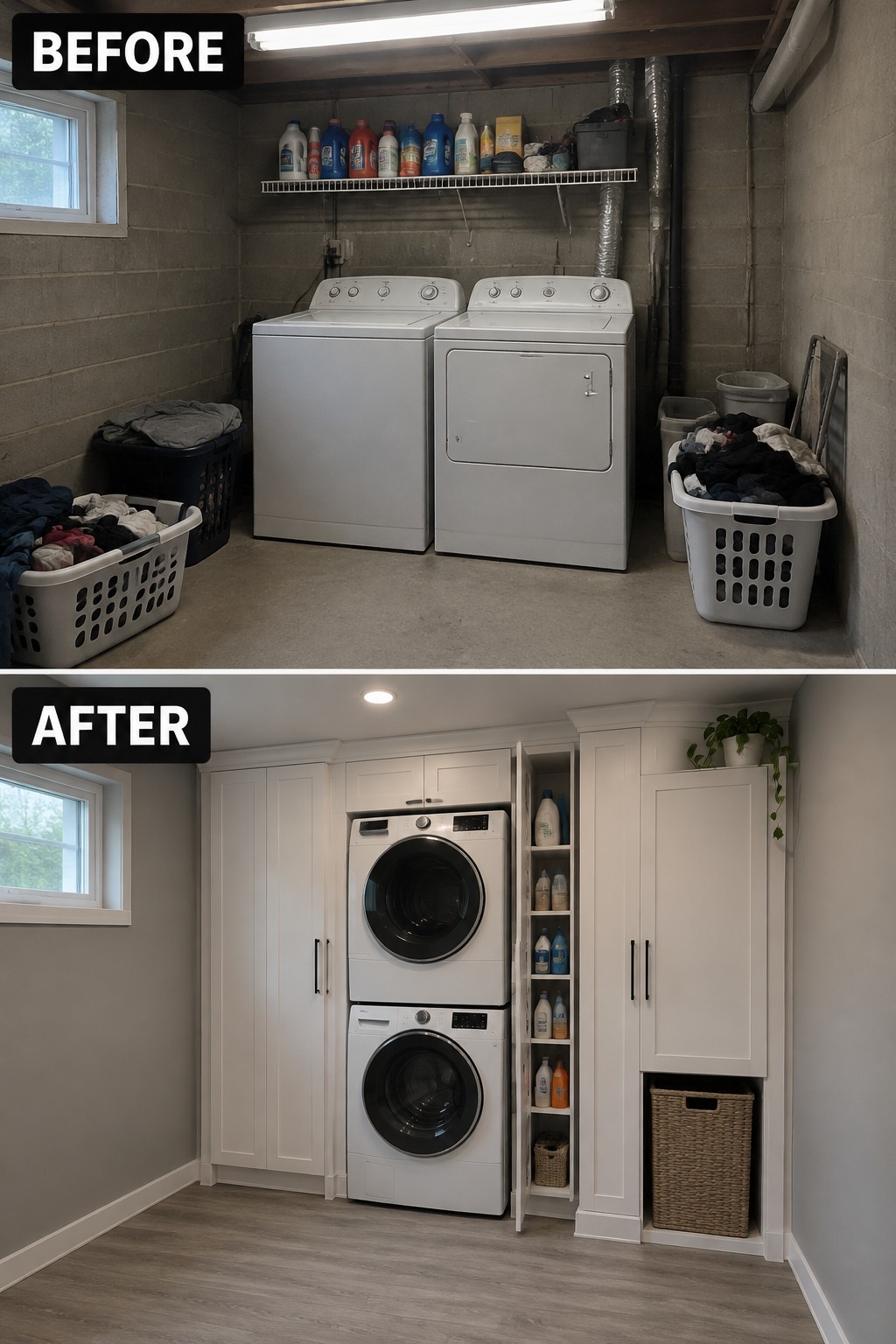
Stacking the washer and dryer frees up floor space, while tall cabinets keep laundry supplies and other essentials organized. This is a practical way to replace an open, clutter-prone setup with storage that uses the room’s height.
In a basement laundry room, consider a narrow cabinet beside the appliances for detergent and a taller cupboard for baskets or household items. Measure carefully before choosing a stacked pair, and leave enough room to open the doors and reach the controls comfortably.
Use Vertical Storage To Free Up Floor Space

Stacking the washer and dryer leaves more room for useful storage in a small basement laundry area. Here, the old side-by-side machines give way to a stacked setup, making space for a tall shelving unit.
Choose a sturdy shelf that fits beside the machines, then use bins and baskets to keep laundry supplies sorted and easy to reach. Leave enough clearance for the appliances and a safe path through the room.
Add Vertical Storage To A Basement Laundry Room

A basement laundry room can feel cramped when supplies and clothes have nowhere to go. Here, a wall-mounted drying rack and an overhead hanging rail make use of space above and beside the machines, leaving more of the floor open.
Try this approach when the room is narrow or has limited floor space. Choose storage that folds away or stays close to the wall, and keep the path to the washer and dryer clear.
Add Vertical Storage To Sort Laundry
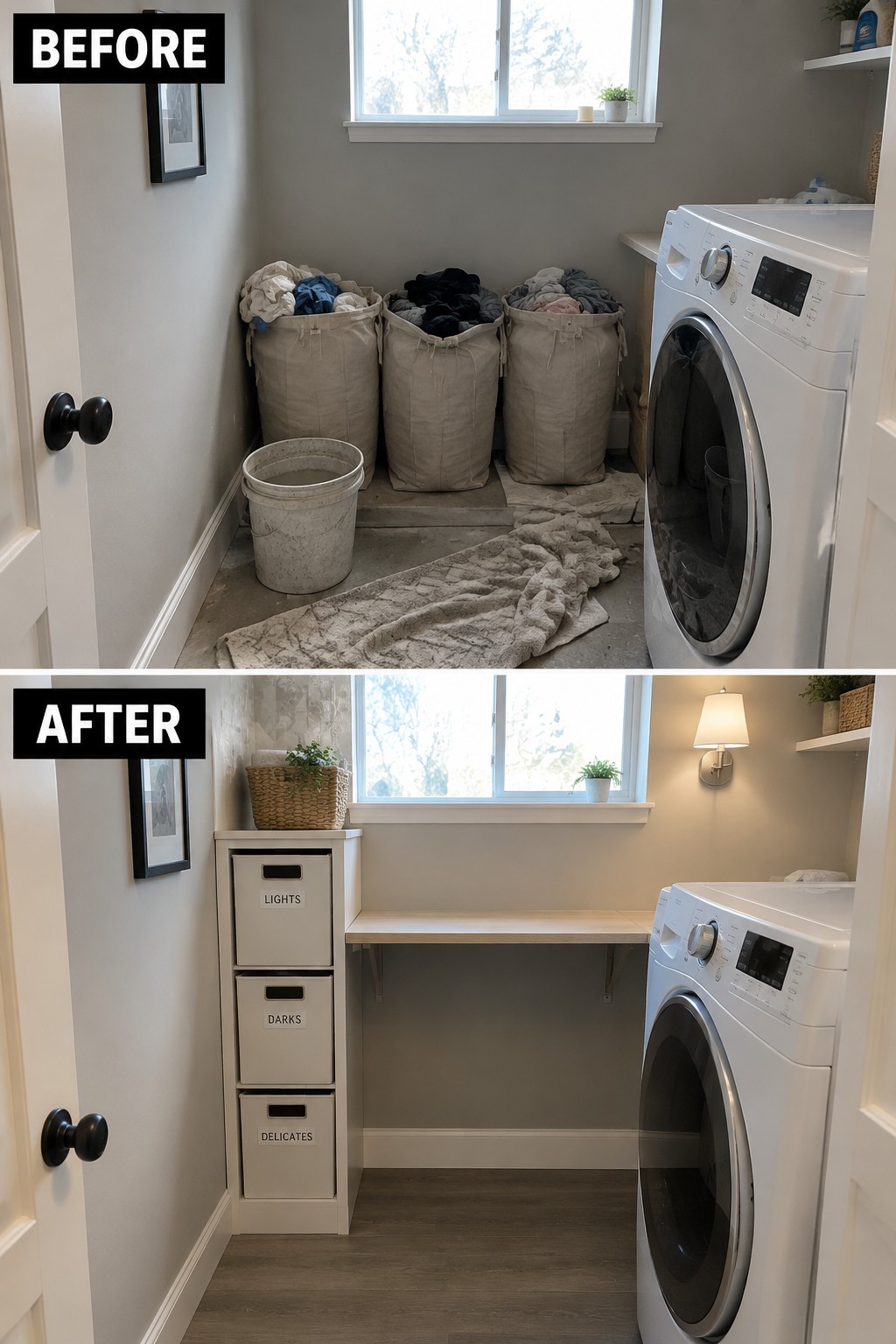
Replacing overflowing baskets with a slim stack of labeled drawers clears the floor and gives each load a place to go. The open space beneath the counter also makes the laundry room easier to use.
In a small basement laundry area, use vertical storage for categories you sort often, and keep the labels simple. Measure carefully so drawers are easy to open without blocking the washer or a walkway.
Organize Laundry Supplies On A Pegboard Wall

Replacing open shelves with a pegboard makes it easier to store laundry supplies vertically and keep the floor clear. Here, the ironing board hangs on the wall too, so it is easy to reach without taking up space beside the washer.
This approach works well in a basement laundry room where storage is limited. Mount a sturdy pegboard, then add hooks, baskets, and shelves for items you use regularly. Keep the electrical panel accessible and avoid placing heavy supplies on hooks that are not rated for them.
Add A Tall Cabinet For Laundry Storage

Replacing open shelves and piled clothing with a floor-to-ceiling cabinet gives a basement laundry room a more contained place for supplies and linens. The narrow built-in shelves also make use of wall height without taking up much floor space.
This idea works well in a small laundry room where freestanding racks can make it hard to move around. Measure carefully, and leave enough room for the cabinet doors and any items you need to store, such as an ironing board.
Use Wall Storage To Keep Laundry Supplies Off The Floor

A narrow laundry room can feel less cluttered when storage goes up the wall instead of taking up floor space. In this makeover, stacked baskets hold towels above a slim shelf, replacing a small, crowded rack.
Try wall-mounted baskets or shelves for items you reach for often, and keep heavier supplies within easy reach. Leave enough room around the machines to move and open the doors comfortably.
Turn A Laundry Nook Into A Storage Wall

The open floor and freestanding rack in this laundry room made it harder to keep supplies and laundry organized. Built-in shelves now use the wall height for labeled baskets, while the washer and dryer sit together beneath a counter. That gives the room clear places for both storage and folding.
In a small basement laundry room, tall, narrow shelving can make better use of limited space than another floor-standing rack. Use baskets to sort supplies or linens, and keep the shelves within easy reach so the storage stays practical.
Hide Laundry Supplies In A Tall Cabinet

The open shelves and cleaning products made this basement laundry area feel cluttered. A tall cabinet turns that scattered storage into one contained spot, leaving the floor and work area clearer.
In a small laundry room, use a narrow cabinet that reaches up rather than out, and add shelves inside the doors for sponges or brushes. Keep frequently used items easy to reach, and make sure the cabinet doors can open without blocking the washer or doorway.
Make A Basement Laundry Room More Functional

The loose shoes and cleaning tools in this basement made the walkway feel crowded. A tall shoe rack and wall-mounted baskets turn the unused wall space into practical storage, while a bench gives shoes a place to land.
This setup works well in a narrow laundry room where floor space is limited. Choose a slim rack that fits beside the door, and mount baskets high enough to keep the path clear.
Stack Laundry Appliances To Make Room For A Folding Station

Replacing side-by-side machines with a stacked washer and dryer frees up valuable floor space in a small basement. In this makeover, that space becomes a compact folding area with shelves above for towels and supplies.
This setup works well when the room is narrow and the appliances can be safely stacked. Measure the machines and leave enough clearance for doors and access, then use the freed wall space for a folding surface you can keep clear when it is not in use.
Move Small Laundry Tools Onto The Wall

A cramped laundry work surface is hard to use when tools and supplies are scattered across it. In the updated nook, wall-mounted holders and jars keep the small items within reach while clearing the bench below.
This approach works well in a basement laundry room where floor and counter space are limited. Mount storage at a comfortable height, group similar items together, and leave the main work surface open for folding or repairs.
Replace Drying Racks With Vertical Hanging Storage

The folding racks and clothes draped over the radiator made this narrow laundry room hard to move through. A tall cabinet with a hanging rail and a slim wall-mounted rail keeps clothes up off the floor while making use of the room’s height.
This approach works well in a basement laundry room where there is little space for a separate drying area. Choose a cabinet or rail that fits the available wall space, and leave the main walkway clear.
Conceal Laundry Clutter Behind A Sliding Door

The open laundry nook had supplies crowding its shelves, while the sliding barn door in the updated room gives the storage a tidier look without taking up space to swing open. A tall cabinet also keeps everyday items together and out of sight.
In a basement laundry room, use a sliding door when there isn’t much clearance for a regular one. Add a tall cabinet inside the nook for detergent and other supplies, and keep the shelves you use most often easy to reach.

A tall cubby unit makes better use of wall height than a crowded table, giving toys and sports equipment a set place to go. In this basement, labeled bins replace the loose piles and clear the floor around the storage area.
Use sturdy shelves with bins sized for what you need to store, and label them so everyone can put things back. This idea works well in a laundry room that also serves as a family storage spot, but leave enough room to reach the machines and move laundry baskets.
Add A Tall Cabinet For Hidden Laundry Storage

A narrow cabinet can turn an awkward gap beside a laundry machine into useful vertical storage. Here, the open ironing board and supplies have a designated place inside the cabinet, leaving the floor area clearer and easier to use.
Look for a tall, slim unit that fits the space without blocking doors or walkways. Interior shelves and drawers can hold smaller items, while a pull-out ironing board makes good use of the cabinet’s height.
Replace A Utility Sink With A Laundry Vanity

The old utility sink took up space without offering much storage. Replacing it with a compact vanity adds a cabinet for laundry supplies while keeping a usable sink in the same spot.
This idea works well in a basement laundry room where floor space is limited. Choose a vanity that fits around the existing plumbing, then use a narrow wall shelf or cabinet above it for items you reach for often.

The bike and cleaning tools crowded the floor in this basement laundry room. A tall, narrow shelving unit now makes use of the wall space, giving baskets and household supplies a place while leaving more room to move around the appliances.
This approach works well in a multipurpose basement where laundry shares space with sports gear or cleaning equipment. Choose shelves deep enough for what you need to store, but keep the unit narrow so it does not block access to the machines.
Build Shelving Into Unused Laundry Room Space

The open shelf above the machines kept supplies in view, but it left little room to sort or store them neatly. A narrow built-in unit beside the dryer makes better use of the wall height, with shelves and baskets for laundry essentials.
In a basement laundry room, a tall storage unit can hold items you reach for often without taking up much extra floor space. Measure around the machines first, and keep the most-used supplies on easy-to-reach shelves.
Hide Laundry Clutter Behind Sliding Doors

The open shelving in this basement laundry room held plenty of supplies, but the mix of bottles and bins made the area feel crowded. Sliding doors cover most of the storage in the updated room, keeping everyday clutter out of sight while leaving a narrow shelf section available for items that are easy to reach.
This approach works well when a laundry room needs substantial storage but has little floor space for extra cabinets. Use tall, shallow storage to make the most of the wall, and keep frequently used supplies on the open shelves. Check that the doors can slide freely around appliances and other obstacles.
Frequently Asked Questions
Q: How can I add vertical storage without making a small basement laundry room feel cramped?
A: Use the wall above your washer and dryer for shallow shelves or a narrow cabinet, and keep the floor clear. Open shelves can feel lighter than deep cabinets, especially in a tight room.
Q: Is it safe to put shelves above a washer and dryer?
A: Yes, as long as they’re securely mounted and leave enough room to open the machines and reach controls. Keep heavy detergent containers on a lower shelf so they’re easy to lift and less likely to fall.
Q: What should I store near the machines?
A: Keep everyday items like detergent, stain remover, and dryer sheets within easy reach. Put seasonal supplies or extra linens on higher shelves, where you won’t need to reach for them often.
Q: How can I make use of the space behind the laundry room door?
A: Add a slim over-door rack for small supplies, or use sturdy hooks for a drying rack or laundry bag. Check that the door still opens freely before loading it up.
