

Basements can be useful storage areas, but bare walls, awkward corners, and piles of boxes often make them feel unfinished and hard to manage.
I find that giving storage a clear place on the wall can open up floor space and make the whole room feel more orderly.
Shelves, hooks, cabinets, and simple zones can help keep everyday items within reach while making less-used belongings easier to tuck away.
The best changes do not need to be elaborate to make a basement feel more practical and cared for.
Some of these ideas are worth adapting to the space you have, whether you need room for tools, seasonal decor, or household supplies.
Replace Open Shelving With Built-In Storage

An open shelving unit can hold a lot, but a mix of loose boxes and bins can make a basement feel cluttered. Full-height cabinets and a row of drawers turn that storage into a neater, more organized wall while keeping everyday items easy to reach.
This idea works well when you have one wall to dedicate to storage. Use closed cabinets for things you do not need often, and keep a few labeled baskets or open cubbies for items you grab regularly. Measure first so the cabinets fit the wall without blocking switches or leaving too little room to move around.
Add Shelving To Organize Basement Storage

Replacing a crowded mix of containers with sturdy wall shelving makes basement storage easier to sort and reach. Clear, labeled bins on the shelves help keep seasonal items together without taking up the whole floor.
Use shelving that can handle the weight of what you plan to store, and group similar items in bins so they’re easy to find later. Leave heavier containers on lower shelves, and keep enough open floor space to move things in and out.
Hide Basement Storage Behind Sliding Barn Doors
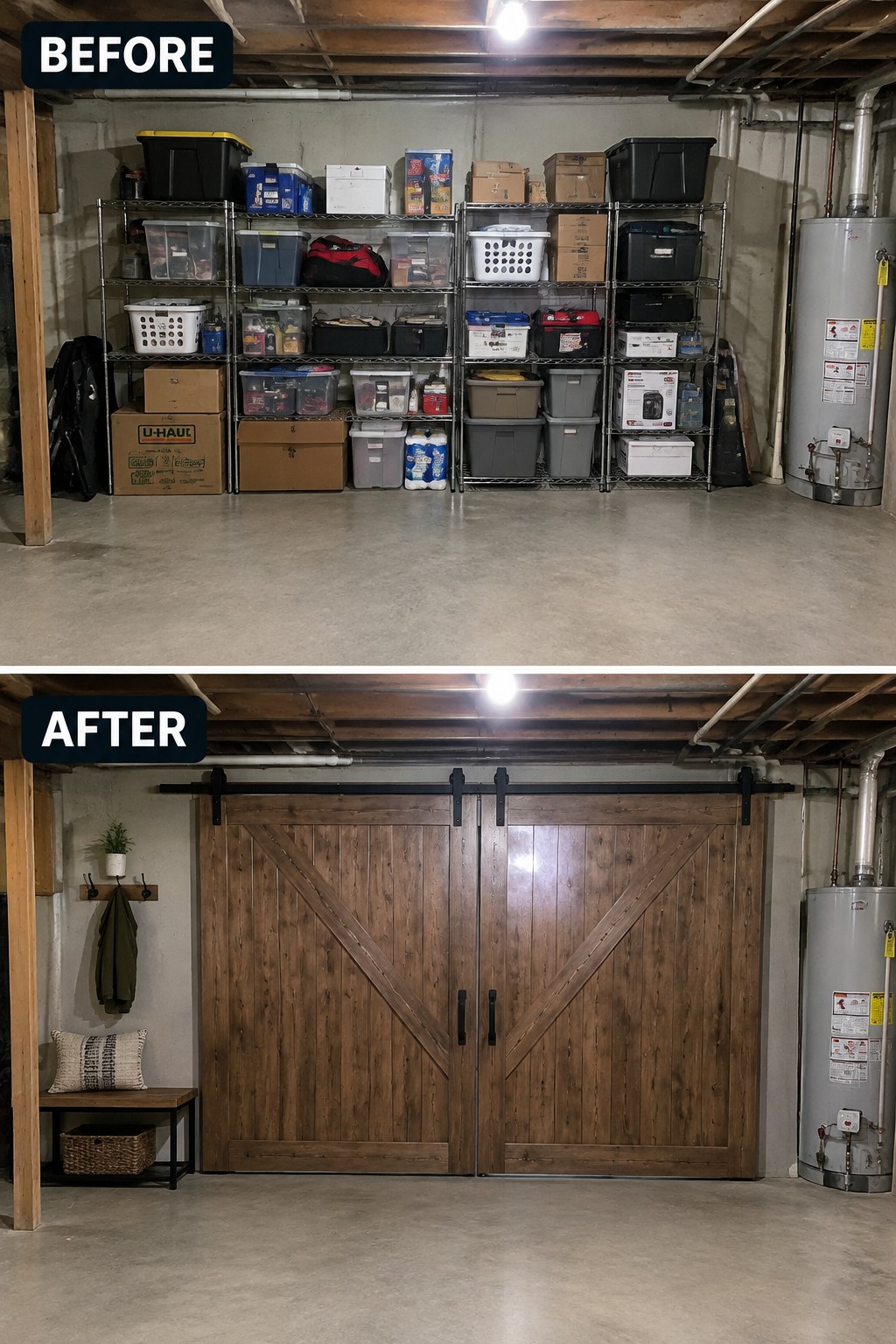
Open shelving can hold a lot, but visible bins and boxes may make a basement feel cluttered. Sliding barn doors cover the storage wall while keeping everything easy to reach, and the wood doors give the space a more finished look.
This idea works well when you want to keep basement storage but make it less noticeable. Measure the opening carefully, leave room for the door track, and check that the doors can slide clear of nearby pipes or equipment.
Cover A Damp Basement Wall With Built-In Cabinets

The bare concrete wall in this basement becomes a useful storage area once it is covered with paneling and fitted with low cabinets. The closed doors hide stored items, while the countertop gives the wall a neat, usable finish.
This approach works well when basement clutter needs a home but open shelves would look too busy. Choose cabinets that fit the wall without blocking access to pipes or other utilities, and check for moisture problems before covering the concrete.
Store Bikes Vertically To Free Up Floor Space

Wall-mounted bike racks move bicycles off the floor, making a crowded basement easier to walk through and use. In the after photo, the bikes hang upright above labeled storage bins, so gear stays organized without taking over the room.
This idea works well in a garage or basement with a clear stretch of wall. Check that the wall and mounts can support the bikes, and leave enough room below for bins or other items you need to reach.
Turn Awkward Stair Space Into Built-In Storage

The space beneath a basement staircase can be hard to organize with loose bins and shelves. Fitted cabinets make better use of the sloped area, turning it into a storage wall with room for baskets, shoes, and items tucked away in drawers.
Measure the slope and plan each section around what you need to store. Open cubbies work well for baskets and everyday items, while drawers keep smaller belongings out of sight. Leave enough room to reach everything without crowding the stairs.
Organize Pantry Items By Category

The makeover replaces crowded, open wire shelves with sturdy shelving and grouped storage. Baskets keep smaller items together, while labeled sections make it easier to find pantry goods and put them back where they belong.
Use the same approach on a basement storage wall by giving each shelf a clear purpose, such as snacks, canned goods, or paper products. Keep frequently used items within easy reach, and avoid packing the shelves so tightly that restocking becomes a chore.
Create A Dedicated Craft Storage Wall

A cluttered craft area becomes much easier to use when storage moves up the wall and the work surface stays clear. Here, labeled bins and wall-mounted tool holders replace crowded shelves and a table covered in supplies.
This setup works well in a basement craft room where floor space is limited. Group supplies by type in clear bins, label the most-used categories, and keep everyday tools within reach. Leave enough open tabletop for projects rather than filling it with storage.
Organize Sports Gear In Individual Lockers
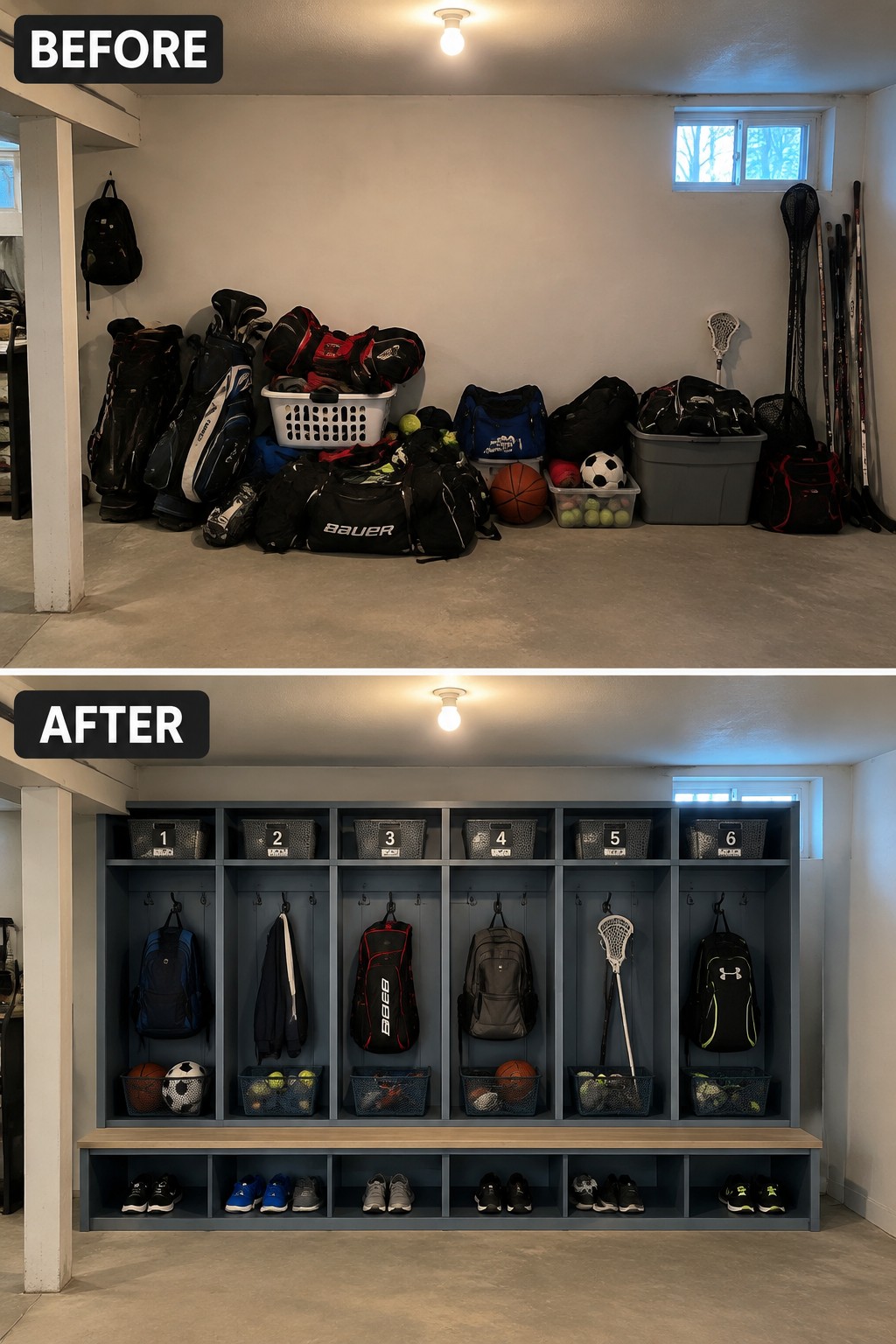
A row of lockers turns a messy pile of sports equipment into storage that’s easy to use. In this basement, separate compartments give each person a place for a bag and smaller gear, while the open hooks keep everyday items within reach.
For a similar setup, choose locker widths that fit the largest bags and add labeled bins for balls or other loose equipment. A low shoe shelf helps keep footwear off the floor, but leave enough room in front of the lockers to open bags and move around.
Use Labeled Bins To Organize Basement Toys

A simple storage wall can turn a cluttered play area into a room that is much easier to manage. In the after photo, colorful bins replace the open bookcase, and labels make it clear where each type of toy belongs.
This idea works well in a basement playroom where toys tend to spread across the floor. Choose bins that fit the shelves and label them by category, then keep the most-used toys within easy reach so cleanup stays simple.
Create A Built-In Wine Storage Wall

Replacing open shelves and a utility rack with built-in cabinetry gives basement storage a more organized, finished look. Here, dedicated wine cubbies and glass-front cabinets keep bottles and stemware together, while a counter provides a useful spot for serving.
This idea works well on a long, unused wall, especially when you want storage to serve a specific purpose. Plan the sections around what you actually need to store, and leave enough counter space for easy use.
Sort Basement Storage Into Labeled Zones

A basement storage wall is easier to use when every category has a clear place. Replacing crowded, mismatched shelves with open shelving and labeled baskets makes seasonal items and garage supplies simpler to find.
Group similar things together, then label the baskets so the system is easy to maintain. Leave some open shelf space for larger bins, and avoid packing items so tightly that you have to move several things to reach what you need.
Turn A Bare Wall Into Recessed Storage

Replacing a freestanding shelf with built-in wall cubbies makes basement storage feel more orderly without taking up as much floor space. In the finished wall, baskets keep everyday items tucked away while a few open cubbies can hold simple decor.
This idea works well on a wide, uncluttered basement wall, especially where a bulky shelving unit makes the room feel crowded. Check for wiring, plumbing, and wall structure before cutting into the wall, and keep the cubbies practical rather than filling every space with display items.
Conceal Basement Clutter Behind Ventilated Cabinets

Built-in cabinets turn an exposed utility area into a more orderly storage wall. Here, louvered doors hide the bins and supplies while allowing air to circulate around the basement utilities.
This approach works well when you want storage to look tidier without blocking access to pipes or equipment. Plan the cabinet layout around anything that needs servicing, and include ventilation where needed.
Add Drawer Storage Along A Basement Wall

Replacing an open ledge with built-in drawers gives a basement storage wall a place for supplies that would otherwise sit out in the open. In this makeover, the drawers store items out of sight, while labeled baskets on the shelf keep frequently used categories easy to find.
This idea works well along a long, empty wall where floor space is limited. Measure for drawers that fit the room, and label baskets by category so the storage stays easy to use.
Add A Storage Wall To Make Use Of Empty Basement Space

The makeover turns a small, crowded stack of boxes into a full wall of organized storage. Built-in shelves make better use of the vertical space, while matching bins keep seasonal items easier to sort and find.
This idea works well in a basement with a long, mostly empty wall. Measure around windows and exposed pipes, and leave enough room to reach the shelves safely. Labels can help keep the system useful after everything is put away.
Turn Basement Clutter Into A Wine Storage Wall

A basement wall piled with wine boxes is hard to use and even harder to keep organized. Wall-mounted wine cubbies turn that scattered storage into a clear system, with bottles grouped by type and the floor left open.
This works well in a basement with a sturdy, mostly unused wall. Measure the space and choose a rack that holds the number of bottles you actually have, rather than filling the wall just because you can. Keep the labels simple so each section is easy to maintain.
Turn Basement Shelving Into A Work And Storage Wall

Open wire racks can hold a lot, but cans, tools, and supplies tend to become a jumble on them. Replacing the racks with a long cabinet counter and wall-mounted shelves gives storage a more useful layout, with a clear surface for sorting or small projects.
This setup works well along an unfinished basement wall where floor space is limited. Keep everyday supplies on open shelves, put less tidy items behind cabinet doors, and leave enough counter space to work comfortably.
Use Wall Shelves To Get Storage Off The Floor

A folding table and scattered boxes can take up useful floor space without making basement storage easy to manage. Two wall shelves with labeled baskets turn that same area into a simple storage wall, leaving the floor clear and everyday items easier to sort.
Use sturdy shelves anchored into wall studs, and keep heavier baskets on the lower shelf. This approach works well for seasonal gear, cleaning supplies, or other belongings you want to keep visible but contained. Avoid making the shelves too deep, so they don’t crowd the room.
Replace Mismatched Cabinets With A Coordinated Storage Wall

A row of matching cabinets can make basement storage look tidier and feel more deliberate. Here, mismatched metal cupboards are replaced with dark built-in-style cabinets and open shelves, giving seasonal items a clear place without leaving everything on display.
For a similar setup, use tall cabinets for bulky or less attractive items, then reserve a short stretch of shelving for labeled bins and a few things you reach for often. Measure carefully and leave enough room to open doors and move around the basement.
Frequently Asked Questions
Q: What’s the best way to store things in a basement that sometimes gets damp?
A: Keep boxes and fabric off the floor, and use sturdy plastic bins with snug lids. Leave a little space between stored items and the walls so air can move around them.
Q: Can I install storage shelves on basement walls?
A: Yes, but anchor them into wall studs or masonry rather than drywall alone. For heavy items, floor-standing shelves can be a safer choice.
Q: How do I make a storage wall easier to use?
A: Put things you reach for often at eye level, and label bins on the front where you can see them. Keep holiday decorations or other occasional-use items higher up.
Q: What should I do before building storage around basement pipes?
A: Leave enough room to reach shutoff valves, cleanouts, and electrical panels. A removable panel or open shelving can keep those spots accessible without giving up the whole wall.
